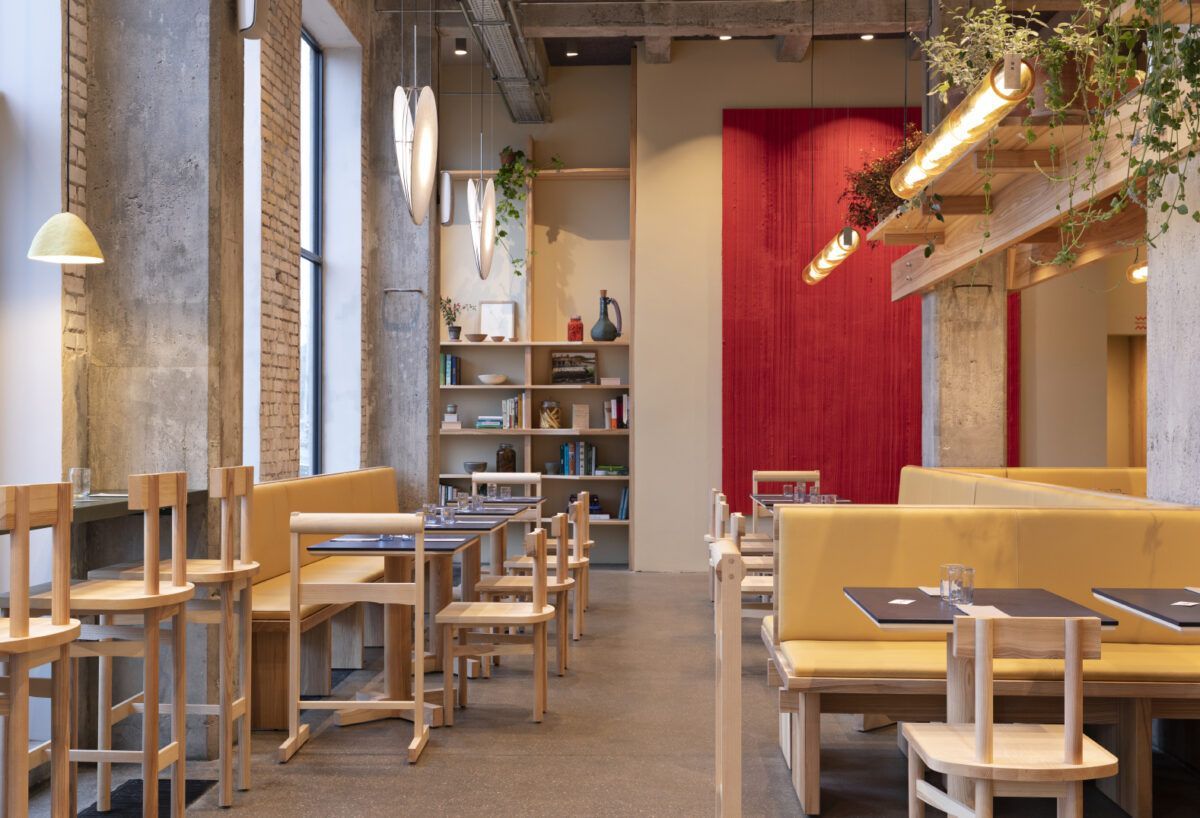
Spacon: rethinking design from a human perspective
When we talk about contemporary design, we often think of forms, materials or visual trends. But there are studios challenging that surface-level view to build something deeper: systems of experience, sensory narratives, immersive worlds. Spacon, the studio founded by Malene Hvidt, Nikoline Dyrup Carlsen and Svend Jacob Pedersen, is one of them.
From their base in Copenhagen, this creative collective has developed its own language that crosses architecture, interior design, graphic design, brand strategy and contemporary art. Their approach is post-disciplinary, radically collaborative and deeply human.

In this exclusive interview for CC/magazine, we explore the philosophy behind their work, the projects that best define their practice, and their vision for the future of design, space and visual culture.
How would you define Spacon’s design philosophy in one sentence?
Spacon is a post-disciplinary design studio that exists to create holistic brand experiences that push boundaries, inspire innovation, and challenge traditional design norms. We design spatial, visual and experiential systems that help brands tell their story across every touchpoint, always with their community in mind.
At a time when brands are no longer defined by a logo or slogan, but by the spaces they inhabit, the objects they touch and the emotions they evoke, Spacon offers a new way of thinking about identity — one built in layers and expressed through every detail. What inspires your creative process across such a wide range of spatial and design disciplines?
We start by asking: what story does this brand need to tell, and how will their community experience it? That question guides everything, from the way we shape a room to the way we frame a word. Our process is collaborative and cross-disciplinary, always grounded in the context of who we’re designing for.
“We believe great design emerges through conversation, friction, and exchange.”
We see design as the infrastructure of experience in today’s world, where brands are no longer just visual identities or physical spaces, but are living, evolving ecosystems. As a consumer, every brand interaction counts: whether it’s a curated shelf, a pop-up event, a store interior, or a single moment online. That’s why we pull from architecture, interiors, graphics, product, digital, and strategy, so that each element works in sync to tell one cohesive story.
Can you share one recent project that you feel captures the essence of your practice, and why?
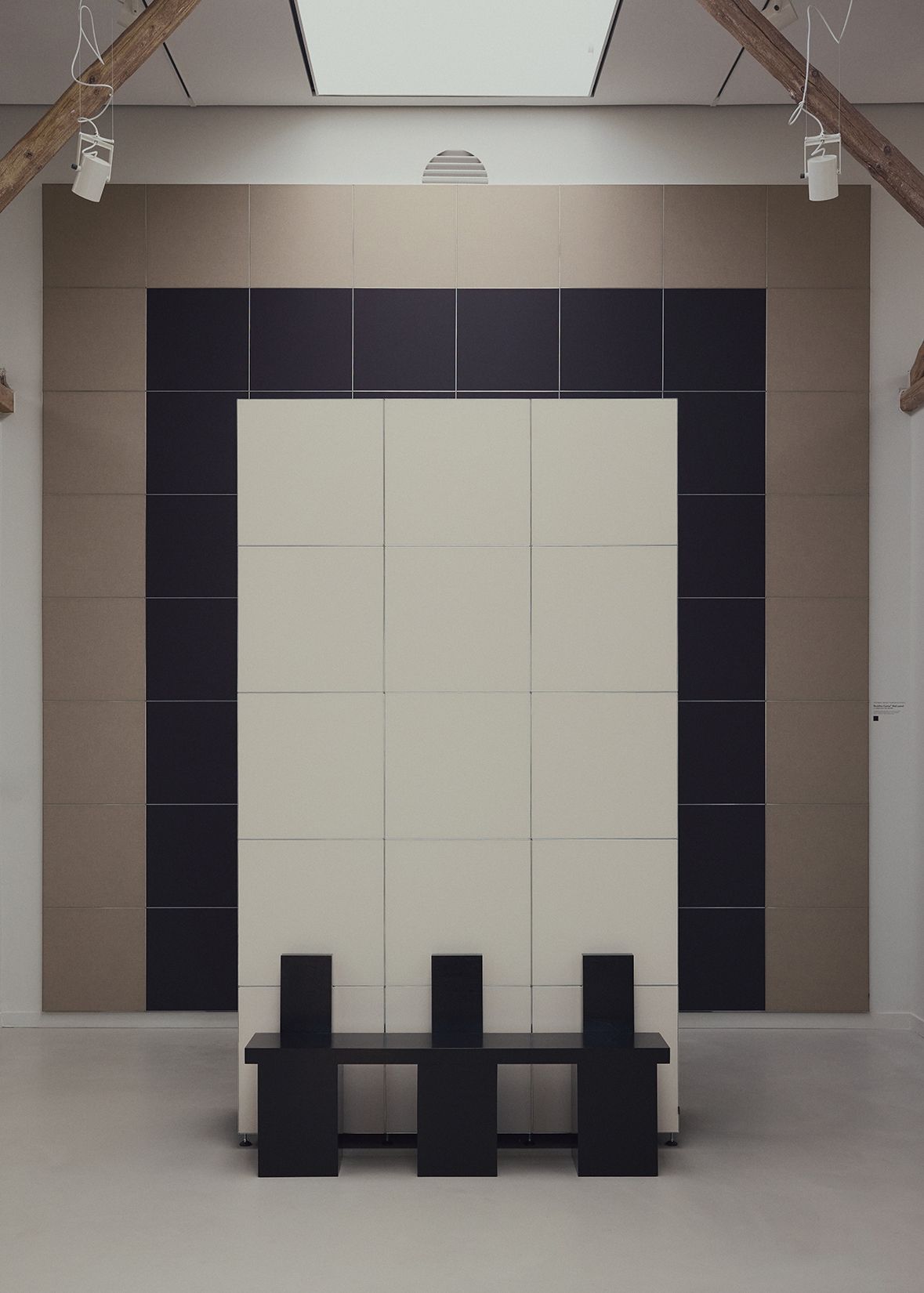
One project that captures the essence of our practice is our collaboration with Rockfon, a global leader in acoustic materials. When they first approached us, the brief was to refresh their showroom and create a more impactful presence. But through our early conversations, we realized the opportunity was much deeper, they didn’t just need a new look, they needed a cohesive spatial identity that could help them show up consistently across contexts, from international fairs to flagship spaces.
We developed a modular grid system that now anchors all of their environments, a design language that’s instantly recognizable but also deeply functional. It allows their sales team to configure and showcase Rockfon’s products in dynamic, adaptable ways. What started as a spatial intervention became a new brand system: scalable, tactile, and strategically aligned across teams, tools, and touchpoints.
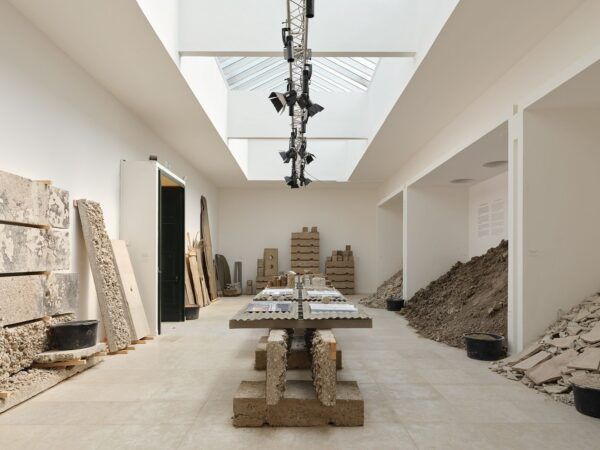
For their Copenhagen flagship showroom, we scaled the system into an immersive acoustic journey, from a corridor embedded with raw stone from their production line, to shelving made from their own waste material, to a central sound pavilion. Every element was made from Rockfon’s own products, turning the space into both a brand expression and a tool for conversation. Today, the showroom can be used for exhibitions and working spaces, but the system can also figure in a fair in barcelona or in a more commercial showroom in Norway… it gives them all the power in that sense.
This project speaks to how we work: starting with insight, building flexible systems, and designing across scales to deliver commercial and emotional impact for complex brands.
What role does collaboration play in your studio’s day-to-day work?
Collaboration is at the heart of everything we do. At Spacon, we treat every interaction as an opportunity for partnership, whether it’s with clients, engineers, suppliers, or makers. We believe great design emerges through conversation, friction, and exchange. It’s never a one-directional process.
Because our work spans spatial, graphic, and strategic disciplines, we rely on a fluid, interdisciplinary approach, pulling together diverse practices to solve problems and tell meaningful stories. Our studio is structured like an ecosystem, not a hierarchy. Ideas can come from anywhere, and we actively seek out collaborators who challenge us to think differently, experiment more, and push future boundaries. In that sense, collaboration isn’t just a method, it’s a mindset. It’s how we stay open, evolve our practice, and remain deeply connected to the people and communities we design for.
How do you see the relationship between functionality and storytelling in your designs?
For us, storytelling and functionality go hand in hand. We design systems that are rooted in a clear brand narrative, but built to be practical, future proof, adaptable across real-world use cases.
That means thinking about how a space or object will perform over time, not just how it looks, but how it supports daily operations, tells a consistent story, and gives the client tools to evolve it themselves. We always try to create strong foundations that can scale, shift, and respond to different needs without losing clarity.
“For us, storytelling and functionality go hand in hand.”
In a world where environments are constantly changing, we believe good design should be both authentic and adaptable.
In what ways are you rethinking the concept of “space” in 2025?
At Spacon our main focus will always be to design for presence. Every spatial concept will focus on the people we design for and how we can create the feeling of being present in a space.
You’ve been involved in this year’s Copenhagen Architecture Biennale — how did that experience influence your perspective on the future of space, cities, or public life?
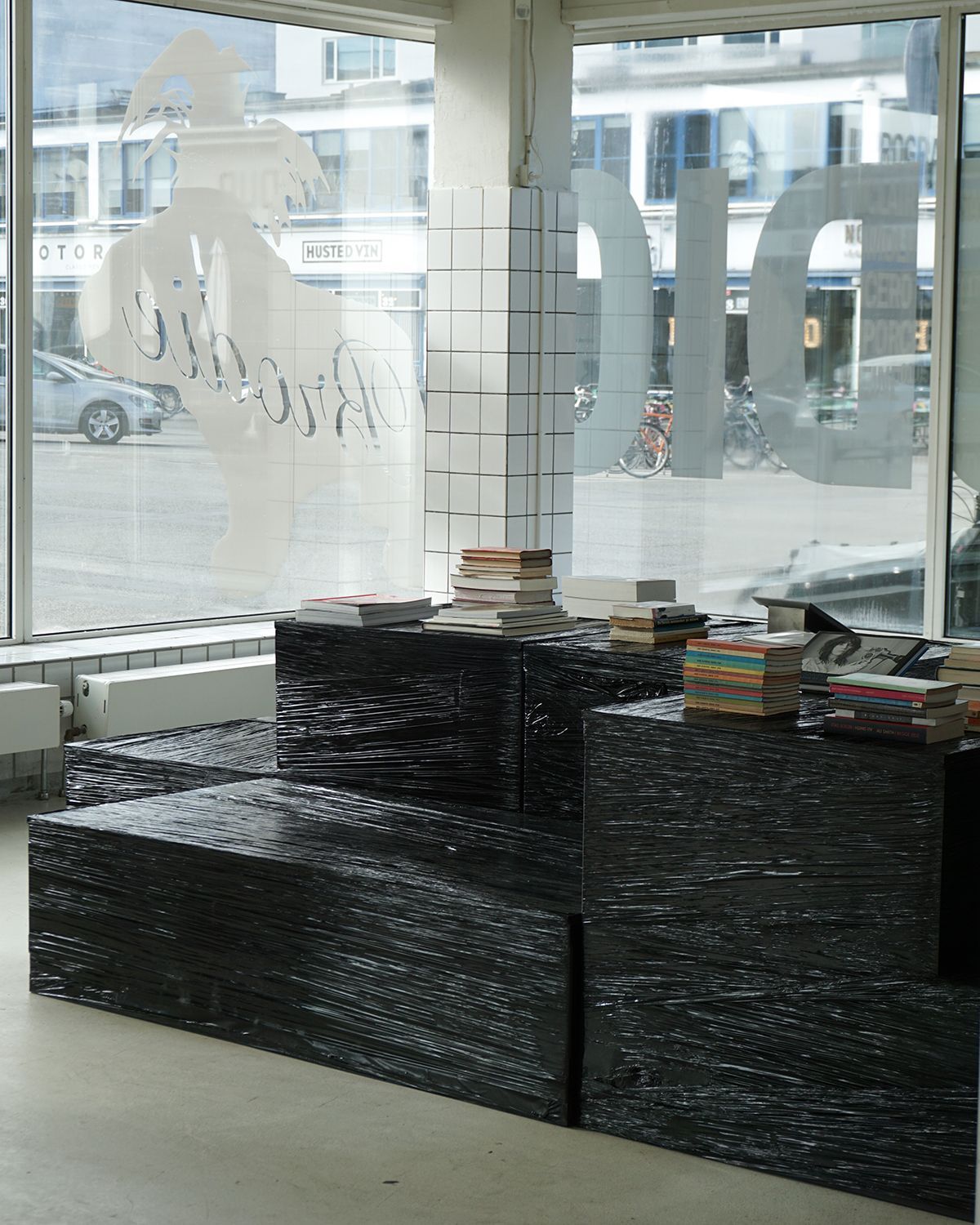
The theme of this year’s Copenhagen Architecture Biennale is ‘Slowing down’. We see a deep understanding of that theme, through our way of designing for presence. We were invited to talk about this approach, to participate in panels and to invite participants on Copenhagen Tasting tours through our ‘Hosting’ projects in the city.
Through each activity we meet likeminded perspectives, that inspired and pushed in the same direction. The fair seemed very succesfull and with an impressing lineup of relevant activities.
What excites you most about the future of design (materials, technologies, or cultural shifts)?
At Spacon, what excites us most is the cultural shift toward post-disciplinary creative practice. The lines between architecture, design, branding, and experience are dissolving, and that’s where we love to live. This shift allows for more fluid, responsive, and collaborative approaches that move beyond traditional categories.
We’re also inspired by the move from permanence to process. Design today is less about finished objects and more about creating adaptable systems that can grow, change, and evolve over time.
More than any single technology or trend, what excites us is that design is becoming more human again. It’s about emotion, tactility, on ground use, storytelling, and the spaces where we meet each other. That opens up endless possibilities, for materials, formats, and ways of working.
“What excites us most is the cultural shift toward post-disciplinary creative practice.”
And finally: what’s one object, place, or idea you keep returning to for inspiration?
We like to travel, and have been fortunate to have projects in many different parts of the world with exciting forward thinking clients. Leaving your everyday contexts and meeting new cultures, ways and approaches always inspires us.
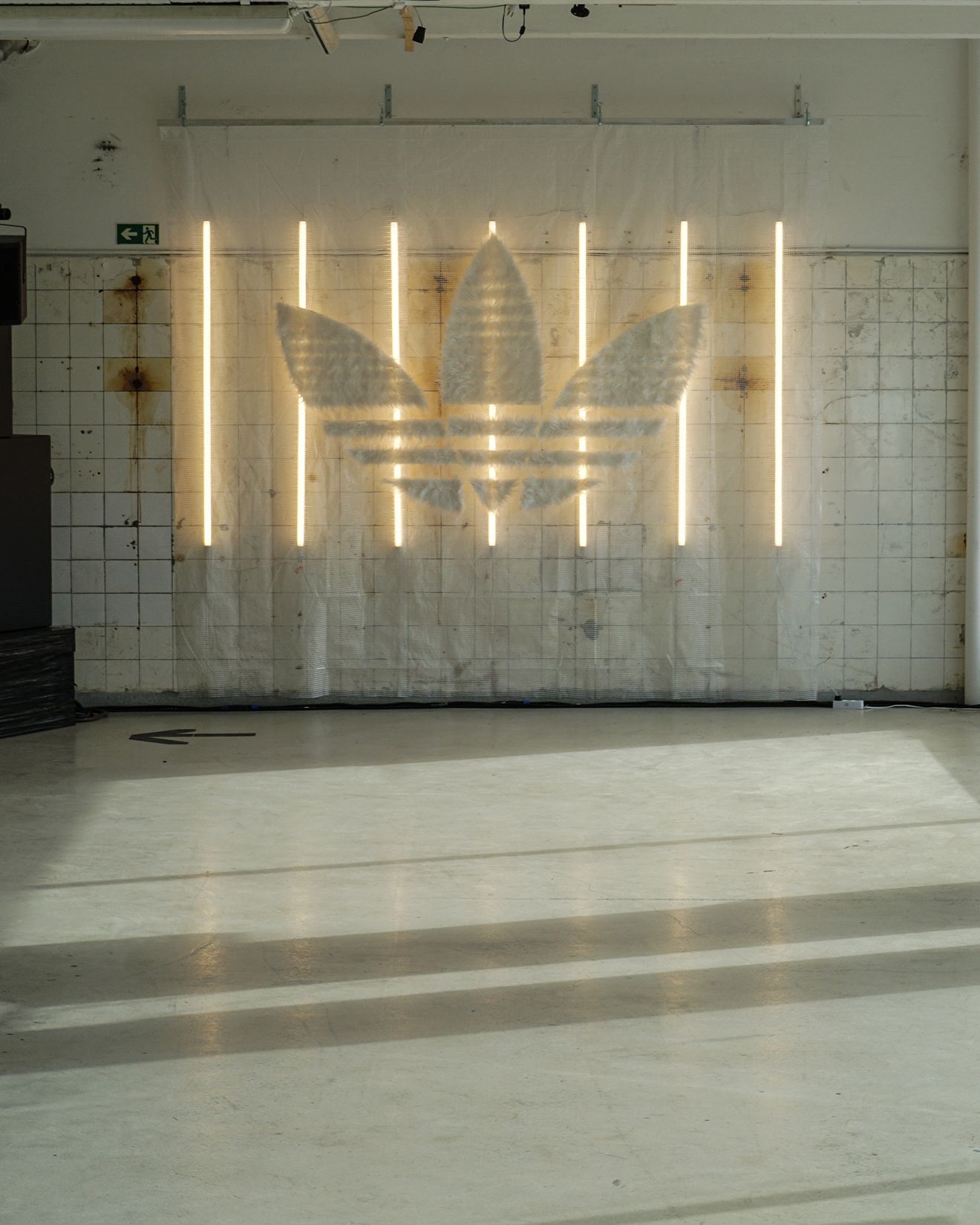
We also have been part of creating a new post disciplinary exhibition platform named other circle, that explores and seeks to redefine contemporary design culture. We mix all the creative disciplines into an immersive exhibition experience during Copenhagen design week in June, last year was the first ‘demo’, this year will be full on – we can’t wait, and we feel it very inspiring to gather energies and see what will appear and be moved.
“We also have been part of creating a new post disciplinary exhibition platform named other circle.”
Designing systems, not surfaces
Spacon is not just a design studio. It is a cultural statement — a space where architecture becomes narrative, branding turns into emotion, and objects act as catalysts for experience.
In an era where design is often reduced to the superficial or the instantaneous, Spacon stands as a form of resistance: building with purpose, thinking long-term, and connecting with the soul of spaces.
A practice that designs meaning, more than things.
You can also follow their work on Instagram: @spacon.studio.
(*) Photos courtesy of Spacon.