Interview with Olivia Ricard: the legacy of André Ricard in design
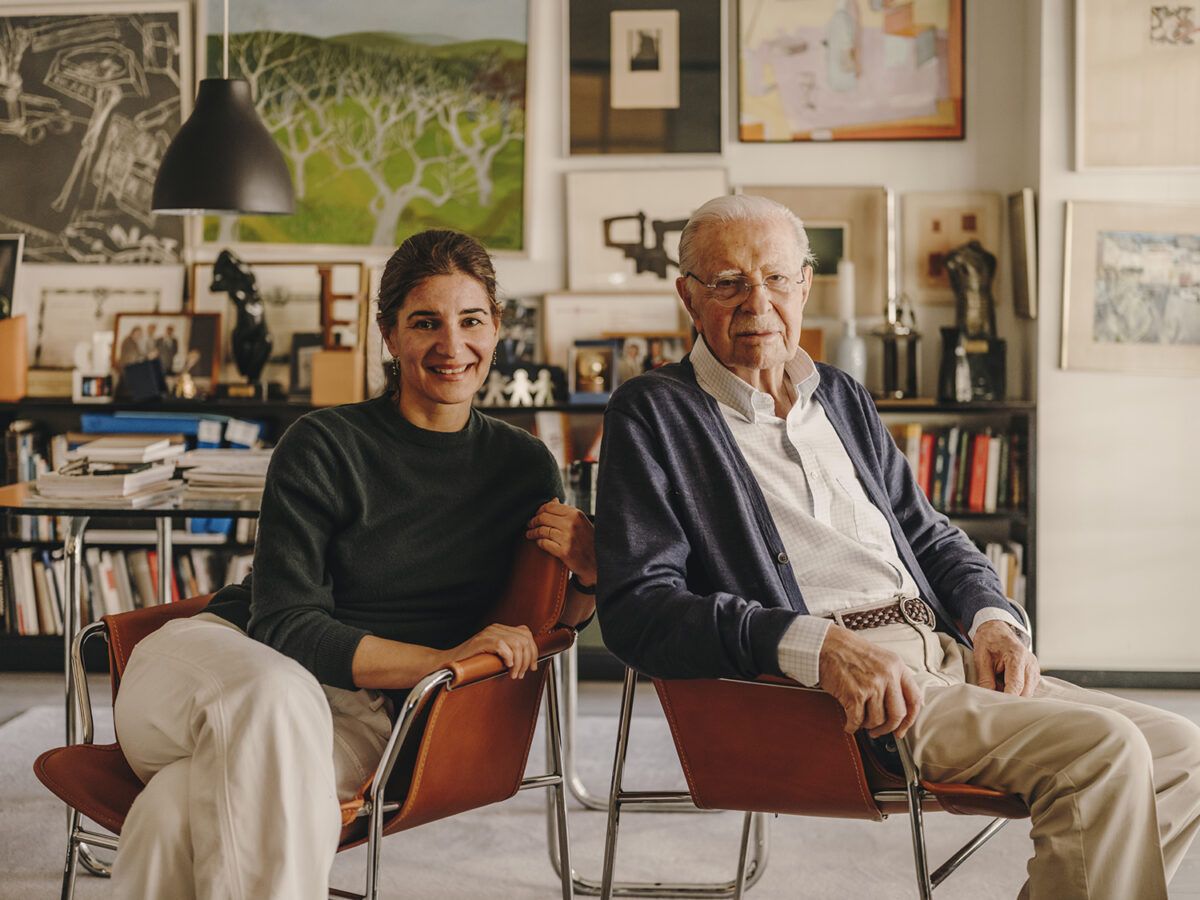
In the world of design, few names resonate as strongly as that of André Ricard, a key figure in industrial design and the creator of icons such as the Barcelona ‘92 Olympic torch. However, behind every great legacy, there is a new generation ready to reinterpret it and carry it forward.
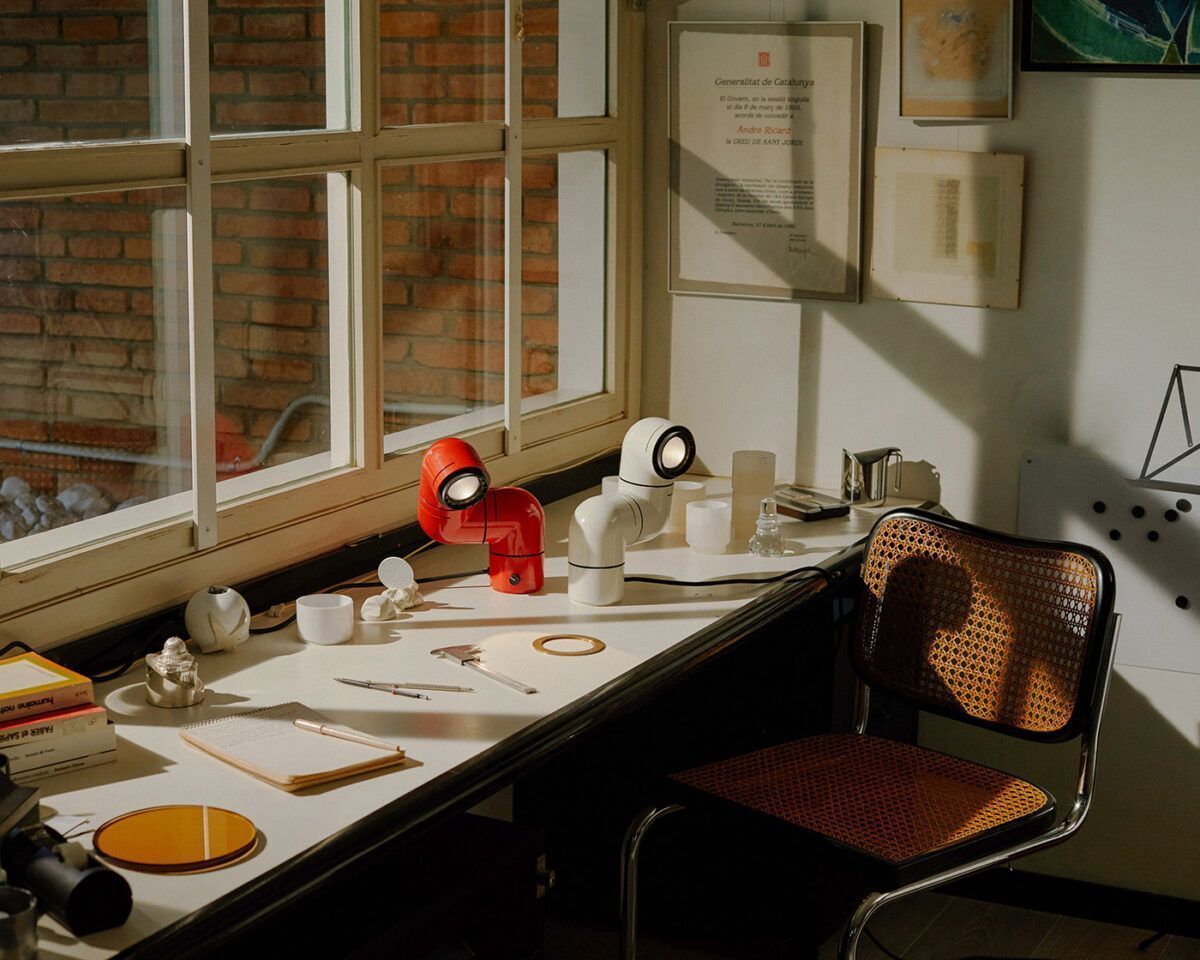
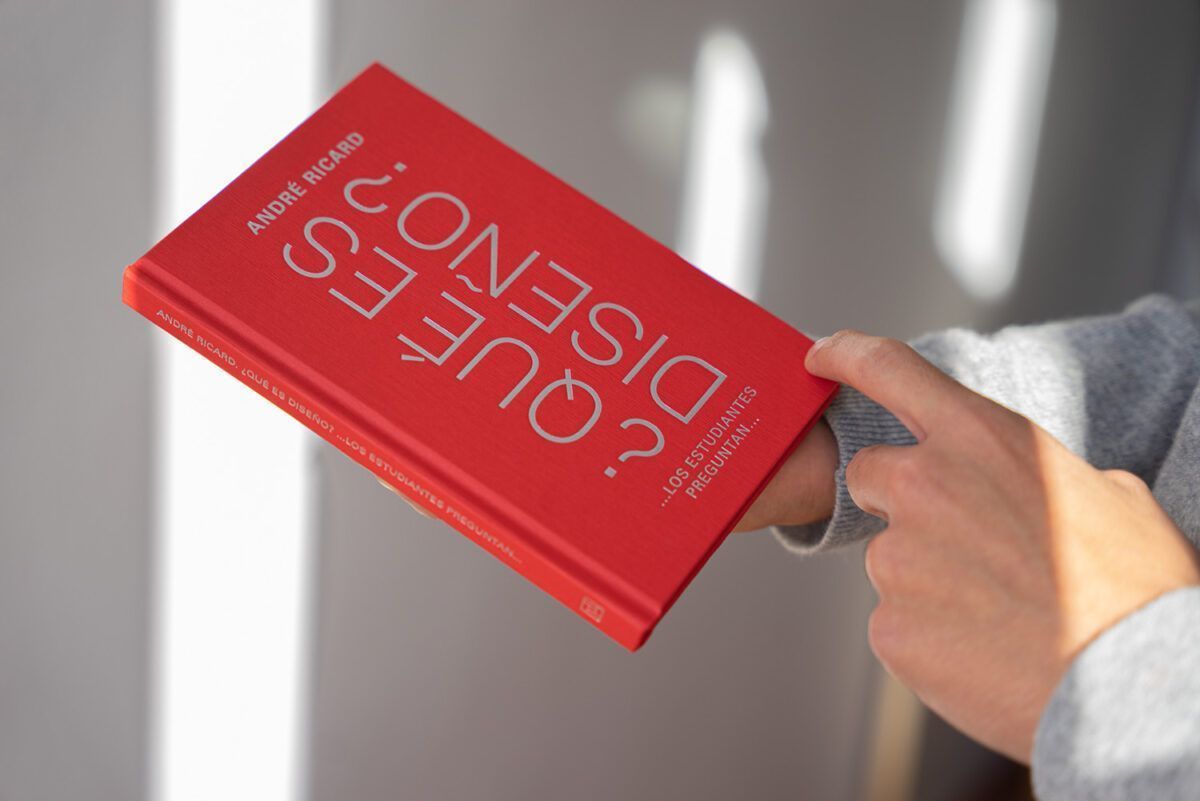
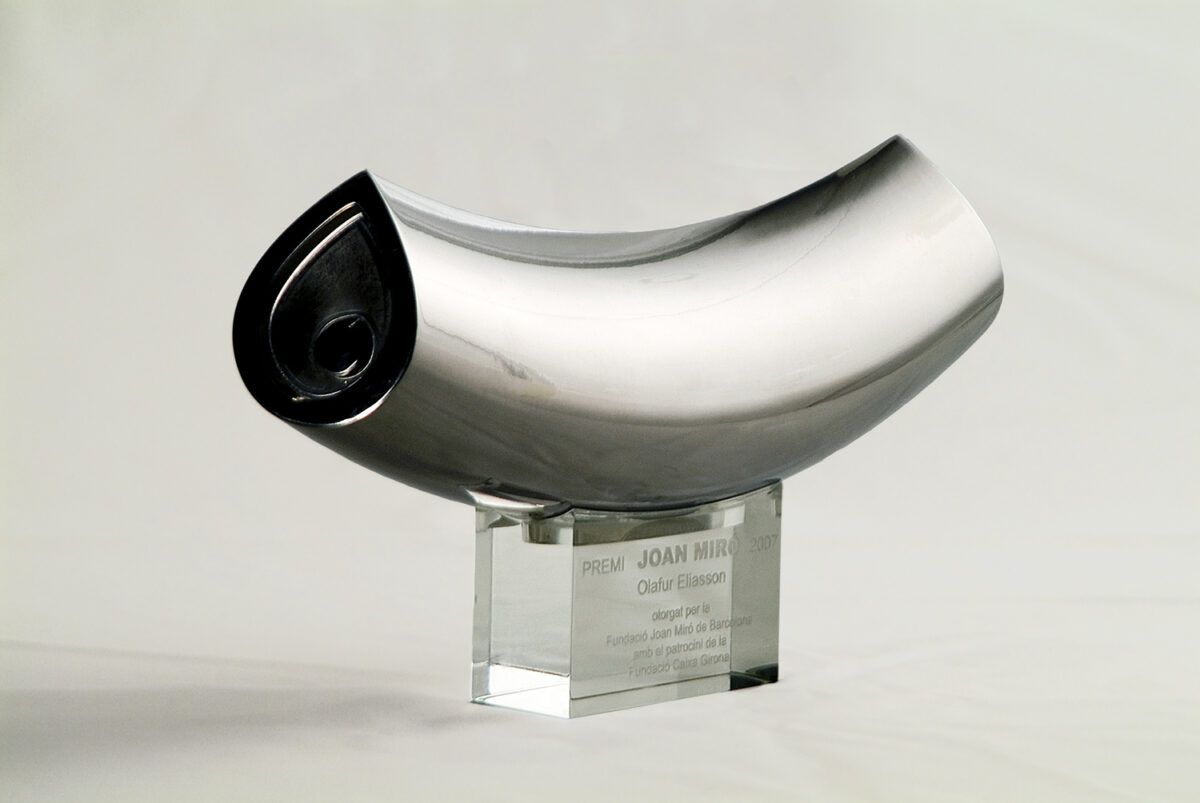

To mark the recent award granted to André Ricard by the organisers of the Madrid Design Festival in recognition of his impeccable career, we spoke with Olivia Ricard, daughter of the renowned designer, who has carved out her own path in the creative field. With a unique perspective and an inherited sensitivity, Olivia shares deep insights into her father’s influence, the impact of design on our daily lives, and her own vision of creativity in the 21st century.

How would you describe your father, André Ricard, on both a personal and professional level?
He is an extremely generous, enthusiastic, and very curious person. My father is exceptional in every sense, both professionally and personally. He has boundless energy. To give you an idea, at the age of 80, he was still skiing—just imagine! Not anymore, of course, as he is much older now and not quite the man he used to be. But even the other day, my children told me, “Mum, for us, Grandpa was like Superman”. They have been lucky enough to experience him so much and, moreover, to have a grandfather who was very involved.
He is very independent and optimistic, always seeing the bright side of things. I believe that this energetic, curious, and positive outlook on life has allowed him to develop his profession and carry out so many projects, especially in an era when Spain was under a dictatorship. Being a foreigner—since my father is French—gave him a broader perspective and the opportunity to establish connections abroad at a time when Spain was very inward-looking. Thanks to this, he was able to travel and discover an inspiring world beyond.
“My father is an extremely generous, enthusiastic, and very curious person. Exceptional in every sense.”
His father was also a pioneering figure, arriving in Spain just after the First World War and setting up a pharmaceutical company. Moreover, he was highly creative—a painter, a sculptor—and always encouraged his children to develop their potential. My father, the youngest of four siblings, comes from a family that was very open to new ideas—modern, but without being flashy.

What impressed you most about his way of working and seeing the world?
As a child, it is difficult to fully grasp certain professional aspects of your father. To me, he was always just my father, beyond his profession. Moreover, he was a modern father from the very beginning, taking care of many things at home, which was not common in his time.
As an adult, I have become more immersed in his professional side. He analyses everything with a very French critical mindset. Whenever he picks up an object, he immediately evaluates its usefulness, functionality, and whether it is truly well designed. His analytical ability is remarkable—to the point that he can marvel at something as simple as a well-designed button.
He always used to say that good design goes unnoticed. A great example of this is the shoehorn—such a simple yet perfectly executed object that he even has a beautiful sculpture dedicated to it at home.
He has always believed that any idea can be improved. We studied at the French Lycée, where we were also taught the importance of critical thinking—not simply accepting things as they are, but seeking our own truth. He has always been a person open to dialogue and tolerance. He never imposed his views; he understood that there is not just one truth, but many. And he always supported us. I have been incredibly lucky to have him as my father.
“His analytical ability is remarkable—to the point that he can marvel at something as simple as a well-designed button.”

He discovered design in England. How do you think that experience shaped his vision and career?
It had a huge impact on him, as the profession of designer did not exist in Spain at the time.
As a young man, my father was not a good student. He was always an avid reader and loved writing, but he struggled with mathematics.
However, he was good at drawing. That is why he decided to go to London at the age of 17 or 18 to learn English and develop his creative skills.
There, he discovered the Bauhaus, the Arts & Crafts movement, and a number of designers and architects who left a deep impression on him.
Additionally, a French designer based in the United States, Raymond Loewy, was a great inspiration to him. In fact, he wrote a letter to Loewy asking to visit him in New York when he was just 24 or 25 years old. Imagine doing something like that at the time! He travelled there by boat, and Loewy welcomed him. This designer—famous for creating the iconic Greyhound buses—was impressed by my father, gave him advice, and shortly after, my father returned to Spain and set up his own design studio.
“Raymond Loewy, famous for creating the Greyhound buses, was a great inspiration to him.”
His big break came with Puig. He designed an innovative stand for Bidasoa porcelain, which caught the attention of Antonio Puig. Curious to know who was behind it, Puig sought out my father, initiating a highly fruitful professional relationship that lasted 40 years. During that time, my father designed practically everything for Puig—he was essentially the company’s entire design department.
What was his creative process like? Do you remember any moments when you saw his genius in action?
My father had two studios. In the mornings, he worked at home writing—he published many books—and reading about the anthropology of design. He always used to say something quite amusing: “If you were left naked on a desert island, the first thing you would do is design”.
In the afternoons, he would go to his other studio, where he worked with collaborators (always architects, as the profession of industrial designer did not exist at the time). He developed projects, sketched by hand, built models, and firmly believed in exchanging ideas with others to improve his work.
Which of his designs do you think best represents his essence as a creator?
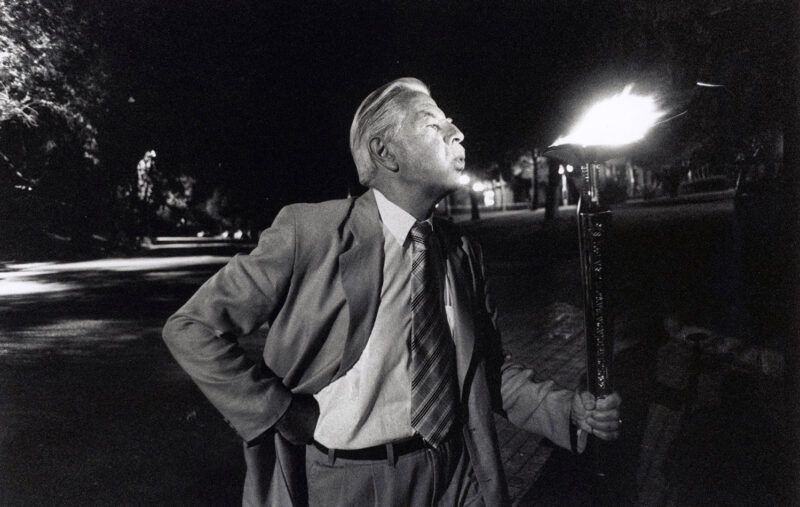
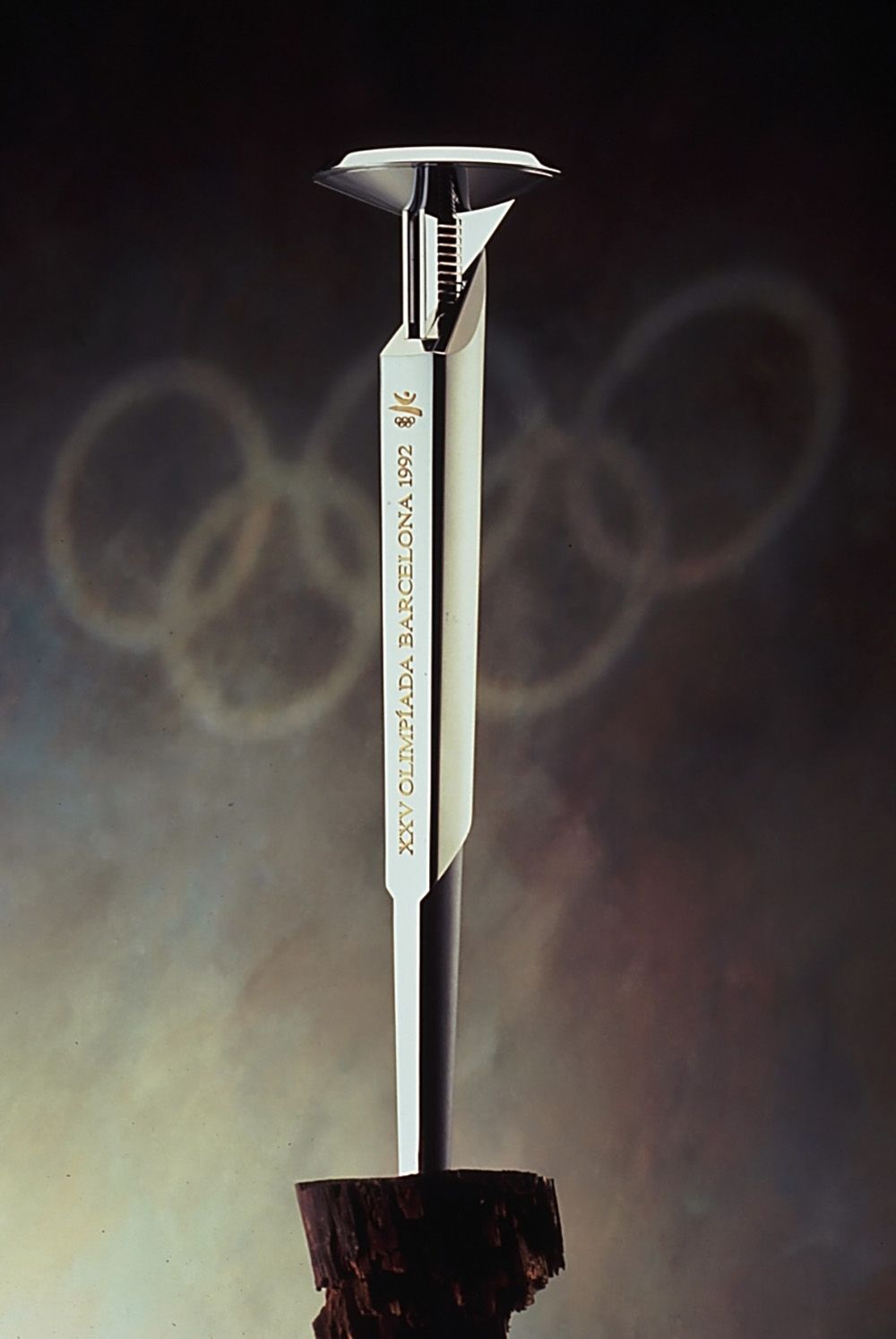
I would say the Barcelona ‘92 Olympic torch. It is an object that combines both heart and mind. It carries enormous symbolic weight, yet at the same time, it is a piece that requires precise engineering and must fulfil a specific function. Without a doubt, it was the commission of his lifetime.
What was it like at home when he received that major commission?
It was the most important commission of his career—an exciting project for both him and all of us. Before that, he had been asked to design the bid dossier, which was a huge success. It was a stunning ebony box with a copper clasp and the Olympic emblem. When opened, it revealed an innovative design consisting of drawers containing the various bid documents. While other cities presented simple folders, Barcelona opted for this masterpiece.
“The Barcelona ‘92 Olympic torch was the commission of his lifetime.”
That project was already incredibly exciting for my father, but when he was offered the chance to design another piece—either the Olympic cauldron or the torch—he had no doubt that he would choose the torch. Although he is French, my father feels deeply connected to Barcelona and loves this city. It was a great joy for him, and he still recalls it with great emotion.
In addition to designing the torch, he also created the flame container and had the honour of running the second leg of the Olympic flame’s journey.
In addition to being a designer, your father was also a teacher and writer. What kind of teacher was he?
In his books, he was highly theoretical, but when it came to teaching, he was a very practical professor who placed students in front of real projects. His goal was for them to understand the evolution of objects and design through hands-on exercises.
He taught at various institutions, including the Art Center Europe in Switzerland and Eina, where he developed the product design department. He also ran a course at the Botín Foundation in Santander, aimed at design students. Teaching was always a passion of his, and he greatly enjoyed supporting his students.
He published numerous books on creativity and design. What would you say is his greatest lesson for future generations?
He is not a nostalgic person. He always says, “My time is the present. I don’t long for what I have lived, only for what I will not live”.
He has no attachment to material objects. Once a project is completed, he always looks ahead. In fact, he donated all his belongings to the Design Museum as a way of freeing up space and ensuring his legacy could be appreciated by others. His philosophy in life is about travelling light—both physically and emotionally.
In Poldo Pomés’ documentary, his concept of invisible design is highlighted, based on the idea that the best designs do not seek attention but rather fulfil their function efficiently and discreetly.
Interestingly, the other day, during a visit to the hospital, my son asked him: “Grandpa, what advice would you give me for life?” And he replied: “Be yourself and fight for it, without harming anyone” . That advice sums up his outlook on life: believe in yourself, follow your instincts, and be persistent. My father is a true fighter, someone who never gave up.
He was a pioneer of industrial design in Spain and received awards such as the Creu de Sant Jordi and the Légion d’Honneur. What do these honours mean to him?
They have always brought him great joy. In the end, awards are a form of recognition and appreciation, and he has always valued and received them with gratitude.
Moreover, he has made sure to share these special moments with the entire family.

How do you think his work has influenced contemporary design?
My father helped to export Spanish design to the world, giving it visibility and establishing a market that, at the time, did not even exist. His legacy has paved the way for many generations of designers who today can develop their work in a much more established and recognised industry.
How would you like his legacy in the world of design to be remembered?
I would like him to be remembered as a generous person, deeply committed to his profession, his clients, and, above all, the user. He always said that a designer should be the ambassador of the user, advocating for their needs against industry demands and acting as a bridge between what people require and what companies wish to manufacture.
His legacy lies in having contributed to making everyday life more pleasant and functional, demonstrating that everything can be designed—not just products, but also processes and services. For him, design extended far beyond tangible objects.
Moreover, he put this philosophy into action by designing NGOs such as Design for the World, an organisation that sought to help in disaster situations by providing design solutions for people and communities in vulnerable conditions.
“His legacy lies in having contributed to making everyday life more pleasant and functional.”
My father always wanted to improve the world through small actions, without seeking recognition. His designs were never about personal authorship; he never imposed his signature above function. He remained in the background, allowing his creations to speak for themselves through their usefulness and accessibility.
In fact, his products were not luxury items but tools designed for ordinary people, for everyday life—designs that solved problems rather than creating them. That is his greatest legacy: making life easier.
André Ricard: Design as an eternal legacy
To speak of design in Spain is to speak of André Ricard. His name is etched into the history of industrial design as an undeniable reference—a pioneer who transformed everyday objects into iconic pieces of functionality and beauty. His legacy transcends time, leaving an indelible mark on how we interact with the objects around us.
From the very beginning, Ricard understood that design is not just about aesthetics; it is a tool for improving people’s lives. His rationalist approach, based on functionality and ergonomics, led him to create some of the most emblematic products of the 20th century.

One of his greatest achievements was the creation of the Barcelona ‘92 Olympic torch—a masterpiece of design and technology that symbolises the union of tradition and innovation. But his legacy goes far beyond that: from iconic packaging for international brands to furniture and objects that have become part of collective memory.
For André Ricard, the concept of invisible design refers to a type of design that, rather than drawing attention to itself, integrates seamlessly into everyday life, facilitating its use without the user even noticing it. In this sense, invisible design is a constant pursuit of clarity, simplicity, and usability—free from unnecessary ornamentation or excess
Ricard believed that the best designs are not those that seek recognition but those that fulfil their function efficiently and discreetly. According to him, a well-designed object does not need explanations or complicated instructions—its functionality is so intuitive that it becomes “invisible” to the user. A clear example of this philosophy can be seen in his work on packaging, utensils, and everyday objects. From the Copenhagen ashtray, designed to prevent smoke from dispersing, to the iconic Barcelona ‘92 Olympic torch, his creations are not ostentatious but are exceptionally functional and ergonomic.
André Ricard did not just design products—he promoted a new way of understanding design. His philosophy is reflected in books and lectures where he championed the importance of accessible and ethical design culture. For Ricard, every object had to respond to a real need, avoiding the superfluous and always prioritising simplicity and functionality.

His legacy lives on—not only through his creations but also in the new generations of designers who have learned from his mastery. His influence endures in the work of those who see design as an act of social responsibility, capable of generating meaningful changes in people’s lives.
That is why today, more than ever, the teachings of André Ricard (1929) remind us that good design is that which transcends trends, solves problems, and leaves an indelible mark over time.
(*) Photographs provided by Olivia Ricard. Cover photo, slider photo 1, and body copy photos 2, 5, 6, 7, and 8 by Salva López.