Sergio Sancho and CAN Art Fair: contemporary art with a Balearic soul
With just four editions under its belt, CAN Art Fair has already become a must on the international art calendar and the cultural highlight of Ibiza’s summer. From 25 to 29 June, the fair — founded and directed by Sergio Sancho — returns to the FECOEV venue with a refined selection of national and international galleries, and a proposal that goes far beyond the exhibition hall: a dialogue between the global and the local, between contemporary creation and the Mediterranean landscape.
CAN (Contemporary Art Now) shapes a unique artistic ecosystem that unfolds across the island through exhibitions, institutional collaborations, and an ambitious OFF Programme that expands both boundaries and formats.
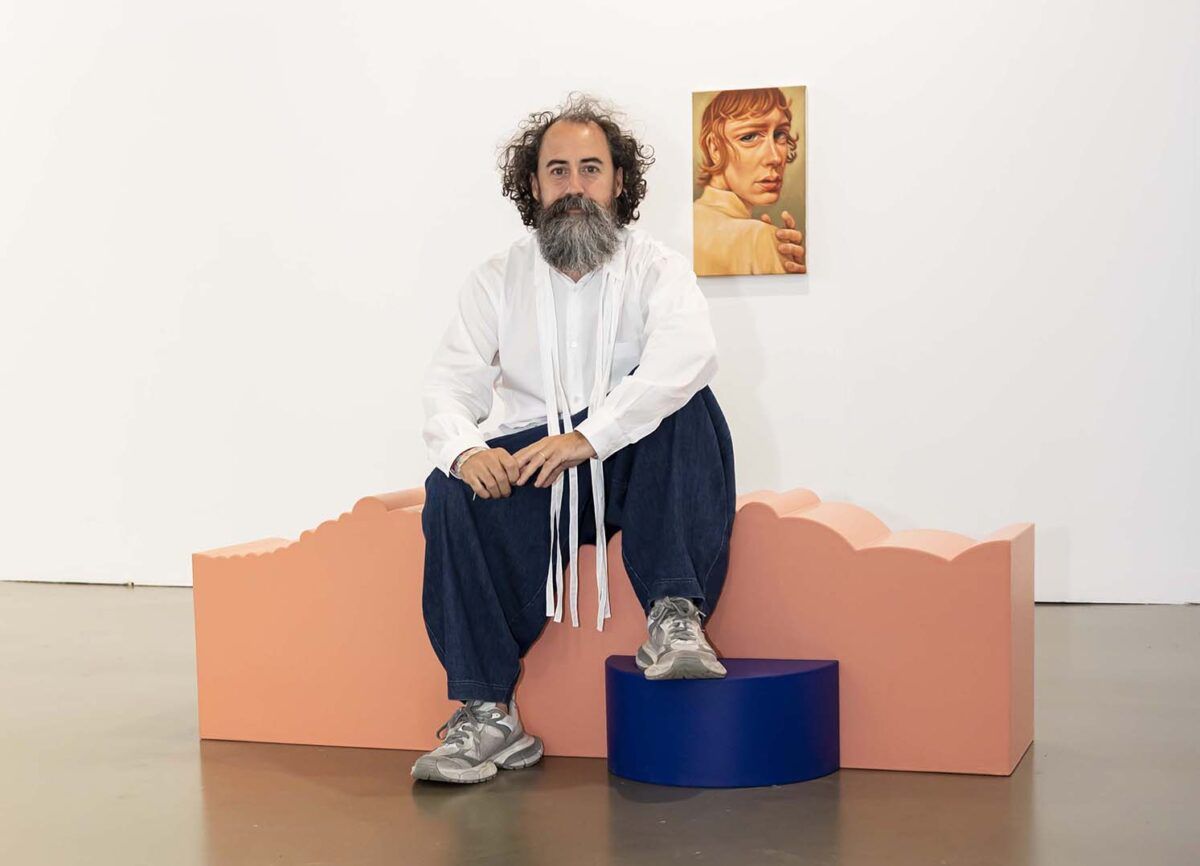
We spoke with Sergio Sancho, the founder of this event that has turned the Pityusic Islands into a global hub for cutting-edge art, about the evolution of the project, his vision of contemporary art, and the challenges (and opportunities) of organising a leading art fair in such a unique setting as Ibiza.
Sergio, four years after the launch of CAN Art Fair, Ibiza already seems inseparable from this celebration of contemporary art. How would you reflect on its evolution?
It’s true that when we arrived on the island four years ago, there were already some cultural and artistic initiatives. But in many ways, CAN Art Fair has acted as a connector. By bringing a large, ambitious project that attracts an art-focused audience, it has helped generate a stronger cultural ecosystem — gradually positioning the island as a significant reference point.
And honestly, I have no doubt that something much bigger will continue to grow here in the coming years. The evolution of the fair has been very positive, and we’re receiving strong support.
What would you say has been the biggest challenge — and the biggest satisfaction — in consolidating a fair like CAN in a setting as unconventional as Ibiza?
The main challenge was arriving in a place that didn’t have an established Art Week or a set date for contemporary art events. At the beginning, we were relatively alone, but we’ve felt hugely supported by the local community and the projects that have emerged since.
“The main challenge was arriving in a place that didn’t have an established Art Week or a set date for contemporary art events.”
That challenge is also, in fact, the greatest reward: meeting so many people who welcomed us with open arms and were genuinely excited for something like this to happen.
This year sees the return of big international names, alongside new galleries from cities like Berlin, Copenhagen and Bali. What are the selection criteria, and what is CAN looking for in a gallery?
As in previous years, we’ve added new galleries and new voices — some come, others go. Since the beginning, CAN has operated as a curated and invitation-only fair, and our curator Sasa Bogojev has played a vital role in shaping the selection. He travels extensively throughout the year, visiting fairs, connecting with galleries and artists, and that ongoing dialogue informs the curatorial vision. Ultimately, he defines the tone and focus of the fair’s artistic profile.
CAN has always stood out for its international reach, but also for its local commitment. How do these two sides coexist within the fair?
The OFF Programme is something very important to us. Given the strong presence of international galleries at the fair, we realised that many of them didn’t represent local artists. That’s why, with the support of the Paya Group, we created an initiative to spotlight Balearic artists — so that when people come to CAN, there’s also an opportunity for real exchange and discovery.
“We’re really proud of this programme because it gives visibility to local talent.”
For instance, international galleries or collectors might encounter these local voices for the first time. We’re really proud of this programme because it gives visibility to local talent — and not just during the days of the fair, but over the course of more than a month.
Curator Sasa Bogojev notes that while painting still plays a major role at the fair, there’s growing space for formats like ceramics, installations or video. How do you strike a balance between these languages?
Sasa has always had a strong eye for painting and figuration, but he’s now opening up to other media. That balance makes sense — the diversity of formats enriches the overall proposal.
Our name, Contemporary Art Now, refers precisely to what’s happening right now. And if new formats are emerging and gaining ground in the current landscape, it’s only natural they should be part of the fair.
“Our name, Contemporary Art Now, refers precisely to what’s happening right now.”
What does it mean to you to give visibility to artists working from the islands, such as Alba Suau, Adrián Martínez or Adriá Mayordomo?
To me, highlighting these artists is all about amplifying their reach — offering the chance for their work to be seen internationally through galleries participating in the fair. It’s about sharing knowledge and creating opportunities for their work to resonate beyond our borders. That’s what we aim to achieve as a fair.
Contemporary art is often seen as elitist or closed-off. How does CAN create a more open, welcoming experience — and connect with Ibiza’s unique energy?
From the very start — as was also the case with UVNT — our approach has been to make contemporary art more accessible to everyone. In Ibiza, for example, local residents receive a 50% discount, because we want to encourage people who might not usually engage with contemporary art to come, enjoy and take part. I believe CAN is a fair and a project that’s open to everyone. Of course, we have our collectors’ programme, but we also work hard to engage with a wider audience. You never know who might become a future expert or collector. Reaching a broad public only adds value — and that enriches the fair as a whole.
“Our approach has been to make contemporary art more accessible to everyone.”
From UVNT in Madrid to CAN in Ibiza, you’ve pioneered new formats and narratives in the art world. What do you think is still lacking in Spain’s cultural landscape?
We’ve always tried to bring a fresh perspective, reach new audiences and invent formats. But I do think we need much more support from big corporations — not just public institutions. In Asia, for instance, you see major backing from brands like LG or Hyundai, which have museums with excellent programming. Here, companies need to shift their mindset — to understand the social return that cultural investment can bring. That kind of backing could really strengthen the ecosystem and offer more visibility to artists, especially given the limitations of public funding.
What’s next for CAN? Do you see this model expanding to other places with strong local identities, like Ibiza?
I see CAN growing stronger — it’s a curated, boutique-style fair, and that makes a lot of sense. Whether it will expand to other places is something time will tell. Right now, we’re focused on consolidating the project. But yes, in the back of my mind, there’s always the idea that CAN could become something even bigger.
Lastly, if you had to define the spirit of CAN in a single phrase, what would it be?
I’d say CAN is something magical and special — a place where people come to enjoy and connect with art, but also with the experience. Beyond the fair itself, there’s so much happening in a relaxed, welcoming atmosphere.
People are always surprised — they leave feeling enriched. It’s not something that happens elsewhere. The setting, the format, the pace… There’s a unique ease to everything. You meet people, chat with artists in a casual way — no pressure, no noise.
In cities, everything moves so fast. At CAN, the rhythm is different. And that, I think, is part of what makes it so special.
(*) Cover image: María santos.