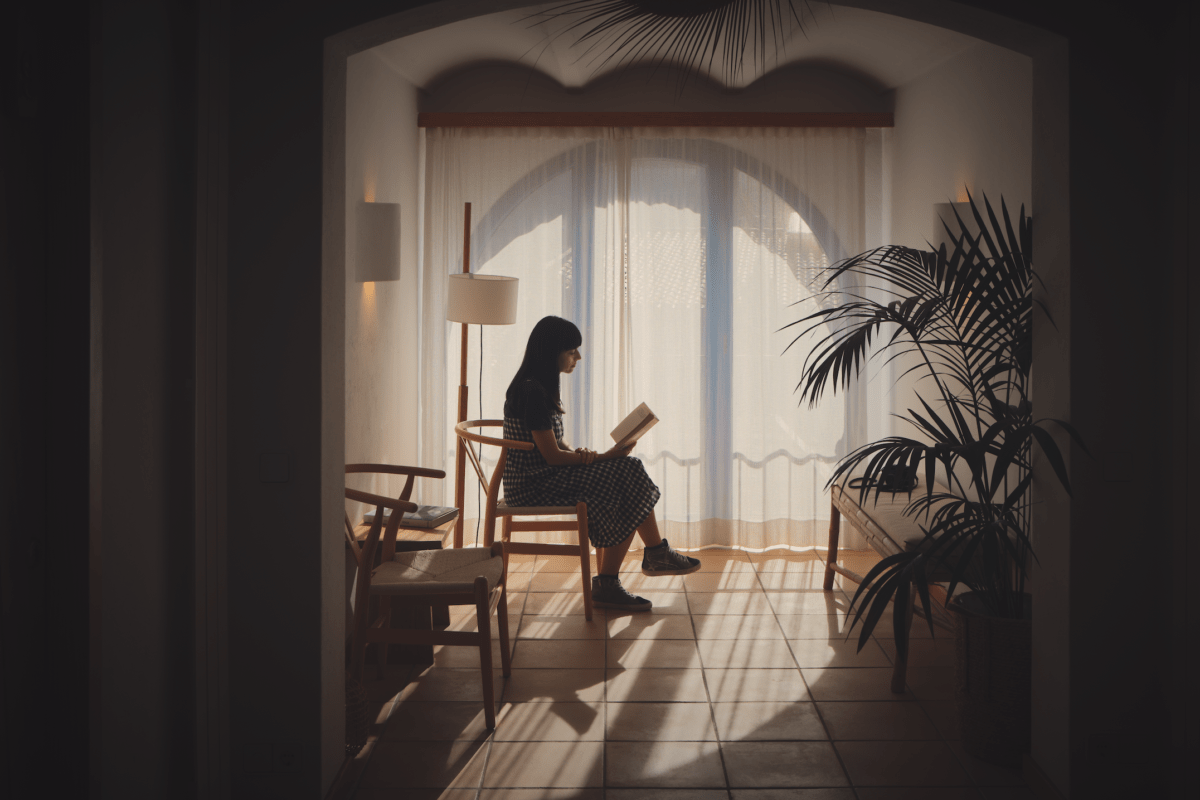
Reading does us good
By Cecilia Camacho, Editor of CC/magazine
The power of what’s essential
Lately, I’ve come to value the simple things that reconnect me with what really matters. And among all of them, one act always grounds me: reading.
I think about it especially now, as April draws to a close and a date approaches that holds deep cultural and emotional weight for me: 23rd April, Sant Jordi’s Day. A celebration as Catalan as it is universal, where books and roses take to the streets, and for one day, literature and love walk hand in hand.
I like to believe this ritual endures because, despite everything, we still need stories. Stories that comfort us, challenge us, or simply make us feel a little less alone.
Reading as an act of resistance
Yes, I’ll admit it: I am devoted to the act of reading. Not out of misplaced romanticism, but because I know —viscerally, experientially— that reading helps me make sense of things. It strengthens and sustains me.
In a world where words so often lose their meaning, where promises are made without intent and speech is emptied of care, opening a book becomes an act of resistance. A way of restoring value to language, of giving words back their weight and significance.
When I read, time stretches. The noise fades. The rush dissolves. Reading demands my full attention —and I offer it gladly. Each well-written sentence is a fulfilled promise. A commitment honoured. And in these times of speaking without saying, that feels almost revolutionary.
Some books that live in me
I don’t arrange my books by colour, author, or genre. I sort them —in my mind and heart— by what they’ve made me feel: those that held me when I was broken, the ones that brought clarity when I felt lost, those that made me laugh in the middle of the night. And especially, the ones that returned questions when I most needed to let go of answers.
Some books sit on my shelves like open rooms. I know they’re there, waiting for me, like a coat you keep for when your soul turns cold. Others I carry with me, like silent talismans, reminding me that refuge is always possible in words.
And then there are the few that live inside me. Books that have stayed with me long after I turned the last page. Recently, I finished “Martyr!” by Kaveh Akbar and I’m still emerging from its spell —it shook me deeply, beautifully. I felt something similar years ago with “The Year of Magical Thinking” by Joan Didion, a book that hurts but heals. Or with “Stolen Focus” by Johann Hari, which felt less like a reading experience and more like an emergency intervention, urging me to rethink my relationship with time, technology, and presence. And if we’re talking about books that hook you with sharp, intelligent humour, then “My year of rest and relaxation” by Ottessa Moshfegh and “The Happy Life” by David Foenkinos deserve a mention. Both gripped me from page one. Smart, funny and fabulously written.
A quiet invitation
For me, reading is also a way of inhabiting the world. Each book is a refuge. A secret city. An emotional architecture. Reading is designing an interior —not physical, but mental and affective— where I can feel protected from the immediate, the superficial, the trivial.
So now that Sant Jordi is just around the corner, beyond recommending a few titles, I want to offer a quieter invitation: give yourself time to read. Time to enter a story as you would a forest. Time to sit with that silent, intimate conversation between you and an author you’ll probably never meet, but who somehow already knows you.
Because in an age where so much is said without saying anything, a good book remains one of the last places where words still carry real weight. And yes, reading —beyond trends— still does us good.
(*) Photography: Ely Sánchez (CC/magazine).