Too close to understand
By Cecilia Camacho, Founder of CC/magazine and Strategic Consultant at CC/studio
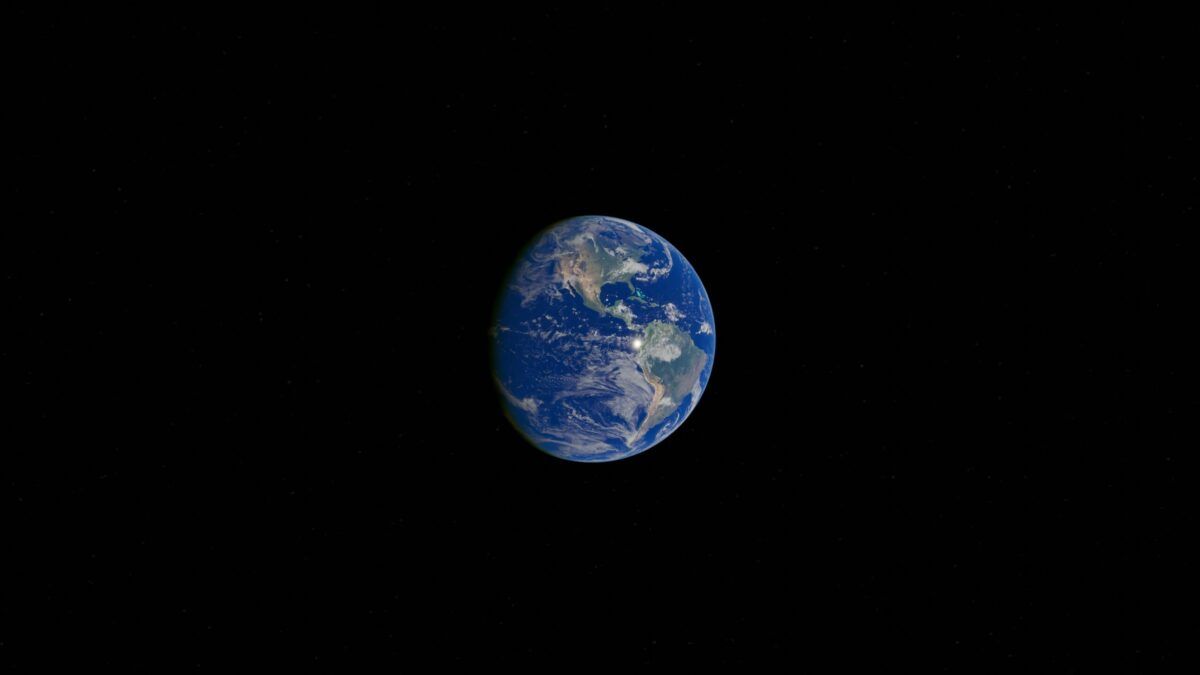
There is something unsettling in the way humanity needs to travel thousands of kilometres to understand what is happening right in front of us. As if only by seeing the Earth from the outside, suspended in darkness as a silent sphere, we are able to grasp what constantly escapes us in everyday life.
The recent Artemis II mission has brought that image back into circulation — one that functions less as a photograph and more as a correction of perspective. From up there, astronaut Victor Glover reflected: “you are special in all of this emptiness”. And perhaps what matters most about that statement is not its poetic weight, but its literal meaning.
Because what becomes visible from that distance isn’t so much the beauty of the planet as its condition. Everything that happens — life, conflict, history, even our most intimate concerns — unfolds within an extremely narrow margin. An equilibrium that, seen from the outside, appears so improbable that it is difficult to understand how we have come to regard it as normal.
That difficulty in recognising our own fragility is, in many ways, structural. We live too close to ourselves. We observe from within, trapped in a scale that amplifies the immediate and diminishes what is essential. Perhaps that is why the shift described by astronauts feels so unsettling: it does not consist in learning something new, but in seeing differently what was already there.
Something similar happens in fiction when it forces us into a perspective we rarely sustain in real life. In the final moments of “Bugonia”, by Yorgos Lanthimos, humanity ceases to be the centre of the narrative and becomes instead an object of evaluation. The film imagines an external, almost clinical gaze from which our species appears no longer as the measure of all things, but as a contingent presence, one that could, in principle, be corrected.
What is most unsettling is not so much the disappearance of humans as what remains afterwards. The Earth persists. Animals continue. Bees return. The cycle does not stop. The film doesn’t present an apocalypse so much as a shift in scale: what we tend to consider absolute is revealed as relative, and the human no longer coincides with what is essential.
This is where fiction meets the same intuition that emerges from space. Seeing the Earth from the outside does not simply reduce our size; it alters our hierarchies. It forces us to reconsider what truly matters and what is instead the result of a perspective that is too close, too absorbed in itself.
Because looking at ourselves exclusively from within has consequences. We become unable to perceive ourselves as a whole. We confuse the individual with the important. We lose sight of the fact that everything we sustain — relationships, environments, life itself — depends on balances we do not fully control, yet which affect us all equally.
Creating distance does not imply detachment, but responsibility. Understanding that we are not the centre does not diminish our value; it redefines it. It places us within a broader context where what matters is no longer accumulation or urgency, but something simpler, and at the same time more demanding: making life, our own and that of others, more habitable.
Perhaps that is the idea that repeats itself, in different forms, across seemingly unrelated contexts — a spacecraft in orbit, a disquieting film — the need to gain perspective, to stop seeing ourselves as isolated individuals and begin to understand ourselves as part of something that both includes and exceeds us, and to recognise that the fragile balance we take for granted is precisely what allows everything else to exist.
(*) Foto portada: Zelch Csaba.