Creating together
By Cecilia Camacho, Founder of CC/magazine and Strategic Consultant at CC/studio
A few weeks ago, I found myself once again recommending “Creative Couples: Collaborations That Changed History”, Angella Nazarian’s book exploring some of the most influential creative partnerships in our culture. Beyond the personal stories, what makes the book particularly compelling is how it reveals something we often forget: many of the ideas, works and projects that have transformed entire disciplines were born from the constant dialogue between two distinct sensibilities.
“Many of the ideas that transformed entire disciplines were born from the dialogue between two distinct sensibilities.”
The delicate emotional and creative balance behind the couples who changed culture
There is something deeply fascinating about creative couples. Perhaps because they embody a contradiction that is difficult to resolve: the need for intimacy and, at the same time, the need for space; the desire to share a vision while preserving one’s own voice. Creating alongside another person is not simply about combining talents. It involves negotiating silences, obsessions, insecurities, timing and ways of looking at the world.
The history of art, design, fashion, architecture and photography is filled with duos who transformed entire disciplines precisely because they understood that creativity does not always emerge from absolute individuality, but also from tension, complicity and continuous dialogue. Some of the most significant ideas in contemporary culture were born from domestic conversations, seemingly insignificant disagreements or complex emotional processes that rarely appear in official biographies.
Yet behind the idealisation of “creative couples” lies a far more vulnerable and human reality. Creating with someone you love can become an extraordinarily enriching experience, but also an emotionally delicate territory. Because when emotional relationships and work begin to merge, many of the boundaries that normally protect our identity start to disappear.
In an era obsessed with productivity, multidisciplinary teams and constant collaborations, perhaps it has become more interesting than ever to ask what really happens when two people decide to build a shared creative vision.
Creativity as conversation
In “Creative Couples”, Angella Nazarian explores precisely how some of the most influential collaborations in culture cannot be understood through isolated individual talent alone. What matters is not only the final result, but the intellectual and emotional chemistry that allowed those ideas to exist in the first place.
There is a romantic — and deeply Western — idea that creativity is born in solitude. The isolated artist, the silent genius, the brilliant mind working apart from the world. Yet the reality is that many of the most interesting creative processes emerge through conversation. Not necessarily literal conversation, but through a constant interaction between different sensibilities.
Creative couples often work precisely because each person brings a partial perspective of the world. One tends to conceptualise while the other grounds ideas in reality. One is intuitive; the other structured. One observes emotion; the other notices technical detail. And within that exchange, something new appears that would have been difficult to achieve individually.
“Creative couples often work because each person brings a partial perspective of the world.”
Shared creativity has a great deal to do with the ability to listen. Not simply to words, but to rhythms, obsessions, silences and ways of thinking. Couples who manage to build strong projects together often develop a kind of invisible language in which cultural references, emotions and intuitions are understood almost without explanation.
The challenge of preserving individuality
But this is precisely where one of the greatest risks emerges. When two people build a shared narrative over a long period of time, identities can easily begin to blur. Especially within creative industries where recognition, authorship and visibility carry enormous weight.
Who really had the original idea? Who leads the process? Who receives the credit? Food for thought.
Historically, many creative couples have had to navigate deeply unfair dynamics, particularly women whose contributions remained overshadowed for decades by more publicly visible male figures.
But even within more balanced relationships, creative coexistence involves constant emotional negotiation. Because creating alongside someone requires exposing highly vulnerable parts of oneself. Ideas are never merely ideas: they are often tied to ego, intuition, self-esteem and the need for validation.
That is why criticism inside a creative partnership carries a completely different emotional weight from criticism in any conventional professional environment.
An apparently technical comment can quickly become emotional. An aesthetic disagreement may conceal deeper differences relating to sensitivity, ambition or identity.
At the same time, it is possible that this very shared vulnerability is precisely what allows certain creative partnerships to reach levels of depth that are difficult to achieve elsewhere.
The home as a creative laboratory
Many of the most interesting creative couples share one particular characteristic: they turn everyday life into part of the process. Ideas emerge during dinners, journeys, walks or seemingly irrelevant conversations. Work stops existing solely within the studio, office or set and begins to infiltrate the emotional structure of the relationship itself. That can be exhausting, but also extraordinarily fertile.
There is something incredibly powerful about building a life where intellectual and aesthetic curiosity form part of the everyday. Where both people observe the world through a shared sensibility and find inspiration in the same places, books, cities or cultural references.
Sometimes creative couples don’t work together simply because they share a profession, but because they share a way of seeing. And that ultimately creates a type of connection that is difficult to explain from the outside.
It is not merely about romantic love, but intellectual admiration. About feeling stimulated by the other person’s mind, and finding pleasure in conversations, ideas and the joint construction of meaning.
Tension as a creative force
There is another interesting aspect worth considering: many great creative collaborations do not function despite tension, but precisely because of it. Friction forces ideas to be revised, certainties to be questioned and comfort zones to be abandoned. When two people possess strong visions, the creative process can become a form of constant negotiation.
And although this can sometimes create exhaustion, it also prevents one of the greatest dangers in any creative discipline: complacency.
Couples who function creatively often understand that conflict is not always negative. In fact, a certain degree of discomfort can be essential for growth.
The problem arises when tension stops serving the project and begins to damage the relationship itself. Because creating together also means living with irregular rhythms, professional insecurities, financial frustrations and moments of emotional blockage. And not all relationships can sustain that level of intensity.
We tend to idealise creative collaborations without speaking enough about the exhaustion they can involve, the difficulty of disconnecting, the feeling that work never truly ends or the pressure of sustaining both an emotional relationship and a professional vision simultaneously. Perhaps that is why creative couples need to develop something even more important than talent: emotional intelligence.
“Couples who function creatively often understand that a certain degree of discomfort can be essential for growth.”
The value of admiring the other
One element constantly appears in long-lasting creative relationships: admiration. And I don’t mean purely aesthetic or professional admiration, but something deeper — admiration for the other person’s sensitivity and their way of observing the world.
When that admiration disappears, collaborations often begin to lose strength. Because working together requires constantly recognising that the other person contributes something one does not possess. And that requires humility.
Within a creative ecosystem where ego often occupies so much space, perhaps the couples who truly manage to build something meaningful are those capable of understanding collaboration as a form of expansion rather than competition.
The point is not to determine who shines more brightly, but to build something neither could have created alone. And perhaps that is why creative couples remind us that some of the most interesting works have emerged — and continue to emerge — precisely from exchange, conversation and the blending of sensibilities.
Creating together in times of hyper-individualism
We are living through a deeply paradoxical cultural moment. On the one hand, there have never been so many opportunities to collaborate. Creative disciplines are becoming increasingly hybrid, and global connections allow shared projects to be built from virtually anywhere in the world.
Yet at the same time, digital culture has dramatically reinforced individualism. Everything seems designed to promote personal identities: profiles, followers, personal branding, individual visibility and the constant construction of a public narrative.
Within that context, creative couples almost represent an anomaly. They force people to share protagonism, accept that ideas do not always belong to one single person and partially relinquish control.
Ideas evolve when they encounter resistance, dialogue and new perspectives. Creating alongside someone therefore means accepting that one’s own vision may be transformed. And that, which may sound simple, requires enormous emotional maturity.
Beyond the romantic myth
Perhaps the true fascination of creative couples does not lie in the idealised image they project, but in precisely the opposite: their complexity and the way they reveal that creativity is emotional, contradictory, vulnerable and profoundly human.
Behind many great shared projects there are difficult conversations, moments of doubt, silent tensions and an enormous amount of invisible work. But there is also something extraordinarily valuable: the possibility of constructing a vision of the world alongside another person. Not merely sharing a life, but sharing a sensibility.
“Ideas evolve when they encounter resistance, dialogue and new perspectives.”
Because creating with someone means accepting a certain displacement: allowing another person’s gaze to alter one’s own, permitting an idea to become contaminated, expanded or even contradicted until it finds a new form. Within that intermediate space — between one person’s intuition and the other’s resistance — the most interesting things sometimes happen.
Ultimately, the most memorable ideas rarely emerge from seeing the world in exactly the same way, but from finding someone capable of observing it alongside us from a different perspective.
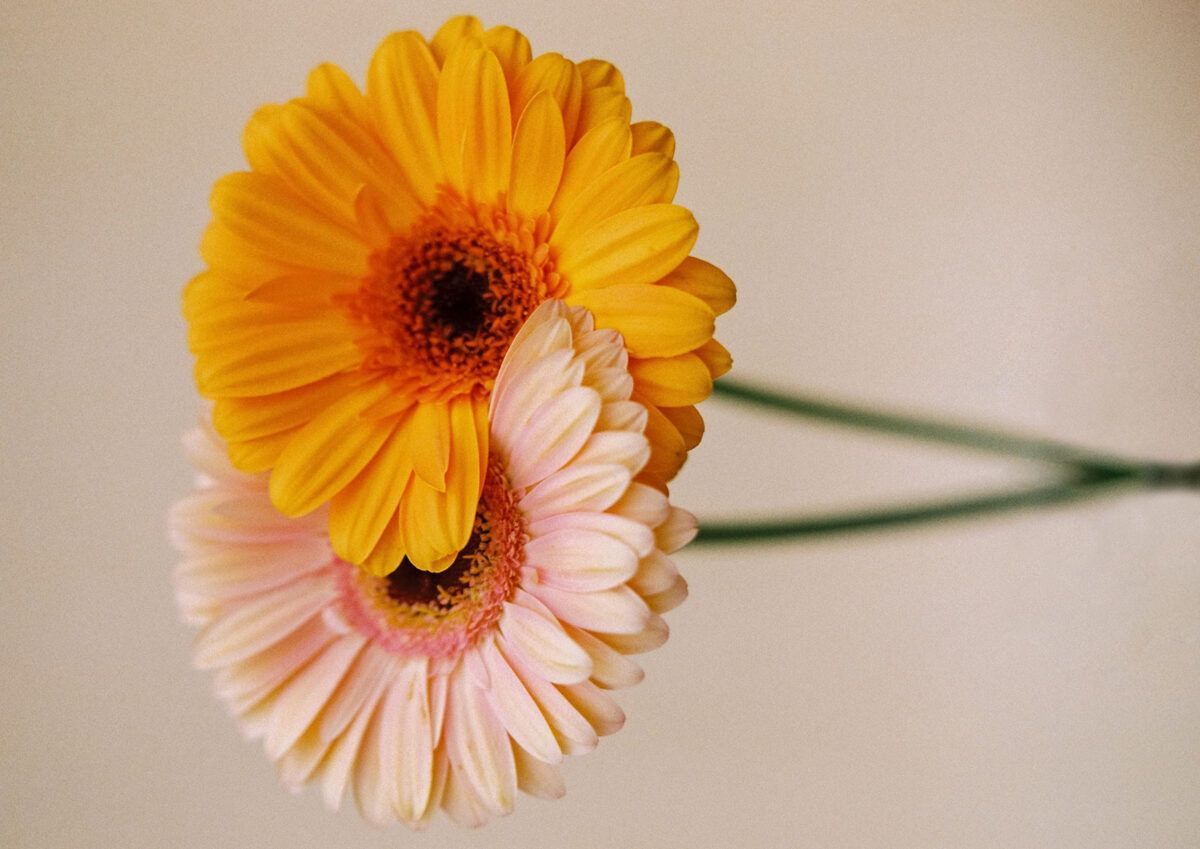
(*) Photo: Paula Codoñer.