The place from which we judge
By Cecilia Camacho, Founder of CC/magazine and Strategic Consultant at CC/studio
There is something that has become increasingly difficult to ignore. It only takes opening any social media platform to notice it: a constant tone of judgement, a kind of background noise where everything seems available to be pointed out, corrected or discredited. It is not so much criticism in its most constructive sense, but rather a form of immediate, impulsive reaction that is, in many cases, unnecessarily harsh.
Having an opinion has never been the problem. What seems to have changed is the way we express it, and the place from which we do so. It is becoming more common to encounter voices that do not actively participate in what is happening, that do not create or expose themselves, yet intervene with absolute certainty. As if simply having an opinion were enough to turn it into informed judgement.
In this context, the idea that ignorance is bold takes on a new dimension. It is no longer just about speaking without knowledge, but about doing so with a level of conviction that does not correspond to actual understanding. Complex processes are judged from the outside, without having gone through them, and yet definitive conclusions are drawn, as if everything could be reduced to a quick reading.
There is something deeply comfortable about judging what others have dared to do. Because creating implies exposure, taking risks, making mistakes, revising and standing by decisions over time. Having an opinion, on the other hand, allows one to remain at a distance from all of that. It requires no real involvement and carries no direct consequences, which perhaps explains why it is exercised so freely.
In this scenario, the metaphor of the sword of Damocles takes on a new meaning. It no longer speaks only of power or the fragility of those in elevated positions. Today, that sword seems to hang over anyone who chooses to make something visible.
To create, to take a position, to launch a project, to step onto a stage or to share an idea inevitably means placing oneself under that constant pressure: the gaze of others, immediate and often disproportionate. What is interesting is not so much the existence of that pressure, which has always been present in one form or another, but the fact that it now comes not from a few, but from a multitude. And that multitude, in many cases, risks nothing.
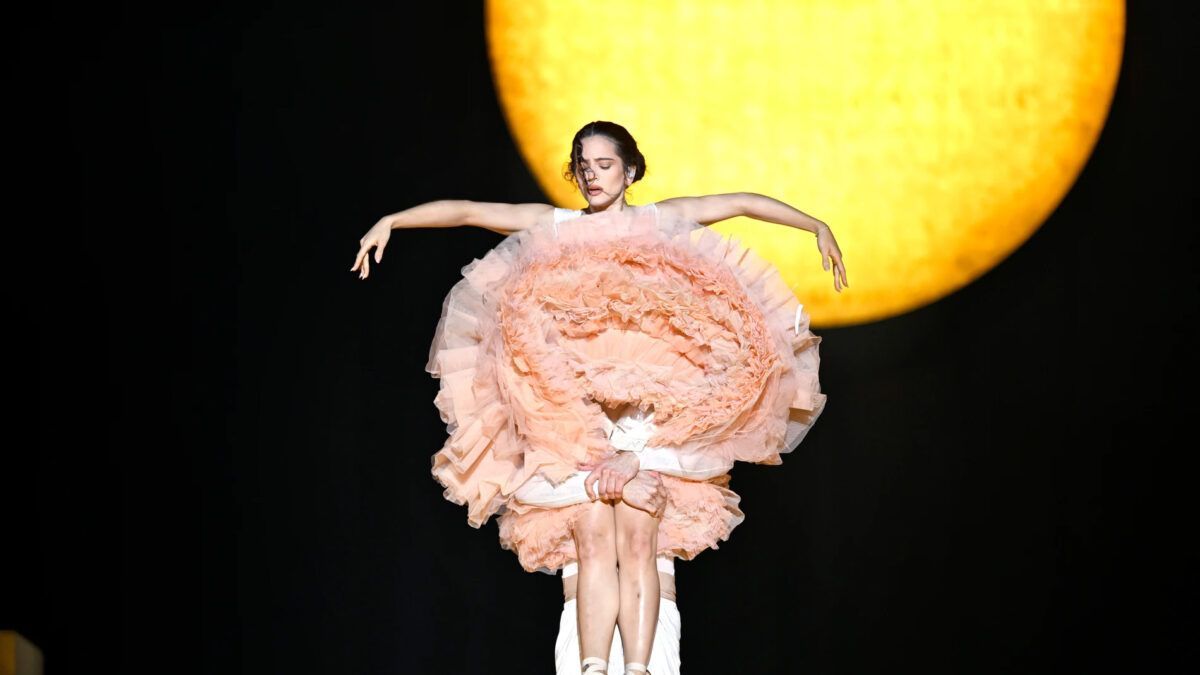
We have seen this clearly in recent days following Rosalía’s new show. Beyond whether one likes it or not — which is entirely legitimate — what is revealing is the type of conversation that has emerged. Alongside perspectives that attempt to understand or analyse the proposal, another kind of reaction appears: faster, less reflective and more focused on pointing things out.
It is not so much about disagreement, but about how that disagreement is expressed. There are comments that do not seek to open a conversation or offer an interesting perspective, but rather limit themselves to identifying flaws, simplifying complex work until it becomes easily criticisable, always from a position that involves no exposure or personal risk.
It is in that gesture that something is lost. Empathy is lost, along with the ability to understand that behind any project there is time, decision-making, doubt and a significant degree of exposure. The humility required to recognise that one does not always have all the information also fades. And, perhaps more subtly, so does a sense of restraint.
That filter which once helped determine what to say, when and how to say it seems to have weakened. Not everything that is thought needs to be said, and certainly not everything needs to be said in any given way.
This does not mean abandoning criticism. Criticism is necessary and forms part of any creative ecosystem. But not all criticism contributes equally. There is a clear difference between observing with attention and reacting without context, between questioning ???? interest and judging from a distance.
The kind of criticism that truly adds value usually requires time, attention and a certain sense of responsibility. The other kind, the most visible on social media, is immediate and lightweight. It functions more as a momentary release than as a meaningful contribution. And perhaps that is precisely why it is so prevalent.
At a time when everything seems open to opinion, true sophistication is not about speaking more, faster or louder. It lies in understanding where one is speaking from, in recognising one’s own limits and in knowing when to intervene.
Because creating and exposing oneself remains, despite everything, an act of courage. And in the face of that, it may not always be necessary to applaud, but it is essential to maintain a form of respect that, all too often today, seems to have been lost.
(*) Cover image: Gareth Cattermole/Getty Images.