Looking where nobody else looks
By Cecilia Camacho, Founder of CC/magazine and Strategic Consultant at CC/studio
There is a habit we rarely question because it has become part of everyday life: we assume that looking and seeing are one and the same. Yet spend just a few minutes in any public square, museum or airport and the difference quickly becomes clear. We are constantly looking, but we pay attention only rarely. We wander through cities thinking about the next stop on our itinerary, move through exhibitions reading the captions before truly engaging with the artworks, and photograph places we have barely taken the time to observe. Never before have we been surrounded by so many images, and yet rarely have we devoted so little time to truly looking at them.
“We are constantly looking, but we pay attention only rarely.”
Perhaps the problem is not the number of photographs we take, but the speed at which we have learnt to consume the world. We live convinced that something else is always waiting just a little further ahead: another street, another headline, another restaurant, another video, another screen. This culture of immediacy has gradually reshaped the way we observe our surroundings. We struggle to remain still. We struggle to accept that the most meaningful things rarely reveal themselves at first glance, and that some stories only begin to emerge once we stop searching for the obvious.
Creativity has always depended upon this ability to pause. Before there is an idea, a project or a photograph, there is a way of looking. Not looking in the purely physical sense, but as a way of engaging with reality. Some people walk through a market and see nothing more than a market. Others discover a choreography of gestures, colours, conversations and quiet contradictions that reveals far more about a society than any headline ever could. The difference lies not in the place itself, but in the attention we bring to it.
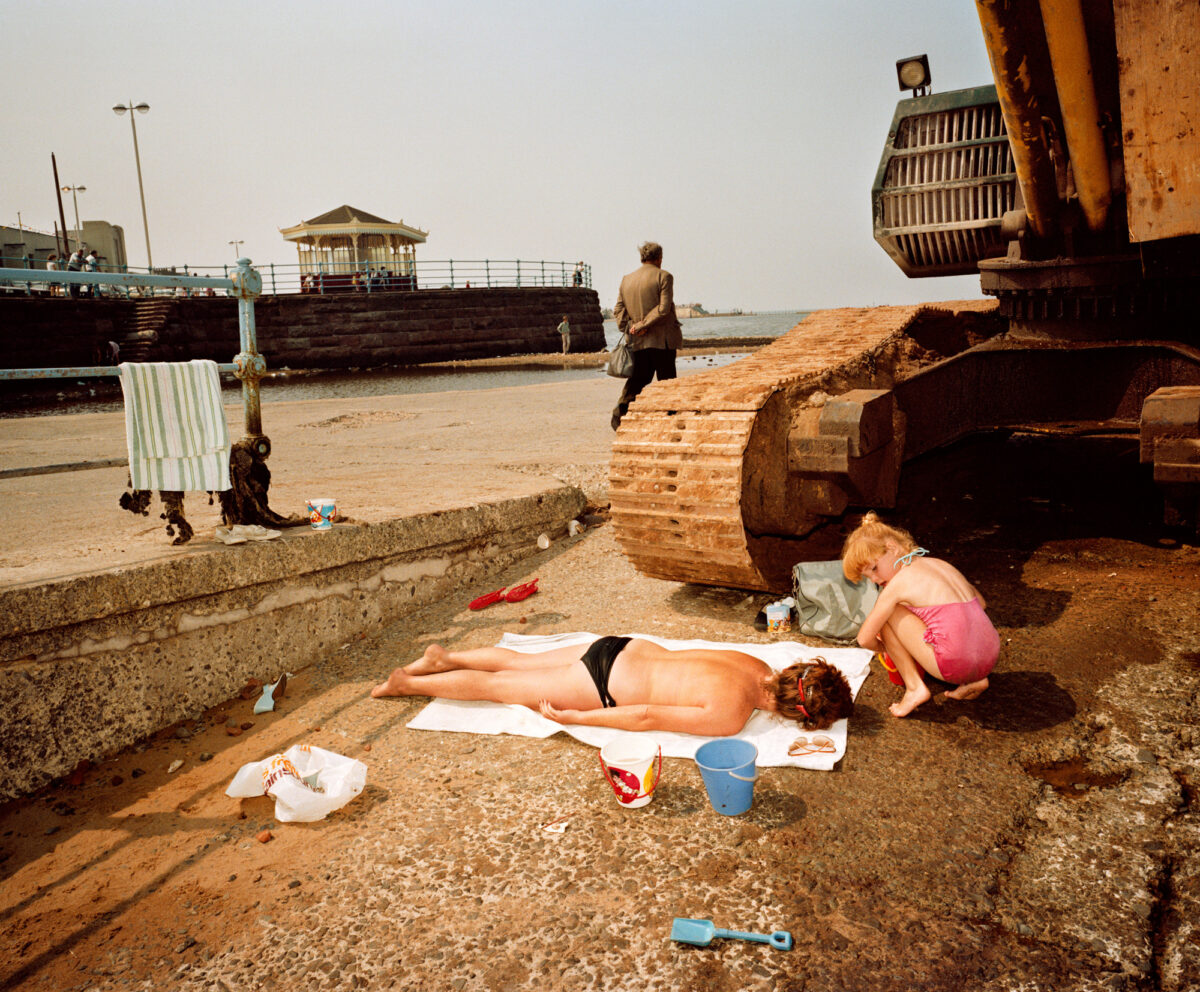
This was, perhaps, what made Martin Parr one of the most influential photographers of recent decades. While many sought dramatic landscapes or meticulously composed scenes, Parr turned his camera towards what most people considered far too ordinary to deserve a photograph. Crowded beaches, tourists, cafés, supermarkets and local fêtes became the settings through which he documented the contradictions of consumerism, leisure and contemporary life. Not because these places were exceptional, but precisely because they were ordinary.
His work challenged a deeply rooted assumption: that the most interesting things always happen somewhere else. In reality, Parr seemed to argue exactly the opposite. The extraordinary was never elsewhere. It was right in front of us, hidden only by the familiarity that had taught us to stop noticing it.
This understanding of photography feels particularly relevant at a time when so many of the images we produce seem to follow the same predictable formula. We travel in search of the viewpoint we have already seen hundreds of times, recreate identical photographs from exactly the same locations, and turn certain destinations into stages where thousands of people strive to capture precisely the same image. Photography, once a way of interpreting the world, now risks becoming little more than a means of reproducing it.
This is not an exercise in nostalgia, nor is it a criticism of social media. Sharing images has always been one of the ways we tell the story of who we are. The problem begins when we stop asking ourselves what genuinely deserves our attention and start photographing only what we know will perform well on a screen. Gradually, we begin to confuse what is photogenic with what is genuinely interesting, as though the two were inseparable.
Yet the images that remain with us are rarely the most technically perfect. They are the ones that reveal something we had never noticed before: an expression, a gesture, a contradiction or an apparently insignificant detail capable of transforming the way we understand an entire scene. This was Martin Parr‘s gift. He was not interested in beautifying reality, but in observing it patiently enough to discover what everyone else overlooked.
That ability extends far beyond photography. It also explains why some architects find inspiration in anonymous buildings, why certain designers transform everyday objects into extraordinary pieces, or why some writers can build remarkable stories from conversations overheard by chance in a café. Creativity doesn’t begin when someone creates something. It begins much earlier, at the moment they learn to look differently.
It is telling that, at a time when artificial intelligence is transforming the production of images, the quality that seems to have become most valuable is not the ability to generate visuals, but the ability to cultivate a distinctive way of seeing. Tools will continue to evolve, as they always have. What will continue to set people apart is the sensitivity to find meaning where others perceive only routine. No technology can teach someone what is truly worth paying attention to.
“Creativity begins long before creation itself, at the moment we learn to look differently.”
Perhaps that is Martin Parr‘s most valuable legacy. Not a particular photographic style or a recognisable visual language, but an invitation to recover a capacity we all once possessed and that the speed of contemporary life seems to have gradually eroded: the ability to pay attention to the ordinary.
Because the stories that ultimately change the way we understand the world rarely unfold in extraordinary places. More often than not, they are much closer than we imagine, quietly waiting for someone willing to look where nobody else does.
(*) Photo: Martin Parr.