The illusion of being right
By Cecilia Camacho, Founder and Editor of CC/magazine
We live surrounded by voices that pontificate. Voices that speak with overwhelming certainty, as if truth were their personal property. Categorical statements, opinions dressed as dogmas, arguments that leave no room for doubt or dialogue. And yet, it’s worth remembering: ignorance is often the boldest.
The danger of such attitudes lies not only in what is said, but in how it is said. Confidence is confused with infallibility, opinion with truth. And when someone speaks from a place of superiority, they seem to forget that there are other perspectives, other tastes, other equally valid experiences.
We witnessed it recently in a controversy surrounding reading. Beyond the topic itself — which could have sparked a truly enriching discussion — what was most disturbing was the tone: a sweeping judgement, as if anything that didn’t fit within her view was devoid of value. That tone, which elevates some above others, is not only inappropriate — it is unconstructive.
We can express opinions, disagree, even provoke debate, without silencing or discrediting those who think differently. True intellectual exchange is not built through imposition, but through respect. And to respect means to always add a humble caveat: “in my opinion”, “from my point of view”. It means remembering that we speak from our own limited experience, and not from some supposed gift of absolute truth.
Critical Thinking: an antidote to dogma
Critical thinking is the opposite of pontificating. It is reading, listening, cross-referencing. It is opening the door to the possibility of being wrong. It is understanding that an idea can be solid without needing to be the only one. And above all, it is realising that tolerance is as important as the argument itself.
We do not need more speeches that aim to issue verdicts; we need more conversations that add nuance, that open up complexity, that allow us to grow through difference. Because to believe that having a group of followers automatically makes us right is to fall for the illusion of popularity.
To speak with conviction is not the same as pontificating. The former is a virtue; the latter, arrogance. To be critical, respectful, and tolerant does not diminish our strength — it enhances it. And although it is sometimes forgotten, the ability to express one’s opinion with humility and depth carries far more weight than any sweeping proclamation. In the end, that’s what it’s all about: creating a space where all voices can contribute, without any claiming ownership of the truth.
We speak from our own limited experience, and not from some supposed gift of absolute truth.
Hannah Arendt and the courage to think
German philosopher Hannah Arendt once said that “thinking without banisters” was one of the great challenges of our time. She referred to the need to exercise critical judgement without clinging to absolute truths imposed by others. Arendt, who deeply analysed the mechanisms of totalitarianism, understood well how unquestioned dogmatic thinking can pave the way for authoritarian power — even within culture and the arts.
In her essay “The Life of the Mind”, Arendt distinguishes between knowledge and understanding. The former can be acquired; the latter requires reflection.
And to reflect means not only to hear other voices, but to recognise one’s own limitations. Dogmatism, by contrast, feeds on certainty. And as Bertrand Russell also warned: “The trouble with the world is that the stupid are cocksure and the intelligent are full of doubt”.
Doubt is not weakness — it’s Intelligence
We live in an era where speed and bluntness are often rewarded more than depth. On social media, the most widely shared messages are those that state things categorically — not the ones that ask thoughtful questions. But what do we lose when we stop doubting?
In “The Usefulness of the Useless”, Nuccio Ordine reminds us that the most valuable knowledge is often that which serves no immediate purpose, but enriches our way of being in the world. Reading for pleasure, writing with passion, engaging in dialogue out of curiosity… these are practices that now seem secondary in the race to be “right”.
But it’s not about being right. It’s about understanding, sharing, exploring the complexity of human thought. As Umberto Eco put it: “The world is full of idiots, but that should not stop us from trying to argue intelligently”.
Pontificating from the digital pulpit
In this age of information overload, everyone has a microphone. Social media has democratised access to speech, which is a positive development. But it has also amplified the most extreme, viral, and domineering discourses — those that seek not to engage, but to dominate.
The algorithm rewards polarisation. And in this context, being thoughtful, measured and respectful seems almost countercultural.
The algorithm rewards polarisation. And in this context, being thoughtful, measured and respectful seems almost countercultural. But we need it more than ever. We need spaces where dissent is allowed without cancellation, where disagreement is not seen as attack, where conversation is an end in itself and not a means of gaining followers.
In her essay “Against Interpretation”, Susan Sontag defended the need to recover the sensual experience of art, without reducing it to rigid interpretations. Perhaps this is the same spirit we must now bring to thinking itself: fewer verdicts, more sensitivity; fewer certainties, more listening.
Quoting is not imposing — It’s an invitation to think
Intellectual authority is not built through shouting, but through reasoning. Quoting authors is not enough if it becomes a banner of moral superiority. Citing others should be an invitation to reflect, not a hammer to crush differing views.
In the world of art, literature, and creativity, interpretations are many. And that’s precisely what makes it so exciting. Imposing a single way of seeing things denies others the opportunity to connect emotionally from their own perspective. As Virginia Woolf so powerfully wrote: “No gate, no lock, no bolt can set upon the freedom of my mind”.
The intellectual ego: an invisible enemy
There’s a little-discussed but increasingly common phenomenon: the ego of the one who believes they know. The one who doesn’t listen, never rethinks, and only seeks to confirm their own views rather than submit them to scrutiny.
This intellectual ego not only blocks learning, it also poisons dialogue. Essayist Adam Gopnik warns that the problem with social media isn’t simply that everyone has an opinion — it’s that many believe theirs is beyond question.
And this is where critical thinking must serve its true purpose: not as a weapon to win arguments, but as a tool to sharpen our vision, to open ourselves to other ways of seeing the world.
The pedagogy of humility
In education, in culture, in public discourse, we need more pedagogy of humility. Learning to say “I don’t know”. Recognising that we might be wrong. That others may be right. That truth is not always binary, nor immediate, nor obvious.
Eduardo Galeano wrote that “many small people, in small places, doing small things, can change the world”. And to that we might add: many people speaking with respect, listening with care, and acting with humility could truly change the way we think.
We are not obliged to have an opinion on everything
Another essential reflection: not everyone needs to have an opinion on everything. Silence, too, is a form of wisdom. In a world that demands immediacy, pausing can be a revolutionary act. Think before speaking. Read before judging. Listen before replying.
As philosopher Karl Popper said, “True ignorance is not the absence of knowledge, but the illusion of having it”. And that illusion is dangerous — it cloaks ignorance in arrogance, and distances us from the possibility of growth.
Fewer dogmas, more dialogue
In the end, this is what it’s all about. Creating a space where all voices can contribute, without any claiming ownership of the truth. Where critical thinking is the norm, not the exception. Where respect is not seen as weakness, but as a sign of emotional intelligence.
Or at least, that’s my opinion.
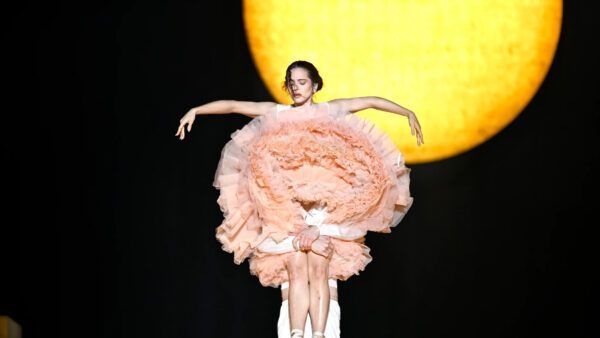
(*) Photo by Carolina Basi.