The Venice Biennale can no longer pretend to be neutral
By Cecilia Camacho, Founder of CC/magazine & Strategic consultant at CC/studio
There is something profoundly different about this edition of the Venice Biennale. It is not only visible in the protests, the banners or the collective resignation of the international jury. Nor solely in the debates surrounding Israel, Russia or the role of cultural institutions in the face of contemporary violence. What has truly changed is something far more uncomfortable: the impossibility of continuing to sustain the fiction that contemporary art exists separately from the political, economic and moral reality that runs through it.
For years, the Biennale operated like a perfectly oiled machine where cultural diplomacy, the market, spectacle, luxury tourism and carefully institutionalised critical discourse coexisted. Everything unfolded within a strange yet stable balance. There were controversies, of course. In fact, there always had been. Yet there was still a certain unspoken consensus surrounding the rules of the game.
This year, that balance appears to have broken down completely.
The resignation of the international jury after the refusal to exclude Israel and Russia from the awards has opened a fracture that will be difficult to close. Even more so after almost half of the participating artists later decided to withdraw from consideration for the prizes created by the organisation to replace the official Lions.
What is interesting is not merely the geopolitical conflict itself, but what it reveals about the contemporary art system as a whole. Because the Biennale has always been political. It has been so since its foundation in 1895. National pavilions were never innocent. They function as diplomatic architecture, as symbolic representations of states, ideologies and national narratives. At this point, believing that art can be entirely separated from that feels naïve.
What is happening now is that many of the contradictions the system had been containing for years no longer fit beneath the institutional carpet.
Contemporary art and moral collapse
The major question hovering over this Biennale is not simply whether certain countries should participate or not. The real question is far more complex: can a global cultural institution continue appealing to neutrality while much of the world is shaped by wars, displacement, violence and extreme polarisation?
The Biennale’s leadership has defended inclusion under the argument of artistic freedom and the refusal to censor countries officially recognised by Italy. Yet even that seemingly neutral position is also a political one.
And there lies one of the great contemporary dilemmas of institutional art: where does the defence of cultural freedom end, and where does the symbolic legitimisation of certain powers begin?
The situation feels especially uncomfortable because it forces the art world to confront something it preferred to avoid for a very long time: its own internal contradiction. The Biennale constantly speaks about diversity, historical reparation, marginalised voices, colonial trauma and social justice. Yet at the same time, it continues to function within a structure deeply tied to states, political funding, the market and international diplomacy.
That tension was always there. The only difference now is that it has become impossible to conceal.
Florentina Holzinger and the body as a battleground
Within this atmosphere charged with political tension and institutional exhaustion, there are artists who have managed to cut through the noise and generate a far more visceral conversation. One of them is Florentina Holzinger.
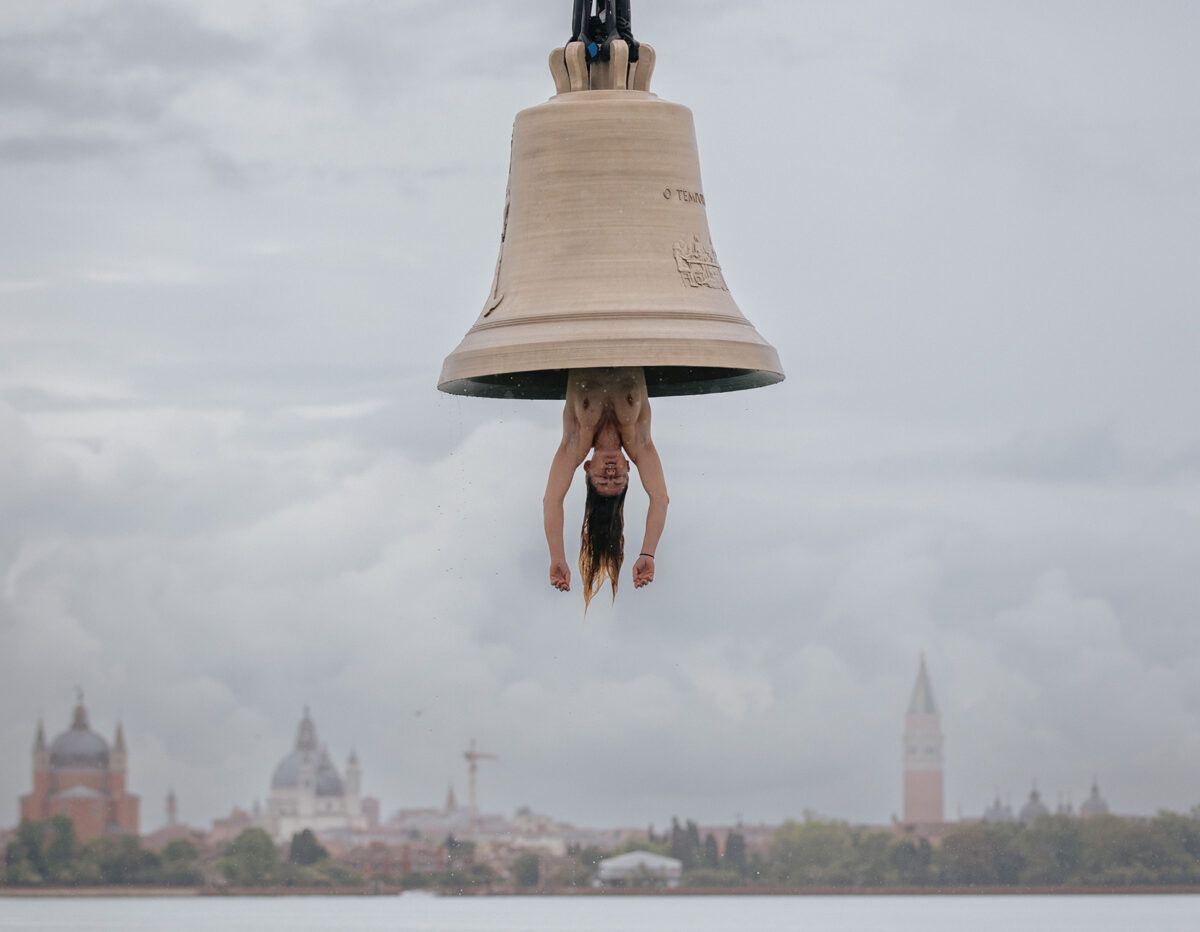
Her intervention within the Austrian Pavilion has become one of the most discussed, unsettling and extreme images of this edition. Naked women suspended in space, bodies pushed to their limits, Holzinger herself hanging from a bell or moving across a jet ski inside a gigantic water tank.
Yet reducing her work to provocation alone would mean remaining at the surface.
For years, Holzinger has used the female body as a site where violence, spectacle, desire, discipline, vulnerability and resistance collide. And that is precisely why her proposal fits so disturbingly within this Biennale. Because it speaks about exposed bodies, observed bodies and bodies used within systems of power that constantly demand performance, representation and sacrifice.
Her work unsettles because it offers no safe distance. It doesn’t allow the experience to be consumed from the intellectual comfort zone typical of much institutional contemporary art. There is something excessive, disturbing and even grotesque in her performances, and that is exactly where their power lies.
While many pavilions continue taking refuge in excessively rationalised curatorial discourse, Holzinger introduces physical chaos, risk and real vulnerability.
It doesn’t feel accidental that one of the most talked-about works in this edition is precisely the one where the body stops functioning as an elegant symbol and once again becomes something uncomfortable, vulnerable and radically human.
The fatigue of spectacle
There is another sensation running through this Biennale: exhaustion. Visual exhaustion, discursive exhaustion and institutional exhaustion.
For years, contemporary art has operated through a logic of constant accumulation: more stimuli, more impact, more immersion, more gigantism, more experience. The Biennale eventually became a kind of aesthetic marathon in which each pavilion competed to produce the most viral image, the most photographable installation or the most extreme experience.
And that is probably why some of the most interesting proposals in this edition are precisely those attempting to slow that dynamic down.
Several spaces have embraced silence, contemplation, rest or even emptiness. As if part of the art world had begun to understand that permanent overstimulation ultimately drains images of meaning as well.
The paradox is obvious: we have never consumed so much contemporary art and, at the same time, it has never been so difficult to truly stop in front of a work.
The problem is no longer provocation
For a long time, provocation functioned almost like currency within contemporary art. Scandal still guaranteed attention, headlines and cultural relevance.
Today, that no longer seems to be the case. We inhabit a reality so saturated with visual violence, political crises, climate collapse and media brutality that the problem is no longer how to provoke the viewer. The problem is how to generate genuine emotional experience within a society that feels completely anaesthetised.
And this is precisely where many of the Biennale’s proposals fail. The contemporary viewer is exhausted by empty symbols, automatic spectacle and works designed solely to circulate on Instagram.
The pieces that truly remain are those capable of generating deeper friction — a discomfort that feels less immediate and more existential.
The Biennale as a mirror of our time
Perhaps the most interesting aspect of this edition is that the Biennale itself has ended up becoming a perfect mirror of our historical moment: fragmentation, polarisation, institutional exhaustion, geopolitical conflict, collective anxiety and an enormous difficulty in finding shared cultural consensus.
Everything seems to coexist simultaneously: genuine activism, moral opportunism, deeply honest works, empty discourse, political marketing, cultural tourism and artists still attempting to produce something truthful within all that immense noise.
The Biennale remains, unquestionably, one of the great symbolic centres of global contemporary art, even if this edition makes it clear that the model is going through a profound crisis.
And although that may sound negative, what is clear is that cultural institutions often only begin to transform once they lose the ability to fully control their own narrative.
The question now is not whether the Biennale will survive this controversy — it almost certainly will. The real question is what kind of contemporary art will emerge after all this. And above all, whether we are still capable of looking at a work beyond spectacle, algorithms and automatic ideological positioning.
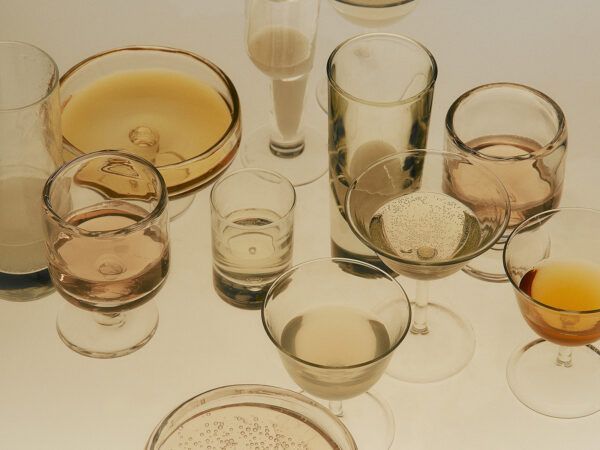
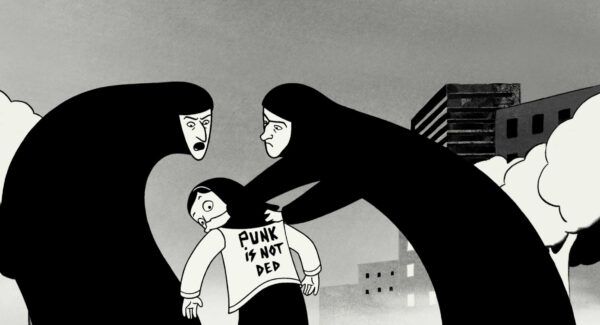
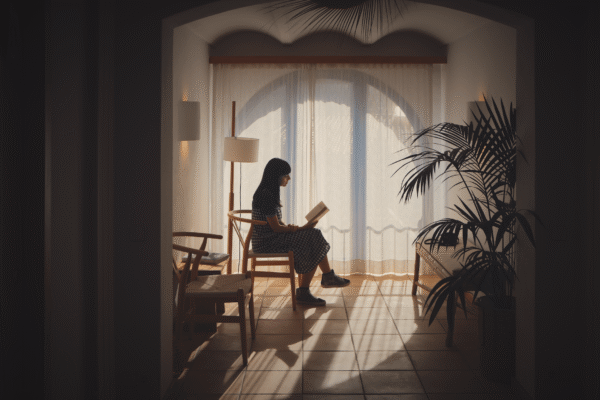
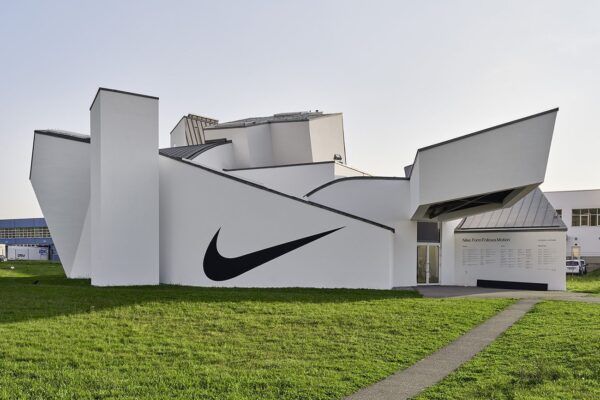
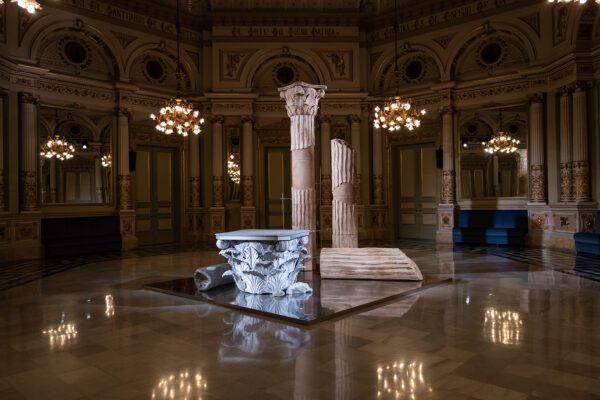
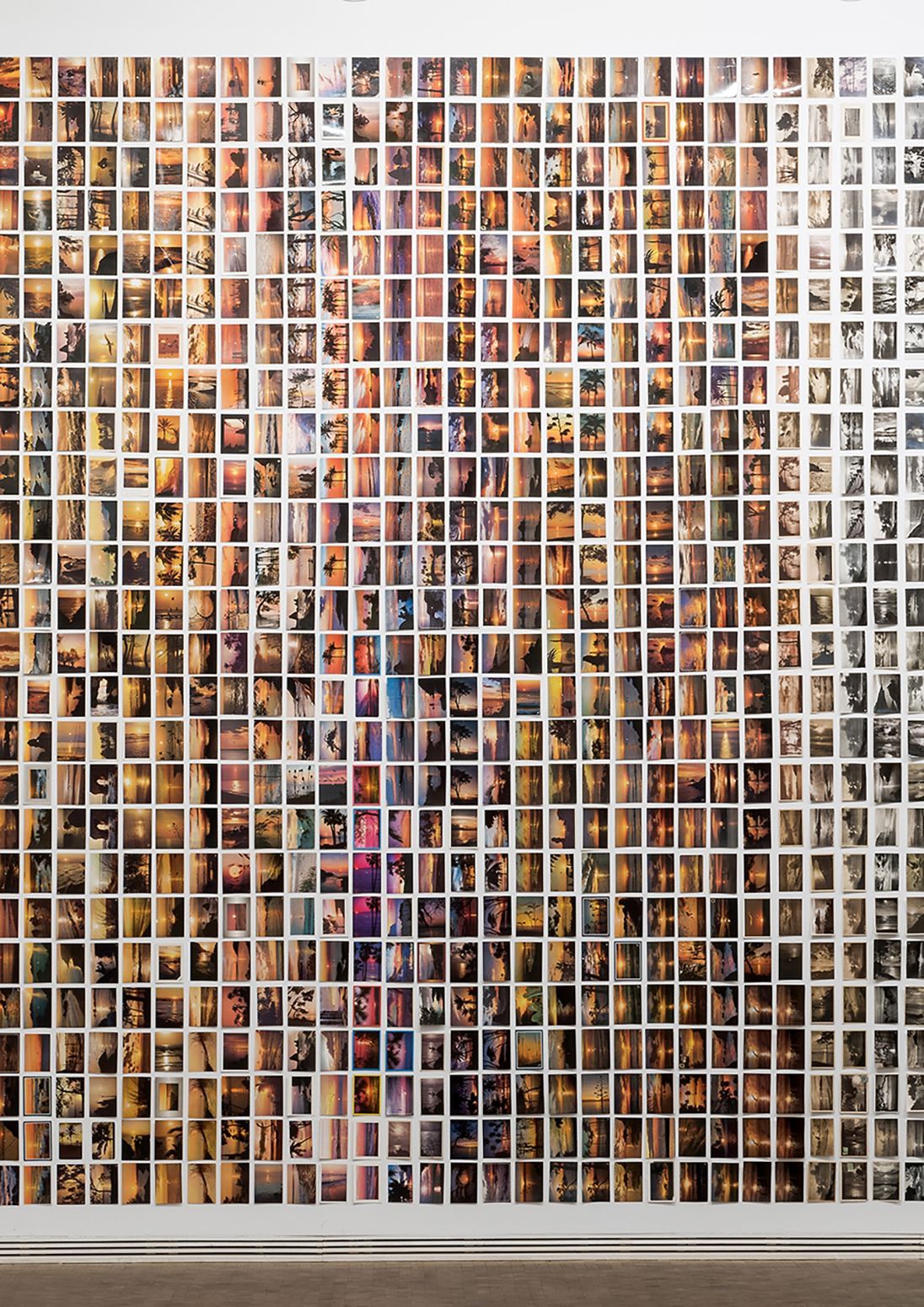
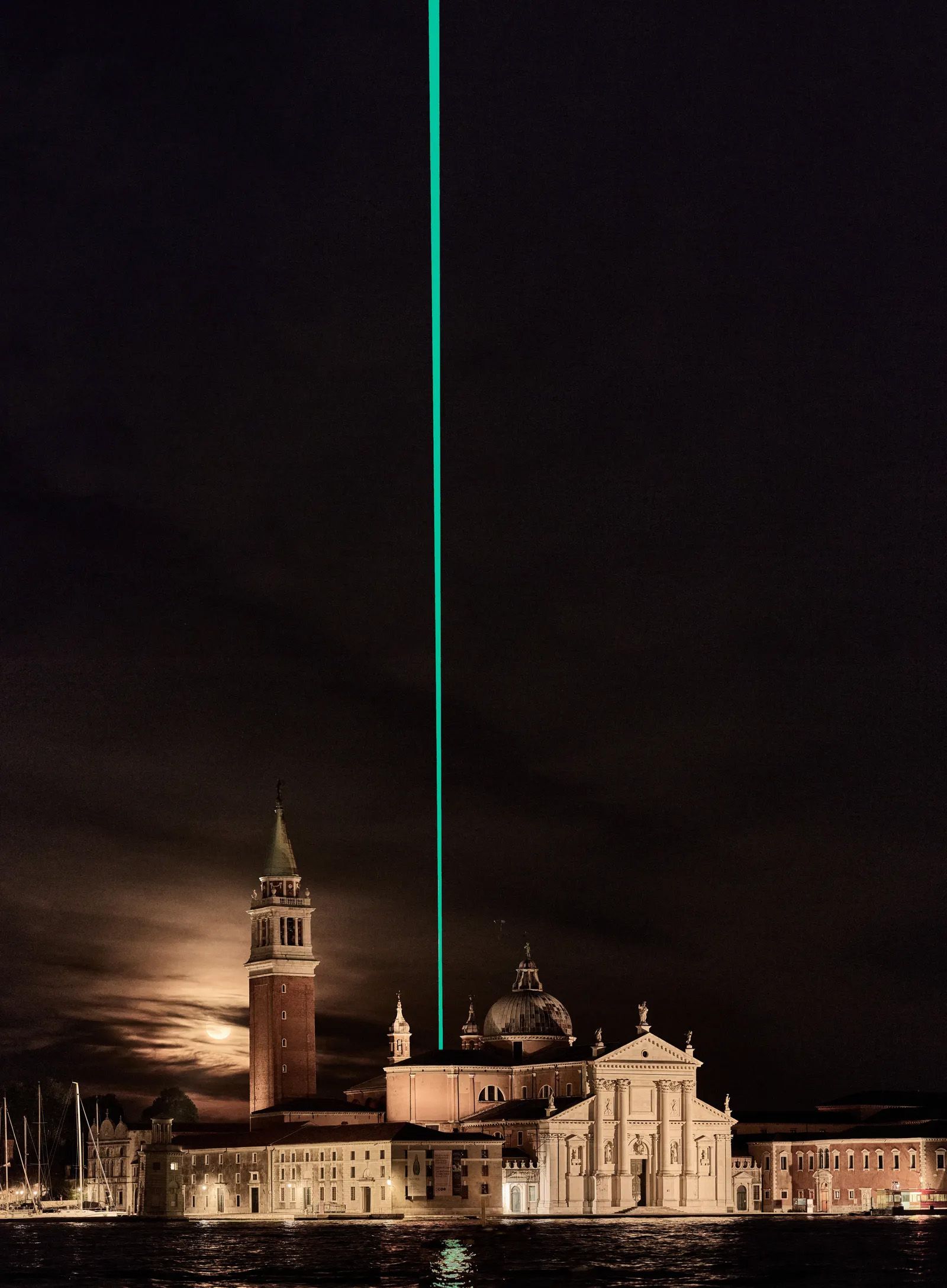
(*) Cover image: Seaworld Venice by Helena Manhartsberger, an installation about climate apocalypse in which the artist hangs upside down naked from a giant bell and uses her body as the clapper. The two vertical images correspond to two installations we particularly loved: vertical image 1: Los restos, Spanish Pavilion at the 2026 Venice Art Biennale by Oriol Vilanova (Galería Elba Benítez), reflects on memory, symbols and cultural remnants through an installation questioning how collective narratives are constructed and inherited; vertical image 2: Higher Power by Chris Levine, whose intervention in the Venetian night sky uses beams of light as a protest gesture against war in Western Asia, transforming the urban landscape into a powerful visual message of denunciation and collective awareness.