Dear future me…
By Cecilia Camacho, Founder and Editor of CC/magazine
We never truly know who we’ll be tomorrow. And yet, we write. We sit before a blank page, take a deep breath, and speak to someone who — with luck — will still carry something of who we are today. That’s how every letter to our future self begins: with the quiet intuition that we’re writing to a version of ourselves that may no longer exist — or perhaps never came to be.
Letters to oneself — especially those sent to the future through platforms like FutureMe.org — have become more common than one might think. But what’s really behind this urge to send ourselves messages on delay? What do we hope that future “self” will understand, that we can’t yet fully express today?
Writing to your future self is not the same as keeping a diary. A diary captures the present; a letter to the future constructs a narrative. We edit. We reframe. We project. The future letter is, at heart, a small act of fiction: it contains truths, yes, but also desires — versions of ourselves that may never come to pass. There’s no deceit in that. Only the quiet recognition that the “self” is an unstable territory.
Sometimes we write to comfort ourselves, to warn ourselves, to take stock emotionally — and other times simply to bear witness. To say we were here. That we felt something. That for a moment, everything felt more fragile than we wished it would. But the true mystery lies in who will read that letter. Will it still be you? The you of 2027, 2030, 2040? Or someone entirely different who lives in the same body but no longer identifies with what keeps you awake at night today?
Unlike the motivational tone that often surrounds this kind of exercise, this is not about promising yourself big things. It’s not about visualising achievements or declaring goals with conviction. It’s something more intimate, more uncertain: a recognition that you don’t know where you’ll be, but you choose to write anyway. And in that gesture, there’s something deeply human. Because far from chasing immediate results, writing to your future self means surrendering to another rhythm — one of waiting, doubt, and the quiet transformation that takes place as time unfolds.
Because the very act of writing forces us to make sense of the noise. To name what hurts, what lingers, what we need to let go of. And when the letter finally arrives — months or years later — it’s not so much an answer as it is a reflection: “This is who I was. This is what mattered. This is what I feared. This is what I dreamed.”
One of the most disarming effects of a letter to the future is the surprise. You write it, you send it, and you forget. Until one ordinary day, without warning, it reappears. And there it is: a version of you who believed those words would matter. Sometimes they do. Sometimes they don’t. But they always invite you to pause. Because reading what you once wrote is also hearing, from a distance, the voice of someone who — though still you — no longer thinks the same. And in that brief crossing of timelines, something lights up: not so much what has changed, but what — in spite of everything — still remains.
We live obsessed with control: over schedules, outcomes, emotions. Writing to the future is the opposite — it’s handing over control. It’s saying: “This is what I know now, and when you read this, you’ll know something different.” There’s no guarantee that what you write will be useful. But there is one certainty: you’ll feel closer to yourself for having tried.
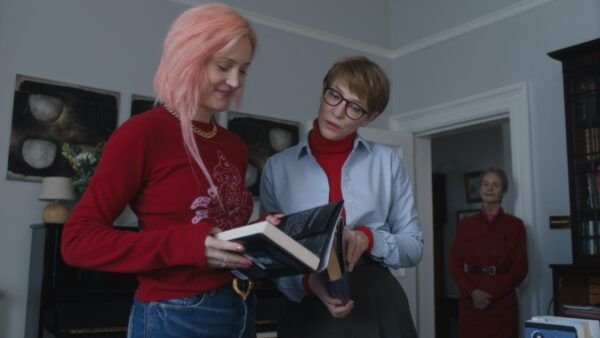
This practice takes on even more weight when we see it unfold in real life. The documentary “The Farrer Method”, directed by Esther Morente, shows it with remarkable sensitivity. In it, Canadian teacher Bruce Farrer asks his high school students to write letters to their future selves. He keeps them for twenty years, then sends them back. What began as a classroom exercise becomes a collective act of memory. Those letters return as mirrors. In some, the reflection is kind. In others, it’s uncomfortable. But in every case, they reveal something essential: writing to your future self is less a tool for prediction and more a gesture of recognition — an attempt to care for something that doesn’t yet exist.
While FutureMe automates this process in the digital age, Farrer did it with envelopes, drawers, ink, and patience. His gesture was handcrafted, but the result is the same: the word as capsule, as ritual, as promise. And also as archive. Because when that letter is opened, what emerges is not only the words — it’s everything that’s changed between who you were and who you’ve become.
Of course, a letter to the future won’t solve your life. It won’t reveal hidden truths or magically make you a better person. But it will leave a mark — and make you feel something. And that, in these times, is already a lot.
Perhaps writing to the future is unnecessary. But it may also be a quiet way of caring for yourself. Of listening. Of leaving proof that some part of you wanted to exist fully — even if only for a moment.
You don’t need a great revelation. Just presence and intention. Open the page. Write. And trust that, someday, you’ll open that message — and maybe, just maybe, it will tell you exactly what you needed to hear.
Are you ready to write to yourself? Start here.