The weight of what goes unsaid
By Cecilia Camacho, Founder and Editor of CC/magazine
A family is not always a refuge. Sometimes, it’s a silent territory where words slip away, where affection goes unspoken, where one survives more than one truly lives. And at the close of this year, when many reunions happen out of routine or obligation, a film arrives offering another perspective: “Father Mother Sister Brother”, the latest from Jim Jarmusch, winner of the Golden Lion at the Venice Film Festival and one of the most significant releases of 2025.
Jarmusch, an undisputed icon of independent cinema, doesn’t direct this film so much as he observes it. With his minimalist, almost invisible style, he invites us to approach family ties from a distance—not through drama or catharsis, but through that invisible choreography rehearsed around every dinner table, every awkward gesture, every silence that weighs more than an argument.

Three countries, one shared distance
The film unfolds as a triptych: three stories, three countries, three shared silences. Father takes place in the northeastern United States, Mother in Dublin, Ireland, and Sister Brother in Paris, France. And though the settings vary, the thread that binds them is constant: the difficulty of communicating with those who should be closest to us.
Each episode stands on its own, yet together they form a collective portrait of restrained affection, of emotional inheritance, of the unspoken words that nonetheless shape the landscape of a family. Far from sentimentality, Jarmusch opts for an observational, unbiased approach, where each character reveals themselves through the smallest details.
A cinematic language built on restraint
What moves in “Father Mother Sister Brother” isn’t what happens, but how it unfolds. The camera remains still. Scenes unfold without haste. The narrative builds up through the accumulation of tiny gestures. As the director himself describes: “A film that in some way stands against action, its subtle and serene style carefully crafted to allow small details to accumulate, like delicately placed flowers in three bouquets”.
Jarmusch surrounds himself, as always, with a sublime team. Cinematographers Frederick Elmes and Yorick Le Saux bring a melancholic beauty to every frame. The editing by Affonso Gonçalves feels like a breath. And the score, composed by Jarmusch and Anikka, gently weaves through the lives of the characters.
Three impossible families
One of the film’s triumphs is its ensemble cast. Seeing Tom Waits return to the screen, portraying a father unsure of what to do with his own body in front of his son, delivers one of the most powerful cinematic moments of the year. Adam Driver and Mayim Bialik accompany him in this segment with beautifully restrained performances.
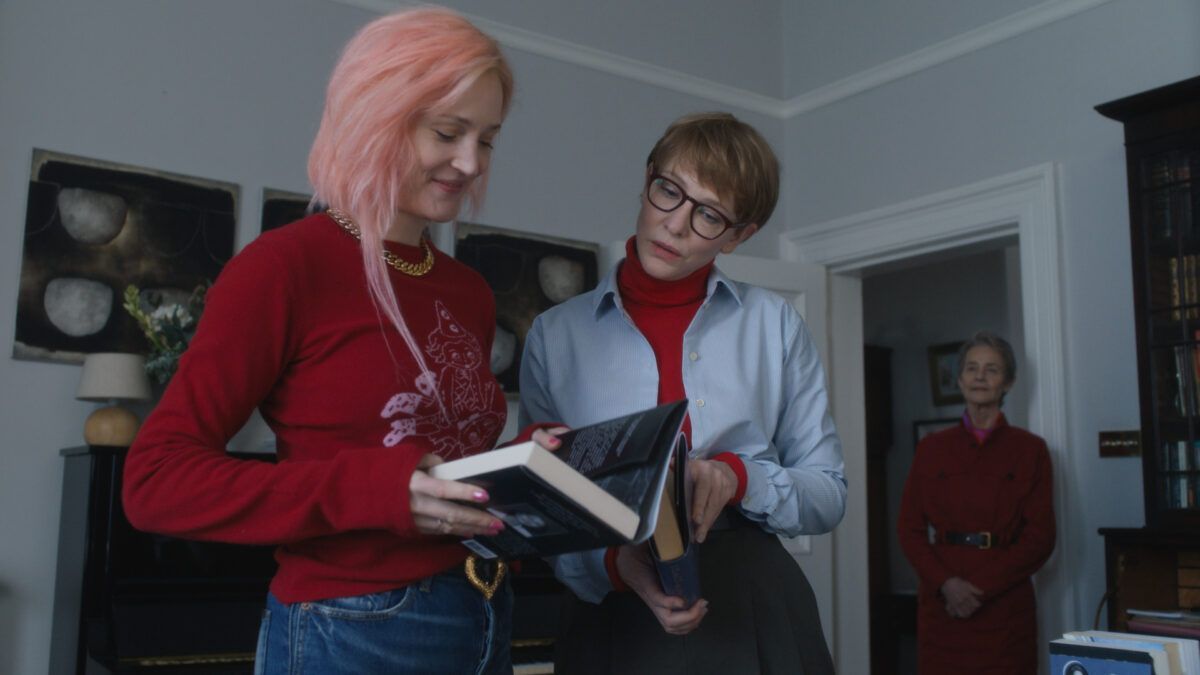
Charlotte Rampling, Vicky Krieps, and Cate Blanchett shine in the Irish episode, bringing humour, strength, and vulnerability to a story that could be summarised in a single unspoken sentence. In Paris, the distant beauty of Indya Moore and Luka Sabbat outlines a sibling relationship where love filters through cracks of resentment.
What we silence when we say family
There is something profoundly political in Jarmusch’s filmmaking: his resistance to noise. In a narrative world dominated by over-explanation, his films leave room for silence, for interpretation, for the viewer’s intuition. In “Father Mother Sister Brother”, that decision is essential. Because it’s not about understanding the characters—it’s about recognising ourselves in them.
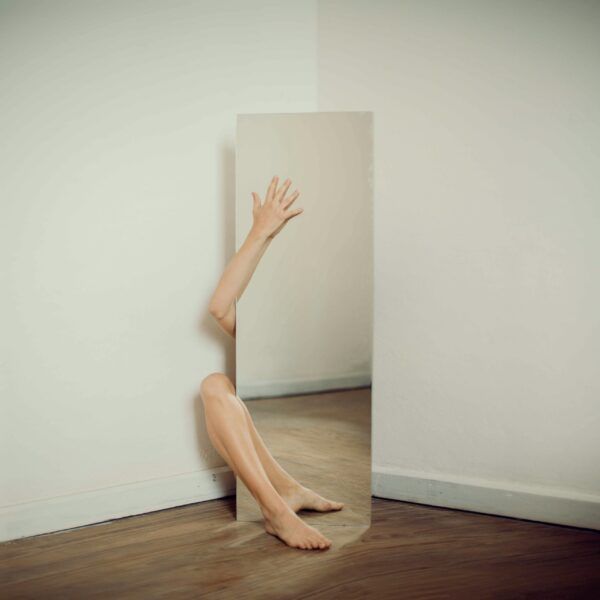
Each story becomes a mirror. Anyone who has endured a tense family meal, a hug that never came, a long-postponed call, will find an echo here. Jarmusch doesn’t judge or dramatise; he simply observes. And that gaze, so rare in today’s cinema, moves us precisely because it respects our own pace of recognition.
The beauty of contained affection
In an era of polarisation and emotional urgency, “Father Mother Sister Brother” offers a subtler, slower, deeper perspective. It’s a film that feels like a long breath, like a walk with no destination, like a conversation that doesn’t seek resolution but companionship.
And perhaps that’s its greatest virtue: reminding us that silence holds beauty too. That love isn’t always spoken. That family, no matter how dysfunctional, remains the place where it’s hardest to simply be—and yet, we keep trying.
Ending the year with open eyes
As 2025 draws to a close, “Father Mother Sister Brother” invites us to look differently. To observe our routines, our habits, our silences. And to ask ourselves: who do we continue relating to out of inertia? And with whom is it worth rehearsing something new?
This is not a film about the ideal family. It is a film about the real family: contradictory, clumsy, imperfect. And for that very reason, deeply human. That it arrives in cinemas on the 24th of December is no coincidence—it is a gift in the form of a mirror. A reminder that even what is left unsaid can bind us.
(*) Still from the film Father Mother Sister Brother.