Cruz Novillo: the man who designed Spain
By Cecilia Camacho, Founder of CC/magazine and Strategic Consultant at CC/studio
There are names that arrive late for those who, without realising it, have been living alongside them for years. José María Cruz Novillo is one of those rare cases: millions of people recognised his work long before they knew his name. They encountered his symbols on postboxes, trains, newspapers, banknotes, institutions, political campaigns or film posters. They moved through a visual landscape shaped, in part, by him, often without ever asking who had drawn it.
Spain changed repeatedly during the second half of the 20th century. Politically, socially, economically. It also changed in appearance. And that visual transformation was not a secondary matter. A country emerging from a long, complex past and beginning to redefine itself needed new ways of presenting itself. It needed clarity, recognisable forms, a visual language that did not carry the weight of what came before.
Cruz Novillo understood that need with unusual clarity. His work did not simply accompany Spain’s modernisation; it helped give it form.
Everyday life as an unintentional museum
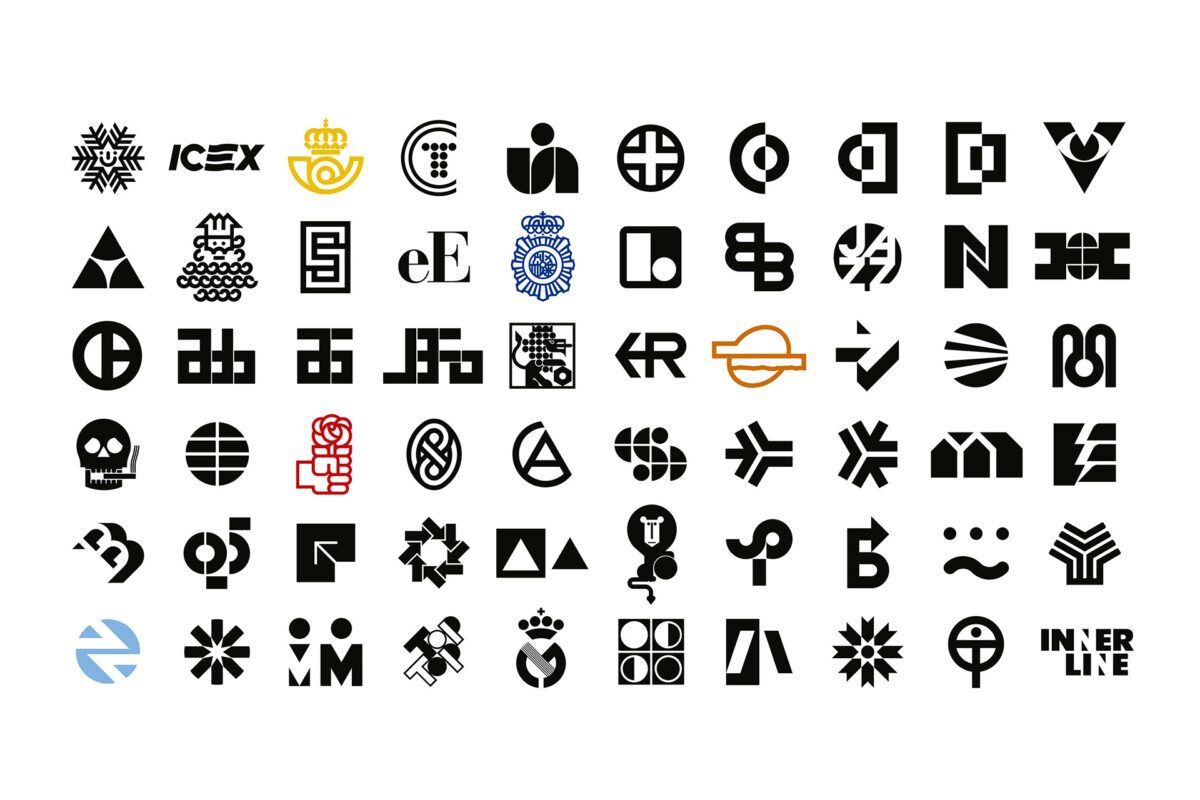
Correos, Renfe, Repsol, Endesa, the PSOE, the National Police, El Mundo, COPE, Diario 16, El Economista, the Bank of Spain banknotes, the flag and coat of arms of the Community of Madrid. The list is often repeated because it is difficult to avoid, but what matters is not the accumulation of names. What matters is how deeply those images entered everyday life.
His designs lived in places we rarely pause to consider: a letter sent, a train awaited, a newspaper unfolded at a café, a ballot paper, a police station, a petrol station, a banknote folded in a pocket. Perhaps that was one of his greatest achievements: allowing design to stop looking like design, integrating it seamlessly into daily experience.
One of his greatest achievements was allowing design to stop looking like design, integrating it seamlessly into daily experience.
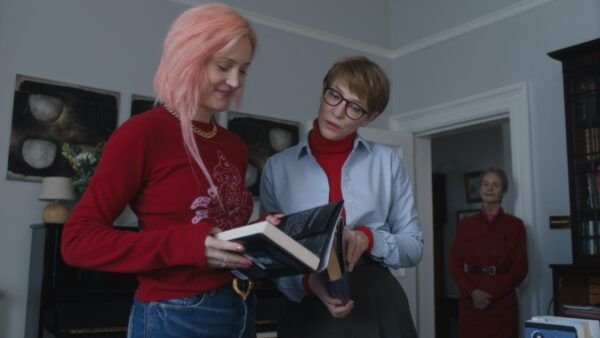
The documentary “El hombre que diseñó España”, directed by Miguel Larraya and Andrea G. Bermejo, captures this idea with precision. The film does more than trace an extraordinary professional career; it invites us to look again. Suddenly, what felt familiar becomes revealing. What seemed to have always been there appears instead as the result of thought, craft and a particular way of understanding a country through form.
In the documentary, Cruz Novillo doesn’t present himself as someone eager to underline his own importance. There is a calmness about him, a clarity in how he relates to his work.
He speaks about his projects with the ease of someone who spent a lifetime solving complex problems without needing to dramatise them. That, in itself, is moving: behind such enduring symbols stands a figure grounded in the act of making rather than in self-assertion.
Precision as a form of care
It would be easy to frame Cruz Novillo’s work purely in terms of effectiveness. To say that his logos work, that they are clear, that they have endured. All of that is true, but it doesn’t fully explain their impact. There is also a quiet attentiveness in his work—a respect for the viewer.
His images didn’t demand prior explanation. They didn’t rely on closed codes. They were designed to circulate, to belong to everyone, to function across different contexts. That public dimension carries particular weight, especially in a period when Spain needed to recognise itself without excess, without artifice, with a sense of modernity that felt both grounded and accessible.
Cruz Novillo worked with geometry, reduction, contrast, proportion. Yet those terms can sound overly technical for what he achieved. His process moved towards simplification until the essential remained. Towards decisions that made the final form feel inevitable rather than imposed.
That is where his strength lies: in making complexity appear resolved.
Cinema, art and another visual narrative
His legacy extends well beyond corporate identity. He designed posters for films such as The Spirit of the Beehive, El Sur, Cría cuervos, The National Shotgun, Barrio and Mondays in the Sun. In those works, a different register emerges: a sensitivity to atmosphere, an ability to condense a film into a single image that does not explain it, but resonates with it.
He was also a painter, sculptor, printmaker and academic. From the 1990s onwards, his work moved towards chronochromophonic explorations, where colour, sound and time became structural elements. His “Diafragma dodecafónico 8.916.100.448.256, opus 14”, presented at ARCO in 2010, was conceived as a work lasting millions of years. There is something striking in that gesture: after decades of designing for the present, he imagined a piece that extended far beyond any human timeframe.
This breadth makes it impossible to reduce him to the author of a series of well-known logos. He was a complete creator, someone who approached the image as language, structure and experience.
A presence that remains
Cruz Novillo passed away at the age of 89, leaving behind one of the most significant visual legacies in contemporary Spain. Yet his work doesn’t retreat with him. It remains active, embedded in daily life, continuing to serve its purpose.
That continuity carries a particular kind of weight. Not monumental, not ceremonial, but constant. Each time one of his symbols guides, identifies or clarifies something in the public sphere, part of his thinking remains in motion.
The title of Larraya and Bermejo’s documentary is precise in ways that only become clear with time. Cruz Novillo didn’t design an entire country, of course. But he did shape many of the images through which that country learned to recognise itself at a crucial moment.
Some creators leave behind objects to be preserved. Cruz Novillo left behind forms that are still being used. And as long as they continue to function—quietly, effectively, without drawing attention to themselves—his work will remain part of how Spain is seen, read and understood.
(*) Cover image by Cruz más Cruz.