André Ricard: designing for a better life
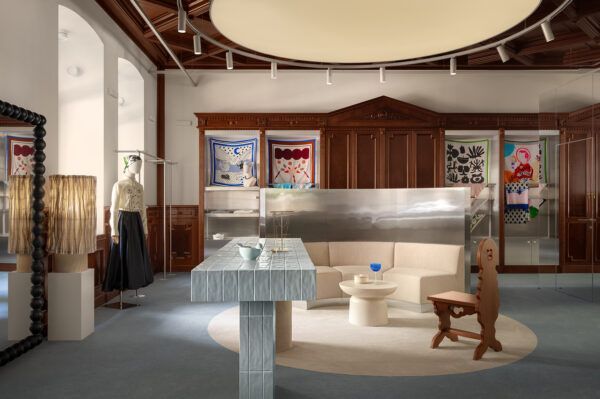
The exhibition André Ricard. Design in Use brings together around 140 pieces at Disseny Hub Barcelona, tracing the career of a designer who made usefulness a form of commitment. From 29 October 2026 to 14 March 2027, his objects invite us to look afresh at the things closest to us.
You may have used an object by André Ricard without knowing who designed it, whether a perfume bottle, a pair of ice tongs or a light switch.
These are pieces that entered our homes and found their place thanks to decisions we barely notice, yet which determine how we hold them, how much space they occupy or how they respond to a gesture. Recognising them in an exhibition therefore feels something like a reunion: on closer inspection, what once seemed self-evident reveals the thinking that made it possible.
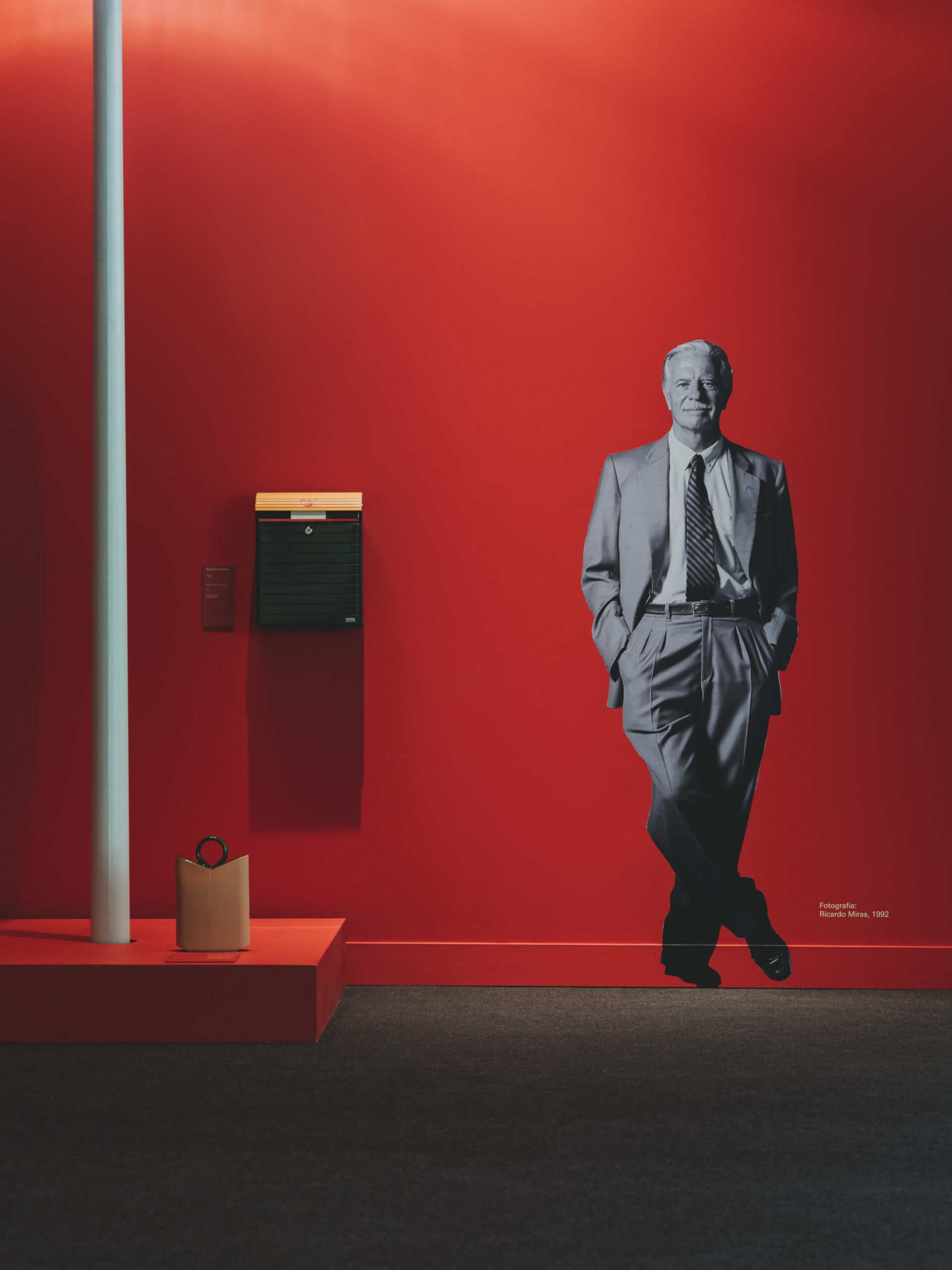
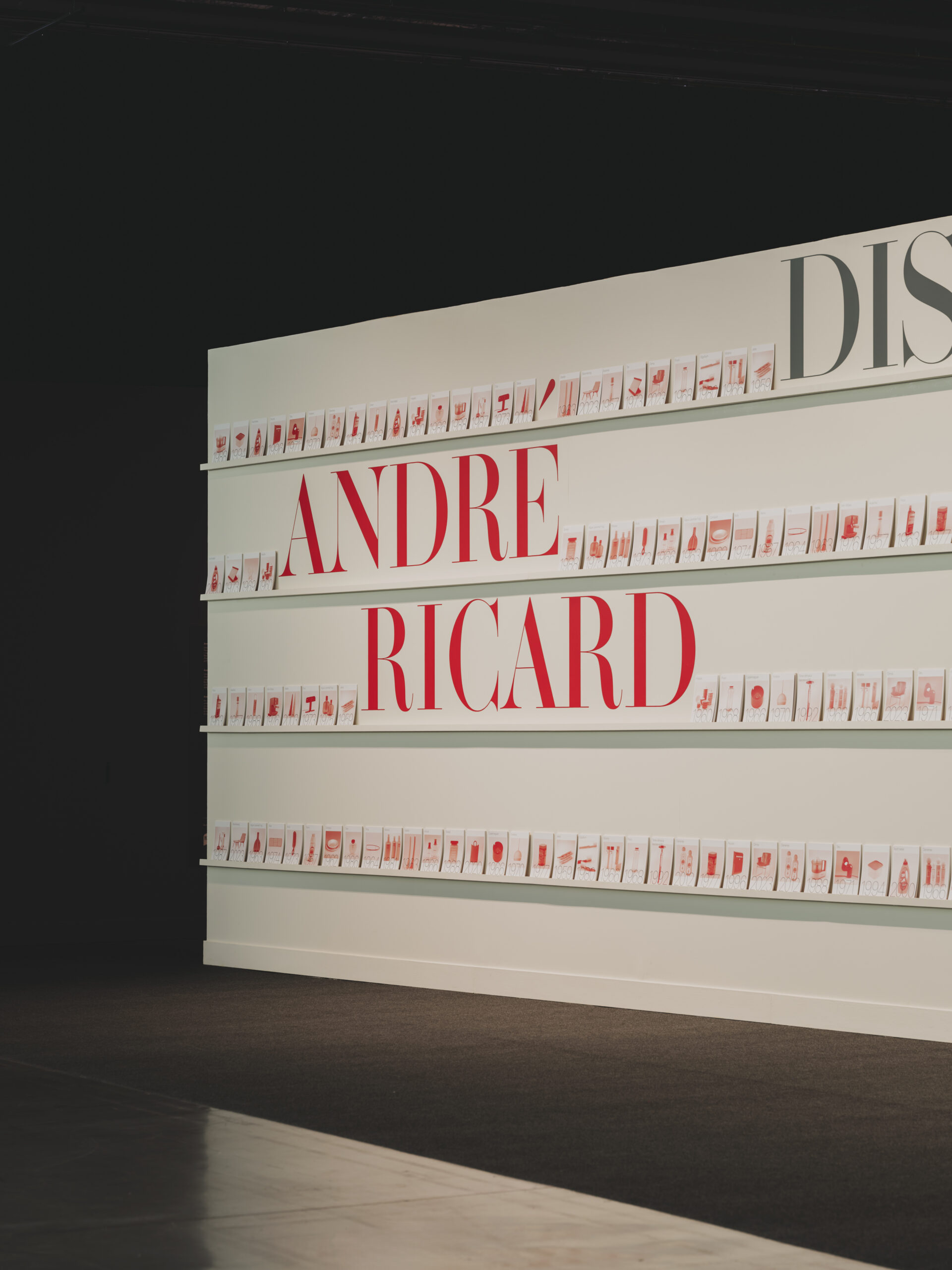
This is a good starting point for André Ricard. Design in Use, the exhibition at Disseny Hub Barcelona curated by Marina Povedano and Arnau Pascual. Following its presentation at Madrid Design Festival, it arrives in an expanded version in the city where Ricard built his career, with around 140 pieces displayed across 600 square metres. It is organised by DHub, La Fábrica, FAD and Madrid Design Festival.
An exhibition that begins at home
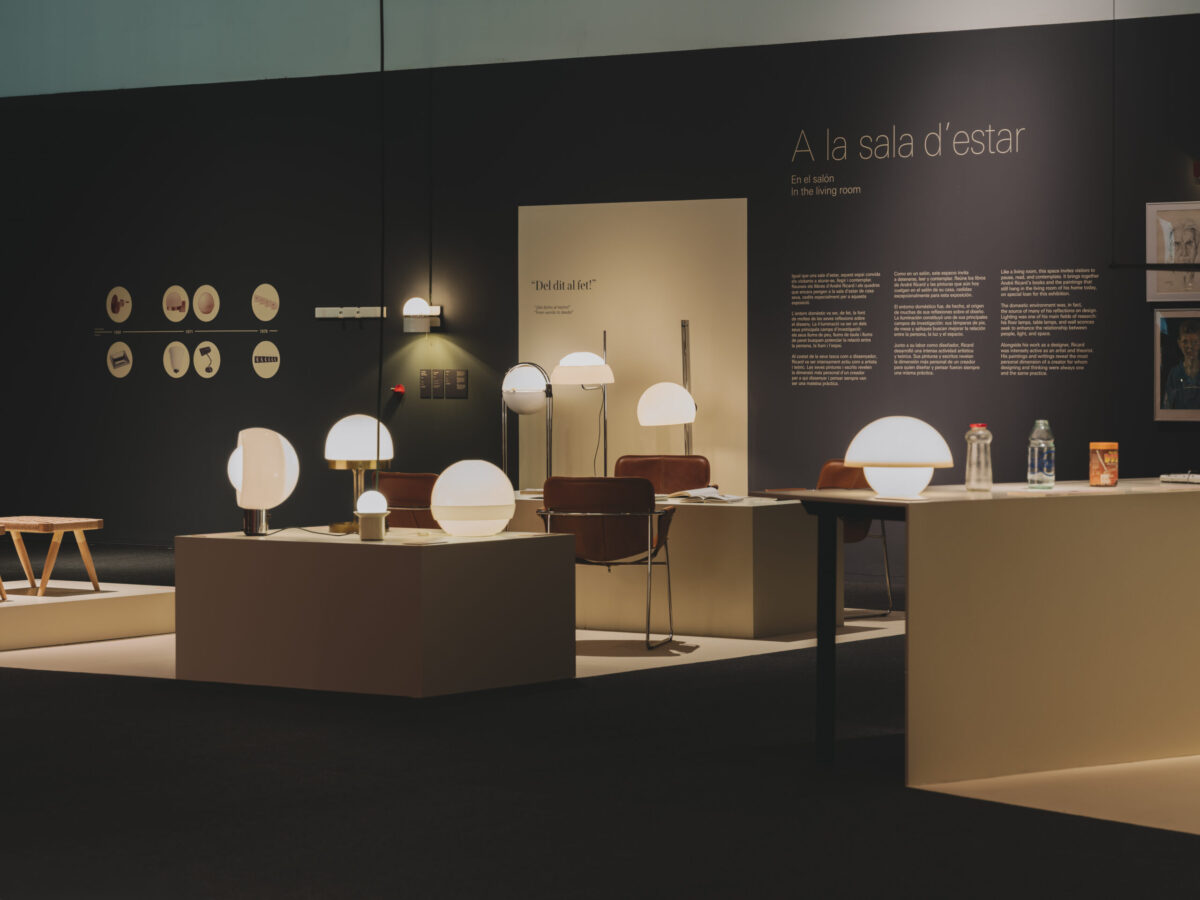
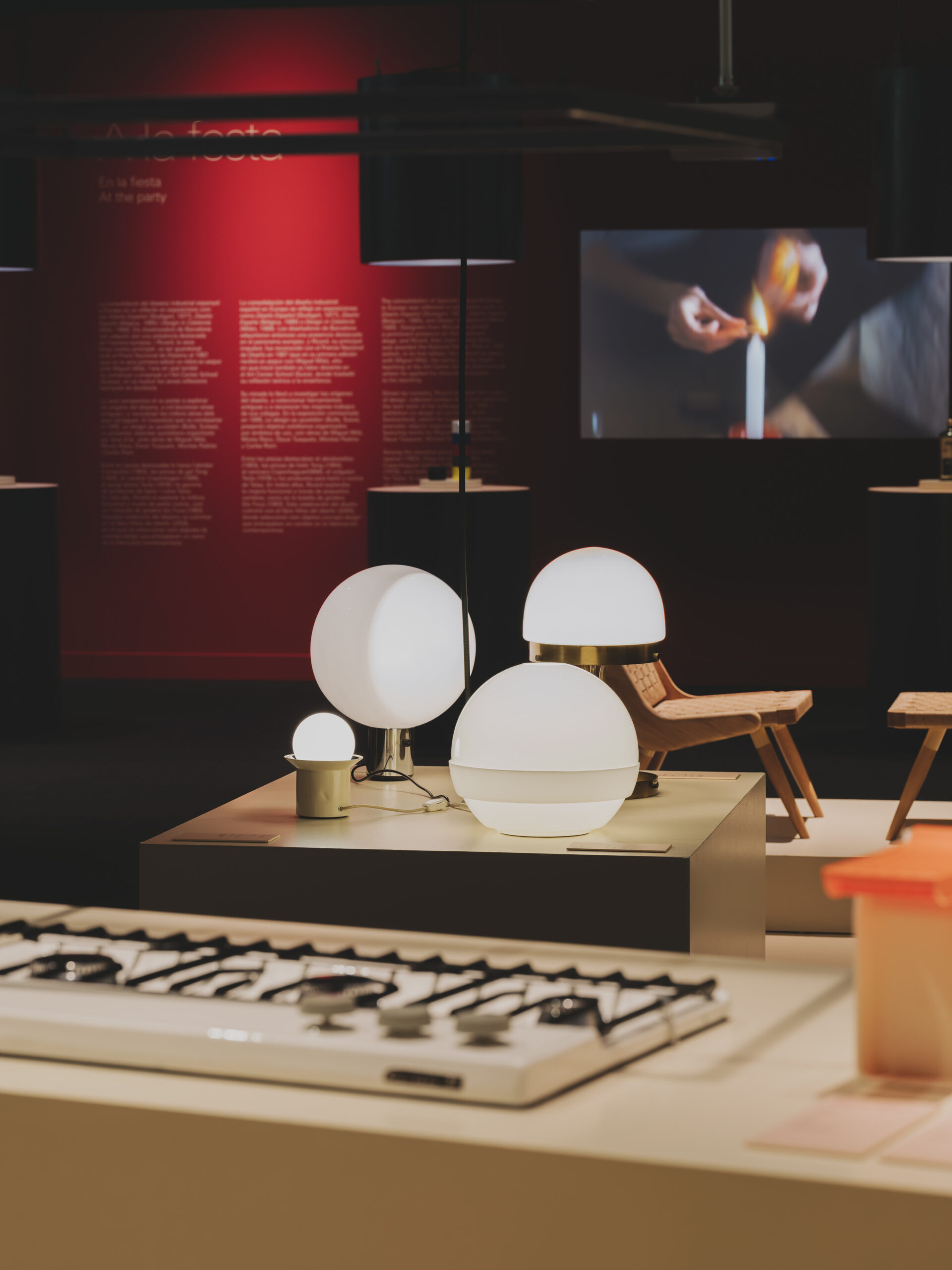
The exhibition arranges the pieces according to the places and situations in which they come into their own: at the table, in the bathroom, in the kitchen, in the living room, at a party, in the studio and in memory. This approach draws inspiration from “Le design au quotidien”, the exhibition Ricard himself curated in Bulle, Switzerland, in 1995.
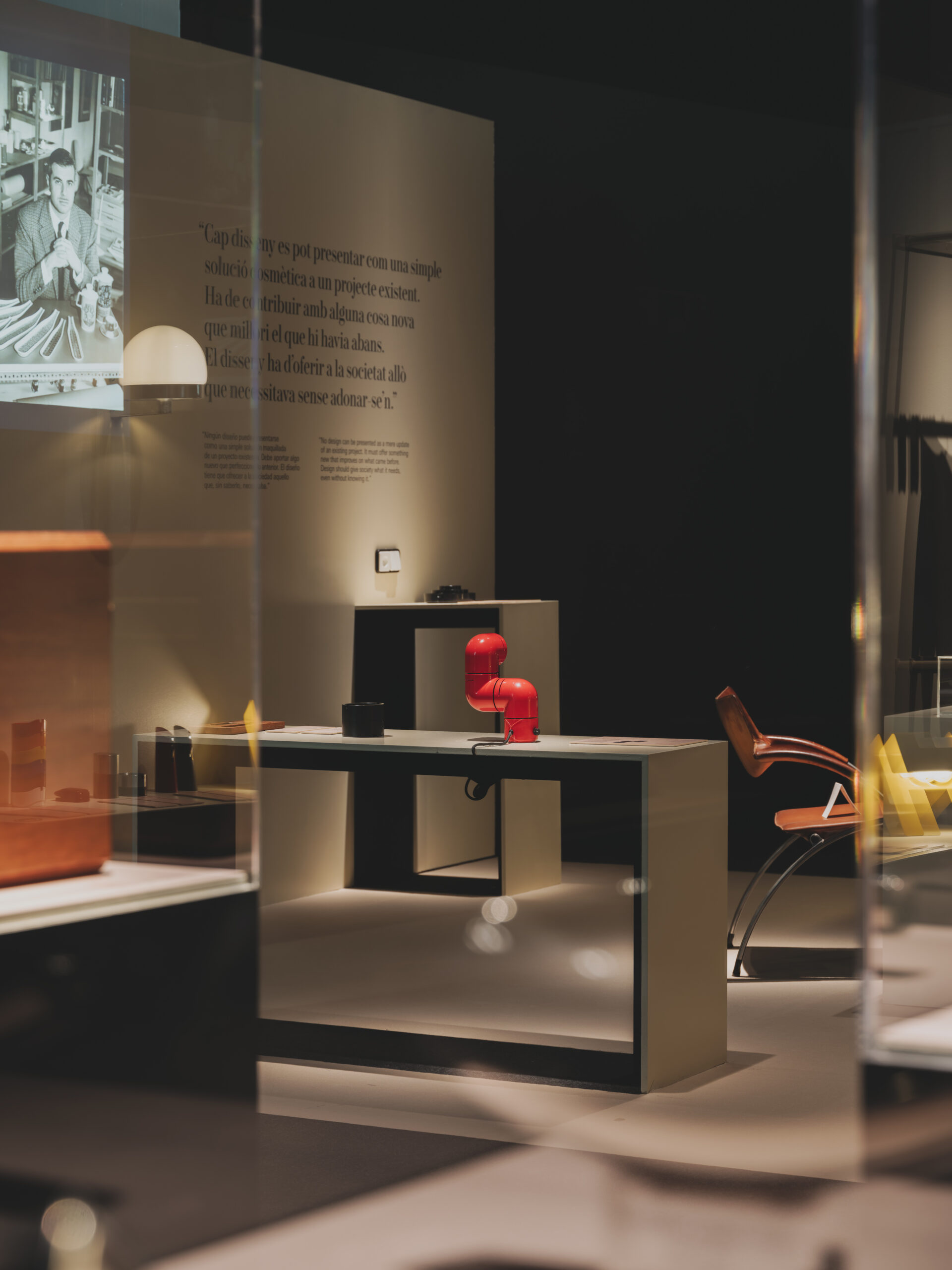
It is a particularly fitting way to understand his work. Tableware makes more sense when we think about serving, eating or clearing away. A bottle, when we picture the hand that opens it. Placing objects within the context of their use allows us to connect their forms with specific needs and ask why some solutions work better than others.
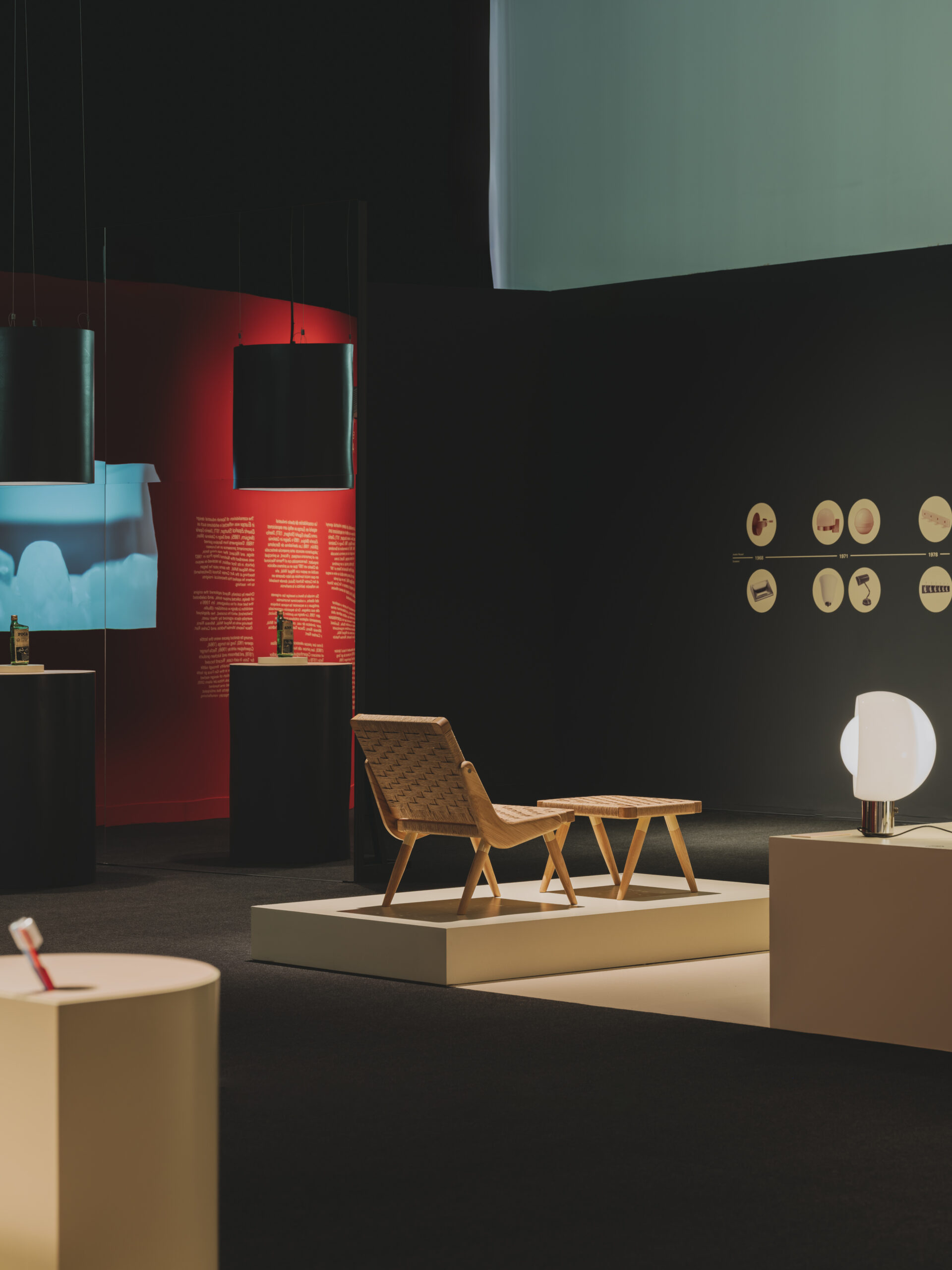
The designs on display include Compact tableware, the Copenhague ashtray, Tong ice tongs, the Tatú lamp and packaging for Puig. Alongside them, photographs, documents, magazines and correspondence reconstruct the circumstances in which they were conceived.
Curiosity as a method
In our interview with Olivia Ricard, his daughter shared an observation that helps explain this way of working: “His capacity for analysis is remarkable, to the point of marvelling at a simple, well-designed button.”
This attention to small things has early roots. During family summers in the Vall d’Aran, Ricard built contraptions with his siblings and took an interest in objects such as the porcelain components on electricity poles. The relationship between material, form and usefulness was beginning to prompt questions.
The exhibition preserves a trace of that curiosity: a notebook containing sketches and financial notes for ZIBA, a toy-making venture he devised at the age of thirteen with school friends. Imagination and feasibility already sit side by side on these pages, two inseparable considerations when an idea has to become something others can use.
From the dining table to the perfume bottle
His early work for Porcelanas Bidasoa brought this observational approach into the home. The Jerez small plates, designed in 1959, were intended to be held in one hand. This detail captures a fundamental requirement: anticipating what the person using an object will do.
His relationship with Puig opened up another field of experimentation. In his 1963 redesign of Agua Lavanda, Ricard combined smoky green glass, an oak stopper and raffia to update the packaging while retaining its identity. Work for Agua Brava, Quorum and Carolina Herrera would follow.
Seen together, these projects reveal how much a container communicates before it is opened. Weight, texture and form all contribute to the experience of a product. They also demonstrate the importance of understanding the brief: every decision must respond both to what the packaging contains and to the person who will hold it.
Making a profession possible
The exhibition places these pieces within a broader history. In 1950s London, Ricard discovered the Design Council and read Never Leave Well Enough Alone by Raymond Loewy. The book helped him recognise a profession that matched an interest he already felt. He wrote to Loewy, went on to meet him and, in 1955, opened his first studio in Barcelona.
Pursuing this work in Spain also meant bringing people together, establishing associations and creating opportunities for exchange. Ricard was one of the founders of ADI-FAD in 1960 and took part in initiatives such as the Delta Awards and the ICSID congress held in Ibiza in 1971.
A timeline brings together designs, books, congresses and institutions to show these parallel commitments. His contribution can also be measured in the opportunities he helped open up for other professionals, in a country where industrial design still needed to explain itself and establish a place.
“The greatest reward for a designer is to see one of their designs become timeless, turning into a classic. It means that a product has earned the public’s approval.” André Ricard
The torch: a shared emotion
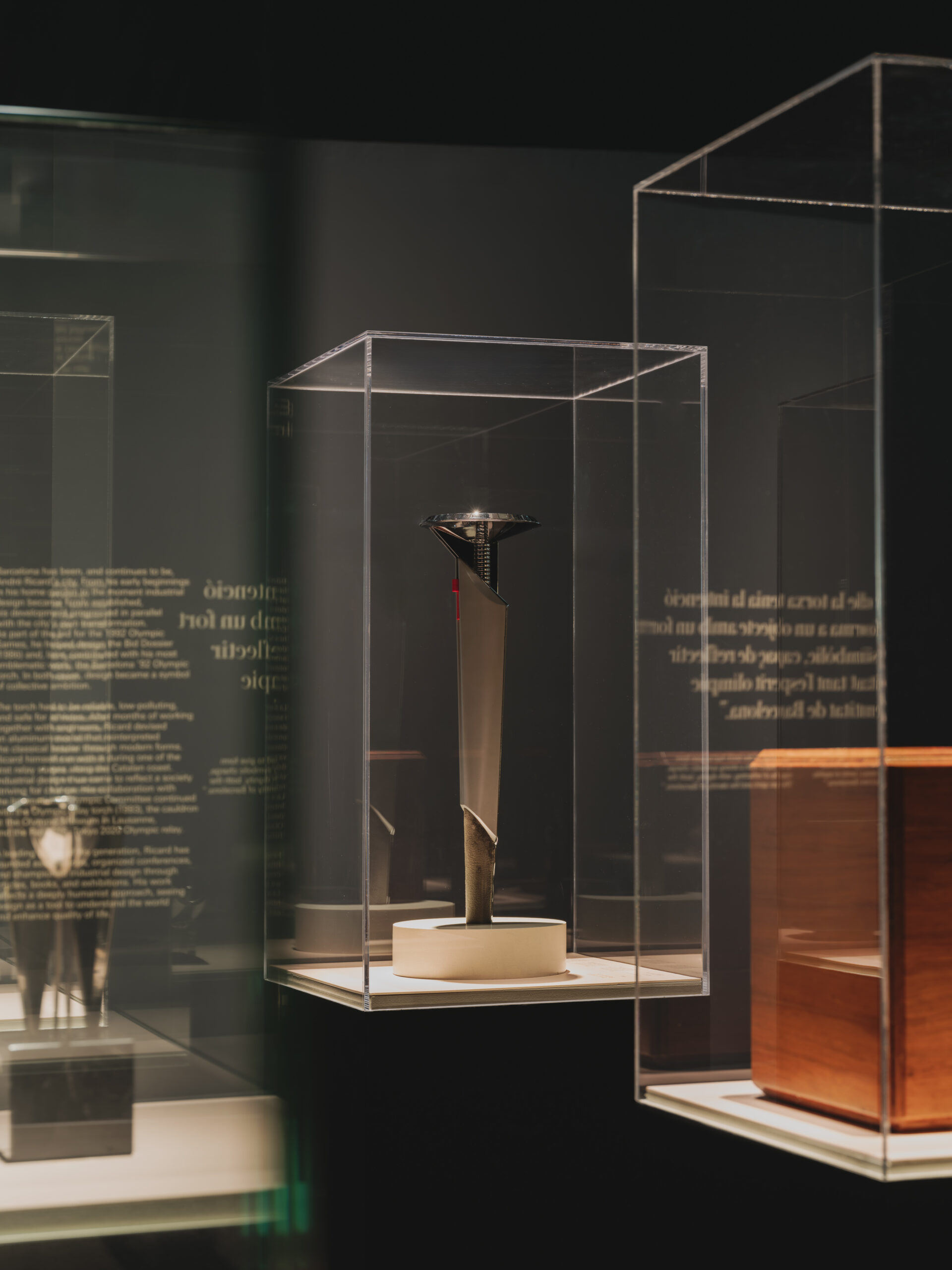
The Barcelona ’92 Olympic torch embodies much of this relationship between design and society. It had to represent a city and convey the Olympic spirit, while remaining safe and reliable throughout the relay. Its form had to fulfil both a technical and a symbolic responsibility.
After months of work with engineers, Ricard developed an aluminium object that reinterpreted the classical cauldron. He had previously designed Barcelona’s candidature dossier, another commission connected to the collective ambition of hosting the Games.
During our conversation, Olivia recalled the torch as the most important project of her father’s career and described the excitement the family shared.
That memory brings an intimate dimension to an object many of us associate with a public experience. Its presence in the exhibition allows us to look at it again as a physical object: something that had to be held, carried and perform its task in front of millions of people.
Thinking, drawing, continuing to make
Ricard’s books, some of which visitors can consult, offer an insight into his thinking. Titles such as Diseño, ¿por qué?, Diseño y calidad de vida and La aventura creativa extend onto the page the questions he explored in the studio.
The exhibition also presents paintings and drawings being shown for the first time, offering a broader view of his interests.
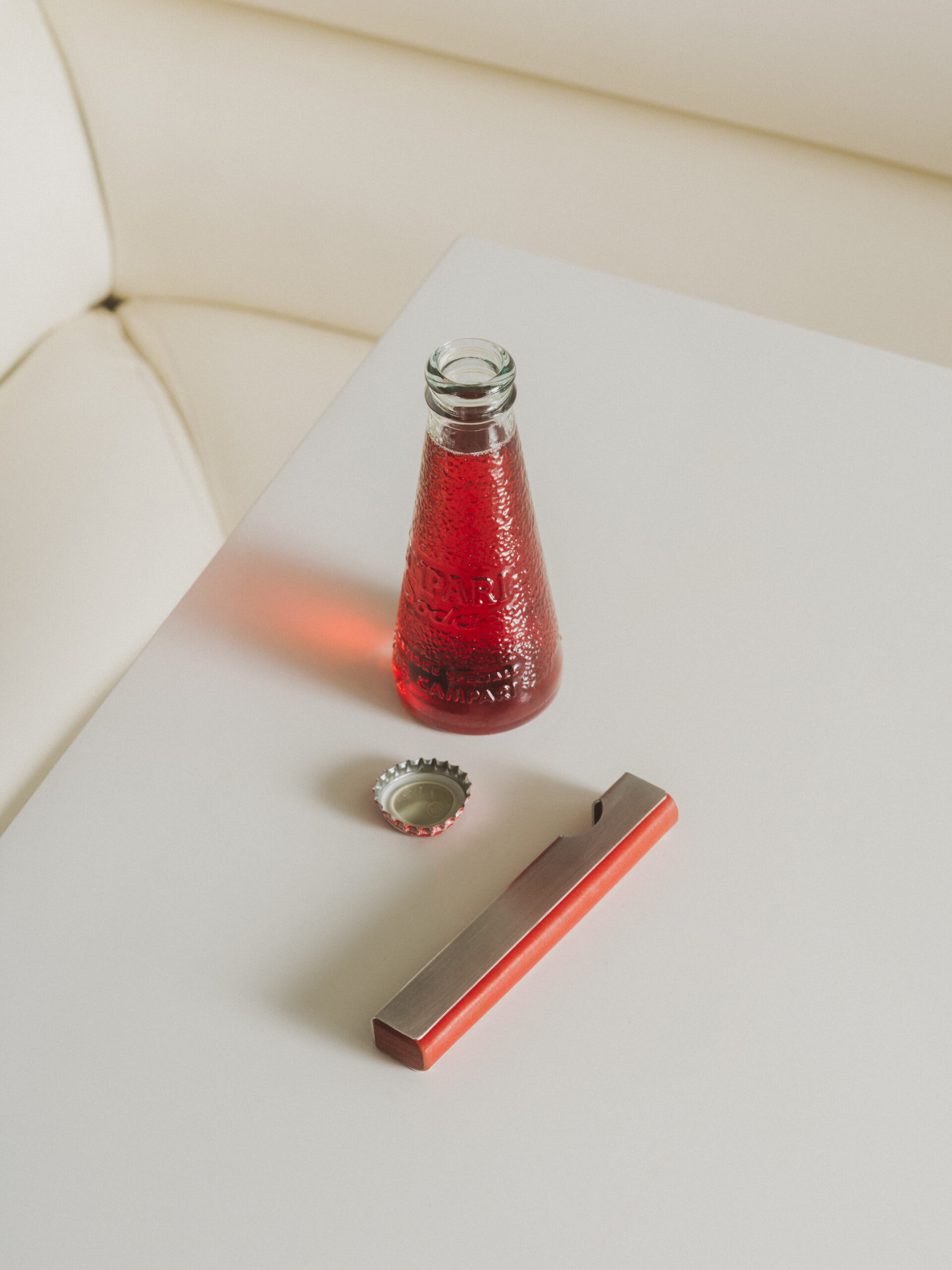
This continuity between reflection and practice finds a present-day echo in Lift, the bottle opener awarded the Gold Delta in 1963. To coincide with the exhibition, Isist Atelier is bringing it back into production after an absence of more than fifteen years.
The new version combines a stainless-steel shell with an inner body of vegetable-tanned leather, replacing the original plastic. Handcrafted in Barcelona, it marks the company’s second collaboration with Ricard, following the Orma armchair in 2023. It offers a tangible example of how a design can continue to evolve as it returns to its users’ hands.
Looking more closely at everyday things
André Ricard. Design in Use’offers a valuable exercise both for those who enjoy design and for those who have never wondered who created the objects they use. With each piece, it is worth pausing over one question: which decision makes it work?
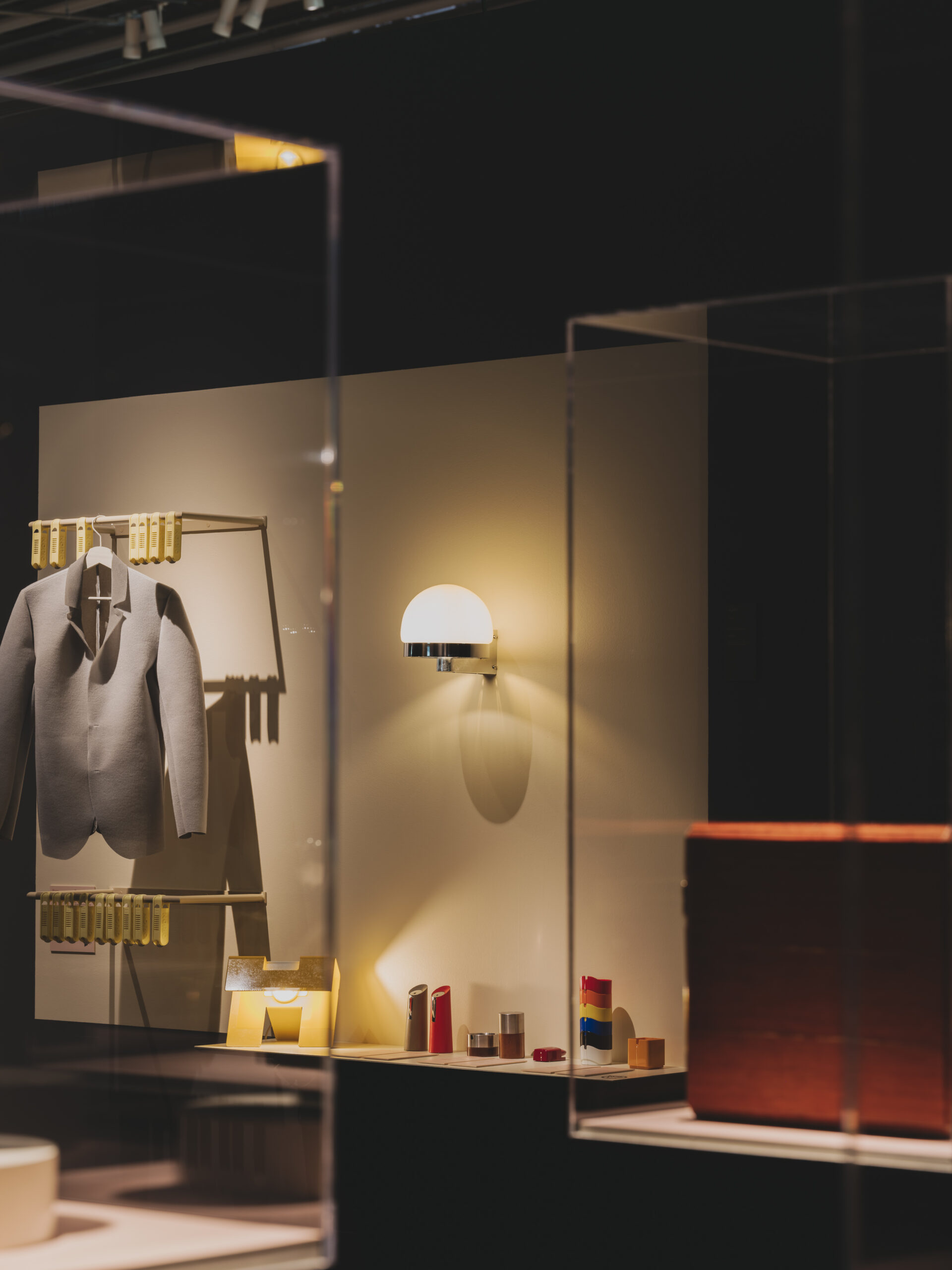
The visit can continue afterwards, when opening a cupboard, switching on a lamp or serving a drink. Perhaps this is the exhibition’s most interesting effect: helping us recognise the intelligence and care within things that have been thoughtfully designed.
The exhibition is on at Disseny Hub Barcelona until 14 March 2027. Standard admission costs €6.20, and the programme includes guided tours and the “Hablemos de… André Ricard” sessions, scheduled for 6 and 7 November 2026.
(*) Photos: Enric Badrinas.