Braun: a success story in sustainability and responsible design
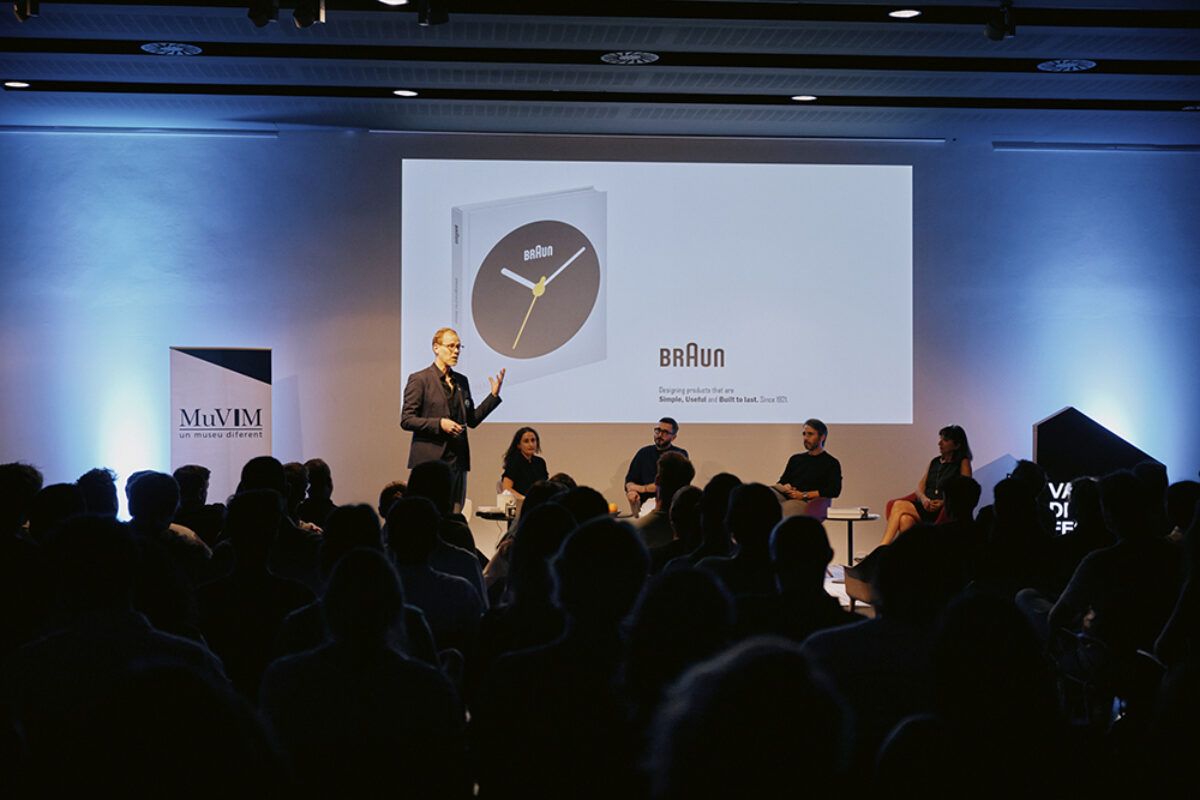
On the occasion of the second edition of the València Design Fest, we had the opportunity to interview Benjamin Wilson, Global Technology & Design Communications Lead at Braun. At this event, organized by the Fundació del Disseny de la Comunitat Valenciana and Andreu World, Wilson presented the book “Braun: Designed to Keep” and participated in a fascinating roundtable discussion on sustainability and responsible design.
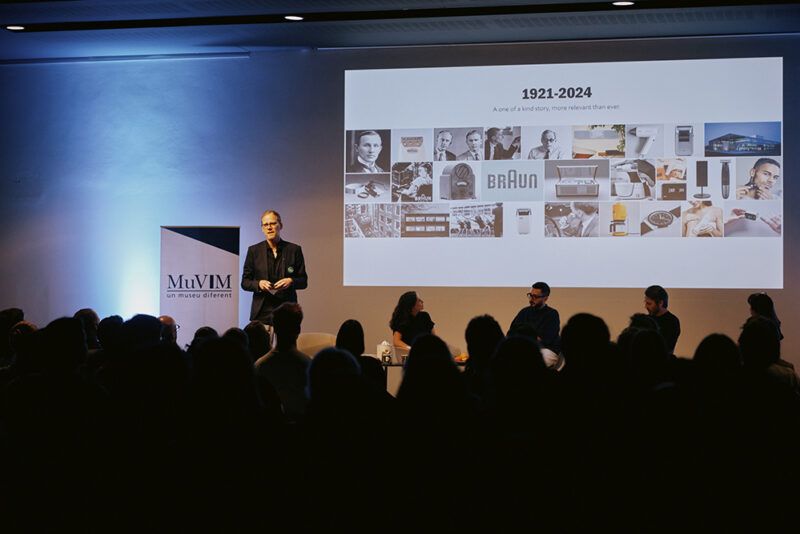
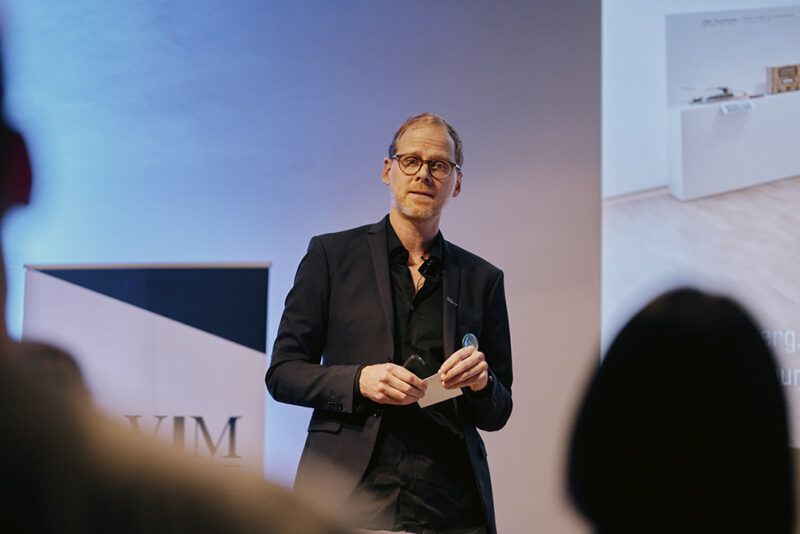
This meeting was part of the Circular Design Challenge®, a global initiative led by Andreu World under the slogan “Manufacturing a Better World”. This initiative promotes a new vision of design, manufacturing, and distribution that is more sustainable, while also highlighting the urgent need to adopt practices such as eco-design, waste management, carbon neutrality, and the use of environmentally friendly materials.
Moreover, as we mentioned, it was truly inspiring to have Benjamin Wilson present, who delighted us with a masterclass on this iconic German brand, which stands out as an example of the perfect balance between functionality, aesthetics, and environmental responsibility.
“Braun is firmly committed to longevity, recycling, and energy efficiency.”
Interview with Benjamin Wilson
Today, many products are designed with a short lifespan, and this mentality leads us to rampant consumerism. How do you think we should change our relationship with the products we use daily?
That’s a great question, and designers need to keep this in mind.
I recall that during the lockdown, the inertia to immediately replace a product that had stopped working could not occur as usual. This frustration led us to reconsider that repair is possible in many cases. At least, that’s something that happens with the designs we create and sell at Braun. They can be repaired and are made to last over time. These principles are part of our DNA.
Fortunately, thanks to certain regulations and a paradigm shift—”think before you buy”—more and more companies are embracing this philosophy, which is fundamentally based on logic. We live on a planet with finite resources, and we cannot continue to evade the impact our actions have on it and on us as humanity.
Braun has always been a brand that values functional and timeless design, and in fact, you follow these principles in all your products. Who was responsible for establishing this idea in the company?
The truth is that although the impact of the great Dieter Rams on the company has been notable, none of this would have been possible without the innovative spirit, entrepreneurial drive, curiosity, and vision of our founder, Max Braun, as well as his sons, Artur and Erwin. Artur Braun “designed” the SK 1/2 radio along with Dr. Fritz Eichler in 1955, becoming a key piece that laid the foundation for the company’s current philosophy.
On the other hand, and to ensure that Braun‘s design philosophy was demonstrated in the market, Erwin Braun sought expert advice in the field of architecture and design, particularly from the “Hochschule für Gestaltung (HfG)” and the Ulm School of Design, a school founded in the early 1950s by creatives Inge Aicher-Scholl, Otl Aicher, and Max Bill. In fact, it was professors Hans Gugelot and Otl Aicher who joined forces with the Braun team to design a completely new range of radios and phonographs. They were also the ones who recommended Dieter Rams to the Braun brothers.
What role does technological innovation play in sustainability?
Innovation in the industrial design sector has played a significant role in the rapid growth of industries. Furthermore, it has played a fundamental role in society, as it has the potential to generate positive changes by addressing complex problems and improving people’s quality of life.
That said, unfortunately not all industrial design is “good” and not all designs consider usability and environmental impact. User experience and product functionality are mandatory, and then comes the aesthetics, which arise as a result.
One of my favorite philosophers is Alan Watts, whose ideology revolved around communal ideals and spoke of harmony, which is something I firmly believe in.
At Braun, we believe in “back to the basics” and in creating products that move away from fleeting aesthetic trends, because above all, they are designed to improve our lives and endure for a long time.
One of the key topics of your talk is “#ideastokeep.” What can you tell us about it?
“#ideastokeep” is a concept taken from the book “Braun: Designed to Keep”, which encapsulates Braun‘s philosophy. With this concept, we aim to challenge new generations to reflect on what we should recover and maintain in terms of product design and in our own lives.
As I mentioned, at Braun we want to challenge emerging designers and inventors to explore both the timeless design principles of the past and the new innovative solutions that are worth preserving for the future.
To this end, we created the international design competition, the Braun Prize, which this year celebrates its 22nd edition, and through which we promote our commitment to fostering young talent, innovation, and design excellence. The total prize is 50,000 USD.
Today, you are also presenting the book “Braun: Designed to Keep”, which is a true tribute to Braun’s design philosophy. What would you highlight about it? And what role does Rams’ legacy play at Braun today?
Dieter Rams was Braun‘s head of product for 40 years, and his influence is absolute.
Even so, the book traces Braun‘s history since its founding in 1921. It not only highlights its philosophy through the creation of timeless, simple, useful, beautiful, and durable designs, but also the way in which the company was able to create a design culture, backed by a set of functional and aesthetic principles, which have had and continue to have a global impact.
Interestingly, Rams has contributed to shaping the personality of one of the most decisive companies in technological development in recent decades: Apple.
I must admit that the best thing Apple has done is put good design into the hands of millions of people. And this is a great achievement.
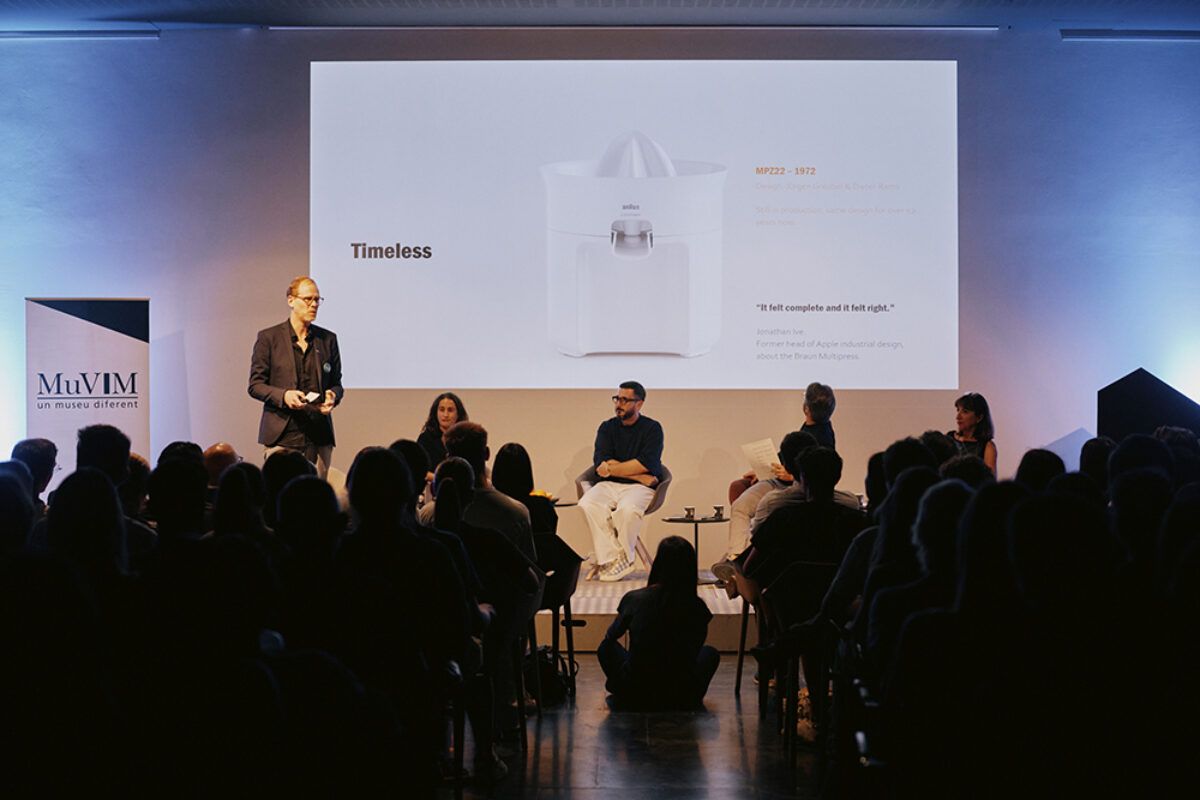
Moreover, Jonathan Ive—former head of Apple‘s design team—has publicly acknowledged his admiration for Dieter Rams. In fact, his influence is clearly seen in some of the creations of the Cupertino company. By the way, did you know he was a big fan of our juicer?
What, for you, is Braun’s most iconic product?
What a difficult question! The watch I’m wearing, which is made of ceramic, would be a good example. It’s minimalist and will probably still be contemporary many years from now. I worked on it with the engineers, and I’m very proud of this product.
In terms of industrial design, I’d say the SK 1/2 radio created by Artur Braun and Fritz Eichler in 1958. It has a fantastic design and was also affordable (though not cheap).
Both you, Andreu World, and the Design Foundation are members of the WDO, and this event is part of the Circular Design Challenge®. What does this initiative promote?
I’m part of the WDO, and the truth is that it’s an incredible community.
The World Design Organization (WDO) is a globally recognized non-governmental organization that aims to promote and advance the discipline of industrial design and its power to improve the economic, social, cultural, and environmental quality of life.
Our main goal is to champion “design for a better world”. Currently, we are focusing on manufacturing, as it’s fundamental in any design, both for people and for the planet.
The Circular Design® Challenge is a call from Andreu World to adopt practices such as eco-design, zero-waste management, carbon-neutral footprints, the selection of sustainable materials, and adherence to certifications like B Corp, Level 3, Cradle to Cradle, or Greenhealth Approved.
The reality is that we are in a climate emergency, and this great challenge requires a new industrial revolution in how we design, manufacture, and distribute globally. And for this great challenge to succeed, the entire industry must tackle it because it’s not enough for just one company to commit.
Braun: a minimalist, timeless, and deeply functional brand
Founded in 1921 by Max Braun, this iconic company has been known for decades for its minimalist, timeless, and deeply functional approach to creating electronic products.
Today, that same philosophy has led them to the forefront in the quest for more sustainable production, aligning with contemporary challenges of climate change and responsible resource management.
Braun’s DNA has remained true to the essential principles of functionalist design, influenced by the Bauhaus, where “less is more” and where every line, every shape, and every material is justified by its utility. This approach has allowed their products, from razors to kitchen appliances, to not only be durable and easy to use but also resistant to the passage of time.
In an era dominated by planned obsolescence in the electronics industry, Braun has prioritized the longevity of its designs, promoting lower consumption and greater respect for natural resources. Thus, every element is designed to prevent unnecessary waste, ensuring that consumers are not forced to frequently replace devices.
“Braun: Designed to Keep”: a must-read book
Published by Phaidon, this fantastic book tells the definitive history of Braun, which since 1921 has been part of our lives through timeless designs that are simple, useful, beautiful, and designed to last. Unlike many other brands, Braun created a design culture, backed by a set of functional and aesthetic principles, that has had and continues to have a global impact.
With profiles of key members like Dieter Rams, who reinforce Braun’s design legacy and the importance of the people behind the process, “Braun: Designed to Keep” delves into the brand’s core values (such as simplicity, utility, and longevity) that changed the way household products are perceived, designed, and used.
“Designers should eliminate everything is modish because this kind of things is only short-lived.” D. Rams
The 10 principles of good design by Dieter Rams
Dieter Rams is one of the key figures in understanding industrial design over the past hundred years. His ten principles of good design are irrefutable:
1. It must be innovative.
2. It must make a product useful.
3. It must be aesthetic.
4. It must make a product understandable.
5. It must be unobtrusive.
6. It must be honest.
7. It must be durable.
8. It must be thorough down to the last detail.
9. It must be environmentally friendly.
10. And it must fulfill this maxim: “Less, but better!”
Roundtable: Manufacturing a Better World
The roundtable discussion that followed the book presentation was moderated by Ramón Arnau, president of the ADCV, and featured Sergio Chismol, Design Manager at Andreu World, Marina Puyuelo, professor at the Higher Technical School of Aerospace Engineering and Industrial Design at UPV, and Ana Segovia, founder of Odosdesign.
Together, they debated the importance of a collective shift towards more responsible and environmentally respectful practices, aiming to inspire the adoption of more eco-friendly approaches in the industry, promoting innovation and progress toward a positive impact on the planet.
(*) Photographs: Brava Studio.