Interview with Product Designer Júlia Esqué
Júlia Esqué (Barcelona, 1986) has become one of the most intriguing creators on the contemporary design scene, precisely because of her commitment to the tangible, the sensory, and the enduring. Her approach is not only aesthetic but also deeply functional: her pieces are not just to be looked at—they are meant to be experienced. And, above all, felt.
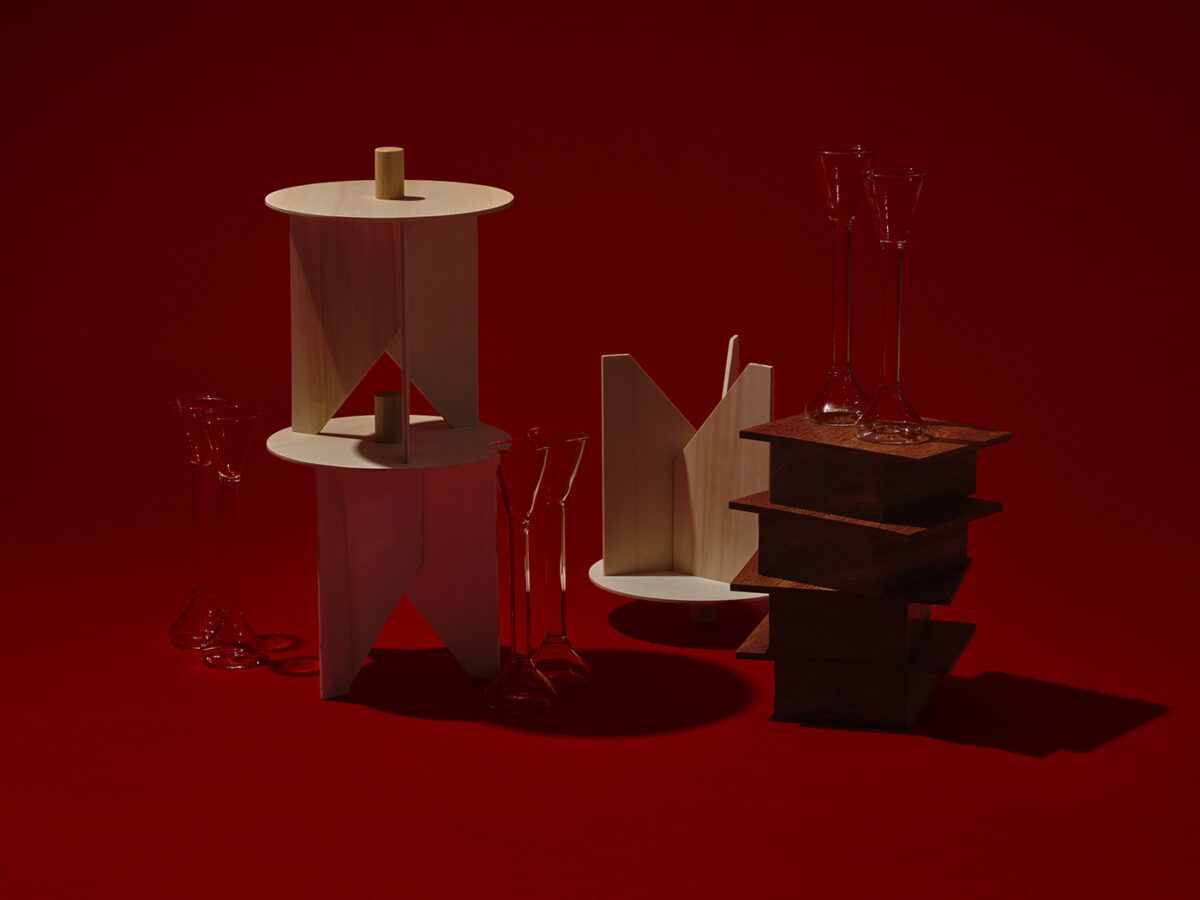
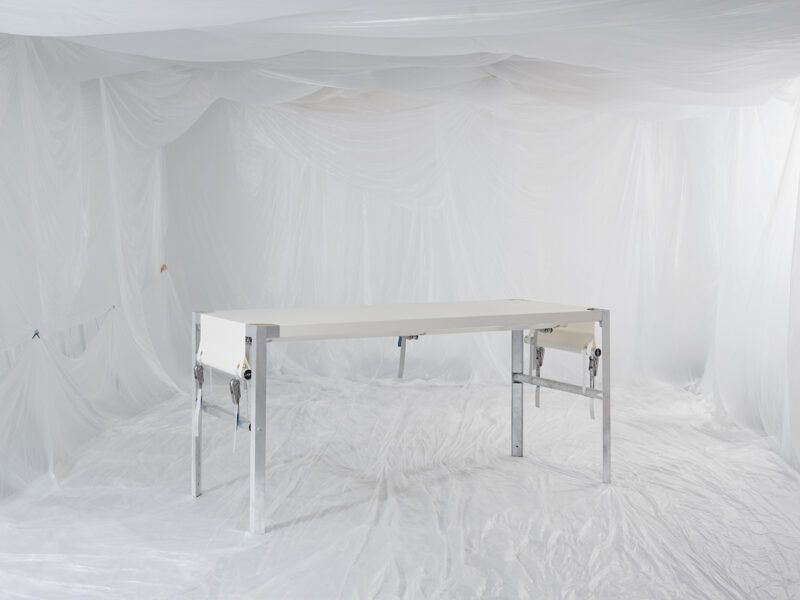
She studied design at Elisava, and after graduating, she interned with Curro Claret before pursuing a Master’s in Product Design at ECAL in Lausanne. She then spent five years between New York and Barcelona while working for Stephen Burks. Upon returning permanently to Barcelona, she collaborated with other studios, including those of Jaume Ramirez and Martí Guixé. Finally, in 2019, she set out on her own, working in a shared studio where one day, artist Andrés Reisinger joined her. Together, they collaborated on the now-iconic Hortensia armchair, originally designed by Reisinger as a digital object but later brought to life thanks to Esqué‘s expertise in textiles and ergonomics. Today, the piece is produced by the Dutch brand Moooi and is also part of the permanent collection of the Vitra Design Museum in Weil am Rhein, Germany.
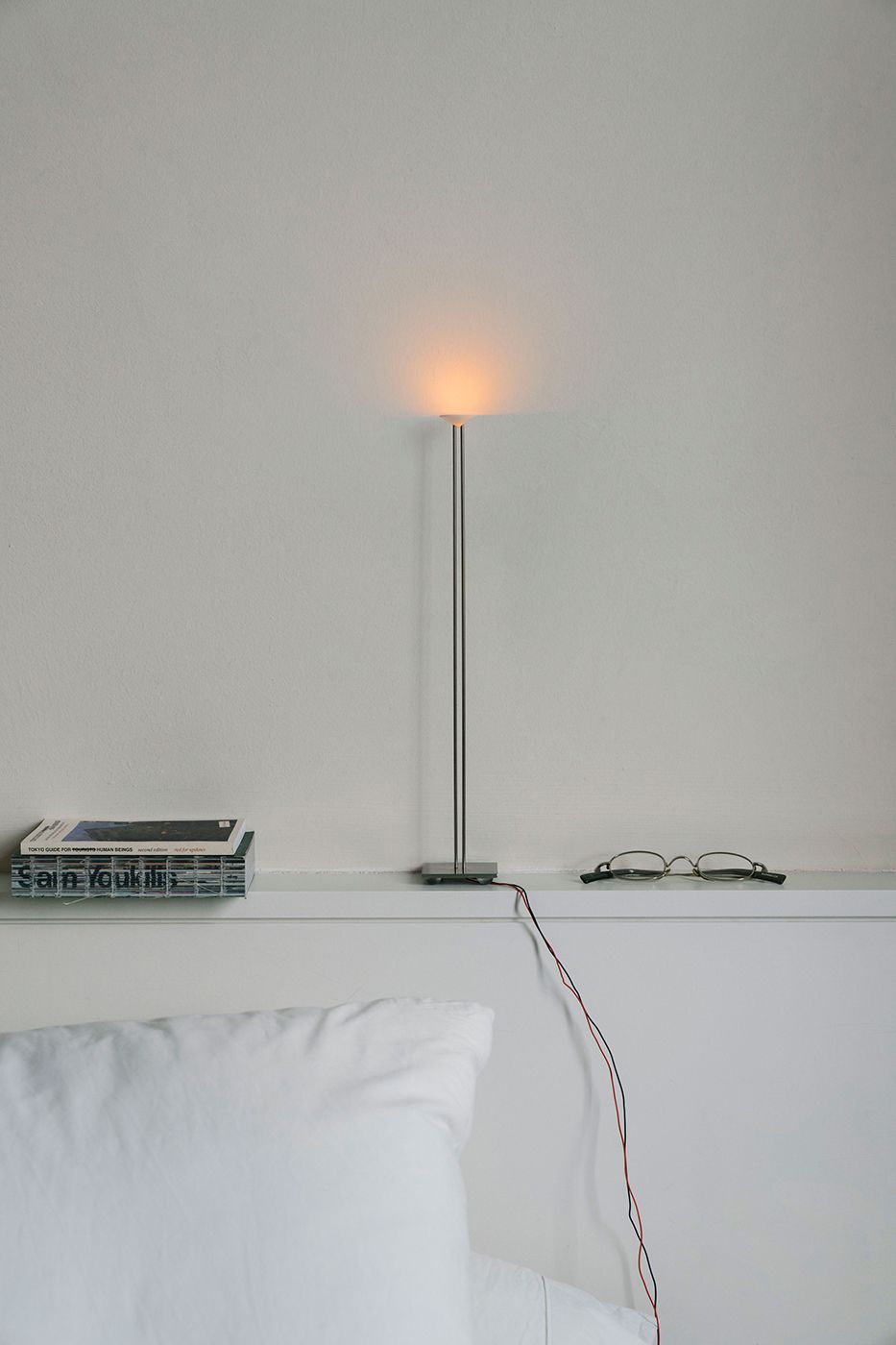
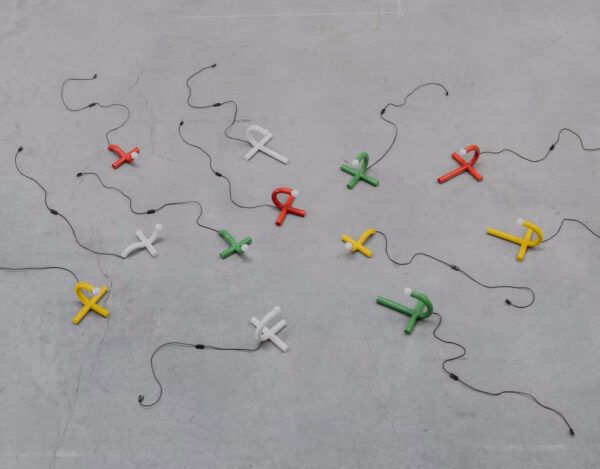
Júlia Esqué’s work challenges the boundaries between design and art, blending technical research with an almost poetic sensitivity. A perfect example of this is the Olímpica lamp, which she recently launched. It takes its name from the Olympic torch used in the 1992 Barcelona Games—a true minimalist beauty that proves that perhaps the real revolution in design must involve an experience.
A few days ago, we sat down with her for a chat. Here’s what she told us.
What did you want to be when you were a child?
I wanted to be a fashion designer.
Your big turning point came in 2019, after spending half a decade collaborating with American designer Stephen Burks in New York. What do you remember from that time, and what was the key factor that made you decide to focus on your own projects?
For a while, the idea of working on my own had been growing inside me, and I couldn’t do anything but follow that impulse. The beginning was—and still is—tough, but I would do it all exactly the same way again.

Once in Barcelona, you shared a studio and projects with Andrés Reisinger, with whom you created the Hortensia armchair. What were the main challenges in bringing this piece to life? What was the creative process like between you and Andrés?
I remember being very happy working on that project. It was a big challenge for both of us—there was a lot of energy and a strong desire to make it happen. I learned a lot, and it marked the beginning of my ongoing interest in the world of textiles.
The biggest challenge was transforming a digital texture into a fabric surface that could be reproduced and scaled for the industry.
For my part, the biggest challenge was transforming a digital texture into a fabric surface that could be reproduced and scaled for the industry.
Regarding the process, Andrés came up with the idea and led the project of turning the armchair into a real object. I took care of its physicality.
Your work focuses on material experimentation. How did your interest in design begin, and what led you to specialize in this field?
As far as I can remember, I have always been interested in objects. My grandparents worked in crafts-related fields, and my parents have been self-employed and deeply passionate about their work. I think all of that together led me to where I am today.
In your projects, there is a clear intention to explore the relationship between the user and texture. How does materiality influence the way we interact with everyday objects?
I believe materiality cannot be separated from an object; it is intrinsic to our craft.
I believe materiality cannot be separated from an object.
You work at the intersection of craftsmanship and technology. How do these two worlds coexist in your creative process?
I strive to give each project what it needs rather than forcing a particular approach. The project demands, and I respond, engaging in a dialogue between technique, material, and industry resources—methods and processes.
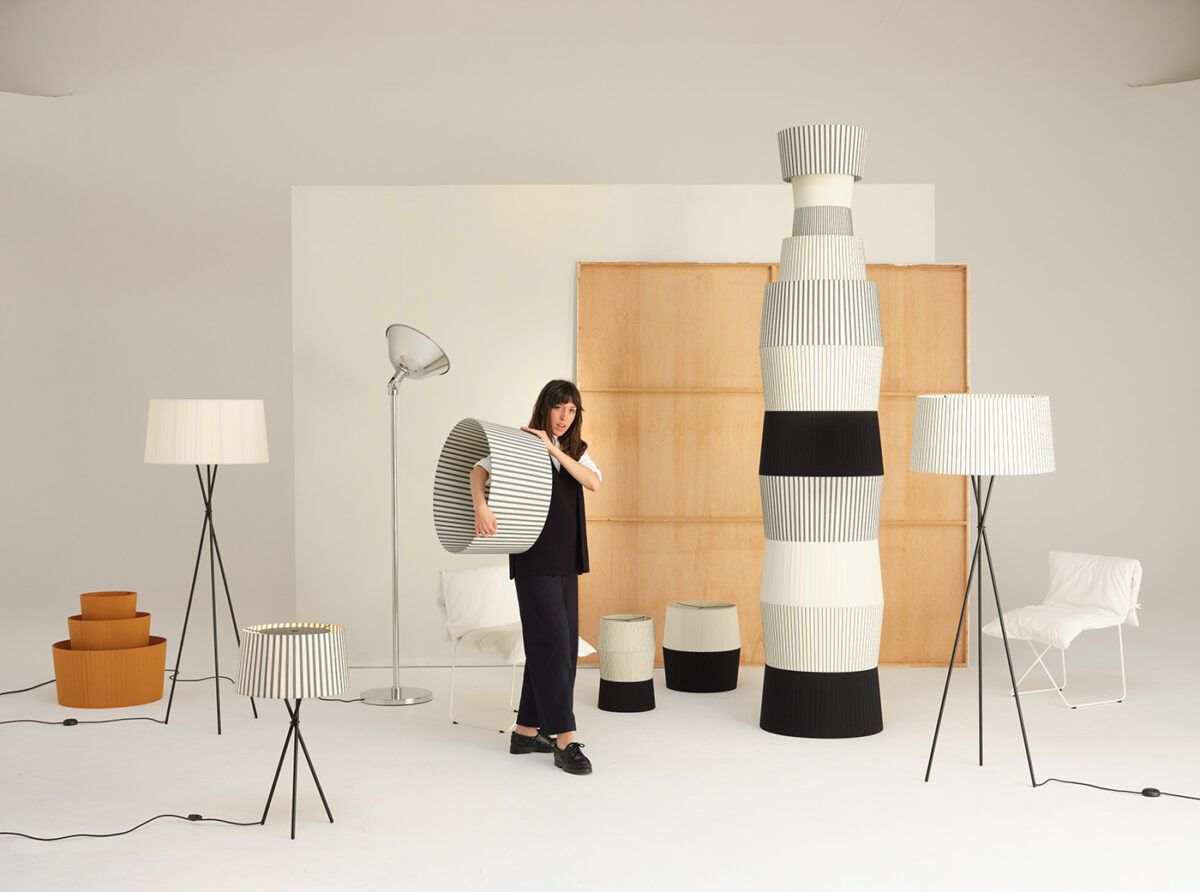
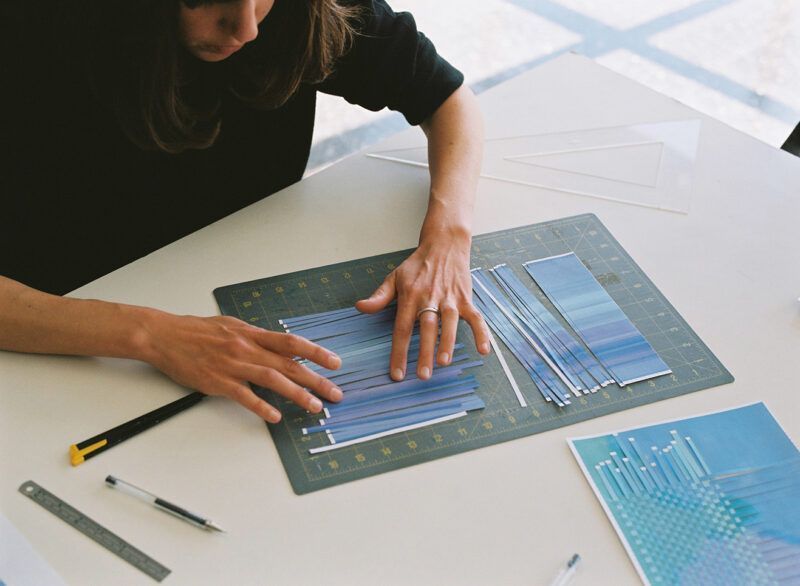
You collaborated with Paloma Wool in designing garments using a paper weaving system you created, as well as with Santa & Cole in designing a collection of lampshades. What can you tell us about both experiences?
The paper weaving project—without knowing at the time that it would be for Paloma Wool—was actually the first project I undertook when I started working independently. I was no longer working at any studio; I had plenty of time but no clients.
It all began as an exploration of color through woven paper, a system to understand the structure of a carpet. It was a personal project, and having time allowed me to discover the process in a slow, intuitive way. The system ended up interesting me as a project in itself rather than just a prototype, so I continued creating pieces.
After a while, Marta Soler from Paloma Wool approached me and said they were interested in using prints of my pieces for their next collection.
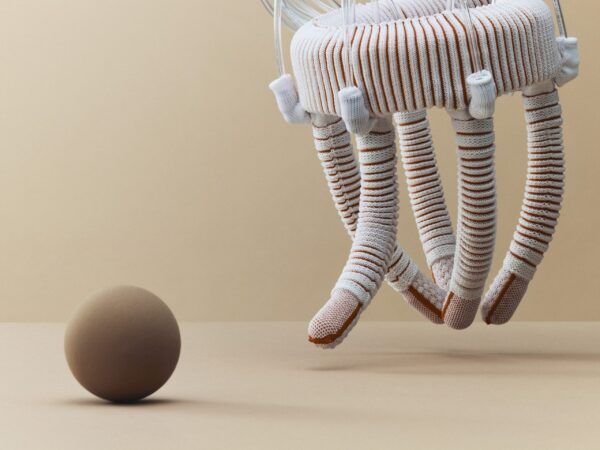
The project for the ribbons of the Trípode lamp, on the other hand, came from a design brief. To me, the uniqueness of the Trípode lies in the beauty of fabric under tension, in its deconstruction, and in the subsequent analysis of the intersection between warp and weft. I started the project with the aim of emphasizing the materiality that defines the lamp. A line, thick or thin, delineates the perimeter of the ribbon.
The repetition of this line becomes a pattern that reinforces rhythm and materiality. This is where fashion references emerge—vertical stripe prints seen throughout history, from Monet’s paintings to Haute Couture dresses or prêt-à-porter by Comme des Garçons. Anni Albers and her research on primitive textiles also appeared at various moments in the project.
In an era where sustainability is key, what role does material selection play in your work? How do you approach the challenge of designing with a reduced environmental impact?
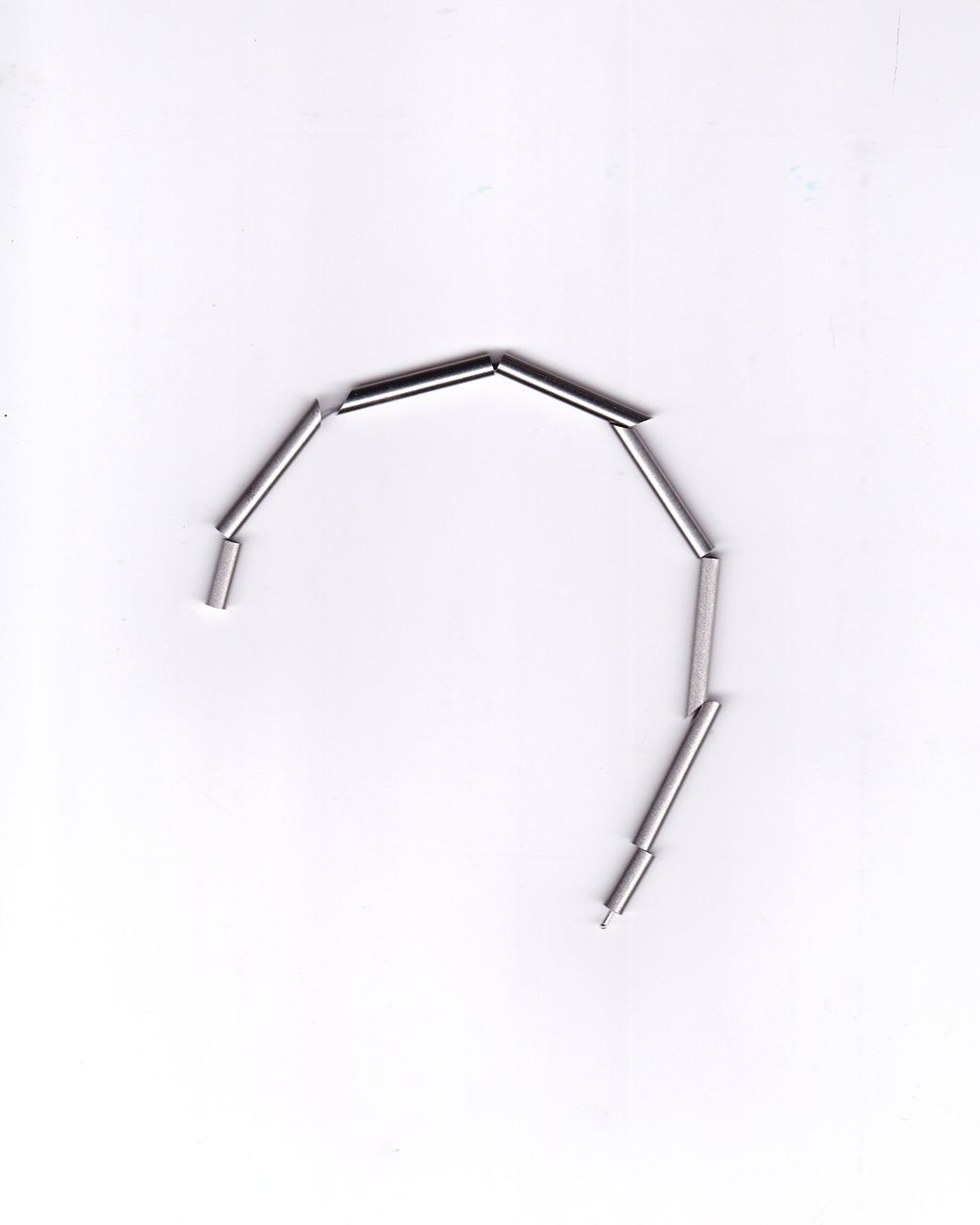
I think the Olímpica lamp perfectly answers this question. It uses minimal resources to evoke the warmth of a traditional candle. The positive and negative poles run through the two legs of the lamp to power the LED diode.
The Olímpica lamp uses minimal resources to evoke the warmth of a traditional candle.
We must admit that we’re big admirers of your work, and we’re fascinated by pieces like the UP Side Table, the Fortyfive tables, the FAD goblet, and now the new Olímpica lamp. How did this project come about, what are its main features, and where can we purchase it?
Thank you! For now, I sell it myself on a made-to-order basis.
Barcelona has a strong design tradition. How do you think the local context influences your work?
The local context undoubtedly influences my work. The people I am closest to in my daily work—Jaume Ramirez, Marc Morro, and Mark Bohle, with whom I share a studio—definitely inspire and support me every day. I learn a lot from them.
In your opinion, where is product design headed in the coming years? What trends or materials do you think will shape the future?
What matters to me is doing what is right for each project within its context.
Lastly, a couple of quick questions: What product category have you not designed yet but would love to? And what projects are you currently working on?
I’ve been wanting to design a rug for a long time—it’s a longstanding desire.
I’ve been wanting to design a rug for a long time—it’s a longstanding desire.
I’m working on several projects, one of which will be presented this year at the Milan fair. I love working on diverse projects—it makes me really happy to design a lamp, an armchair, or even a textile print for a fashion brand, all at the same time.
(*) Photos provided by Júlia Esqué.