Byung-Chul Han and what we lose when we stop respecting one another
By Cecilia Camacho, founder of CC/magazine and strategic consultant at CC/studio
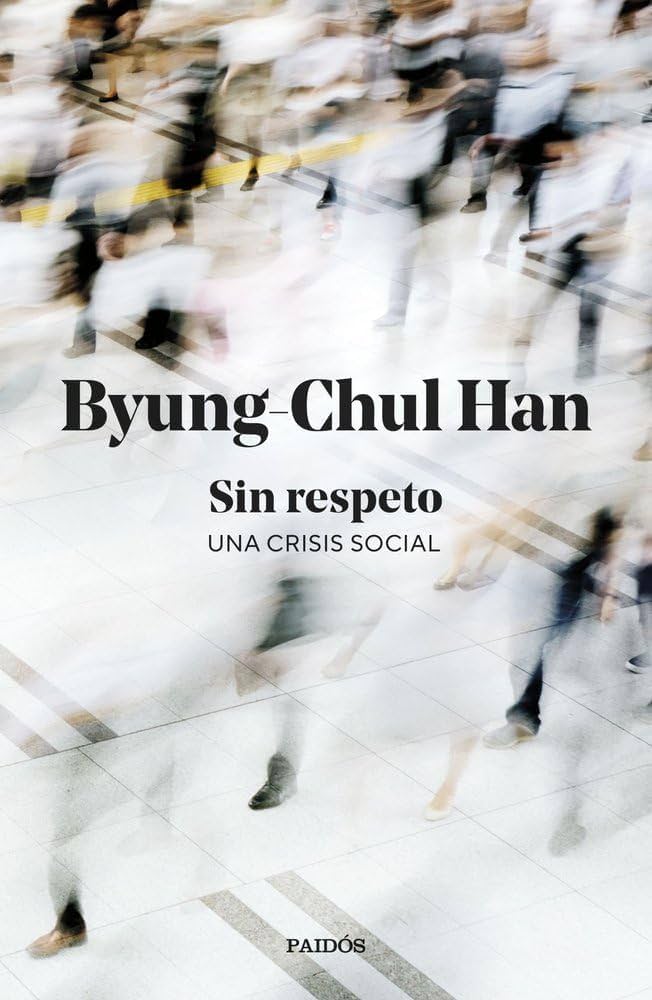
I recently read “Sin respeto. Una crisis social” (“Without Respect: A Social Crisis”), an essay by Byung-Chul Han that I wholeheartedly recommend. It helps us understand something that runs through politics, work and our relationships: how easily we stop considering others when they make us uncomfortable, think differently or are no longer useful to us.
The author of “The Burnout Society” explores a subject that deserves more attention than we tend to give it. We need only look at how we argue, whom we admire or what we are willing to excuse to recognise some of the contradictions he identifies. We resent being interrupted, yet listen while preparing our reply; we ask others to respect our work, yet sometimes forget the value of their time; we condemn one insult and applaud another because it comes from someone on our side. This is precisely what makes Han worth reading: he also asks us to examine our own behaviour.
How much do you have to prove to be respected?
We say that respect must be earned with an ease that is revealing. What should someone have to prove to be treated with dignity? That they have social standing, a brilliant career or a life others admire? We can recognise someone’s talent or effort without making their achievements the measure of their worth.
Han connects this confusion to a society that conditions us to compete and to feel responsible for everything that happens to us. If we cannot keep up, we should organise ourselves better; if we are exhausted, we need to learn to manage our time; if a project fails, perhaps we lacked ambition. Within this logic, circumstances disappear and every difficulty begins to look like a personal failing.
One of the book’s most uncomfortable insights concerns the shame of feeling that we are falling behind. We can work incredibly hard and still feel that it is not enough, particularly when we compare ourselves with lives of which we see only a carefully curated selection. We end up feeling ashamed of our limitations, of needing help or of not having achieved what we were supposed to.
Applied to work, this reflection raises very concrete questions about how we treat those who work with us, what we demand in exchange for an opportunity and how much value we place on tasks that receive little recognition. Respect also means paying on time, acknowledging a contribution and honouring a commitment, even when nobody is going to congratulate us for it.
“A well-ordered society is not a society of achievement, but a society of respect.” Byung-Chul Han
Disagreeing without turning the other person into an enemy
In politics, this difficulty in recognising others takes on a particularly troubling dimension. Han examines what happens when our opinions become inseparable from our identity: any disagreement begins to feel like a personal attack, and changing our mind can seem like a betrayal.
We then stop asking whether an argument makes sense and focus instead on who is making it. We may excuse a lie because it benefits our own side, or refuse to acknowledge a good decision because it comes from someone we oppose.
Meanwhile, the possibility of understanding one another diminishes because we enter the conversation having already reached a verdict.
Han analyses Trump to explain how discrediting an opponent on moral grounds can become an instrument of power. He also warns of an unsettling paradox: losing trust in authority can fuel a desire for an authoritarian leader who promises to solve everything. When we distrust every institution or source of knowledge, someone offering a simple explanation and an obvious person to blame can seem particularly convincing.
“We must separate the realm of opinion from that of identity. When the two merge, debate ends.” Byung-Chul Han
Acknowledging the authority of someone with expertise, someone who offers guidance or takes responsibility, is compatible with holding them accountable. Similarly, respecting a person allows us to challenge their ideas firmly. We can fight discrimination, expose abuse or dismantle a falsehood without resorting to humiliation. Our principles are put to the test when we uphold them even in our dealings with people we dislike.
The applause that cruelty receives
There is a difference between holding someone accountable for what they have done and enjoying watching them being torn apart. On social media, that distance can quickly disappear when a mistake becomes a video we share, comment on and turn into entertainment. We may know nothing of the context, but the mockery is immediately clear, and joining in takes very little effort.
Han distinguishes between acknowledging wrongdoing and suffering humiliation intended to exclude. The question is what we hope will happen after we point out a mistake: whether we want to establish what happened, repair the harm and see something change, or whether we have found an opportunity to feel superior for a while.
“Respect, too, takes time. But we have no time for respect.” Byung-Chul Han
The book connects this dynamic with our confusion between attention and respect. Being seen and talked about does not mean being valued, whatever the numbers might suggest. When we reward every form of notoriety, we can also end up giving more space to those who are most adept at insulting or provoking others. In doing so, we help normalise a way of treating one another that we later lament.
Making room for others
Among the passages I find most compelling are those devoted to friendship and attention. Han describes a bond that allows the other person to develop their own life, at their own pace, with their own decisions and differences. Something seemingly simple, yet it requires us to accept that the people we love are not there to agree with us all the time or fulfil every expectation we have of them.
Listening to someone means letting them finish, asking questions and accepting that they may have something to say that we had not anticipated. It also means giving up the centre of the conversation for a while. With so many invitations to put ourselves on display and express our opinions, it is worth asking how much room we leave for the kind of attention that goes unseen and uncounted.
Drawing on Richard Sennett, Han turns to musical improvisation to discuss cooperation. Musicians need to listen to one another to play together, and that attention allows each of them to find their place without losing their own voice. I find this a particularly apt image for thinking about our relationships: what someone else does influences what we do, and that willingness to respond can produce something neither of us would have created alone.
I recommend ‘Sin respeto’ because it raises questions we would do well to bring into our own lives, even when they make us uncomfortable. After reading it, it is worth noticing how we respond to criticism, what we do with someone else’s mistake or how we treat a person from whom we expect nothing in return. These are concrete opportunities to practise the respect we so often find lacking.
(*) Cover photograph: Roman Kaiuk (Pexels).