The art of saying no
By Cecilia Camacho, Founder and Editor-in-Chief of CC/magazine
We live in an age of overpresence — where everything must be seen, everything must be said, everything must be accepted. An age where yes and silence have become the only acceptable answers: yes, to belong to something, to someone, to a collective narrative — even if it’s not entirely clear; and silence, as a substitute for no, out of convenience, apathy, or fear of causing discomfort. We say yes out of inertia, out of a desire to please, out of fear of being left out. We remain silent to avoid conflict, to dodge the discomfort of refusal. And yet, few things are more revolutionary — or more honest — than learning to say no.
The philosopher Byung-Chul Han writes that constant positivity is one of the afflictions of our era: the imperative to perform, to be visible, to be constantly validated. In that context, saying no becomes almost an act of resistance. Not out of gratuitous rejection or self-righteous authenticity, but because no sets a boundary, a shape, a standard. To say no is to draw the outline of who we are.
As Isabel Coixet once said: “Not everyone is going to love you”. And what a relief it is to accept that truth. To stop seeking universal approval and begin to live — and work — with internal coherence. Because failing to say no often means failing to say yes to ourselves.
Saying no also means drawing lines. It’s about defending our decisions, our ideas, our time, against the pressures of the outside world. It’s not about imposing or closing oneself off, nor is it about provoking conflict — it’s about standing firm, with respect, for what we believe in. Saying no to certain things — and certain people — is a way of revealing ourselves: of clarifying what we value, what we reject, what moves us. A no can be more revealing than a thousand affirmations. It is a way for the world to truly know us.
And yet, saying no is not easy. In some cultures, such as Japan, a direct no is considered almost offensive. There, the art of refusal has been elevated to something subtle and sophisticated — a matter of elegance, empathy, and compassion. The idea is not simply to reject, but to do so with care and tact. And this teaches us something important: saying no should never be done with arrogance or indifference — as is sometimes the case in cultures where refusal becomes a show of superiority. True mastery lies in knowing how to say no without causing harm. A no can be firm and still kind.
Learning to accept a no is also part of the game. No career, no personal relationship, no artistic vocation has been built without facing rejection. The no from others is not an offence — it’s a declaration of context, of values, of fit (or misfit). Knowing how to receive a no without falling apart is just as essential as learning how to say it without fear. And let’s not forget: the world doesn’t end. Life is full of doors that open — and others that don’t. Maturity means learning to live with that.
And this brings us to something we’ve forgotten in today’s culture of polite avoidance: showing up and being accountable.
Saying no with good manners is a form of ethical elegance. Rudeness is never an option — it wounds, but it also reveals. It exposes a lack of integrity, of courage, or simply of respect. A no can be both clear and generous. It can be direct without being hurtful. There is no contradiction between being honest and being kind. In fact, the way we say no says more about us than the reason behind it. Because it’s not just what we say — it’s how we stand by it.
In a time of strategic silence — of being left on read, of emails that go unanswered and messages that vanish into the ether — a direct and well-reasoned no is an act of respect. Respect for oneself, but also for the other. It’s not about wounding, it’s about being clear. It’s not about rejection, but about making decisions with discernment. Silence may disguise a lack of response, but it will never be more elegant than a firm, humane refusal.
Saying no is having a compass. A well-spoken no isn’t a wall — it’s a door gently closed, leaving room for future conversations in another context, under different circumstances.
May we learn to say no. Without guilt. Without fear. With honesty, grace and care.
It won’t always be easy — but only from that clear, conscious place can the yes regain its true meaning.
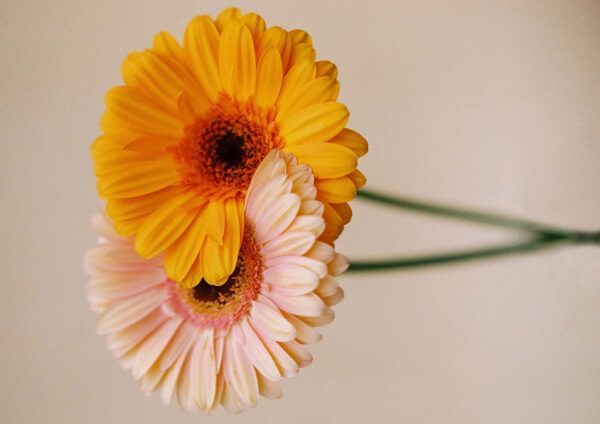
(*) Cover image: Miguel Á. Padriñán (Pexels).