Cavea: from a place of power to a place of connection
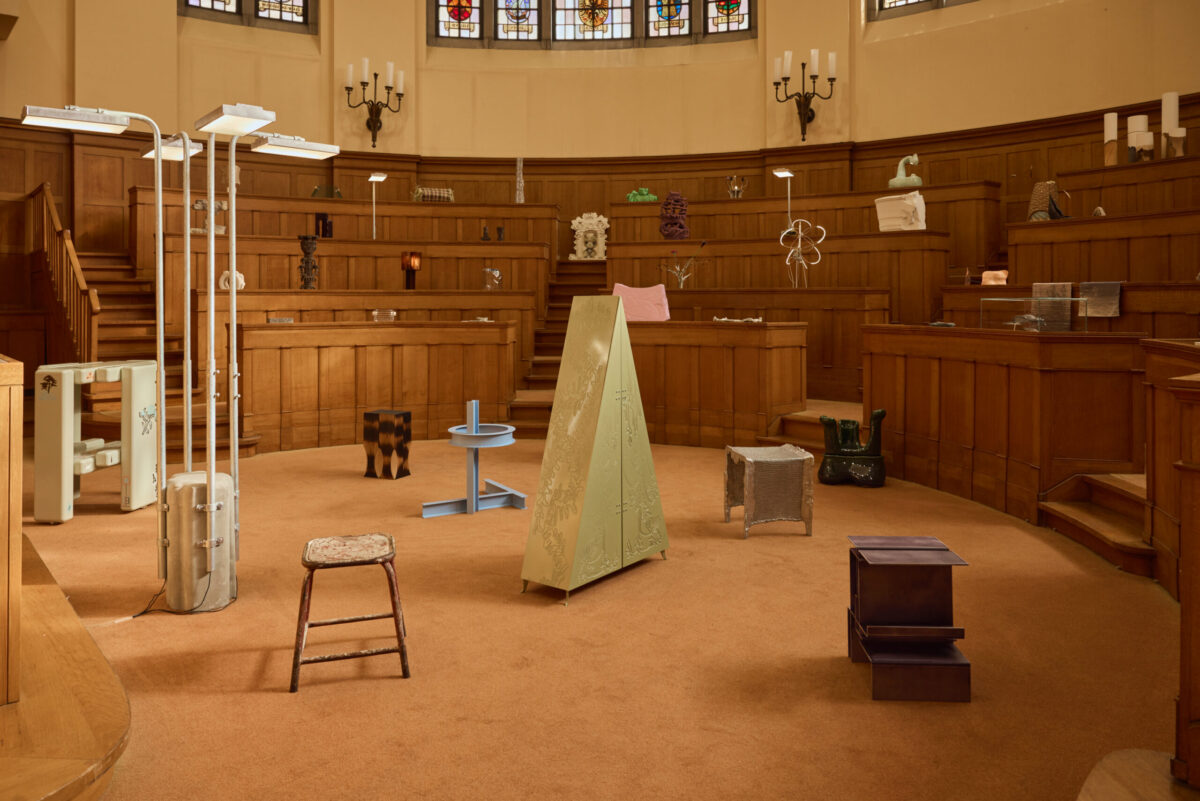
Brut Collective and DesignUnDisciplined brought together designers, architects and artists in Ghent to explore how we live together. In the former council chamber of the Gouvernement, the works shared a space with a question about who participates and what place they occupy.
The arrangement of a room shapes what happens within it: who can speak, where attention is directed and how much distance separates those taking part. Cavea drew on this relationship between space and behaviour to occupy the historic council chamber of Ghent’s former Government House. Where discussions and decisions once took place, Brut Collective and DesignUnDisciplined proposed an encounter between different ways of understanding design.
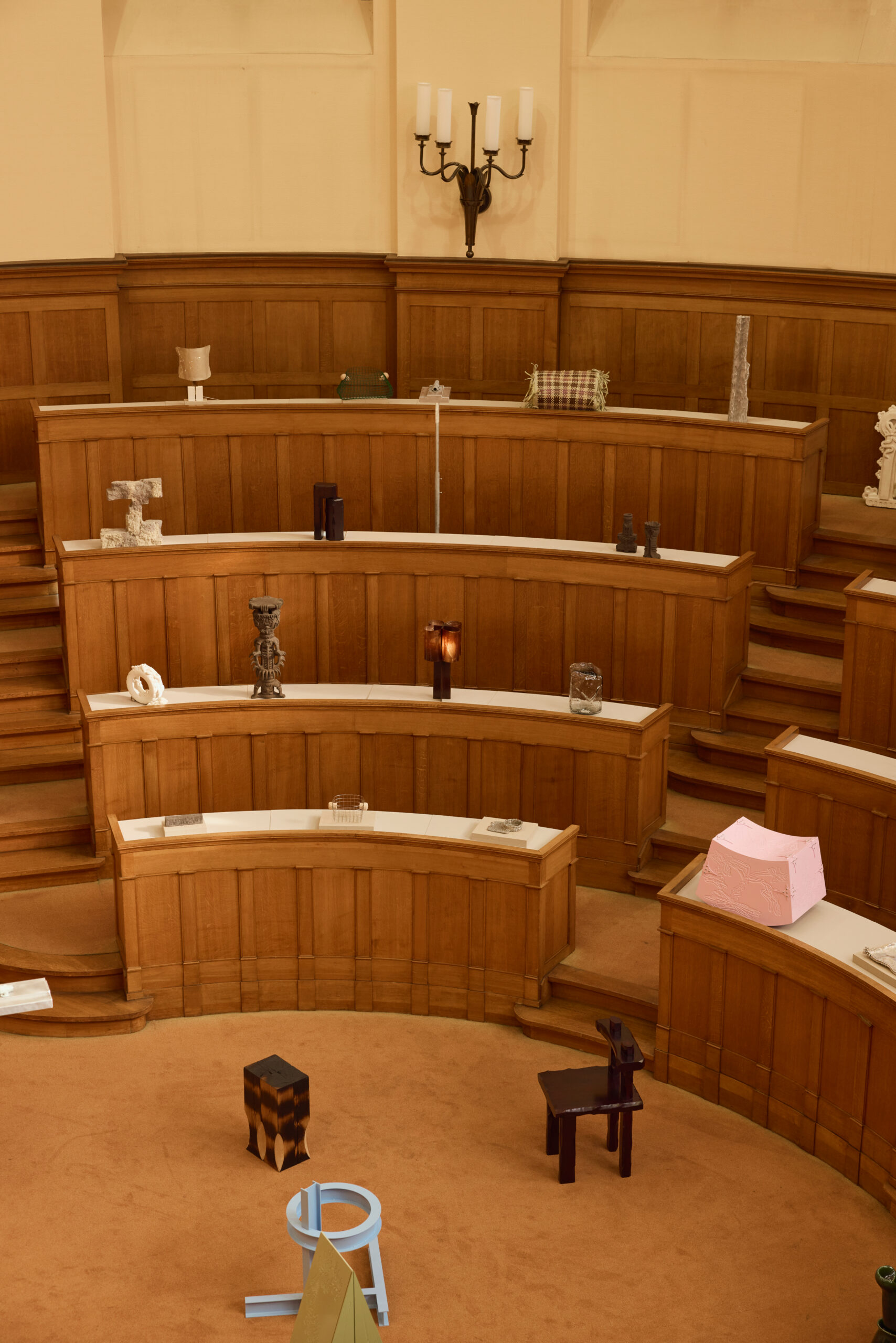
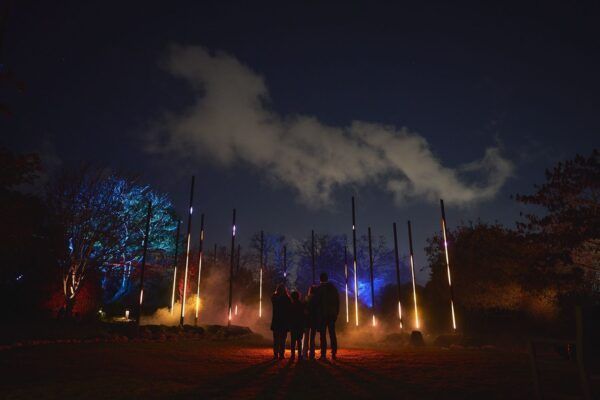
Held from 3 to 11 October 2026 as part of Design Fest Gent, the exhibition brought together material research, objects and artistic proposals around a shared question: how can we imagine other ways of living together? The setting offered more than a distinctive backdrop, bringing the memory of a space devoted to representation and the exercise of power into the interpretation of the works.
From watching the stage to sharing the stands
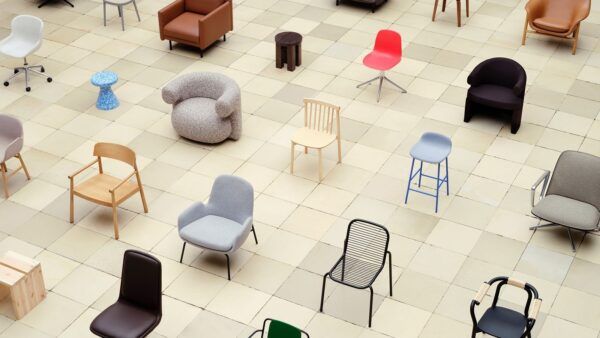
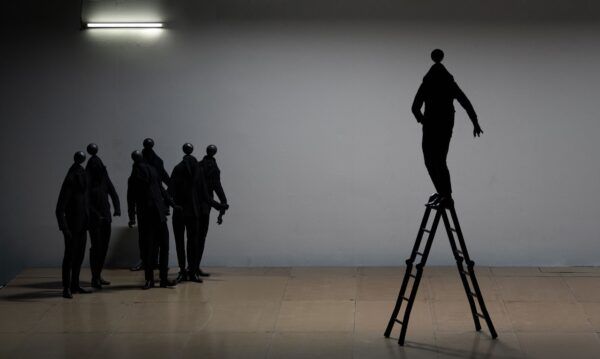
The title refers to the cavea, the tiered seating reserved for spectators in ancient theatres. The curatorial approach revisited this architecture of gathering and questioned the hierarchical arrangements that historically governed its seating. Attention shifted towards those who watch, listen and share a place, extending the exhibition’s focus beyond whatever occupies centre stage.
The organisers conceived the stands as a space open to people, objects, machines, nature and hybrid forms. This broader perspective invited consideration of what we include when we talk about coexistence: alongside human relationships come the materials we use, the technologies we adopt and the environments on which we depend.
Viewed from this perspective, Cavea proposed thinking about design through the relationships it establishes. An object can be studied for its form and function, but also for how it changes the space it shares with others and the behaviour it invites. The former council chamber made this reading particularly pertinent.
Cavea proposed thinking about design through the relationships it establishes.
An exhibition shaped by many voices
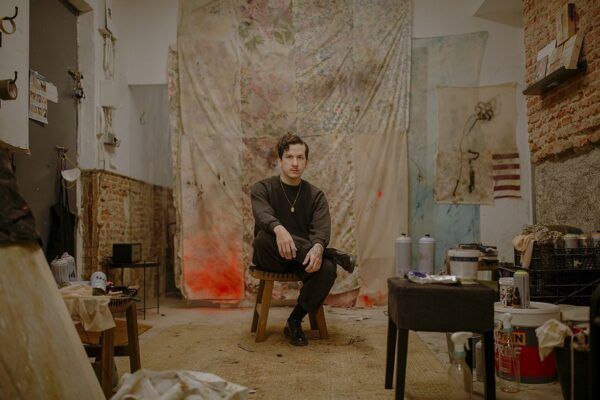
The collaboration between Brut Collective and DesignUnDisciplined brought together complementary responsibilities: both shared the curatorship, while DesignUnDisciplined coordinated the project and Brut Collective developed the exhibition design. Linde Freya Tangelder, Nel Verbeke, Charlotte Jonckheer and Bram Vanderbeke on behalf of Brut, and Siegrid Demyttenaere and Elien Haentjens on behalf of DesignUnDisciplined.
For Brut, working collectively is part of a trajectory that began in 2018. The group places the architectural, sculptural and emotional potential of design among its shared interests, developing installations in which individual works interact within an environment conceived together. This approach allows each practice to retain its distinctiveness while bringing it into proximity with others.
Brut develop installations in which individual works interact within an environment conceived together.
Cavea extended that conversation to participants including Théophile Blandet, Liesbet Bussche, Marie Caye, Audrey Large, Odd Matter, Nonhuman Nonsense, Gijs Van Vaerenbergh and Sharon Van Overmeiren. Collaborations such as Suhee Kim with Camille Tan, and Diane Steverlynck with Maud Vande Veire and OpenStructures, reinforced the interest in shared authorship. The exhibition accommodated different disciplines without imposing a single formal language on them.
Bram Vanderbeke’s material research
Among these contributions, Bram Vanderbeke’s work offers a close look at how material research can move between object, sculpture and architecture. The Belgian artist and designer, based in Ghent, graduated from Design Academy Eindhoven in 2016, having previously studied design at the Royal Academy of Fine Arts in Ghent.
His practice examines the relationships between pieces, their architectural surroundings and the people who use them. The ambiguity between an autonomous artwork and a functional element is a deliberate aspect of his work, which draws on materials and construction processes to alter our perception of scale and space.
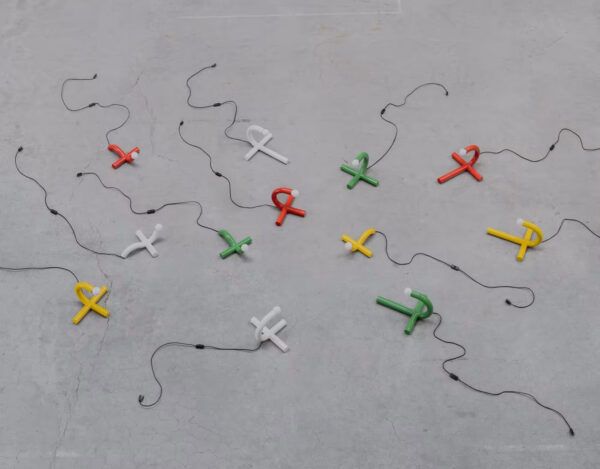
At Cavea, he presented works from the Casted Models and Alucast Sculptures series, alongside the Woven Stool, developed with Wendy Andreu. These three proposals offer an opportunity to observe different operations — moulding, casting, folding and assembling — and see how each process leaves a recognisable trace in the finished piece.
Small-scale architectures in concrete
The Casted Models are unique concrete objects that suggest possible architectural developments. They originate in intuitive compositions of stacked bricks, from which Vanderbeke creates the pieces. The shift in scale remains open to the imagination: a form viewed as an object might suggest a fragment of a building or a larger construction.
The Casted Models are unique concrete objects that suggest possible architectural developments.
The surfaces retain rough textures, imperfections and subtle variations in colour that give them a weathered appearance. Concrete thus acquires an expressive presence linked to the process of its making, with details that encourage closer attention to what might otherwise be regarded as an irregularity.
This attention changes how the material is read. Accustomed to associating concrete with structures and building sites, here we can observe it at close quarters and recognise how texture, volume and proportion contribute to the same investigation. Each piece works both through what it reveals and through the construction possibilities it allows us to imagine.
Traces of the process in aluminium
In the Alucast Sculptures, the forms are initially sculpted from large blocks of wax and then cast in aluminium. The marks of this physical work remain visible on the metal, so that the surface retains information about the gestures that preceded it.
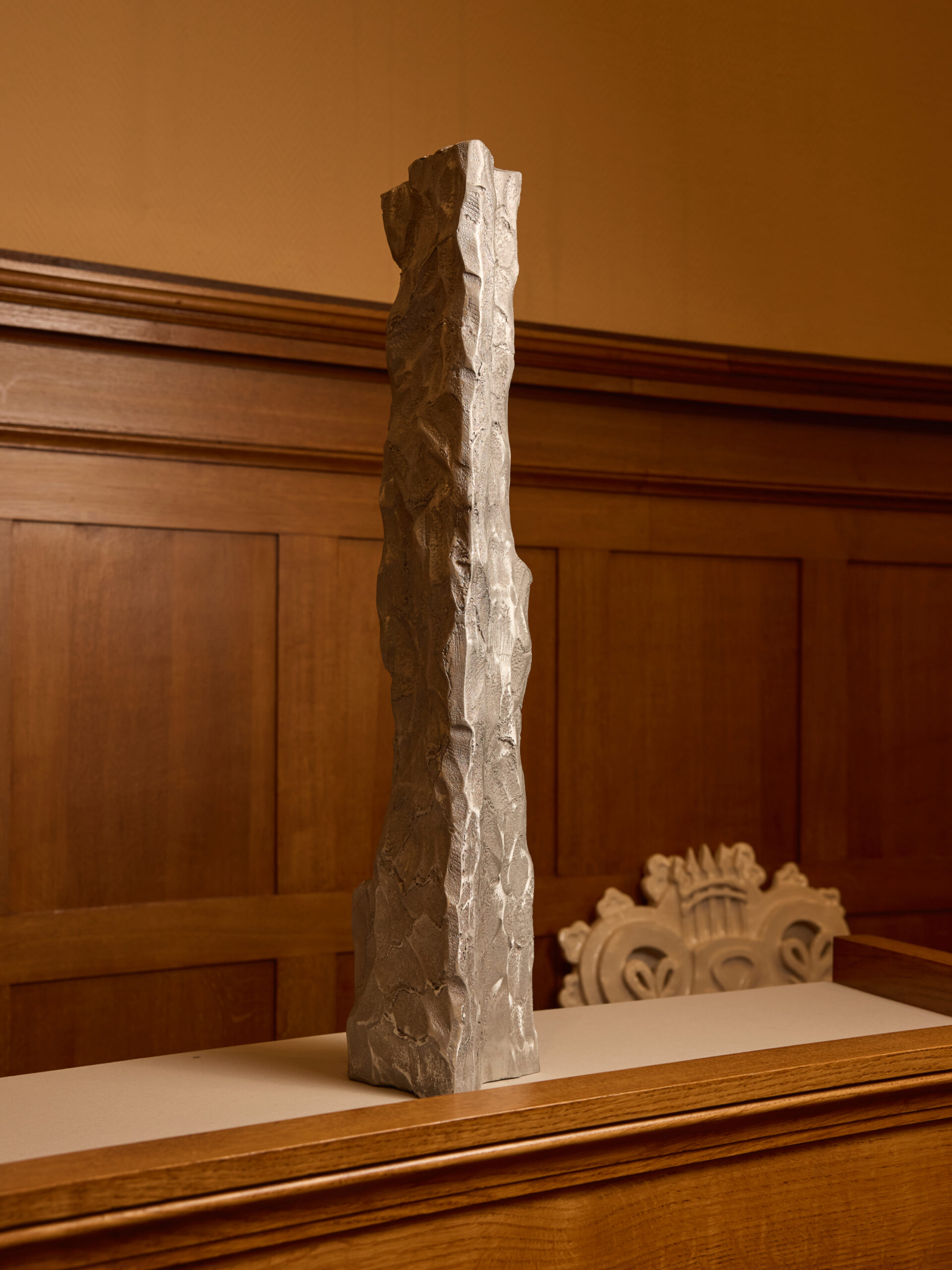
Deliberately rough polishing creates areas that reflect light and others that absorb it. Attention then moves from the sculpture’s outline to the variations across its surface, where the traces of fabrication influence how its volume is perceived.
In relation to the Casted Models, these works demonstrate how a change of material transforms an object’s presence. Concrete and aluminium allow different qualities to be explored, although both retain traces of their making. This continuity helps us understand Vanderbeke’s research beyond a collection of isolated forms.
Weaving with metal alongside Wendy Andreu
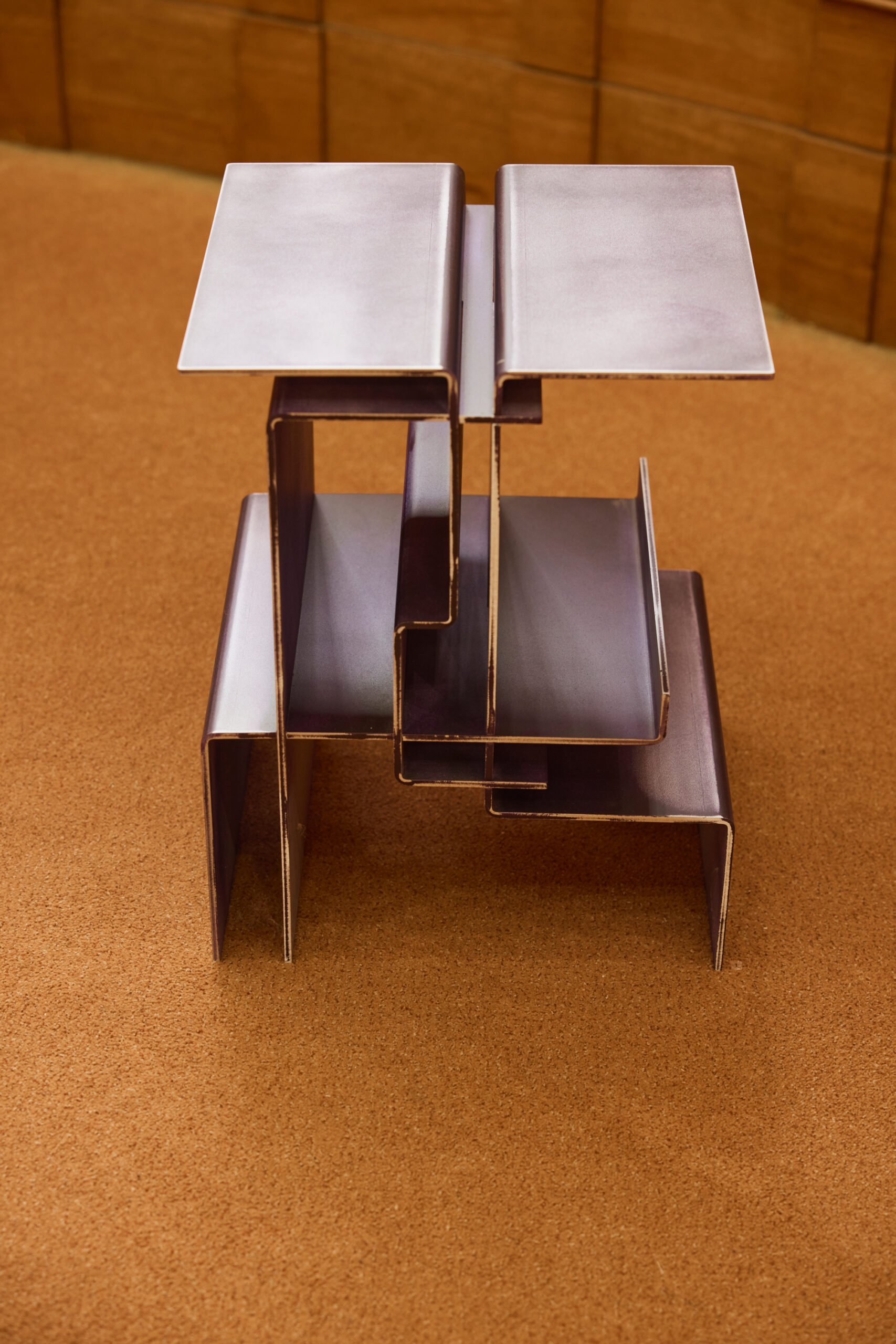
The collaboration with Wendy Andreu translates this interest in construction into a system of interlocking aluminium plates that are folded and welded. In Woven Stool, the assembly principle recalls weaving, transferring that logic to a rigid material.
The relationship between the parts defines both the structure and the appearance of the stool. Its interest lies in making its construction legible and showing how a technique associated with one family of materials can be used to investigate another. The name makes that reference recognisable without concealing the piece’s metallic nature.
Within Cavea, Andreu and Vanderbeke’s joint work offered a concrete example of exchange between practices. Their collaboration found expression in an object whose material, construction system and function develop inseparably.
The space we leave for others
The exhibition proposed encounter as a condition for seeing differently. Rather than closing the conversation with a single answer, it brought together works capable of prompting different readings of material, construction and shared space.
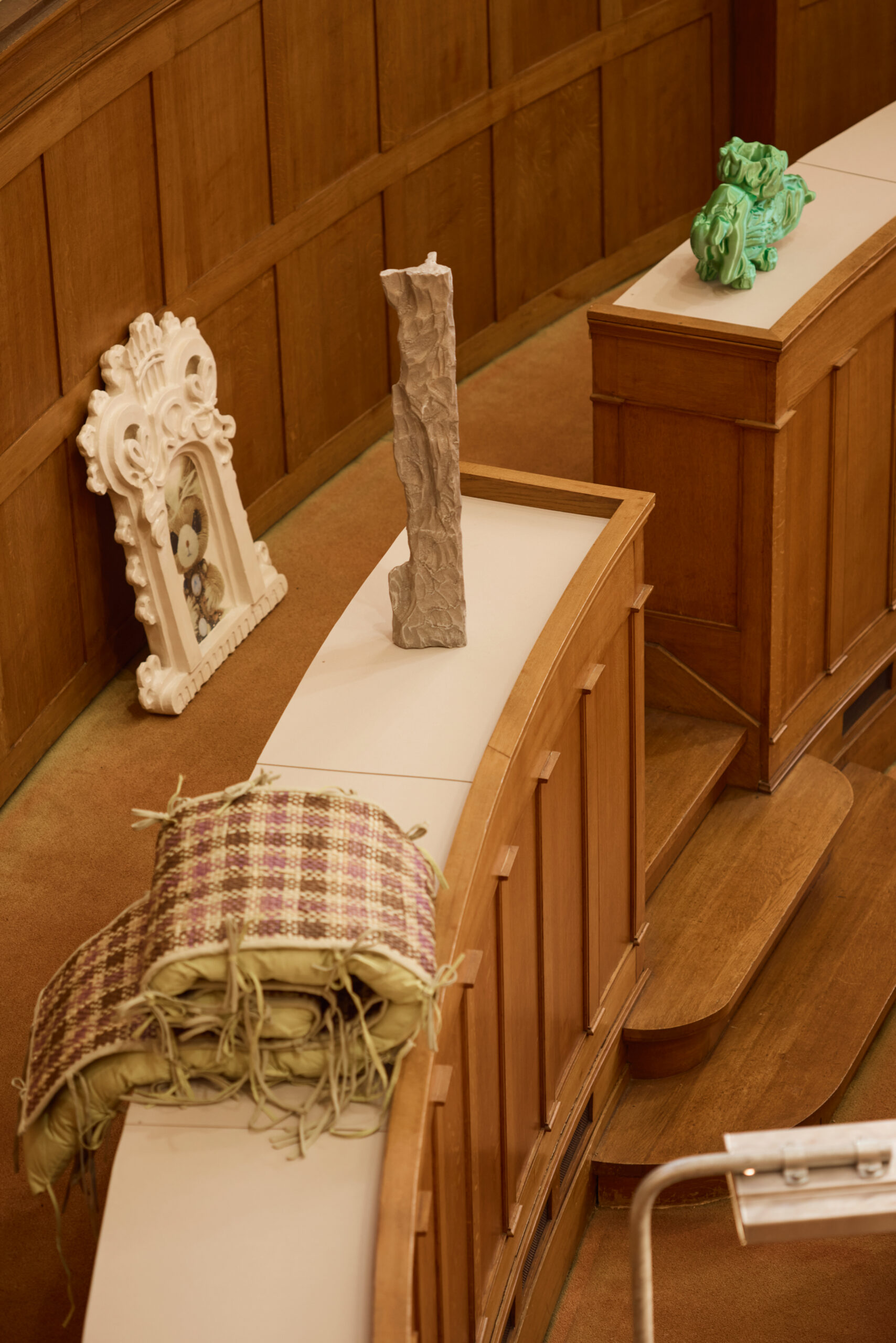
Cavea left a question that remains pertinent after its closure: how can we design places and objects that accommodate other presences and ways of participating? Its occupation of a former council chamber gave particular weight to that question, reminding us that arranging seats, bringing people together and directing their gaze are also decisions about how we live together.
(*) Photos: Alexander Popelier.