“HU (Huwa). Dance as if no one were watching you”: Oliver Laxe and spirituality
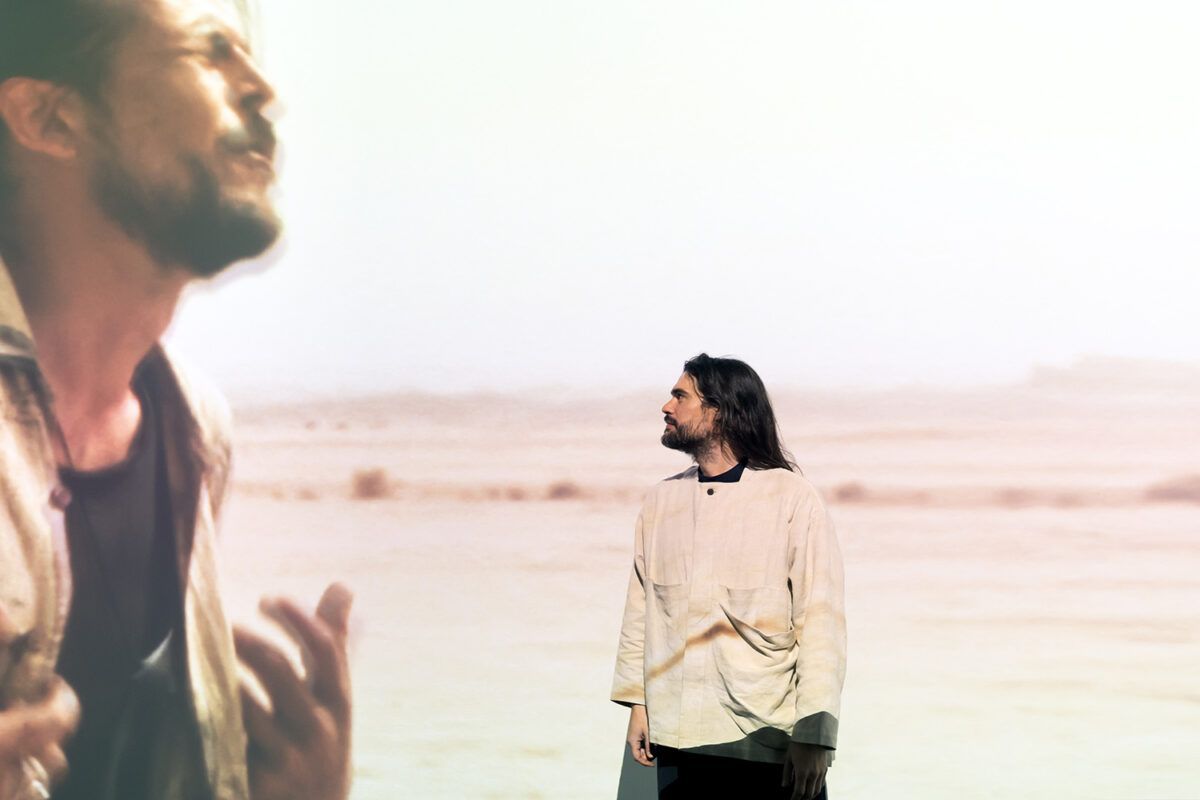
Until 20 April 2026, the Museo Reina Sofía presents “HU (Huwa). Dance as if no one were watching you”, an audiovisual installation by filmmaker Oliver Laxe that marks the beginning of the new programme for Espacio 1, now dedicated to “exhibition cinema”.
This immersive, multisensory proposal has been curated by Julia Morandeira Arrizabalaga and Chema González, and is conceived as a conceptual and formal extension of “Sirat”, Laxe’s Cannes-awarded film and Spain’s official submission for the Oscars.
Body, sound, landscape: the matter of the soul
The installation begins with a gesture as simple as it is radical: the dancing body. Yet this dance is neither performative nor superficial — it is a form of prayer, trance, and channelling. As in the Sufism of Persian poet Rumi — whom Laxe evokes in the subtitle “HU (Huwa). Dance as if no one were watching you” — bodily movement becomes a vehicle for ego dissolution and divine connection.
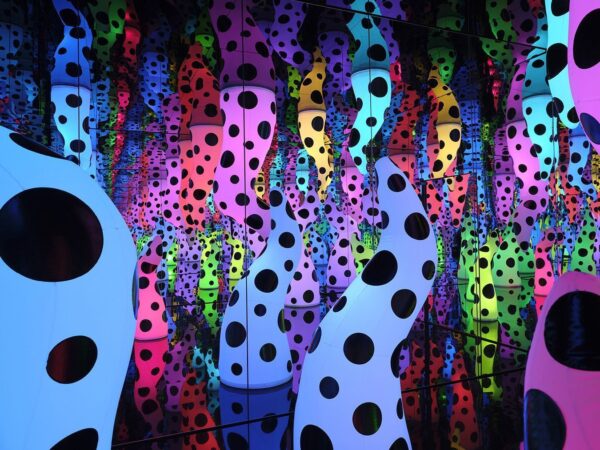
The installation occupies two rooms in the Sabatini Building. In the first, a pyramid of speakers stands like a three-metre-high totem. Inspired by rave culture, this object emits a constant vibration that is not intended to please, but to prepare the body for an experience of awe and openness — a sensory antechamber reminiscent of ancient temple atriums.
In the second room, three looping projections depict desert landscapes filmed in Iran, where human figures dance, temples emerge like spectres, and speakers appear as technological ruins. Shot over a decade ago, these images evoke a sacred geometry in which architecture, nature, and spirituality converge.
Vibration as narrative
Unlike narrative cinema, this installation offers no linear storyline. Laxe embraces an abstract, atmospheric, and sensory language. The images — with soft fades and grainy textures — were transferred from 16mm film to digital, accompanied by a soundscape created by sound artist Kangding Ray (David Letellier), who explores the materiality of sound as a tool for spiritual construction.
The installation proposes an immersive experience in which time dissolves. The viewer is not invited to understand, but to feel. Like a ritual, the visitor passes through phases of preparation, trance, and contemplation. The immanent becomes transcendent.
HU (Huwa) as curatorial gesture
The project also marks a renewal in the curatorial language of the Museo Reina Sofía. Curator Julia Morandeira describes it as a “radical treatment of space”: a sober, dark, sensorially dense exhibition device that places the body at the centre of the experience. Chema González, meanwhile, highlights how the installation and the film programme engage in dialogue through the moving image in its various forms — cinematic, plastic, ritual.
A mystical and telluric filmography
The programme “Landscapes in Trance” accompanies the installation with a complete retrospective of Laxe’s filmography: from “Todos vós sodes capitáns” (2010) to “Sirat” (2025), including “Mimosas” (2016) and “Fire Will Come” (O que arde, 2019). All of these works share a deep spirituality, a contemplative gaze, and a hypnotic rhythm. In his films, the visible becomes a portal to the invisible.
Alongside this retrospective, the filmmaker has curated a “carte blanche” selection of four films that reflect his aesthetic and philosophical affiliations: “Highway” by Dvortsevoy, “The Naked Island” by Kaneto Shind?, “The Seasons” by Peleshyan, and “Trás-os-Montes” by Reis and Cordeiro. Each of these works explores the landscape as a spiritual matrix.
An artist in search of transcendent communities
Oliver Laxe, born in Paris and raised in Galicia, has become one of the most singular voices in European cinema. But he is also a cultural agent who transcends the screen. Through the Asociación Ser, he promotes rural, community-based and heritage projects in the Os Ancares region. For Laxe, cinema, art and life are one and the same: a way of seeking the sacred in the everyday, of generating community through both wound and beauty.
In this sense, “HU (Huwa)” is not merely a projection of images — it is a summoning of presences. Each visitor comes into contact with something beyond themselves: a vibration, an emotion, a silence. The experience is always unique and personal, because it is inscribed in the body, not in the intellect.
Dancing as a form of mystical resistance
As you will see, “HU (Huwa). Dance as if no one were watching you” is far from a conventional exhibition. It is a sensorial manifesto on the power of art to re-enchant the world — to remind us that beyond hyperproductivity, informational noise, and empty aesthetics, there are still spaces for the sacred, the poetic and the invisible.
Laxe’s work does not seek to explain, but to transform through experience. His installation is a call to reconnect with the body as a channel, with vibration as a universal language, and with silence as a form of wisdom. It is, ultimately, a celebration of the human from the perspective of the transcendent — an intimate and collective dance that turns the museum into a temple, art into ritual, and the viewer into an active participant in a spirituality free from dogma.
(*) Image courtesy of Museo Reina Sofía.

. Dance as if no one were watching you”: Oliver Laxe and spirituality&p[summary]=&p[url]=https://ccmagazine.es/en/hu-huwa-dance-as-if-no-one-were-watching-you-oliver-laxe&p[images[0]=https://ccmagazine.es/wp-content/uploads/2026/01/Retrato_OliverLaxe.jpg)
. Dance as if no one were watching you”: Oliver Laxe and spirituality)