“Sirat” by Oliver Laxe: a sensory journey to the edge of the desert
With “Sirat”, Oliver Laxe delivers a radical work: a physical, emotional, and aesthetic odyssey that elevates contemporary cinema.
Sirât means “the path”, more precisely “the narrow bridge from hell to paradise”—a powerful metaphor framing the film’s emotional journey. It is an original production by Movistar Plus, in collaboration with El Deseo, Filmes Da Ermida, Uri Films, and 4A4Productions. The screenplay was written by Oliver Laxe and Santiago Fillol.
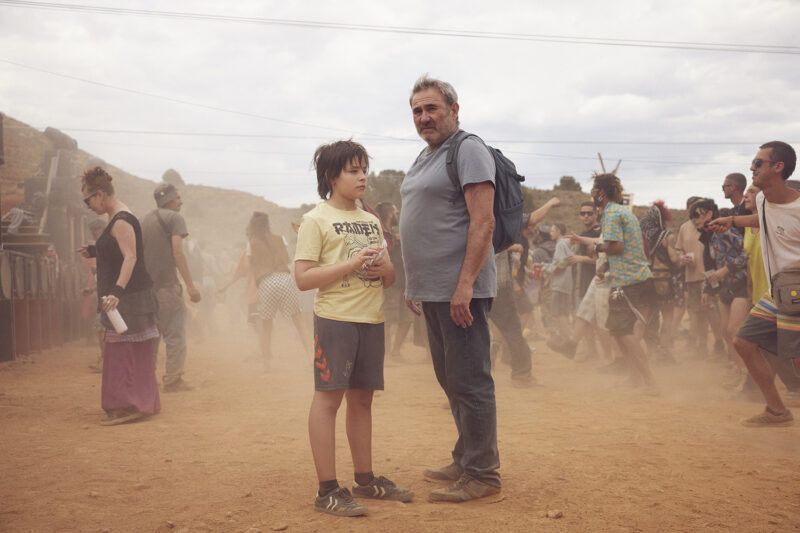
In “Sirat”, Laxe guides us into extreme territory: the vast Moroccan desert, illegal trance parties, pain, music and a fractured family, centred on Luis (Sergi López), a father traversing kilometres in search of his missing daughter, and his son Esteban (Bruno Núñez).
A visual spectacle in full scale
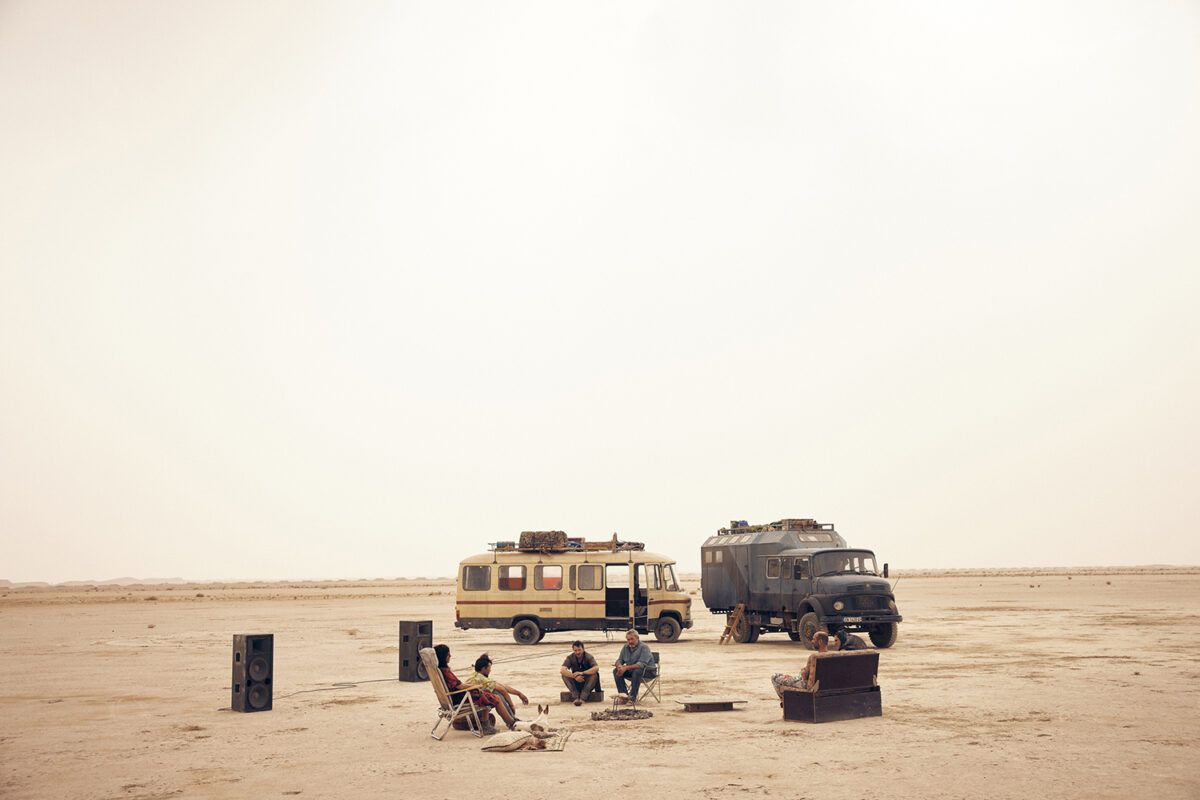
Shot on Super 16 mm by Laxe himself, the film embraces the desert’s scale with overwhelming intensity. Much of the footage unfolds in long takes, where the desert becomes the main character: dry, gleaming, relentless.
The cinematography captures a nearly static texture—the shimmering heat, dust in the air, colours dissolving into the horizon—but also reaches near-frenetic energy during the rave scene. These contrasts, between contemplation and sensory explosion, construct a unique multisensory experience. The camera lingers from the dusk rave in the opening shot right through the final train sequence, where landscape and community merge in a luminous, painful farewell.
What’s compelling is that “Sirat” doesn’t sensationalise or moralise. Instead it demands our presence with the characters, compelling us to feel discomfort and reality.
“It’s been the end of the world for a long time.” Tonin
The soundtrack: the film’s beating heart
If the visuals are brutal, the sound is even more so. The blend of techno and natural ambience—wind, engines, cries, heartbeats—creates an immersive atmosphere that begs for volume. In Cannes, Laxe opted for Dolby Atmos for the premiere—a masterstroke.
“Sirat” is a film you feel in your chest. From the pounding bass of the rave to the silence signalling tragedy, every sound is calibrated to reverberate.
Performances that transcend the script
The human core of “Sirat” blends professional and non-professional actors. It feels intentionally cast: the mix of polish and raw authenticity works to emotional precision.
Sergi López
The experienced Catalan actor gives a minimalist, profound performance where pain seeps in without theatrics. It’s as if he has swallowed the desert itself.
Bruno Núñez Arjona
The boy who barely acts is Esteban. His inquisitive gaze, restrained sorrow, and emotional rapport with López form one of recent cinema’s most believable duos. His small frame becomes an emotional anchor.
Non-professional ravers
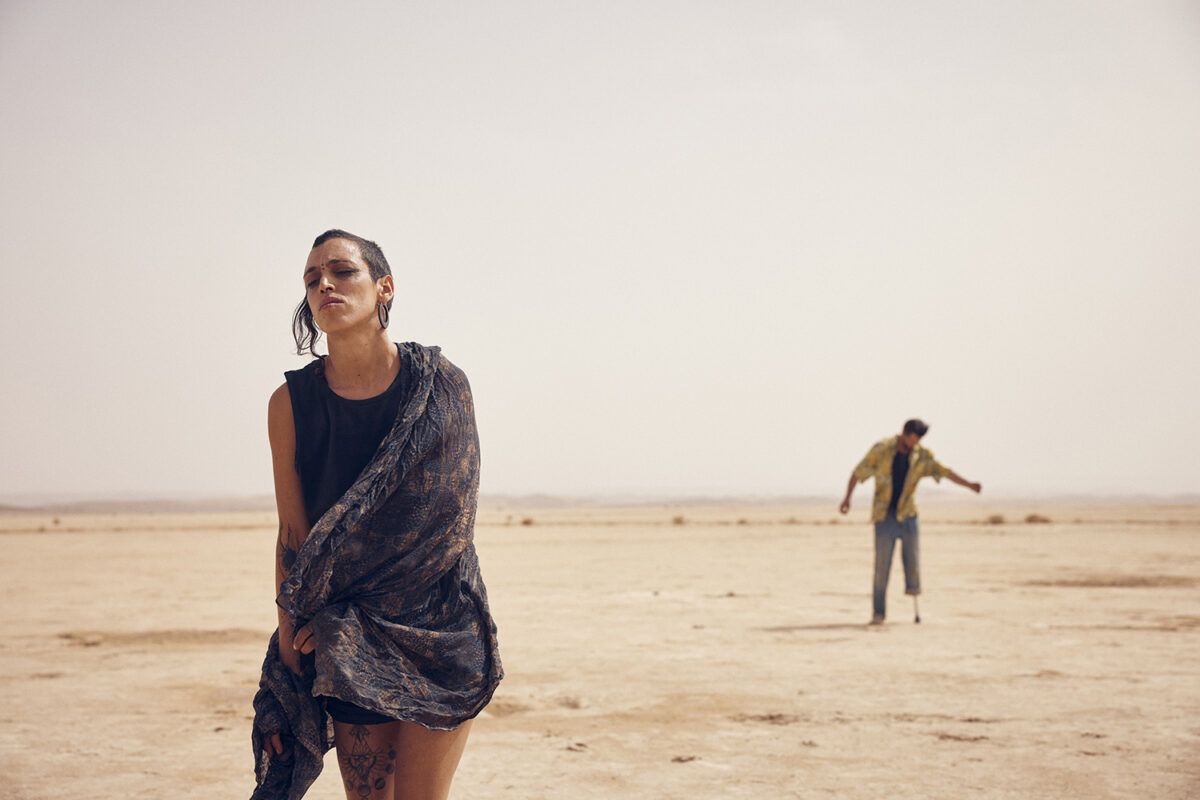
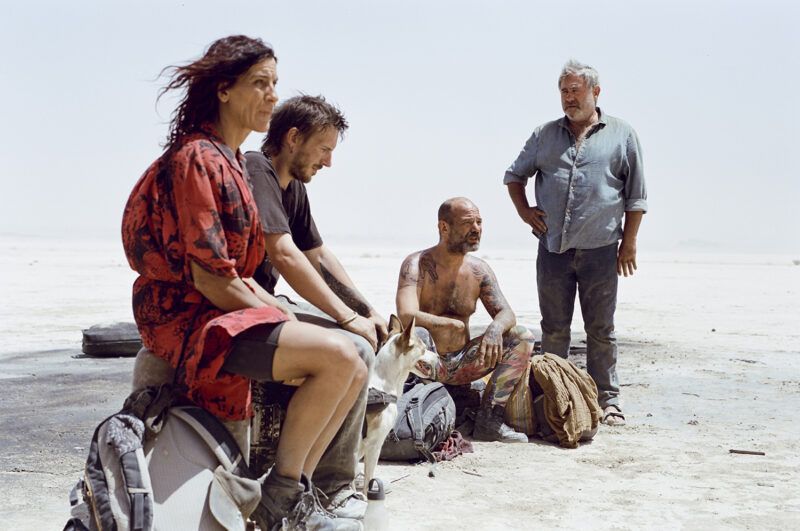
Stefania Gadda, Jade Oukid, José Liam Henderson and Tonin Janvier appear with magnetic presence. Without formal acting training, they embody themselves, which intensifies the film’s realism.
Sensory narrative rather than traditional storytelling
“Sirat” unfolds more like a ritual than a story. Laxe opts for intuition—I treads the road-rave movie terrain where each sound, frame, footstep in the dust adds another layer of meaning.
Though some viewers have criticised the lack of narrative development—“thin character arcs”, “empty aesthetics”—that was part of its design. From its first rave to the tragic finale, it’s a dance between sacred and chaotic, communal and intimate.
Slow-motion tragedy
No spoilers: the ritual ends in tragedy. No plot twists, just an inevitable descent, like stepping over a ledge without looking. Death, betrayal, loss—sudden and devastating. The group navigates a literal and emotional minefield where each decision carries weight. “Sirat” observes, without drama. Tragedy hits unannounced, as a natural outcome of existing as outsiders—moving instinctively, risking without safety nets. Sometimes fate favours you, sometimes it doesn’t. When you accept that, you accept everything.
The ravers of Sirat are not just partygoers; they live the journey
Their way of being in the world is constant flight—a search for something beyond the map. When tragedy arrives, they accept it as part of the journey, even if it breaks your bones.
Context and political resonance
“Sirat” won the Grand Jury Prize at Cannes. It emerges at a time of intense search for freedom and systemic critique. Laxe, known for his political and spiritual cinema, positions the desert as a mirror reflecting humanity, emptiness, and communal resilience.
It invites reflection on modernity, rave culture, and anti-system resistance—and confronts audiences with body, territory, ritual and trance.
“Life is a path that has turns; it has alleys on both sides. Life shakes you; it doesn’t knock at the door.” Oliver Laxe
Why Sirat matters
It is a sensory experience: merging sound and image with unignorable physicality.
It revolutionises narrative: favouring trance over story arc.
Rare amalgam of polished and genuine performances.
Visually powerful: frames etched into memory.
Politically and existentially charged: a sublime meeting of form and substance.
It influences contemporary cinema—opening new paths for the visual, sonic and ritual to unite.
Conclusion
“Sirat” isn’t a film to drift alongside—it’s a slap of hot dust, an echoing bass, and the sky’s indifference to tragedy. It’s beautiful in every moment. A film that must be screened IN CINEMA, at full volume, to be felt in the bones.
At its core, “Sirat” is a hymn to cinema as total experience—and to a director who is profoundly spiritual and radical. Oliver Laxe and his team have created an unforgettable work that propels cinema into a realm where the sensory and the human are inseparable.
For those curious, here’s the soundtrack link — highly recommended.
(*) Images: BTEAM Pictures.