MATRIA: Studio Penique’s inflatable sanctuary in Melbourne
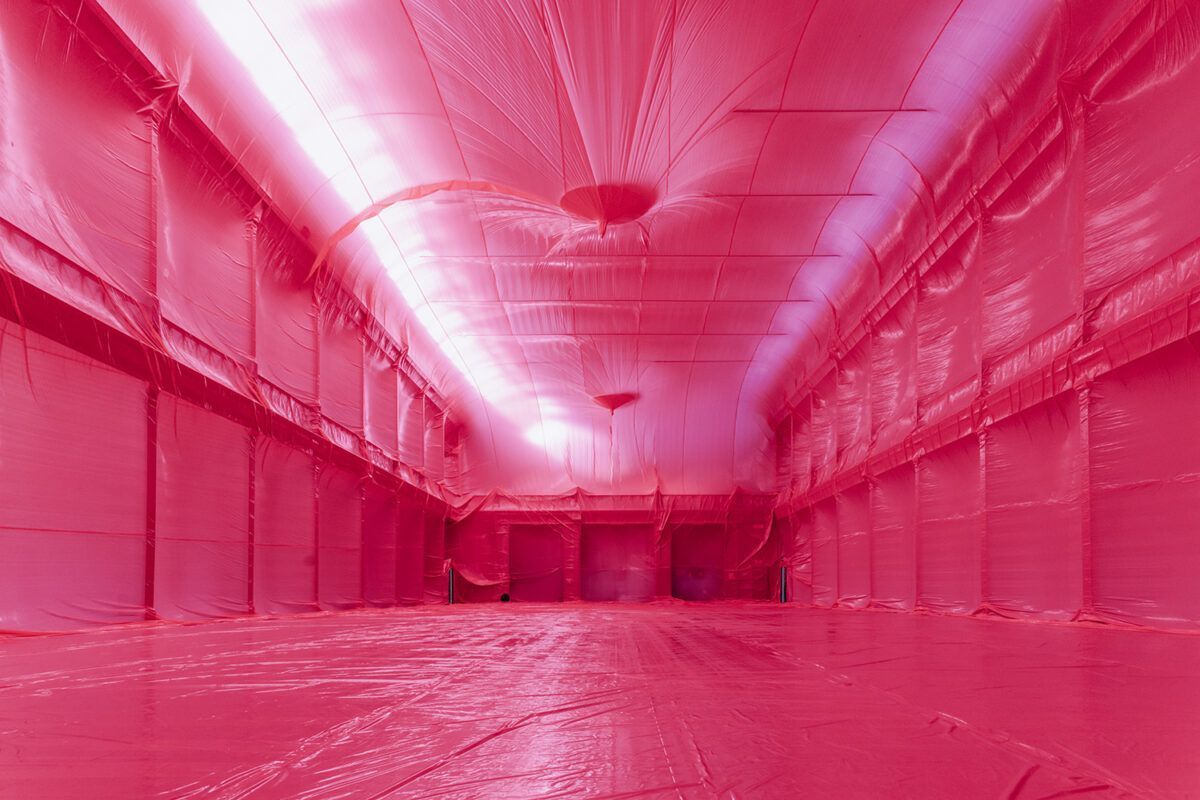
There are spaces we observe, others we inhabit, and a rare few we experience with our whole body. That is precisely what happens with MATRIA, the latest installation by Barcelona-based collective Studio Penique, who have transformed Melbourne’s historic Royal Exhibition Building with a monumental inflatable structure that redefines our perception of space and the relationship between visitor and architecture.
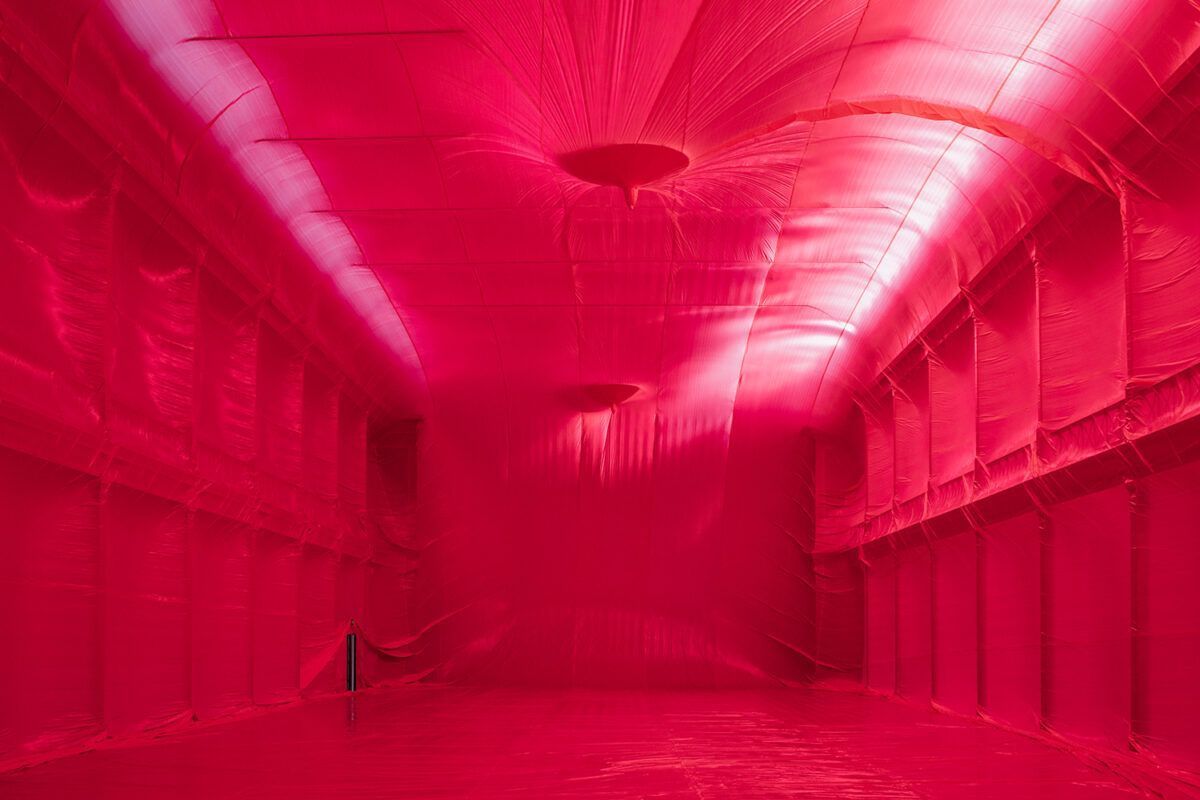
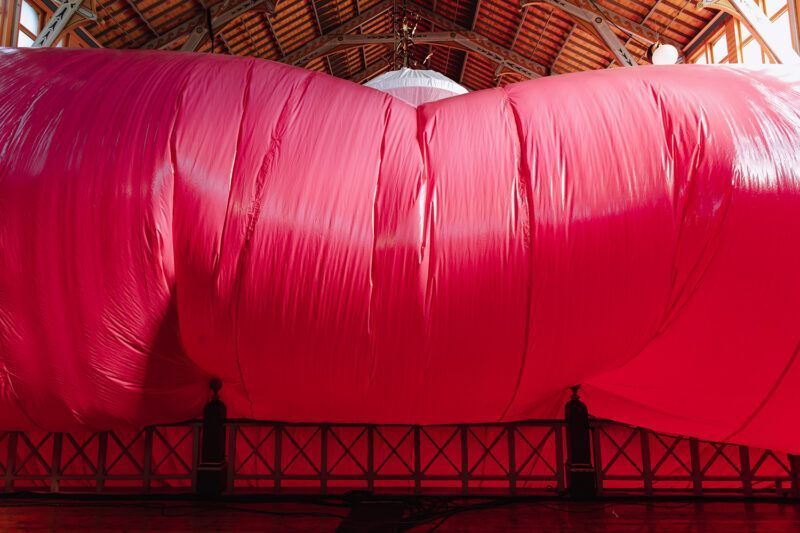
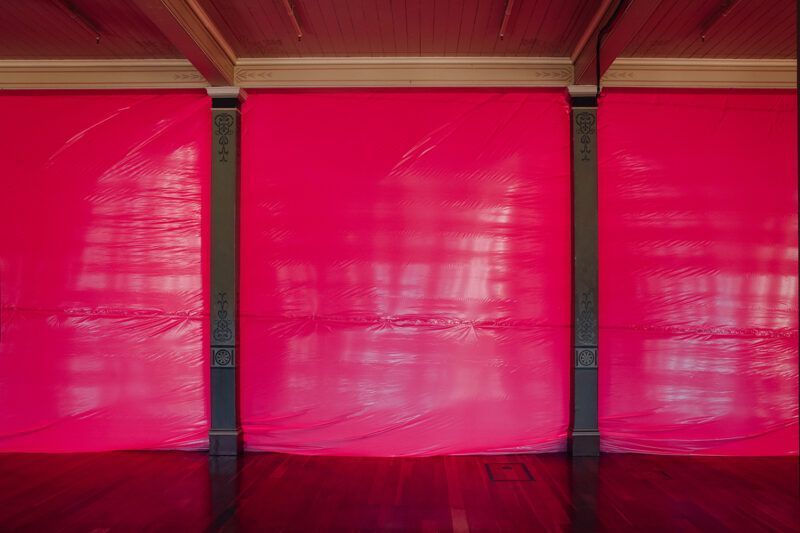
The piece is part of the Now or Never festival programme — a multidisciplinary event that has turned Melbourne into a playground for immersive art, music, technology and architecture.
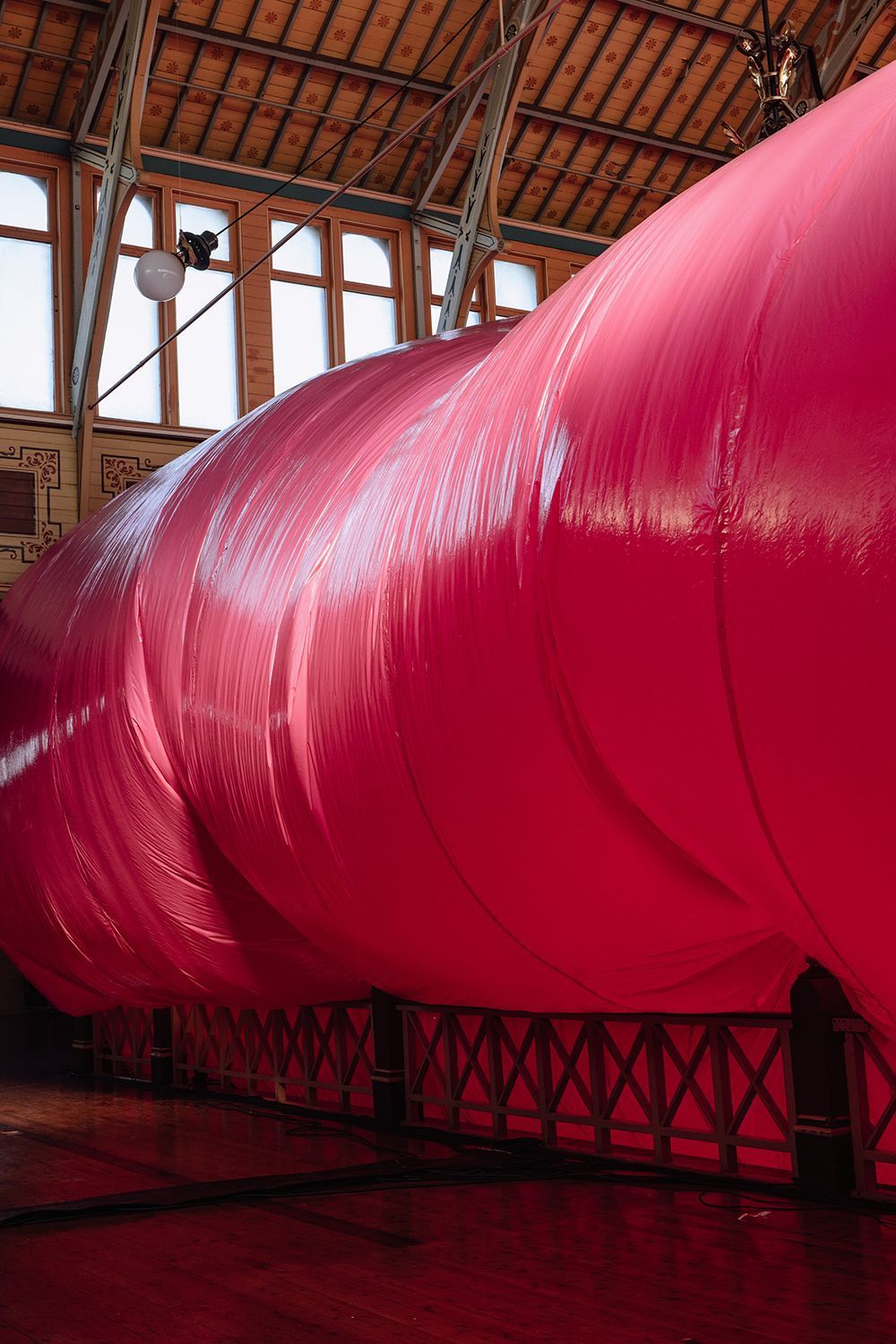
In this context, MATRIA is presented as a total experience: an inflatable volume that fully envelops the interior of one of Australia’s most iconic heritage buildings, transforming its 19th-century grandeur into a soft, warm and radically contemporary refuge.
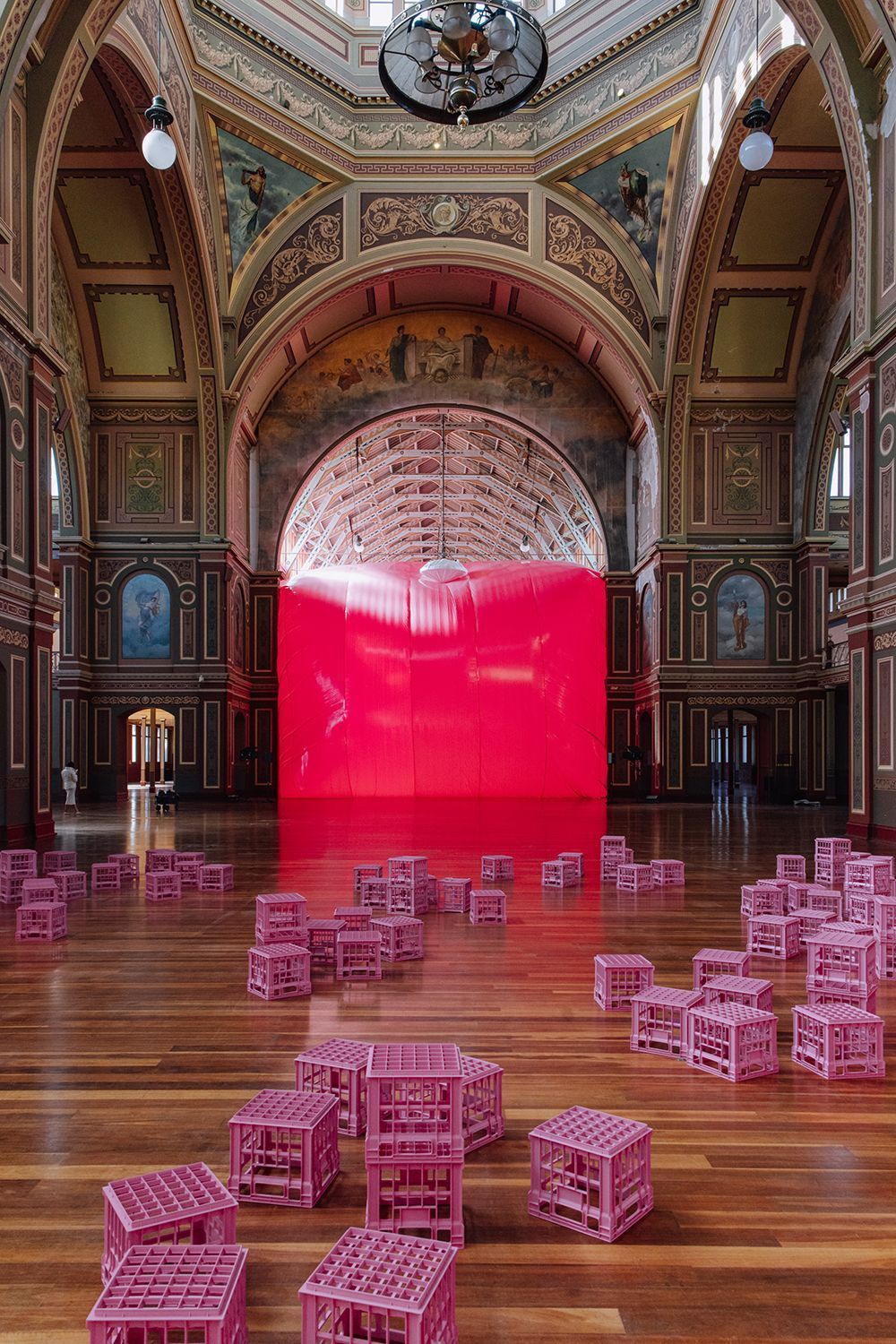
Studio Penique’s signature is unmistakable. Since its beginnings, the collective has worked with large-scale, monochromatic inflatable installations that occupy and reimagine existing architectural spaces. Their method involves introducing a vast plastic membrane that adapts to the environment, covering every surface and inviting a new reading of volume, scale and light.
In the case of MATRIA, the proposal reaches an even deeper symbolic dimension: the soft pink hue, plastic texture and enveloping form create an almost womb-like atmosphere, in which the viewer is not merely an observer, but quite literally held within.
The title is no accident. MATRIA evokes a sense of belonging and origin that breaks away from the patriarchal notion of the “patria” or “fatherland”. Here, architecture becomes a maternal entity — an emotional container, a safe space. It’s a gesture that is both sensitive and political, placing the work at the intersection of installation art, urban reflection and sensory experience. Penique doesn’t simply create environments; it crafts spaces of emotional transit.
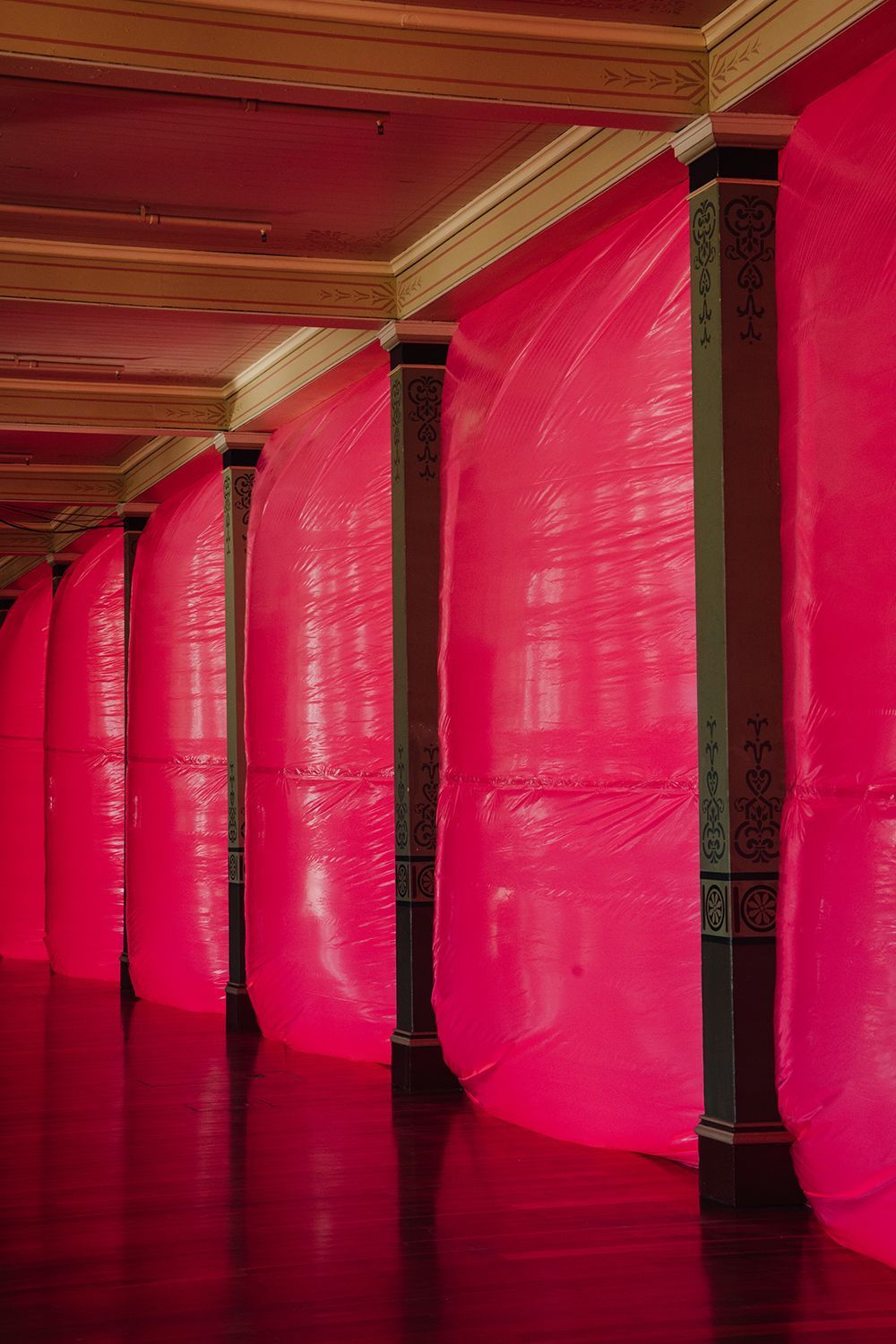
The choice of the Royal Exhibition Building as the setting reinforces the tension between the historic and the ephemeral. A UNESCO World Heritage Site built in 1880, the building stands as a symbol of architectural grandeur from the industrial era. Wrapping it entirely in a pink inflatable skin becomes an almost subversive act: a space traditionally loaded with visual hierarchy and symbolic power is made accessible, intimate — even tender. Monumentality becomes human.
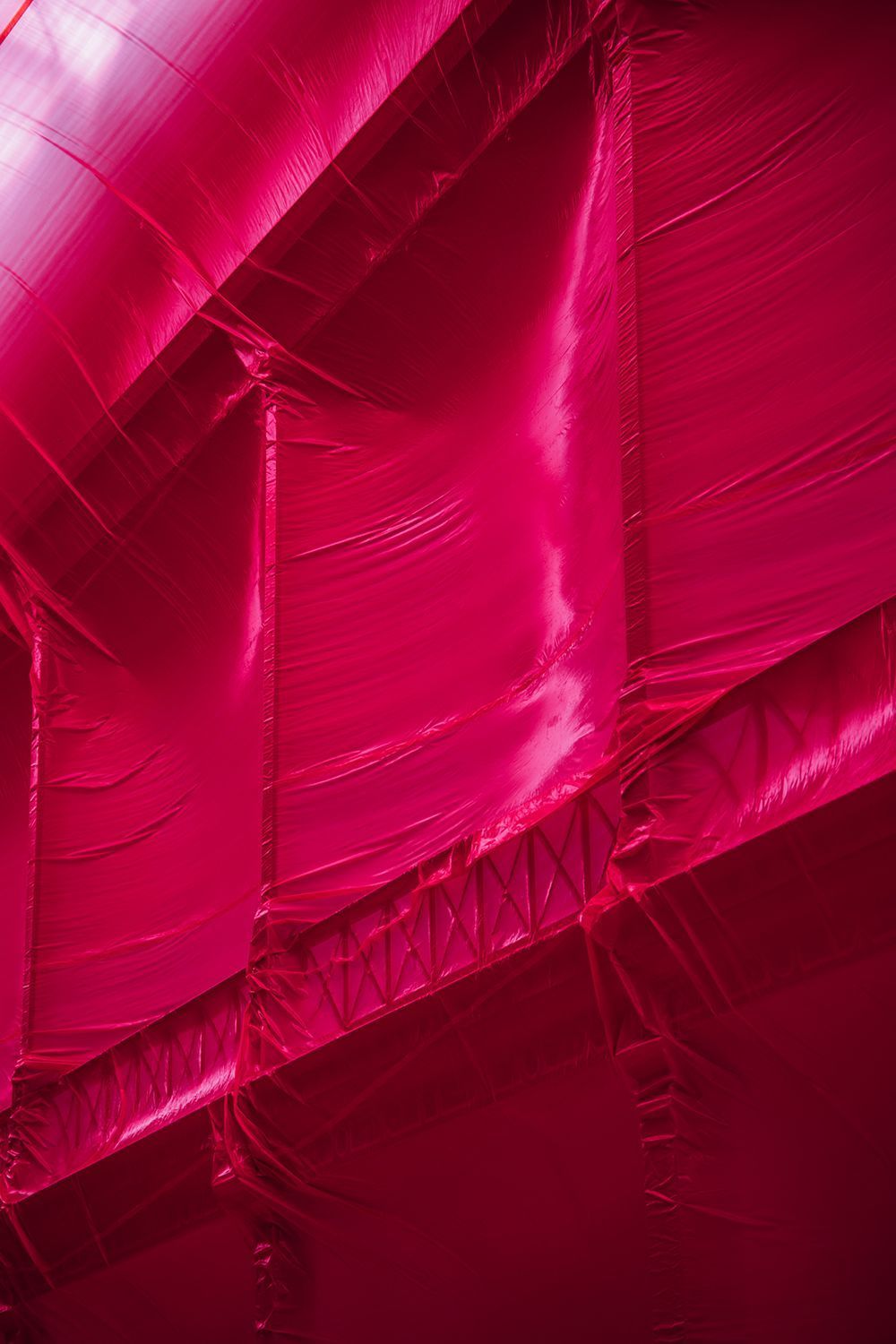
Inside, everything changes. Natural light, filtered through the plastic membrane, creates a warm, almost dreamlike glow. Columns, soaring ceilings and ornate mouldings are softened into fluid, almost liquid forms. The building’s usual echo dissolves, replaced by a carefully designed soundscape tailored specifically for the installation.
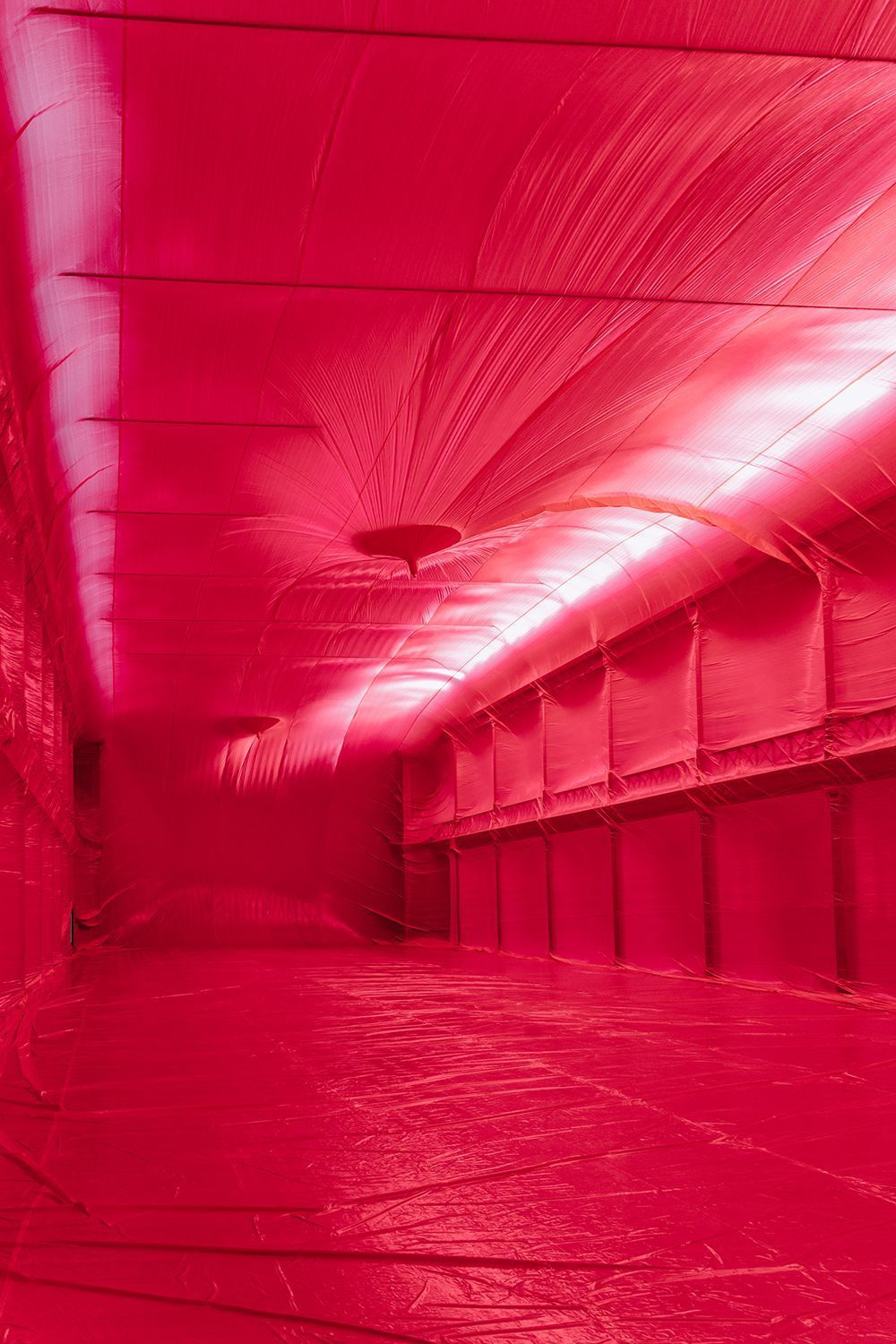
Composer David Paterson has created an immersive score designed to resonate with the internal rhythm of the space and heighten the sensory experience of those who move through it. Gentle, breath-like sounds intertwine with the inflatable architecture, as though the space itself were emitting a vital pulse. Meanwhile, lighting by visual artist Paul Lim acts as an emotional layer: it washes the pink membrane with soft transitions and subtle contrasts, guiding the visitor without dictating a path. Together, sound and light form a perceptual choreography, turning each step into an intimate and meditative experience.
But MATRIA is not merely a habitable sculpture. Throughout its presence in Melbourne, the space has been activated by meditation sessions, performances and live concerts, creating a living environment in constant flux. Studio Penique conceives its works as platforms for collectivity — as spaces where architecture becomes a shared body. In this edition, artists such as rROXYMORE, Shapednoise, and Amber McCartney have delivered performances that dialogue with the volume, the sound, and the pink skin that envelops it all.
“One of the work’s greatest strengths lies in its ability to question our relationship with materials.”
One of the work’s greatest strengths lies in its ability to question our relationship with materials. The inflatable structure is made from 100% recycled plastic — a decision that not only responds to sustainability concerns but also introduces a new poetics of waste. The disposable becomes art. The fragile becomes structure. In a world saturated with hollow sustainability narratives, Studio Penique offers a tangible practice that literally transforms discarded materials into aesthetic experience.
Despite its monumentality, MATRIA does not impose — it embraces. Its presence is gentle yet powerful, like a slow breath. Visitors move with care, their steps cushioned by the padded floor, and time seems to stretch. What might normally be an architectural visit here becomes an act of full presence — of pause, of surrender. As if the space itself were asking to be inhabited at a different pace.
Studio Penique’s trajectory has been shaped by this very philosophy. Since their beginnings in Barcelona, the collective has intervened in libraries, auditoriums, chapels and industrial spaces — always with a practice that is both playful and critical. Works such as Niu (L’Auditori, Barcelona) and Buit (Tecla Sala Art Centre, L’Hospitalet) already pointed towards their unique way of crafting architecture using air, colour and time. But MATRIA is undoubtedly their most ambitious project to date — not only in terms of scale, but also in the symbolic weight it carries.
As one progresses through MATRIA, it becomes clear that this installation is not meant to be understood through the traditional languages of art or architecture. There is no single reading, no fixed route. Everything invites drift — a bodily, sensorial exploration. That freedom is part of the work’s core: here, architecture ceases to be structure and becomes emotional state. The visitor doesn’t simply observe — they allow themselves to be affected.
“MATRIA doesn’t impose a narrative; it opens a space where each visitor can build their own.”
In that sense, MATRIA aligns with a growing movement in contemporary art that questions the hierarchical relationship between artwork and viewer. Instead of the expository, the immersive. Instead of the contemplative, the participatory. Rather than demanding attention, MATRIA offers care. It does not dictate a message but creates the conditions for each visitor to shape their own experience. The result is an open encounter, where subjectivity is not only welcome but becomes the true engine of meaning. In that meeting of body, space and emotion, art ceases to be an object and becomes an event.
This type of practice — straddling installation, ephemeral architecture and performance — is gaining ground at festivals and biennials worldwide, and is reshaping how we understand public space. The inflatable is no longer merely a technical or aesthetic device; it is a tool for openness, a way to hack space through softness. Studio Penique has understood this potential and expanded it to a monumental scale, without losing the poetic dimension at its core.
The choice of the word MATRIA reinforces this way of thinking. At a time when many cities are undergoing gentrification, bodily regulation and the erosion of shared space, the concept of “matria” emerges as a symbolic counterpoint to the patriarchal, the rigid and the normative. MATRIA doesn’t defend a fixed identity — it proposes a space open to difference, listening, and community. It is also a critique of traditional exhibition models, often elitist or inaccessible, which here dissolve into something fully sensorial.
Speaking to CC/magazine from Melbourne, the members of Studio Penique summarise their philosophy as follows:
“We work with air as a structure, but also as a metaphor. Inflatable forms allow us to redefine the limits of architecture — to make it more porous, more human. We want our installations not just to occupy a space, but to transform it emotionally.”
That gesture — light, yet deeply political — resonates with other contemporary practices that use architecture not as a form of control, but as an act of care. MATRIA is a refuge, but also an open question: what kind of spaces do we want to inhabit? How can art soften the harshness of the world? How can we return to experiencing architecture through the senses?
The answer, perhaps, lies not in reason, but in experience. It is enough to walk through MATRIA, to feel how the light filters through the pink membrane, how the sound resonates with the body’s own rhythm, how the air seems to breathe alongside us. In that moment, history becomes present, and monumentality turns intimate.
The installation was open for four days, from August 21 to 24, and left a lasting impression on those who experienced it. Not only because of its scale or beauty, but because of its rare ability to offer a moment of pause amidst the noise — to return to architectural space its most essential dimension: being a place to stay.
In times of constant acceleration, MATRIA acted as a parenthesis, an invitation to inhabit the present with a different quality of attention. Its gentle, contained atmosphere not only transformed the relationship with the surroundings, but also awakened something deeper: the desire to reconnect with the sensitive, the intimate, the shared.
(*) Photographs courtesy of Articulate Advisory.