Kamila Solarz: the quiet beauty of transformation
Kamila Solarz’s work exists within that almost imperceptible space where meaningful things happen: the moment in which something begins to change. Her gaze doesn’t aim to capture the obvious, but to stay close to unfolding processes—observing without interference and allowing the image to arise organically from transformation itself.
Based in Barcelona, her practice moves between analogue and digital, exploring the relationship between matter, light and presence.
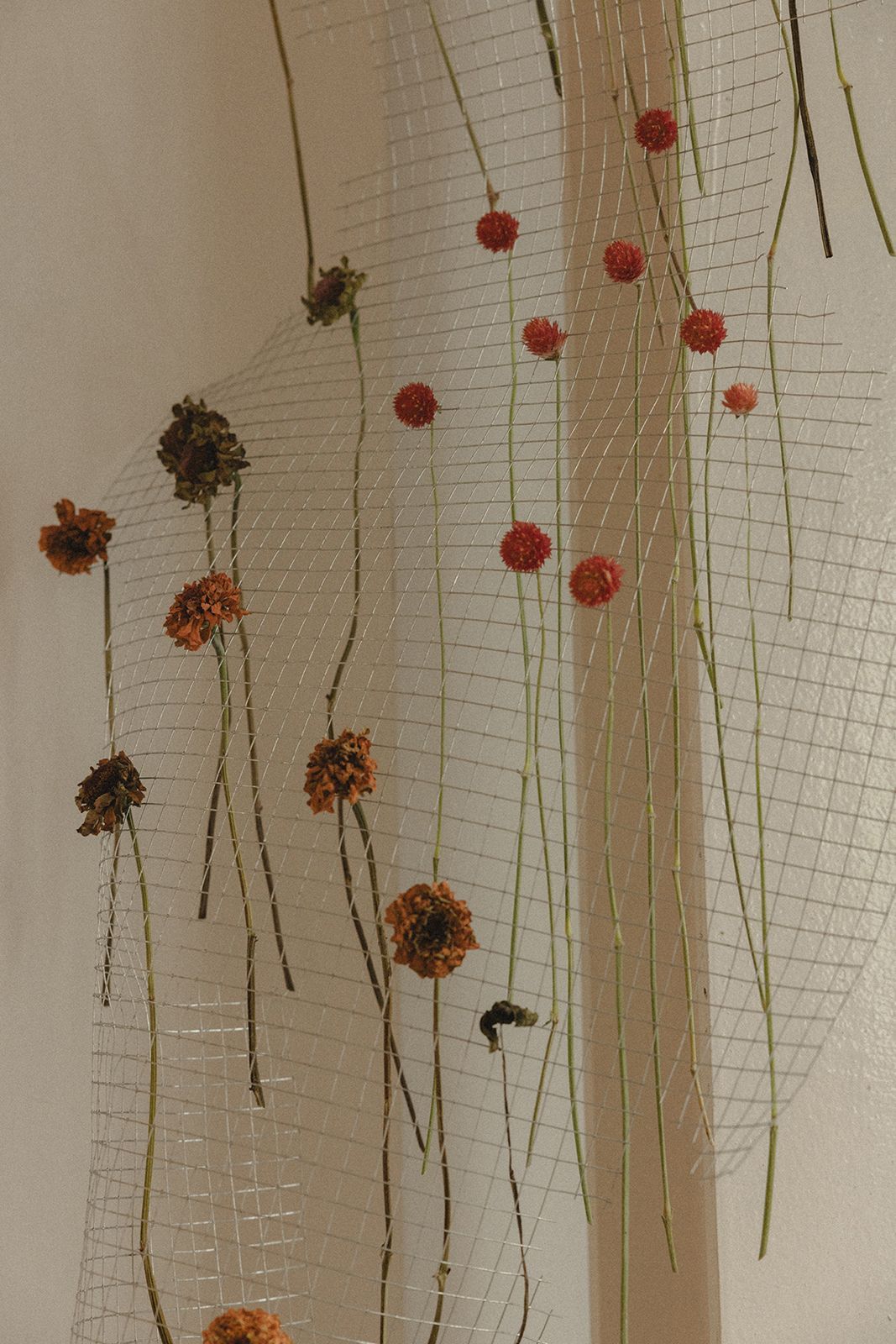
In “Cycles”, her most intimate project, Solarz works with flowers as both metaphor and living matter, following their natural evolution over several months — from blooming to disappearance.
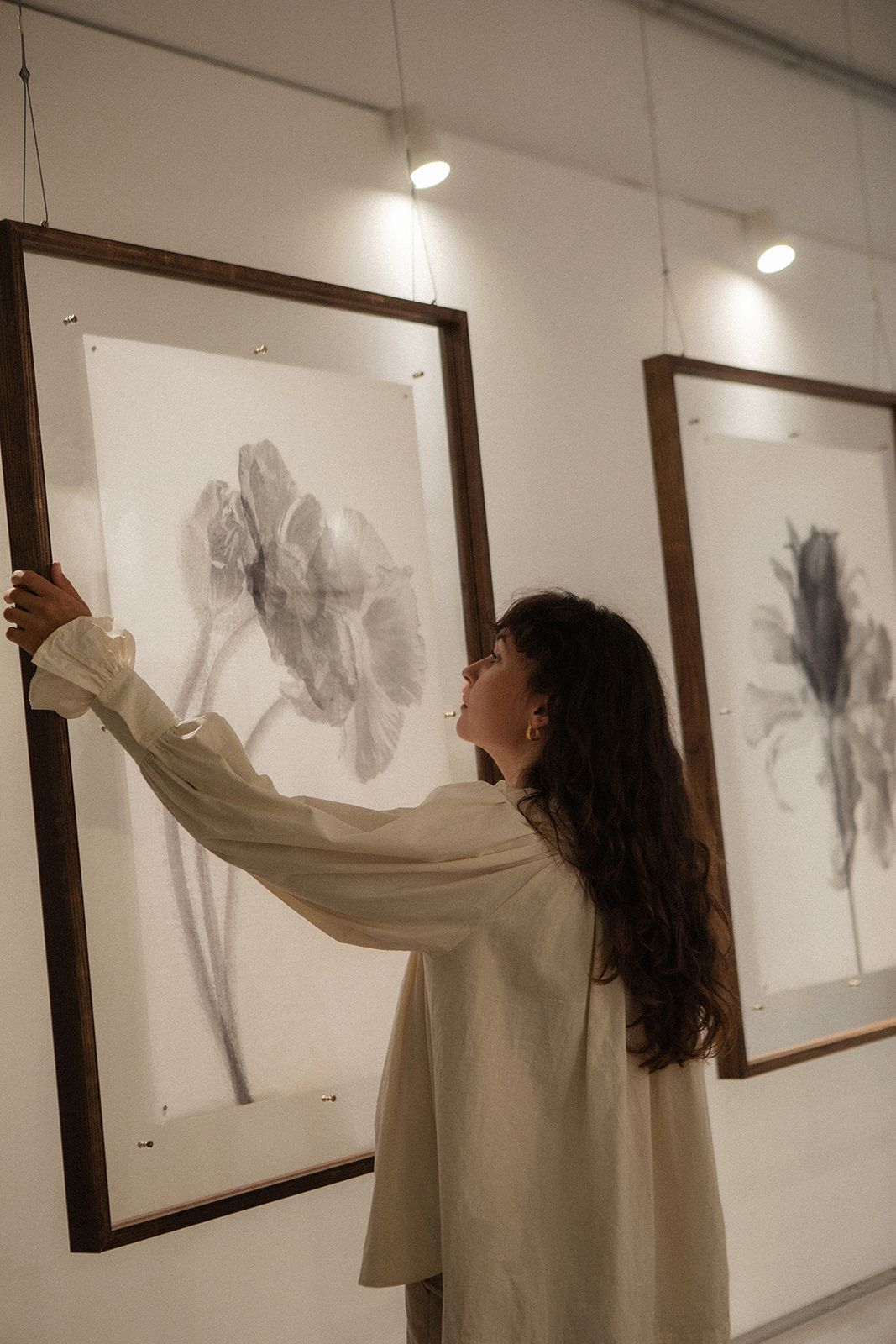
The result is a visual and sensorial investigation in which each image functions as a trace of time. Layers don’t replace one another, they accumulate; forms don’t disappear, they transform. A gesture that connects with an essential idea: everything remains, even if in another form.
In this interview, Kamila Solarz opens the doors to “Cycles”: a project that transcends photography to become a reflection on rhythm, matter, and the way we inhabit our own processes.
Cycles explores transformation and natural cycles through flowers. At what point did the idea of turning this process into an artist’s book — alongside the exhibition — emerge?
I started working on the project at the beginning of last spring, with the awakening of the flowers, following my journey to India, which became a starting point and inspiration for it.
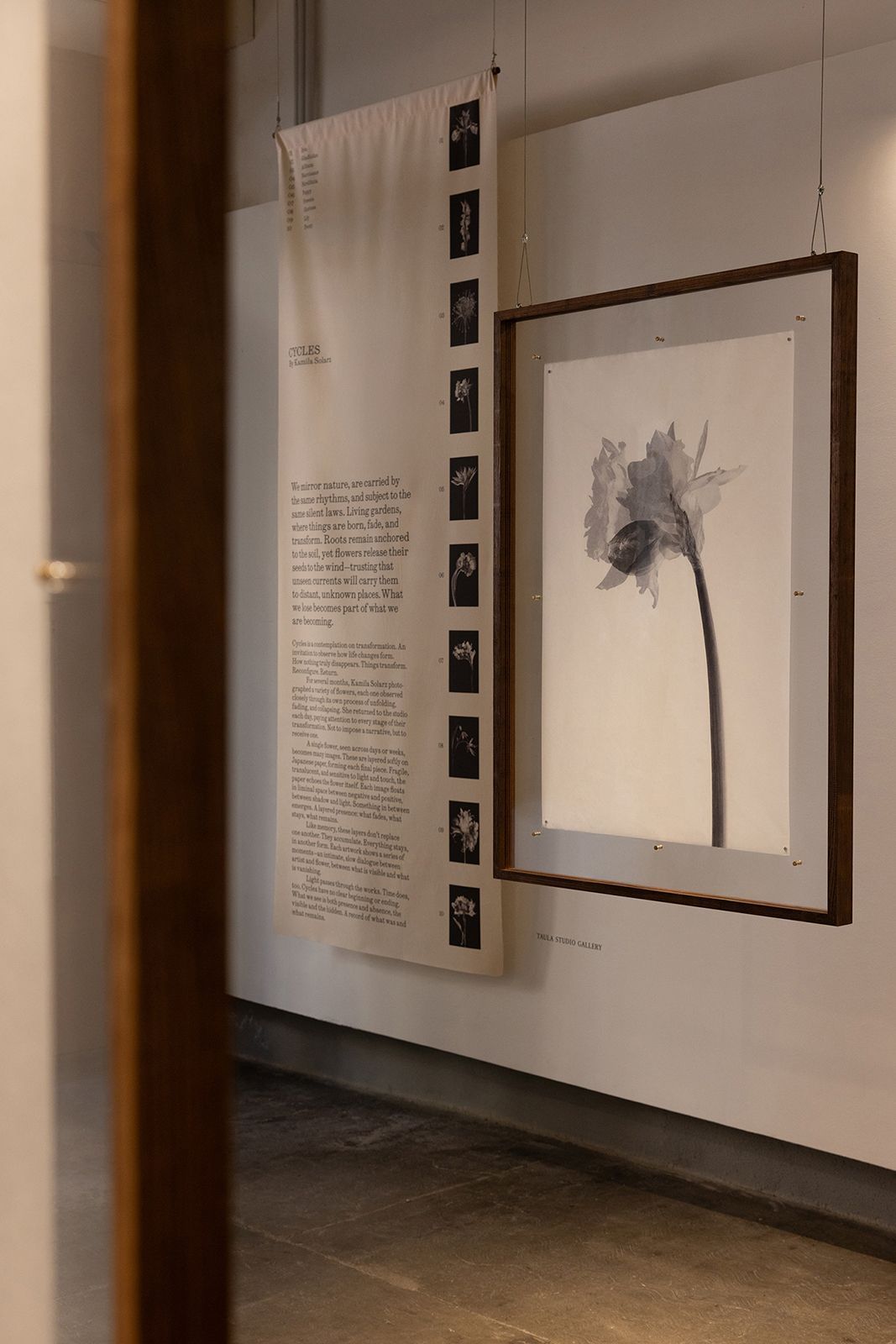
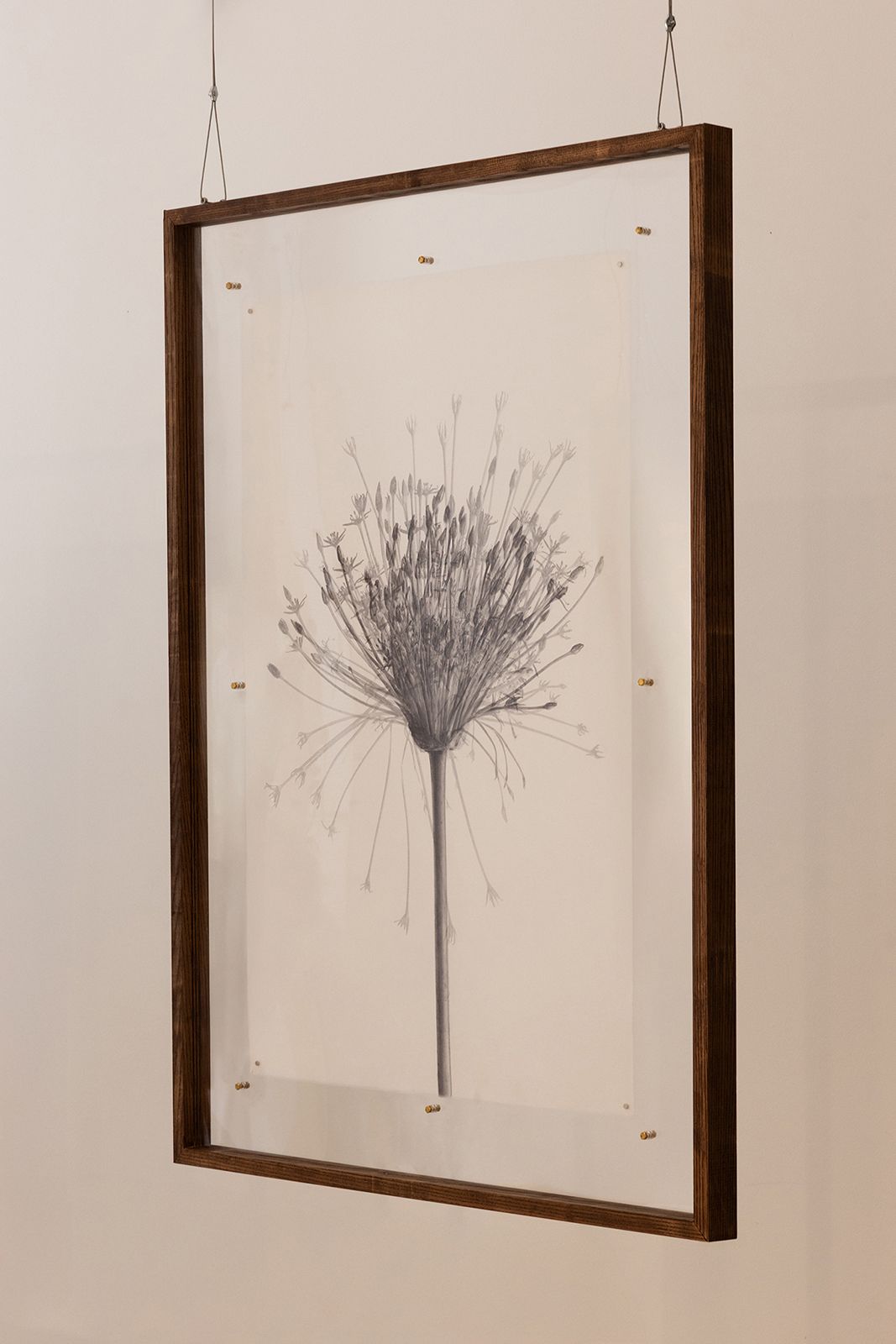
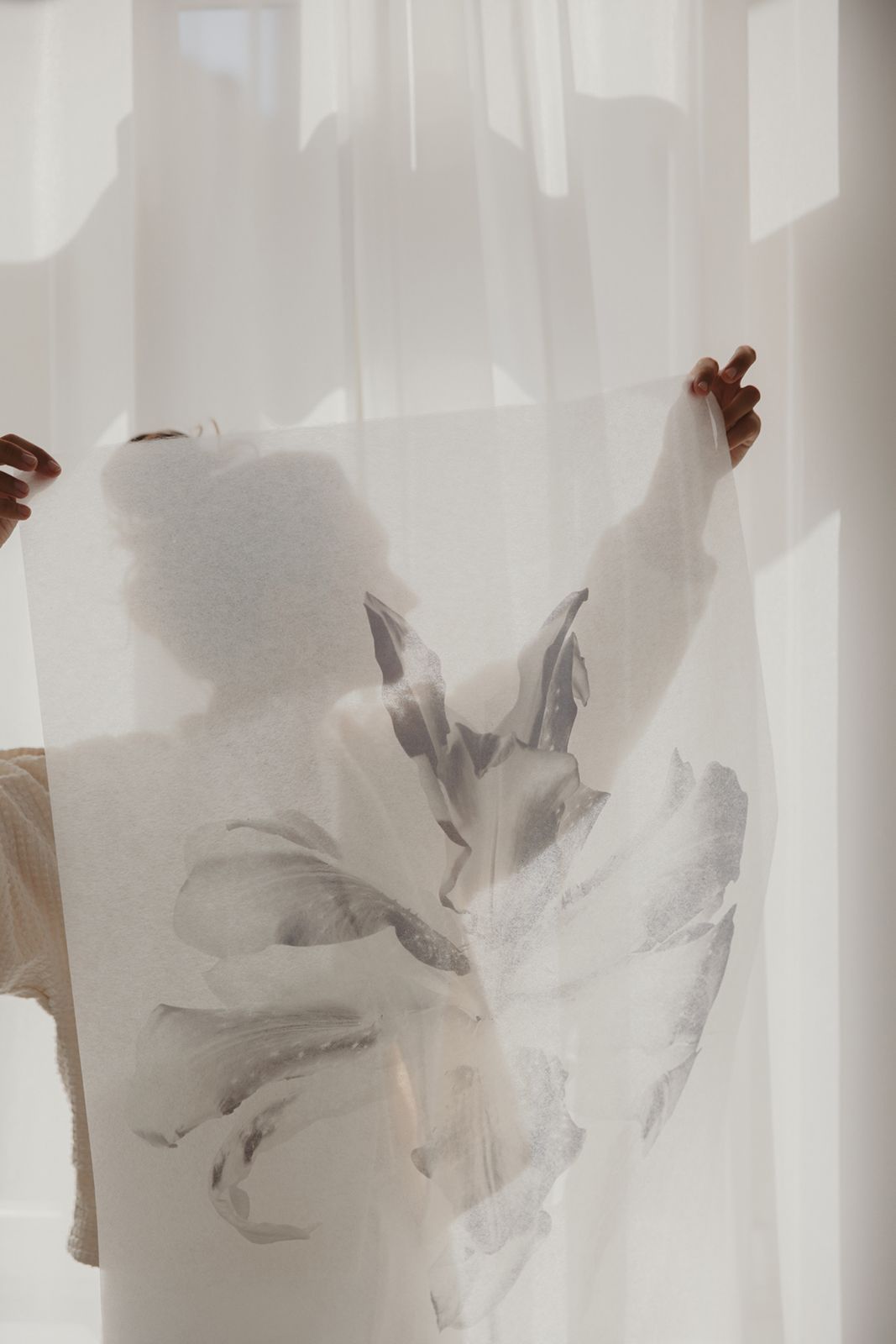
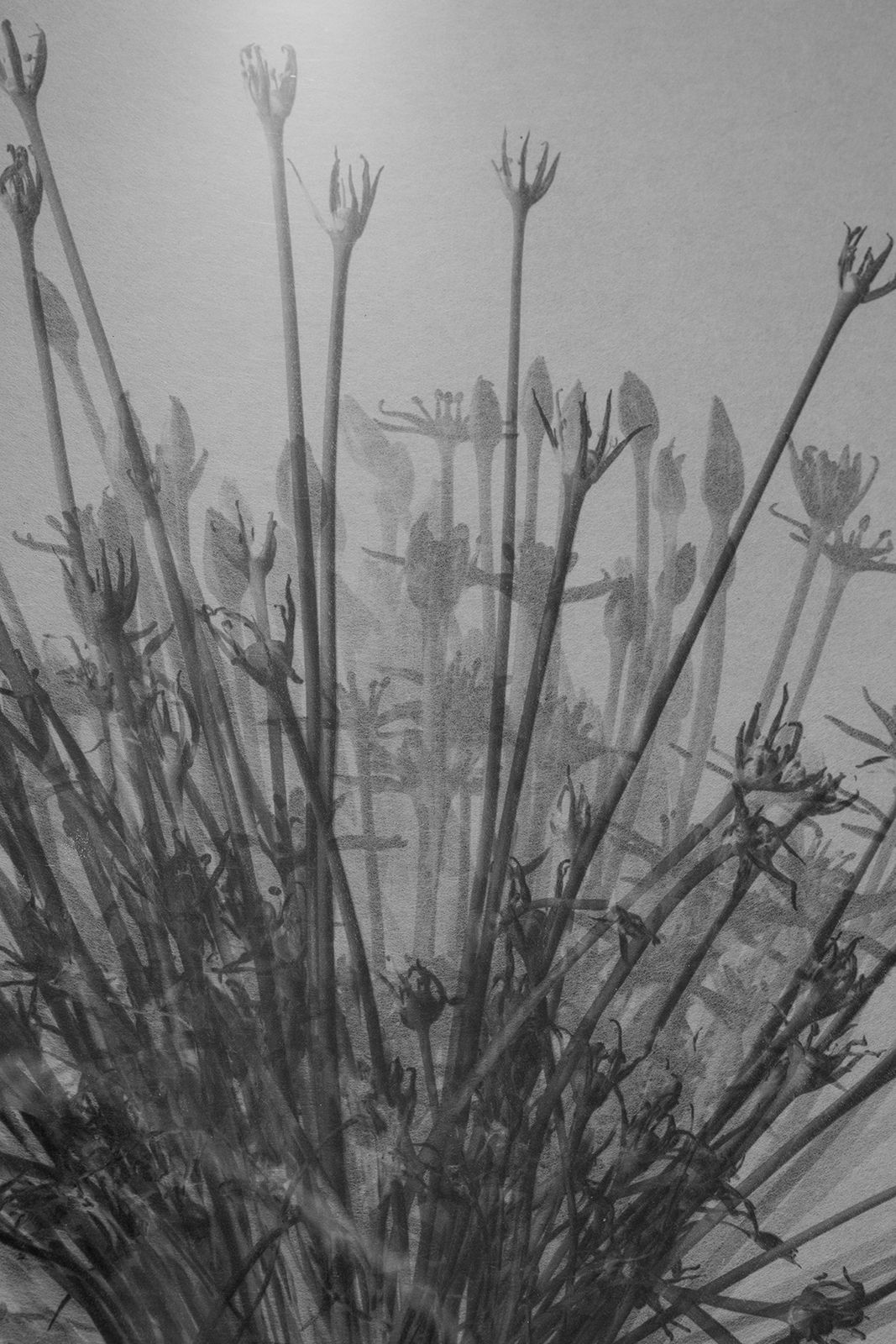
I first photographed their transformations over a few months, returning to the studio every day. The photographs were later printed on extremely delicate Japanese paper, almost weightless.
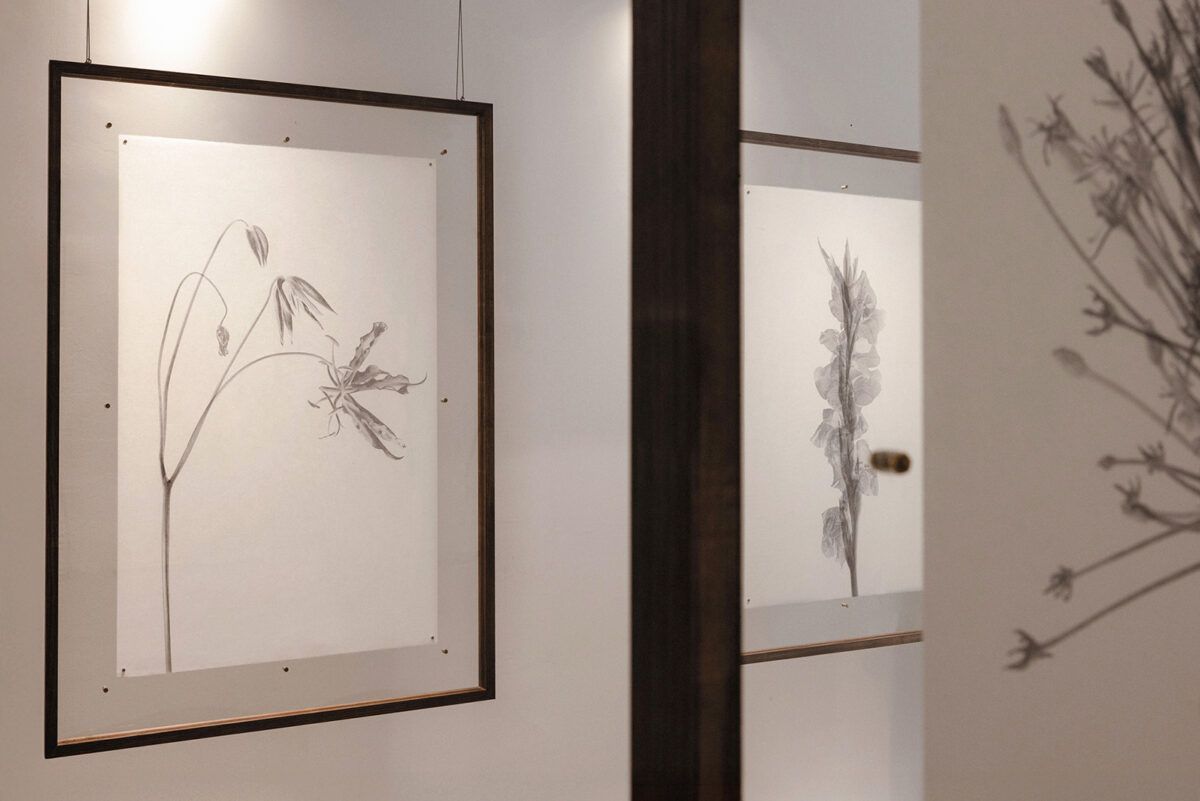
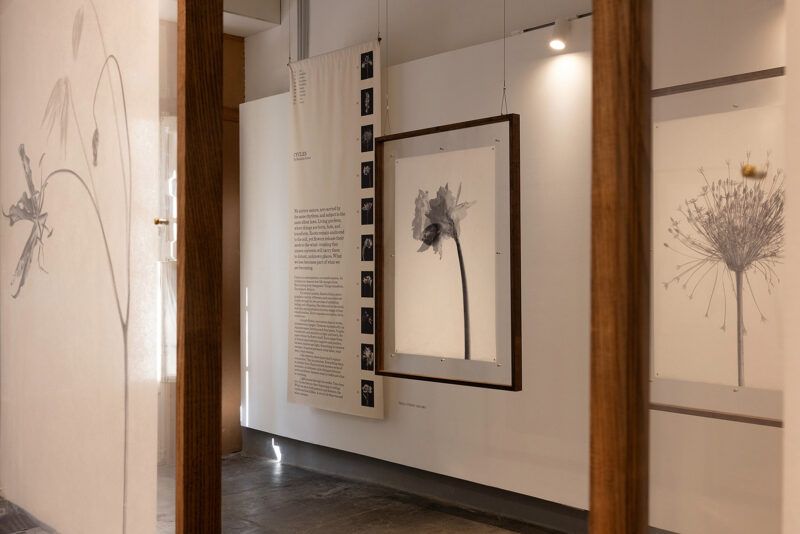
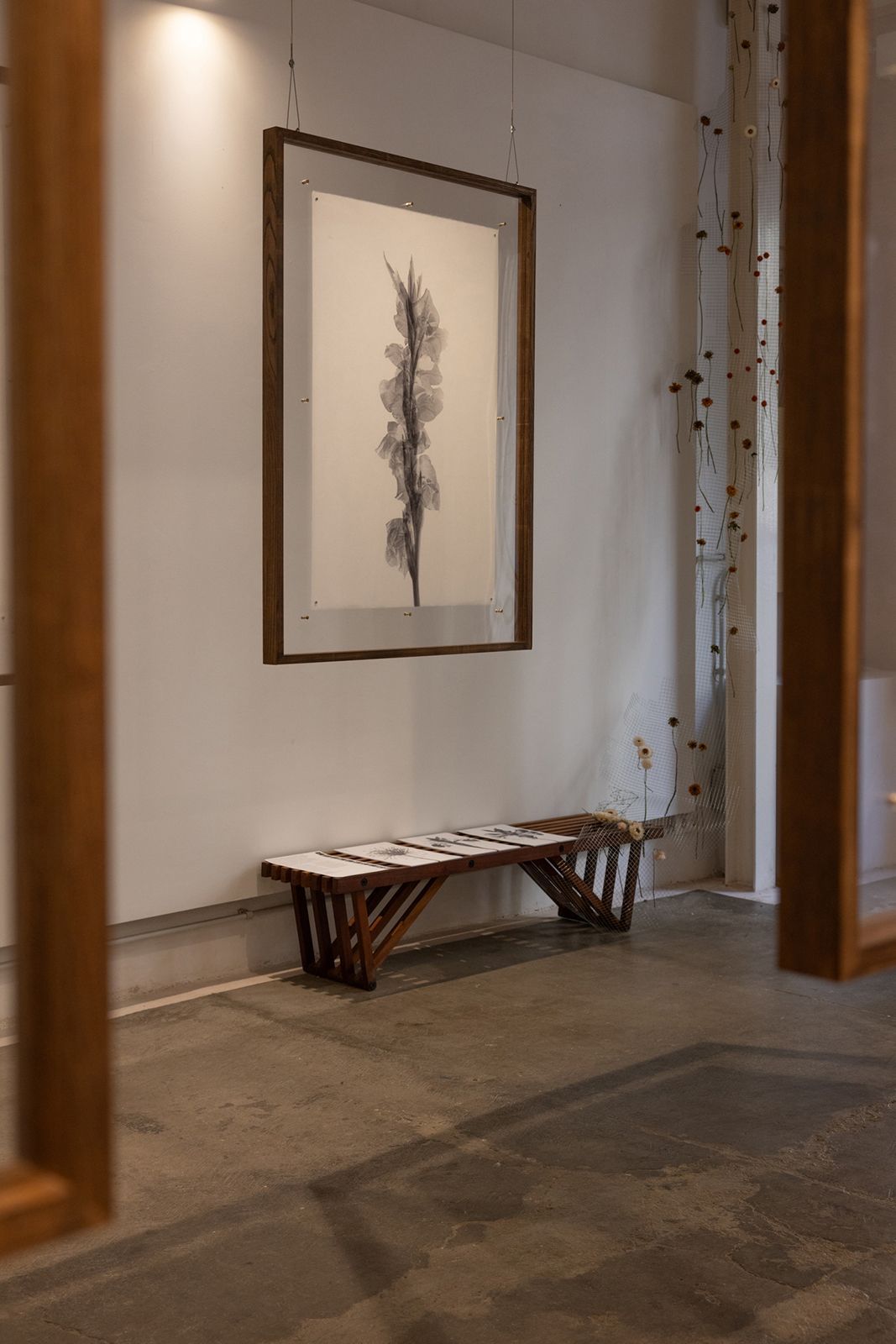
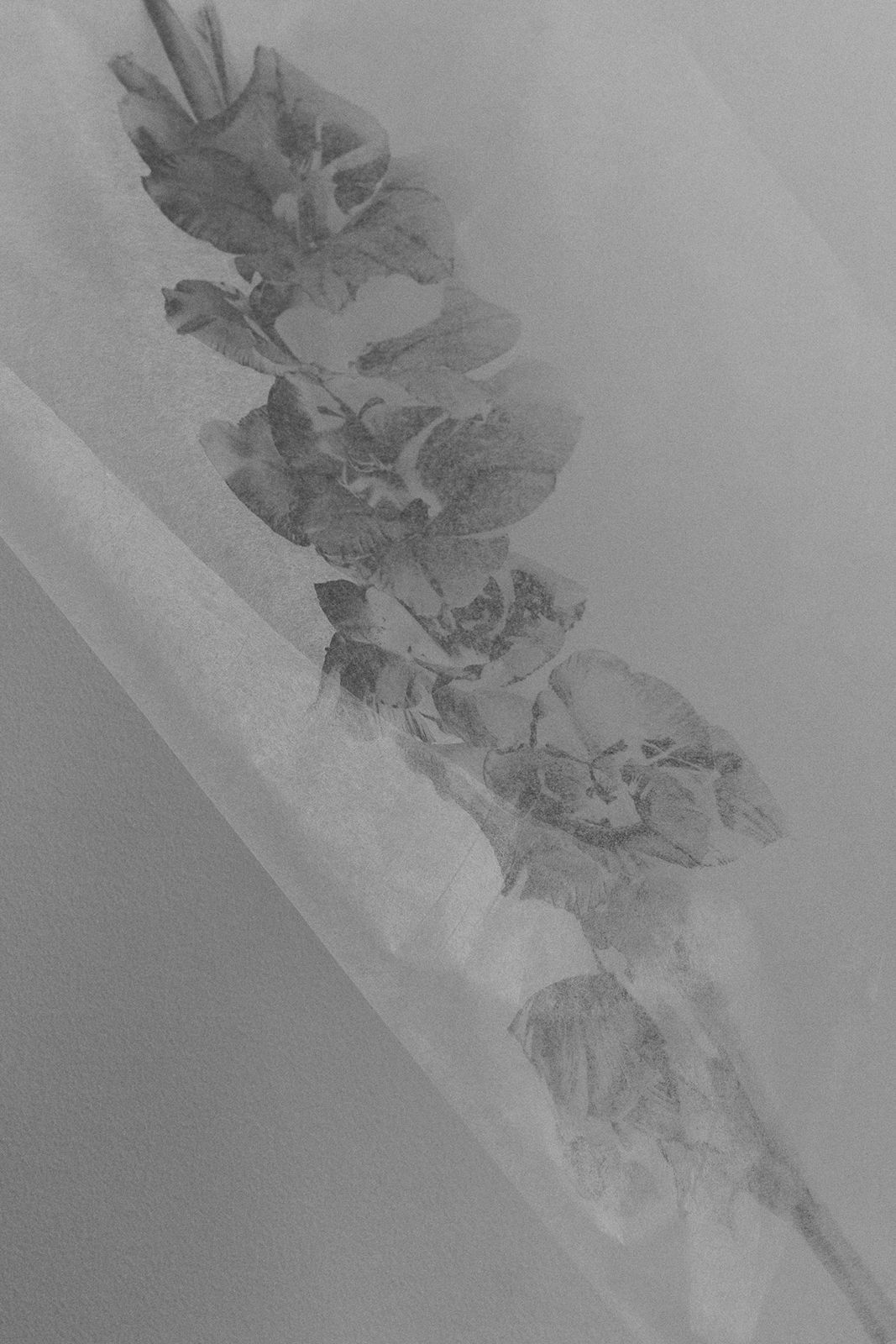
In the larger pieces, they are superimposed, to hold that sense that they don’t replace each other, but exist within one another, forming a cycle without a clear beginning or end.
As the images were becoming part of these compositions, I started to feel a need to let them exist on their own as well. That’s where the idea of the book came in.
The book reveals the layers that compose each work. How did you approach this editorial format so that the reader could experience the project in a different way from the exhibition?
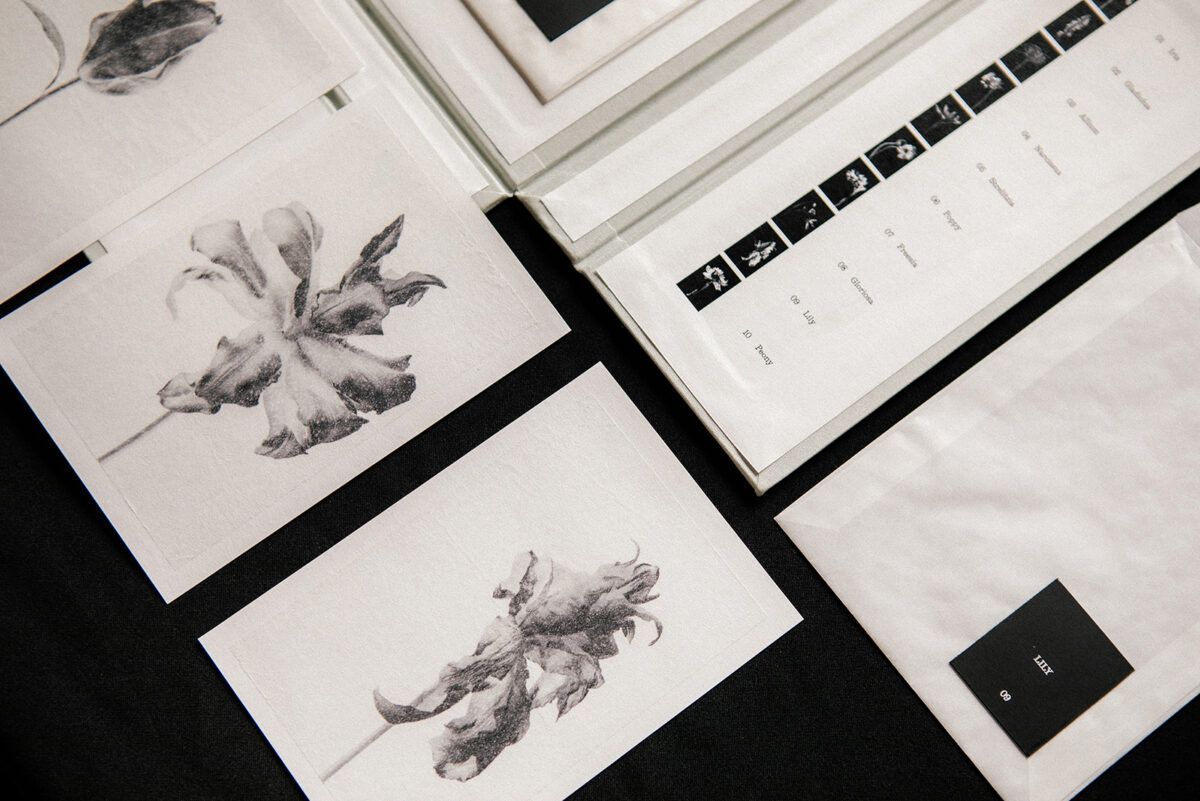
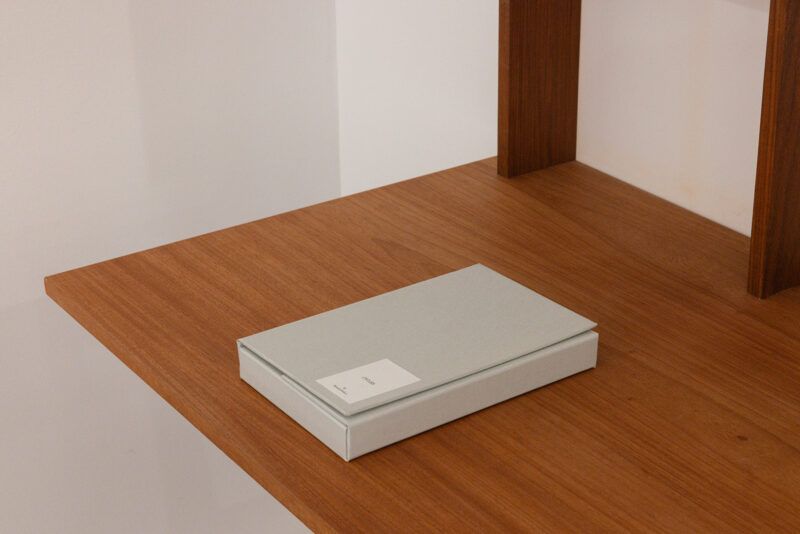
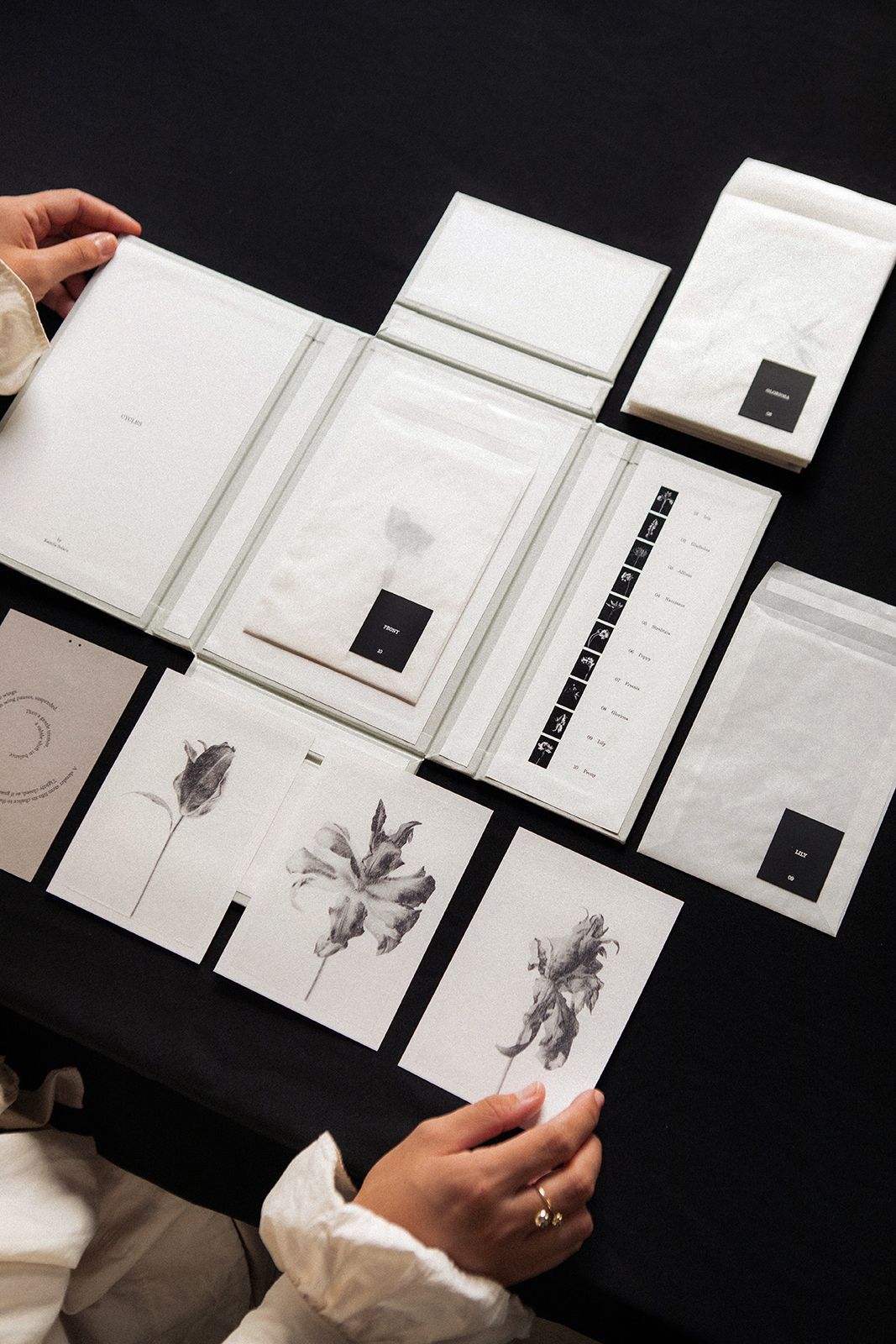
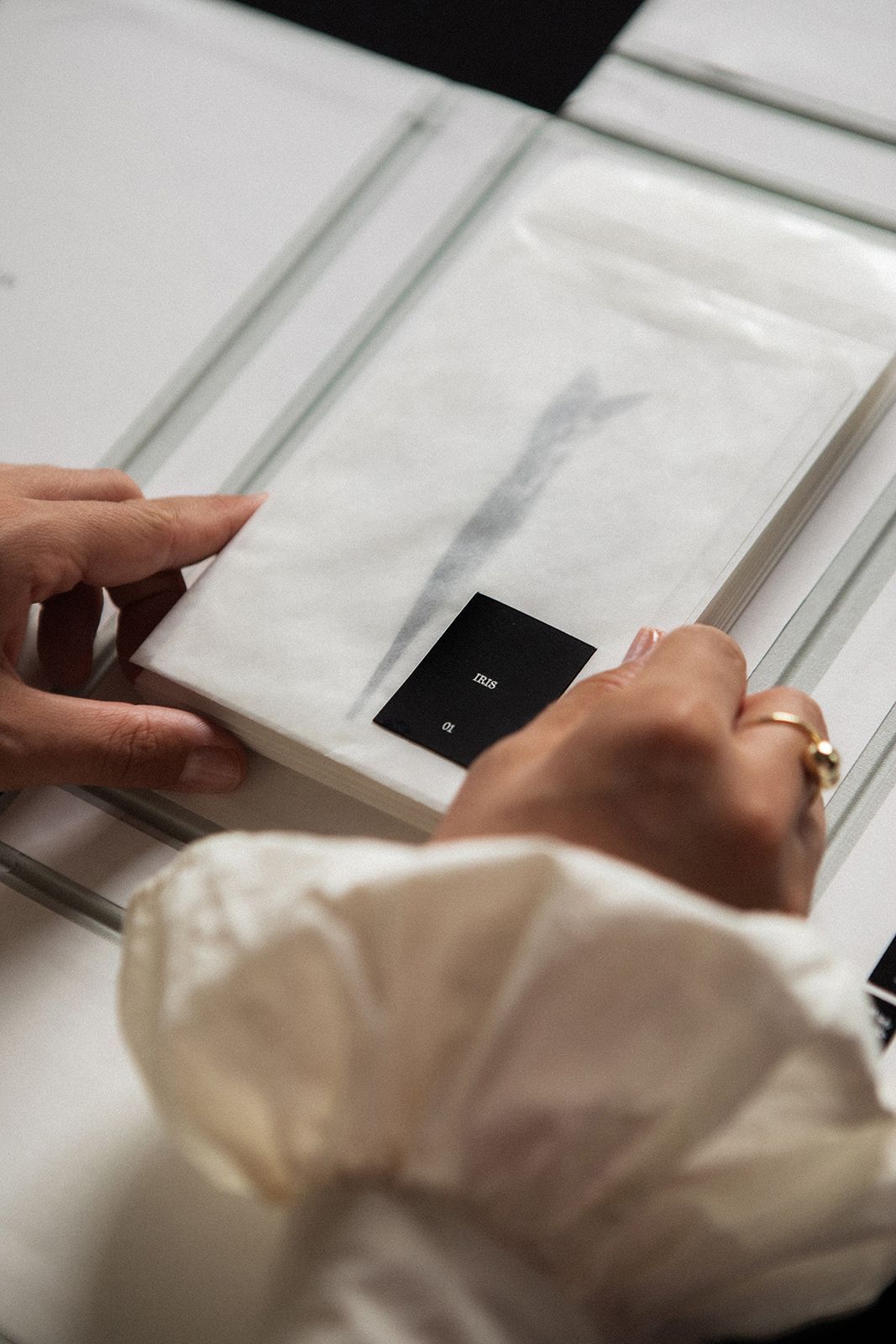
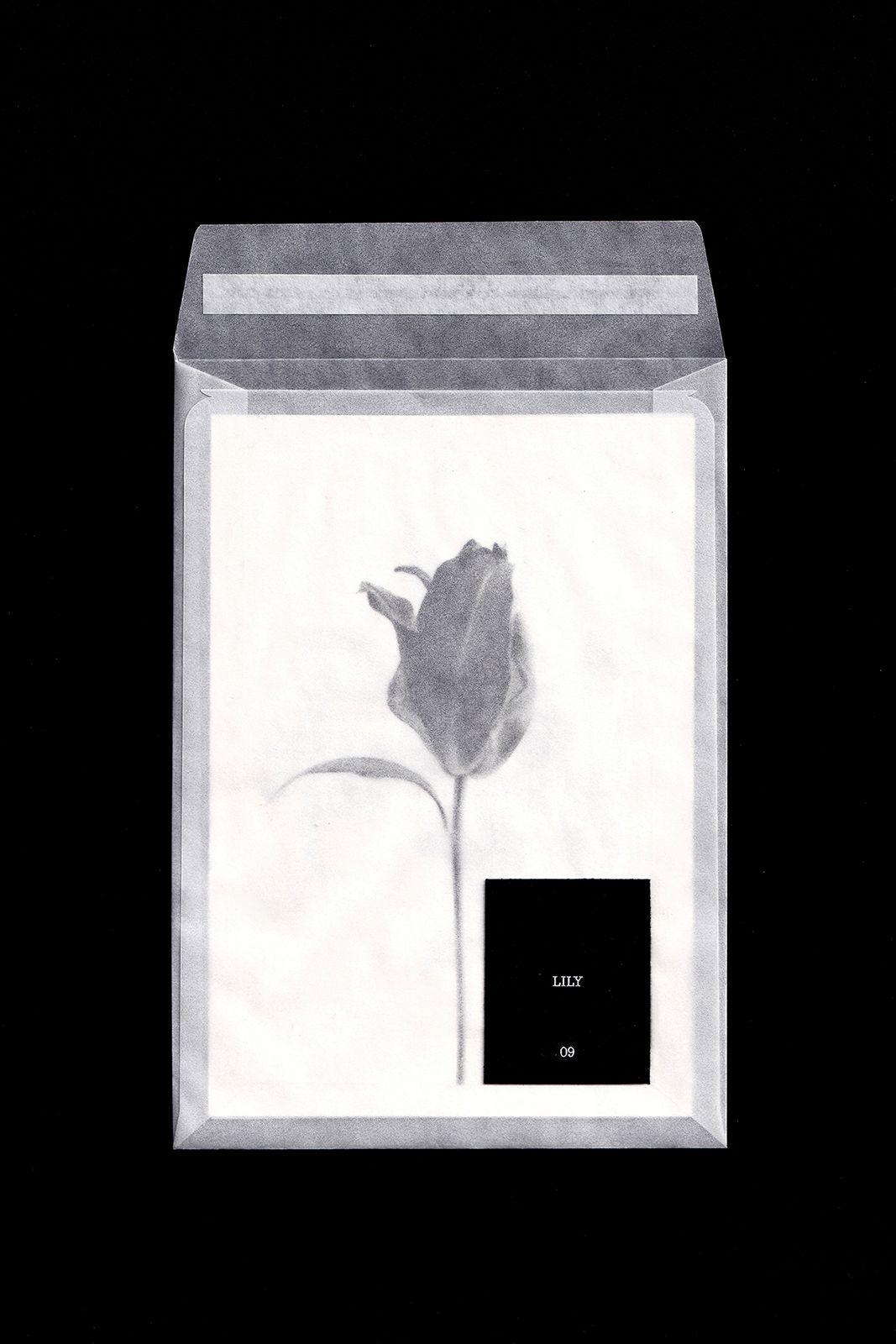
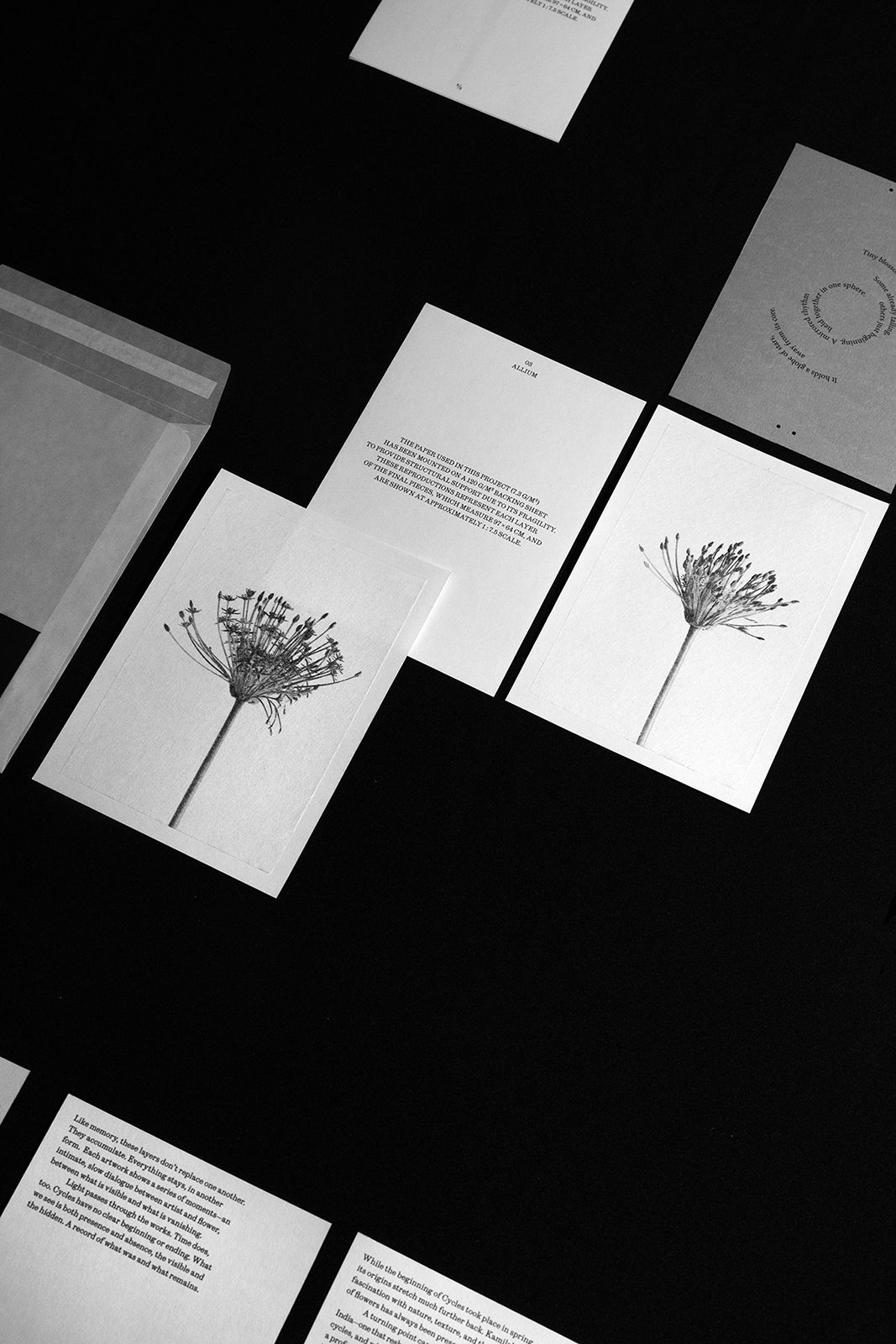
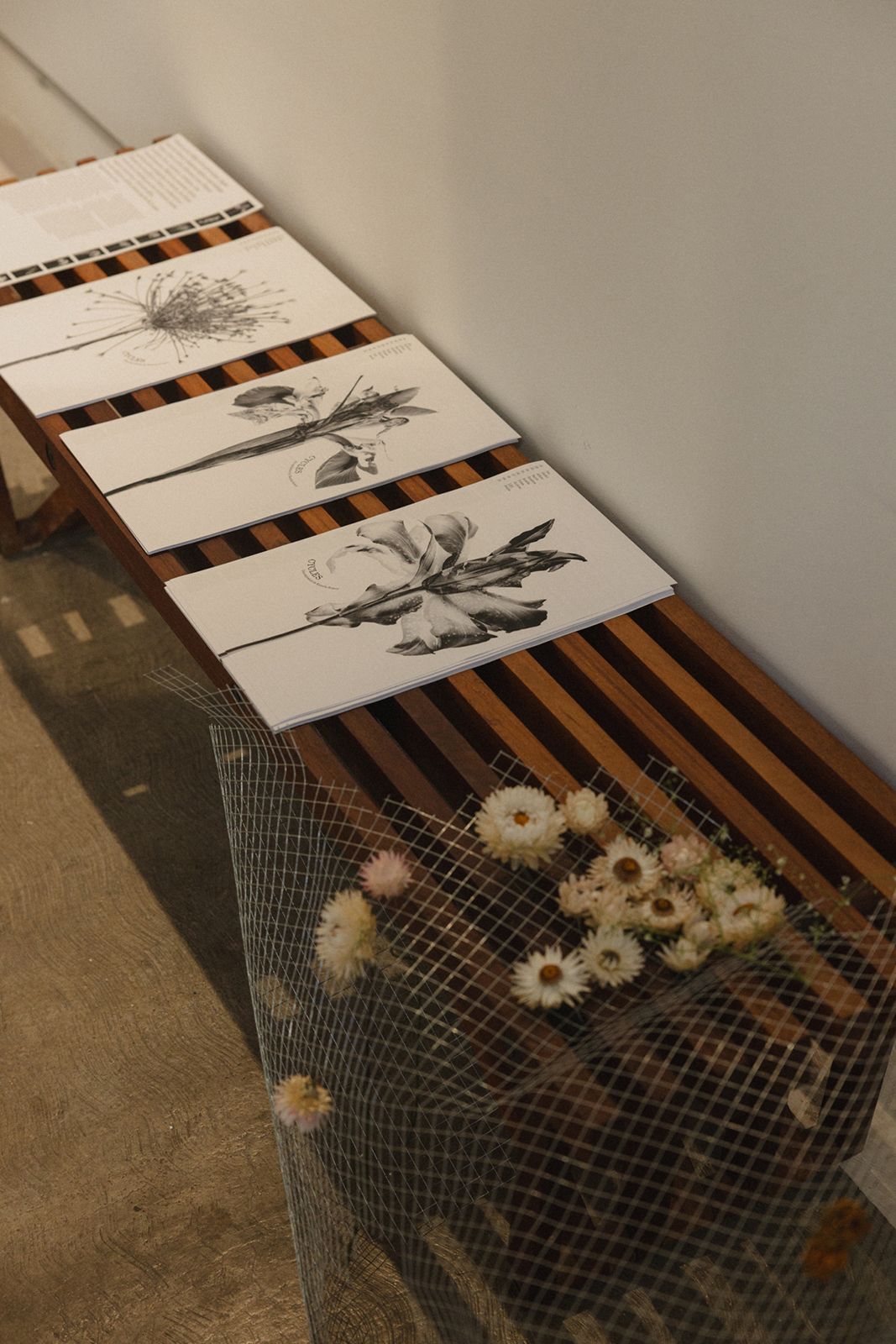
As you open a handmade box, you find inside 10 envelopes, each dedicated to one flower.
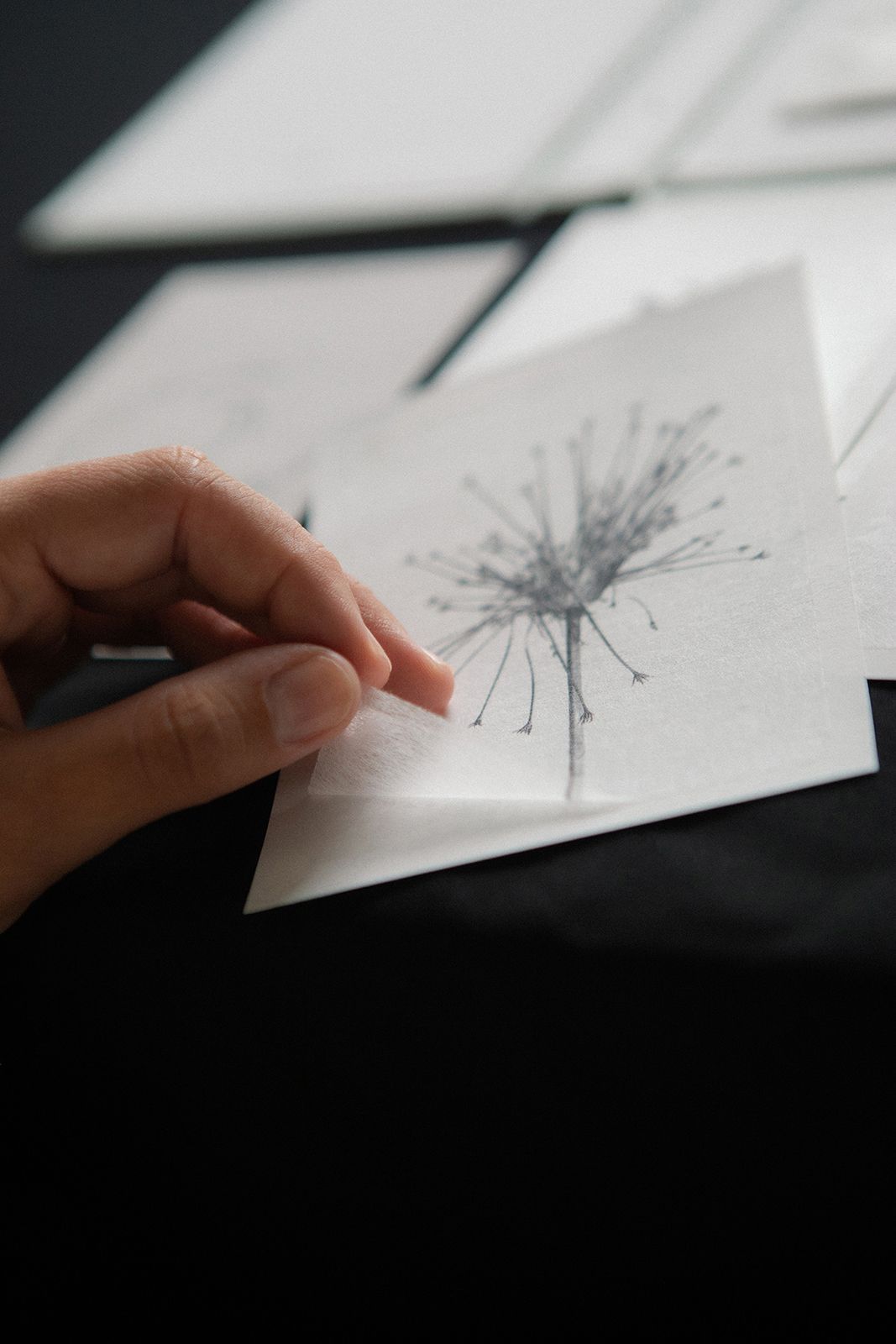
Inside, there are small reproductions of each photograph that compose the large pieces. In them, the paper sheets accumulate and interweave.
The book creates an intimate way of discovering them, layer by layer.
Together with a poem, each envelope holds photographs mounted on a backing sheet due to their delicacy.
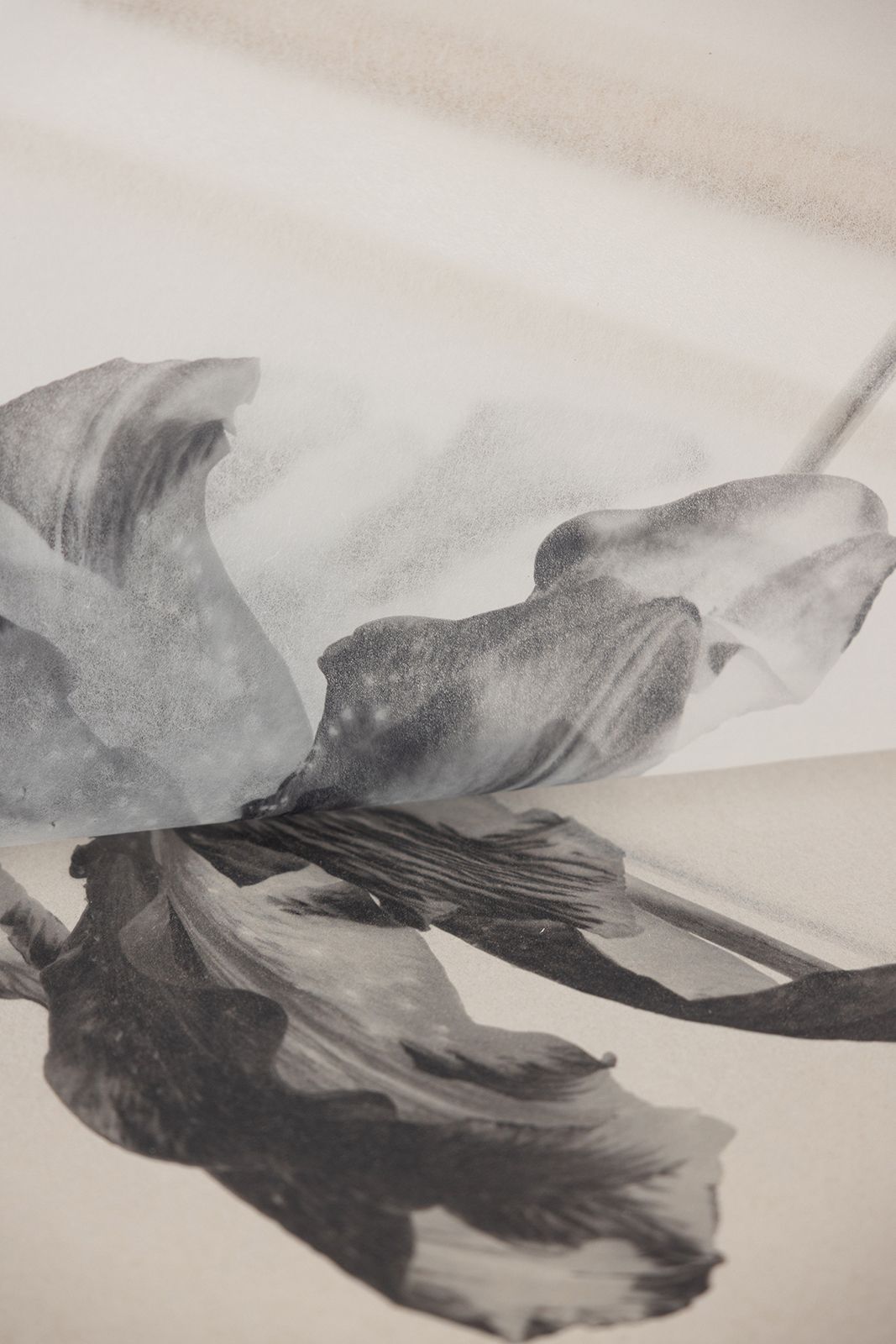
The paper I used is made of Kozo (mulberry tree) and has a weight of 7.3 g/m². It is very delicate and transparent, yet durable, and its fibres visibly bind together.
Through the book, I wanted to “give access” to experiencing it, but also to the way these layers exist individually, as a process in itself, inviting reflection on the space between process and result, which I explore in my practice.
“Through the book, I wanted to invite reflection on transformation and on the processes we go through ourselves.”
The project is based on the patient observation of the process of blooming and wilting in flowers over several months. How did this slow rhythm of observation influence the conception of the book?
The process of photographing the flowers over months really taught me patience and not imposing any narrative on them. Each revealed itself in its own rhythm.
The photographs are like traces. I remember how calming it was for me to come back to them and simply observe what had changed. Not pushing, not intervening.
Each flower had its own energy, its own pace and character. It was like a slow way of getting to know them, of discovering each stage. I would return to the studio every day without knowing what I would find.
“Nature and the processes in it are indeed an infinite source of inspiration for me.”
I wanted the book to carry this same rhythm – an intimate form of discovering, where we find space and acceptance for reflection on transformation and on the processes we go through ourselves, as part of nature.
Through these transformations, I hope we can recognise reflections of our own processes.
As you mentioned, the photographs are printed on Japanese Kozo paper. What drew you to this material, and what role does it play in the experience of the book?
I’ve been long searching for a material that would be translucent, but at the same time organic, and would allow me to explore the idea of “Cycles” and experiment with the idea of layers.
Working with Kozo paper was an exceptional experience for me. What really drew me to it was this duality, its extreme delicacy and at the same time its strength.
It feels very fragile, almost transparent, yet it is incredibly durable. In a way, it mirrors the flower itself.
The process of making it is also slow — how the fibers grow, are collected, peeled, and soaked in water. It holds time within.
“Working with Kozo paper was an exceptional experience for me.”
In Cycles, the layers of images function almost like memory: nothing disappears, everything remains in some way. Does the book also aim to preserve this sense of accumulated time?
For me, the book is more rooted in the present. It acknowledges the past and the future, but none of the stages of transformation is dominant.
The envelopes, each holding a trace of a stage with equal importance, are for me like reminders of the cyclical nature of time. Here, the layers don’t intertwine to create one single image, but we can enter the presence of each, while they are still bonded by the envelope.
I would love for the viewer to find themselves in these flowers, to feel connected to the processes that happen within us, and perhaps discover different states of each flower, always remembering the continuous change, the welcoming and letting go, and how both are connected.
“Each envelope holds a trace of a stage with equal importance, are for me are like reminders of the cyclical nature of time.”
Each envelope in the book contains reproductions of the images along with a poem written by you. How do photography and text interact within this editorial object?
The words were written after photographing each flower. It was for me like describing a meeting. How I saw and felt this presence that unfolded in front of me. A dialogue with the flower.
The words also transmit their personalities for me. Reflection of their rhythm. I feel like it’s another trace of the life they hold, seen through my eyes and felt. The words add movement. They capture the energy of moving from one state we see to another, what happens in between.
The exhibition presents the final compositions first and then the process. Does the book follow the same narrative logic, or does it propose a different way of navigating the project?
The book’s intention is to enclose the project in another form. Instead of seeing the full cycle all at once, it is more rooted in the present, in observing each stage closely.
It invites the reader to immerse themselves in the current experience, to notice the details and the subtle transformations.
At the same time, the book reflects the structure of the large pieces. It shows the layers that later accumulate in the final compositions, so in a sense it also becomes a process of the larger works.
It plays with both scales: the intimate, moment-to-moment presence of each stage, and the way these stages come together to form the full cycle.
Your artistic practice reveals a strong connection between nature, time and presence. Would you say the book allows for a more intimate or meditative experience of these ideas?
Nature and the processes in it are indeed an infinite source of inspiration for me. My intention was that the book opens space for a meditative experience of these themes. I hope it will be an object to return to, to reflect on transformation as a continuous movement, to welcome and let go, and to look at ourselves as living gardens, where things are born, fade, and transform.
The book design was developed in collaboration with Paula Illescas. What was that collaborative process like in transforming the project into an editorial object?
The collaboration with Paula was very intuitive. She worked closely with me throughout the project and saw it emerging.
“Paula Illescas developed the entire graphic design of the exhibition, and together we translated the idea into an object.”
She developed the entire graphic design of the exhibition, and together we translated the idea into an object. She understood my intention perfectly and we shared a mutual vision.
A very special moment was creating the first copy with our hands, together with Catalina Risso, who ran a workshop for us on Japanese bookbinding. We spent a day at Taula, creating it hand in hand, a day about the essence and power of collaboration: to meet, to meet the space, and in the flow of gestures exchanged.
There is a strong sensitivity to fragility and materiality throughout the project. How do the book, the photographs and the frames engage with this idea of delicacy?
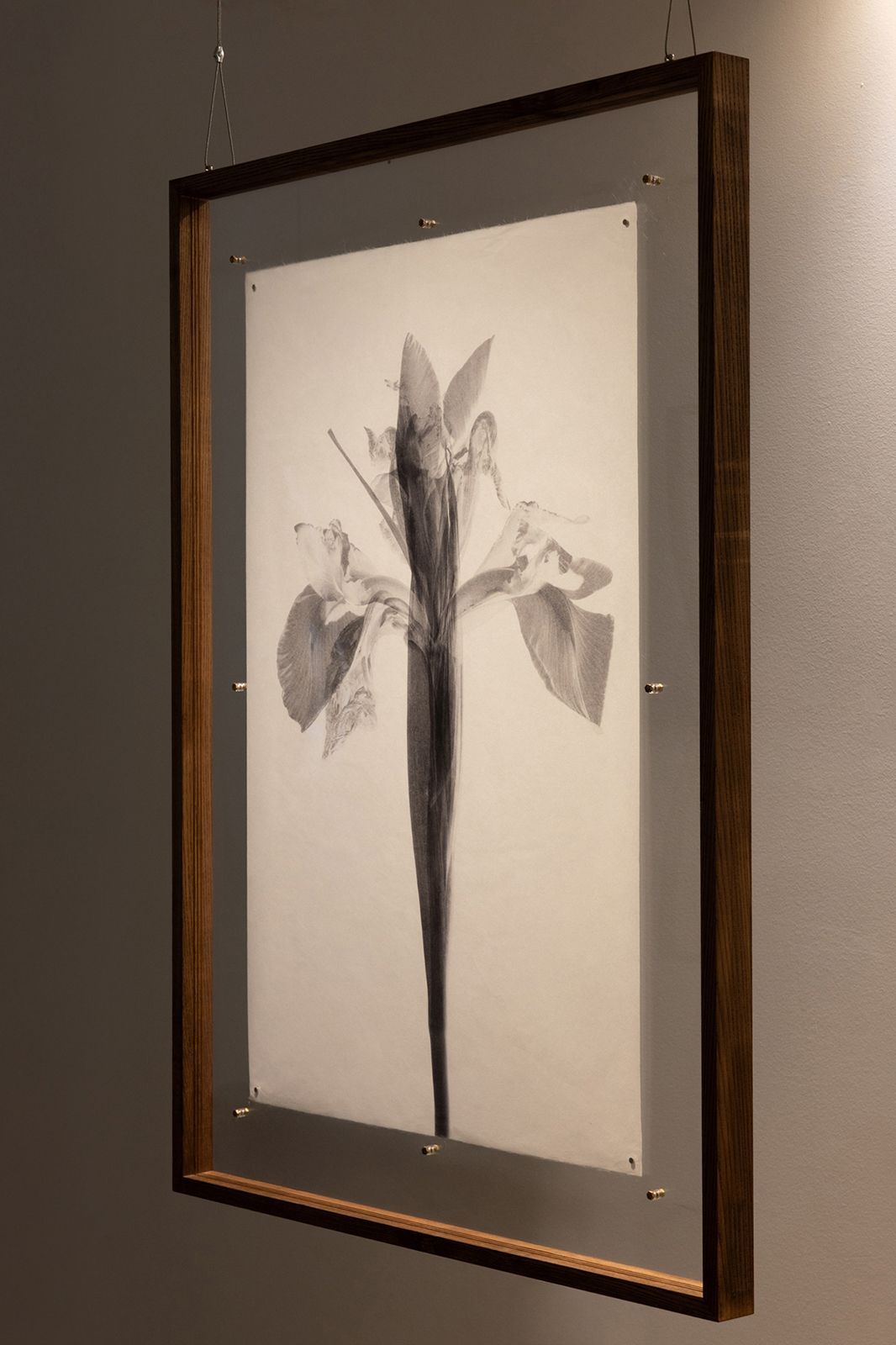
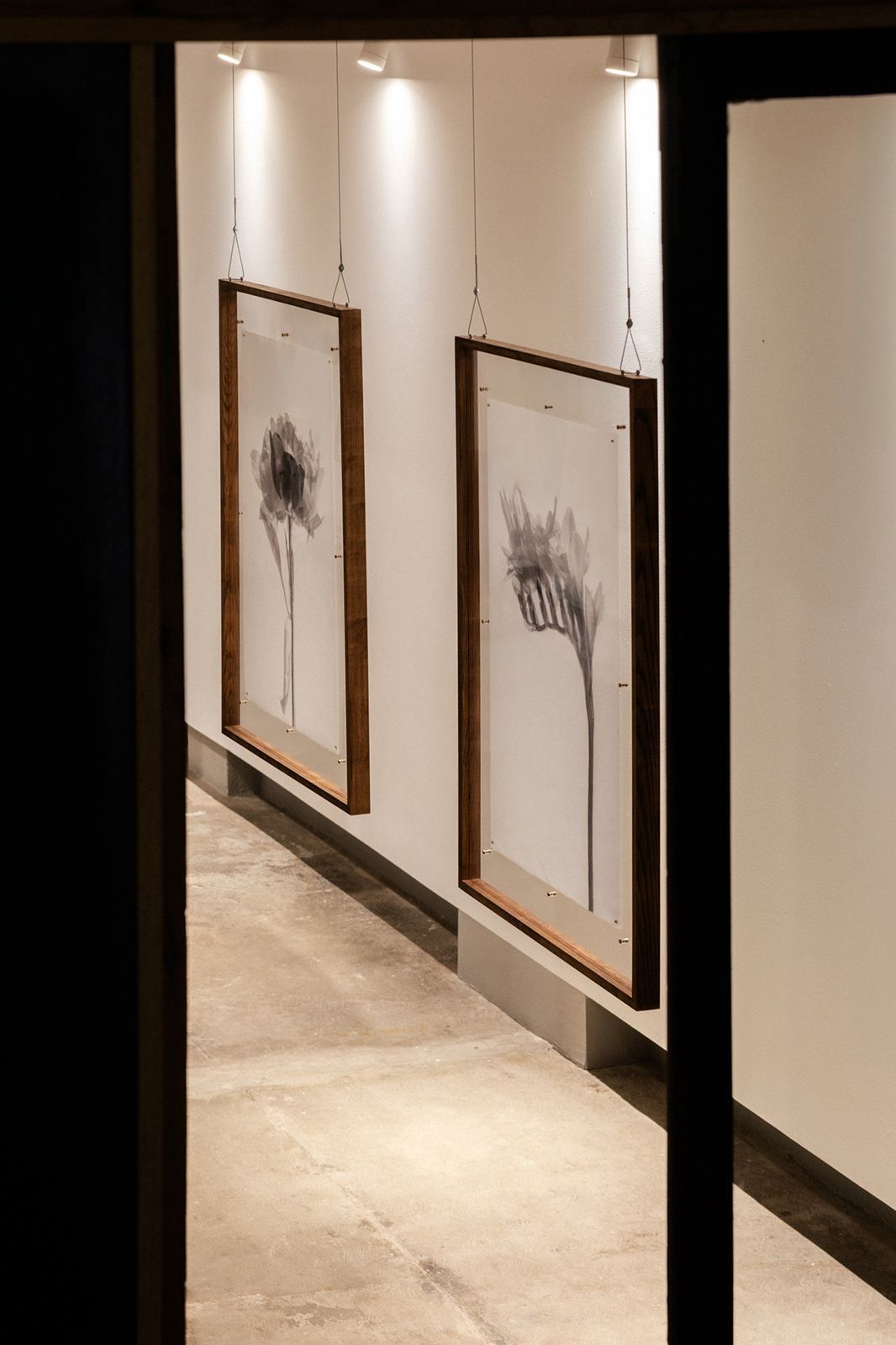
The frames mirror the structure of the large works, with three planes and the photographs positioned on the central one. They were created specifically for the artworks, allowing them to be viewed from both sides while also protecting them. For me, the frames and the envelopes are a way to hold the work, to pause and attend to its delicacy, to appreciate it and to see the strength in that fragility, the duality it holds.
We understand that your journey to India was a key moment in shaping the project’s understanding of cycles. In what way did that experience influence the final form of the book and the narrative of Cycles?
The journey changed how I see the processes we go through. It made me understand transformation not as something to complete, but as a constant movement.
India gave me a deeper sense of it as something continuous, cyclical. Life and death were present there, right next to each other. Death wasn’t hidden or taboo.
I witnessed rituals at the ghats, where bodies are buried in the open air, visible to everyone. Covered with flowers, everything slowly becomes one matter; what remains is taken—by animals, by the river.
“In India I witnessed rituals, where bodies are buried in the open air, visible to everyone. Covered with flowers, everything slowly becomes one matter.”
That openness I received through the journey allowed me to observe without imposing a narrative after returning. And through being with the flowers day by day, witnessing their transformations, I kept learning how to receive their stories and rhythms. It also made me appreciate each stage as equally important and beautiful—not only the blooming. The flowers in the project became a mirror for that reflection.
If the book could be read as a cycle in itself, what would you like the reader to discover or feel as they open each envelope and move through its layers?
The photographs in each envelope show different states of transformation. None of them is more important than the others. The envelope holds them together, gathers them into one whole. I’d like it to feel like getting to know someone, slowly.
Each flower was, for me, a different personality to discover. Each one carries a different energy you might recognize yourself in. Maybe a different one each time.
“Each flower was, for me, a different personality to discover. Each one carries a different energy you might recognize yourself in.”
Another way of looking at time
Cycles proposes another way of looking at time. In its subtlety, in its apparent fragility, lies a quiet strength that invites us to observe from a different perspective. Kamila Solarz constructs a language in which the image ceases to be mere representation and becomes experience: a space in which to pause, to look, and perhaps to recognise ourselves within the constant change that runs through us.
Although the exhibition at Taula is no longer on view, Solarz is preparing a new exhibition opening on 7 May at Barbara Aurell’s space in Barcelona — Movimiento en Blanco (C/ Martínez de la Rosa 16, Barcelona).
Her book-object, in a first limited edition of 50 copies crafted by local artisans in Barcelona, is available through her website and will also be presented at Barcelona Common Air Book Fair 2026 (17–19 April).