AOT studio: experimental, democratic and sustainable design
In the universe of contemporary design, there are studios that transcend the label of “brand” to become a living manifesto. Such is the case of AOT studio, a Danish workshop founded almost by accident by Kathrine and Mathias, a couple who combine fine arts and design to create objects that defy convention. Their philosophy is built on intuition, craftsmanship and a profound respect for materials.
In this article, we explore the history, processes and vision of AOT studio, complemented by an in-depth interview that reveals how a personal project has evolved into a benchmark of contemporary European design.
Origins: when creation becomes destiny
AOT studio was born almost by chance when Kathrine and Mathias, during a summer holiday at their country house, began making everyday objects. What started as a playful experiment quickly grew into a life project that, five years later, has consolidated itself as a reference point in contemporary Danish design.
Their identity stems from the complicity of being a couple and from the fusion of their disciplines — fine arts and design. A combination that places manual experimentation and respect for materials at the heart of their creative philosophy.
Their approach is clear: design should move people and be democratic, capable of inhabiting both a grand hall and the edge of a window sill.

Exclusive interview with AOT studio
You define yourselves as a family-led design studio. How does that dynamic influence your creative process?
AOT kind of started by accident as we were designing and making stuff for our summer house. Within the both of us there’s a very natural urge to simply create, and for 10 days straight we were making everything from lamps to tables to accessories. After those 10 days we looked at what we had made and then we looked at each other and were like “That went quite well”. That is almost five years ago now.
We have different backgrounds (design and fine arts) and have completely different skill sets. This, combined with the fact that we know each other in and out makes it easy for us to utilize each other’s differences into advantages as well as into things that embody the both of us. Not just with the things we create but with the brand in general. The downside to being a family business (especially when you add kids to that equation) is that everything tends to blend together. Work and life. That is a balance we have to find every single day.
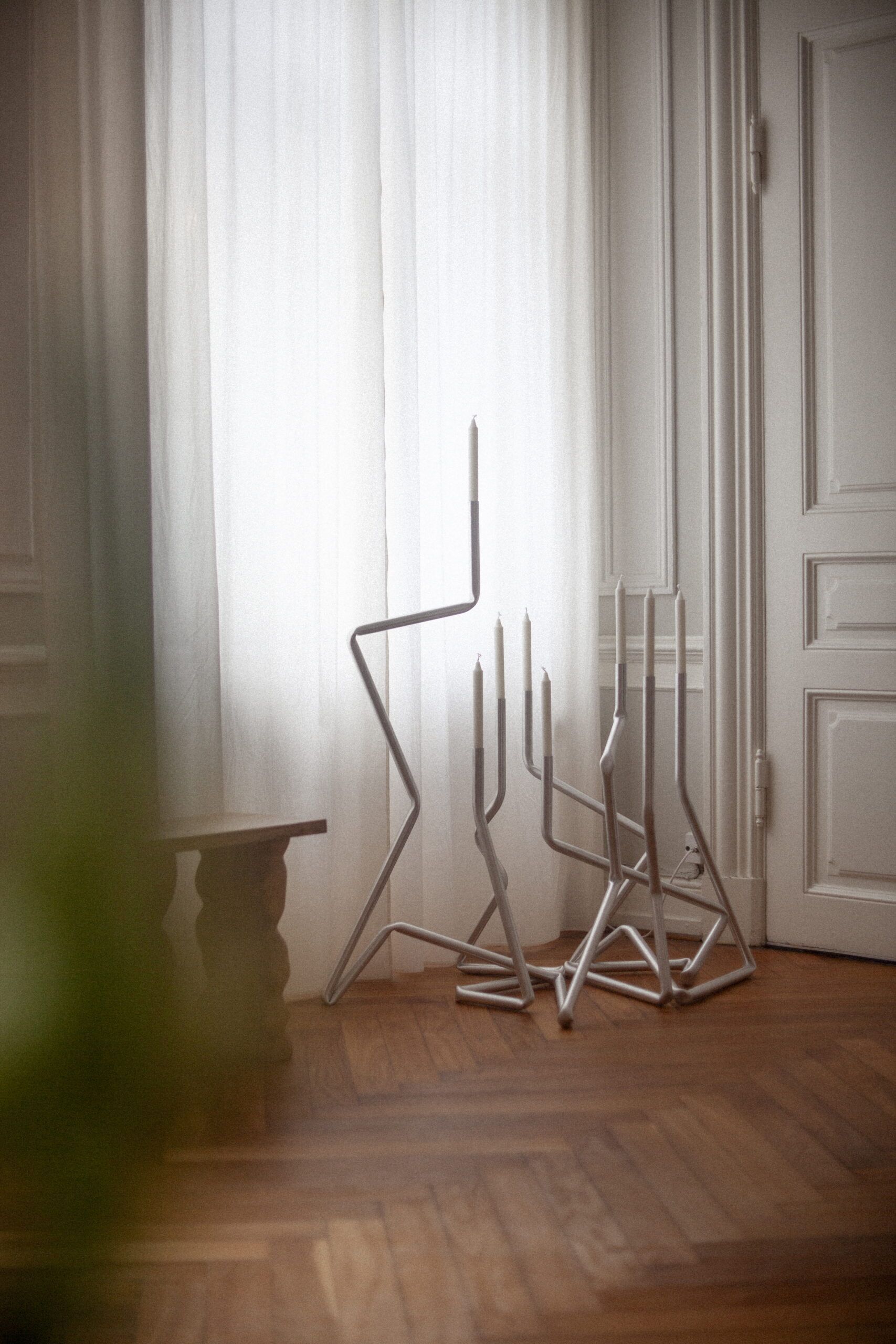
You often talk about liberating materials from conventions. Could you explain what this means for you in practice?
Among other things – AOT started from a frustraIon with some of the norms and default “ways of doing things” within industrial. Especially within production and when you have to scale production, we met a lot of limitations to how and what we could design.
If you follow that mentality to the end our fear is that everything will end up looking like each other. That is absolutely not what we’re about nor is it how our minds work. We want to challenge this default way of doing things and meet the materials with open arms and a big porIon of naivety. So, from the beginning we decided that our processes start with our own hands.
Neither of us are crafts people but we have a huge respect for the value of crafted objects in a world as well as the knowledge and learnings that is out there. But our curiosity for materials and ways of handling things by far exceeds our fear to do things the wrong way around. In a way, our design process is about creating problems for ourselves by doings things the wrong way. Second part of the process is then solving these problems without compromising the design and process. In this process we often end up “inventing” our own crafts, techniques and tools which for us is a big part of making uncompromising designs that can be scaled in a financial and practical sustainable way.
“Our design process is about creating problems for ourselves by doings things the wrong way.”
Many of your pieces start with hand-made experiments before moving to production. Why is this “wrong way around”, as you describe it, so important for your work?
In our general urge to create things there’s a deep love for crafts and for making things come alive with our hands. It’s almost a primal feeling. At least it is simply what feels natural to us. But it has also become a simple way for us to start the process of always striving to make something truly original.
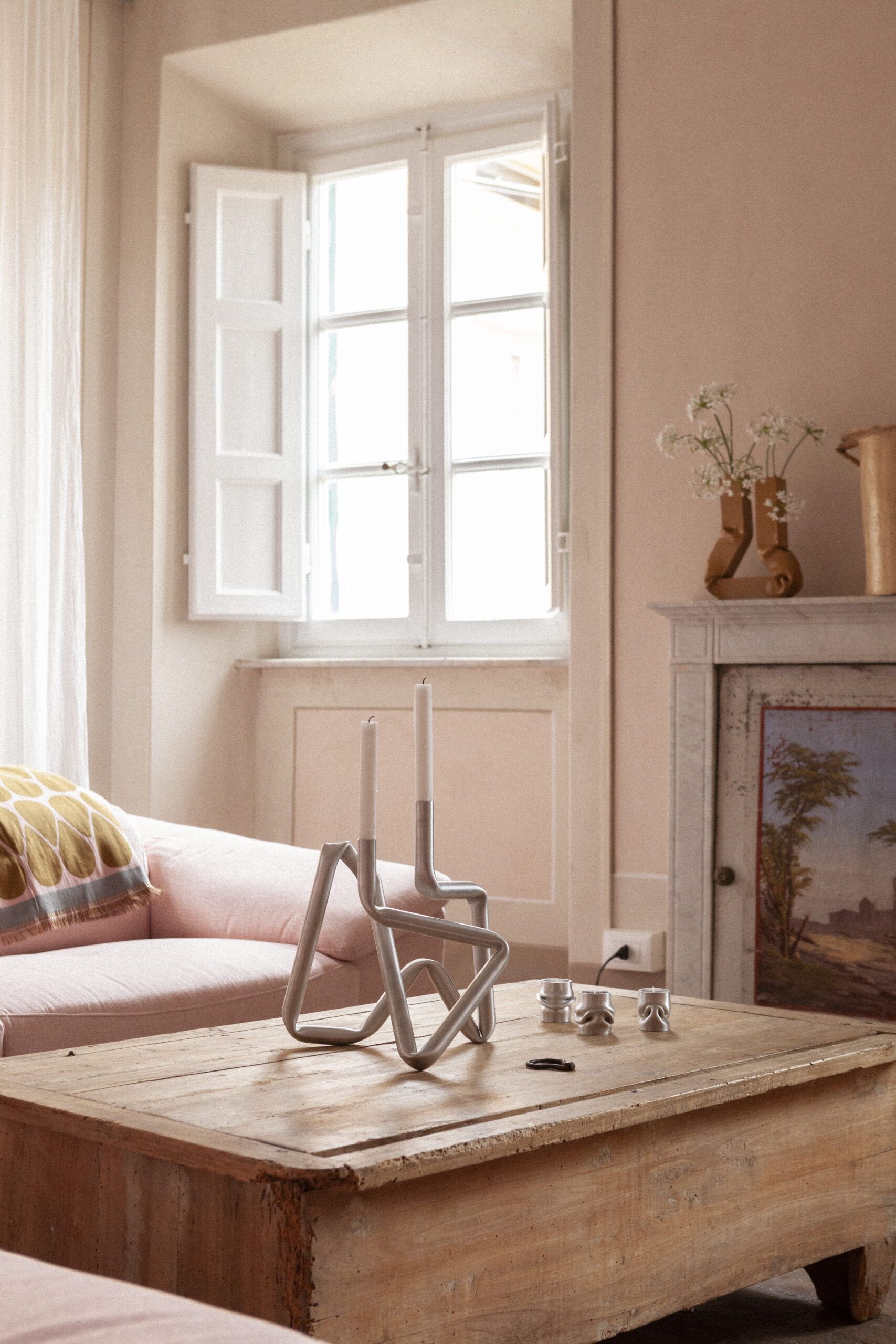
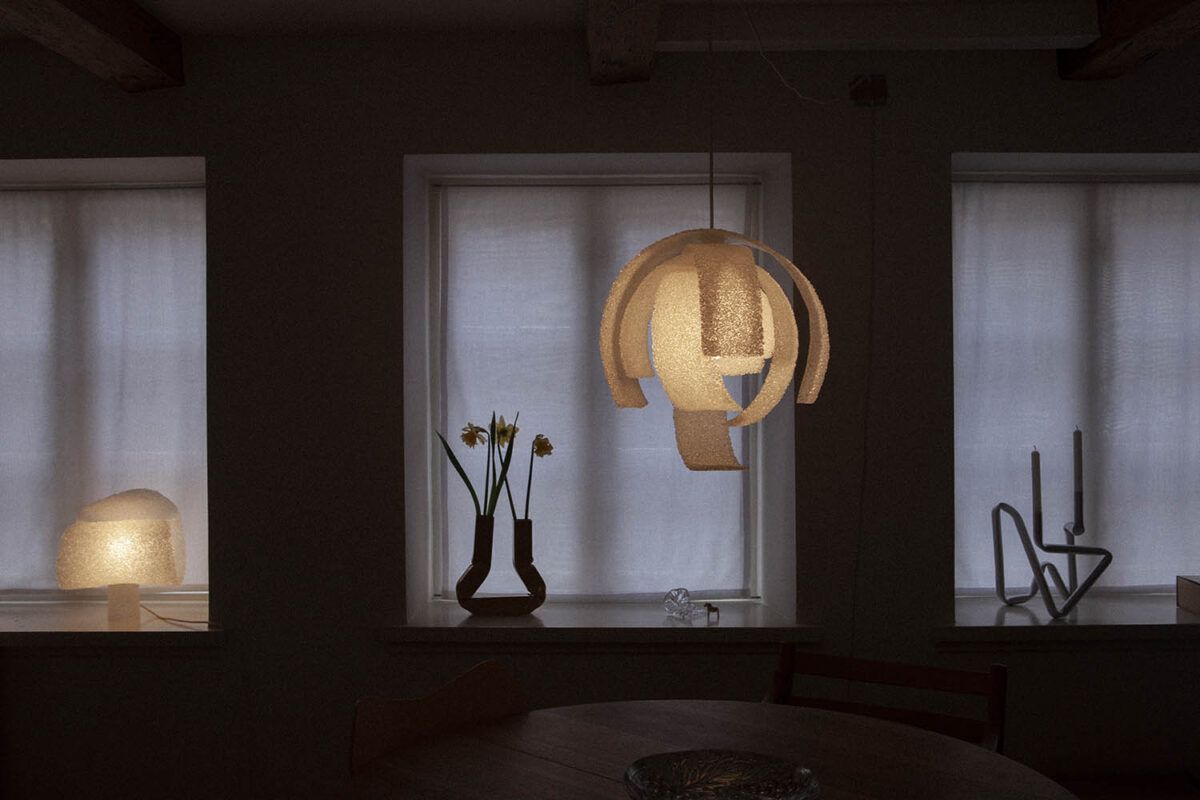
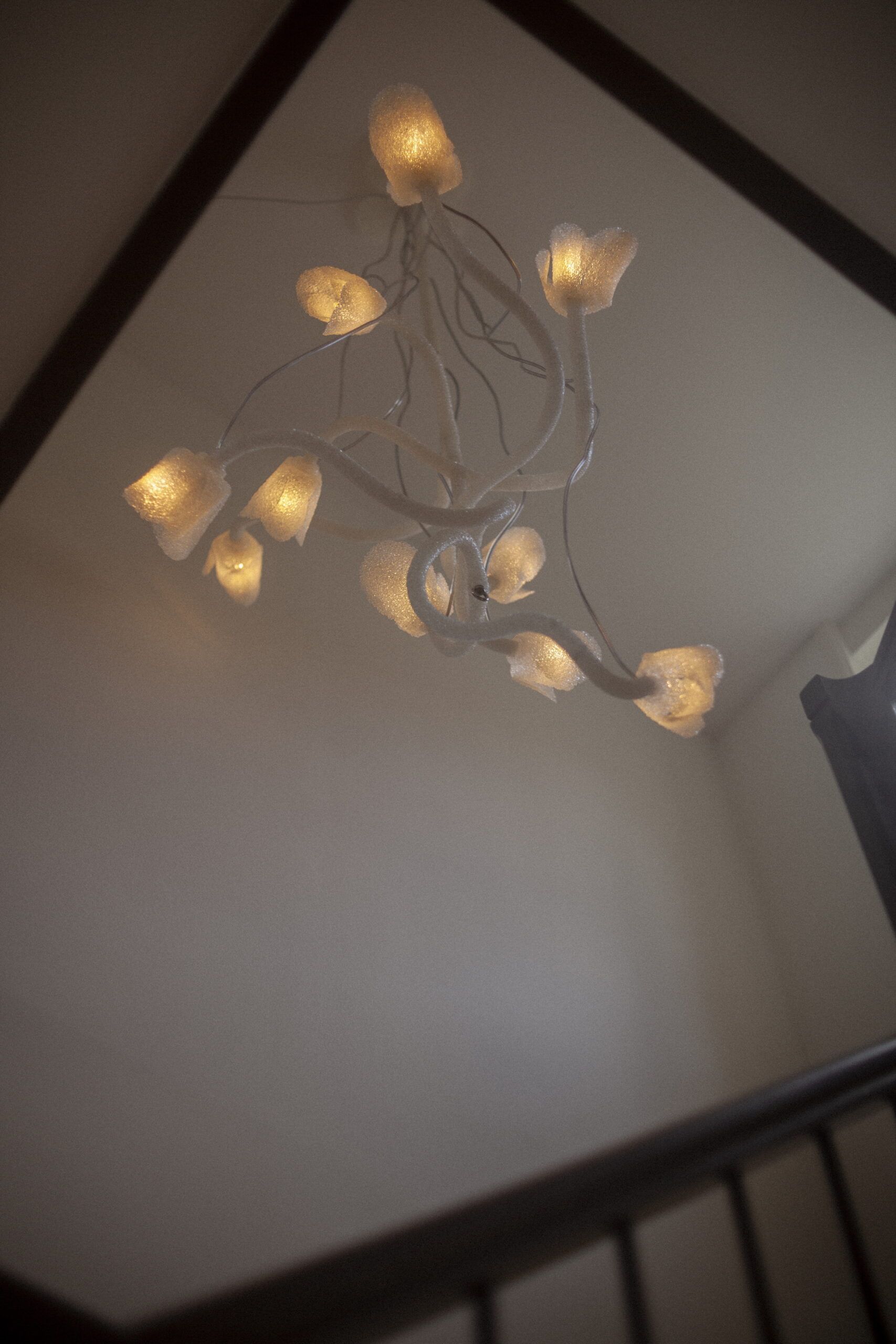
The F46 light collection is made entirely from repurposed plastic. What inspired you to work with this material, and what challenges did you face in transforming it?
We have long been fascinated with plastic as it is everything we are not, so it felt like the ultimate challenge. It is highly dependent on advanced machinery to take shape, and it is rarely associated with something hand-made. But it is such an incredible material (in its functions and qualities) so we had to try to make it fit the AOT way.
The reputation of plastic is in general super interesting, as it is technically such a fantastic material but in real life it is causing a lot of problems. But in this string of thought we need to remember that the problems are caused because we, humans, do not treat it with the respect that it requires. And that’s what we wanted to express.
We wanted to elevate a material that is often considered as having no value and give it a right of its own. Repurposed and recycled plastic has obviously been used a lot in design for the last 10-15 years, but very often in a way where the design is almost screaming in your face that this it is made from repurposed plastic. From a professional point of view, we were a bit fed up with this aesthetic. We believe in 2025 it should be a given, when using plastic in design production, it is either recycled or repurposed without the design having to spell it out.
“We have long been fascinated with plastic as it is everything we are not, so it felt like the ultimate challenge.”
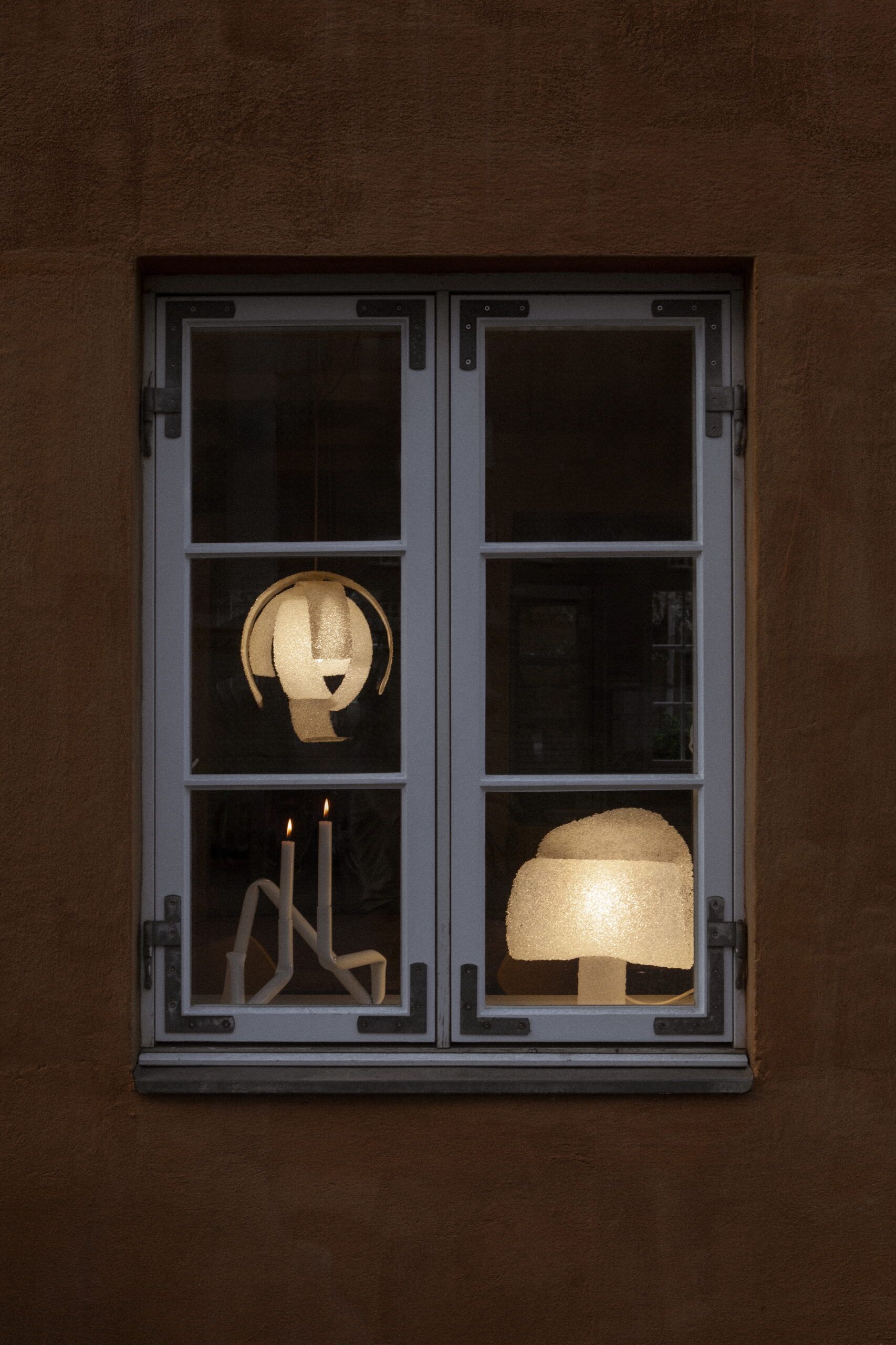
Your Primi Collection is based on bent aluminium tubes. What fascinates you about this material and its possibilities?
The almost banal quality of a material changing its properties when e.g. exposed to heat will continue to amaze us over and over again. It’s a quality present in many metals and materials but especially with aluminium a lot of things are possible when it comes to handling the material with your hands. Note to self: all these small “gifts” comes with equal amounts of problems later on. Another fairly banal fascination with the aluminium tube is the fact that the two ends of a tube has been a great framework for us to figure out how and what this material and technique can become (the answer is everything).
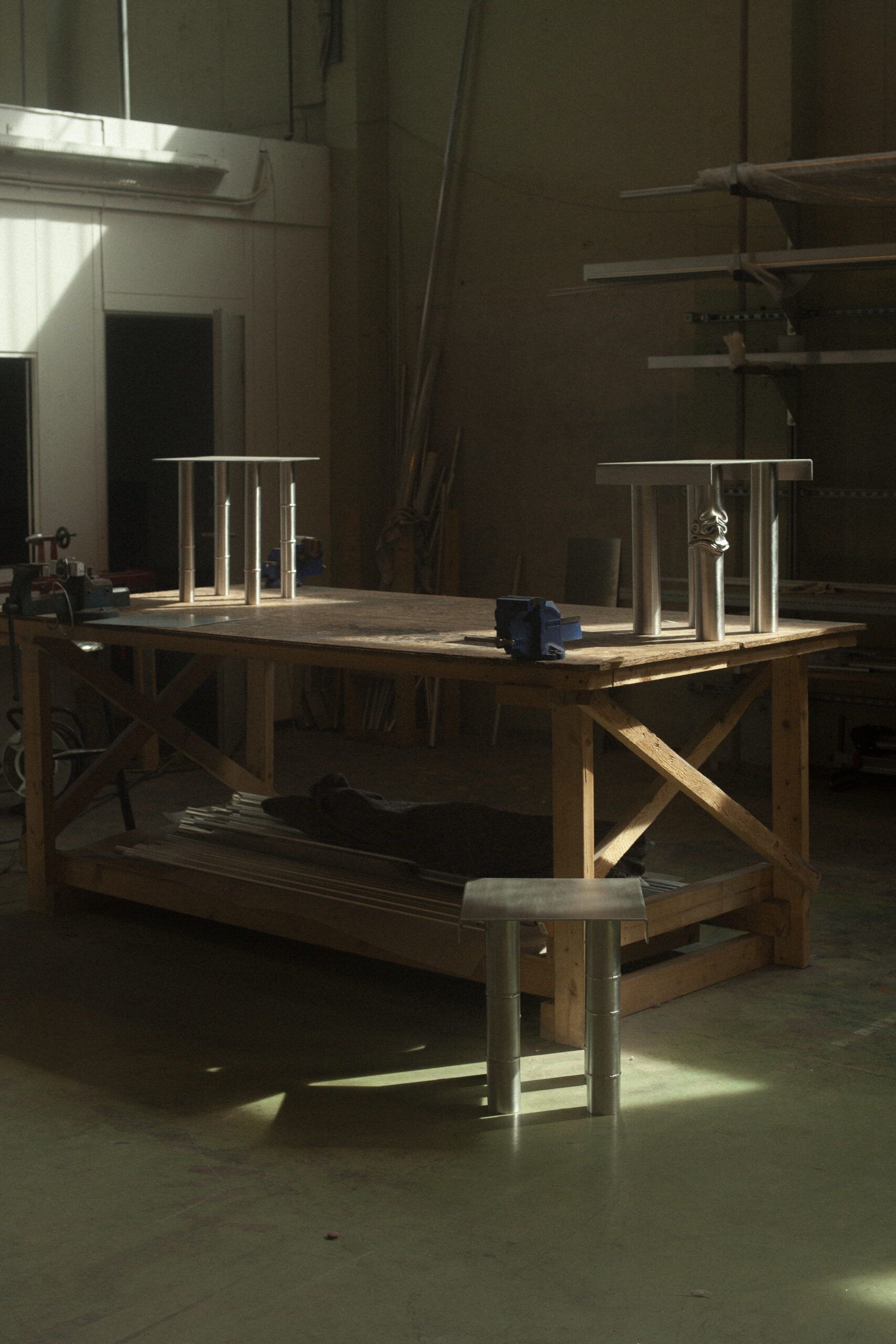
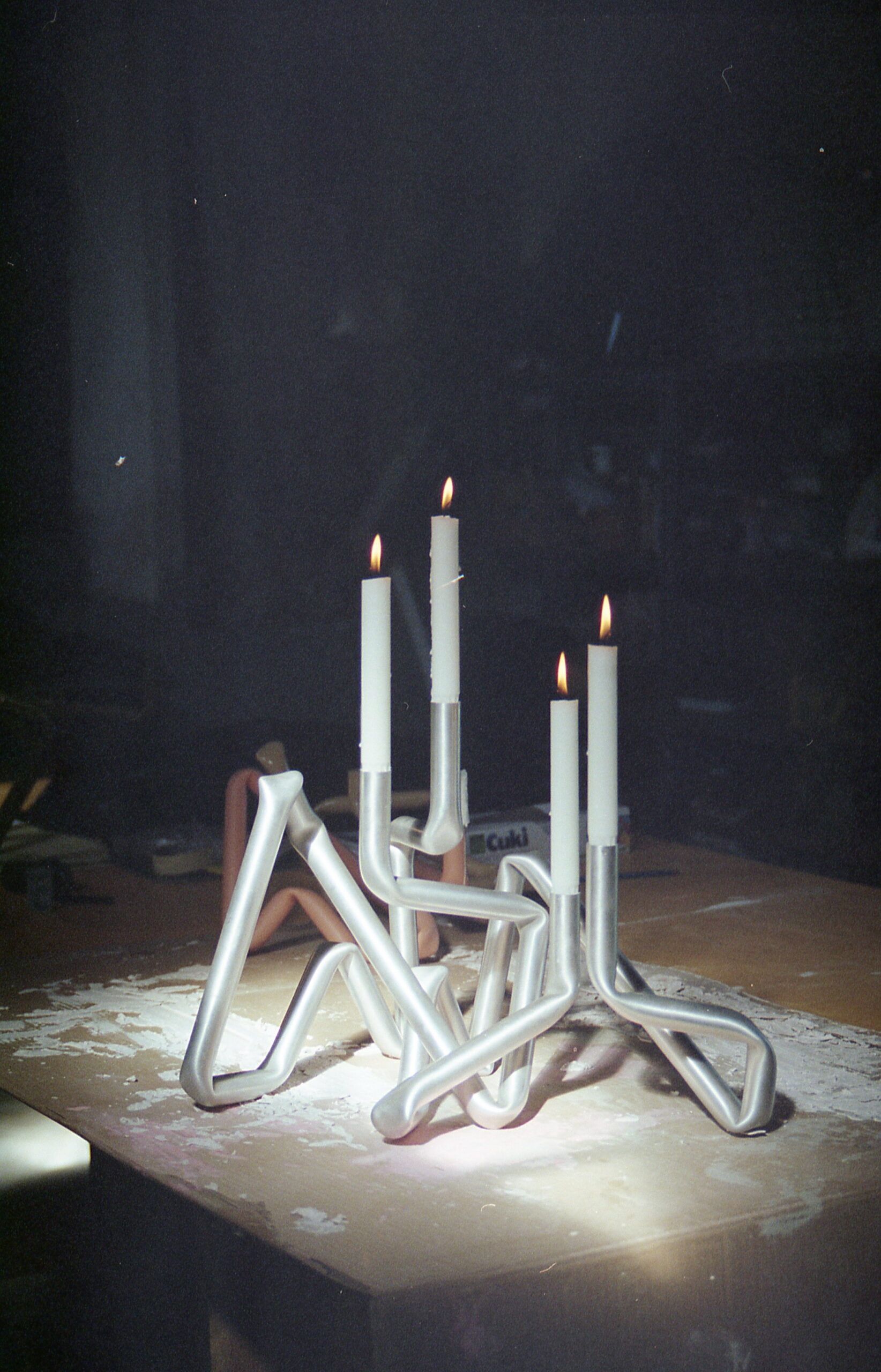
We first discovered your candle holder collections at the Copenhagen Contemporary shop, and we instantly fell in love with them. They show a playful yet sculptural approach. What role do these smaller, everyday objects play in your broader design philosophy?
Alongside a professional strive to create things that are original, wants to be seen and are ambitious in their design we have an equally strong intention not to become an elitist practice. We don’t get off on designing extravagant things for the few. We intend for our practice to be a more democratized way of thinking contemporary design.
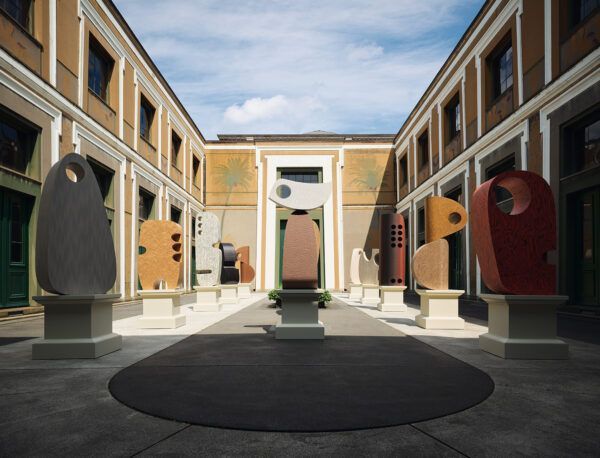
There’s a sculpture for those with a hall to fill but there’s also a sculpture for those with just a window sill to decorate.
“Sustainability is an inherent part of our lives and our business.”
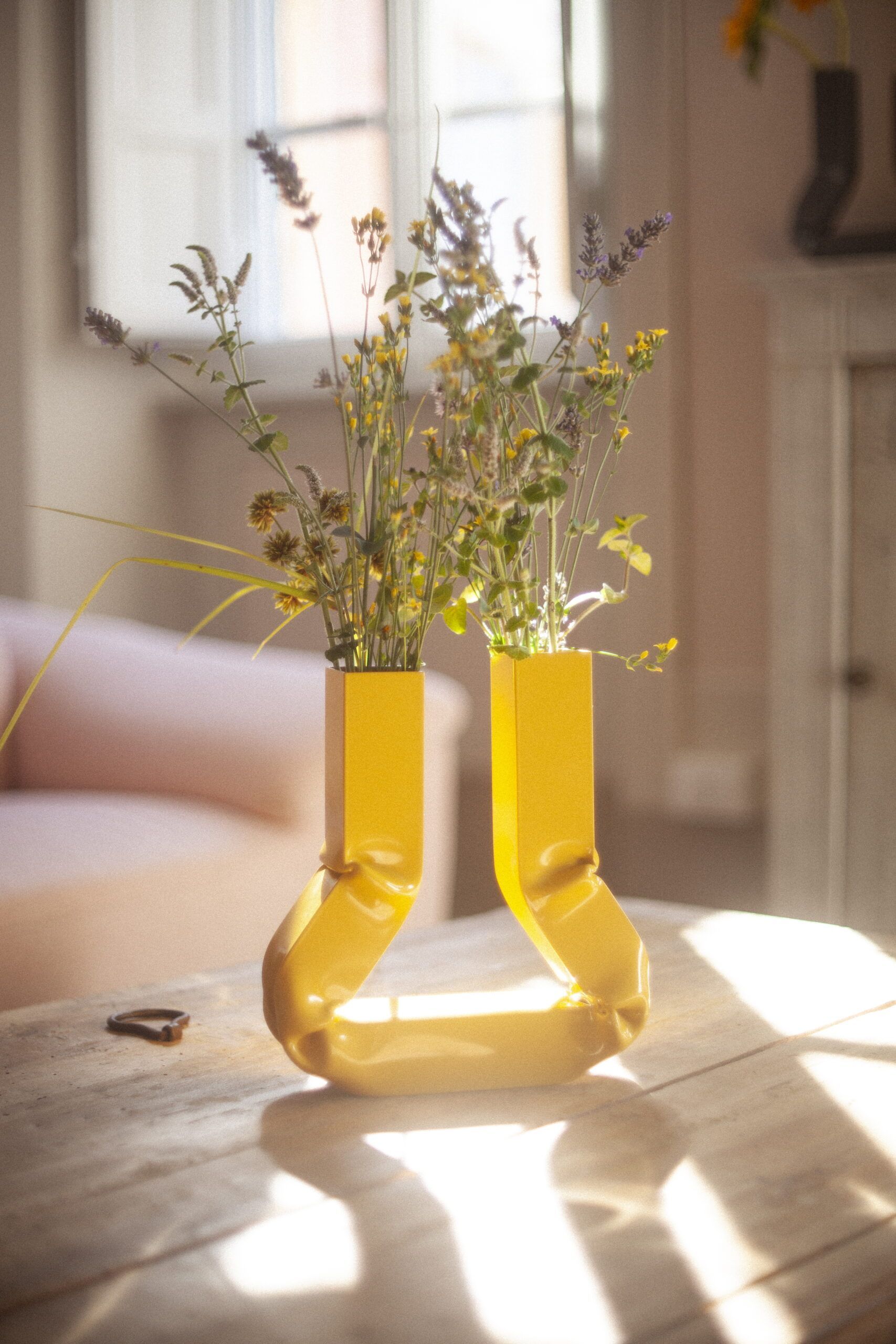
Many of these pieces are hand-bent or shaped from aluminium. How do you balance experimentation and control when working with such direct, intuitive processes?
That’s where the power of being two comes in. In the duality of different opinions and personalities we find the sweet spot that is now AOT. Kathrine is experimentation. Mathias is control. Almost literally.
Sustainability clearly plays a role in your practice, with projects using leftover or recycled materials. How do you balance sustainability with aesthetics and functionality?
Sustainability is an inherent part of our lives and our business. Though we are no saints but for us sustainability feels more like the natural default than something we have a need to spell out. I think we would like to keep it that way, as it sometimes also feels like a word that tends to stupefy design. You describe it as a balance between “sustainability” on one side and “aesthetics and functionality” on the other side as if they are working against each other.
We think this is a general conception of sustainability, but we just don’t see it like that. It is the most natural choice in the world to use what you have – whether it is your in-house leftover material or out-of-house leftover and repurposed plastic. Just as it is not initially a sustainability choice from our side to only produce our things in Denmark – it is simply the natural choice for us. But I guess that also speaks into what is fundamentally wrong with our world, which is another conversation.

The G.O.A.T.’s project pays tribute to inventors and pioneers. Why was it important for you to highlight these overlooked figures?
The G.O.A.T.’s project came to life in a period where we worked a lot with defining, visualizing and conceptualizing who we are as a design studio. We did a photo shoot that functions as portrait of us but is a series of photographs of the tools we have invented for our processes, the worn-out materials/tools we use, the scars on our arms (from production) etc.
In general, a documentation of the AOT patina over the course of the first 2-3 years. This series is now part of the flyers you get when you buy an AOT product.
In that process we wanted to make these “busts” and thought it was the obvious choice to portray and pay tribute some of the people that have paved the way to make what we do possible (e.g. the discoverer of aluminium, the inventor of the angle grinder, the designer of the Citroën Berlingo (our company car)). Obviously with a hint of humor.
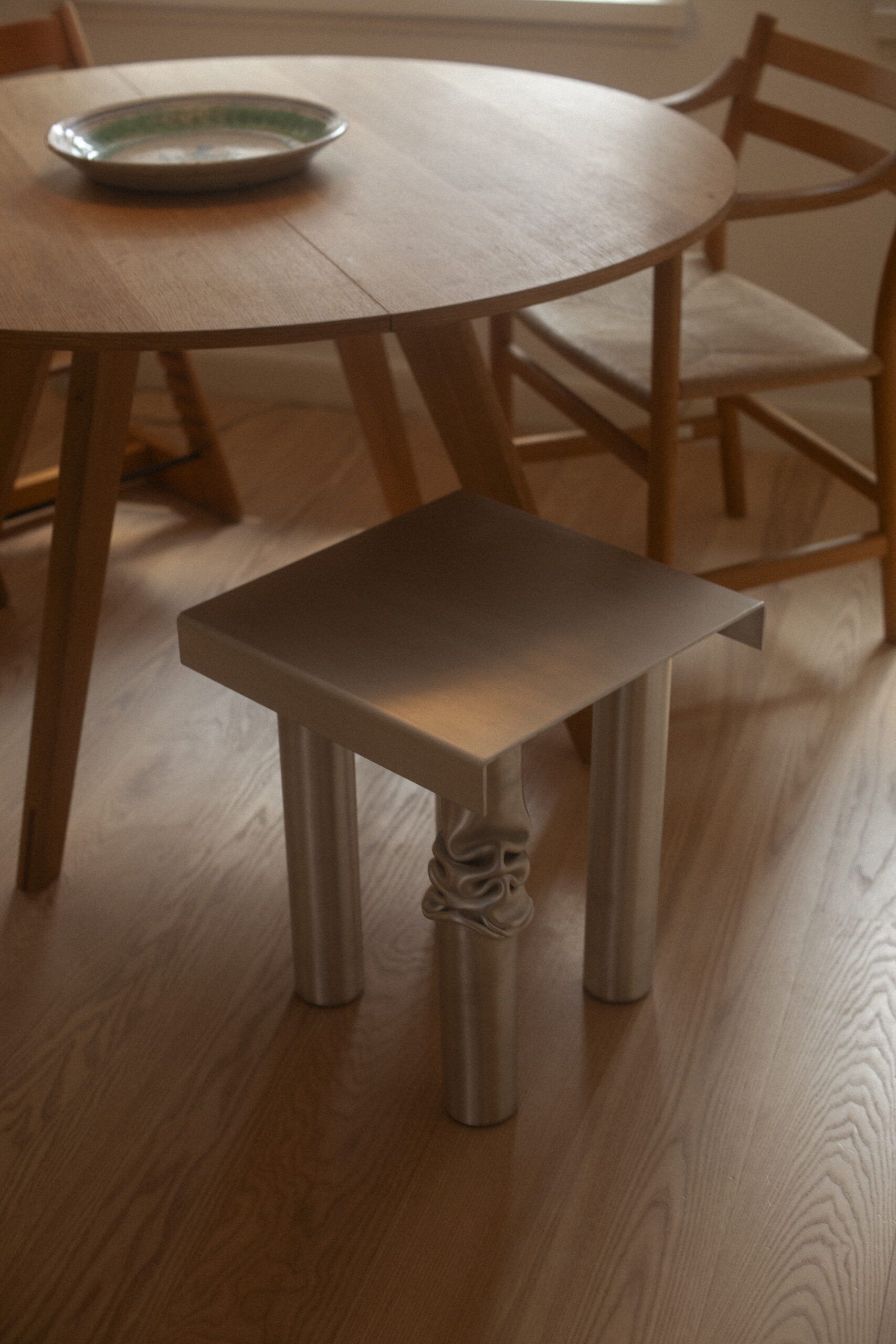
All your pieces are “always hand-made, always made in Denmark”. How important is this strong local identity in a global design landscape?
As mentioned earlier it has felt very natural to keep the production in Denmark. We needed to introduce and teach our producers a completely new technique and it was a convenient choice to try to find someone who wasn’t too far away. We knew we would have to oversee the process quite a lot.
We really cherish our partners because we know it requires a lot from them to fit our unconventional objects into their systems (whether it’s production, powder coating etc.). We are grateful that they love what they do enough to be up for a challenge, so we also put time and effort into having a good relationship with the people that help us and are around us. Over time we’ve got to know them privately and care about their wellbeing.
“We also put time and effort into having a good relationship with the people that help us.”
We also take some pride in contributing to the long history of Danish design and craftsmanship actually produced in Denmark. In our set of values and in the DNA of AOT this feels like the right choice.
Looking ahead, what new materials, techniques or projects are you most excited to explore?
We only just scratched the surface of the endless possibilities within repurposed plastic, so we are very excited to dive more into that and see what and how it can become.
This will also include some new collaborations in different stages of the development and output of products which we are quite excited about.
And finally, what are you currently working on? Could you reveal a liUle about any upcoming projects in the pipeline?
The biggest and most exciIng project we’re working on at the moment is that Kathrine is pregnant with our second child and due very soon. But AOT won’t stand still because of that.
Though we can’t reveal too much about what the future brings, we are currently focusing on some exciting collaborations within our plastic universe, which will hopefully see the light of day in 2026.
A studio with Danish DNA and a global outlook
Always handmade and always produced in Denmark: this is how AOT studio sums up its commitment. Their work stands as testimony to how craftsmanship, experimentation and sustainability can come together without the need for labels.
Beyond the pieces themselves, AOT proposes a new narrative for contemporary design: honest, experimental, approachable and profoundly human.
(*) Photos provided by AOT studio.