Dame veneno que quiero vivir
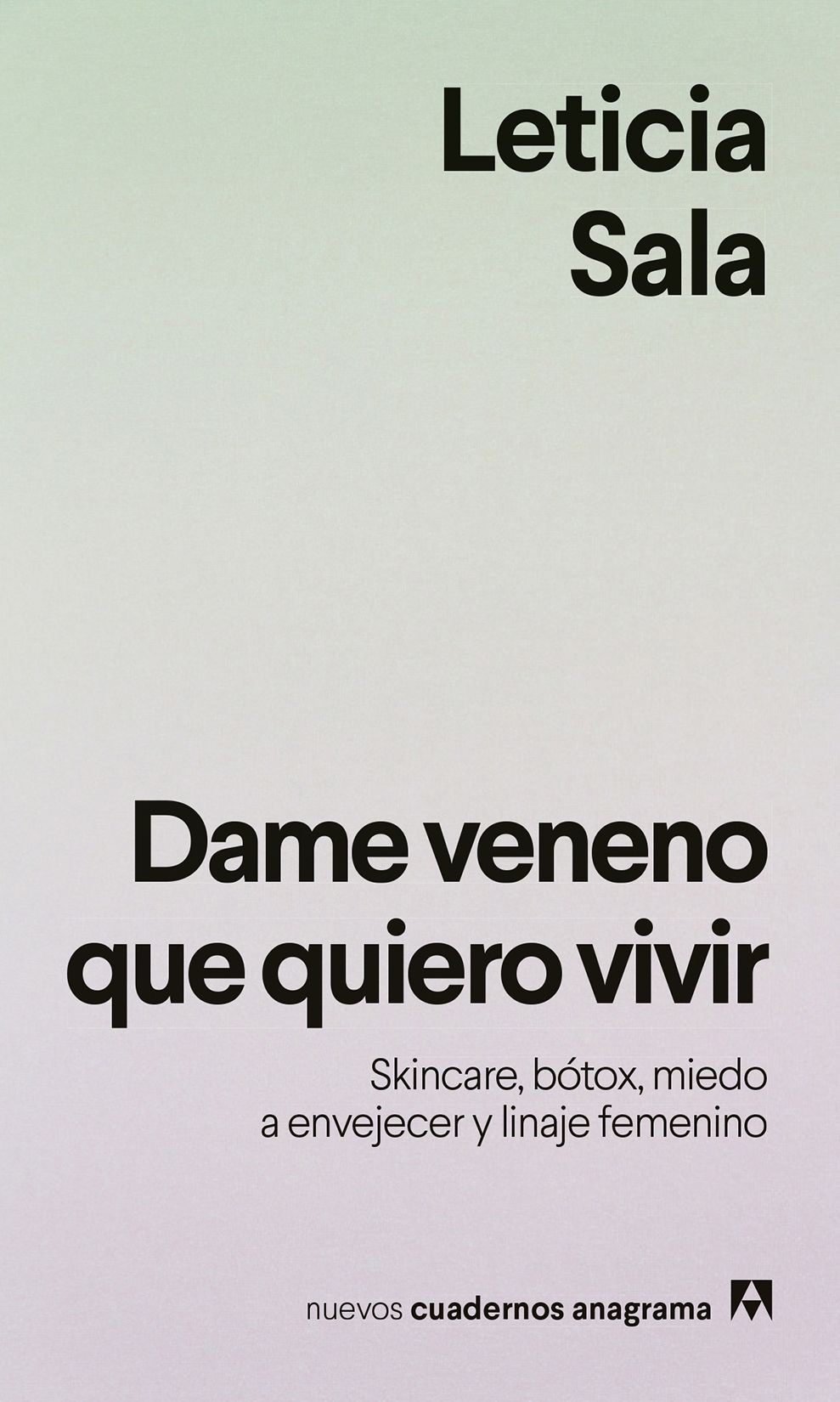
The face has become the new battleground. For years, aesthetic pressure centred on the body: extreme thinness, impossible diets, an obsession with weight. But something has shifted. Today, surveillance has moved to the face, to the skin, to wrinkles, and to the need to appear eternally rested, smooth, youthful and glowing. And within that landscape comes “Dame veneno que quiero vivir” (“Give me poison so I can live”, Anagrama), the new book by Leticia Sala — a lucid, unsettling and deeply honest essay reflecting on the fear of ageing, cosmetic procedures, ageism and the way beauty standards colonise even our imagination.
Far removed from moralism, Sala approaches a particularly delicate subject without retreating into easy ideological trenches. She doesn’t write from judgement, nor from an anti-Botox manifesto. She writes from doubt, contradiction and curiosity. And that is precisely where the strength of the book lies.
“I sense that ageing is like a experience that can only be understood by living through it, which is why I’d rather prioritise opening myself spiritually than join the anti-Botox cult. Besides, embracing a rigid position would simply be another form of polarisation”, she writes.
That tone runs throughout the entire book: an open conversation about how we inhabit our faces in an era obsessed with stopping time.
The new beauty obsession is no longer the body — It’s the face
In “Dame veneno que quiero vivir”, Leticia Sala introduces an idea that feels both obvious and deeply unsettling: the beauty industry has changed territory. After years of conversations around body positivity and a partial acceptance of diverse body types, the focus has shifted to the face.
“For a while it felt like we were exploring imperfection — uniqueness, crooked teeth, even ugliness. But suddenly came the obsession with erasing tiny wrinkles and skincare culture, first presented as something fun and then becoming increasingly creepy”, she explains.
The author is not only talking about Botox or cosmetic procedures. She is talking about the entire cultural ecosystem that sustains them: filters, video calls, front-facing cameras, TikTok, Instagram, algorithms and a billion-pound industry that turns skin into an endless project.
“The new imperative is to have a thin body and perfect skin”, she notes.
And according to Sala, the problem is not merely individual — it is structural. It has to do with the way we have learned to associate youth with value.
“I’m not a historian, but I do think beauty ideals used to be different. Pale skin, tuberculosis chic… Now the focus is intensely fixed on wrinkles. That’s where there’s been a very clear shift”, she says.
Botox, desire and the male gaze
One of the book’s most compelling aspects is the way it connects cosmetic procedures with desire, gender and the male gaze. Sala doesn’t shy away from the political dimension of female ageing.
“There’s a male gaze whose desire is rooted in the pursuit of youth. Everything we perceive as beautiful consists of adolescent features. And there’s something deeply unsettling about that”, she reflects.
Throughout the book runs the idea of women trapped within an impossible double bind: not ageing, but not appearing artificial either. Remaining youthful, but invisibly so.
“We are living in the era of invisible treatments. The message is: you must look perfect, but nobody should notice why”, she says.
The paradox is brutal. Society punishes wrinkles, yet it also punishes visible cosmetic intervention. And within that minefield, millions of women are trying to negotiate their image.
Sala insists she has no interest in judging those who resort to Botox or aesthetic procedures. In fact, she openly rejects that position: “I don’t demonise those who give in to it, whatever their reasons may be. I simply focus on it and reflect upon it. I’m not giving lessons or saying what is right or wrong.”
That is precisely why the book feels so powerful: because it understands that aesthetic pressure is always stronger than any one individual.
The fear of ageing as the fear of death
At its core, “Dame veneno que quiero vivir” speaks about something far deeper than wrinkles. It speaks about the fear of disappearing.
“Ageing is a process that prepares you for death”, Sala states.
The author connects this contemporary obsession to something ancestral. From Ancient Egypt to viral skincare routines, humanity has spent centuries attempting to control physical decline.
“The poison has changed, but the fear remains the same”, she says.
Yet what makes the book truly interesting is that it does not advocate for an ascetic rejection of self-care. Sala insists on separating self-care from punishment.
Here emerges one of the essay’s central ideas: developing an internal radar capable of recognising the emotional place from which our choices come.
“We need to raise our conscious vigilance”, she explains, borrowing a concept from Elena Ferrante that runs throughout the book. “Taking care of yourself, wearing make-up or dressing a certain way has nothing to do with feminism or anti-feminism. The point is where it comes from. Guilt or pleasure.”
The generation that will grow up without seeing their mothers age
One of the conversation’s most disturbing moments arrives when Leticia Sala speaks about younger generations — especially girls and teenagers.
The author expresses clear concern over phenomena such as Sephora Kids and the increasingly early access to preventative treatments.
“When we’re talking about twenty-year-olds already preventing wrinkles with baby Botox, or thirteen-year-old girls with skincare routines, that’s when I say: this is not good”, she states.
In the book, Sala gathers deeply unsettling testimonies. Mothers whose heavily treated faces no longer display recognisable emotions. Daughters who will grow up without witnessing the natural ageing of their role models.
“A friend once told me she will never see her mother age because her mother hasn’t allowed her to”, she recalls.
The sentence perfectly captures one of the major contemporary conflicts: what happens when we erase the natural traces of time from our faces?
“Moving faces contain information — they are constantly communicating”, Sala writes. “Today I wonder: where will we read the soul when the face no longer reflects it faithfully?”
“We must learn to distinguish when we are caring for ourselves out of love and when we are doing it out of guilt.”
In one of the book’s most striking passages, the author revisits studies linking Botox to a diminished ability to express and even experience certain emotions.
“Facial expressions don’t just communicate emotions — they also produce them”, she quotes from Dana Berkowitz.
The idea is deeply disturbing: a society obsessed with erasing signs of pain may eventually numb its own ability to feel.
“Now, with AI, we say emotion is what will save us. But are we sure? Because if we camouflage emotions, what will happen?” she asks.
Youth as the only accepted form of female beauty
One of the greatest achievements of “Dame veneno que quiero vivir” is the way it connects the intimate act of looking at oneself in the mirror with much broader cultural structures.
Sala references Susan Sontag, Naomi Wolf, bell hooks and Jean Shinoda Bolen to demonstrate that female ageing remains profoundly political.
“While men can be attractive both in youth and maturity, women are allowed only one model of beauty: youth”, she writes, echoing an idea from Sontag.
And perhaps that is the heart of the issue. Because ageing, for many women, does not simply mean physical change. It means losing visibility, desirability and symbolic value.
“It feels as though we must preserve that innocence and those teenager vibes because otherwise we lose that gaze”, Sala reflects.
The author uses the myth of Persephone to explore this contemporary resistance to leaving youth behind: “A woman who never abandons innocence never becomes queen of the underworld.”
Far from portraying the underworld as something dark, Sala reclaims that descent as a form of wisdom: “Sometimes we need to leave things behind in order to access something new.”
A book that unsettles because it includes all of us
What makes “Dame veneno que quiero vivir” so compelling is that it doesn’t merely point at the beauty industry. It points at all of us. At the way we compliment each other. The way we look. The seemingly harmless comments we make.
“So often, when someone tells us their age, we automatically reply: ‘You don’t look it.’ We say it as a compliment”, she explains.
That automatic reflex reveals just how deeply we have internalised ageism.
The book doesn’t offer magical solutions either. Sala is deeply suspicious of absolute discourses. But she does leave us with important intuitions: returning to basics, shifting the focus, building a more conscious relationship with the body and abandoning the search for impossible shortcuts.
“For now, I believe the only thing that can save us from the slavery imposed by the fear of ageing is shifting the focus of our interests”, she writes.
And perhaps that is why the book resonates so strongly. Because yes, it talks about Botox — but it also talks about humanity. About the terror of losing youth and the difficulty of accepting time in a society obsessed with erasing it.
It is not a book against aesthetic self-care, nor against those who choose cosmetic intervention. It is something far more complex and far more interesting: an invitation to question where our choices come from.
“We live in a profoundly contradictory world”, Sala writes. “But that should not lead to immediate, unreflective and complacent conformism.”
Which is precisely why the true value of this essay lies there: in its ability to generate uncomfortable questions in an era that prefers quick answers.
“For now, I believe the only thing that can save us from the slavery imposed by the fear of ageing is shifting the focus of our interests.”
Highly recommended.
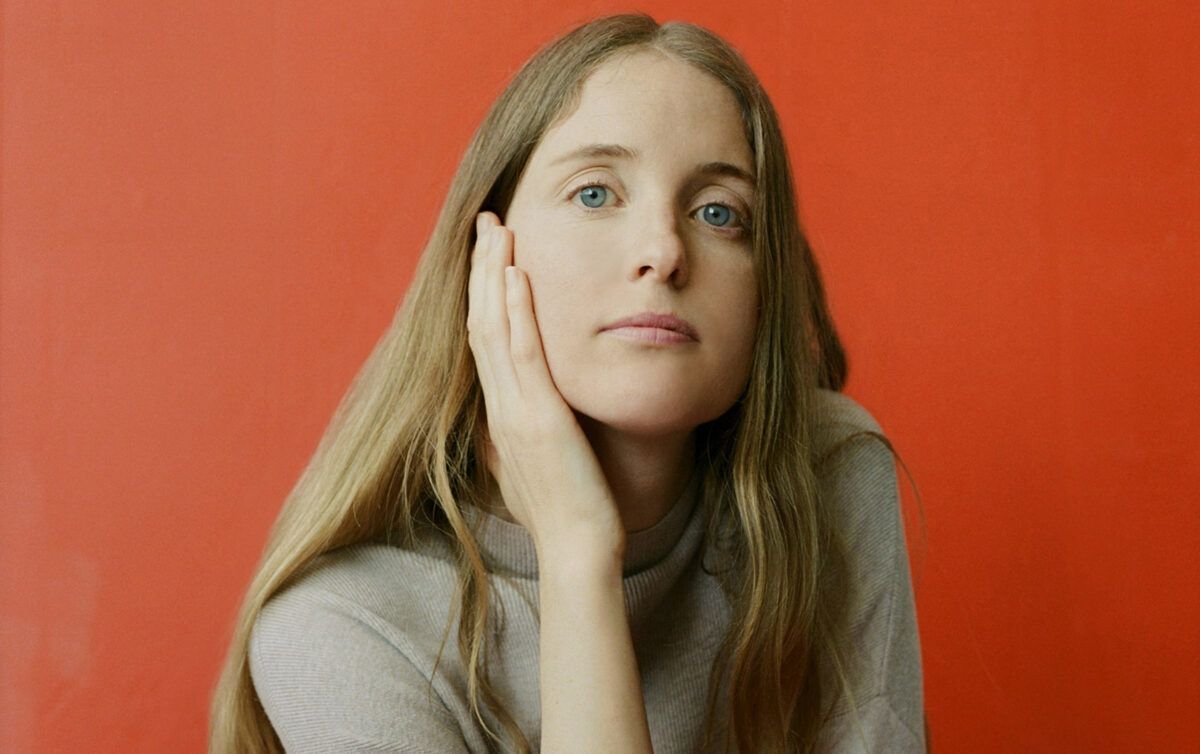
(*) Cover photo: Camila Falquez.