Copenhagen Architecture Biennial 2025: Josephine Michau and the urgency of slowing down
A new chapter for architecture in Northern Europe
Copenhagen has long been recognised as a global reference for sustainability, urban planning and quality of life. Now, it takes a step further with the first-ever Copenhagen Architecture Biennial (CAB 2025) — an event that transforms what was once the Copenhagen Architecture Festival (CAFx) into an international gathering of ideas and practices.
The driving force behind this evolution is Josephine Michau, founder and director of CAFx, who has successfully turned an annual festival into a laboratory for critical and creative thinking around architecture and cities.
The Biennial, taking place from 18 September to 19 October 2025 across Copenhagen and Malmö, will feature more than 250 events and the participation of international figures such as Rem Koolhaas, Atelier Bow-Wow, Kate Orff and philosopher Kohei Saito, alongside local studios including Adept and Lendager.
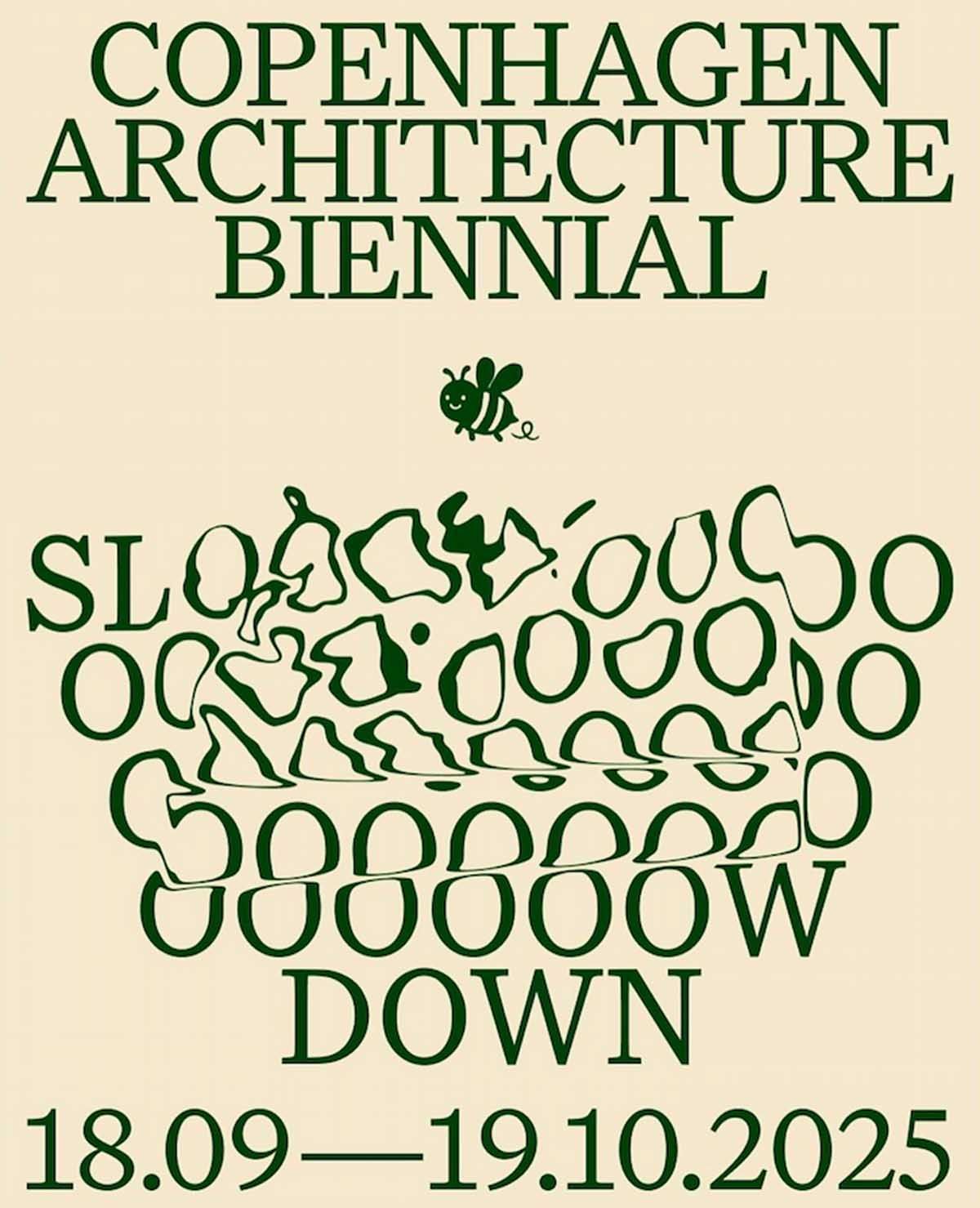
The theme of this inaugural edition, “Slow Down”, is an invitation to question the so-called Great Acceleration of recent decades and to propose a shift towards the Great Deceleration: repairing, reusing, extending the lifespan of materials, and rethinking the role of time in architecture.
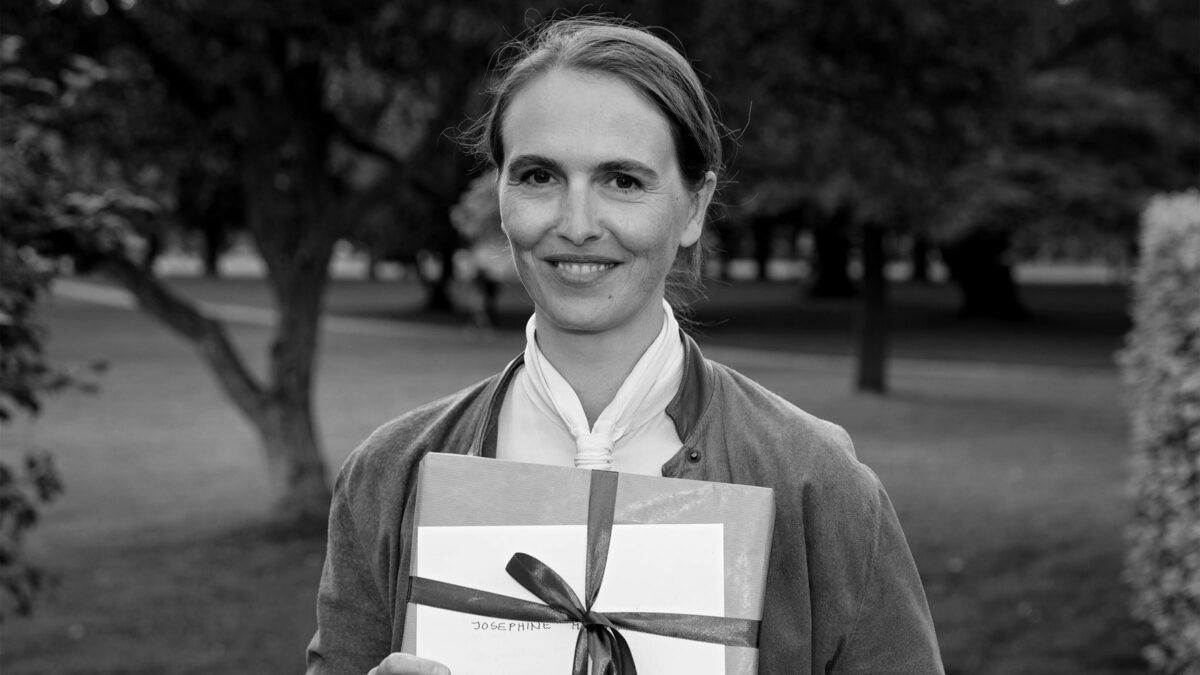
In conversation with CC/magazine, Josephine Michau shares the key ideas behind this first Biennial and her vision for the future of architecture.
This year you are moving from celebrating the Copenhagen Architecture Festival to inaugurating the first Copenhagen Architecture Biennial. What motivated this transformation, and what does it mean for the city and for CAFx?
Since its founding in 2014, CAFx has established itself as a reference point for open and democratic architectural discourse. In 2024, it was reconstituted as the Copenhagen Architecture Biennial, shifting from an annual to a biennial format.
This transformation allows us to engage more deeply and consistently with complex issues in architecture and urbanism. It also opens the door to broader international collaborations, while strengthening our local roots. For the city of Copenhagen, it represents an evolution: from being the site of an annual celebration to becoming a global hub for long-term critical reflection. And for CAFx, it reinforces our mission as a platform for inclusive, experimental and enduring dialogue.
The theme of this first Biennial is Slow Down. Why is this idea so relevant today, and how can architecture respond to the challenges of the so-called “Great Acceleration”?
The theme emerges as a counterpoint to the Great Acceleration — the exponential growth in human activity, energy consumption and environmental impact over the past hundred years.
Architecture, often caught up in this dynamic, must now ask: how can we build differently? The Biennial proposes a shift towards what we call the Great Deceleration: a way of thinking and building based on repair, reuse, longevity and care.
“The Biennial proposes a way of thinking and building based on repair, reuse, longevity and care.”
It is an invitation to slow down not only the pace of construction, but also the way we conceive time, value and responsibility in the built environment.
How does the Biennial aim to inspire architects, citizens and policymakers to adopt this shift in mindset and practice?
The Great Deceleration is a conceptual framework that invites us to move away from extractive, fast-production models towards more regenerative ways of living and building.
The Biennial embodies this spirit both in form and in content — through exhibitions, installations, discussions and public programming that promote systemic thinking, ecological balance and a renewed sensitivity to time. We want architects, citizens and policymakers alike to ask themselves what it means to live more slowly and more wisely in our cities.
The programme brings together more than 250 events, with participants ranging from Adept and Lendager to international figures such as Rem Koolhaas, Atelier Bow-Wow and Kohei Saito. How do you ensure coherence across such a diverse line-up?
Coherence is ensured through a shared commitment to the theme of slowness and care.
Every event — whether a film, installation, guided walk, lecture or academic symposium — responds to the same question: how can architecture contribute to a slower, fairer and more sustainable world?
This serves as the compass that connects all the proposals, even though each participant addresses it through their own lens: practical, poetic, speculative or political.
The two winning Slow Pavilions, Barn Again and Inside Out, Downside Up, reinterpret material reuse in bold ways. What made them stand out, and what do they symbolise within the Biennial’s vision?
Both pavilions are physical manifestations of the Biennial’s core values.
“Barn Again”, by Tom Svilans and THISS Studio, reuses timber salvaged from Norwegian barns, combining handcraft with digital precision. Beyond the material gesture, it offers visitors a place to pause and reflect: a true space for slowing down.
“Inside Out, Downside Up”, by Slaatto Morsbøl, transforms construction waste into an open, meditative structure. Its minimal intervention and emotional sensibility present slowness not only as a method but also as a form of care.
Together, these projects symbolise the Biennial’s ambition to merge aesthetics, ethics and sustainability into meaningful spatial experiences.
“We want architects, citizens and policymakers to ask themselves what it means to live more slowly and more wisely in our cities.”
The Biennial will also host the transdisciplinary Slow Down exhibition across Copenhagen and Malmö. Why is it essential to bring together art, architecture and other disciplines in this moment of cultural reflection?
Because this moment demands cross-disciplinary thinking. The Slow Down exhibition, held at Halmtorvet 27 (Copenhagen) and at the Form/Design Center (Malmö), blends architecture with art, philosophy, film and speculative design.
By inviting diverse voices and media, the exhibition offers multiple entry points into the idea of slowness. It is not about presenting a theoretical discourse, but about creating an immersive experience that allows audiences to feel, question and imagine new rhythms of life — together.
Film plays an important role in the programme, from premieres such as Make Materials Matter to classics selected by Jan Gehl and Kate Orff. What does cinema bring to the way we understand space and the built environment?
Cinema brings architecture to life. It does not only show forms and functions, but also emotions, atmospheres and lived experiences.
This blend of contemporary and historical perspectives makes cinema a privileged lens through which to observe how people inhabit, adapt to and relate to spaces.
The Assemble! symposium will address legislation and structural change in the construction industry. What key outcomes do you expect from this professional gathering?
Assemble! is not just a lecture series, but a platform for urgent action.
Together with speakers such as Indy Johar and Kate Orff, we will explore what it takes to transform the industry: from procurement models to building codes. We want to generate concrete policy proposals, showcase best practices and inspire professionals to align architecture with planetary boundaries and social justice.
The Biennial highlights circular design and zero-waste principles, not only in theory but also through the pavilions and collaborations with companies such as Revalu. Why is it important to make sustainability tangible for visitors?
Because sustainability must be felt in order to be understood.
The Biennial emphasises tactile and immersive encounters with sustainable architecture: from the Slow Pavilions to collaborations with visionary companies such as Revalu, who are striving to change the industry from within.
Visitors can experience how waste becomes beauty, how materials carry memory and how circularity can inspire spatial storytelling.
In 2023 you curated the Danish Pavilion at the Venice Architecture Biennale. How did that experience influence your approach to the Copenhagen Biennial?
That experience reinforced my conviction that it is essential to combine local specificity with global relevance.
In Venice, we learned how to create spaces that provoke thought and emotion while engaging a wide range of audiences. That same spirit is carried over into Copenhagen: an event deeply rooted in its own context, but with international resonance.
Looking ahead, what is your long-term ambition for the Copenhagen Architecture Biennial?
Our ambition is for the Biennial to become a global benchmark for sustainable, ethical and socially responsible architecture.
Over time, we want Copenhagen to be not only a stage, but also a global laboratory where new architectural ideas are tested and shared. A place where imagination, equity and deceleration become engines of change.
“The Biennial’s ambition is to merge aesthetics, ethics and sustainability into meaningful spatial experiences.”
A global laboratory for a slower future
The Copenhagen Architecture Biennial 2025 is not simply a cultural event: it is a wake-up call for the sector, for cities and for citizens.
With more than 250 activities, pavilions built from recycled materials, experimental installations, film, exhibitions and a symposium focused on structural change, the Biennial makes a radical proposal: to rethink architecture through slowness.
In times of climate emergency, urban inequality and technological acceleration, Josephine Michau’s proposal resonates strongly. Because, as she herself affirms, it is about “catalysing new forms of collaboration and cultural production, to imagine cities that are fairer, more sustainable and more humane”.
Save the date!
(*) Photo of Josephine Michau: Sabina Hodovic.