Anobjct: objects that exist between function and emotion
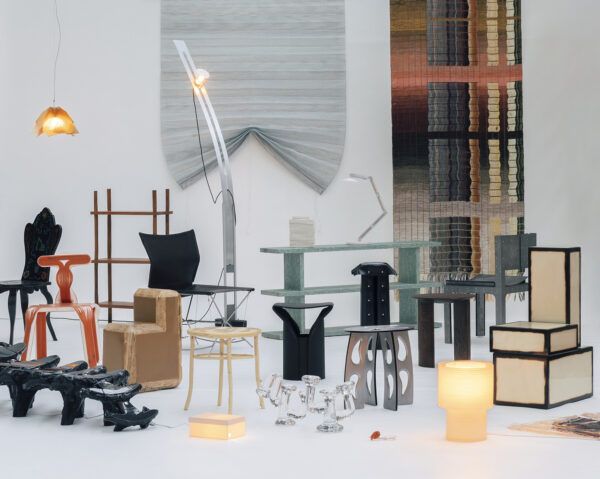
Anobjct is far more than a collection of design pieces; it is a visual language that speaks of tension, memory and emotion. Founded in Berlin by Till Helmbold and now developed together with his wife, designer Sabrina Dehoff, the studio explores the fine line between the functional and the sculptural, the industrial and the poetic. Their objects don’t just inhabit a space — they transform it. In this conversation, we delve into their creative universe, where every form is a statement and every detail an invitation to look twice.
As media partners of Berlin Design Week, we recently spoke with Till Helmbold — here’s what he shared with us. Come in, and read on.
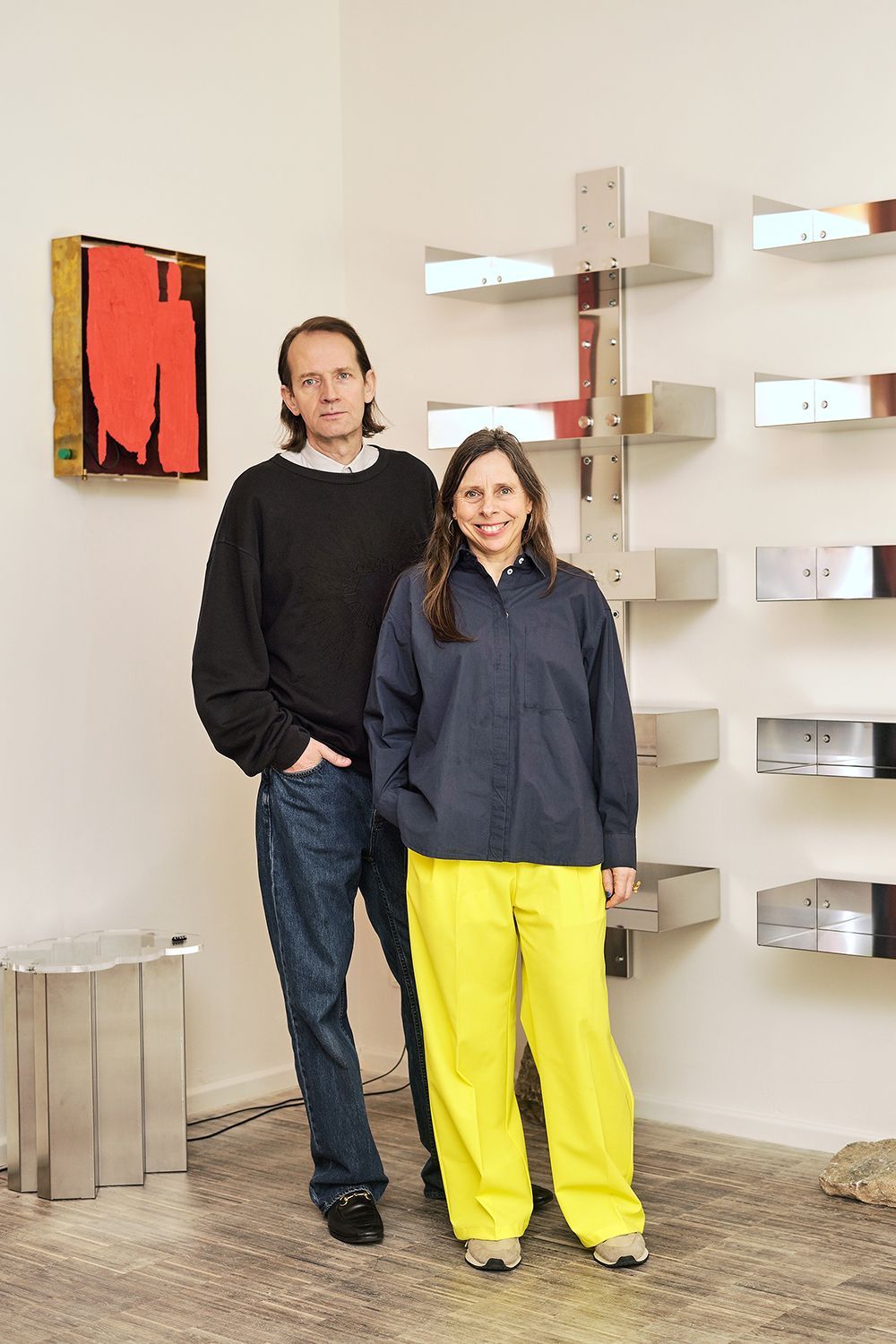
Anobjct was born from a desire to create meaningful pieces that connect with space and time. How would you define the core philosophy behind the project today?
Anobjct’s essence lies in the dialogue between function and design like material, form, colour. The name is a reference to the fact that we try to give things a meaning, a metaphor or a reference beyond their function. This can be expressed in a minimalist, conceptual or artistic realisation – it’s an object. Form follows function would not match our approach it is more that design matters – function included.
“Anobjct’s essence lies in the dialogue between function and design like material, form, colour.”
Anobjct is about creating objects that resonate with architectural space while evoking a feeling, a memory, or a tension. It’s about embracing contradiction — softness in raw material, elegance in the industrial. We aim to design objects that feel both futuristic and nostalgic, grounded yet transcendent.
Your pieces blend minimalism, raw materials and a sculptural presence. What inspires the balance between function and form in your designs?
I grew up in the GDR and part of my family lived in West Germany. The very limited range of goods available in the GDR made the contents of the parcels from West Germany seem like incredibly strange and fascinating things to which I devoted myself with particular devotion. It could be that this is why I have a strong connection to design.
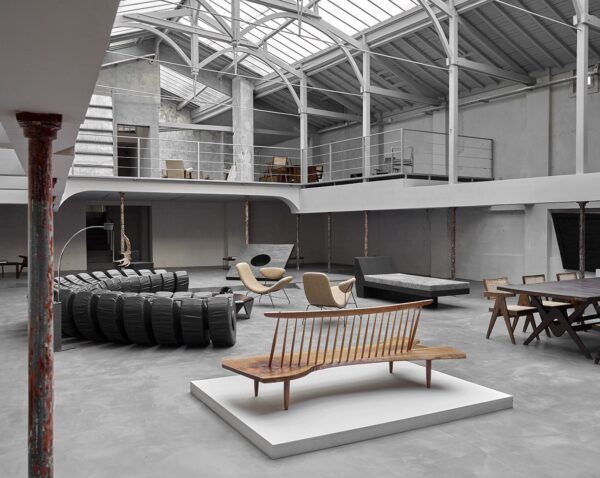
Later, I began to study Italian design history from the 1940s to the 1980s. The abundance, variety and freedom with which designers and manufacturers co-operated with each other was unique in the world. In addition, at that time it was mainly architects who designed furniture and lighting.
For example, the “Fasce” coffee table by Azucena designed by Luigi Caccia Dominioni consists of connected steel L-profiles, a wide chrome frame and a glass top. This design from the 1950s would be anticipated today, 75 years later, as a relevant and modern design. I was really excited to find out how it came about, how it developed and how it has characterised the attitude to life at that time to this day. The hype surrounding post-modern design from Prouvé to Gabriella Crespi shows precisely this fascination for these objects from this bygone era.
You speak of “invisible narratives” within objects. Can you share how storytelling influences your creative process — and how that manifests in the final piece?
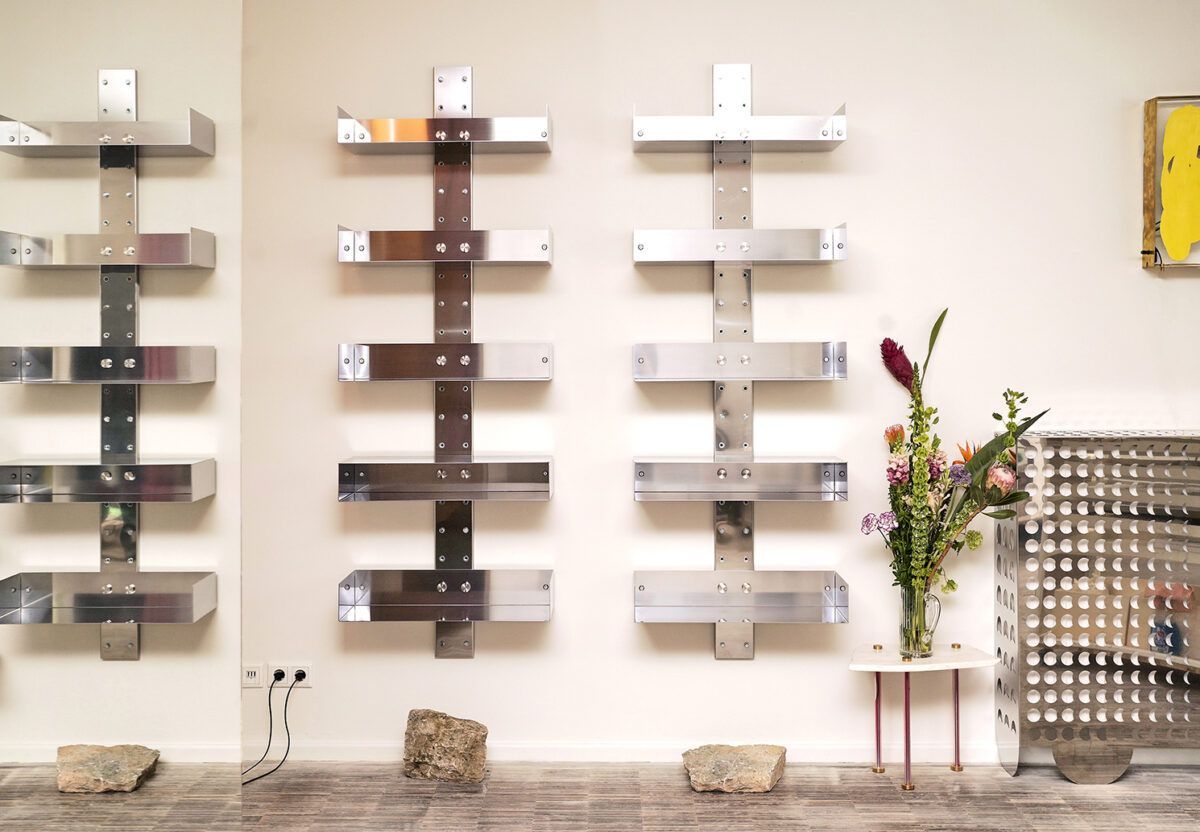
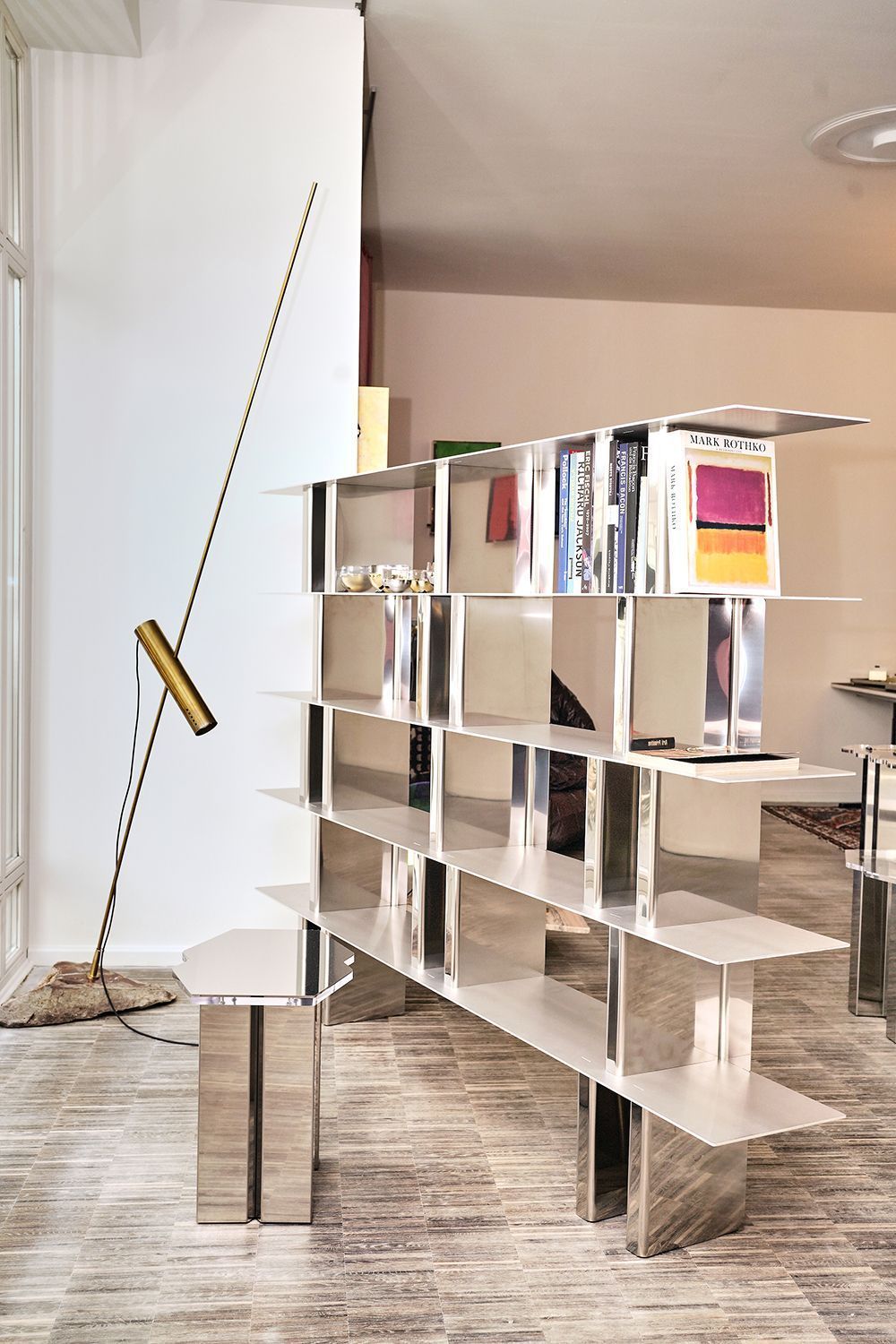
For every object there is at least one strong intention that sets the whole process in motion as an idea – design as an adventure is very enjoyable. The “ONETWO” shelf has 2 different elements that serve as supports for the shelf boards on top. I tested different ideas with the aim of creating an interesting repetitive relief similar to a façade and the result was a design reminiscent of graphic works by ZERO artists such as Sol le Witt. In this respect, the function is clear, the task is rather the sculptural realisation.
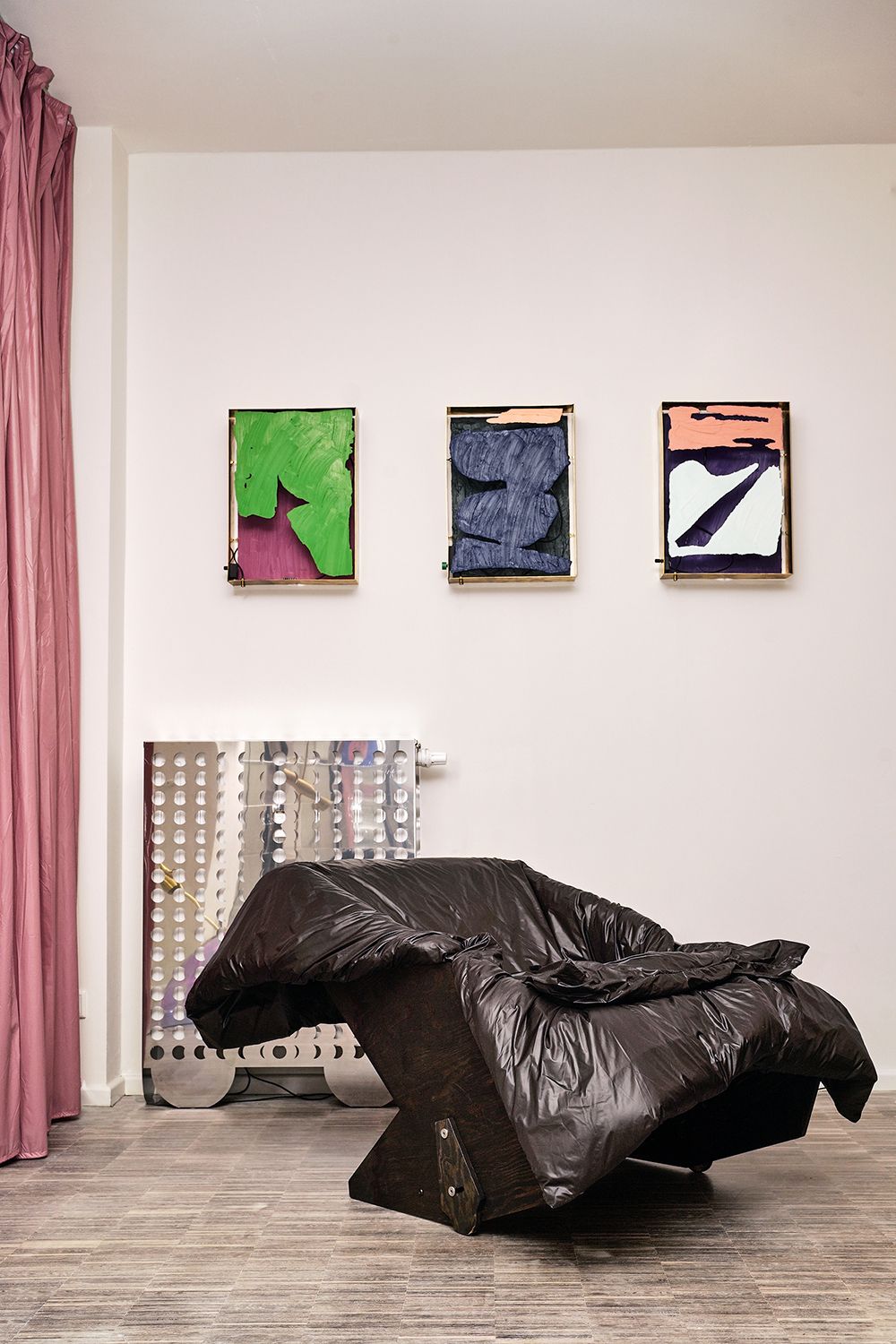
The “Quasar” launch chair, for example is result of an exploration of the Italian Radical Design of the 70s. The side shape that allows 2 sitting positions was the starting point. A design that on the one hand creates a new silluette but on the other hand contradicts a functional design and was thus a reference to the Italian anti design movement that was the manifestation of a criticism of consumerism in the 70s.
These side walls, however, create a new experience of inside and outside. The transparency makes the chair with seat and backrest seem to float and the reflections on the edges sketch the form for the viewer in space. The stability of the two seating positions could only be made possible by a special lever. Achieving this solution as simply as possible was a challenge that was only possible in co-operation with an automotive engineer.
Craftsmanship seems to play a central role in your approach. How important is the hand-made, the imperfect, or the unique in your collections?
Imperfection is an interesting aspect that can have different reasons and is often appealing. I see imperfection less as a lack of technical or craft possibilities than as a conscious decision to create an intended style. I have worked with oil on canvas or wood for many years.
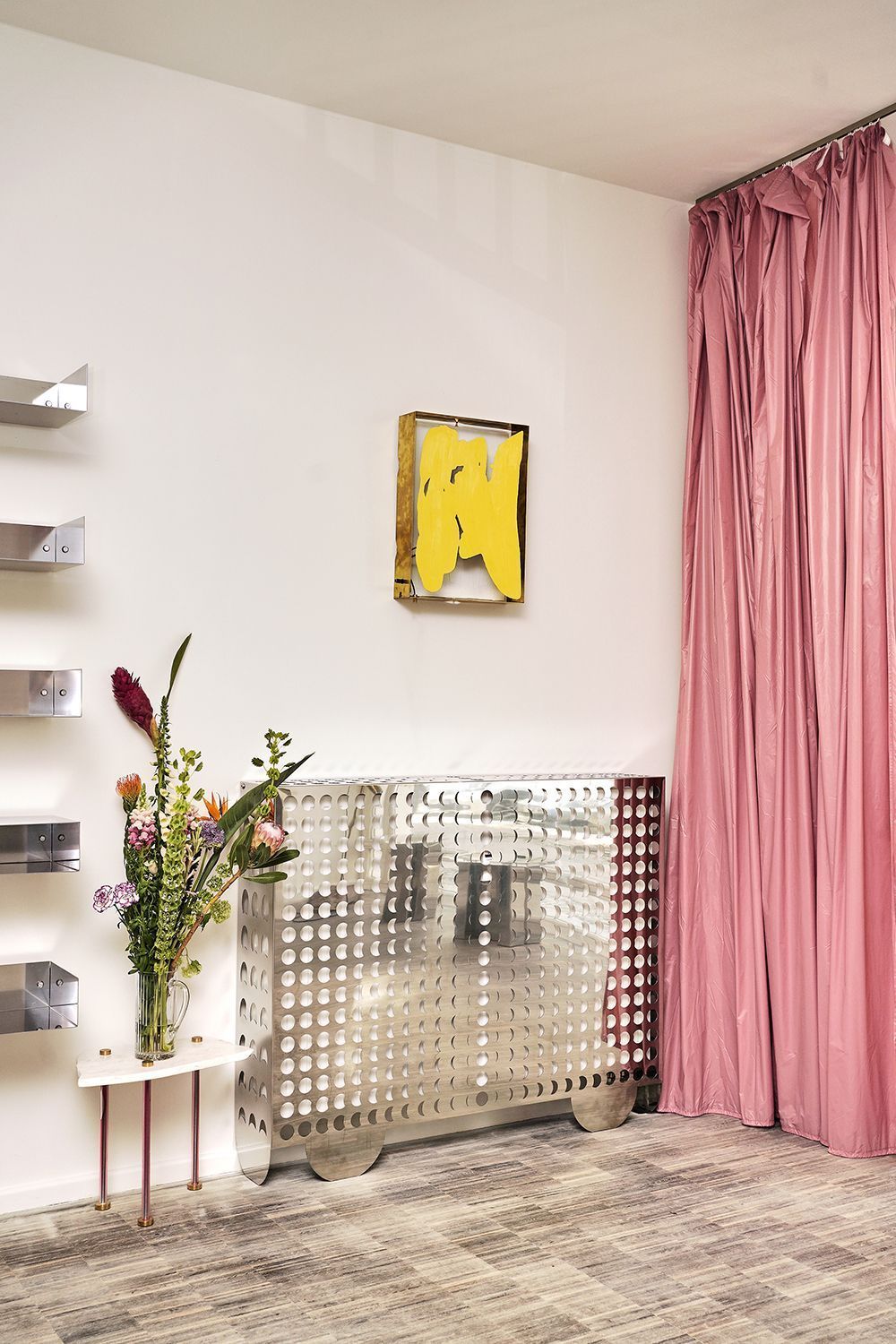
The artistic quality of handcrafted motifs or forms breaks industrially manufactured ones, resulting in illuminated murals (“10 Glowing Modern Art Greats”) that could also be described as sculptural wall lights. Artistic design techniques combined with machine-made parts is definitely something I would like to continue working on.
How does your physical and cultural environment influence your creative process — whether it’s the landscapes, traditions, or the everyday beauty that surrounds you?
I believe in the creative power of nature. Japanese culture celebrates this in such a loving way that we Europeans are simply amazed by it and of course we also find this in Western culture.
“I believe in the creative power of nature.”
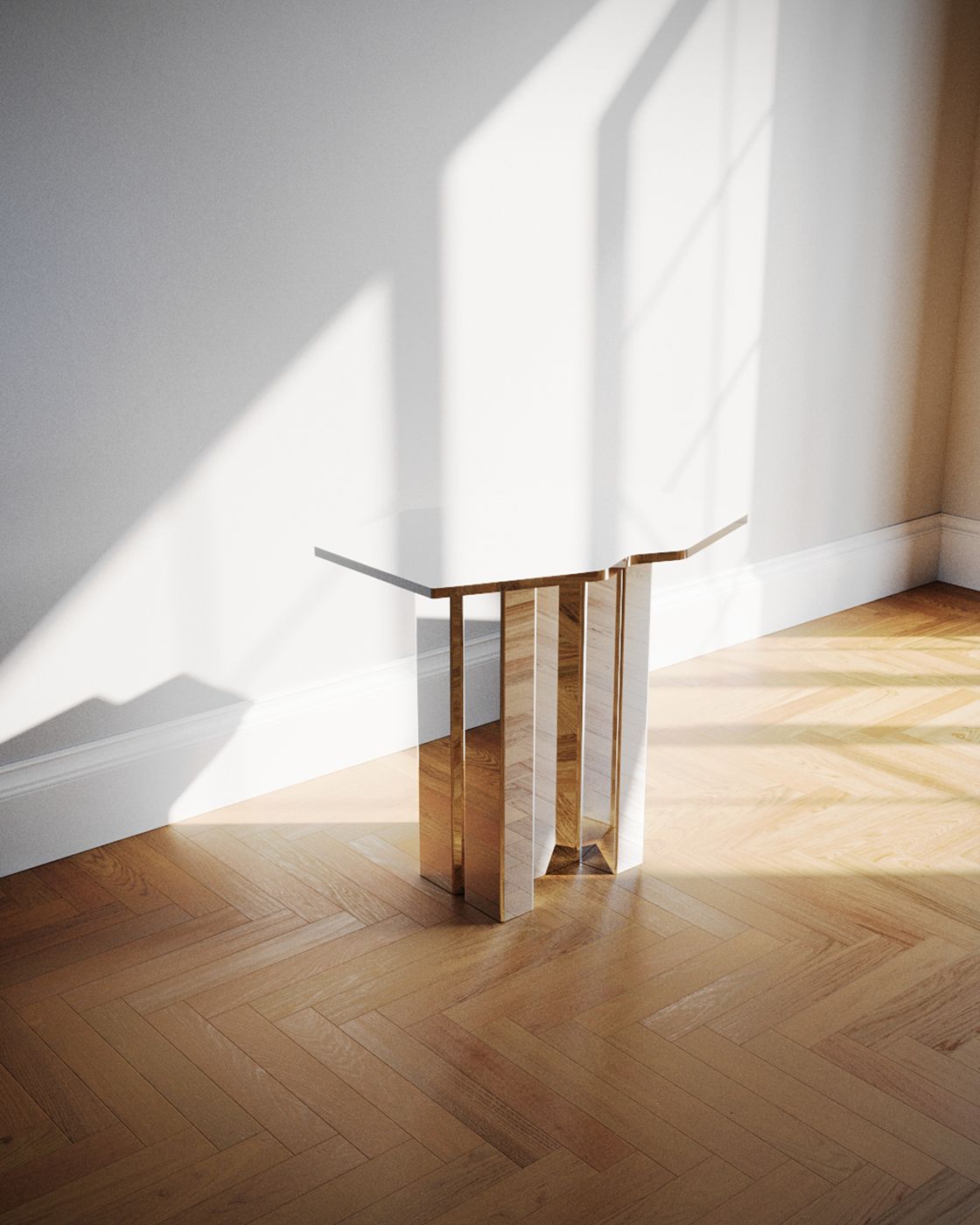
I often went stone collecting with my father, collecting amethyst and agates, which we then sawed open, and when I heard about a disused marble quarry in southern Germany a few weeks later, I packed large marble stones into the car, had them cut open and used them as lamp bases … Imperfect because they are crooked, these pieces radiate a fascination for natural forms.
I live with my wife and Anobjct partner Sabrina Dehoff in Berlin – a beautiful, rough and also ugly city. This mix is very liberating and still leaves room for something new. Even or despite the advanced stage of gentrification.
How do you approach materials, processes or production from a conscious point of view?
I have collected some Lamps form the 50‘s to the 80’s and nobody would just throw them away – at least they would put them on the street for others. Good design makes things sustainable and timeless.
Of course, aspects such as carbon footprint from material, production and transport have to be taken into account. We are very happy with our German manufacturer and be aware in regional production. However, we have also had the problem that the market and the calculated prices end up being so high that marketing is either impossible – or parts are made in China.
For example, if customised screw parts cost €3.50 in China and €9 in Europe, then a paper tray that uses 8 pieces is not feasible without Chinese production of these parts. Of course, we discuss these issues and then ask how essential these parts are and what alternatives there are.
Your work moves between object and art — between the useful and the poetic. Where do you draw the line between design and sculpture?
For me, a sculpture in the pure sense only has a functional character and that is the aesthetic pleasure of looking at it, feeling it, etc. In recent years, the term “object” has become widespread in the field of interior design. I think that the “object” in this context refers to sculptural design – Anobjct.
As long as another function plays a role for a thing that goes beyond an aesthetic one, I would use design even if it had a spiritual function, but that’s probably where the boundary becomes blurred. Gabriella Crespi, for example, has designed a number of lamps and home accessories whose sculptural appearance is spiritually charged. That is incredibly fascinating.
Is there a particular piece that you feel defines Anobjct’s spirit — or one that marked a turning point in your journey?
I started designing furniture and lighting for my wife Sabrina Dehoff‘s shop in 2006. Since then, many things have been created – furniture, displays, interiors, lights.
I can best illustrate the current design process with an actually lapidary object, the stackable paper tray “Lyra“. The realisation of the basic shape for the function as a stackable tray was found relatively quickly, but finding the shape of the side and rear panels was a real struggle. What is too much, what is not coherent, how do two abutting surfaces interact with each other and ultimately all of these questions wobble in the judgement between “subjective taste” and “objective coherence”.
This is then more of an artistic process in which the form does not follow the function of use but the aesthetic effect.
How do you envision the evolution of Anobjct in the coming years? Are there new formats, disciplines or collaborations you’d like to explore?
Anobjct originally started in 2017 as a platform for my design ambitions. The result was a lighting collection that consisted of both individual pieces and editions.
In 2024, my wife suggested professionalising it and we started an intensive design process. Not everything has been realised so far, but in the end we presented a collection of furniture and home accessories at Maison et Objet in Paris in January 2025. Sabrina has so far been involved in the designs in an advisory capacity. In the coming months, she will be more involved with her designs and enrich the collection.
“We also see Anobjct as an opportunity to realise projects with other designers and artists.”
In the long term, we are of course interested in exploring new materials and processes. But we also see Anobjct as an opportunity to realise projects with other designers and artists. The openness for collaboration is something that we believe is essential for Anobjct‘s future. This positive energy is ultimately one of the most valuable features of our evolution and source of joy.
You’re participating in this year’s Berlin Design Week — what can you tell us about the project you’re presenting, and what does it mean for you to be part of this event?
On 10 April, we open our Anobjct shop in Berlin. An art concept store with selected pieces from Sabrina Dehoff‘s collection. We are presenting the first collection in Berlin there after Paris.
Design Week Berlin was the perfect communication platform to publicise the space. We are very excited to see how many design addicts will find their way to us.
(*) Photos provided by Anobjct.