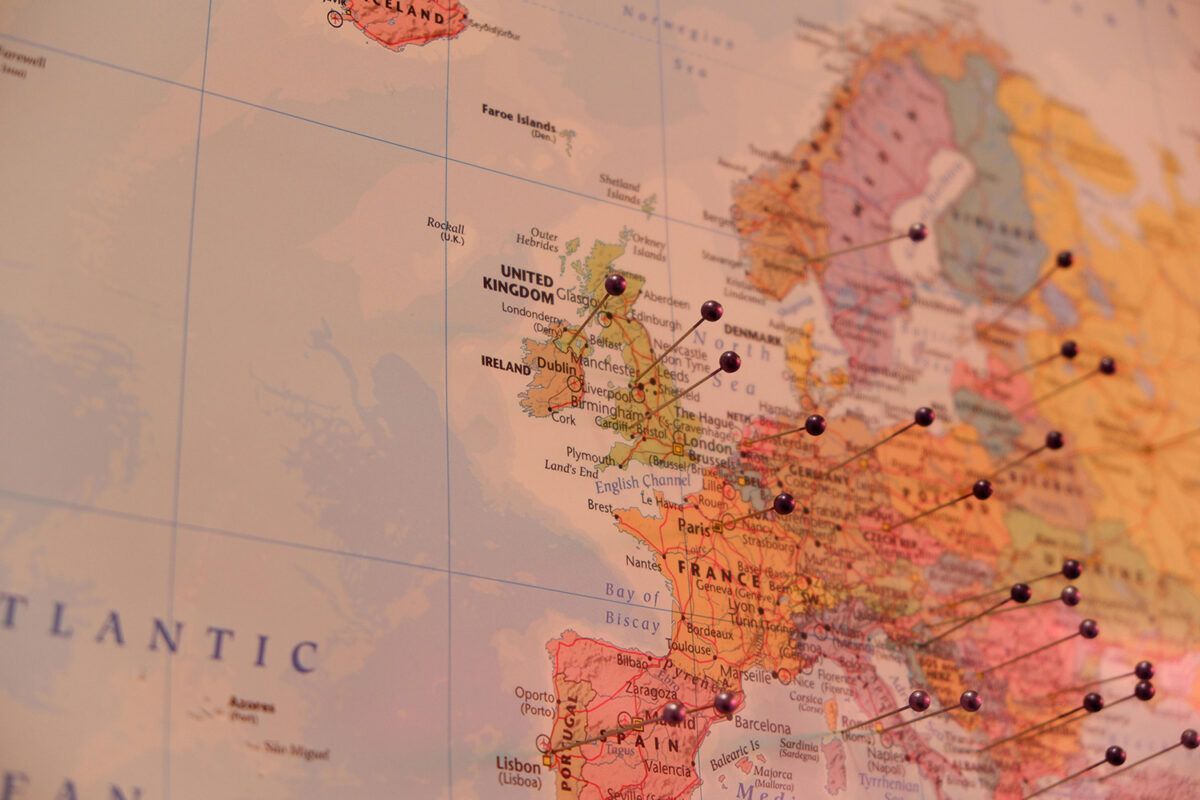
Solo Travel: A different way to discover the world (and yourself)
Travelling solo isn’t better or worse than doing it as a couple, with friends, or in a group. It’s simply different. It’s an experience that doesn’t compete with other ways of travelling, but one that offers something difficult to replicate: the chance to meet yourself—no intermediaries, no shortcuts, no compromises.
It’s not about running away, nor proving a point. It’s not about romanticising solitude either. It’s about living a moment where the focus shifts direction: from others to yourself. There’s no one setting the pace, no one making decisions for you, no one validating or questioning your choices. It’s just you. And that—though it may feel daunting—is deeply revealing.
“Travelling solo is a way of being fully present.”
Travelling solo is a way of being fully present. Of getting to know yourself in a different context, in a different language, with different maps. Of asking questions you may not have considered in a long time. It’s not magic, but it is transformative. Because once you realise that you can enjoy your own company, listen to yourself, make decisions, make mistakes and move on—something shifts.
And it doesn’t matter whether you do it just once or every year. What it leaves behind stays with you.
The value of listening without noise
We live in a world full of noise, stimulation and expectations. Often, we make decisions on autopilot, without really asking ourselves what we truly want. Travelling solo is a pause in that momentum. It’s the opportunity to hear yourself without the echo of others.
You don’t need to pick a remote destination or turn your trip into some great adventure. It’s enough to step outside your routine and into something unfamiliar. The simple act of deciding what to see, when to stop, and how fast or slow to go is a powerful exercise in self-connection—one we rarely practise.
Stepping outside the usual script
Solo travel pulls you out of the predictable—your habits, your schedule, your usual conversations. And at the same time, it places you in a space where you are no one but yourself. You don’t have to explain anything. You don’t need to justify your choices. You can simply be.
That freedom may feel uncomfortable at first. But it also teaches you. Because when no one’s around to say “this is right” or “this makes no sense” , that’s when you start trusting your intuition. Building your own judgement. Making mistakes and adjusting without shame. Making choices from a different place.
It’s not selfishness. It’s awareness.
Travelling solo isn’t about cutting yourself off from the world. In fact, it’s often quite the opposite—a way of being more present. Of observing more attentively. Of speaking to new people without the barrier of a companion. Of seeing others without rushing.
The introspection it inspires isn’t withdrawal—it’s a return to what matters. A chance to know yourself a bit more, without decoration. And that doesn’t need to be deep or dramatic. It can be as simple as discovering you like getting up early when no one’s dragging you out of bed. Or that you enjoy eating alone without checking your phone. Or that you need fewer things than you thought.
You set the pace (and that changes everything)
One of the greatest luxuries of travelling alone is having full autonomy over your time. You can change plans without notice. Spend two more hours in a museum. Sit in a square doing absolutely nothing. No one grows impatient. No one gets bored. It’s just you, your rhythm and your curiosity.
This experience—seemingly small—can have a deep impact. Because in a society obsessed with productivity, choosing your own pace is a quiet act of power. And solo travel reminds you that you can.
Unscripted encounters
Interestingly, when you travel alone, you open yourself more to the world. Because you’re not “in your group”. You’re not protected by the bubble of familiarity. You’re receptive. And it shows. In the spontaneous conversations, in the recommendations you receive, in the chance moments that feel almost magical.
An experience that leaves something within
There’s no need to romanticise it—because like any trip, there may be uncomfortable moments. Long silences. Tricky decisions. Meals you wish you were sharing. But even those have value. Because they put you face to face with yourself, without distractions. And they allow you to know yourself better—for all that’s wonderful and all that’s not so easy.
Travelling solo is a way to build trust. To practise emotional autonomy. To learn to be with yourself without constant validation. That’s priceless.
It’s not just a trip. It’s a journey towards yourself.
Does this mean you should always travel solo? Of course not. But you should try it at least once. Because there are things you can only discover in that setting: you, in a different place, being yourself—without a script.
“Solo travel is an experience that confronts, frees, and transforms you.”
Solo travel is an experience that confronts, frees, and transforms you. Not because the destination changes you, but because you allow it. Because you give yourself that space. And because you choose to live it with your eyes wide open.
At the end of the day, solo travel is not about escape. It’s about looking inward from the outside. It’s about allowing yourself to pause, observe and feel without having to explain anything. And though the experience is yours and yours alone, the impact stays with you. In how you return. In how you decide. In how you are with yourself—wherever you are.
And what about you—do you enjoy travelling solo?
(*) Cover photo: Pexels.








&p[summary]=&p[url]=https://ccmagazine.es/en/solo-travel-a-different-way-to-discover-the-world-and-yourself&p[images[0]=https://ccmagazine.es/wp-content/uploads/2025/04/pexels-ryan-118744-8874803.jpg)
)