Vipp Bespoke Chairs: the art of customising an icon
In the world of contemporary design, some brands have managed to build a recognisable identity over decades without falling into repetition. Vipp is one of them. Since that first steel pedal bin created in 1939 by Danish blacksmith Holger Nielsen for his wife’s hair salon, the company has evolved into a complete design ecosystem spanning furniture, lighting, kitchens, accessories and a singular collection of architectural guesthouses around the world.

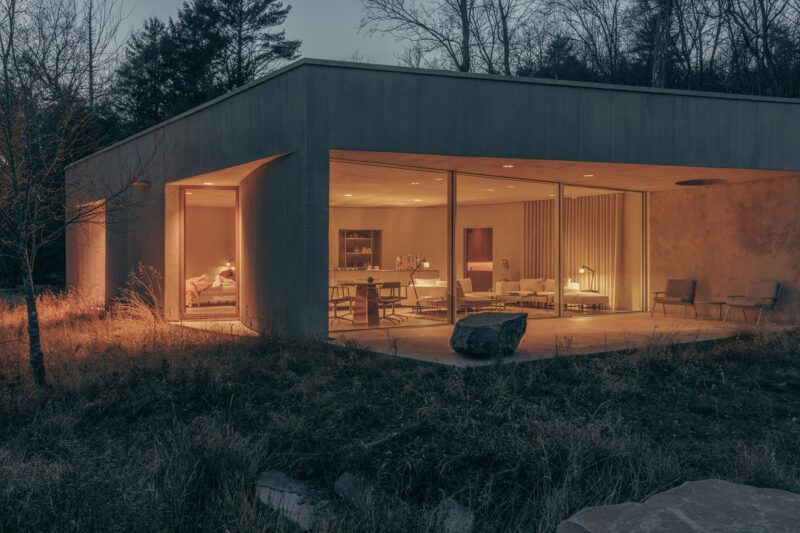
What makes Vipp particularly interesting is that its growth has never been driven by marketing noise, but by a coherent narrative built around engineering, durability and aesthetic precision. Its objects are instantly recognisable: clean lines, honest materials and a refined industrial language that connects both with the legacy of Scandinavian design and with a contemporary vision of lifestyle.
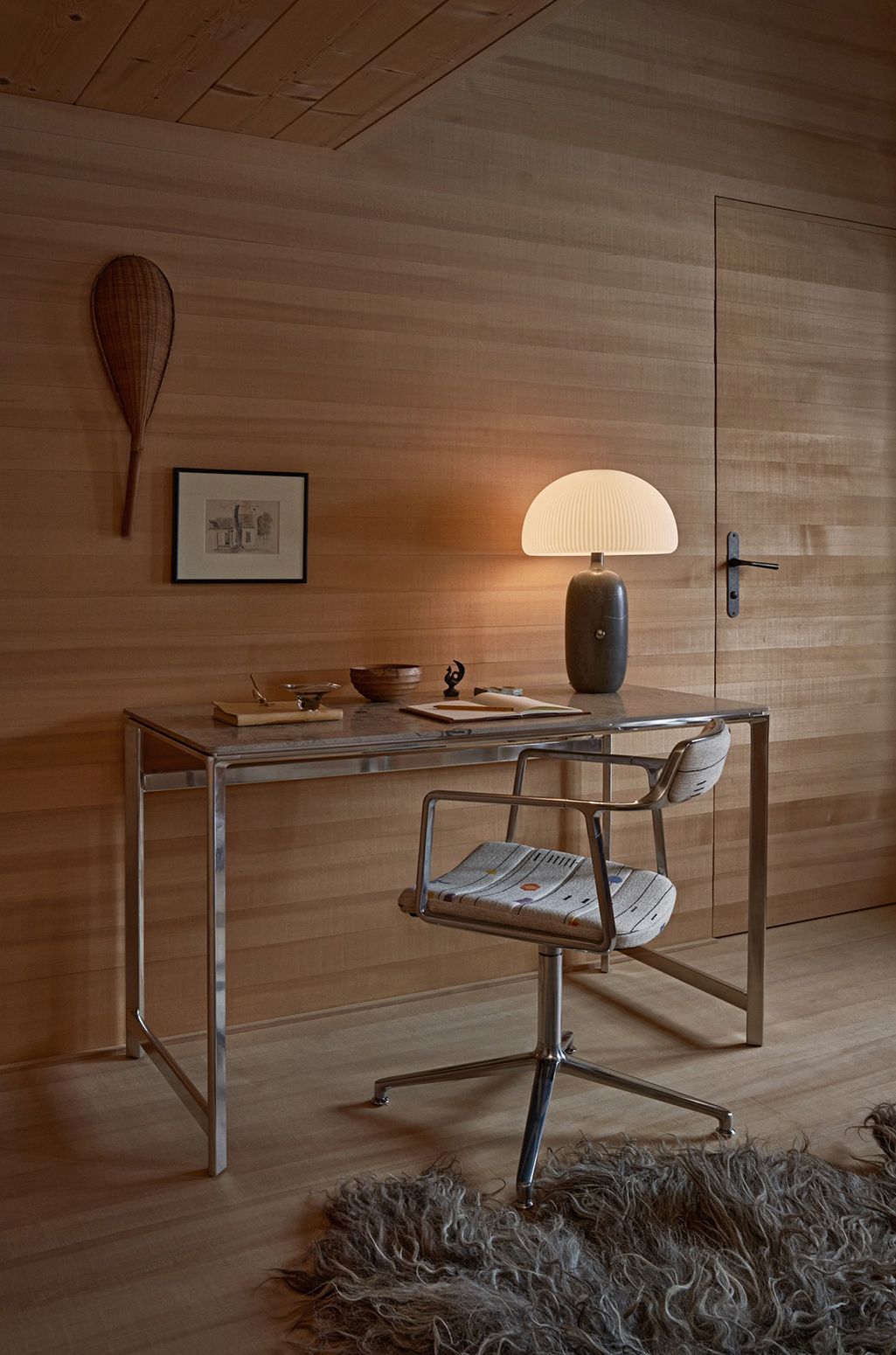
Today, under the leadership of the third generation of the founding family, that universe continues to expand. One of the latest expressions of this evolution is the Bespoke Swivel series, a collection that introduces personalisation into the brand’s carefully controlled design DNA without compromising its formal identity.
To understand the significance of this new chapter, it is essential to hear from the person leading the company. “The Bespoke concept reflects how Vipp continues to evolve from a purely functional and industrial heritage towards a design philosophy that still respects craftsmanship while adding a more playful dimension”, explains Kasper Egelund, CEO and co-owner of the company.
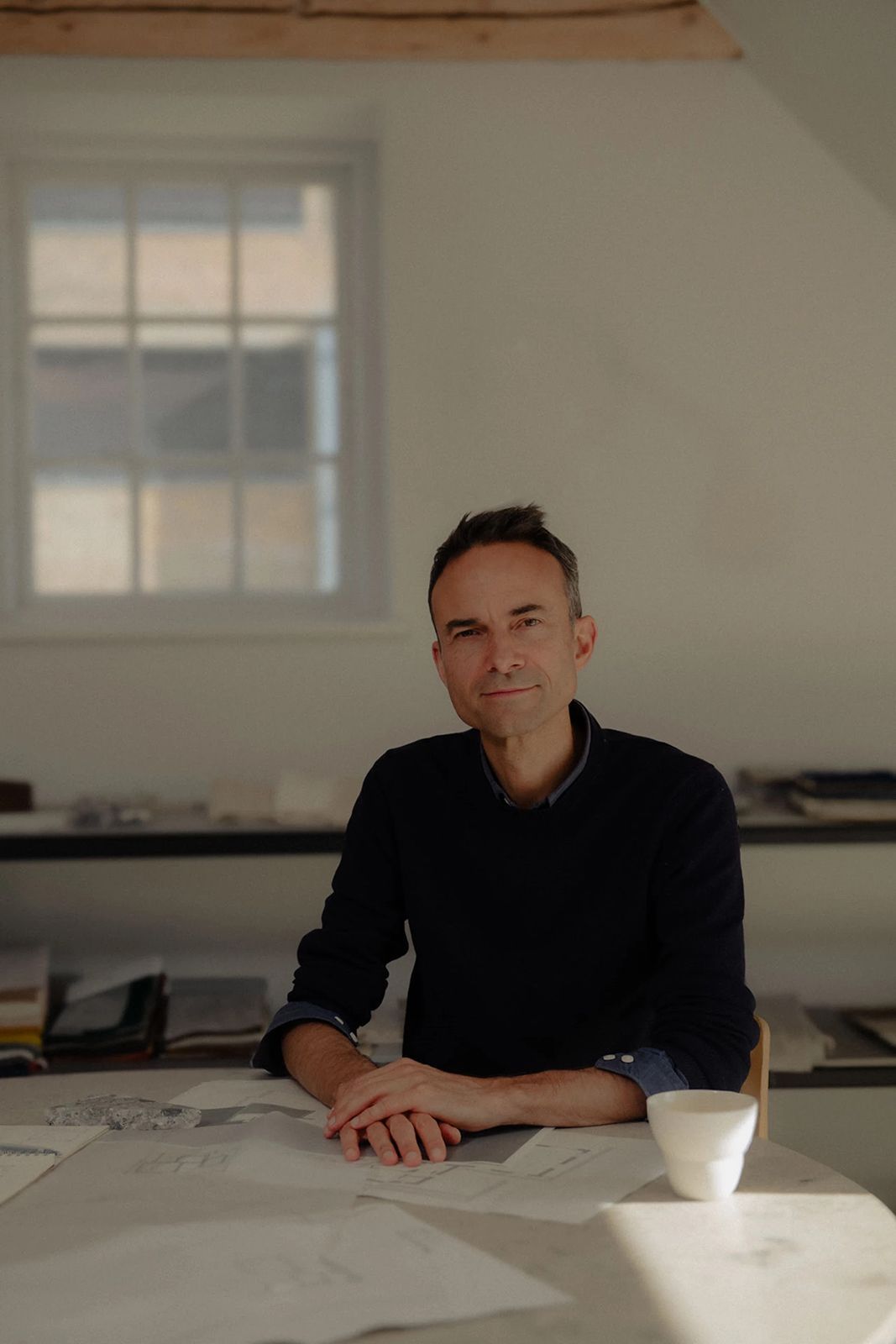
The Bespoke series doesn’t aim to reinvent the Vipp chair, nor does it seek to break with the past. Its ambition is subtler: to allow a highly defined object to become a canvas for personal interpretation.
“The Bespoke series is about allowing a highly defined object to become a canvas for personal interpretation.”
The Swivel chair: a design born from architecture
To understand the new collection, one must go back to 2014. That year Vipp inaugurated its first architectural project, the Vipp Shelter, a small steel house located in the Swedish forest. Conceived as a complete immersion into the brand’s universe, the retreat included furniture developed specifically for that environment. Among these pieces appeared for the first time the Vipp Swivel chair.
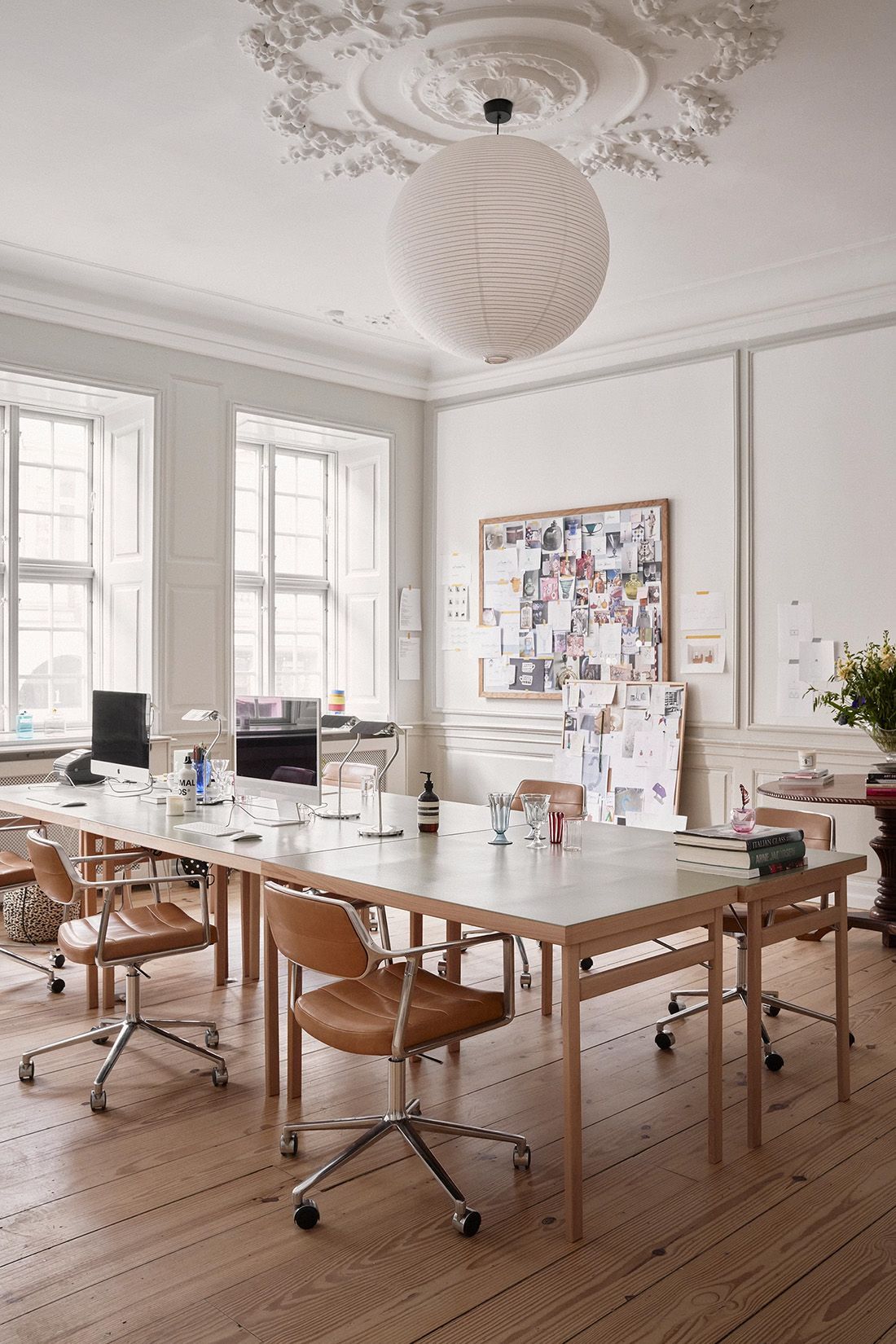
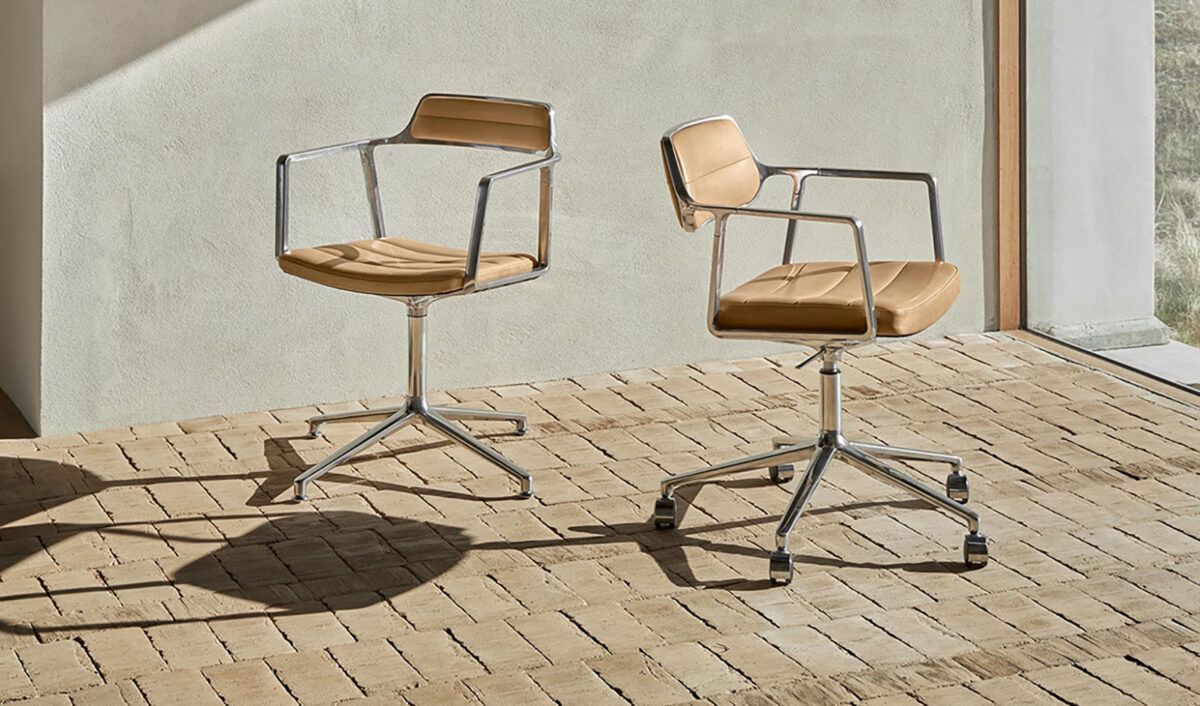
The chair was based on a simple idea: an enveloping shell with precise ergonomics combined with a swivel base that introduced mobility and visual lightness. The result was a sculptural seat capable of integrating equally well into a dining setting or a workspace.
The design proved successful and, over time, became a recurring typology within the company’s catalogue.
As Egelund explains, the new chapter of this piece emerges precisely from that consolidated trajectory: “The Swivel is an evolution of our first chair, originally designed for the Vipp Shelter in 2014. We kept the shell and added a swivel base. That formula resonated strongly in the market, and since then the chair has become a recurring typology within our collection.”
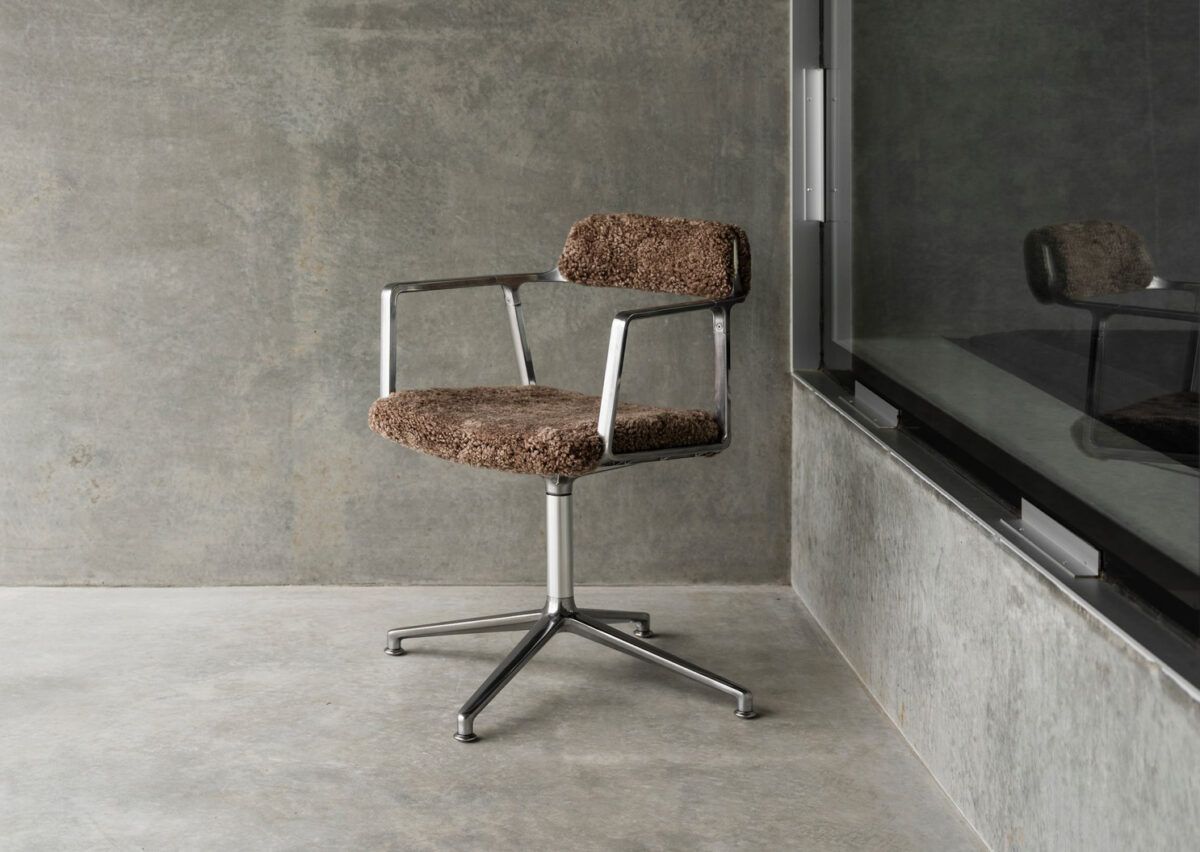
The Bespoke Swivel series preserves that original structure. The sculptural shell remains unchanged and the 360-degree rotation continues to be a key functional element. The difference appears on the surface.
Bespoke: personalisation without losing identity
The word bespoke is often associated with tailoring or with pieces made entirely to measure. In the case of Vipp, the concept is interpreted with greater precision.
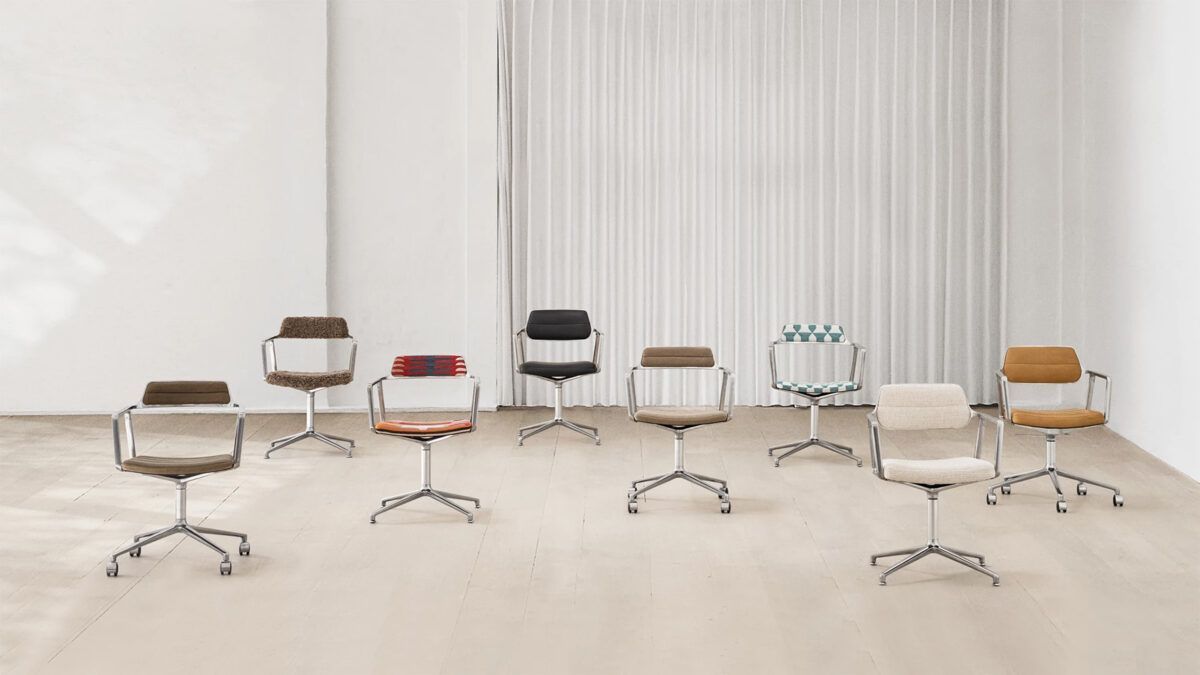
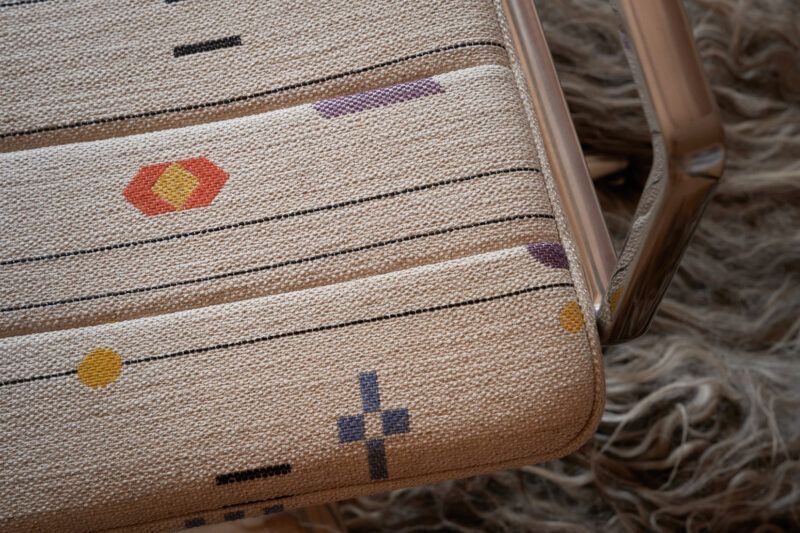
As mentioned earlier, the structural design of the chair does not change. What becomes customisable is the upholstery. This means architects, interior designers or private clients can apply their own fabrics to the chair, transforming a recognisable form into a unique piece.
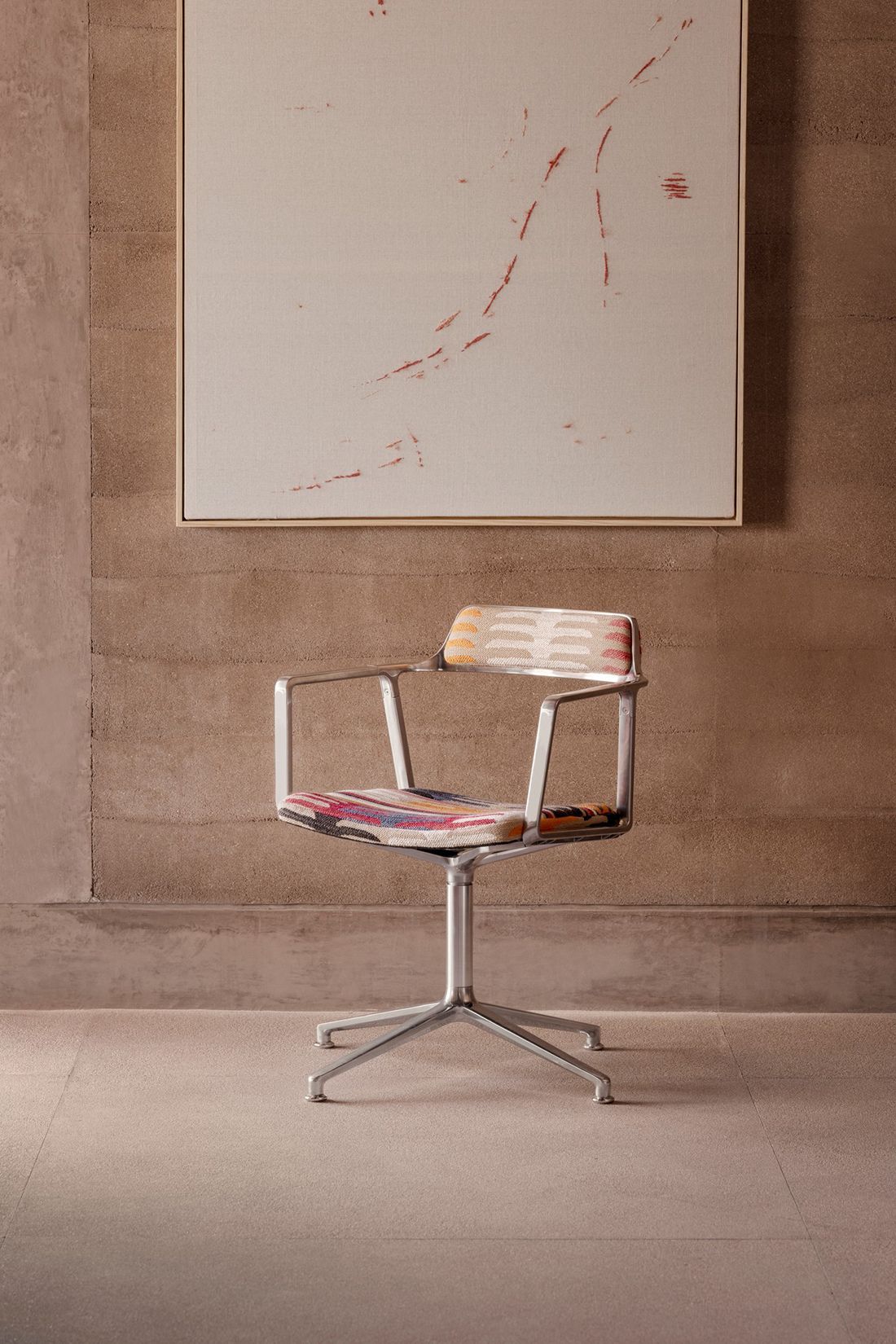
“Structurally the chair remains unchanged”, explains Egelund. “The bespoke element lies in the upholstery, allowing clients to apply their own textile and transform a familiar Vipp form into a unique piece.”
The idea of turning an object into a creative platform is not entirely new for the brand. In fact, it forms part of its history.
From its earliest years, Vipp experimented with reinterpretations of its iconic pedal bin by inviting artists and designers to work on the original object. That strategy transformed a simple bin into an icon of industrial design. The Bespoke series translates this philosophy into furniture.
Rather than multiplying models or collections, Vipp maintains a deliberately restrained catalogue while opening the door to interventions that respect the original form.
The role of textiles in the new collection
If the structure remains constant, the character of each Bespoke chair largely depends on the chosen fabric.
At this point the brand adopts an almost editorial approach. Textile selection is not a decorative gesture but must respond to both aesthetic and technical criteria.
“A bespoke solution requires a close dialogue with the client”, explains Egelund. “We advise on material quality, such as Martindale ratings, and on how patterns behave when applied to upholstery.”
“The character of each Bespoke chair largely depends on the chosen textile.”
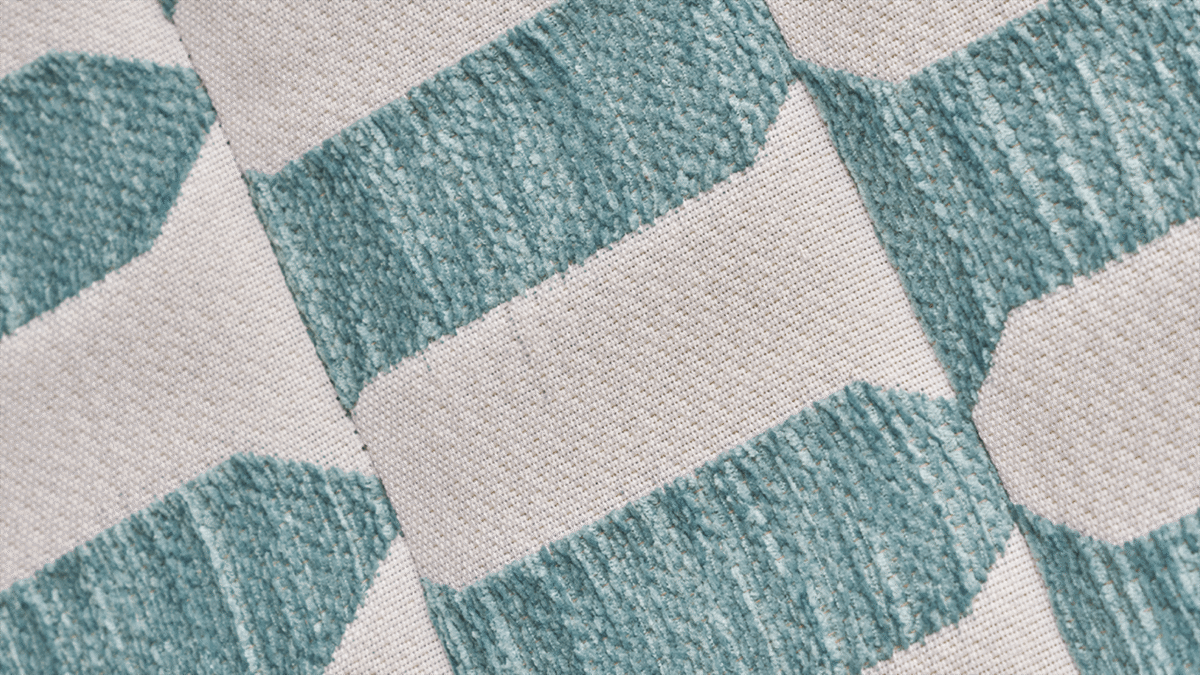
The company also works with some of the most prestigious textile houses in the world. These collaborations provide access to extensive fabric libraries where contemporary materials coexist with historical patterns.
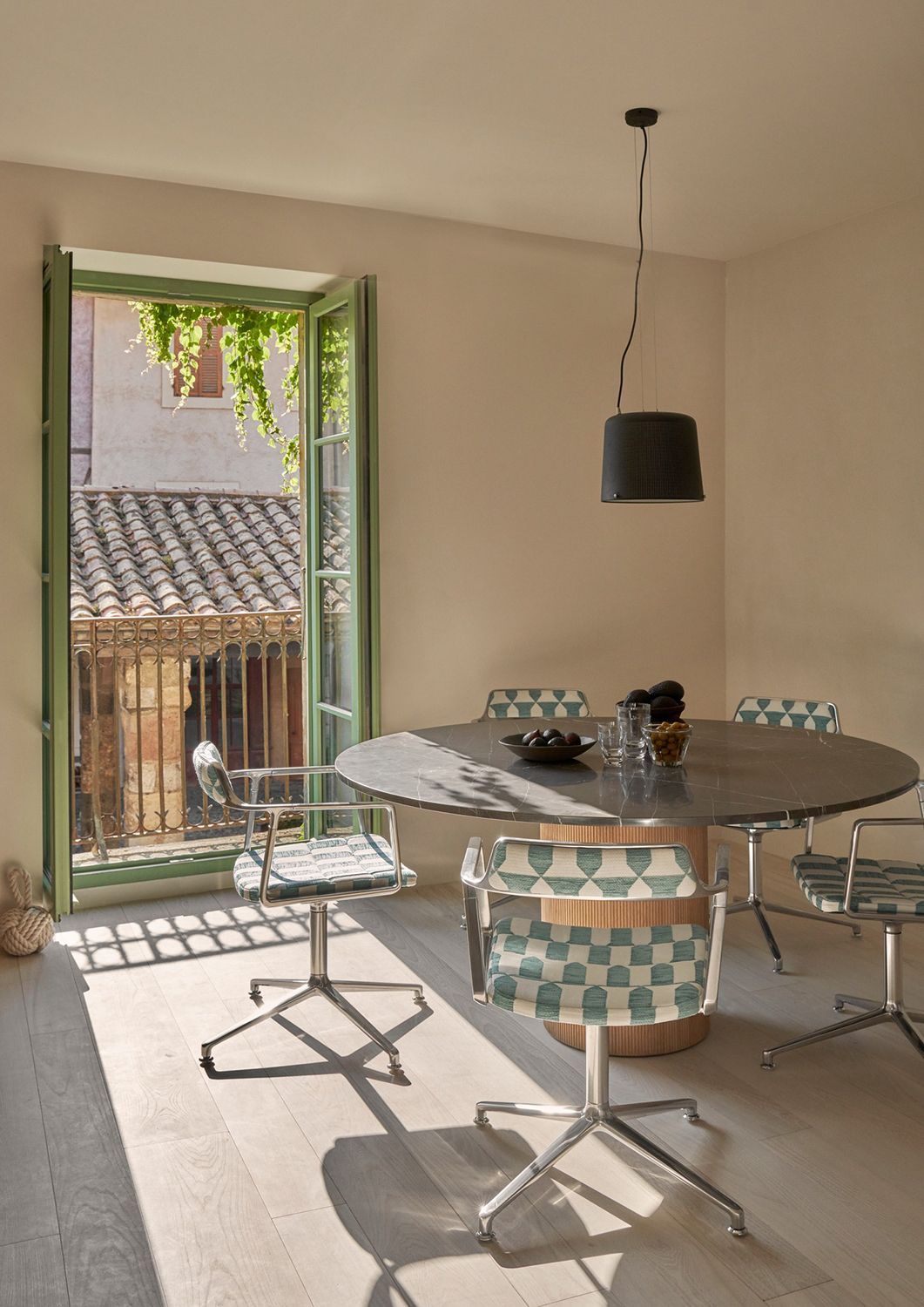
The ultimate goal is to ensure three fundamental qualities: durability, tactility and long-term performance. These factors guarantee that the chair retains its aesthetic relevance over time.
In other words, the Bespoke concept is not about creating ephemeral objects or fleeting trends. Personalisation must coexist with longevity, a core value within Vipp’s philosophy.
A curated universe, not an endless catalogue
At a time when many brands multiply collections and collaborations to remain visible, Vipp has chosen almost the opposite strategy. Its catalogue is deliberately limited.
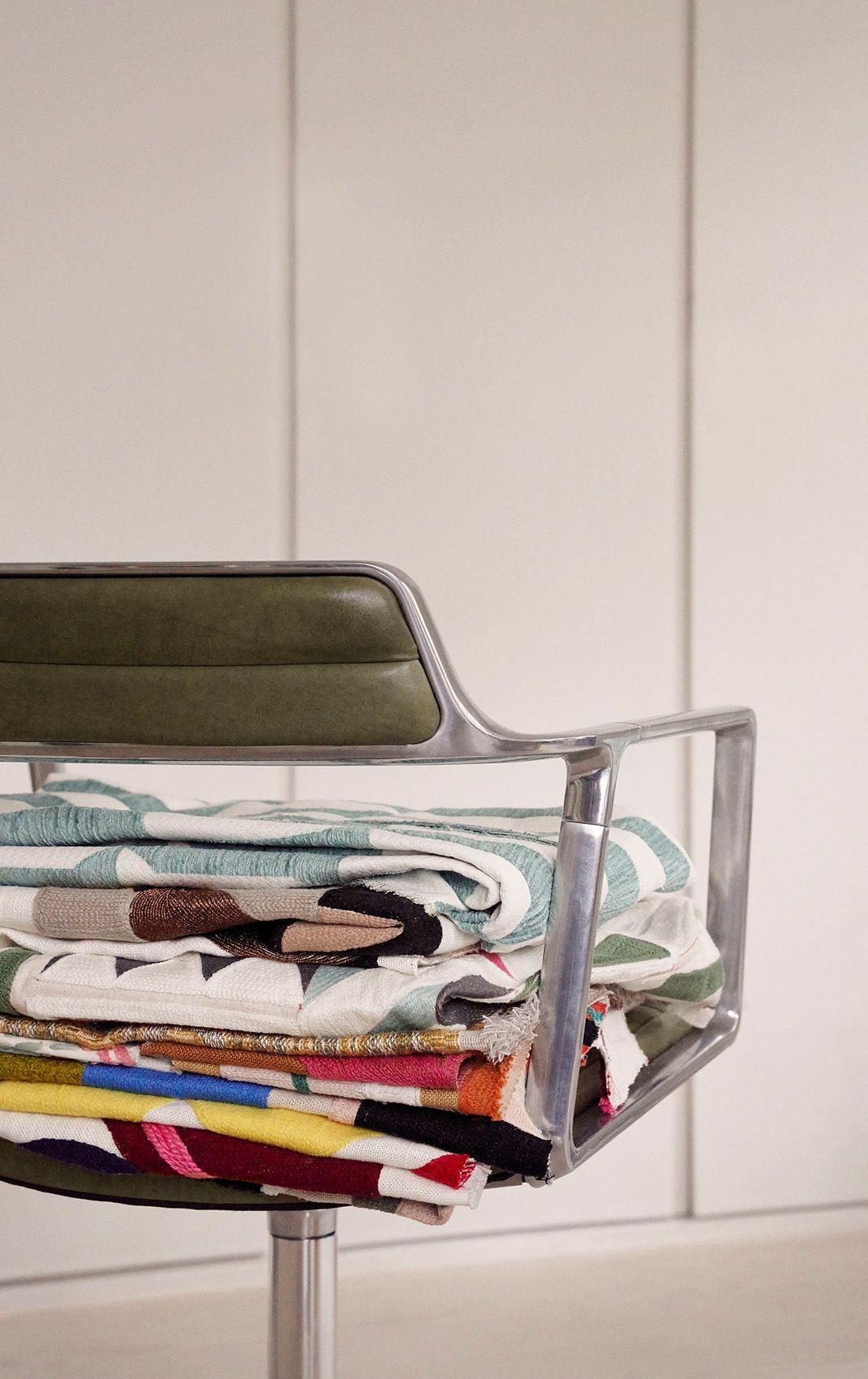
Pieces are developed internally and respond to a tightly controlled formal language. Within this relatively strict universe, the Bespoke concept introduces a layer of flexibility.
“Custom solutions add a playful and flexible dimension, but they do not define a new direction for the brand”, says Egelund.
This sentence neatly summarises the strategy: Bespoke does not replace the original design, it amplifies it. In doing so, the chair can adapt to different architectural contexts without losing the aesthetic coherence that defines Vipp.
Architecture and design: the laboratory of the Vipp Houses
The relationship between objects and architecture is one of the most fascinating aspects of the brand. For more than a decade, Vipp has developed a collection of guesthouses in different parts of the world. Each of these houses is conceived as an immersive experience where visitors can inhabit the brand’s entire universe.
The network currently includes destinations as diverse as Sweden, Denmark, Italy, Mexico, Tasmania, Andorra and Norway. In each project, architecture functions as a laboratory where products are integrated into a real environment. Within these spaces, Bespoke editions find particularly fertile ground.
“Within each Vipp House, Bespoke editions find especially fertile ground.”
For example, the Vipp Townhouse in Lagrasse, France, uses a graphic textile from Pierre Frey to reinterpret the Swivel chair. In the guesthouse in Todos Santos, Mexico, the upholstery pattern references local textile traditions. At Vipp Tunnel in Tasmania, dining chairs are upholstered in curly sheepskin sourced from New Zealand.
Each architectural project becomes a narrative platform where furniture enters into dialogue with its surroundings.
The new Vipp Pavilion in Upstate New York
The latest addition to this global collection is the Vipp Pavilion, inaugurated this March in New York State. It is the brand’s first guesthouse in the United States.
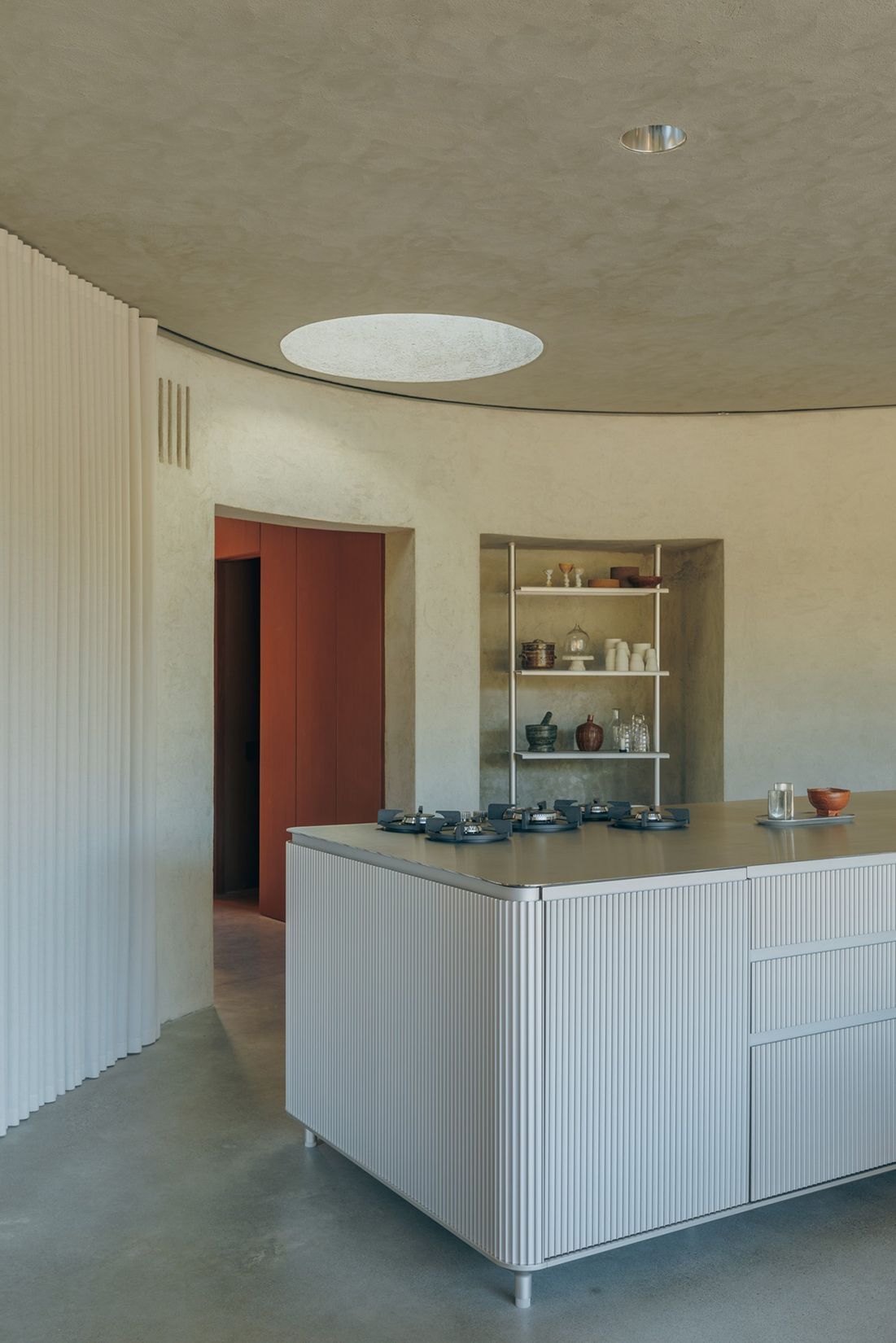
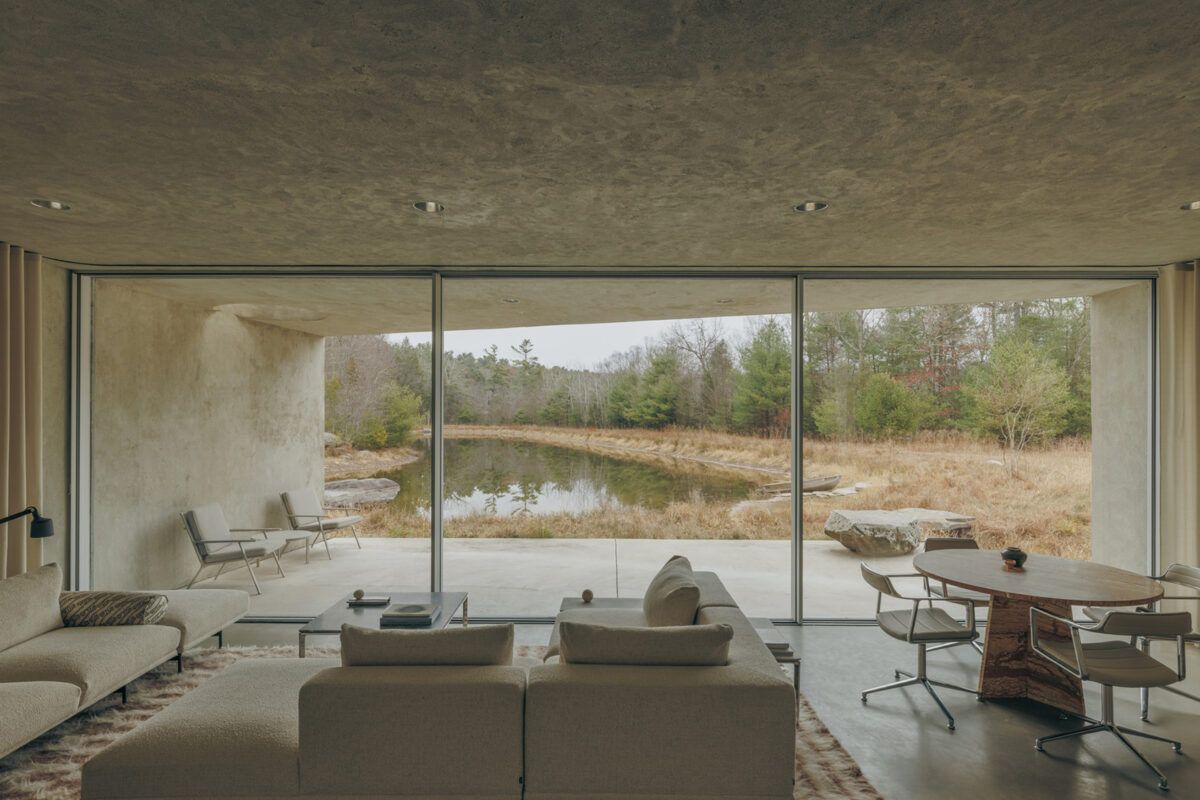
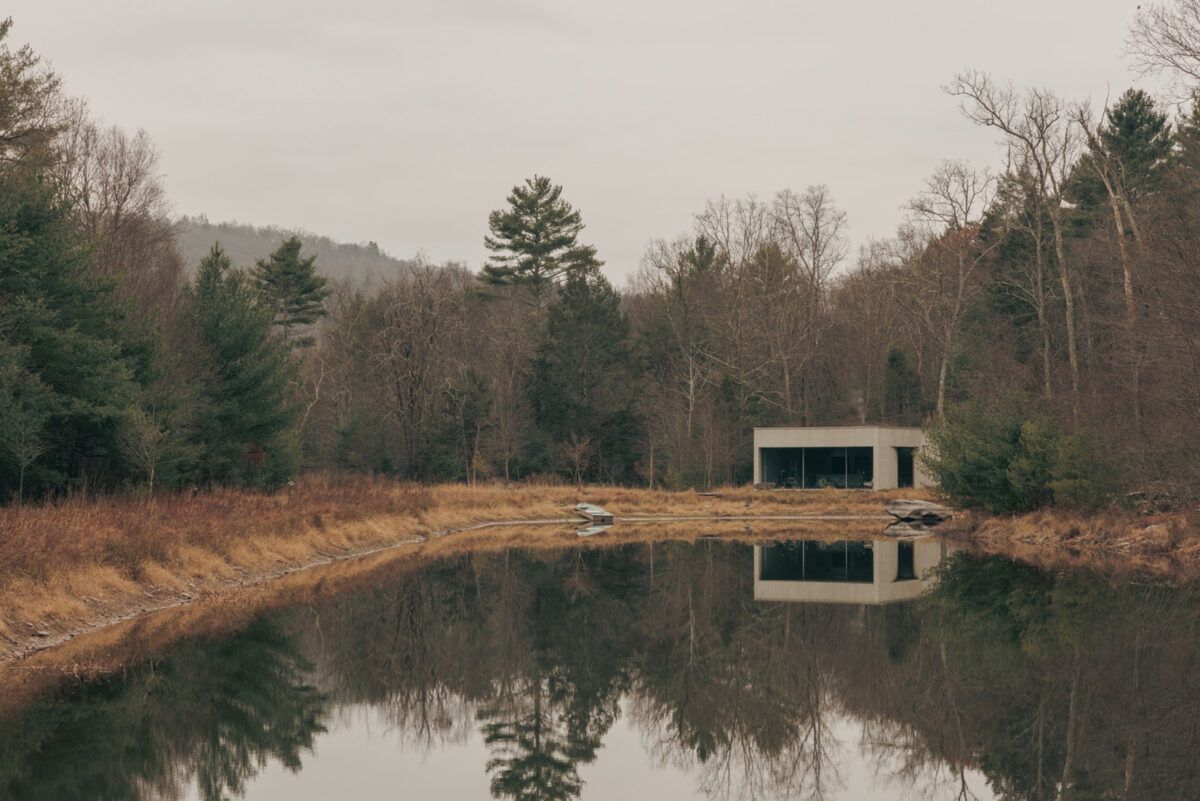
Located in Lumberland, about two hours from Manhattan, the pavilion sits on the edge of a pond surrounded by sixteen acres of forest. The architecture was designed by Los Angeles studio Johnston Marklee, known for its sculptural approach to geometry and materiality.
The building, approximately 111 square metres, is composed of two tangent elliptical volumes that create a monolithic silhouette. The exterior is clad in smooth and grooved stucco, a texture that reflects the undulations of the nearby water.
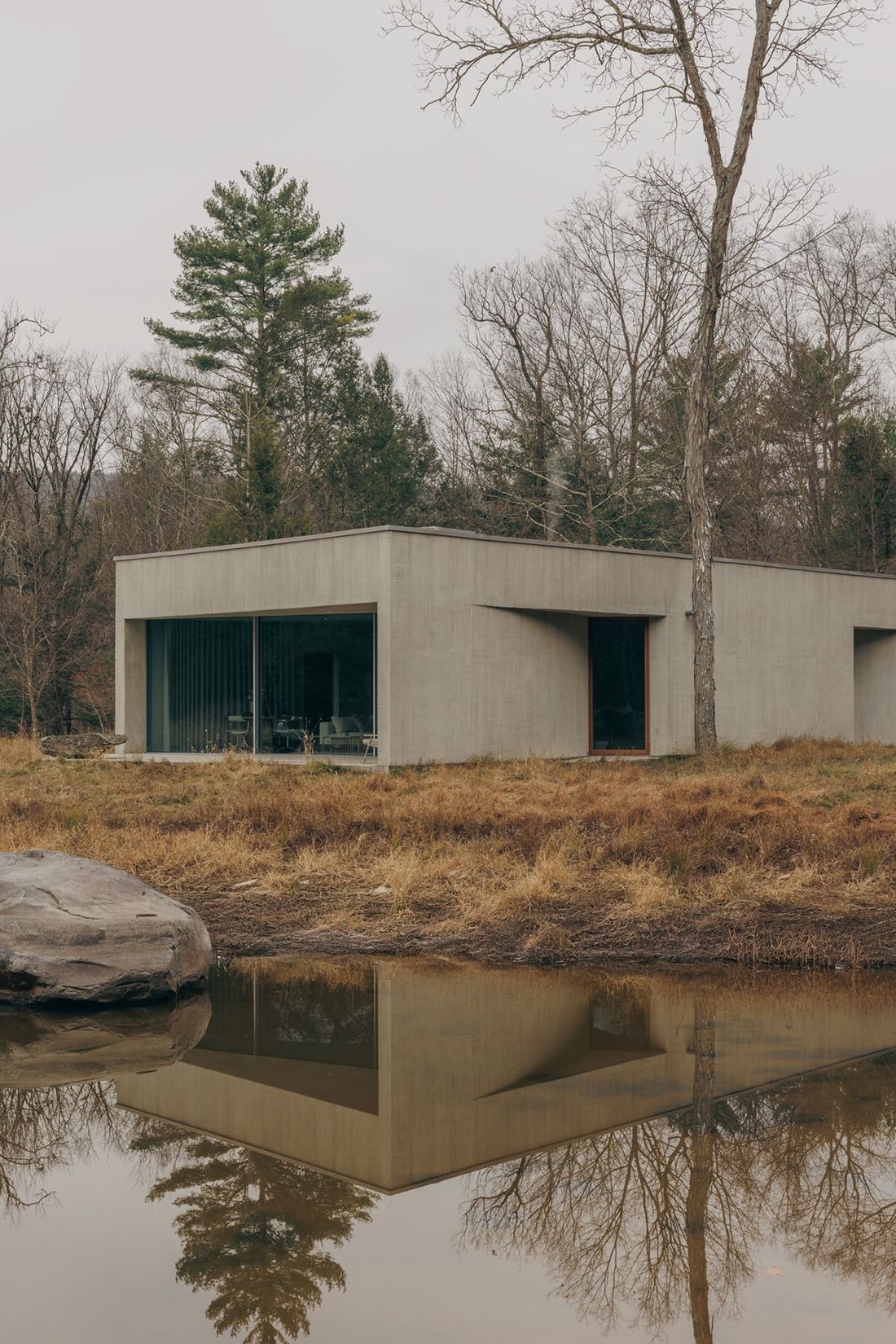
According to Sharon Johnston, co-founder of the studio, the pavilion was conceived as an almost geological presence in the landscape:
“From afar, the building resembles a stone in the pond. It appears solid at first, but gradually reveals its volumetric form as one approaches.”
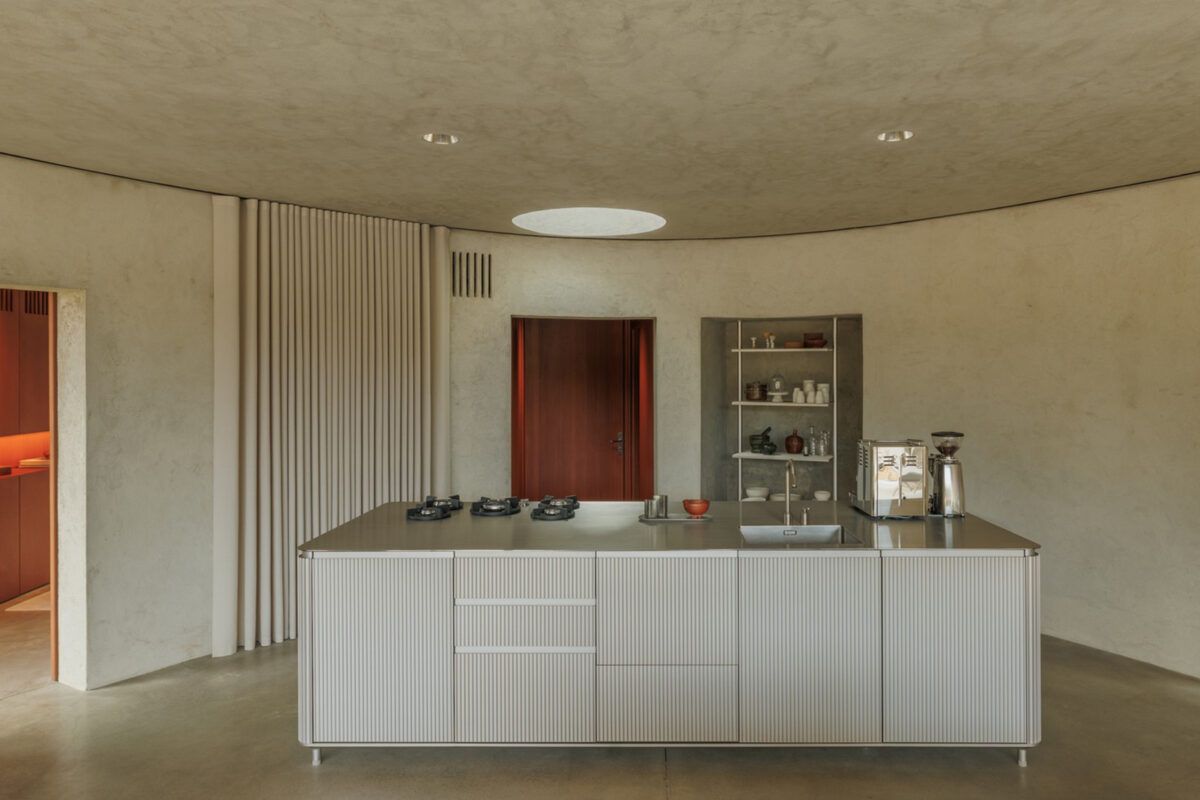
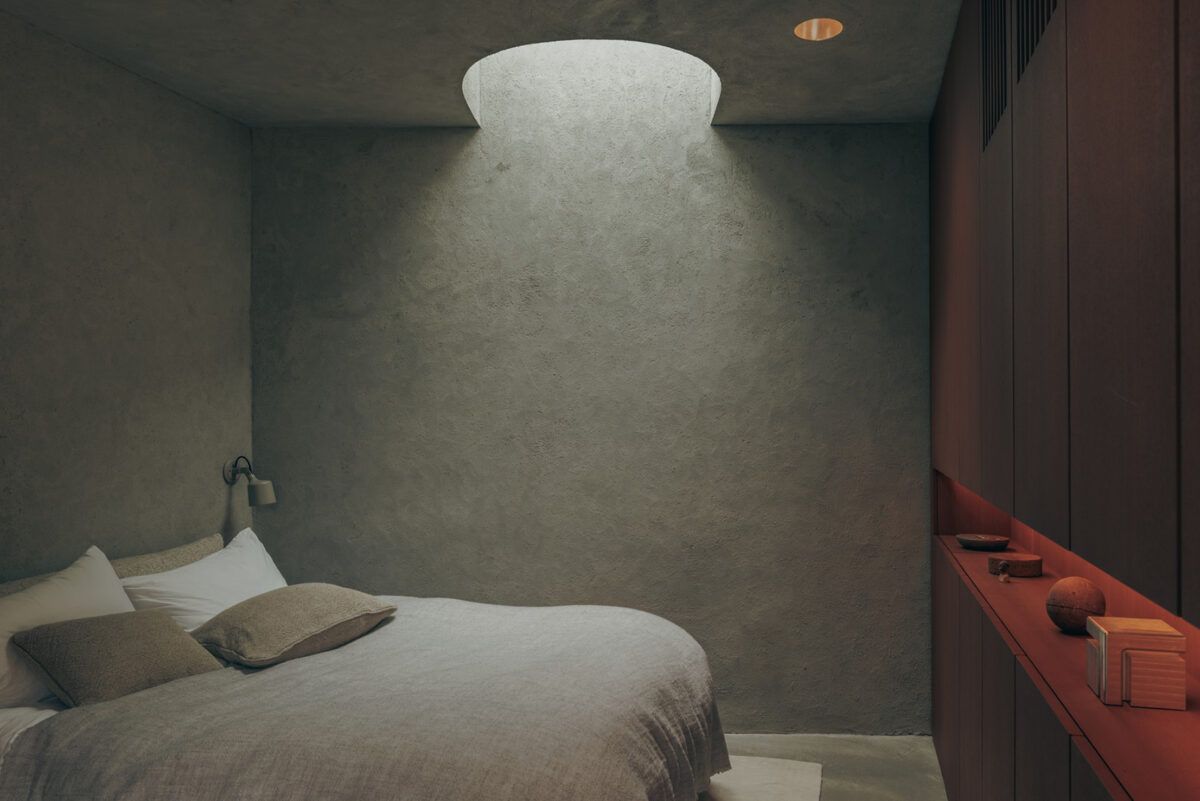
The interior follows Vipp’s characteristic minimalist logic. The main space is organised around the V3 kitchen in anodised aluminium, positioned beneath a circular skylight. The colour palette draws inspiration from the surrounding landscape, with tones recalling autumn leaves, tree bark and moss.
The house accommodates four guests and is conceived as a quiet retreat where architecture, landscape and design interact intimately.
The Pavilion Edition of the Bespoke Swivel Chair
For this new guesthouse, Vipp developed a specific version of the Swivel chair.
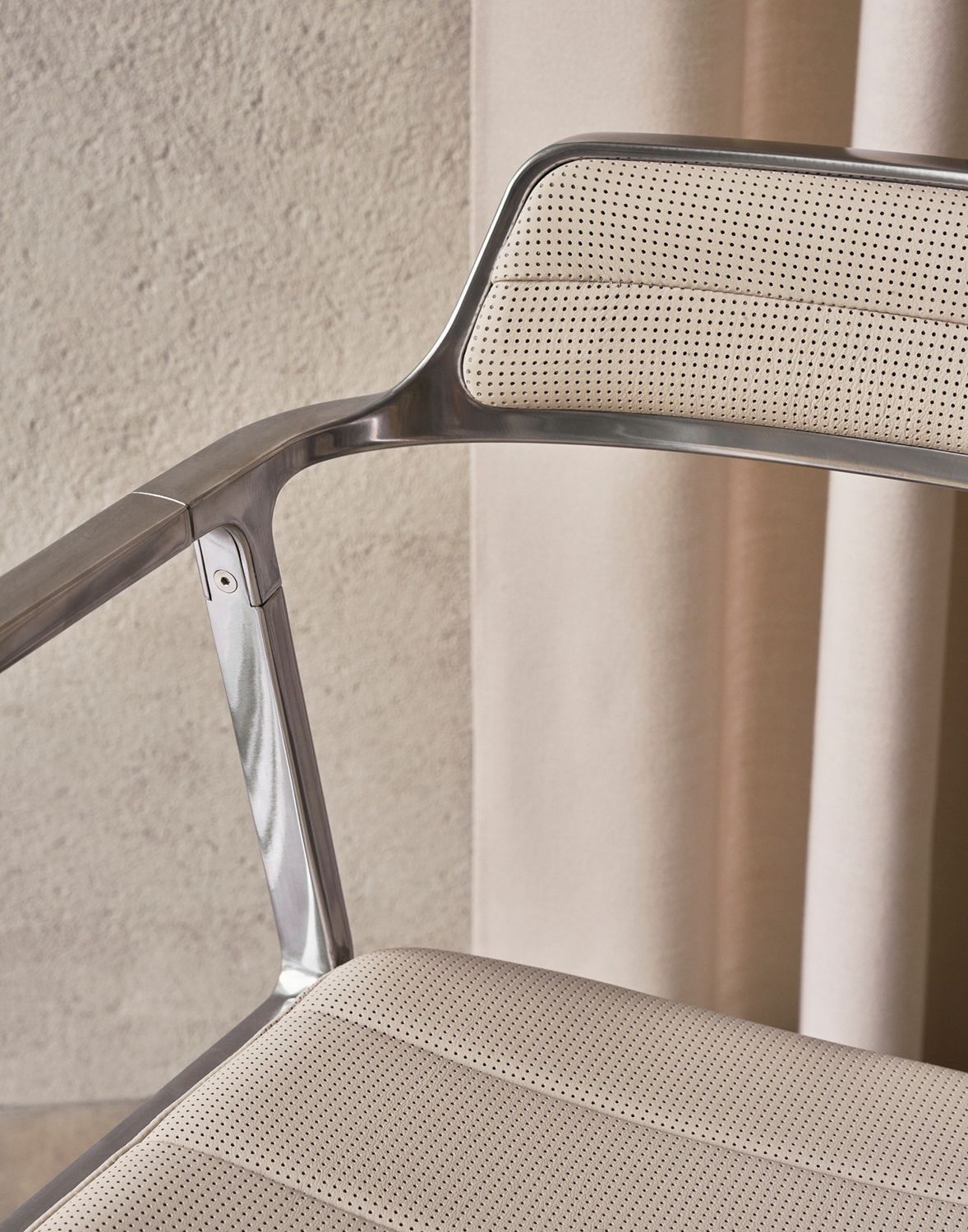
The Pavilion Edition is upholstered in light grey leather inspired by the tones of the building’s stucco. The most interesting detail appears on the surface: small perforations referencing both the brand’s design DNA and the pavilion’s circular skylights.
“The Pavilion Edition chair translates architectural elements into product design.”
The chair sits on a fixed four-leg polished aluminium base while maintaining the model’s characteristic 360-degree rotation. More than a simple piece of furniture, it functions as an object that translates architectural elements into product design.
This dialogue between building and object reflects one of the fundamental principles of the Vipp universe: design is not understood as a collection of isolated pieces, but as a coherent system of experiences.
The dialogue between client and designer
Creating a Bespoke piece always involves conversation. Clients bring materials, references or ideas, and the Vipp team evaluates how these elements can be integrated into the chair’s construction.
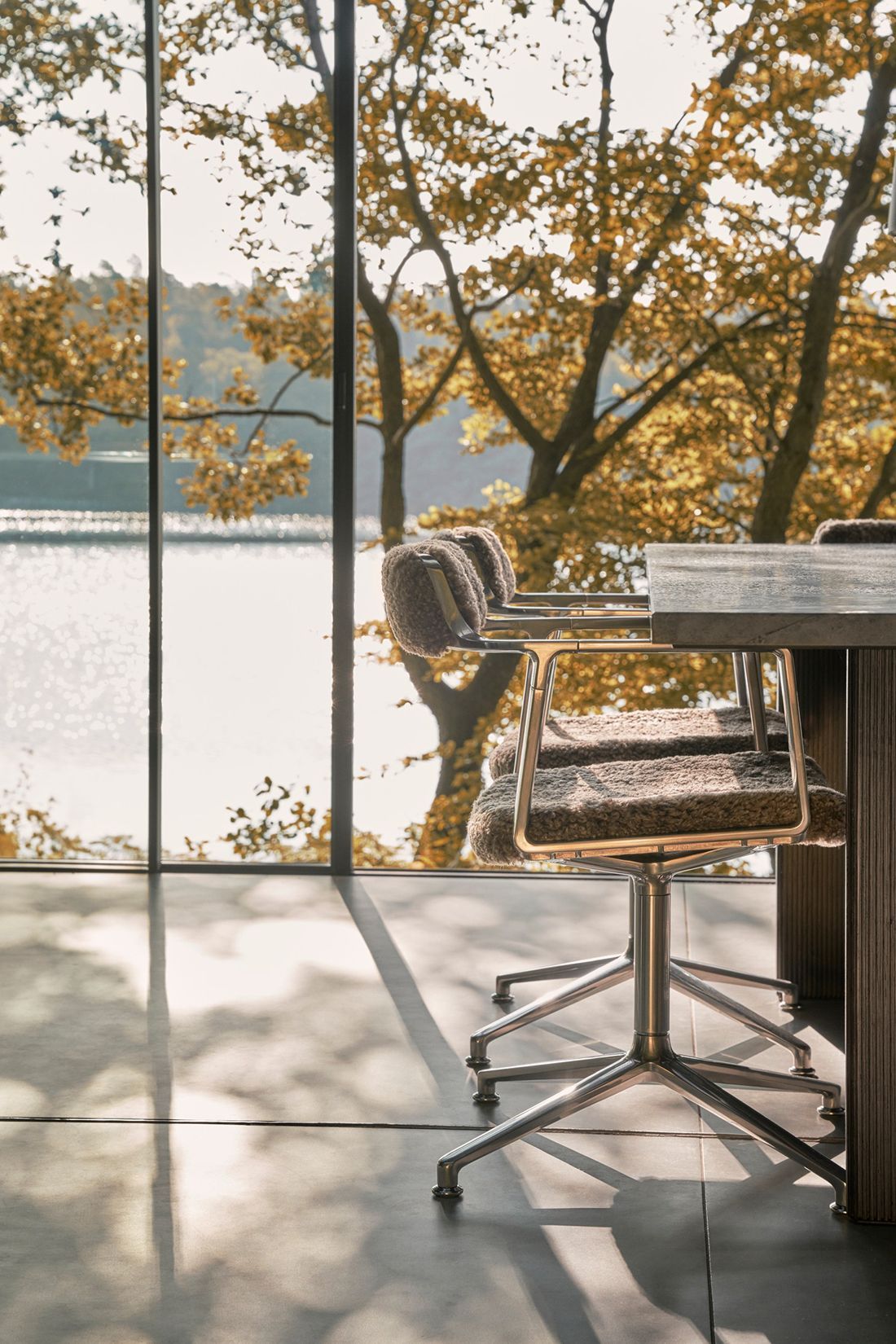
“The development of a Bespoke piece is always a dialogue”, explains Egelund. “Clients bring their preferred materials or ideas, while our team ensures that the textile and its application align with the chair’s construction and our durability standards.”
This approach ensures that each project maintains a high level of technical quality.
Sustainability through longevity
In the contemporary debate on sustainability, many brands focus on recycled materials or low-impact processes. Vipp adopts a slightly different perspective.
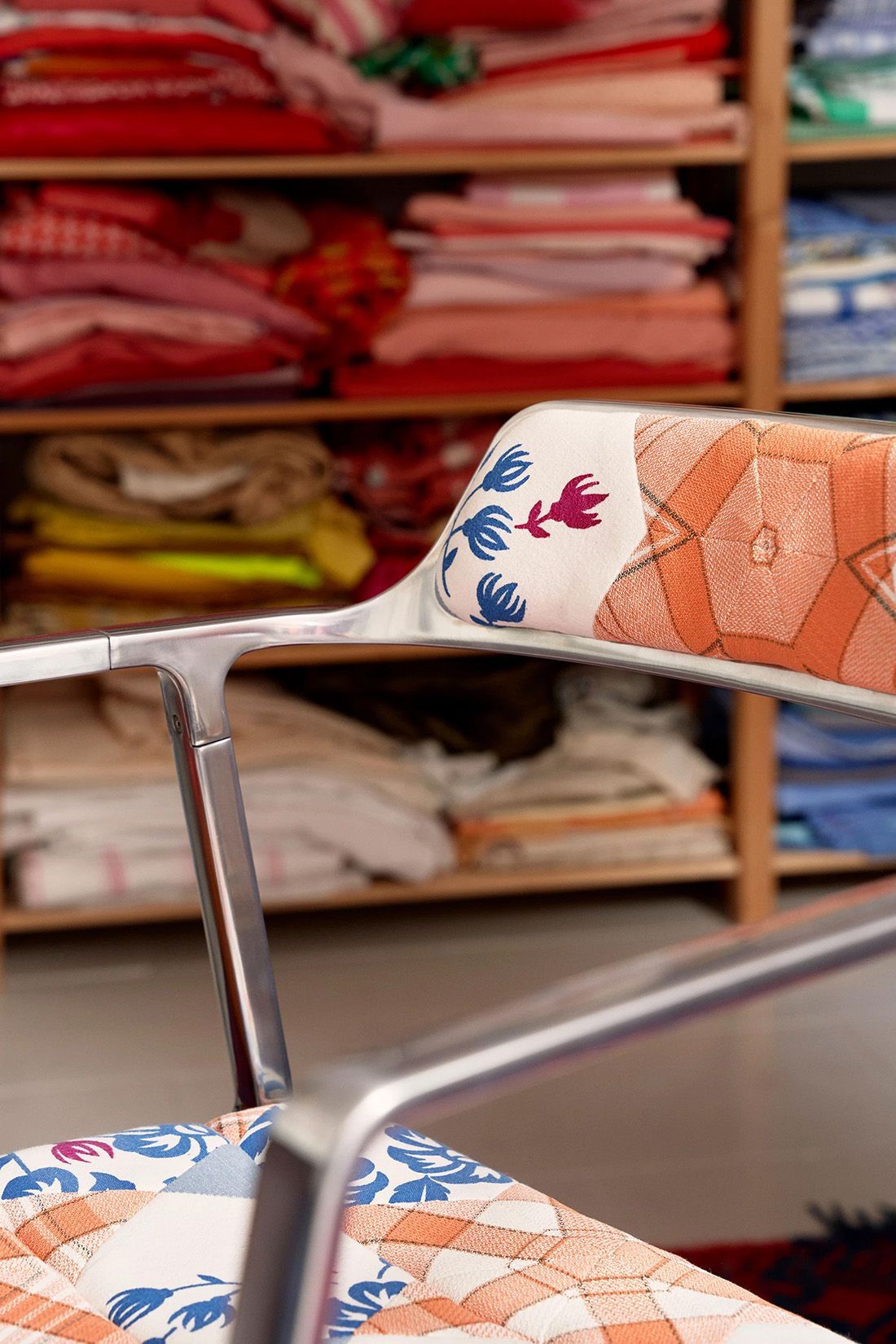
For the company, durability is the key factor. A product that remains relevant for decades avoids the need for constant replacement. This principle also applies to customised pieces.
Even within the Bespoke model, production is based on a fixed design platform and carefully controlled manufacturing processes.
“By working with a stable design base and longer production cycles we can maintain responsible manufacturing processes while encouraging a long product lifespan”, explains the CEO.
This philosophy connects directly with the brand’s industrial heritage. Vipp objects are not conceived as temporary decorative elements, but as tools designed to accompany everyday life for many years.
A design meant to be lived
The history of Vipp shows that innovation does not always mean reinventing forms. Sometimes it consists in expanding the meaning of an existing object.
The Bespoke Swivel series achieves this by introducing personalisation within a clearly defined design structure. The chair maintains its sculptural identity and original ergonomics, yet the narrative each user can build around it changes.
In this sense, the project also reflects a broader cultural shift. Contemporary design no longer focuses solely on producing iconic objects, but increasingly seeks to generate more personal and contextual experiences.
“Each guesthouse becomes a stage where furniture integrates with architecture, landscape and everyday life.”
The Vipp Houses illustrate this transformation particularly clearly. Each guesthouse becomes a setting where furniture integrates with architecture, landscape and daily life. The new Vipp Pavilion in Upstate New York pushes this idea even further: within that bucolic environment, a chair becomes a bridge between the geometry of the building and the visitor’s experience.
Perhaps that is the true strength of the Vipp universe: a seemingly simple object — a chair, a kitchen, a pedal bin — can acquire an entirely different meaning when inserted into a coherent design system.
The Bespoke Swivel series demonstrates that even within a strongly defined identity there remains space for personal interpretation. In that tension between industrial precision and individual expression lies much of its appeal.
(*) Photographs courtesy of Vipp.