V&A East Storehouse: London’s new temple of creativity
London’s next major cultural landmark is now a reality. On 31 May 2025, the V&A East Storehouse opened its doors — a truly groundbreaking museum experience that transforms how we access, and connect with, the UK’s national collections.
Located in the heart of East Bank, the new cultural district within the Queen Elizabeth Olympic Park, the Storehouse is not a museum in the traditional sense, but a hybrid space that combines storage, conservation, research, and public access under one roof.
Address: Parkes Street, Queen Elizabeth Olympic Park, Hackney Wick, Londres
A museum of the future, today
Designed by the acclaimed studio Diller Scofidio + Renfro, the V&A East Storehouse is far more than an art archive: it is a tribute to the diversity, creativity, and material history of our visual culture.
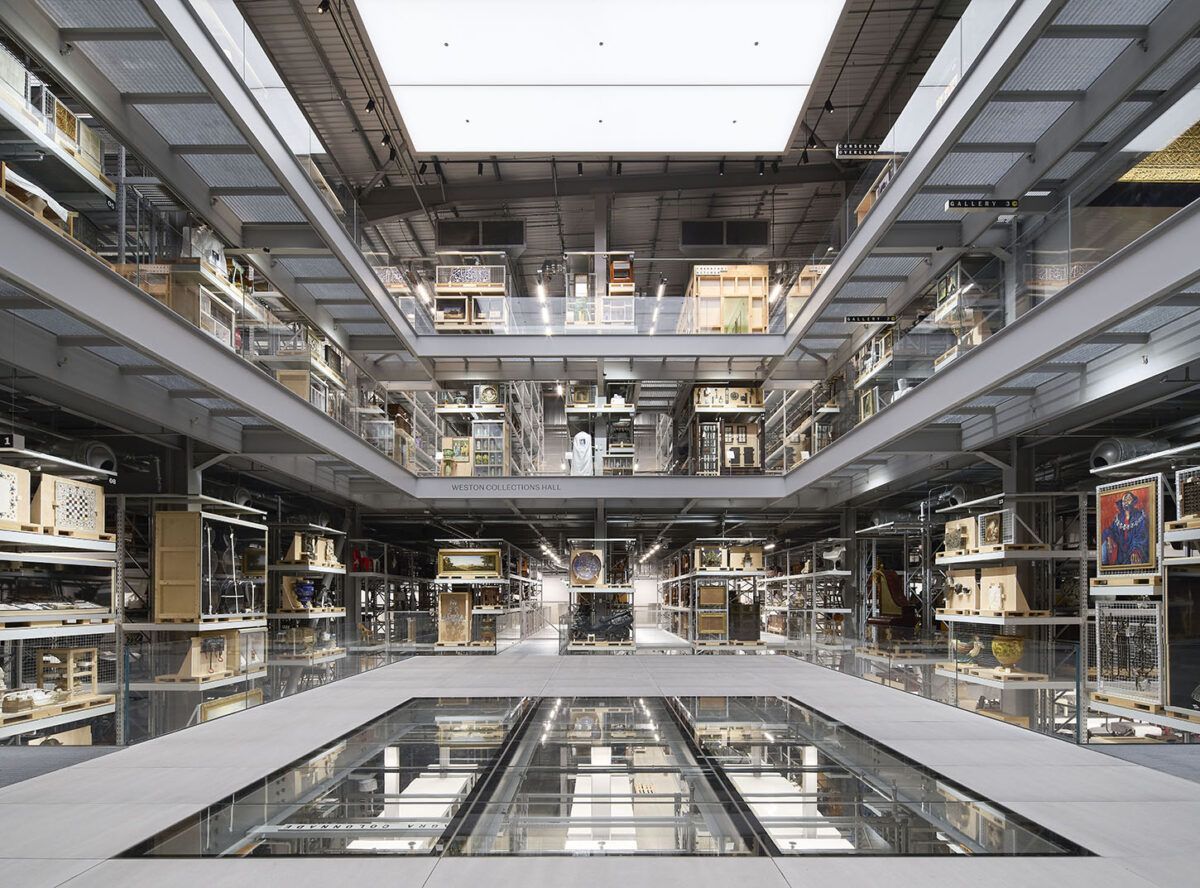
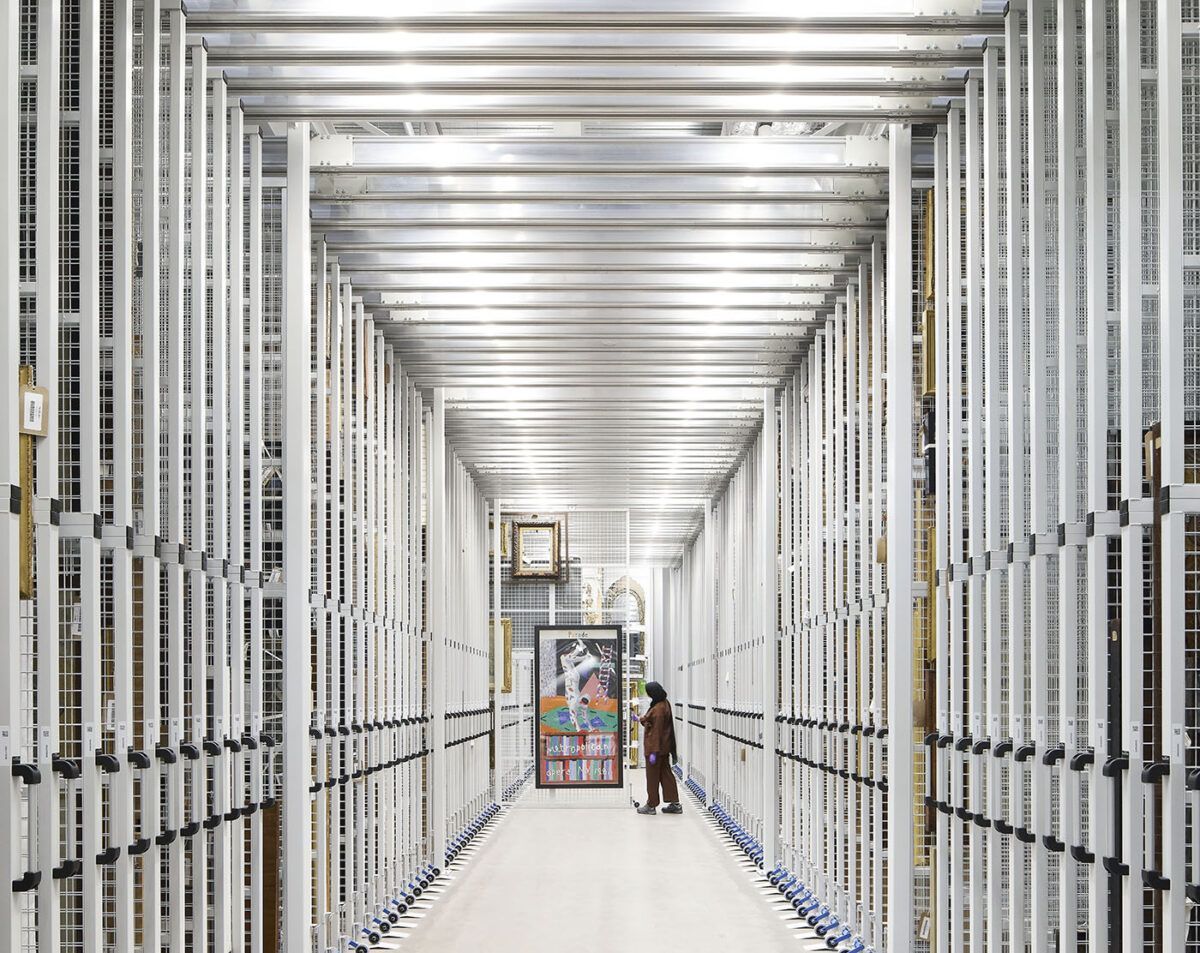
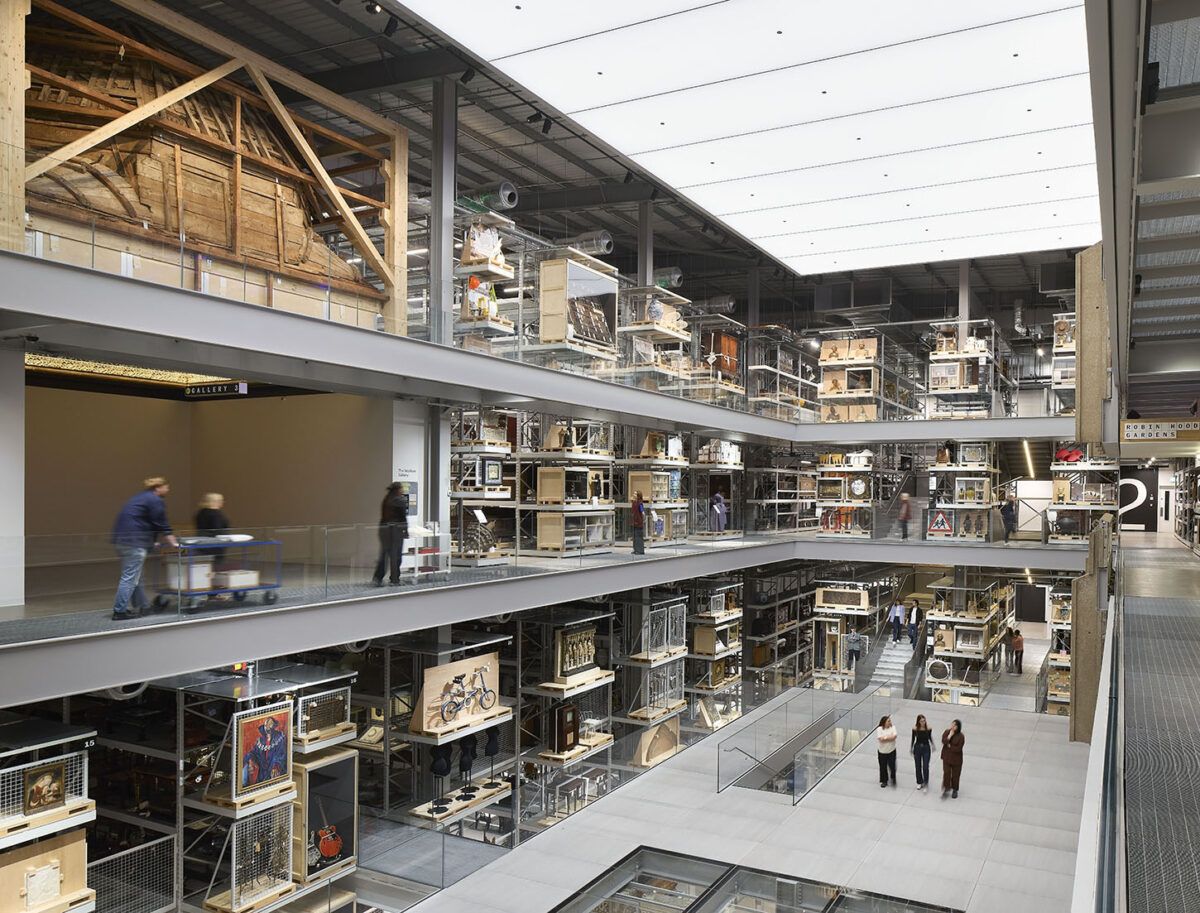
Spanning over 16,000 m², it houses more than 250,000 objects, 350,000 books, and 1,000 archives, spread across four interconnected levels. Most importantly, the entire space has been designed for visitors to explore.
From store to stage
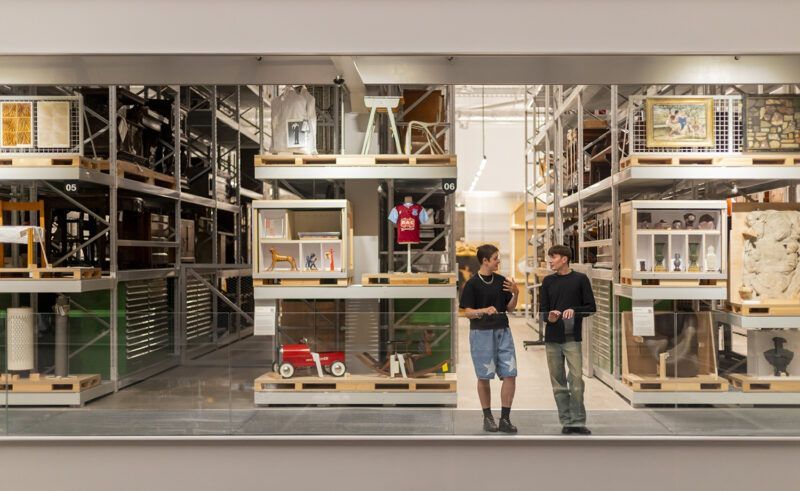
Traditionally, museum storage spaces have been hidden from public view. Here, the logic is reversed. The Storehouse is an open invitation to step behind the scenes.
As Tim Reeve, Deputy Director and COO of the V&A, explains: “The V&A East Storehouse is a completely new experience: a kind of backstage pass into the wonder of a working museum”.
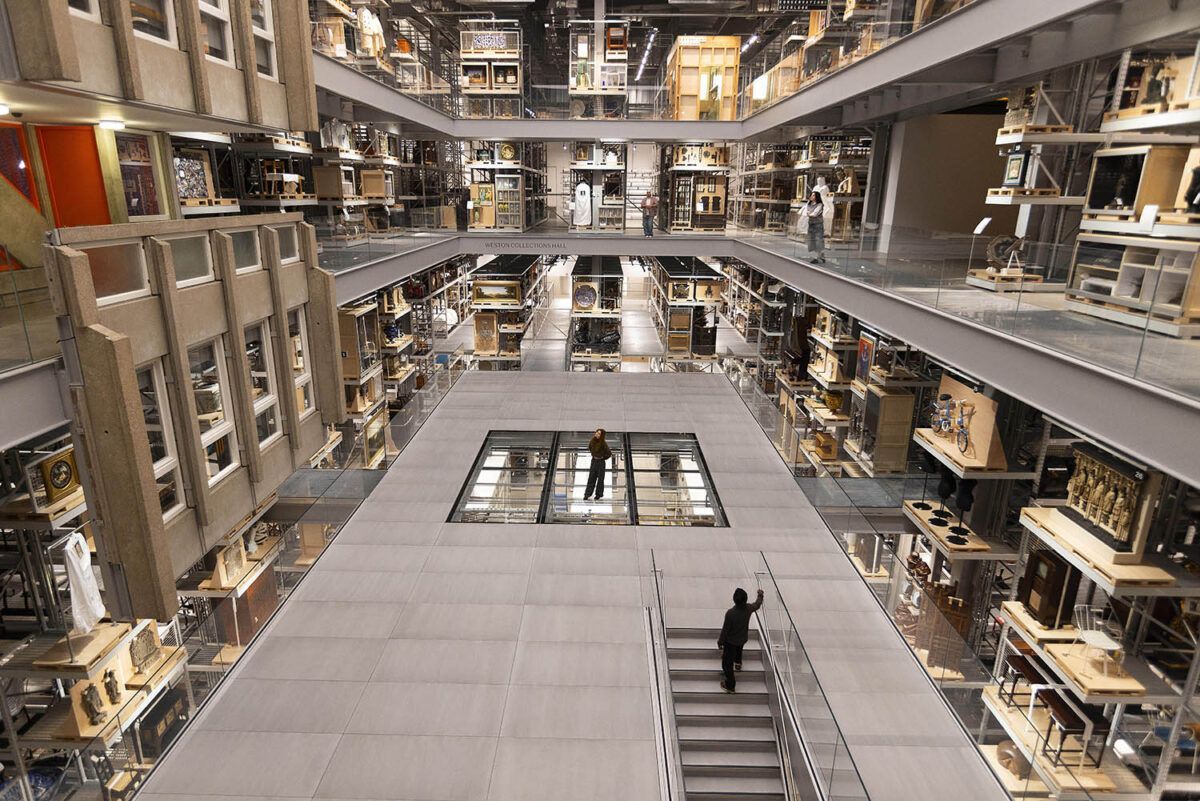
And he’s not exaggerating. From the moment you enter the Weston Collections Hall, you’re greeted by a breathtaking panorama of carefully organised objects — not arranged by strict chronological or thematic order, but evoking a “contemporary Cabinet of Curiosities” where the visitor’s own curiosity shapes the journey.
Radical access: order an object
One of the Storehouse’s most remarkable innovations is its Order an Object service.
This free platform, available seven days a week, allows anyone to request access to a specific object from the collection — from Balenciaga haute couture gowns and 14th-century ceramics to contemporary art, photographs by Julia Margaret Cameron, legendary band T-shirts, theatre posters, or mid-century modern furniture.
Since its launch in May, more than 1,000 objects have been requested. The most popular so far? A pink silk evening gown designed by Cristóbal Balenciaga in 1954 — proof of fashion’s enduring power in design history.
“The V&A East Storehouse is a completely new experience: a kind of backstage pass into the wonder of a working museum.”
A Museum in motion
Beyond its radical access model, the Storehouse stands out for its participatory approach. Its programming includes collaborative projects with young people from East London, local communities, contemporary artists, and makers. From new publications, films, interviews, and artworks to re-readings of historic pieces, every corner of the building comes alive with multiple voices and perspectives.
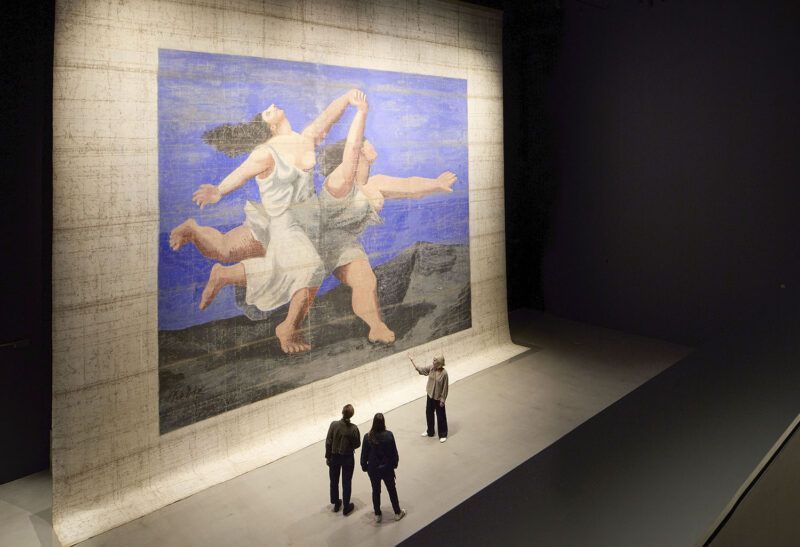
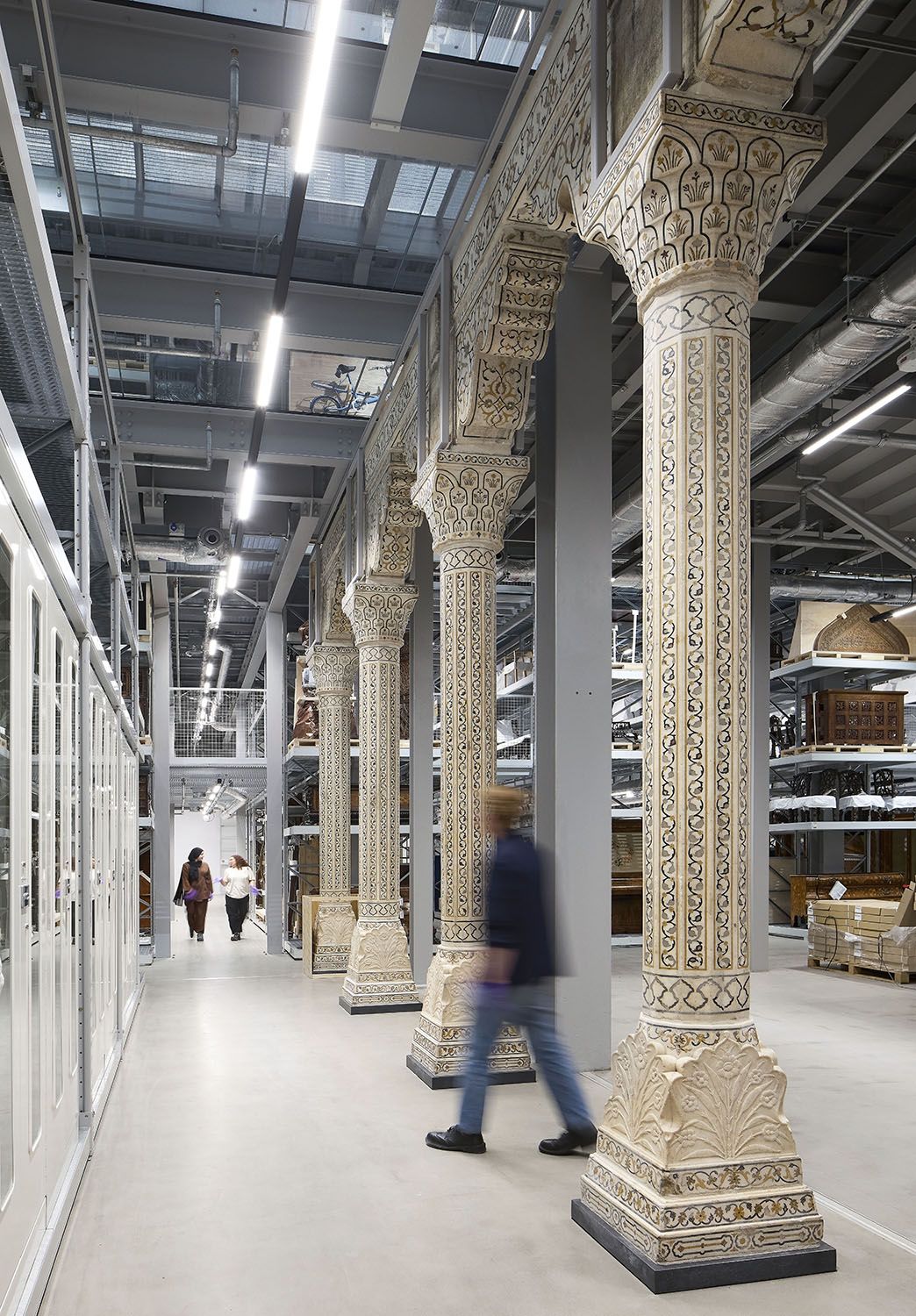
Here, art is not confined behind glass cases but becomes part of an ongoing conversation. This is especially evident in how large-scale pieces are displayed — from the 15th-century carved ceiling of the Palace of Torrijos (Spain) to the largest Picasso in the world, a monumental 1924 theatre curtain created for the Ballets Russes.
Design with vision: between industrial and poetic
The Storehouse occupies what was once the Media and Broadcast Centre of the London 2012 Olympic Games. Its transformation is an architectural feat in itself.
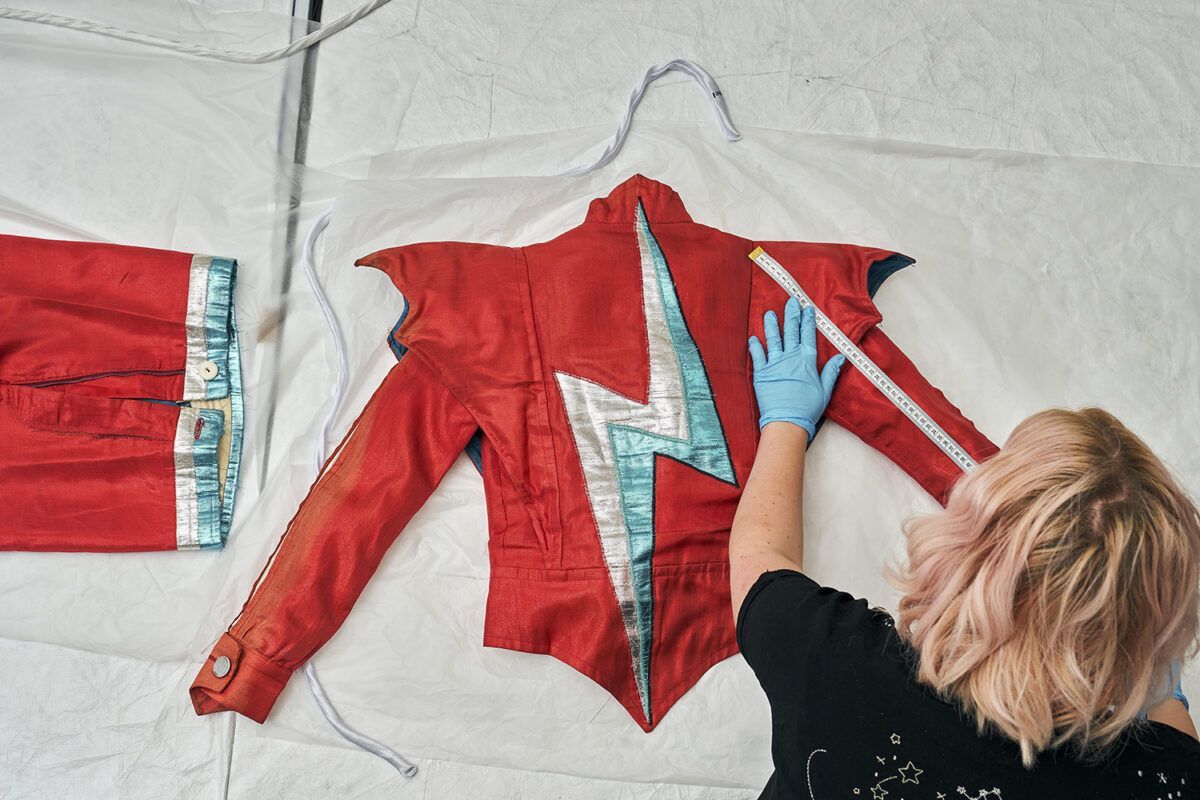
Diller Scofidio + Renfro have achieved a fascinating balance between the building’s original industrial aesthetic and a sensitive, visitor-friendly museum environment. Everything is designed to enhance the experience: from self-guided tours to visible conservation spaces where visitors can watch objects being cared for up close.
Even the furniture and signage were created by innovative studios such as Fieldwork Facility and We Not I, reinforcing a coherent, futuristic, and accessible visual identity.
Objects with history, stories with soul
A highlight of the Storehouse is the Weston Collections Hall, which hosts more than 100 micro-exhibitions. Among the stand-out pieces are:
– The Kaufmann Office by Frank Lloyd Wright (1930) — the only complete interior by the architect outside the US.
– A Frankfurt Kitchen designed by Margarete Schütte-Lihotzky, a pioneer of functional design.
– The aforementioned Picasso stage curtain, measuring 10 metres high by 11 metres wide.
– Modern architectural elements such as a section of the controversial Robin Hood Gardens.
– Pop and contemporary items like PJ Harvey’s guitars, models of the 2012 Olympic cauldron, and vintage football shirts.
Each item tells its own story, but also forms part of a broader narrative — a collective reflection on what we value, preserve, and celebrate as a society.
A living archive for all
The Storehouse is not only home to objects, but also to knowledge. Visitors can consult archives, access books from the National Art Library, and take part in events, workshops, and guided tours.
It also features its own café — the e5 Storehouse — perfect for pausing to digest the day’s discoveries.
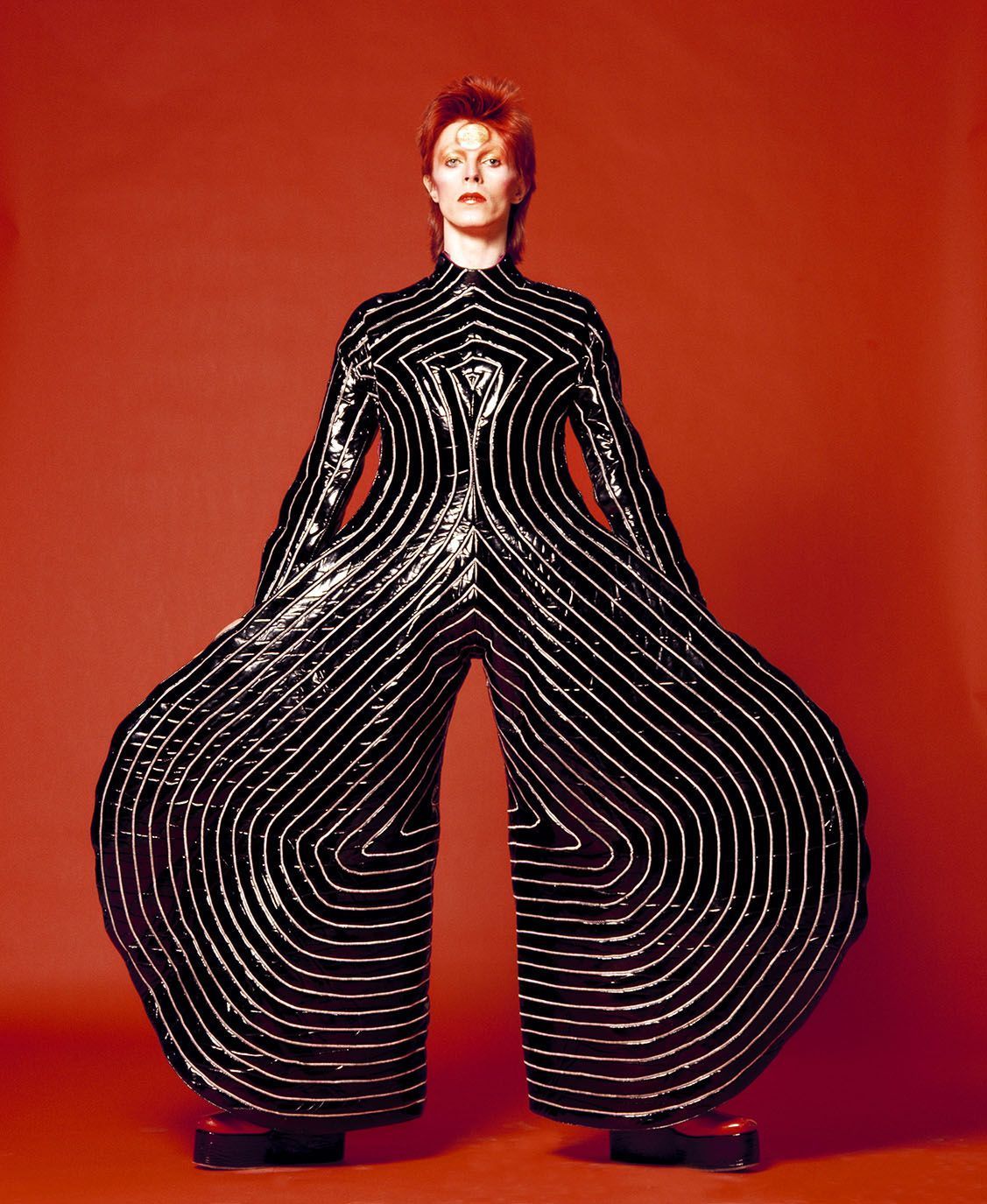
And this is only the beginning: on 13 September 2025, the David Bowie Centre will open, housing the legendary British artist’s archive of over 80,000 items. It will be another milestone for East Bank and a testament to the V&A’s commitment to connecting the culture of the past with the voices of the present.
A new cultural epicentre in London
The V&A East Storehouse is part of an ambitious cultural project led by the Mayor of London. Alongside institutions such as the London College of Fashion, BBC Music Studios, Sadler’s Wells East, and University College London, this new district aims to democratise access to culture and decentralise the city’s artistic life.
As Mayor Sadiq Khan puts it: “This is the most ambitious cultural project in decades, ensuring that London remains the creative capital of the world”.
In summary: why you should visit
If you’re in London, the V&A East Storehouse is unmissable. Whether your passion is design, fashion, architecture, contemporary art — or simply curiosity about how our cultural heritage is preserved — you will find inspiration here.
It is a space that celebrates diversity, promotes open access, challenges traditional museum models, and offers a rich, emotional, and utterly unique experience.
(*) Photos courtesy of V&A East Storehouse. ©Hufton+Crow.