The winners of the 2026 Goya Awards are…
The 40th edition of the Goya Awards once again shone a spotlight on the diversity and talent of contemporary Spanish cinema. In a ceremony marked by emotion and recognition of a range of creative sensibilities, the Academy honoured works spanning intimate introspection, films of striking aesthetic personality, and stories with a clear social and moral dimension.
The big winner was “Los Domingos”, directed by Alauda Ruiz de Azúa, which was crowned Best Film and reaffirmed its director as one of the essential voices in the European landscape. Yet the night offered far more: “Sorda”, “Sirat”, “Tardes de soledad”, “Maspalomas” and “La cena” traced a compelling cinematic map inviting exploration.
If the 2026 Goya Awards made one thing clear, it is that Spanish cinema engages in dialogue, unsettles, moves and, above all, matters.
Los Domingos: the consecration of Alauda Ruiz de Azúa
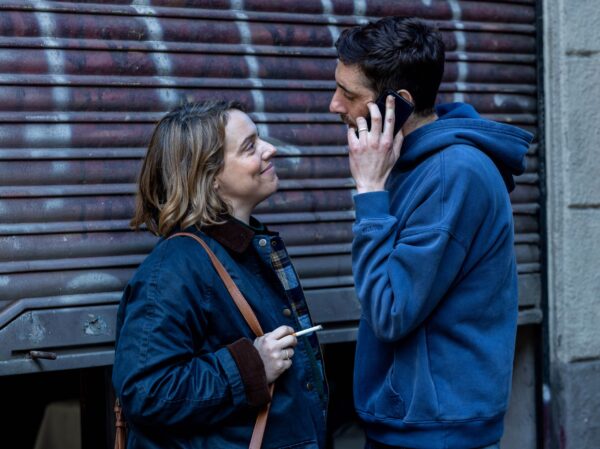
The undisputed protagonist of the evening was “Los Domingos”. Five major awards — Best Film, Best Director, Best Original Screenplay, and the acting prizes for Patricia López Arnaiz and Nagore Aranburu — consolidated a journey already endorsed by critics and festivals.
Following the success of “Cinco lobitos”, Ruiz de Azúa once again explores family bonds and the invisible tensions shaping identity. This time, the story of a young woman contemplating entering a convent becomes a powerful portrait of faith, belonging and individual freedom.
The film stands out for its narrative delicacy. There is no judgement, no explicit moral. There are doubts, silences, uncomfortable conversations and glances that say everything. That ability to capture the intangible is what turns “Los Domingos” into a major work.
Beyond the awards, it is a film that deserves to be seen on the big screen, allowed to settle, and discussed afterwards. Cinema that does not end with the closing credits.
Sorda: when silence becomes language
Among the titles that have defined this season, “Sorda” stands out powerfully — a film we previously analysed in CC/magazine through an interview with its leading actress, Miriam Garlo.
The film addresses motherhood, identity and belonging through the experience of a deaf woman. Yet beyond the plot, what is truly transformative is its sensory proposal: the treatment of sound — and silence — compels the viewer to change the way the story is perceived.
It is not merely a film about deafness; it is a film that invites us to listen differently. To question our communicative codes. To reconsider what it means to belong.
Sirat, by Óliver Laxe: cinema as a sensory experience
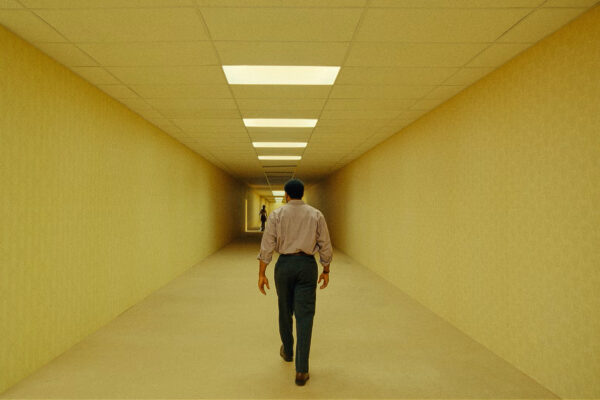
If “Los Domingos” claimed the major awards, “Sirat”, directed by Óliver Laxe, established itself as the year’s great aesthetic reference by triumphing in the technical categories.
Defined as a sensory journey to the edge of the desert, “Sirat” is a radical cinematic experience. The landscape is not a backdrop: it is a character. Sound does not accompany: it envelops. The camera does not observe: it hypnotises.
Laxe embraces a contemplative, demanding cinema that avoids conventional narrative. The viewer does not attend passively but moves through the film, and vice versa. Perhaps for that reason, we cannot help but confess that we missed greater recognition in the main categories. Especially considering that the film has secured two nominations at the 98th Academy Awards, to be held on 15 March — an international milestone underscoring its artistic stature and global reach.
Tardes de soledad: Albert Serra and death as ritual
The Goya for Best Documentary went to “Tardes de soledad”, Albert Serra’s controversial work, which had already won the Golden Shell in San Sebastián.
On this occasion, Serra turns his gaze towards bullfighting through a portrait of the matador Andrés Roca Rey and his cuadrilla. True to his style, the filmmaker observes the ritual with an almost entomological distance, without emphasis or concessions.
Death, the body, risk and silence become cinematic material. The documentary does not seek to persuade but to show, and within that raw exposure lies both its controversy and its artistic strength.
We were unable to finish it. Our sensibility prevents us from confronting a bullfight, even through Serra’s aesthetic and auteur lens. This does not diminish the value of his proposal nor the recognition received, but it does mark a personal boundary that also forms part of our understanding of culture: we admire the formal risk and the debate it generates, even if in this case we could not accompany it as viewers.
Maspalomas: the weight of the past and the dignity of the present
The award for Best Leading Actor went to José Ramón Soroiz for his role in “Maspalomas”, a drama exploring second chances and unresolved accounts with the past.
Set in the iconic Canarian enclave, the film uses the landscape as an emotional mirror. The sea, the light and the sand converse with the protagonist’s memories.
“Maspalomas” is character-driven cinema — built on glances and silences heavy with history. A film about desire in maturity and dignity in the face of time’s passing.
La cena: black comedy with a Berlanga flavour
One of the surprises of the 2026 Goya Awards was “La cena”, directed by Manuel Gómez Pereira, which amassed eight nominations, including Best Film and Best Leading Actor.
This black comedy with a historical backdrop, clearly influenced by Berlanga’s ensemble and satirical spirit, unfolds two weeks after the end of the Civil War. Franco requests a celebratory dinner at the Hotel Palace and, as the banquet is prepared, more than a menu is being devised in the kitchen: a possible escape.
The cast is led by Alberto San Juan as the meticulous maître d’, Genaro, and Mario Casas as the young Lieutenant Medina. With a Feroz Award for Best Comedy and critical acclaim, “La cena” proves that humour can be a powerful tool to revisit historical memory with intelligence and irony.
Susan Sarandon: the international bridge
The ceremony’s international dimension was embodied by Susan Sarandon, who received the International Goya in recognition of her career and commitment.
Her presence reinforced the idea that Spanish cinema stands shoulder to shoulder with the global industry. Sarandon reminded us that art is not merely entertainment: it is memory, resistance and conscience.
A year to celebrate (and to go to the cinema)
For those seeking a clear snapshot of the evening, these were the most notable winners of the 40th edition:
Best Film: “Los Domingos”
Best Director: Alauda Ruiz de Azúa (“Los Domingos”)
Best Leading Actor: José Ramón Soroiz (“Maspalomas”)
Best Leading Actress: Patricia López Arnaiz (“Los Domingos”)
Best Supporting Actress: Nagore Aranburu (“Los Domingos”)
Best New Actor: Antonio “Toni” Fernández Gabarre (“Ciudad sin sueño”)
Best Original Screenplay: “Los Domingos”
Best Adapted Screenplay: “La cena”
Best Cinematography: “Sirat”
Best Editing: “Sirat”
Best Art Direction: “Sirat”
Best Sound: “Sirat”
Best Documentary Feature: “Tardes de soledad”
Best Ibero-American Film: “Belén” (Argentina)
Best Original Song: “Flores para Antonio” (Alba Flores, Sílvia Pérez Cruz)
Best Animated Feature: “Decorado” (Alberto Vázquez, Chelo Loureiro, Iván Miñambres, Jose María Fernández de Vega)
Best Documentary Short: “El Santo” (Carlo D’Ursi)
Best Fiction Short: “Ángulo muerto” (Cristian Beteta)
Best Animated Short: “Gilbert” (Alex Salu, Arturo Lacal, Jordi Jiménez)
International Goya: Susan Sarandon
Yet beyond the list, what truly matters is what comes after the awards. Films do not end at the ceremony: they begin in the cinema auditorium. We therefore encourage you to watch them. Many are still in theatres and others can already be found on platforms such as Movistar Plus+ or Filmin.
Because while the Goya Awards are celebrated on one night, cinema, by contrast, is celebrated all year round. And the best prize we can give these films is to go and see them.