Lessons from Grizzly Man on human nature and the wild
We often say we’re “more about the good than the new”, and this time we’d like to recommend — and revisit — “Grizzly Man”, a documentary that Werner Herzog released in 2005. More than simply recounting the life and death of Timothy Treadwell, it became a brutally honest exploration of the limits of coexistence between humans and the wild.
“A brutally honest exploration of the limits of coexistence between humans and the wild.”
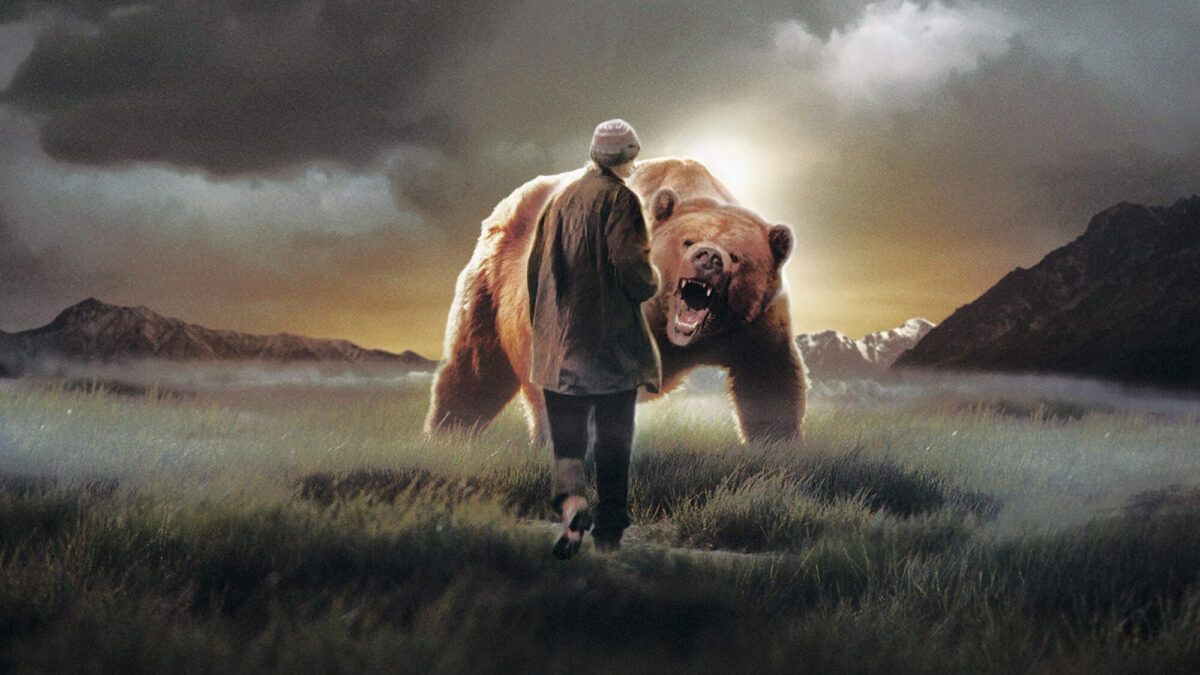
As you will see, the story is as fascinating as it is tragic: Treadwell, a self-proclaimed protector and friend of grizzly bears, spent thirteen summers in Katmai National Park, Alaska, living among animals which, by instinct and biology, cannot distinguish human affection from potential threat. In October 2003, he and his companion, Amie Huguenard, were killed and eaten by one of those very same bears.
With his unmistakable deep voice and philosophical scepticism, Herzog reconstructs Treadwell’s journey from over a hundred hours of footage shot by the naturalist himself, interviews with those who knew him, and a narrative that moves between fascination and warning. The result is a portrait that forces us to confront an uncomfortable truth: no matter how much we project our emotions onto nature, it follows its own laws, indifferent to human morality or affection.
Herzog’s uncomfortable mirror
Herzog doesn’t merely show us images of Treadwell stroking bears or talking to foxes that trot over his tent. The German director uses this material as a distorting — or perhaps revealing — mirror in which our own illusions about wild nature are reflected.
Treadwell appears as a charismatic, committed and passionate man, but also as a complex, contradictory figure, showing traits consistent with borderline personality disorder — able to move from the most genuine tenderness to uncontrolled rage in front of a camera that never stops recording.
The filmmaker seems to recognise in Treadwell a contemporary version of his most extreme fictional characters, such as those played by Klaus Kinski in “Fitzcarraldo” or “Slave Coast”: figures who seek redemption in the very territory that will become their downfall, driven by a form of beauty that, paradoxically, will end up devouring them.
The most disturbing element of “Grizzly Man” is not the protagonist’s death, but the realisation that Treadwell’s mission was not only to protect the bears — it was also to protect himself from a life he found unbearable. For him, nature was not just a physical refuge, but a projection of his own need for belonging and meaning.
Between the human and the animal: a border without clear lines
Treadwell’s cohabitation with the bears had little to do with biological logic or the caution of ethology. On numerous occasions, he broke the most basic rules of interaction with wild animals: approaching too closely, talking to them as though they were human, even touching them.
The camera captures moments that seem idyllic: a bear tolerating his proximity, a fox stealing his cap and playing with it, even letting itself be stroked like a domestic cat.
But Herzog reminds us that such moments are the exception, not the rule. In nature, there is no pact that is not mediated by the instinct for survival. A bear might allow you close today and kill you tomorrow — not out of cruelty or revenge, but in response to hunger or fleeting irritation.
Here the documentary becomes more than a chronicle of a life: it turns into a meditation on the hazy frontier between the human and the animal. A frontier Treadwell chose to cross without the baggage of fear, but also without the lifeline of common sense.
The animal as a mirror of man
For millennia, humans have projected onto animals our virtues and flaws, our aspirations and fears: the wolf as a symbol of freedom and danger, the deer as an emblem of grace and vulnerability, the bear as primal and maternal strength.
Treadwell projected onto the grizzlies a nobility that, in truth, belongs to no species outside the human imagination. Herzog, however, insists that behind the bear’s eyes there is no trace of this anthropomorphised nobility, but rather an “empty” look — indifferent, devoid of morality.
This is not a cruel statement, but a realistic one: animals are not here to validate us or to comfort us. They exist simply to live. And perhaps that is the most uncomfortable lesson of all: nature is not a stage designed for our spiritual redemption. It is an autonomous, vast system that needs neither our approval nor our stories to endure.
Sanity, madness and the wild utopia
In “Grizzly Man”, the line between sanity and madness becomes porous. For many, Treadwell’s life in Alaska was a suicidal folly; for him, it was the only way to remain sane. The documentary confronts us with this paradox: what one person sees as extreme danger, another may see as the only true form of fulfilment.
Here the film connects with figures like Alexander Supertramp (“Into the Wild”) or Henry David Thoreau, who also sought liberation in nature. The difference is that Treadwell did not retreat to a forest to write, but to live among predators weighing over 300 kilos.
His story resonates because, deep down, we all understand — however vaguely — the pull of the wild: that romantic idea of living without intermediaries, facing the world as it is, without cultural filters or imposed rules. What “Grizzly Man” reminds us is that this utopia has a price, and that nature collects its debts without warning.
The documentary as an act of emotional dissection
Herzog builds the narrative without cheap sensationalism. He does not play the audio recording of Treadwell’s death — a choice which, coming from a director who has filmed extremes of both the physical and the emotional, is particularly telling — but he does show us the reactions of those who have heard it. That eloquent silence says more than any explicit image could.
“Herzog builds the narrative without cheap sensationalism.”
The director is more interested in Treadwell’s confessional material than in spectacular shots of bears. This is where the documentary’s real tension emerges: between the protagonist’s self-image as a protector of animals and the cracks in his personality, marked by fierce loneliness and a desperate need for connection.
What Grizzly Man tells us about ourselves
Beyond the fascination with wild fauna, the documentary compels us to ask what we are really seeking when we approach nature. Are we trying to understand it — or to have it understand us? Do we want to know animals — or to have them reflect back a kind image of ourselves?
In Treadwell’s case, the answer seems clear: the bears were the mirror in which he chose to see himself, even if that mirror did not reflect the image he believed in. Herzog, with his characteristic blend of irony and compassion, leaves us with the sense that the true subject of the film is not the grizzlies, but the man who loved them to the point of self-destruction.
The lesson of a morally neutral nature
“Grizzly Man” is not a story of heroes or martyrs. It is a reminder that nature, in all its beauty and brutality, owes us nothing. That the line between fascination and fatality is thinner than we care to admit. And that perhaps the most honest relationship we can have with the wild is one that acknowledges both our vulnerability and our modest place in the order of things.
“Grizzly Man is a reminder that nature, in all its beauty and brutality, owes us nothing.”
Timothy Treadwell died where he most wanted to live. For some, his story is a warning; for others, an inspiration; and for many, it is both — a testament to the human capacity to dream the impossible, and a reminder that reality does not always bend to our dreams.
Highly recommended.
Available on Amazon Prime.