“Adolescence”: A miniseries that reveals the digital crisis in youth
Everyone is talking about “Adolescence”, the Netflix miniseries masterfully directed by Philip Barantini and featuring outstanding performances from Stephen Graham (“Boiling Point”), Owen Cooper (who embodies the complex Jamie), and Ashley Walters (as Chief Inspector DI Luke Bascombe). And for good reason.
This is not just about the crime that drives the story—it’s about adolescence itself. That volatile stage where every word can leave a scar, every experience can be a turning point. “Adolescence” is not just about investigating a case; it plunges us into the fragility of a generation caught in the whirlwind of social media. It’s an unsettling story that exposes, with relentless clarity, the dark influence of the digital world on today’s youth.
“The single-take shot creates tension and forces the viewer to keep their eyes on the screen.”
A start that takes your breath away
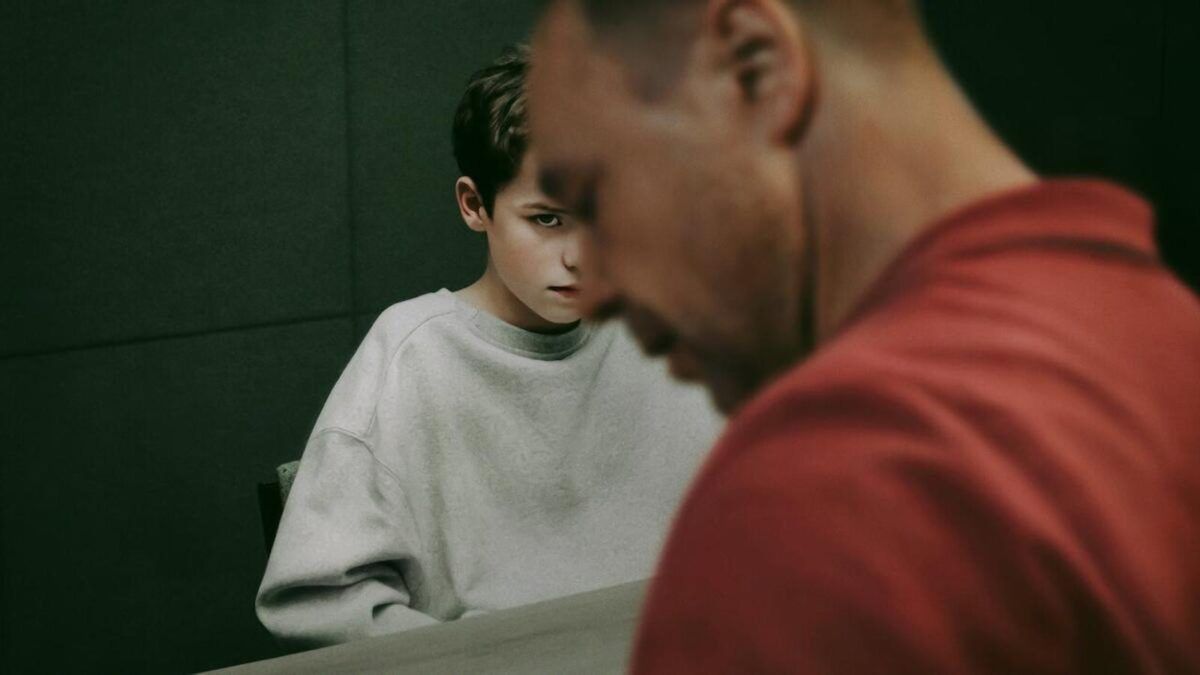
From the very first scene, the series makes it clear that it won’t grant us a moment of relief: the police burst into the Miller family home to arrest Jamie, a 13-year-old boy accused of murdering his classmate, Katie. In an instant, the illusion of a typical British family is shattered, dragging us into a spiral of unsettling questions. But unlike conventional mystery dramas, “Adolescence” isn’t obsessed with who did it—it’s focused on why. Each episode peels back the hidden layers that led Jamie to this irreversible moment.
A technique that leaves no escape
One of the most striking elements of “Adolescence” is its bold visual style: each of the four episodes is filmed in a single continuous take. This isn’t just a technical feat—it’s a direct punch to the viewer’s experience. There are no cuts, no breathing room. We are trapped in the immediacy of every scene, the suffocating tension of school hallways, and Jamie’s emotional chaos. Philip Barantini turns the camera into a silent witness, pulling us in and refusing to let us look away.
From loneliness to online radicalization
The series tackles a topic many prefer to ignore: how the internet, rather than providing a refuge, can become a silent breeding ground for radicalization. In his search for identity and belonging, Jamie stumbles into the darkest corners of the web—online communities that feed his resentment and drag him into incel and misogynistic ideologies. But “Adolescence” doesn’t demonize Jamie; instead, it forces us to ask: what went wrong in the real world that drove him to seek answers in these virtual spaces?
Because this is not just the story of one isolated teenager. It’s a reflection of a society that has normalized letting algorithms shape young minds, amplifying hate and frustration as if they were just fleeting trends.
“It may seem that your child is safe alone in their room, but that’s where the problems begin.”
Parents who don’t understand their children’s digital world
If there’s one painful truth “Adolescence” exposes, it’s the generational disconnect between parents and their children. Jamie’s parents, played masterfully by Stephen Graham and Christine Tremarco, represent well-meaning adults who are completely blind to the warning signs. They don’t understand the digital codes that govern their children’s lives. They have no idea what happens in online forums where toxic narratives take root. And by the time they try to react, it’s already too late.
The series makes it clear: the problem isn’t just with young people. It’s with all of us. And the uncomfortable question it asks is: Are we really paying attention?
The school system: a jungle without rules
In school, every glance is a judgment. Every rejection, a wound that lingers for years. “Adolescence” portrays teenage life as a psychological battlefield, where acceptance is rare and exclusion is a silent sentence. But now, a new factor has made things even more chaotic: ADHD. In the U.S., 13% of teenagers have been diagnosed with the disorder. The reason? A world where screens have shaped a generation with fragmented attention spans and increasingly weak emotional regulation.
Jamie is just one example of what happens when teenagers seek solace in a virtual world that not only understands them but also reinforces their fears and frustrations. A world where algorithms are designed to keep them hooked—regardless of the consequences.
Recognizing the problem isn’t enough. This series is a wake-up call: we need a response that extends beyond classrooms. Because if we allow social media to educate our children, we can’t pretend to be surprised when reality falls apart.
“The series emphasises understanding teenagers’ mental state to prevent violent behaviour.”
Psychology as the last hope
One of the most crucial figures in the series is the psychologist, played by Erin Doherty. Through her sessions with Jamie, the story unravels his psyche, revealing layers of pain, insecurity, and desperation. “Adolescence” doesn’t seek to justify—it seeks to understand. Because understanding the mind of a teenager in crisis isn’t just essential for fiction; it’s essential for real life.
A harsh reflection of our reality
“Adolescence” is more than just a miniseries—it’s a mirror. It forces us to confront the consequences of a digital world evolving faster than we can process. It reminds us that behind every shocking news headline lies a human story that demands empathy, reflection, and, above all, action.
Because the real problem isn’t Jamie. It’s the society that let him fall.
Highly recommended.