“Force Majeure”: when fear strips us bare
You know our motto well: “We care more about quality than novelty”. And that means, among other things, that while we love writing about and recommending films currently in cinemas, we also enjoy revisiting those that, despite the passing of time, continue to thrill us. “Force Majeure” (Turist, 2014), by Swedish director Ruben Östlund, is one such film. It runs for just 120 minutes and not only portrays a relationship crisis with surgical precision, but also poses — without heavy-handedness or melodrama — a question as ancient as it is unsettling: What would you do if fear caught you off guard?
Winner of the Jury Prize in the Un Certain Regard section at Cannes, nominated for a Golden Globe and deserving of far more Oscar recognition, this film was Östlund’s international breakout before becoming the only Swedish director to win two Palme d’Ors (for “The Square” and “Triangle of Sadness”). But beyond the accolades, what makes “Force Majeure” truly remarkable is its ability to transform the everyday — a family ski holiday in the Alps — into an emotional battleground where the roles of the father, masculinity, and our self-image begin to unravel.
The moment everything breaks
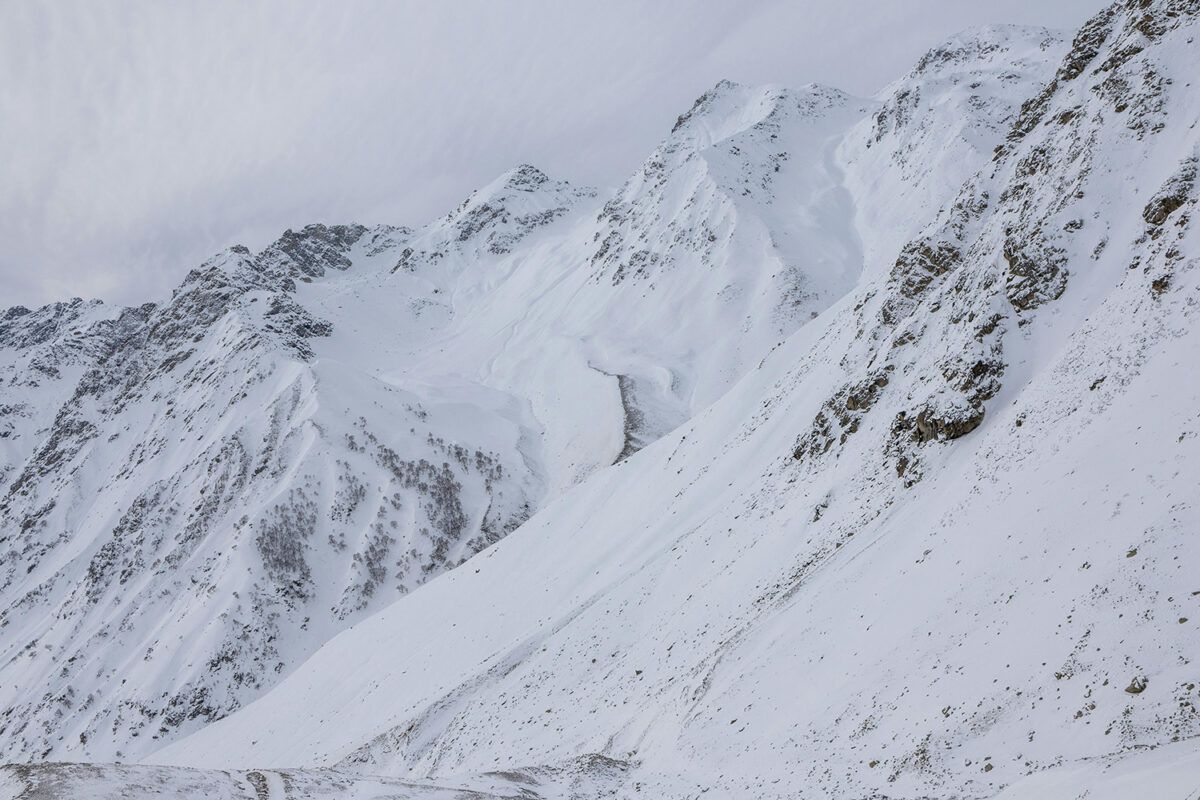
The entire film hinges on a single scene: a controlled avalanche suddenly surges toward the restaurant terrace where tourists are dining. In the chaos, Ebba — the mother — instinctively shields the children, while Tomas — the father — flees with his phone and gloves. No one is hurt. It’s just a scare. But symbolically, something crucial dies: the unspoken contract that holds the family together — the belief that the father will protect, guide, sacrifice.
There’s no blood. No shouting. Just the kind of silence that lingers — through dinners, walks, conversations that no longer flow. The awkward silence we all know, when someone falls short — or we do.
The fall of the domestic hero
Tomas isn’t a villain. He’s an ordinary man. A middle-class father, well-meaning and affectionate, who works hard and loves his family. But his instinctive flight strips him bare. Suddenly, he must confront something no parenting manual or photo album prepares you for: deep, irrational fear.
What makes “Force Majeure” so compelling isn’t just Tomas’s reaction, but his collapse afterward. His need for forgiveness, to reclaim his symbolic role, his wounded masculinity. Östlund frames this internal struggle as a subdued satire — we see Tomas unravel, attempting — sometimes pathetically — to rebuild his image. Not just for others, but for himself.
A fable about modern ego
We live in a culture that rewards self-control, curated identities, heroic self-narratives. We post our achievements, travels, and dinners on Instagram. But what happens when fear, chaos, and unpredictability creep in?
“Force Majeure” explores the fragility of our personal stories. Tomas is forced to look inward — and doesn’t like what he sees. He’s not the fearless protector, nor the dependable man. He is, like all of us, a complex human being full of contradictions.
The film isn’t just about a couple. It’s about all of us. About how we respond to our own personal avalanches — a loss, a diagnosis, a betrayal, a call that changes everything. Do we run? Freeze? Protect others, or just ourselves?
The weight of gender and the female gaze
Ebba, the wife, doesn’t rage. She’s quietly devastated. She wants to understand what happened — and why she can’t let it go. Her pain stems not only from the incident, but from what it symbolises: the collapse of everything she thought was true. The pillar of her family — the idea of Tomas as protector — might have been an illusion.
Östlund wisely avoids turning Ebba into a victim or Tomas into a monster. Instead, he presents two people trapped in roles they didn’t choose, trying to salvage something that may no longer be salvageable.
“The film isn’t just about a couple. It’s about all of us. About how we respond to our own personal avalanches.”
Beyond marriage: a reflection on life itself
This editorial isn’t meant to offer a psychological reading of a film, but rather to invite a deeper reflection. Force Majeure isn’t only about marriage. It’s about life in the modern world — about how we deal with uncertainty, and the masks we wear to feel safe.
We go through life believing we are brave, coherent, loyal. But then life tests us. Sometimes, like Tomas, there’s no time to think. Only instinct. And instinct reveals the truth.
So the real question isn’t just “what would you do in an avalanche?” It’s “what do you do when fear rips off your mask?”
The need to forgive ourselves
One of the film’s great strengths is its refusal to offer punishment or redemption. There’s no revenge, no sweeping absolution. Just small gestures of understanding, silent exchanges, moments of tentative closeness. Tomas cries, confesses, breaks down. And though forgiveness isn’t immediate, something deeper emerges: an acceptance of fragility. A chance to rebuild something more honest atop the ruins of illusion.
In a world that demands perfection, perhaps what we need most is the opposite: the ability to fail, to fear, to be vulnerable without shame.
An ending on a treacherous curve
The final scene is brilliant. The family is on a coach navigating a winding mountain road. The driver is erratic. Ebba asks him to stop. There’s fear. This time, she rises to protect the children. Tomas does too — albeit more hesitantly. The tourists disembark. They walk, children in hand, along the snow-covered roadside. Nothing is fully resolved. But something has shifted. No one is quite the same.
Perhaps this is the ultimate message of “Force Majeure”: we are not heroes or cowards — we are human. And as long as we keep walking together, even if it’s on the icy edge of a mountain road, there’s hope.
Available on Filmin.
(*) Photo: Asif Khan.