Ravalejar: one of the Spanish series of the year
Since its premiere, much of the conversation surrounding Ravalejar has centred on property speculation, gentrification and the transformation of Barcelona’s Raval district. Understandably so. The series, created by Pol Rodríguez and co-directed with Isaki Lacuesta, begins with a very specific conflict: the family who own a long-established restaurant are threatened with eviction after the building is acquired by an investment fund.
But what makes Ravalejar one of the most compelling Spanish series of the year is not simply the subject it tackles, but the way it chooses to tell its story.
Pol Rodríguez doesn’t portray El Raval as an alternative postcard or as a neighbourhood beyond redemption. Nor does he use it to construct a fixed thesis about Barcelona. His perspective is more unsettling and, for that very reason, far more rewarding. El Raval emerges as a place shaped by affection, contradiction, memory, a desire to belong and, at the same time, by very real tensions. It is a neighbourhood that is changing, certainly, but also one where people continue to live their everyday lives, negotiating the ordinary and trying to preserve what still matters to them.
A story born from a real wound
Ravalejar is inspired by Pol Rodríguez’s own experience and by the eviction of his family’s restaurant, Can Lluís, an establishment with decades of history in El Raval. That experience serves as the starting point for a fictional story that imagines just how far someone might go when they feel that something forming part of their identity is being taken away from them.
The series doesn’t merely reconstruct a specific case. Its true interest lies elsewhere: in observing how an external threat reshapes a family’s relationships, reopens old wounds and forces each character to decide how far they are willing to go to protect what is theirs.
This is where Ravalejar finds its greatest strength—not in its message, but in its moral conflict.
The neighbourhood, without wasy heroics
One of the series’ greatest achievements is its refusal to turn El Raval into an overly neat symbol. The neighbourhood is neither idealised nor reduced to a catalogue of urban problems. Rodríguez understands that a place with such historical, social and cultural significance cannot be explained through a single perspective.
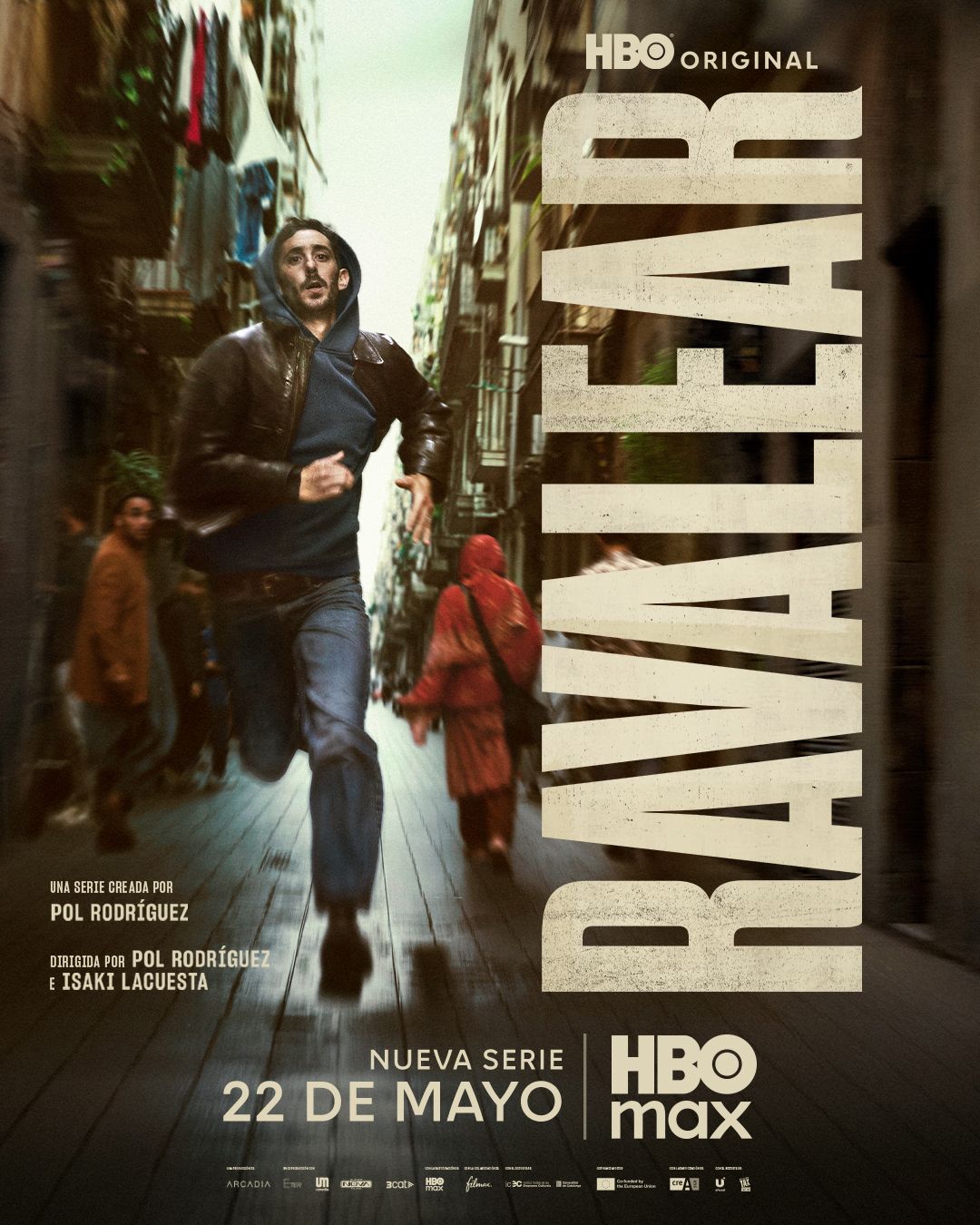
The camera moves through streets, interiors, shops, doorways and conversations with an energy that neither seeks to beautify nor to judge. The city is ever-present, but it never overwhelms the characters. It shapes them, pushes them and confronts them with their own limits, yet it never takes centre stage away from their story.
This choice proves particularly effective because the conflict at the heart of Ravalejar does not belong solely to El Raval. The transformation of neighbourhoods, pressure from the property market and the disappearance of long-established businesses that form part of a community’s collective memory are, unfortunately, issues shared by many cities today. The series begins in a very specific place, yet succeeds in speaking to a reality that extends far beyond its streets.
A thriller that never lets up
The series succeeds because it never confines itself to being a social portrait. Ravalejar adopts the pace of a thriller, with tension building from episode to episode as the characters are drawn into increasingly unstable territory.
Much of that intensity also stems from its outstanding sound work. The original score, composed by Eloi Caballé, co-founder of Can Sons studio, together with the sound design by Belén López Albert, creates an atmosphere that never seeks to dominate the narrative. Electronic music, the bustle of the streets, conversations and carefully measured silences sustain a constant tension that accompanies the viewer throughout the series.
Meanwhile, the family restaurant, Can Mosques, becomes the emotional heart of the story. It is not merely a business under threat, but a place where years of hard work, family ties and a particular way of understanding the neighbourhood have accumulated. When the restaurant is placed at risk, what is at stake goes far beyond the loss of a physical space: part of the shared memory of those who inhabit it is also in danger of disappearing.
Rodríguez skilfully balances the intimate with the political. The series explores investment funds, housing and urban transformation, yet it never loses sight of what truly sustains the story: the family.
An outstanding ensemble cast
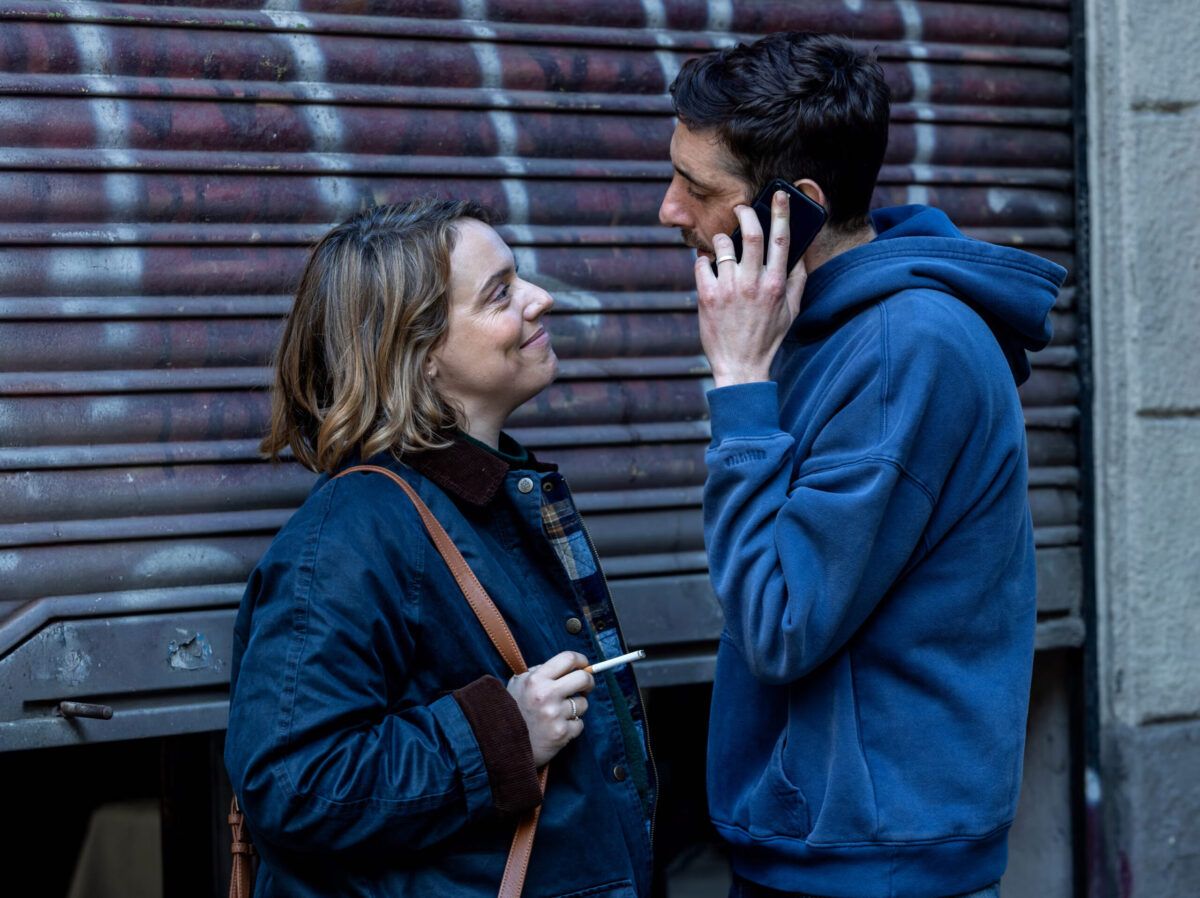
Much of Ravalejar‘s strength rests on its outstanding ensemble cast. Enric Auquer once again demonstrates why he is considered one of the finest actors of his generation. His performance combines intensity with restraint in a way that feels remarkably natural. Maria Rodríguez Soto delivers an equally compelling performance, built on subtle gestures and meaningful silences that add essential depth to the story.
Veteran actors Sergi López and Francesc Orella also bring additional layers to a narrative in which no character appears to exist simply to fulfil an obvious function. Quim Àvila, Lluïsa Castell, Alba Guilera, Noor Ul Huda and Mohamed Ben Moula also stand out in a cast that successfully blends well-established performers with fresh faces capable of bringing authenticity to the screen.
The series is at its strongest when it allows its characters room to breathe—when it lets them hesitate, contradict themselves, make mistakes or act on impulses that are not always easy to justify.
A series that goes beyond its subject
Ravalejar could easily have settled for being a timely drama. It had all the ingredients: a recognisable conflict, a city immersed in the debate over housing, and a neighbourhood that has frequently become a symbolic battleground. Its real achievement, however, lies in going much further.
The series uses that context to explore family, memory, belonging and personal limits. It also reflects on pride, fear and the need to defend something, even when there is no clear idea of how to do so. Pol Rodríguez has created a work that is both gripping and deeply sensitive; political without ever becoming didactic; profoundly rooted in its local setting, yet capable of resonating far beyond El Raval.
That is why Ravalejar endures beyond the immediacy of the issues it addresses. It remains memorable because of its characters, its pacing and the intelligence with which it transforms a deeply personal wound into a powerful work of fiction.
Without question, it is one of the Spanish television series of the year.