“One Battle After Another” by Paul Thomas Anderson
Paul Thomas Anderson’s new film, “One Battle After Another”, arrives on the big screen as a cinematic manifesto that doesn’t merely challenge the conventions of contemporary cinema — it blows them apart with a vision as fierce as it is poetic. Produced by Warner Bros. Pictures and written and directed by Anderson himself, the film unfolds as an emotional, political, and existential odyssey, with a stellar cast led by Leonardo DiCaprio, Benicio del Toro, and Sean Penn.
From its premiere, critics have been clear: this is one of the Californian filmmaker’s most ambitious yet intimate works. A film that takes time to settle, but once it does, it flows with disarming naturalness. When the story leaps forward sixteen years and lands in Bob’s modest home, the film truly takes off, and comedy begins to weave itself into the narrative. Like the sea evoked by Benicio del Toro’s character in one of the film’s most memorable monologues — unpredictable, vast, full of beauty and danger. A perfect metaphor for Anderson’s proposal.
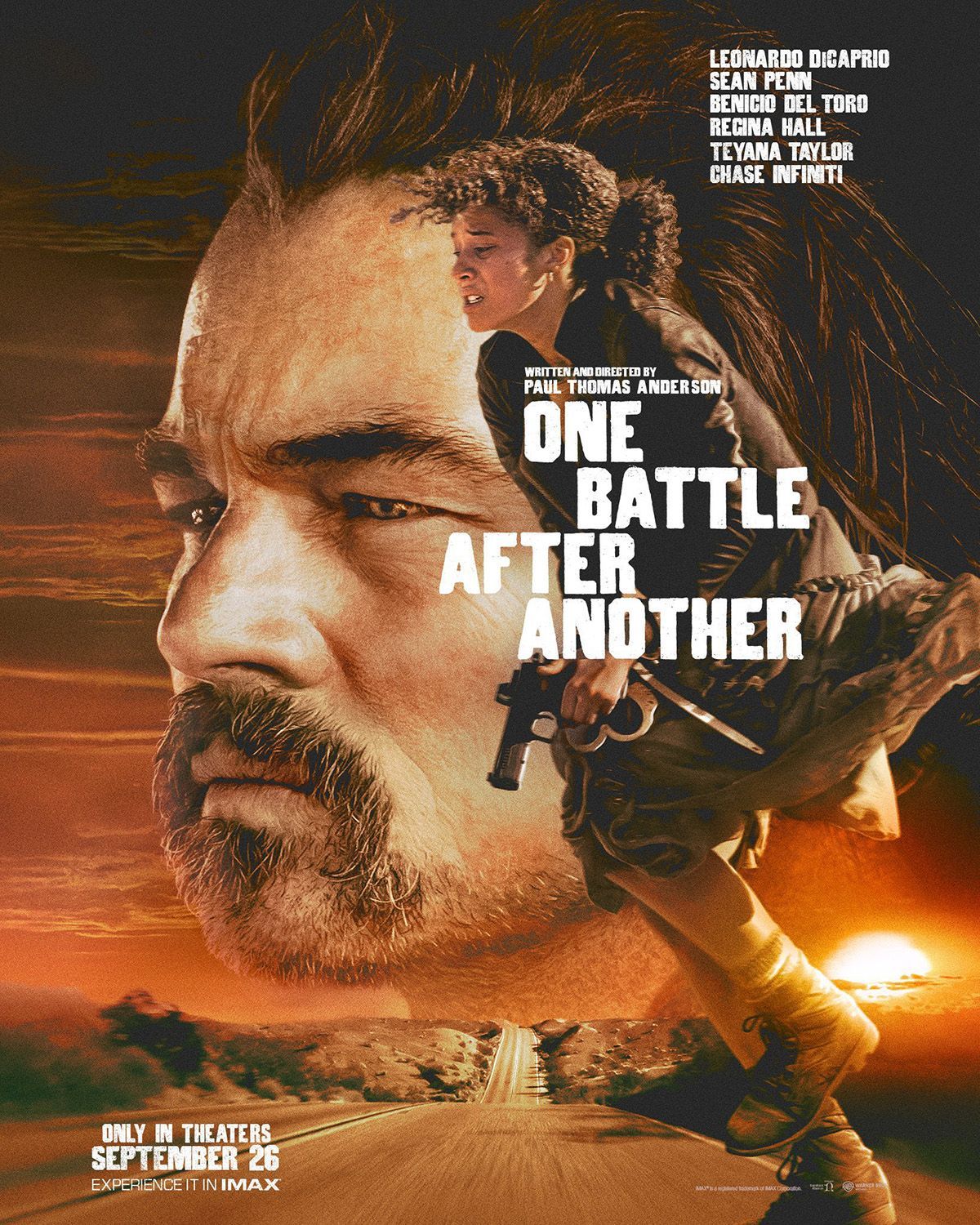
A cast that shines with its own light
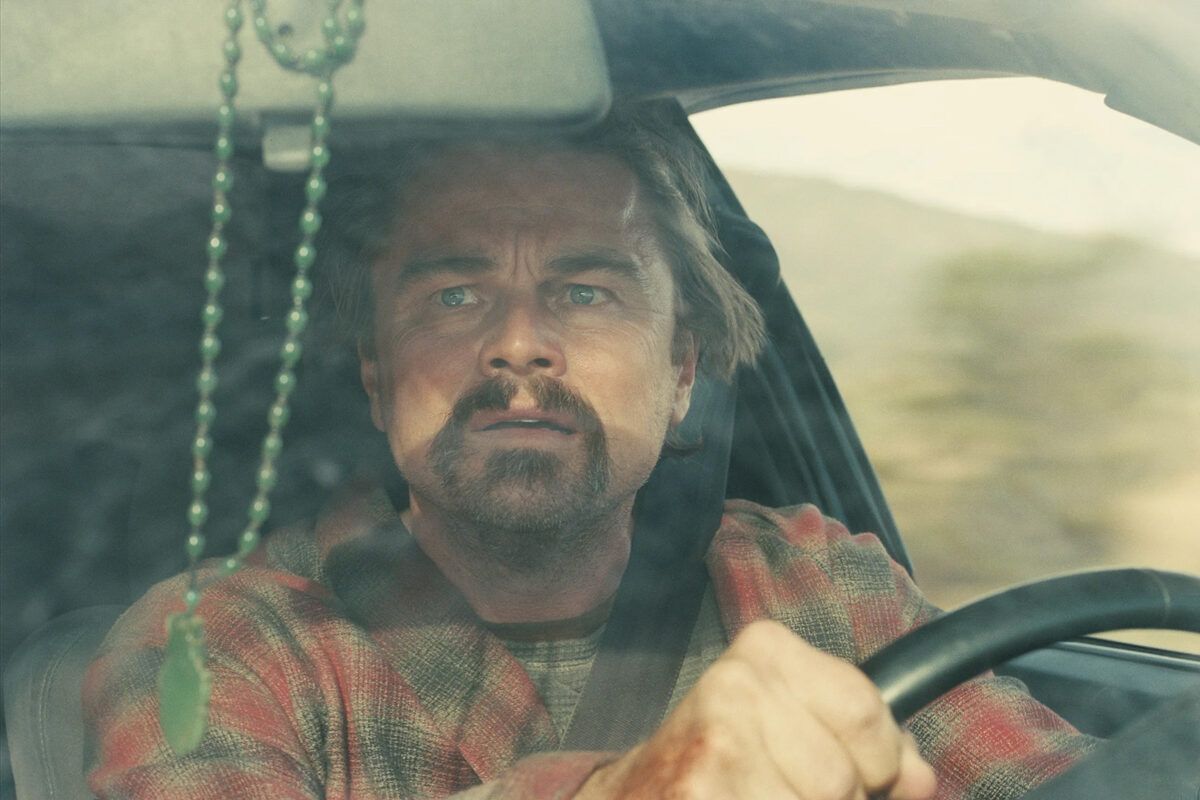
At the heart of “One Battle After Another” lies a trio of performances that mark a before and after. Leonardo DiCaprio delivers one of his most human and charismatic roles, portraying a character clearly reminiscent of The Dude from “The Big Lebowski”: a man seemingly apathetic yet deeply sensitive, contradictory, addicted to drugs and alcohol, and desperately clinging to something resembling hope — especially after being abandoned by Perfidia and forced into hiding. His chemistry with Benicio del Toro is nothing short of spectacular; together they give us some of the film’s most touching and humorous moments, with a wit that lightens the tension without undermining the tone.
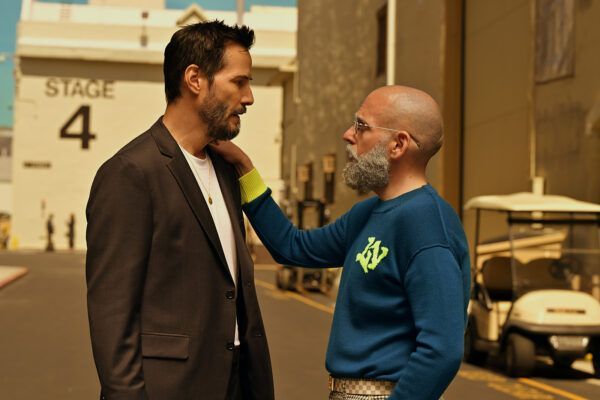
Benicio del Toro, as the eccentric yet serene Sensei, becomes an unexpected figure of wisdom and irony. He articulates many of the film’s philosophical reflections, and his performance carries a quietly moving depth. Both Bob and Sensei represent resistance in its most human form — from the everyday, from vulnerability. They are the hopeful soul of a story dominated by oppressive political and military powers.
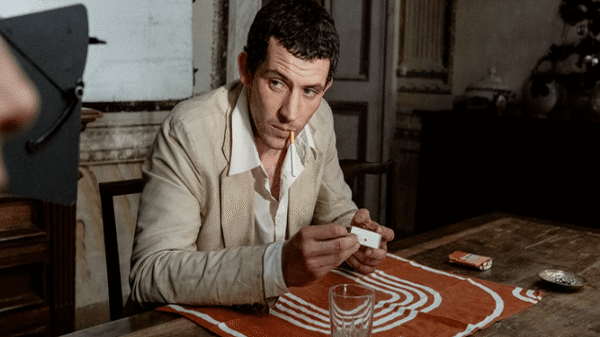
But it is Sean Penn who delivers, without question, one of the most powerful performances of his career. His character is complex and disturbing — not a mere villain, but a living embodiment of the cynical machinery of power. Penn incarnates authoritarianism with hypnotic stage presence, crafting a performance as nuanced as it is terrifying.
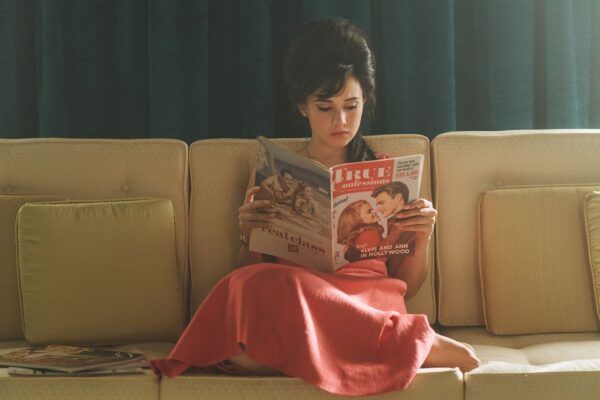
The cast is rounded out by an inspired Regina Hall, a magnetic Teyana Taylor, and Alana Haim, who proves that her debut in Licorice Pizza was no accident but the beginning of a promising career.
Politics, absurdity and humanity: Pynchon’s DNA updated
It’s worth noting that this is Anderson’s second film influenced by Thomas Pynchon’s work, following Inherent Vice (2014). “One Battle After Another” takes partial inspiration from Pynchon’s 1990 novel Vineland, transposing its spirit from the original 1980s setting to the present day. Anderson reshapes the timeline to reflect today’s socio-political context, heightening its critical charge and resonance.
Although he retains only fragments of the novel’s plot, Anderson preserves Pynchon’s satirical and absurdist spirit — visible in the caricatured names, the rhythmic dialogue, and that virtuosic balance between tragedy and the ridiculous.
One of the most striking — and absurdly comic — moments comes when Bob’s daughter, Willa, is kidnapped, and he forgets the password needed to contact his former radical group, The 75 Frenchmen, now living in hiding. DiCaprio excels in one of his finest comedic performances, desperately trying to fix a situation far beyond his control, even enlisting his daughter’s eccentric karate teacher, Sensei, for help.
The coexistence of drama and comedy is one of the film’s greatest achievements. Anderson allows both dimensions to breathe naturally, two sides of the same coin. Life, he seems to say, is as absurd as it is painful — and that ambiguity is what makes it so profoundly real.
A visual epic with the soul of classic cinema
Shot in panoramic VistaVision and glorious 35 mm, the film possesses a visual texture reminiscent of classic cinema, yet executed with hypnotic modern precision. Anderson handles the camera with mastery: the use of Steadicam gives fluid movement and life to spaces, while the action sequences are choreographed with surgical accuracy. Whether a military helicopter landing in a Californian valley or a dusty street in Baktan Cross, each moment carries equal epic weight and emotional charge.
Nothing in the mise-en-scène feels arbitrary. Every shot appears meticulously composed to convey emotion, tension, or beauty. Working alongside cinematographer Michael Bauman and production designer Florencia Martin, Anderson creates a visually cohesive universe, rich in texture and symbolism. Costume designer Colleen Atwood enhances the atmosphere with a palette that charts the characters’ emotional and moral evolution, while editor Andy Jurgensen orchestrates it all with a rhythm that respects the inner breath of each scene.
Music as emotional pulse
The score, unsurprisingly, is by Jonny Greenwood, the Radiohead member who once again proves why he’s one of the most distinctive composers in modern cinema. His music here is incisive, majestic, melancholic when it needs to be, yet electric and vibrant in moments of tension. Greenwood doesn’t merely underline emotion — he creates it. Some sequences — like the nocturnal coastal chase or the climactic raid on the fascist compound — reach their emotional peak thanks to the score, which acts as a silent narrator.
A message for the present
Although filming took place in early 2024 — before the U.S. presidential elections — the film feels urgent and profoundly contemporary. The temporal shift is no narrative whim; it’s a political statement. In a world where fundamental rights are threatened, migrants scapegoated, and authoritarian discourses gaining ground, “One Battle After Another” stands as a cry of resistance.
And yet Anderson never preaches — he suggests. The fight for freedom, he reminds us, is never over. Every generation must fight its own battles.
A necessary work
“One Battle After Another” is not just a great film. It’s a necessary one. Paul Thomas Anderson has created a deeply human story that blends the best of auteur cinema with a sharp political and emotional lens. It’s cinema that moves, provokes, and lingers long after the credits roll.
With an outstanding cast — DiCaprio at his most fearless, Penn monumental, and del Toro embodying poetic chaos — along with impeccable visuals and an unforgettable score, the film lodges itself in the viewer’s memory as a total cinematic experience.
In the end, life really is one battle after another — and cinema, when it’s as powerful as this, reminds us why it’s worth fighting on.
Highly recommended to watch on the big screen — and in the original version.