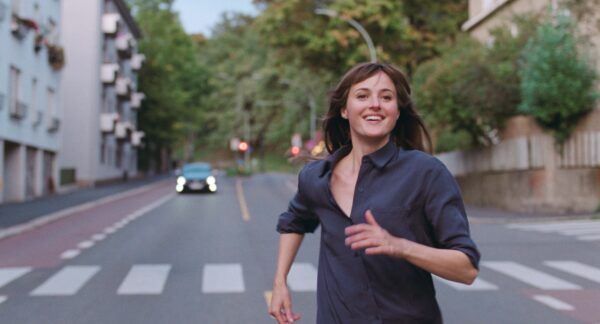
“The Brutalist”: brutalist architecture, exile, love, and surrender
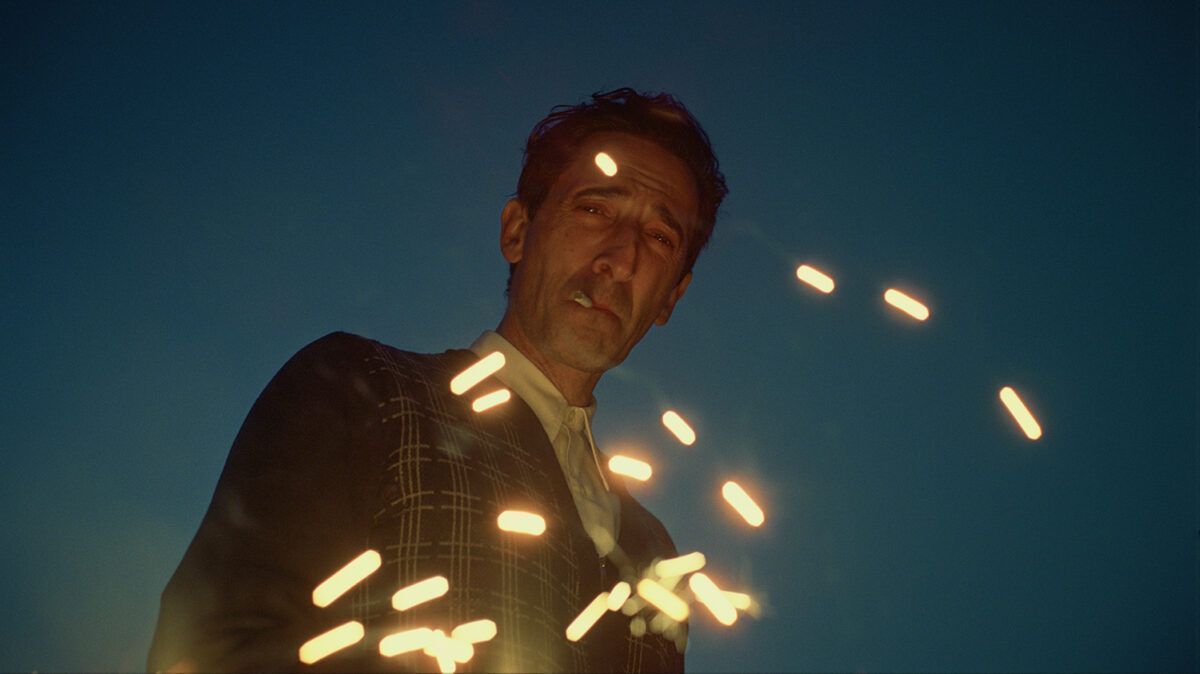
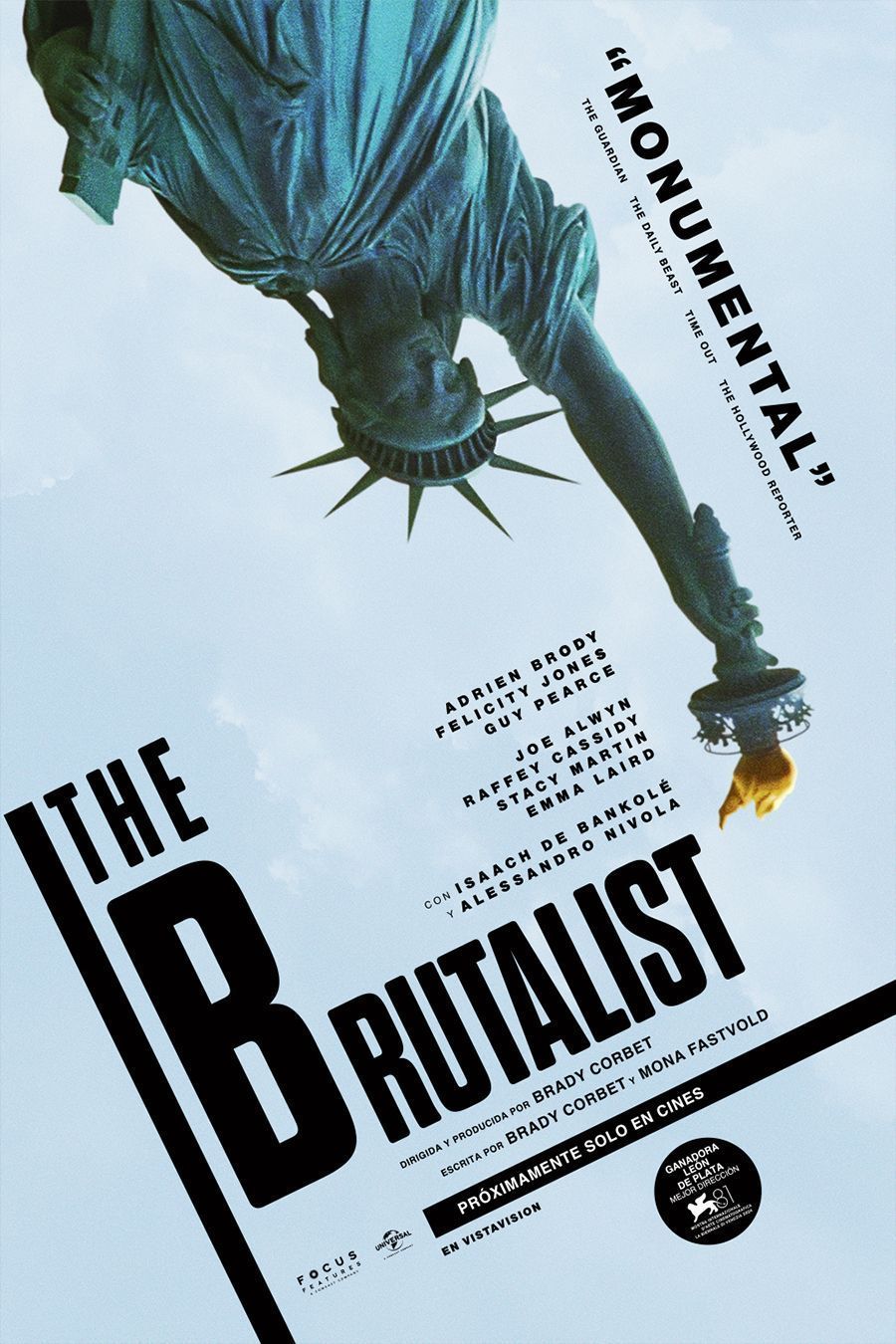
With a cast led by Adrien Brody, Guy Pearce, and Felicity Jones, “The Brutalist”, directed by Brady Corbet, challenges the viewer to see architecture not just as a physical space but as a mirror of the struggle for survival and creation.


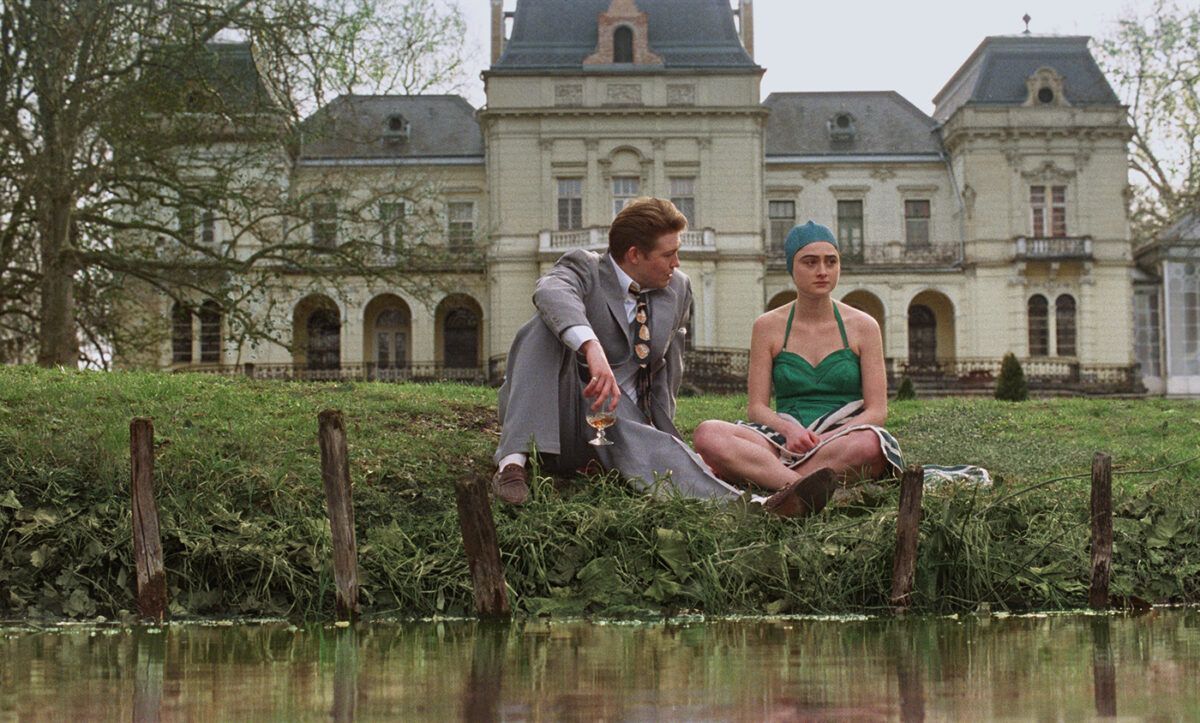
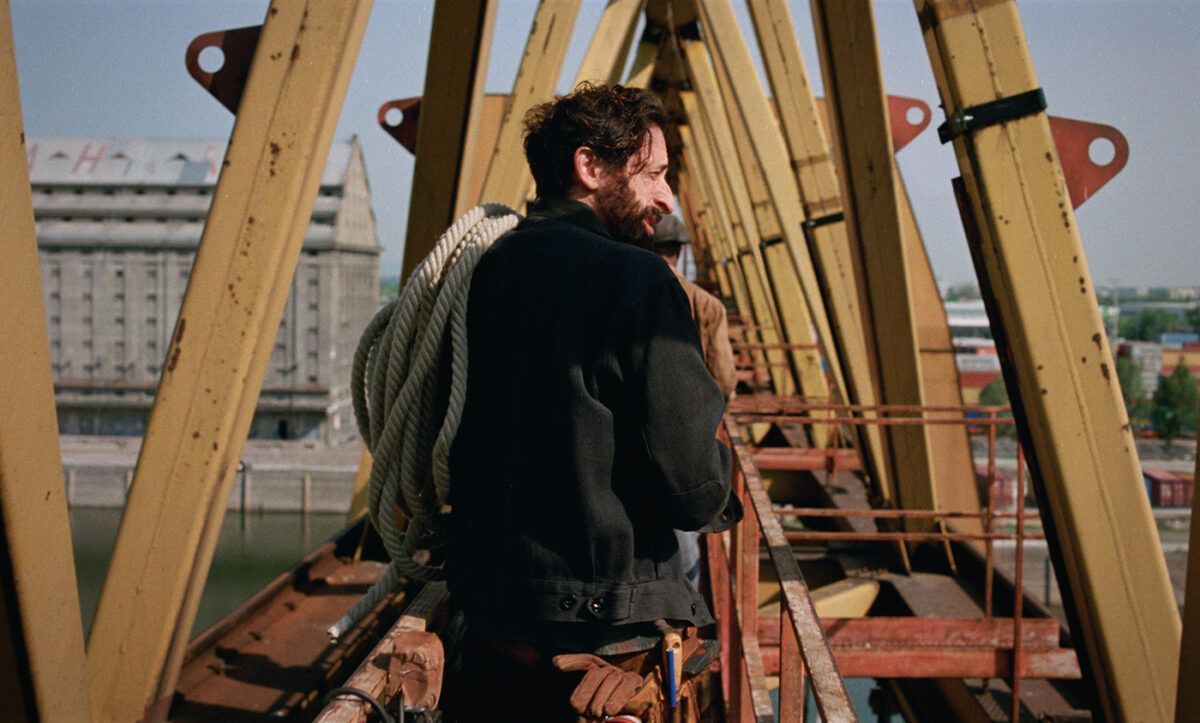
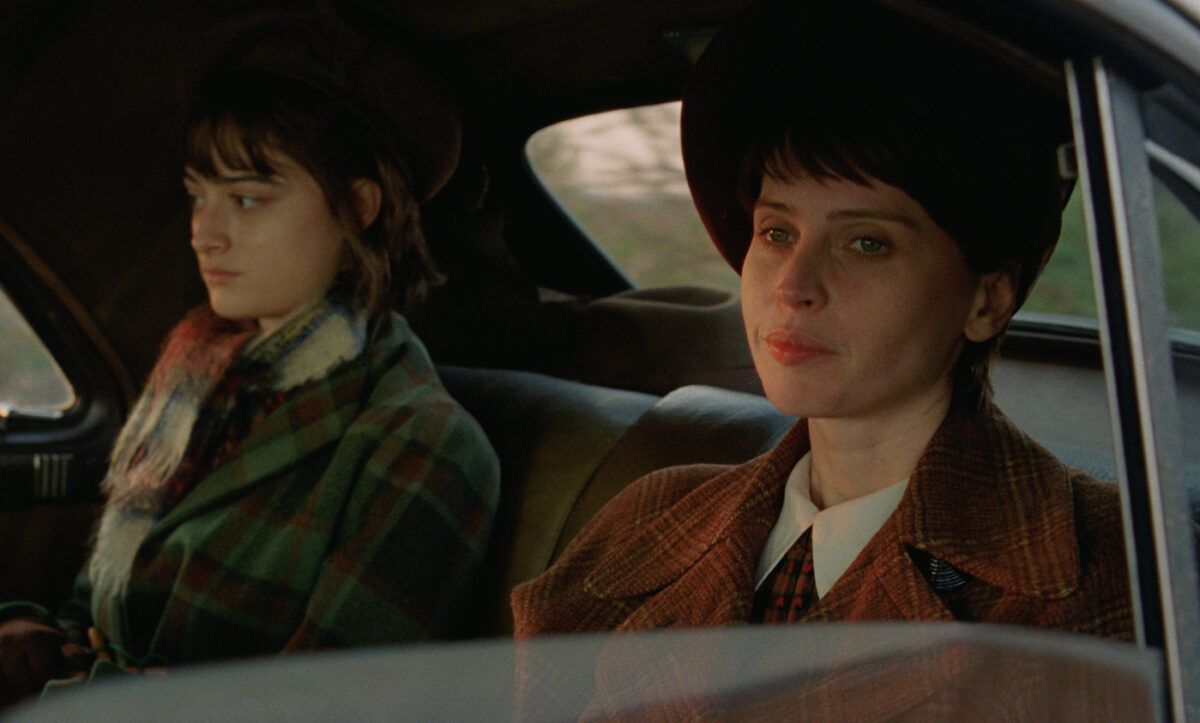
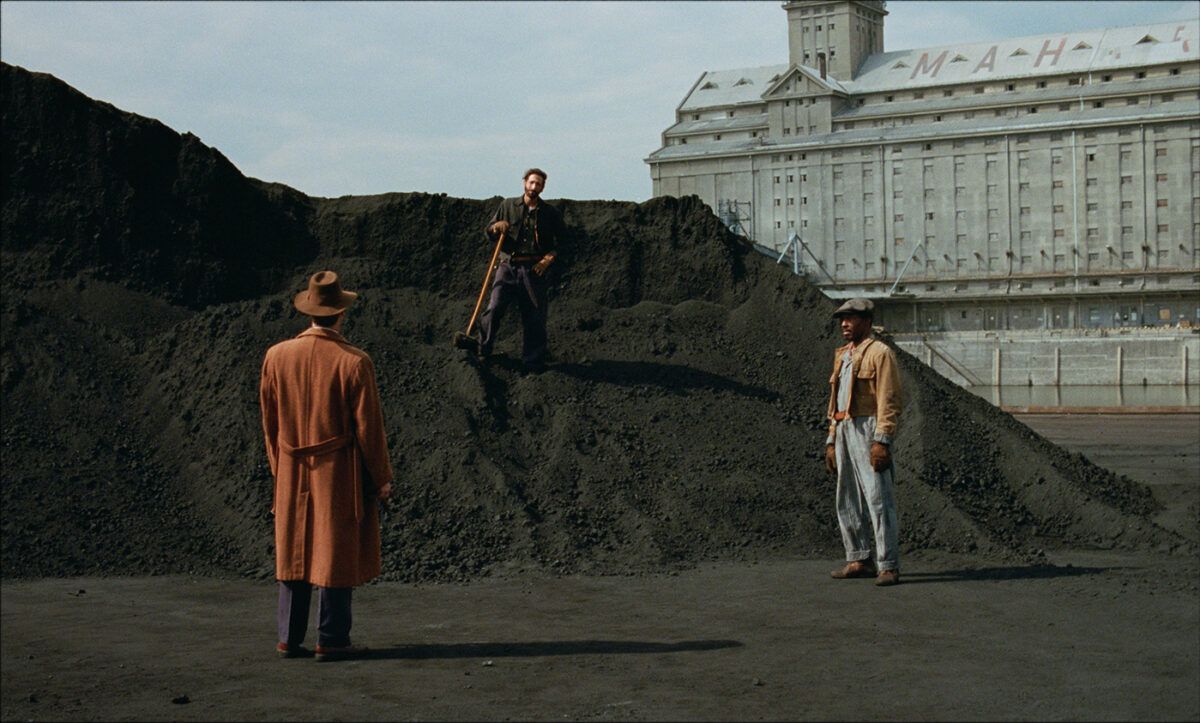

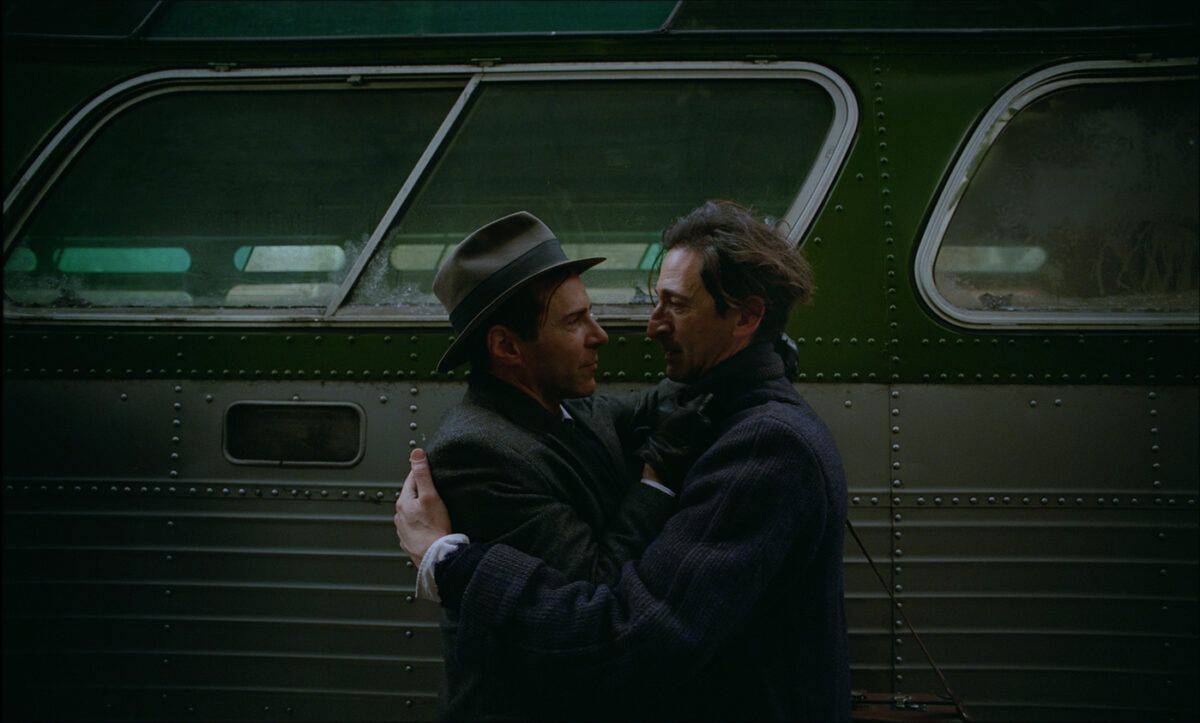

Screenwriter and director Brady Corbet (“Vox Lux”, “The Childhood of a Leader”), who spent seven years bringing this film to life, presents the story of László Tóth, a Jewish-Hungarian architect who, after surviving the Holocaust, emigrates to the United States in search of a new beginning while awaiting the return of his wife, Erzsébet, who remains trapped with her niece in post-war Eastern Europe.
A disillusioned american dream
Upon arriving in the West, László encounters an America far removed from the one he had envisioned. The promise of the American Dream proves to be nothing more than an illusion, and his once-flourishing reputation as a successful architect in Budapest holds little weight within Pennsylvania’s aristocratic circles.
Inspiration: brutalist architecture, immigration, and a shattered dream
Brutalist architecture rose to prominence in Britain during the 1950s, particularly within post-war reconstruction projects. Defined by its minimalist structures that expose raw materials such as bare brick and exposed concrete, Brutalism prioritises structural integrity over decorative design. This ethos is evident in the works of Le Corbusier, Marcel Breuer, William Pereira, Moshe Safdie, Denys Lasdun, and Alison and Peter Smithson.
“Brutalism is an architectural style created by immigrants. Brutalist buildings demand visibility, yet those who design or construct them must fight for their right to exist.” Brady Corbet
Corbet’s previous films, “The Childhood of a Leader” (2015) and “Vox Lux” (2018), both historical in nature, explore pivotal moments of the 20th century. “The Brutalist” follows this thematic thread, focusing on mid-century life in both the United States and Europe, particularly the period immediately following the two world wars. A unifying theme across Corbet’s work is the cyclical nature of history.
In developing “The Brutalist”, Corbet conducted extensive research, consulting with renowned architectural scholar Jean-Louis Cohen, whose work on Le Corbusier and Frank Gehry is widely revered. During a visit to Princeton, where Cohen teaches, Corbet asked whether any historical figures had founded an architectural firm in one part of the world, only to be displaced by war and forced to start anew in exile.
Cohen was unable to identify a real-life example, prompting Corbet and co-writer Mona Fastvold to craft the fictional components that would become László and Erzsébet Tóth.
“The film has a lot to say about the immigrant experience in the United States and how the American Dream fails for László and Erzsébet Tóth.” Brady Corbet
With a touch of imagination from Corbet and Fastvold, László’s experiences in the United States mirror those of key Brutalist artists, such as Louis Kahn, Mies van der Rohe, and especially Hungarian-born Marcel Breuer, who designed the Whitney Museum of American Art in New York, now known as the Met Breuer. Breuer was a highly regarded academic, and unlike the vast majority of Eastern and Central European Jewish architects who remained trapped in Europe and did not survive, Breuer was fortunate enough to receive an invitation from Walter Gropius in 1937 to work with him in the United States.
Interestingly, during their research process, Corbet and Fastvold became increasingly intrigued by Breuer’s relationship with his wife, as well as his volatile relationship with his critics, who were often merciless in their reviews of his work both in Europe and across the Atlantic. Just as happens to László Tóth, in the final years of his life, Breuer was not a particularly celebrated architect, and he is now regarded as one of the greatest architects of the 20th century.
The Brutalist is the story of how the American Dream turns toxic in the eyes of the Tóth couple after László encounters and accepts the patronage of wealthy industrialist Harrison Lee Van Buren, in exchange for building a memorial to Van Buren’s late mother on the oligarch’s vast estate in Pennsylvania.
Throughout the film, that monument becomes a symbol of Tóth’s genius, of the suffering caused by war, and of the epic battle he faces with capitalist Van Buren to bring it to life.
“The Tóth couple embarks on a journey of professional ascent, but also emotional disintegration, in a context where the American Dream clashes with the scars of the European past.” CC/magazine
Excellent performances led by the great Adrien Brody
One of the biggest challenges of the production was assembling a team of actors with the necessary talent to meet the emotional and technical demands that “The Brutalist” required.
In a story that employs multiple languages, dialects, and accents, including Hungarian, with some monologues stretching over several pages of the script, lead actors Adrien Brody and Felicity Jones had to learn Hungarian, a language known for its difficulty, and then incorporate Hungarian accents into their predominantly English dialogue.
For Brody, this was not the first time he worked with historical material and Eastern European accents, given the Academy Award he won in 2003 for portraying the Jewish-Polish composer and Holocaust survivor W?adys?aw Szpilman in “The Pianist”.
“To embody László Tóth, I drew on two profound influences from my life: growing up as the son of a Hungarian refugee and portraying the memories of W?adys?aw Szpilman as they are told in The Pianist.
While these are two completely different characters, the months spent researching and connecting with Szpilman’s past and the horrors of that time is an experience that still haunts me and has given me an emotional understanding of the heartbreaking experiences and losses that form László’s journey to the United States as a refugee.” Adrien Brody
Brody’s connection to Hungary predates the film. His mother, photographer Sylvia Plachy, was born in Budapest and was forced to flee during the Hungarian Revolution of 1956. She became a refugee and emigrated to the United States, where, like László, she pursued her dream of becoming an artist.
Felicity Jones, who spent months working on her Hungarian accent and delving into the darker corners of Erzsébet’s life to portray her overwhelming pain and suffering, as well as the deep and loving bond between László and her, felt an immediate connection to her character as soon as she read the script.
“The story also represents how surviving a life in a concentration camp carries profound repercussions over the years. There is a lot of violence in the film, both emotional and physical, but it was the combination of violence, humanity, and romance that truly captivated me.
There is an unbreakable honesty in her, and she is a very observant person, in the sense that she absorbs everything like a sponge when she arrives in the United States to reunite with her husband. Throughout the film, we see her gain health, self-confidence, and spirit. There was such a huge range of emotions to explore and interpret in her. The love she shares with László allows her to improve physically and emotionally.” Felicity Jones
Darkness is the common denominator for many of the characters in “The Brutalist”, but the one who hides that darkness in plain sight is the courteous and volatile industrial businessman Harrison Lee Van Buren, portrayed with a menacing gallantry by Guy Pearce. He appears to be a progressive businessman who is forging his legacy on his vast rural estate in Pennsylvania, but unfortunately, he becomes both the saviour and the tormentor of Tóth in a story spanning three decades.
“Part of his power is being charming and winning people over. He’s disturbed, but there’s also a big heart underneath; someone who is willing to financially support a struggling immigrant like László, whose architectural talent he recognises.
He has good taste, and as long as he controls everyone around him, everything’s fine. His entire façade is built around that.” Pearce
The relationship between Harrison Van Buren and László Tóth is complex, navigating between admiration and submission from the artist who accepts the commission of a powerful patron/benefactor. In this case, Van Buren is a mid-century industrial businessman from the oligarchic class, seemingly complacent but prone to fits of rage and violence. He ultimately becomes a symbol of the most atrocious excesses of capitalism.
The construction of the Institute
It was necessary to create the imposing and highly symbolic architectural vision known as the Institute, which László builds in different stages, beginning on a hill in Pennsylvania and developing over many years.
“The Brutalist is also a film about making a film. Architecture and cinema have a lot in common because it takes roughly the same number of people to build a building as it does to make a film.
For me, it was a way to talk about the more bureaucratic aspects of the artistic process.” Corbet
Production designer Judy Becker, who was already well-versed in mid-century America from her work on Todd Haynes’s “Carol”, set in 1950s New York, had to create a design that not only looked authentically brutalist but also felt like something an architect trained at the Bauhaus School could have realistically created. Furthermore, its construction had to be feasible within the scope of the production without the need to build an actual building, which required a great deal of cinematic magic from her design team.
“The crucial point of the film is the problems László encounters while designing and building the Institute, but it’s not just a matter of architecture, design or construction, because it’s tied to issues of greater importance.
When someone is paving the way for you, like Harrison Lee Van Buren when he finances László’s vision, how much power can they exercise over you?” Becker
“For me, Carrara is a clear indication of how damaging capitalism has been to the planet, so the landscape reflects the interior of the character. The whole film is about my character’s inner world, which manifests in the spaces that László creates in the film and the spaces he inhabits. It also reflects Van Buren’s greed; it’s a visual reminder of how people like that devour and plunder everything in their path.” Corbet
A memorable soundtrack
The powerful soundtrack of “The Brutalist” had to be both minimalist and maximalist at the same time to reflect the overall design vision that became a guiding force for Corbet and his team throughout the seven-year development of the film.
For the soundtrack, Corbet turned to British experimental musician Daniel Blumberg, who has released three albums with Mute Records in collaboration with producer Peter Walsh, who helped create many of Scott Walker’s solo albums from the mid to late stages of his career, including “Climate of Hunter” and “The Drift”, as well as albums by Peter Gabriel, Simple Minds, and Heaven 17.
During the seven years of the film’s development, Corbet and his team of craftsmen, including Blumberg, worked tirelessly to represent Brutalism in the film as effectively as possible, both sonically, visually, and psychologically.
“Just as architecture uses concrete blocks, Daniel and I wanted blocks of sound in the soundtrack of The Brutalist, like bars that resonated and engulfed everything, but in a measured and minimalist way. Sonic Youth has famous verses that last seven minutes with choruses lasting only 30 seconds, but the chorus takes on another dimension because of how long the listener has to wait for them. I felt something similar in the buildings of Marcel Breuer, like the Met Breuer in New York, where instead of entering a palace-like lobby, you find yourself in a restrictive space where there’s just enough room to take off your coat with ceilings barely over 2.5 meters high. When you access the main spaces of the building, it feels like it opens up wide.” Corbet
Before production, composer Daniel Blumberg travelled across Europe multiple times to record with a large ensemble of top musicians improvising, including legendary figures such as Evan Parker, Axel Dörner, and Sophie Agnel. He was also present for much of the filming to capture key musical sequences, such as the live performance at the nightclub set.
They also worked with British-based pianist John Tilbury, widely known for his performances of classical composer Morton Feldman’s works.
“In my opinion, John is one of the most important artists of the 20th century. I felt it was vital to have that force throughout the film to reflect László’s character and his actions over the years and decades.” Blumberg
The film ends on a different set, like an epilogue, set at the Venice Biennale in 1980, where a tribute is paid to László Tóth‘s work. To create the sound for this new era, Blumberg travelled to New York to collaborate with Vince Clarke, who defined the 80s sound full of synthesizers with his work for Depeche Mode, Yaz, and Erasure. Peter Walsh mixed and co-produced alongside Blumberg.
“This is a film dedicated to Scott Walker, the composer of my last two films, who passed away while The Brutalist was in pre-production. I’m convinced that Scott Walker would have loved this film and Daniel’s extraordinary soundtrack.” — Corbet
A necessary intermission
To add a certain respite to the long runtime of “The Brutalist”, Corbet and Fastvold incorporated a 15-minute break into the script that comes halfway through the film, dividing László’s arrival in the United States from that of his wife into two distinct chapters.
“It’s an intermission built into the film itself because it’s a long story that spans several years and decades. We didn’t want exhibitors to have to stop the film and turn on the lights, which can interfere with the experience.” Corbet
For the editing process, Corbet turned to Dávid Jancsó, his collaborator on “The Childhood of a Leader” and Fastvold’s “The World to Come”. Born in Hungary, Jancsó is the son of acclaimed filmmaker Miklós Jancsó, who gained international fame in the 1960s for his historical allegories, which included long takes.
For Jancsó, the monumental work of László Tóth in the film became the stylistic reference for thinking about how to structure the also monumental footage of the film.
“Architectural motifs are also reflected in the editing style. The clean, geometric precision of Brutalist architecture influenced the editing patterns, with long, uninterrupted takes, combined with abrupt and sudden cuts, creating a rhythm that mirrored the tensions in László’s life.” Jancsó
Jancsó’s deep knowledge of the celluloid creation process, with experience shooting in the outdated VistaVision format, helped Corbet and Crawley enjoy peace of mind during the 18-month post-production process.
The Worst: Its slow pace, which sometimes feels excessive; the second half contains somewhat implausible situations, and the final song completely took us out of the experience, right before the images are shown in a format resembling the jarring transitions of PowerPoint…
The Best: The performances of Adrien Brody, Felicity Jones, and Guy Pearce; the themes tackled by the script, such as immigration, identity, memory, the origins of Brutalist architecture, the American Dream, and the paradoxes of modernity; the soundtrack by Daniel Blumberg; the cinematography by Lol Crawley, and the beauty provided by the format in which it was filmed, known as VistaVision.
All in all, at a time when migration and exile stories are at the centre of global debate, “The Brutalist” emerges as a thought-provoking and relevant work. Corbet has created a film that is a meditation on loss and rebirth, an ode to the power of architecture and design in articulating the complexity of humanity.
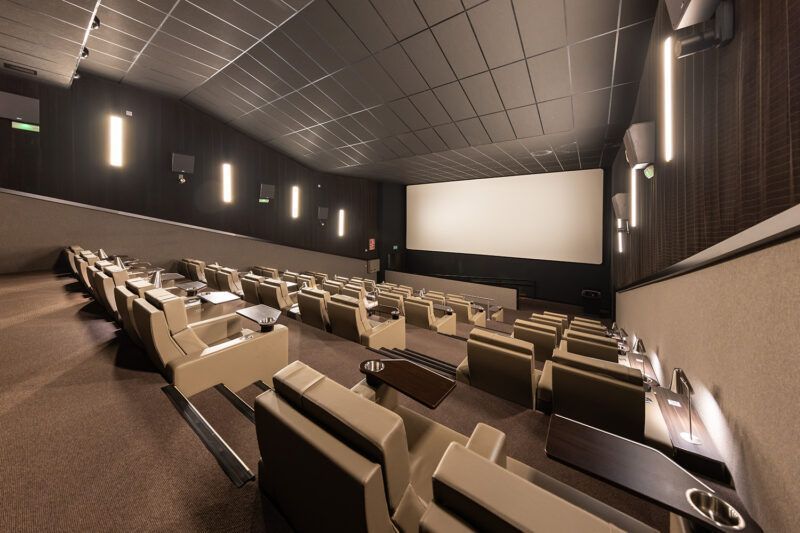
Due to how it was filmed, we recommend seeing it in a cinema that is equipped for it, such as Cine Yelmo Luxury Palafox (Madrid), as the visual and sonic experience is stunning, not to mention how comfortable it is—something to appreciate in a feature-length film like this, which lasts over three hours.
Enjoy it on board Air Europa flights in April and May 2025.
(*) Images provided by UPI Media, courtesy of A24.