The Invite: anatomy of a relationship
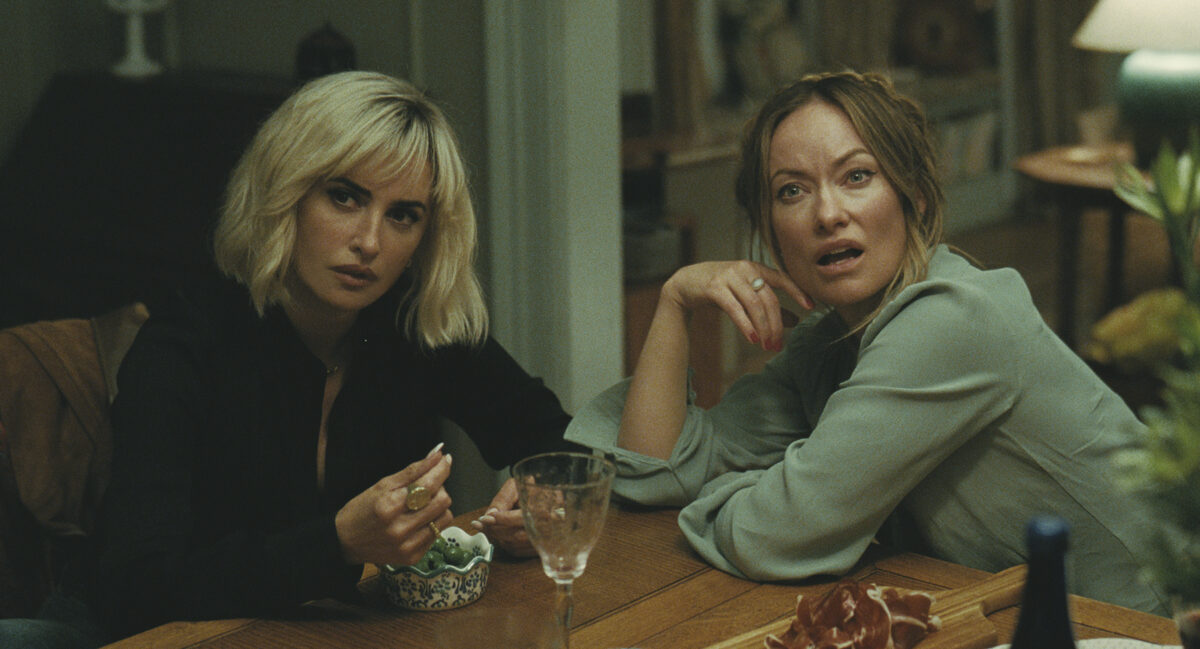
Olivia Wilde directs a brilliant comedy about desire, frustration and intimacy in long-term relationships, with a cast firing on all cylinders and conversations as uncomfortable as they are necessary.
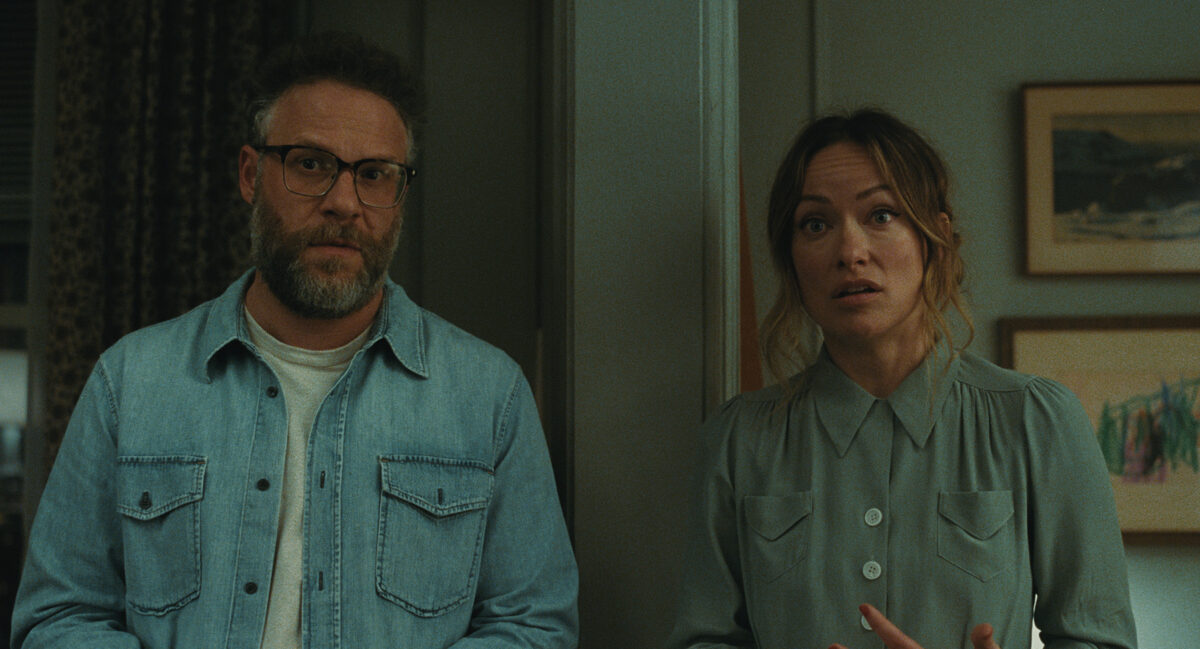
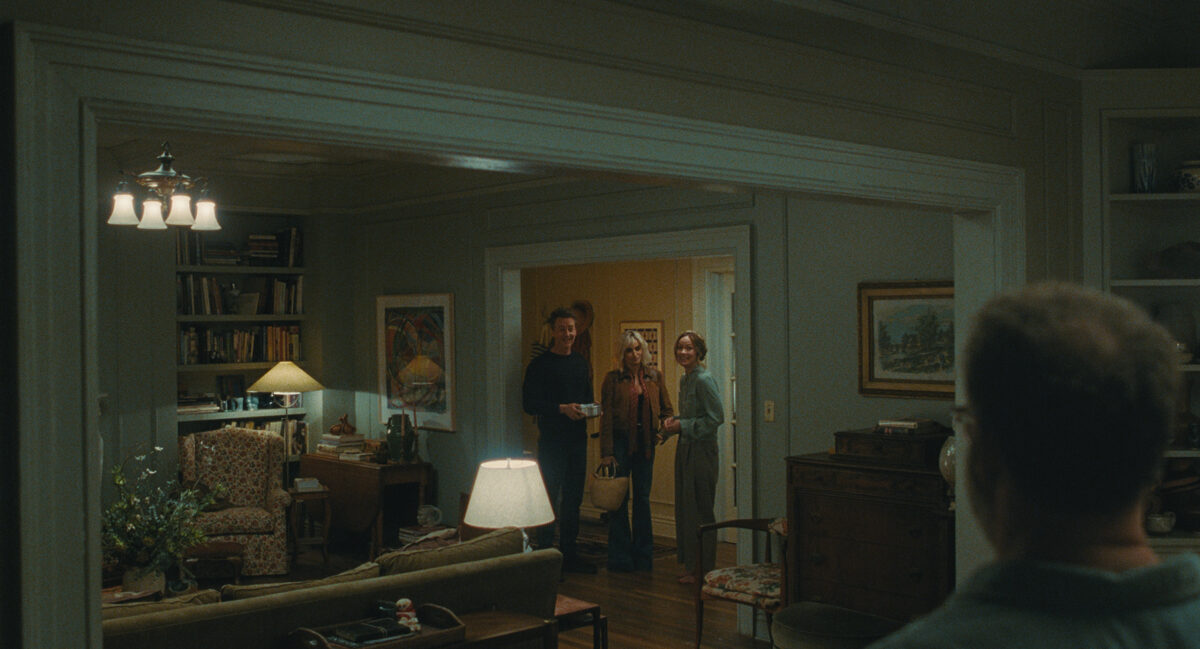
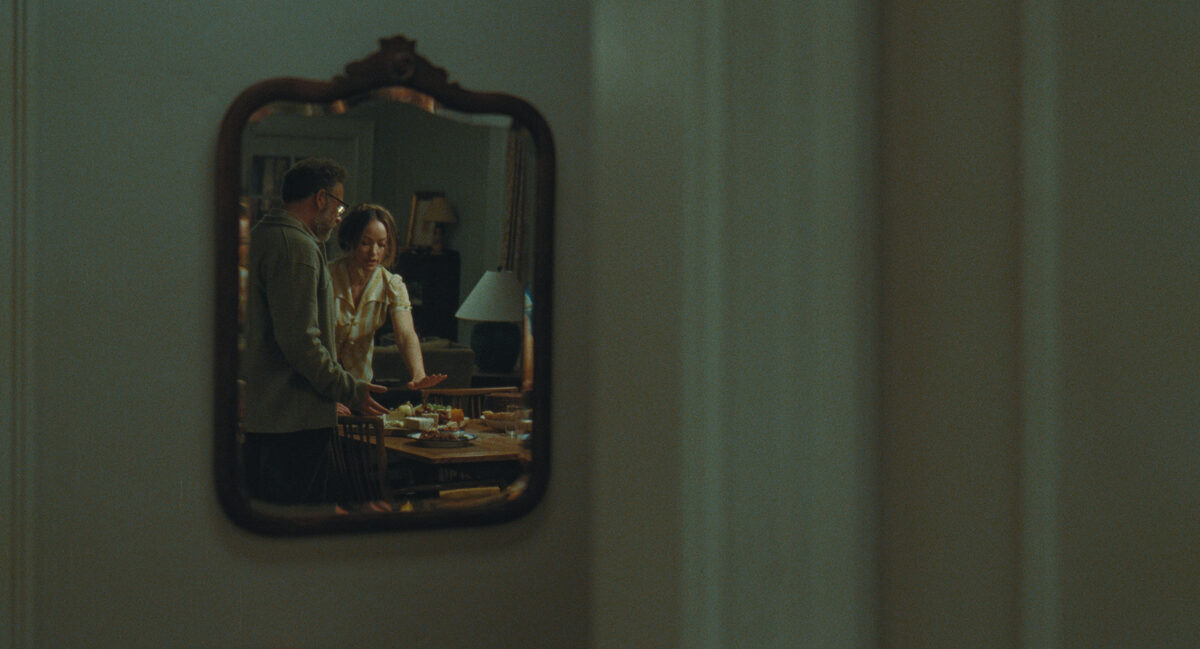
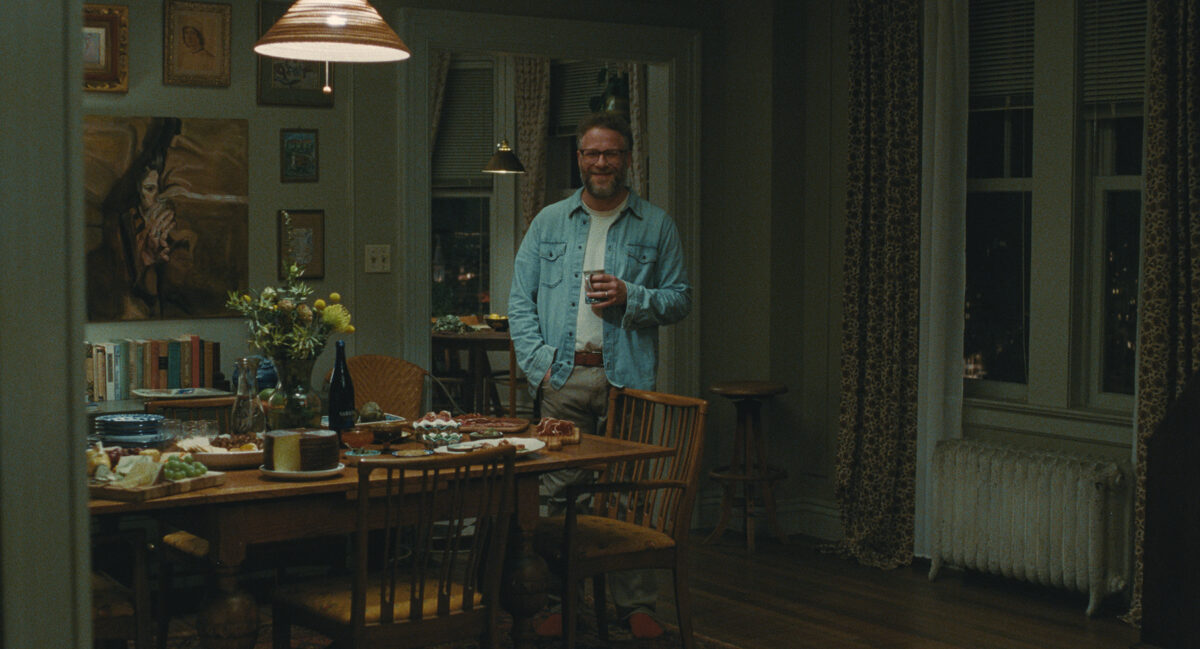
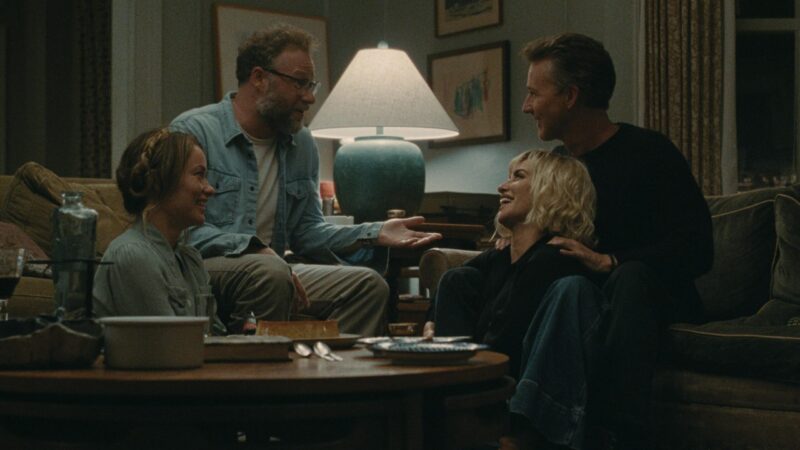
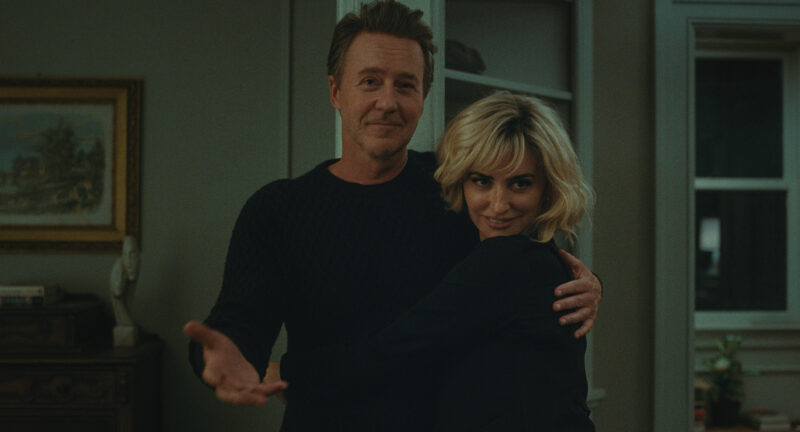
The Invite begins with something far more recognisable than the partner-swapping proposition that will eventually turn the evening upside down: two people who have been together for years and who, at some difficult-to-pinpoint moment, have stopped understanding one another. Joe and Angela share a home, a daughter, routines and a life built over many years, but a distance has settled between them that does not necessarily mean the love has disappeared. Their curiosity about each other has faded, sex has gradually taken up less space, individual frustrations have begun to seep into the relationship and many of the important conversations have been postponed until they have hardened into reproach.
The Invite talks a great deal about sex, but sex ultimately becomes the excuse to talk about almost everything else.
Living in the flat upstairs are Pina and Hawk, a couple who seem to represent the exact opposite. They are uninhibited, have a very active sex life — active enough for their neighbours to be perfectly aware of it — and speak with disarming ease about the things Joe and Angela are barely able to name. When the four of them sit down to dinner and Pina and Hawk make an unexpected proposition, what seemed like an evening between neighbours becomes the perfect setting for years of dissatisfaction, fantasies, insecurities and truths nobody was particularly eager to hear to begin surfacing.
Olivia Wilde finds in this an extraordinarily funny comedy, and one far more intelligent than its premise might initially suggest. Because The Invite talks a great deal about sex, but sex ultimately becomes the excuse to talk about almost everything else: why we stop desiring each other, how a relationship changes when our perception of ourselves changes, the frustration of reaching a certain age and realising we are not exactly where we thought we would be, ageing bodies and, above all, how poorly prepared we are to talk about any of it with the person with whom we share our life.
Four people, one flat and a great deal left unsaid
The film is based on Sentimental (2020), by Cesc Gay, itself adapted from his play Los vecinos de arriba. Rashida Jonesand Will McCormack wrote this new adaptation, which relocates the action to San Francisco and retains something fundamental from its theatrical origins: almost everything takes place in one flat and revolves around four characters.
It needs very little more. In fact, one of the pleasures of The Invite lies in seeing just how dynamic a film can be when it has good actors, a script that trusts conversation and characters with a great deal left to say to one another. The action lies precisely in those conversations. Every revelation alters the way we understand one of them, and what begins with curiosity about the neighbours’ sex life gradually turns into a kind of collective examination of two relationships that may not be quite as radically different as they first appear.
The chemistry between Olivia Wilde, Seth Rogen, Penélope Cruz and Edward Norton is superb and absolutely essential to the film’s success. There is a constant sense of spontaneity, even when the conversations move into deeply uncomfortable territory. The characters provoke one another, interrupt, contradict themselves, become defensive, say more than they should and use humour to escape places they have somehow talked themselves into without entirely knowing how.
That is also a major part of the pleasure of watching it. Wilde understands that all these subjects work far better through comedy than solemnity, and she makes the film genuinely funny without trivialising what it is exploring. There are moments that provoke actual laughter rather than merely knowing smiles, and Seth Rogen is responsible for a large proportion of them.
When frustration enters the relationship
Rogen is in a superb professional phase — his excellent series The Studio is a good example — and The Invite makes excellent use of his particular combination of vulnerability, awkwardness and comic timing.
Joe is a music teacher who lives with the feeling that professionally he has not arrived where he once imagined he would. His frustration doesn’t appear as a conflict separate from the relationship, but as one of the very things that has gradually eroded it.
It is an especially interesting point because we tend to analyse relationship crises from within the relationship itself: lack of communication, infidelity, routine, incompatibility, absence of sex. The film reminds us that we also enter relationships carrying our opinion of our own lives. Professional disappointment, the feeling of having fallen behind, the opportunities we believe we have missed or the comparison with people who seem to have achieved what we wanted do not disappear when we close the front door. They end up affecting the way we relate to the person beside us.
Reaching middle age adds another layer. For much of our youth, there is a sense that there is still time to become many different versions of ourselves. Our careers can change, we can start again, move somewhere else, find success later on. As the years pass, some possibilities begin to feel less likely, and the comparison between the life we imagined and the life we actually have becomes more concrete. The Invite observes with considerable clarity how easily personal dissatisfaction can become resentment towards one’s partner.
Joe is probably the one who expresses this most obviously, but Angela is not exactly where she wants to be either. And this is where the film begins to raise a much more interesting question than who is right in their arguments: how much do we expect our partner to compensate for what we feel is missing elsewhere in our lives?
Why do we stop desiring each other?
The lack of sex between Joe and Angela runs through the entire story, but Wilde avoids treating it as an isolated problem in need of an immediate solution. What matters is understanding how they got there.
After many years together, desire coexists with things that were not present at the beginning of a relationship: routine, responsibilities, tiredness, an almost excessive familiarity with the other person and, sometimes, a collection of small resentments that ends up carrying more weight than we realise. The film also introduces something even more important: the loss of communication.
Because desire and intimacy are difficult to separate. You can share a bed with someone and go for months without really telling them how you feel. You can know their habits perfectly and still have stopped knowing what worries them. You can even love someone deeply and have almost completely lost your curiosity about them.
The arrival of Pina and Hawk forces Joe and Angela to put into words things they would probably have continued avoiding. What is interesting is that the neighbours’ apparent sexual freedom does not function as a prescription the film wants us to follow. The Invite doesn’t seem particularly interested in deciding whether monogamy is better or worse, nor in presenting sexual openness as the modern solution to the problems of traditional couples. What it contrasts, above all, are different capacities for talking about desire, establishing boundaries and acknowledging what one actually wants.
And that is where the sexual proposition that sets the evening in motion stops being the real subject.
Desire, hormones and age
There is one moment in The Invite that particularly surprised us. Pina, who is a sex therapist, begins talking about perimenopause and explains that this stage can last for many years. She even mentions that, in some cases, it can last ten.
Hearing the word perimenopause in a mainstream film, spoken with complete normality and linked directly to sex and relationships, feels far more unusual than it should in 2026.
Menopause has slowly begun to occupy more space in public conversation, but perimenopause remains widely misunderstood despite the fact that it can affect women’s lives for years. Hormonal changes can influence sleep, energy, mood, concentration, body temperature and libido, among many other things. And yet a huge number of women reach this stage with very little information about what is happening to their bodies. If they themselves have so little information, it is easy to imagine how much misunderstanding can also exist within a relationship.
The fact that The Invite introduces this subject makes complete sense within everything else it is exploring. If we want to talk honestly about desire in relationships that last for decades, we also have to talk about the ways bodies change. Desire does not exist independently of biology, emotional state, age or hormones, and it is striking how much space fiction has devoted to exploring certain male sexual crises while paying so little attention to a transition that profoundly affects millions of women.
If we want to talk about desire in relationships that last for decades, we also have to talk about the ways bodies change.
What is interesting is that the film doesn’t turn the subject into a medical drama or a lesson. It appears within a conversation about sex because that is exactly where it belongs.
Normalising something means, to a large extent, being able to talk about it without having to stop the entire narrative to justify why it is being discussed.
And the fact that Penélope Cruz leads part of that conversation works especially well. Pina is probably the character who seems to relate to her own desire most consciously, but the film avoids turning her into a caricature of the sexually liberated woman who arrives to teach everyone else how to live. Her profession allows her to talk about sex without the embarrassment or defensiveness that affects the others, although that does not mean her own relationship is necessarily perfect.
Cruz is excellent. Funny, quick, intelligent and remarkably good at moving between the absurdity of certain situations and the most intimate conversations without the character ever losing her naturalness. She also reminds us just how strong a comic actress she can be when given the right material.
A quartet that is difficult to improve upon
The same is true of Edward Norton, perhaps the least obvious casting choice and, precisely because of that, one of the funniest. Hawk has a confidence that stands in direct contrast to Joe, and Norton plays that difference beautifully without reducing him to a simple caricature. His comic side is one of the film’s surprises, and the moments in which he ventures into Spanish are particularly memorable.
Rogen, meanwhile, manages to make Joe irritating, endearing and ridiculous almost within the same scene. The actor has spent years proving that his range is far broader than his earlier comedies might have suggested, and here his ability to use humour through insecurity finds the perfect character.
Wilde, for her part, creates an Angela full of frustration, impulsive and at times almost theatrical in her reactions, but vulnerable too. She is tired of feeling unheard, tired of a relationship in which desire has all but disappeared and perhaps also tired of the person she herself has become within that relationship. As the dinner progresses, we understand that this is not simply about recovering sex, but about recovering a part of herself and working out what she really wants from the life she shares with Joe. As a director, Wilde entrusts much of the film to her four performers and to some excellent dialogue. The fact that almost everything takes place inside a flat becomes almost irrelevant: so much is happening between these four people that we have no need to leave it.
The film reminds us that we enter relationships carrying our opinion of our own lives with us.
Together they form an extraordinary quartet. And it is difficult to imagine The Invite working quite as well if any one of them fell short, because so much of the humour depends on one character’s reaction to what another has just said.
A comedy about sex that is really about intimacy
Perhaps the smartest thing about The Invite is that it uses a potentially scandalous sexual situation to end up talking about very ordinary problems. You do not need to be interested in open relationships, or ever to have considered swapping partners, to recognise yourself in many of the conversations that unfold over dinner.
The film talks about feeling undesired, not knowing how to recover lost intimacy, having fantasies we have never voiced, comparing ourselves with other couples, assuming we know someone completely because we have lived with them for years and discovering that perhaps we have stopped asking them questions.
It also talks about something less obvious: the difference between sex and intimacy. We live at a cultural moment in which sex is extraordinarily visible, and yet we still have enormous difficulty talking naturally about desire within long-term relationships. Saying that you want more sex can be difficult; saying that you no longer feel desire can be harder still. Admitting that our body is changing, that we do not feel attractive, that we are afraid of ageing or that we are disappointed by the person we have become requires a degree of vulnerability for which we are not always prepared.
Wilde and her screenwriters find a way of bringing many of these questions to the table without turning their characters into mouthpieces for a thesis. No one represents the correct relationship and no one leaves the evening with all the answers. That allows the film to be far more interesting than a defence of any particular way of understanding coupledom. And, above all, it allows it to remain a comedy.
Because The Invite is extremely funny. Not “funny considering it deals with serious subjects”, but genuinely funny. The rhythm of the dialogue, the awkwardness, the reactions, the differences between the four characters and the gradual disappearance of every filter create some magnificent situations. There is a lightness in the way it is told that prevents its reflections on marriage, ageing or dissatisfaction from becoming heavy-handed.
Highly recommended.
Spanish release: 16 October 2026.