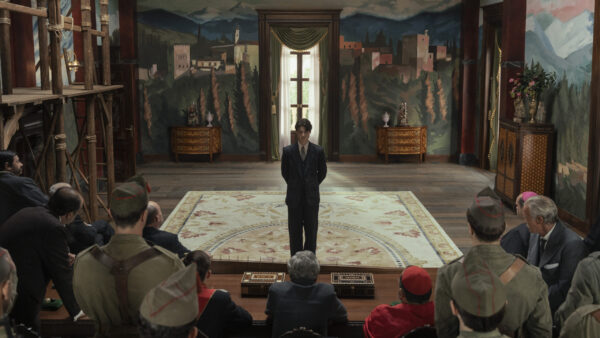
Movies in the air: road motels as ephemeral shelters in film and life
We continue with our film recommendations in the in-flight entertainment section of Air Europa flights, this time exploring the intriguing roles that motels and hotels play in cinema. Motels, with their transient and impersonal nature, often represent themes of impermanence and anonymity, while hotels can evoke a sense of grandeur, isolation, or transformation. Together, these settings provide the backdrop for some of the most iconic and memorable moments in film.
Therefore, this selection of unforgettable films demonstrates how these accommodations are key elements within their narratives and how they are capable of shaping their stories in profound and unexpected ways.
“Pulp Fiction” (1994): The motel as a crucible of violence and chaos
Synopsis: Quentin Tarantino’s masterpiece weaves together several crime stories set in Los Angeles, told in a non-linear fashion. From the lives of gangsters Vincent Vega (John Travolta) and Jules Winnfield (Samuel L. Jackson) to the story of a pair of thieves, and the fate of a boxer on the run, the film is a feast of violence, sharp dialogue, and unexpected twists. “Pulp Fiction” is a chronicle of life and death on the margins of the city, marked by pop culture and an innovative visual style.

In “Pulp Fiction”, motels serve as the setting for violent encounters and moments of tension. The motel in the scene between Vincent Vega and Mia Wallace is more than just a resting place; it becomes a crucible of 90s pop culture, where characters seem trapped in a spiral of wrong decisions. The brutality and randomness that define Tarantino’s narratives are manifested in the charged atmosphere of this place, where risk and uncertainty lurk, much like the motels that line American highways.
“The Lobster” (2015): Alienation and the search for love in dehumanized spaces
Synopsis: In the near future, being single is a crime punishable by transformation into an animal of one’s choosing. The film follows David (Colin Farrell), a man who enters a hotel where singles must find a partner within 45 days or face conversion into an animal. The story explores the absurd rules of this dystopian society that regulates love, as David confronts his despair, personal desires, and the oppression of a system that limits human relationships. Directed by Yorgos Lanthimos, “The Lobster” is a surreal satire on love and conformity.
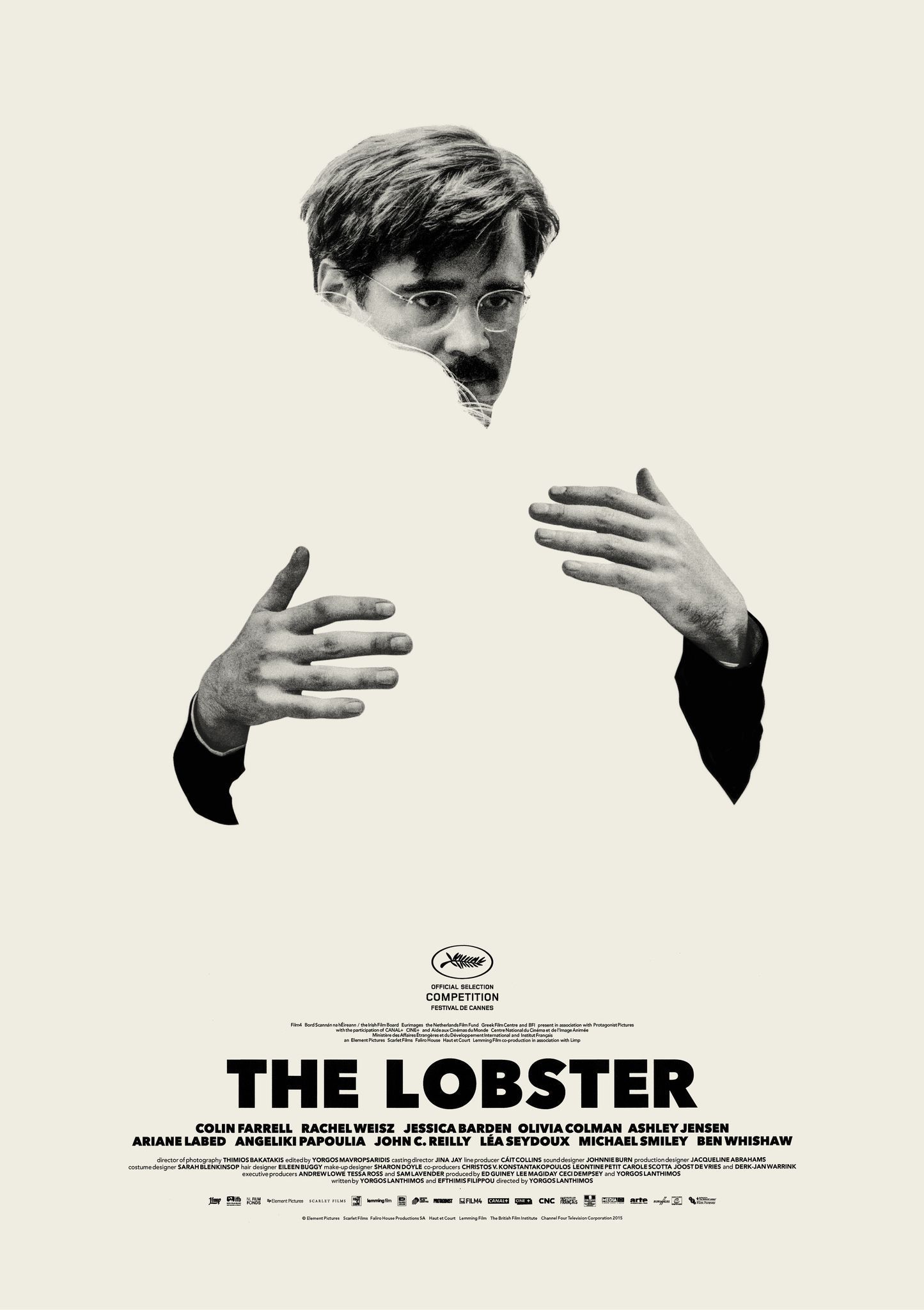
In “The Lobster”, the distorted dystopian society that governs human relationships is reflected in the desolate spaces where characters are forced to adhere to absurd rules. While the film is not explicitly set in a road motel, the aesthetic and depersonalization of the place where the singles live echo the coldness and anonymity of these transient accommodations. Just like in a motel, human relationships seem to be merely temporary, as if the characters are just passing through, attempting to escape their destined solitude.
“Thelma & Louise” (1991): Freedom and escape on the road
Synopsis: Two women, Thelma (Geena Davis) and Louise (Susan Sarandon), embark on a journey of liberation and escape after an attempted rape changes the course of their lives. As they travel through the deserts of the United States, the two friends face their fate in unpredictable ways, freeing themselves from the constraints imposed by a patriarchal society. Ridley Scott’s film is a powerful tale of empowerment, friendship, and the fight for personal freedom, becoming a symbol of feminist cinema.
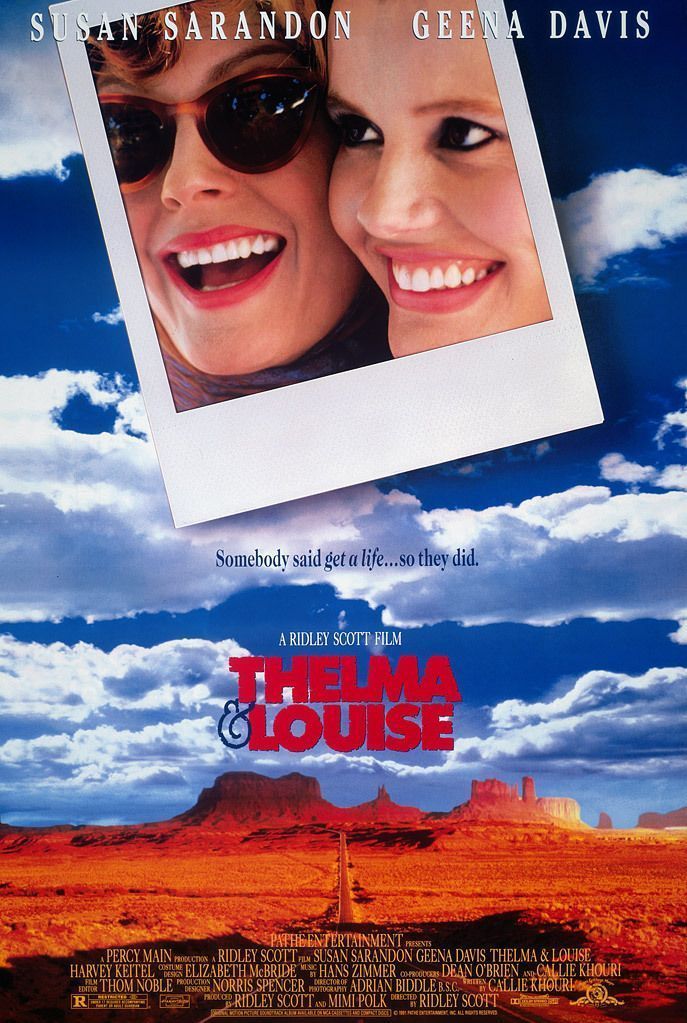
The journey of “Thelma & Louise” is a clear example of how the road motel can symbolize liberation and escape from social conventions. While the film explores a series of dramatic and tragic events, each stop at motels on the way south through the United States represents a moment for the protagonists to redefine their identity and escape the oppressive control of society. The motels are not just places to rest; they become spaces for rethinking life, in a journey towards autonomy and self-definition.
“The Grand Budapest Hotel” (2014): The theme of shelter at the heart of nostalgia
Synopsis: In a luxury hotel set in a fictional interwar Europe, concierge Gustave H. (Ralph Fiennes) becomes involved in the theft of a priceless painting and a series of political and familial intrigues. Directed by Wes Anderson, the film is a visually stunning comedy that blends eccentric humor with drama, as it portrays the adventures of Gustave and his young protégé Zero (Tony Revolori) in a world on the brink of war. A work of art in terms of both aesthetics and narrative.
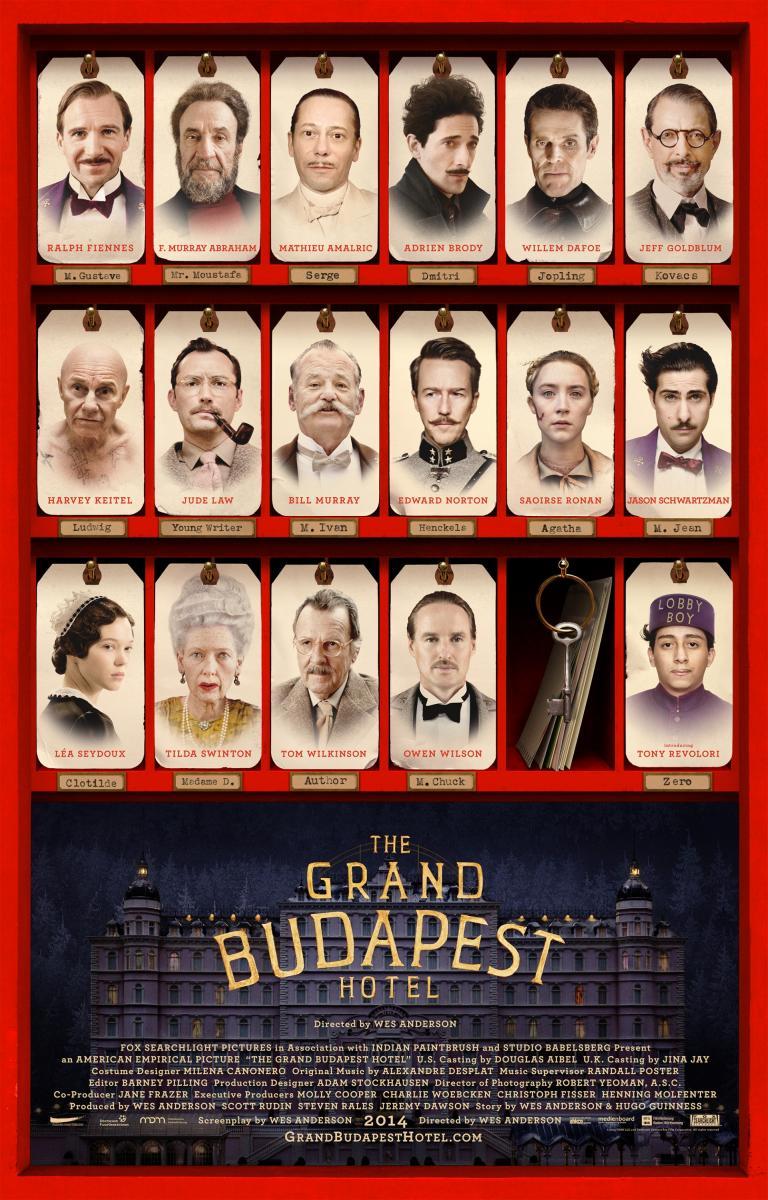
Although “The Grand Budapest Hotel” is not strictly a film about road motels, Wes Anderson plays with the concept of transient places, much like the hotel that gives the film its title. This establishment, though luxurious and exclusive, holds a concept of passage and refuge similar to that of road motels: a temporary meeting point for characters forced to face their own conflicts. The film’s symmetry and theatricality contrast with the rawness of road motels, but both share the idea of a transient space that reflects the fleeting nature of life.
“The Best Exotic Marigold Hotel” (2011): Refuge and transformation in the twilight of life
Synopsis: A group of British retirees, each with their own problems and expectations, decides to move to India in search of a more peaceful life. At the “Best Exotic Marigold Hotel”, a rundown but hopeful establishment, the characters discover that old age is not an end, but a new beginning. Directed by John Madden, this dramedy is a celebration of maturity and adaptation to change, with a stellar cast led by Judi Dench, Maggie Smith, and Bill Nighy.

On the other hand, “The Best Exotic Marigold Hotel” also uses the idea of a “transit hotel”, but with a different focus: a refuge for older adults seeking something more than just a temporary stay. In this context, the hotel becomes a space of redemption, reunions, and transformations. It contrasts with road motels, which often evoke despair or violence, but in both, the concept of a transitional space is key for the characters’ evolution.
“Lost in Translation” (2003): Loneliness in the big city
Synopsis: Bob Harris (Bill Murray), a fading actor, and Charlotte (Scarlett Johansson), a young woman accompanying her husband to Tokyo, find themselves lost in a strange life that seems to belong to someone else. Amid the vibrant Japanese city, the two form a deep and silent friendship, marked by loneliness and miscommunication. Directed by Sofia Coppola, “Lost in Translation” is a reflection on emotional disconnection and the unexpected encounter that can change lives, set in one of the most stimulating cities in the world.
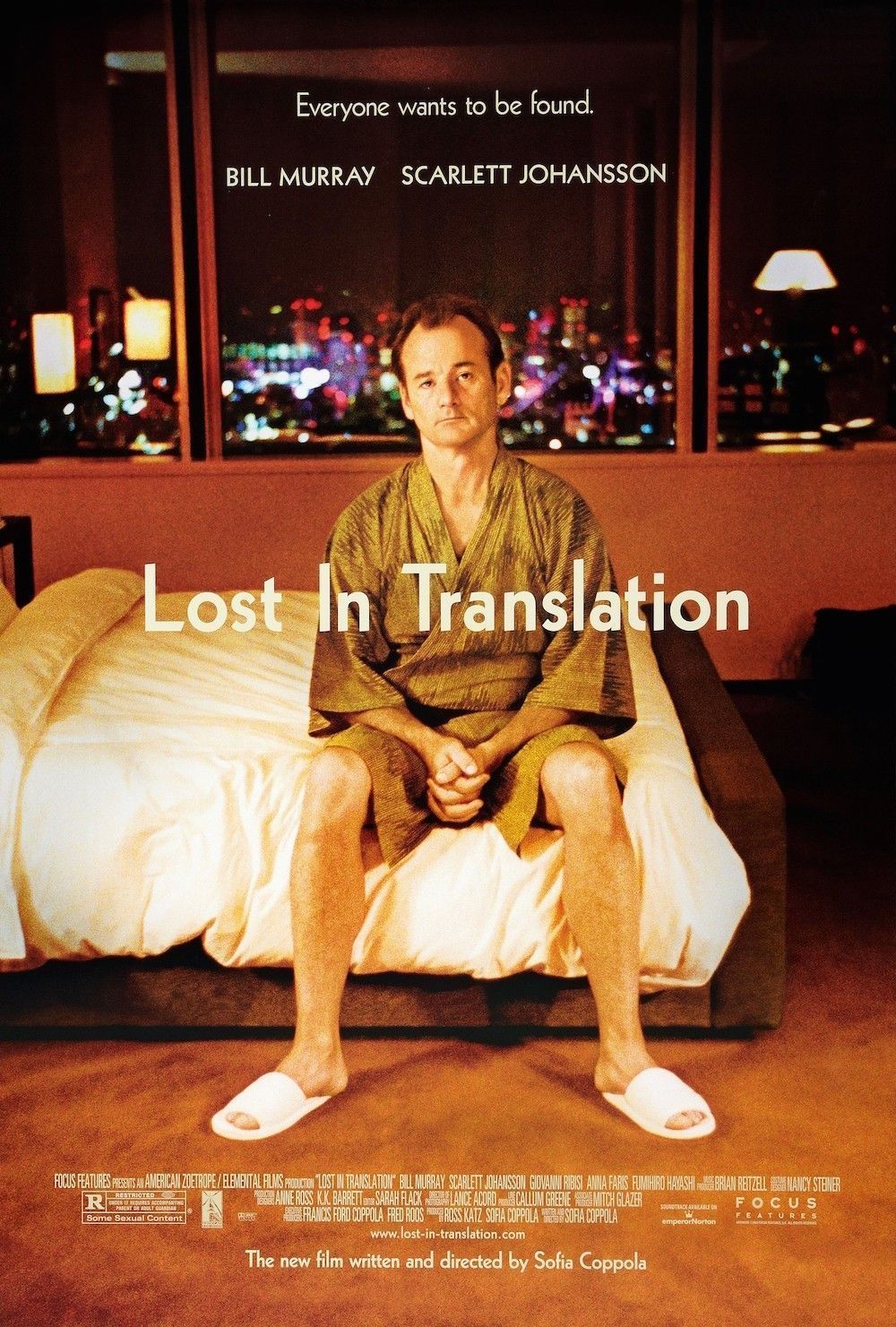
In “Lost in Translation”, Sofia Coppola’s film, road motels are not the main setting, but the idea of loneliness in foreign and anonymous places feels very similar. Bill Murray and Scarlett Johansson find themselves lost in Tokyo, trapped in an empty and distant space, as if they were occupants of a motel that fails to offer them solace. In both cases, it’s a moment of transition, a search for meaning in the vastness and disconnection.
“The Florida Project” (2017): The harsh reality behind the tourist façade
Synopsis: On the outskirts of Disney World, a young girl named Moonee (Brooklynn Prince) and her mother Halley (Bria Vinaite) live in a cheap motel. While the girl runs and plays with other children from the neighbourhood, her mother struggles to keep her life afloat, resorting to unconventional methods to survive. Directed by Sean Baker, this film depicts life in poverty in the United States, showing the beauty and harshness of childhood and the fight for a better future in a hostile environment.

In “The Florida Project”, the protagonist and her daughter live in a road motel on the outskirts of Disney World, a place where magic and fantasy fade when confronted with the harsh reality of life. The motels in the film represent not just a physical space of passage, but also a place where broken dreams and survival struggles accumulate. The bright, colourful façade and vacation-like atmosphere contrast with the difficult circumstances of the characters, who struggle to find a permanent home in a system that marginalizes them.
“Bad Times at the El Royale” (2018): The motel as a setting for dark secrets
Synopsis: In a decadent motel on the border between California and Nevada, seven strangers find themselves at the same place on the same night. Each has a dark past, and soon their tensions and secrets come to light, leading them to face a deadly danger. Directed by Drew Goddard, this thriller and mystery film plays with the genres of suspense and noir, offering an elegant tale of fate, vengeance, and redemption.
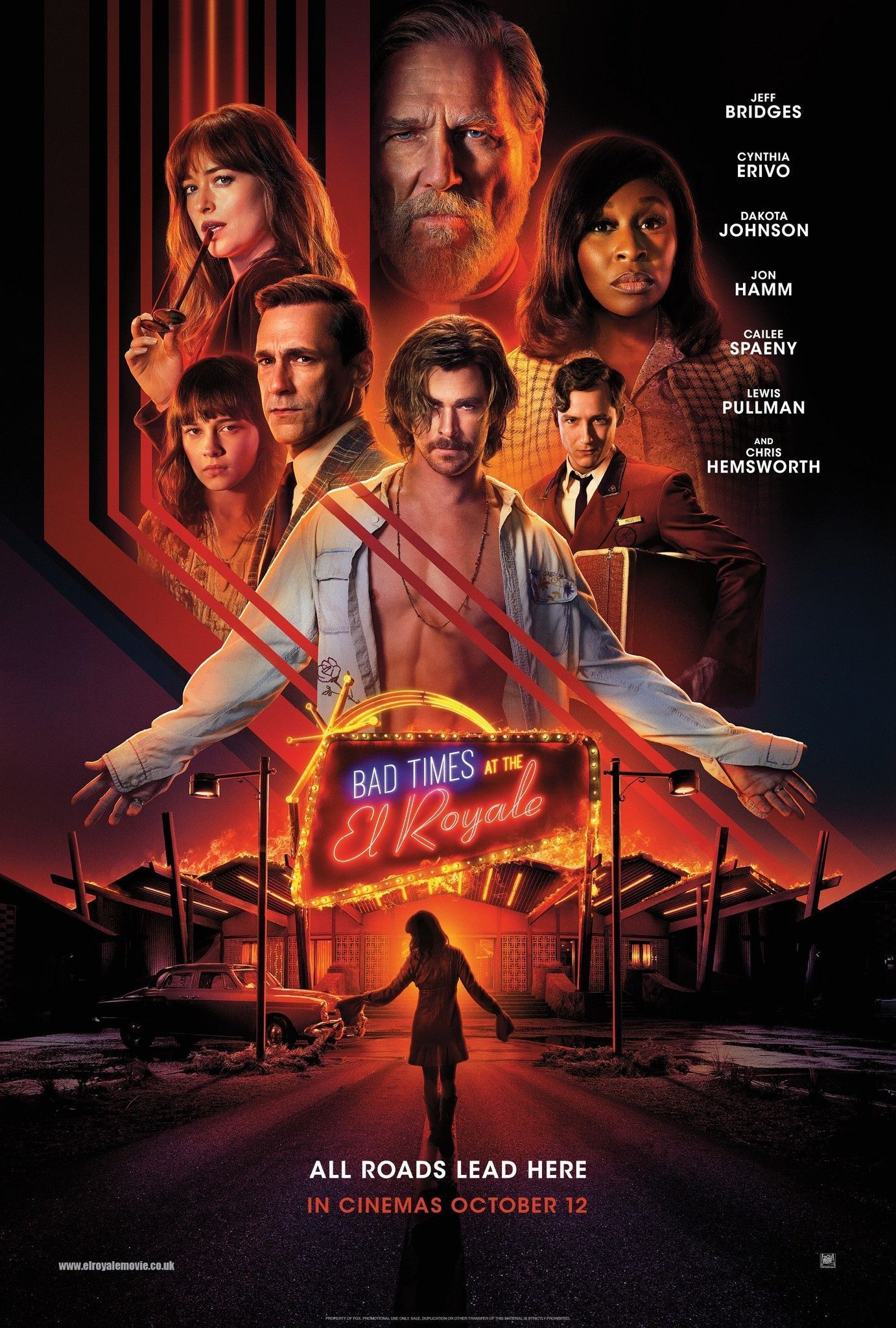
In “Bad Times at the El Royale”, the road motel becomes a microcosm of secrets, betrayals, and intertwined destinies. This motel, seemingly out of time, is the perfect setting for a story about characters with dark, troubled pasts. The retro aesthetic and the charged atmosphere of mystery reinforce the idea of the motel as a space where anything can happen, a place where every room holds its own story, marked by sin and regret.
“No Country for Old Men” (2007): The latent threat on the road
Synopsis: In arid and violent Texas, Llewelyn Moss (Josh Brolin) stumbles upon a briefcase full of money after a botched drug deal. From there, an unstoppable assassin, Anton Chigurh (Javier Bardem), pursues him, while Sheriff Ed Tom Bell (Tommy Lee Jones) tries to understand the chaos invading his peaceful region. Based on the novel by Cormac McCarthy, “No Country for Old Men”, directed by the Coen brothers, is an exploration of chance, fate, and violence, with a dark tone and relentless tension.
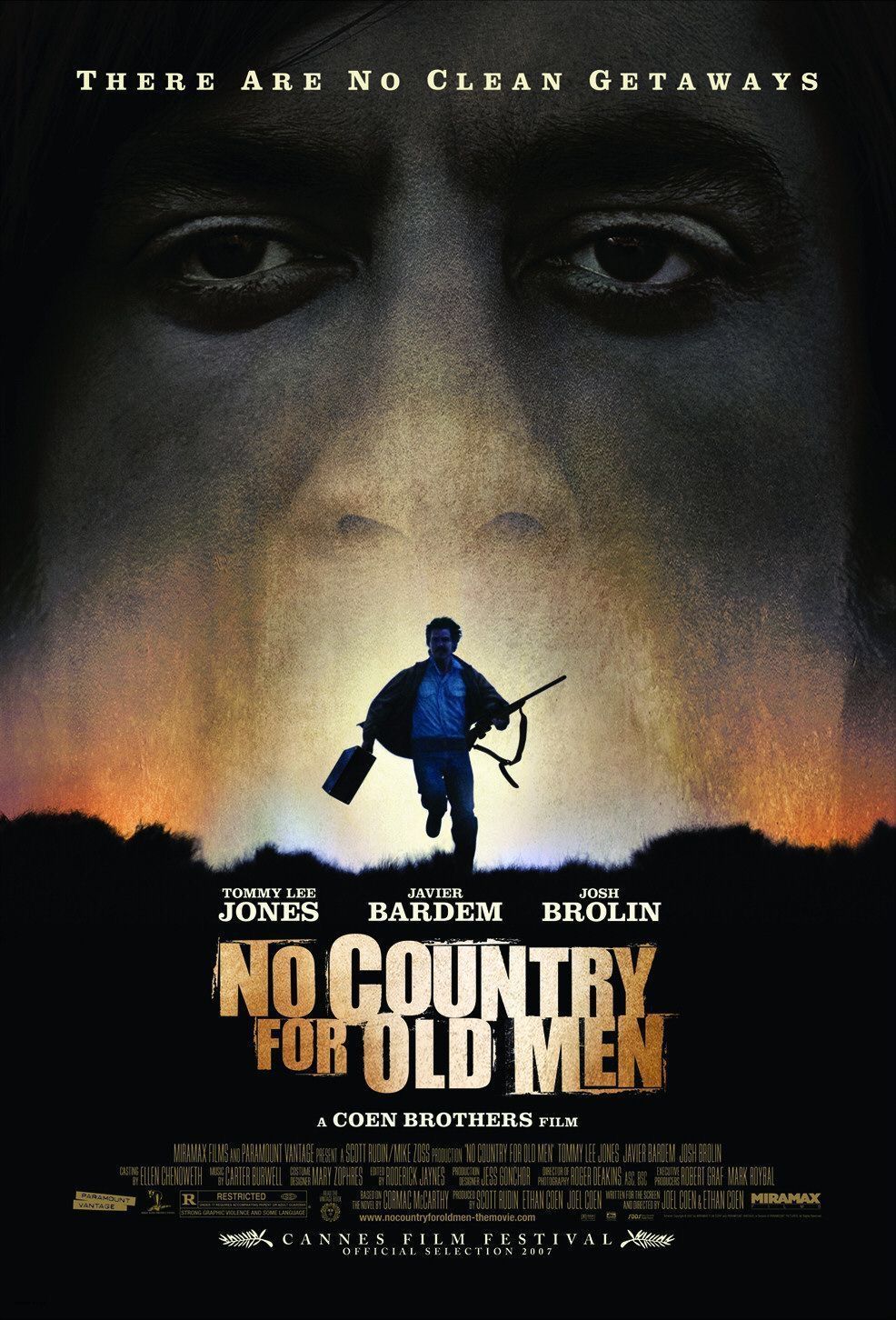
In “No Country for Old Men”, road motels serve as meeting points for the characters, but they are also places where threats incubate. In Cormac McCarthy‘s story, the motel is a temporary refuge, but also a place where death lurks in every corner. The characters who seek shelter in these motels not only want rest, but also feel the constant presence of danger, like a shadow that never leaves them.
“Psycho” (1960): The motel as a symbol of fear and distrust
Synopsis: In this Alfred Hitchcock masterpiece, Marion Crane (Janet Leigh) flees with a large sum of stolen money and stops at the isolated Bates Motel, run by the unsettling Norman Bates (Anthony Perkins). What begins as a thriller soon turns into psychological horror as Norman’s dark secret is revealed. “Psycho” is a landmark in suspense cinema, combining elements of psychological horror with masterful direction that keeps the viewer on edge until the end, redefining the genre and leaving an indelible mark on modern film.
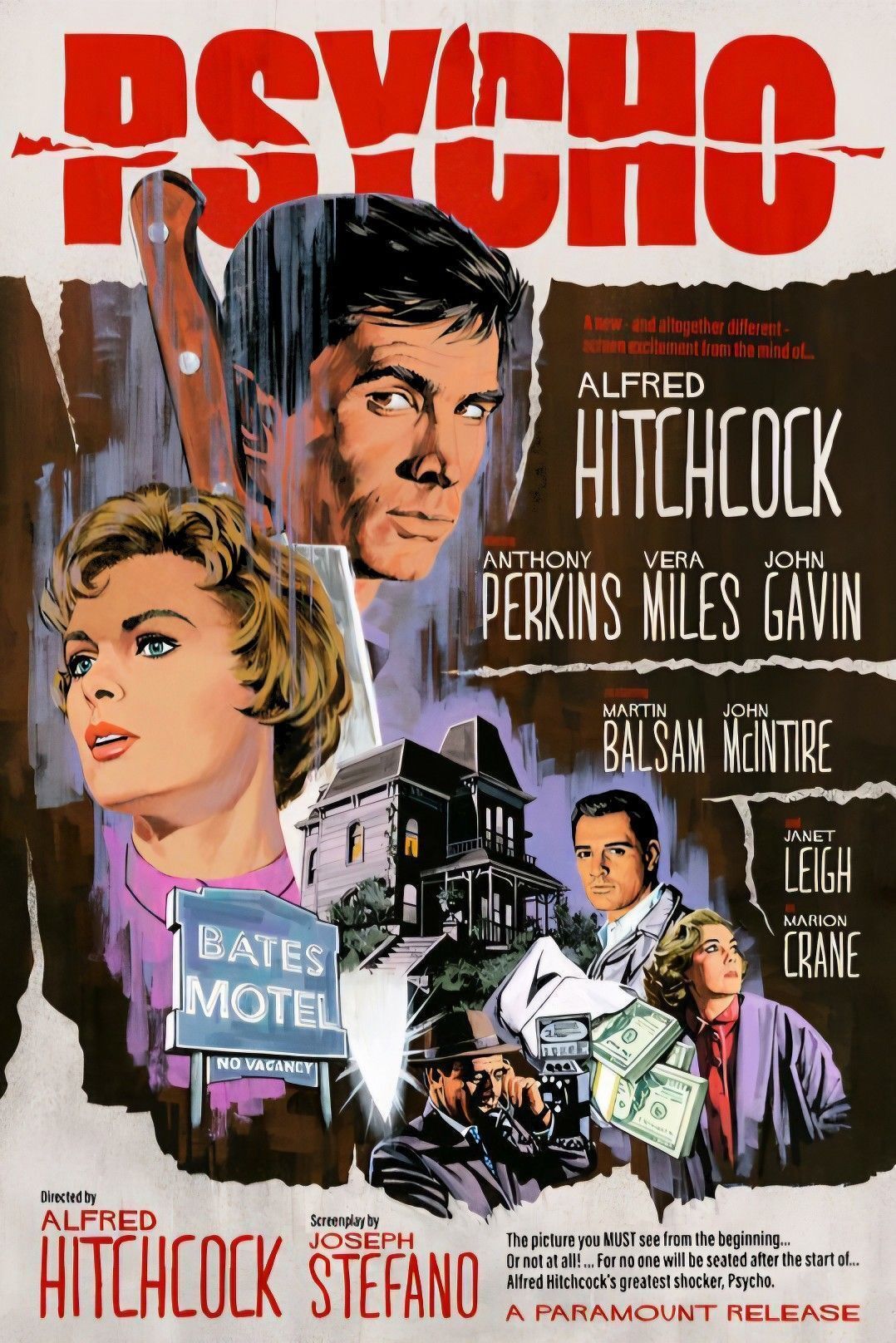
Finally, “Psycho” by Alfred Hitchcock is the masterpiece that undoubtedly left an indelible mark on how cinema uses road motels as symbols of danger and perversion. The Bates Motel is the perfect place for psychological horror, where the apparent normalcy of a resting space turns into the refuge of madness. The latent tension in this motel is as terrifying as Norman Bates himself, and the fear of the unknown is amplified when we find ourselves in a place without history or identity, where anything can happen.
These 10 films, diverse in genre and style, share a unique vision of life, death, freedom, and the internal struggles of human beings. Each one, in its own way, explores how characters face their destinies in temporary spaces, whether a hotel, a motel, or the vast road, offering both visual and emotional lessons that continue to resonate within us all.
Safe travels and enjoy your movie session! #ccmagazinerecommends