Mother Mary: the creation behind the icon
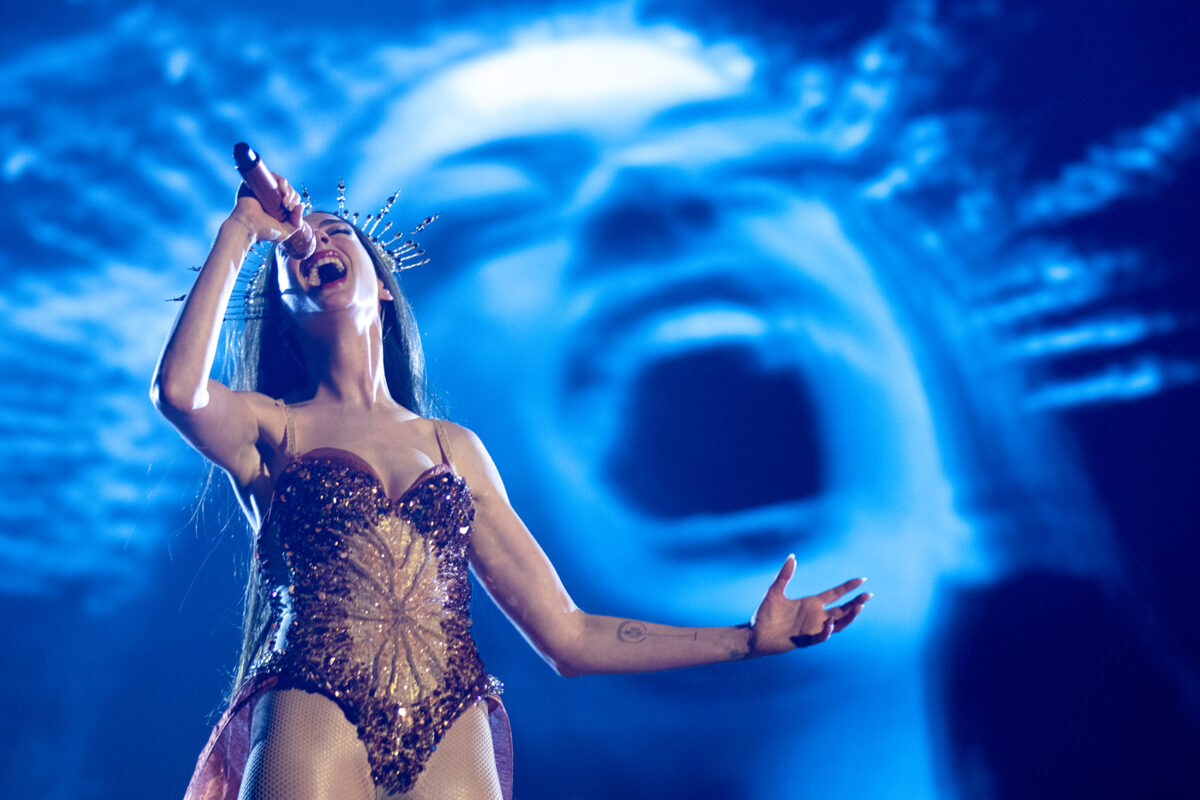
Who really creates an icon? The person who stands in the spotlight, or the one working behind the scenes, shaping their identity? That is the question posed by Mother Mary, David Lowery‘s new film. Starring Anne Hathaway and Michaela Coel, the story explores the reunion between a global pop star and the designer who created her public image, a relationship shaped by admiration, creative dependency and the wounds that success has left behind.
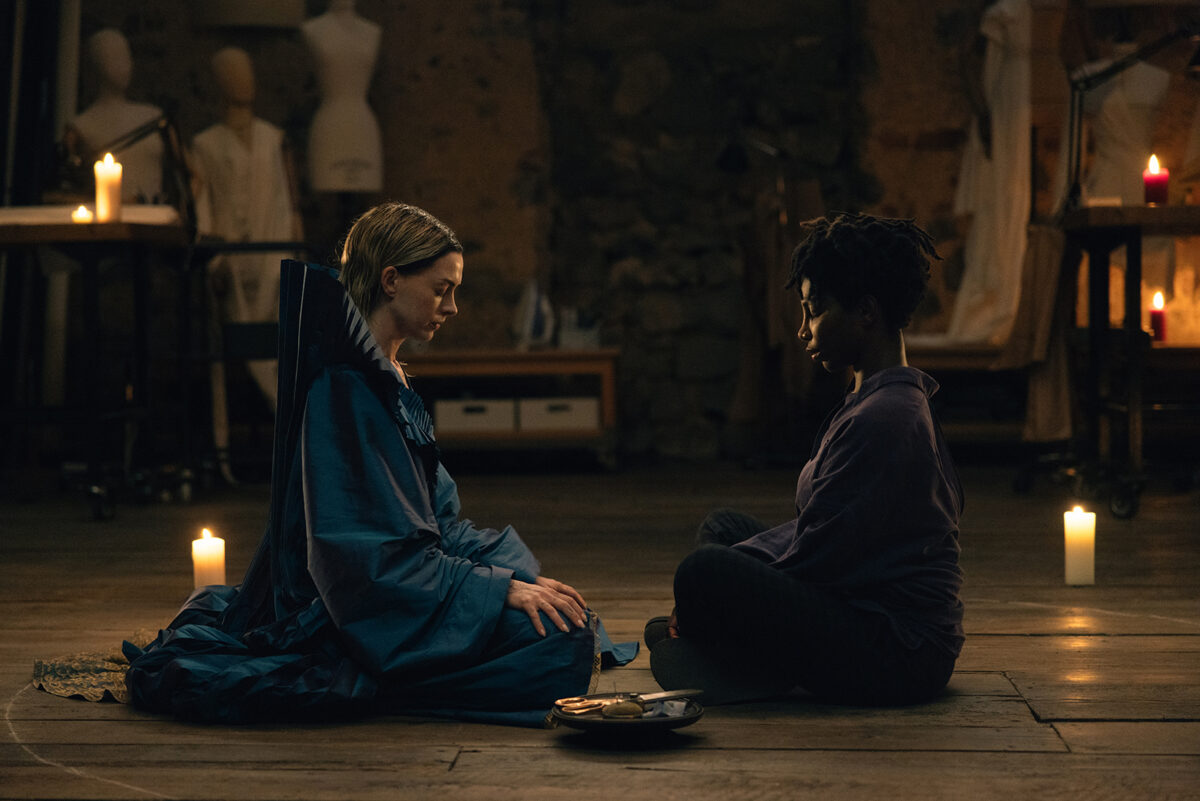
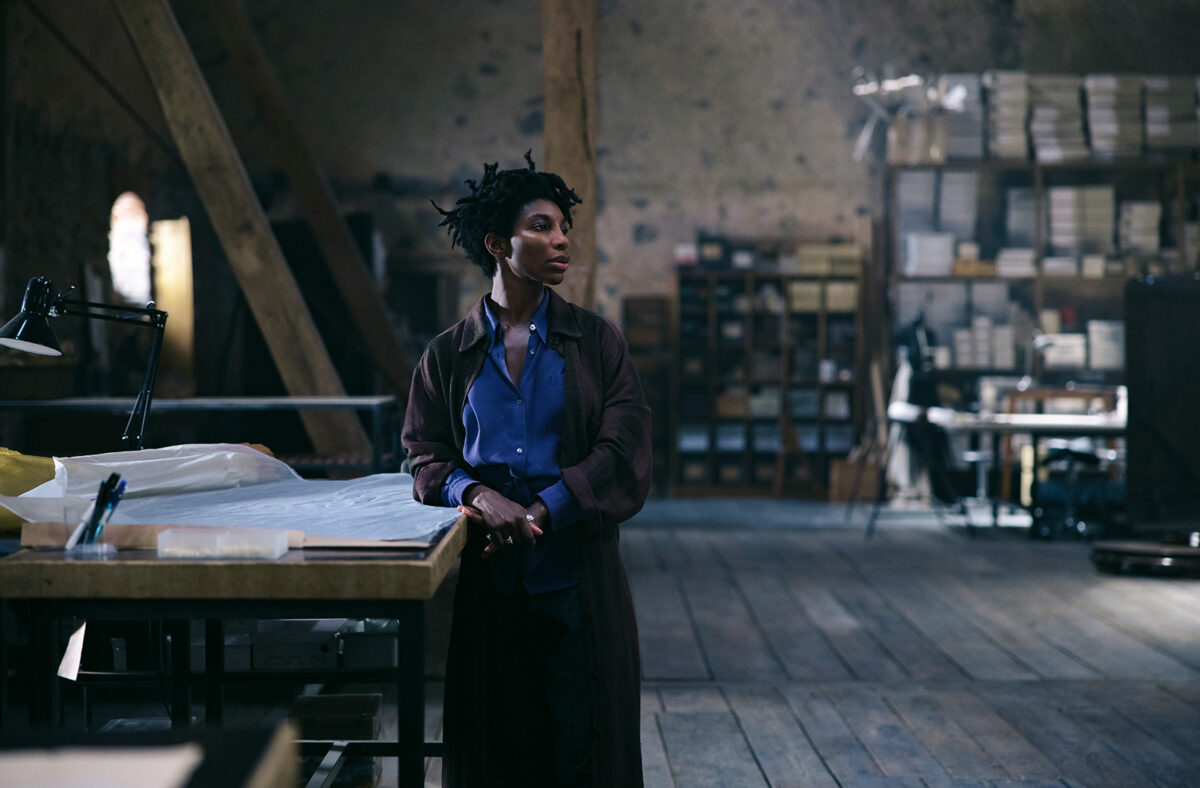
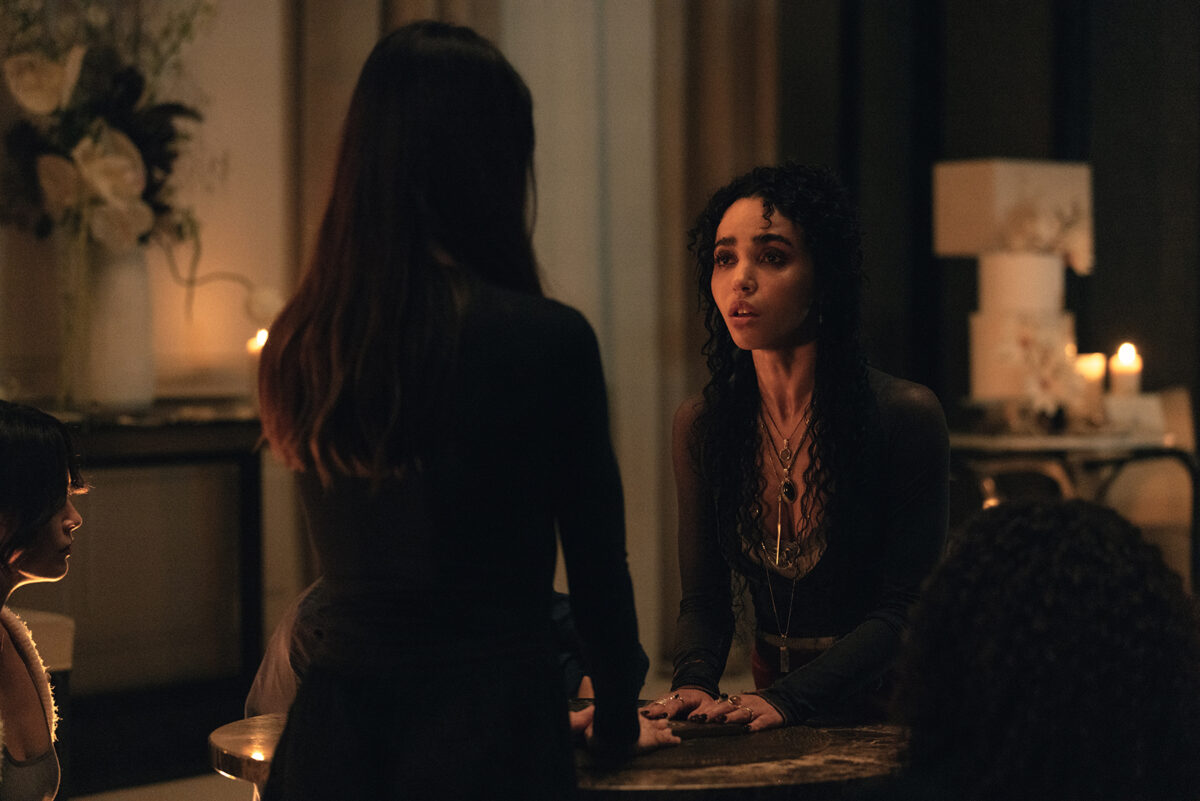
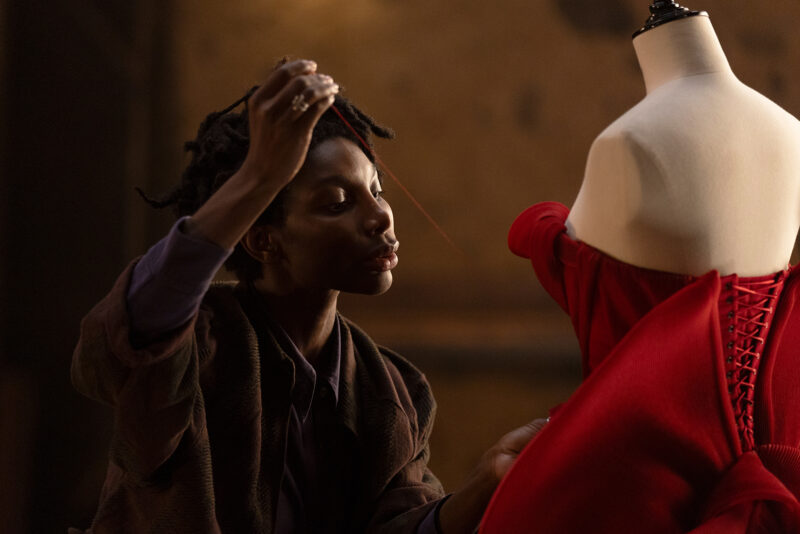
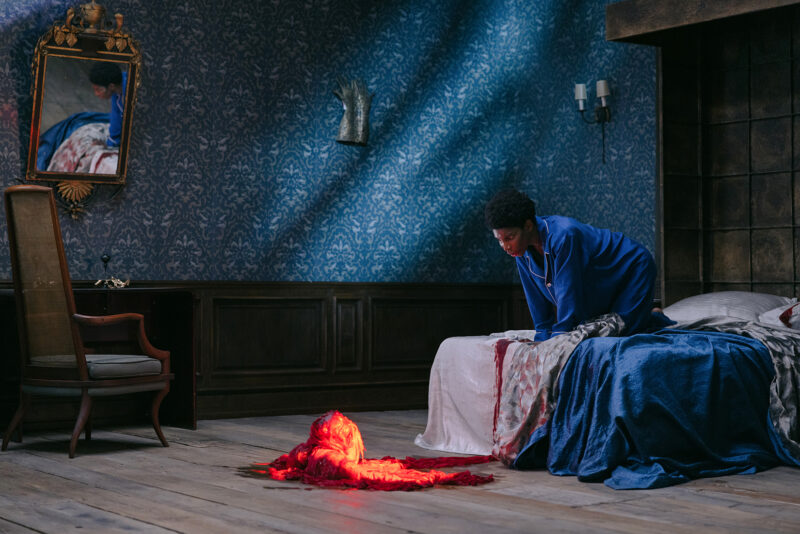
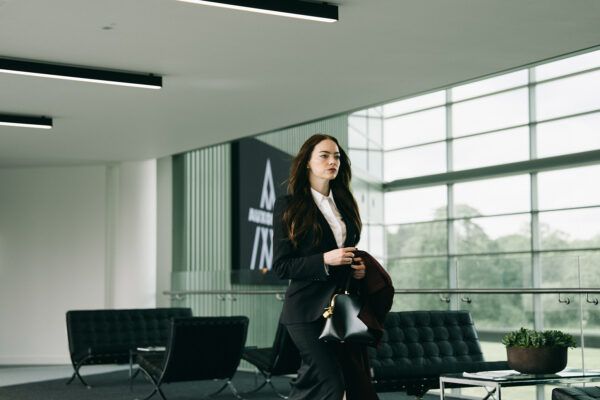
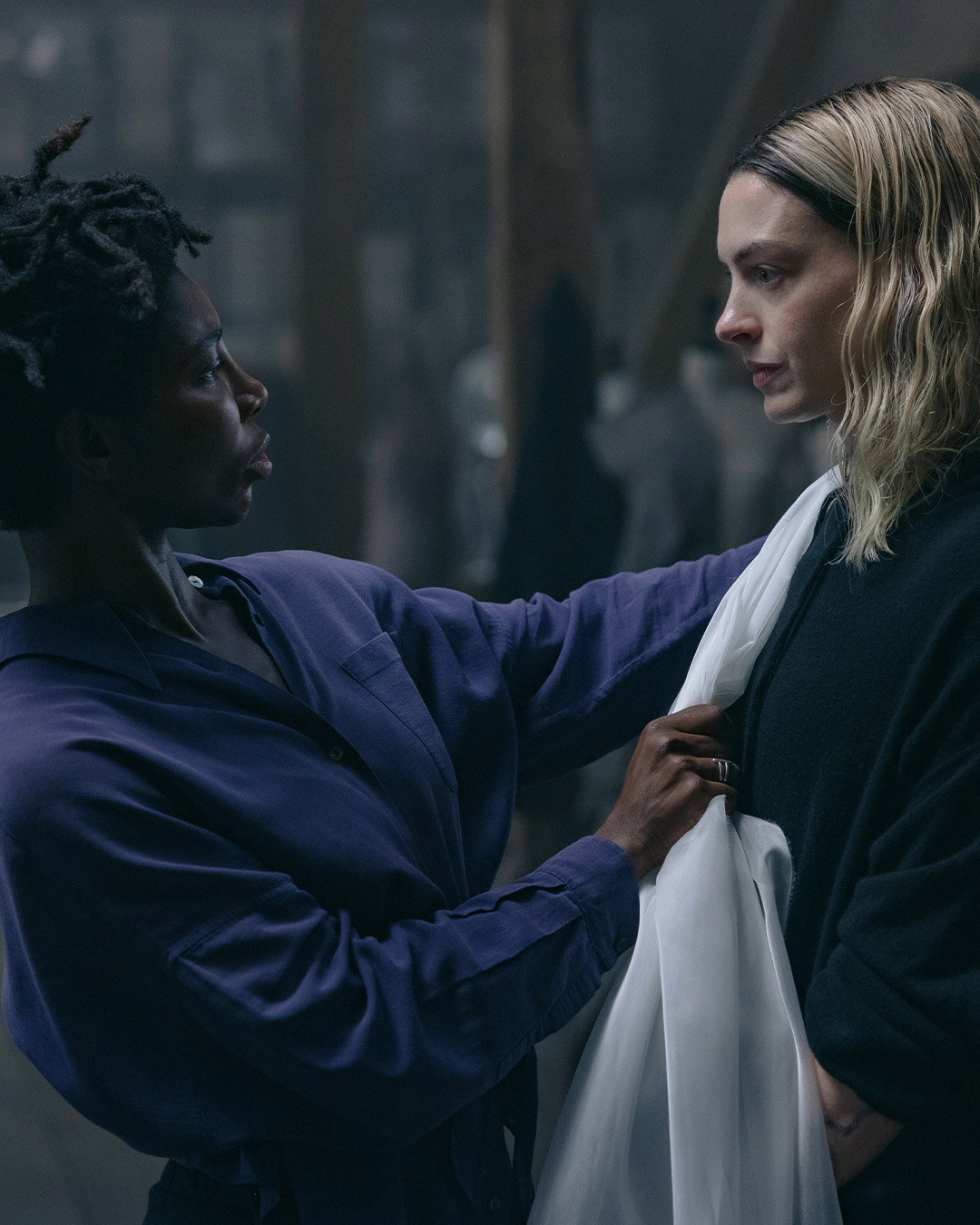
The film follows the reunion between Mother Mary (Anne Hathaway), one of the world’s most celebrated artists, and Sam Anselm (Michaela Coel), the designer who helped create her image and with whom she shares a complicated personal history marked by admiration, dependency and resentment.
What begins as a commission to create a dress for a major concert gradually unfolds into a long night in which memories, unresolved conflicts and buried emotions finally come to the surface.
A film that captivates visually
If there is one aspect of Mother Mary that is beyond dispute, it is its extraordinary visual craftsmanship.
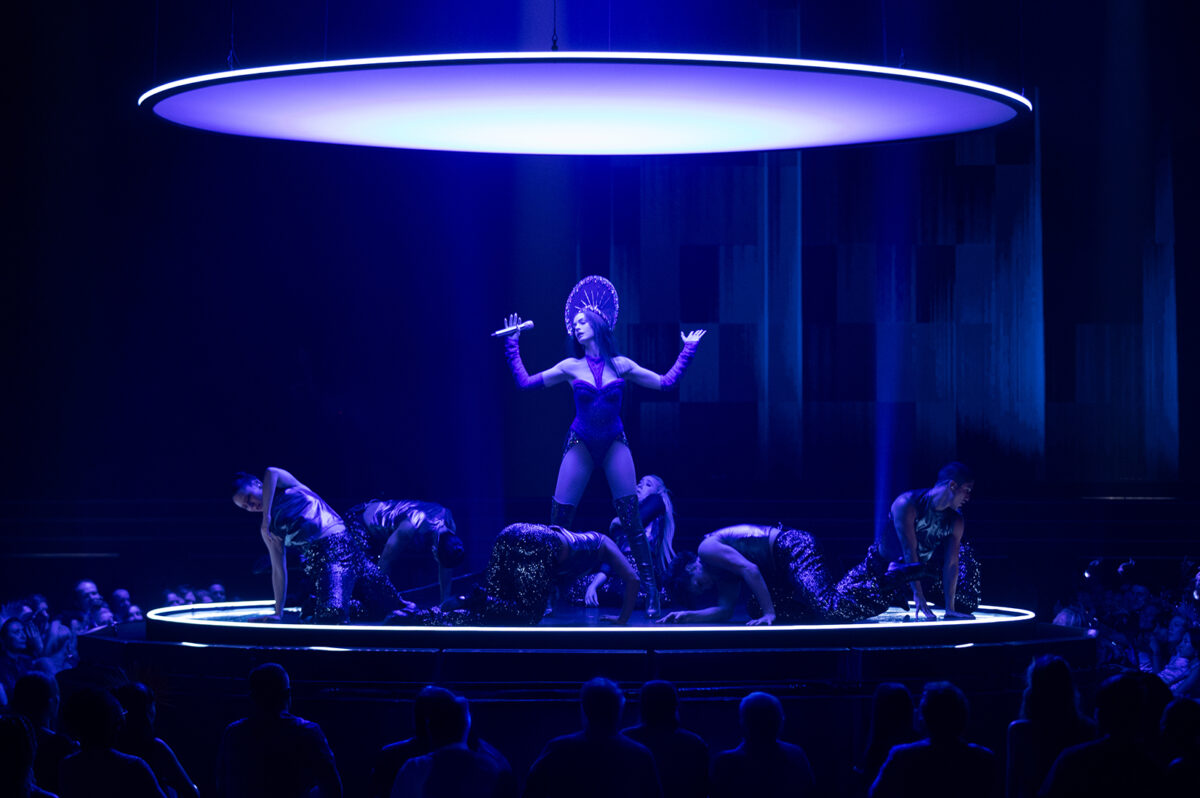
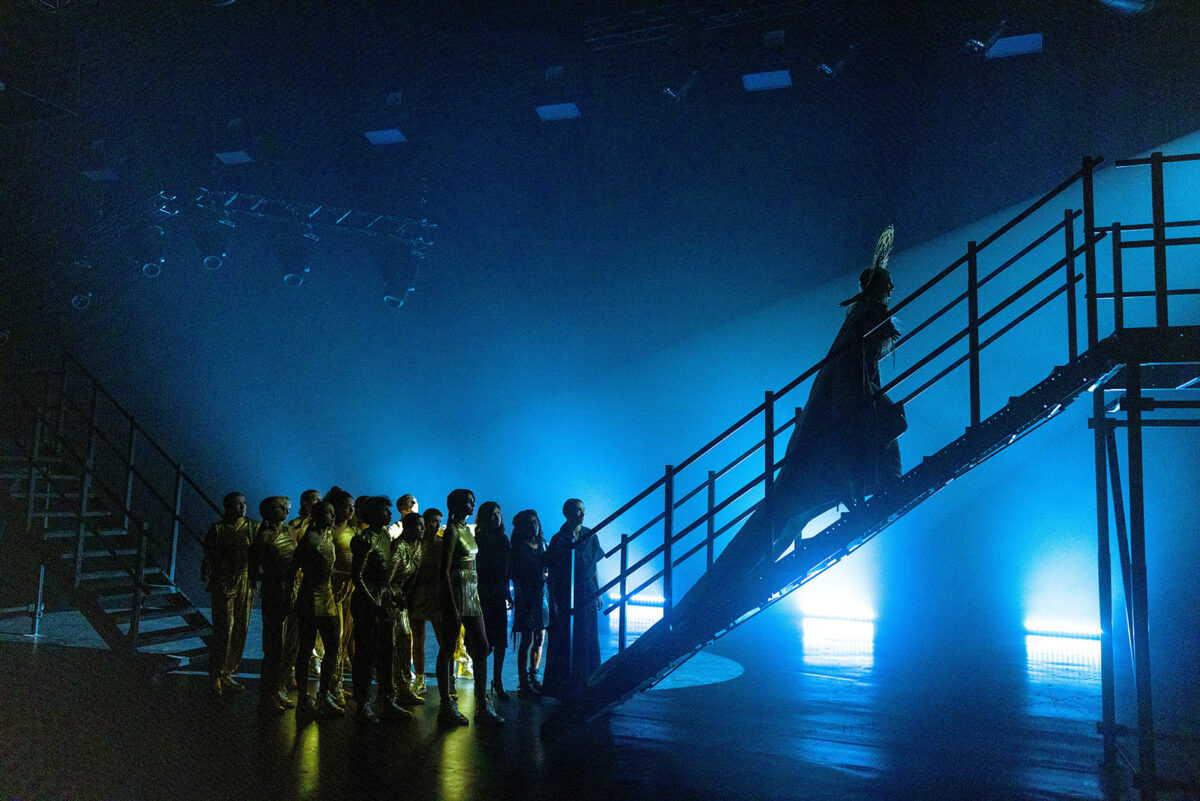
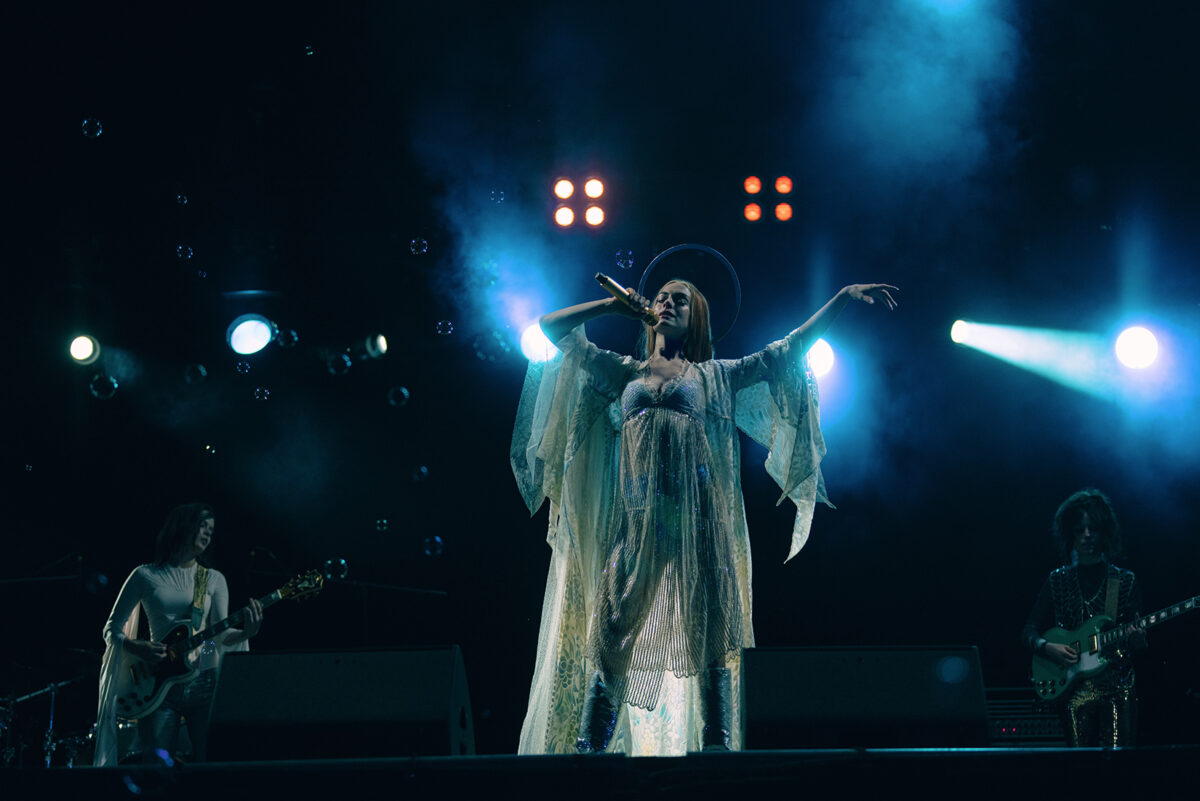
David Lowery once again demonstrates his exceptional ability to construct images rich in meaning. The cinematography, production design and costume design work together seamlessly to create a universe that oscillates between the glamour of contemporary pop culture and an almost liturgical imagination, where concerts acquire the significance of ritual.
If there is one aspect of Mother Mary that is beyond dispute, it is its extraordinary visual craftsmanship.
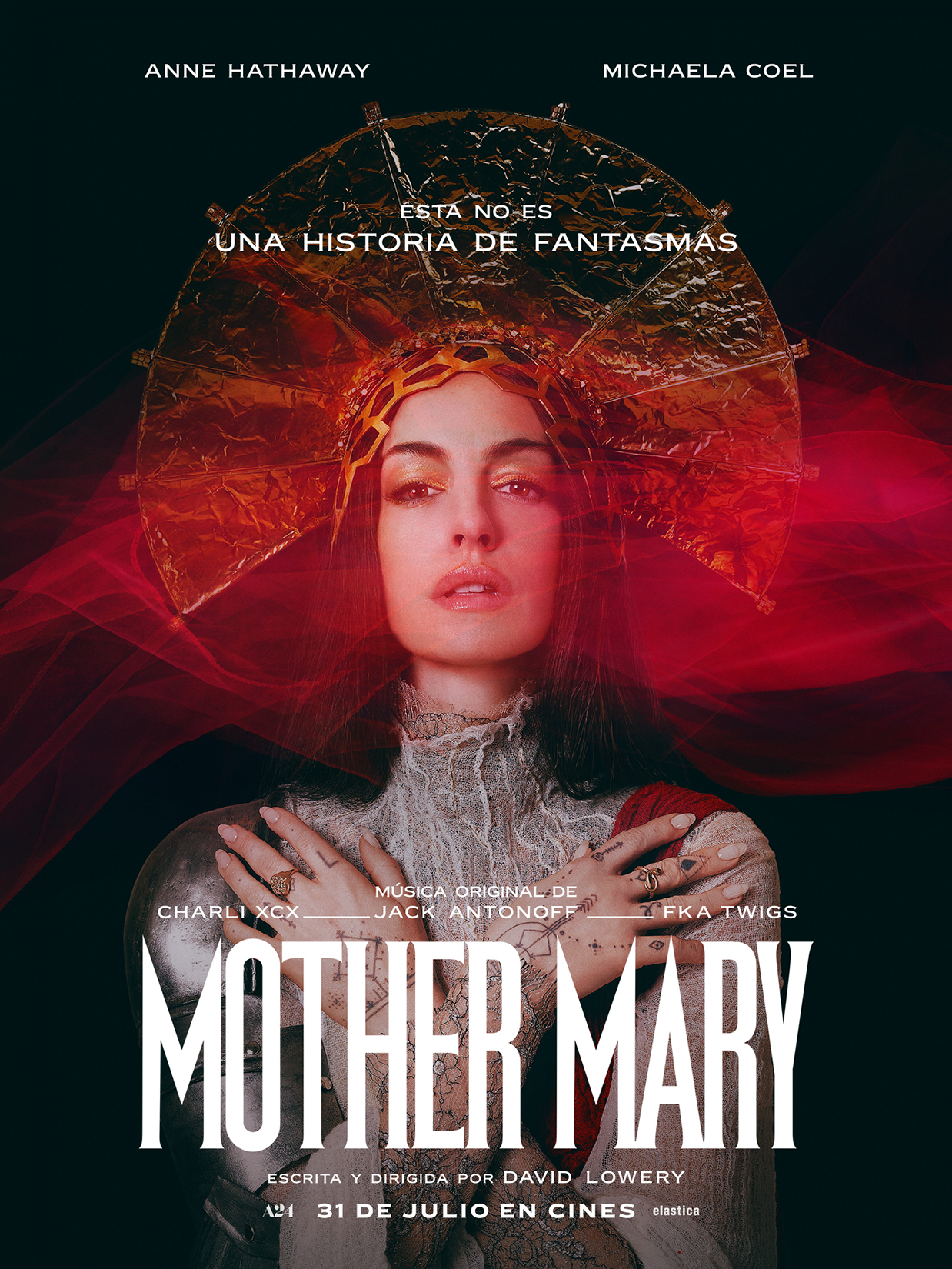
The sets, choreography and staging are meticulously designed to convey this duality between spectacle and vulnerability. Even when the film embraces restraint, every frame retains remarkable aesthetic richness.
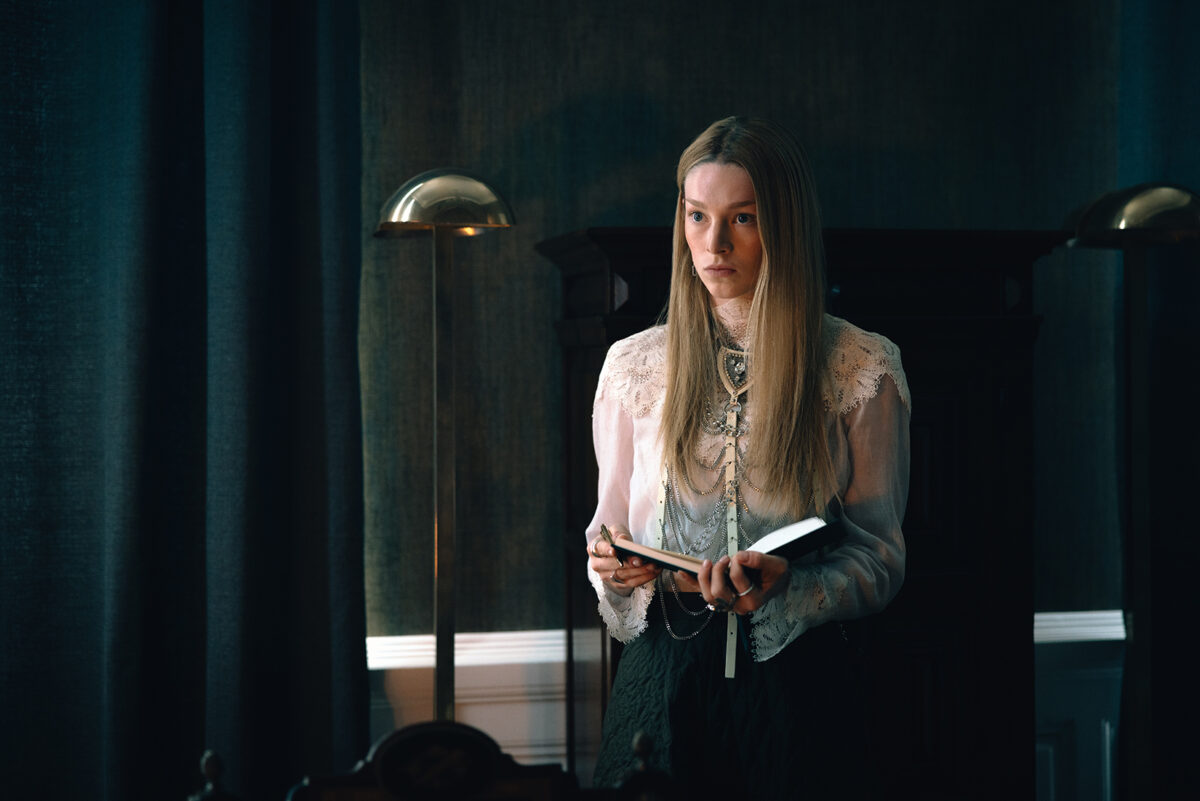
Particularly outstanding is the costume design by Bina Daigeler, who transforms Mother Mary‘s emotional journey into a visual evolution. Every public appearance by the singer becomes an extension of her inner state, culminating in the spectacular final gown designed by Iris van Herpen, which encapsulates much of the film’s artistic vision.
Everything has been conceived with admirable attention to detail, demonstrating the extent to which Lowery understands imagery as a narrative tool rather than merely decorative embellishment.
Anne Hathaway and Michaela Coel carry the story
Another of the film’s greatest strengths lies in its performances. Anne Hathaway delivers what is arguably one of the most complex roles of her recent career.
Her Mother Mary combines the almost divine confidence she projects on stage with a constant fragility once the spotlight fades.
Hathaway moves effortlessly between these two versions of the character without ever losing credibility, portraying a pop star shaped by extraordinary success while simultaneously exhausted by the persona she herself has created.
Alongside her, Michaela Coel delivers an equally compelling and restrained performance. Her Sam Anselm embodies the quiet talent that exists behind the spectacle — someone whose creativity proved essential in creating a global icon, yet who ultimately found herself pushed into the background.
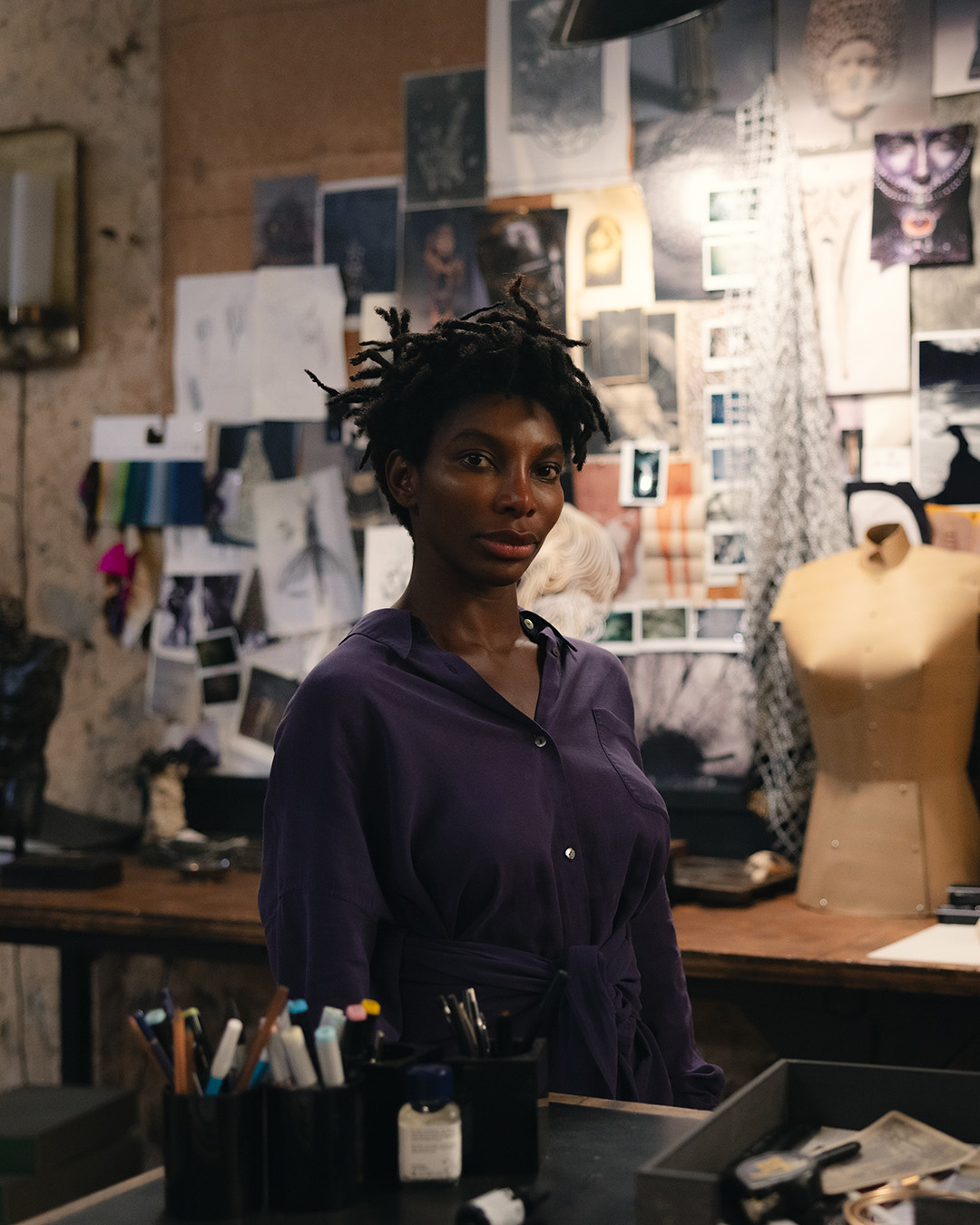
The chemistry between the two actresses sustains much of the film. Their conversations, silences and confrontations contain some of the story’s most compelling moments, particularly when the narrative abandons visual spectacle and focuses solely on their relationship.
When the pop universe never fully connects
However, this is also where Mother Mary encounters its greatest challenge.
Although the film clearly draws inspiration from figures such as Madonna, Lady Gaga, Taylor Swift and Beyoncé, it never fully succeeds in creating a completely distinctive identity for its protagonist. Mother Mary functions effectively as a symbol, yet it remains difficult to perceive her as a genuinely believable artist with a recognisable career.
The songs, composed by Charli XCX, Jack Antonoff and FKA twigs, possess more than enough quality to support the film’s musical universe, but the pop dimension of the character ultimately feels more conceptual than emotionally convincing.
We understand who Mother Mary is and what she represents, yet it proves more difficult to connect with her on a deeply personal level.
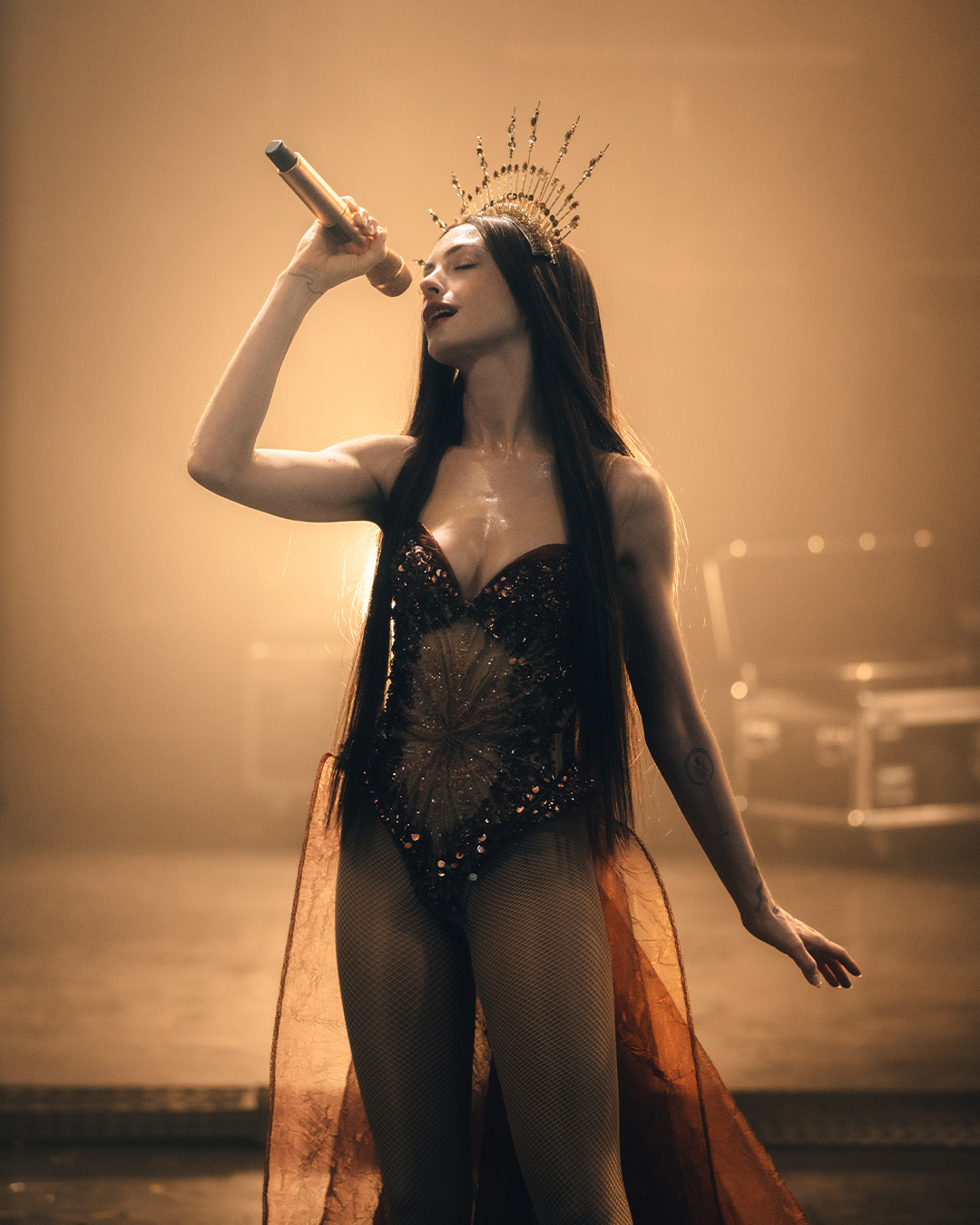
This directly affects the central conflict. The relationship between Mother Mary and Sam contains fascinating ideas about artistic creation, creative ownership, ego and friendship, yet the audience observes this process from a certain emotional distance.
The film constantly invites viewers to interpret symbols rather than share emotions.
This is not a problem of performance or direction, but of a screenplay that privileges ideas over emotional experience.
Between reality and the supernatural
It is difficult to watch Mother Mary without thinking of A Ghost Story.
Not only because both films share the same director, but because David Lowery once again explores many of the themes that run throughout his body of work: absence, invisible bonds, the passage of time and the difficulty of expressing certain emotions through words.
Here, that symbolic universe takes shape through a supernatural presence whose meaning deliberately remains open to interpretation. Anne Hathaway sees it as a representation of karma; Michaela Coel describes it as a force of eternal love, while Lowery himself defines it as “a feeling trying to find a form”. The diversity of these interpretations makes it clear that the intention was never to provide a single answer, but to leave space for each viewer to complete its meaning.
On paper, the idea fits perfectly with the director’s recurring concerns. Yet throughout the film, this supernatural presence ultimately feels more conceptual than organic. Whereas in A Ghost Story the supernatural element emerged naturally and sustained the entire narrative, here it seems to appear primarily to reinforce symbolism that the story was already communicating on its own.
It doesn’t diminish the beauty of the imagery nor undermine the visual ambition of the film, but it does leave the impression that the device feels more intellectually conceived than emotionally experienced.
A more sensory than emotional experience
Mother Mary confirms that David Lowery remains one of contemporary cinema’s most visually compelling filmmakers. His ability to create atmosphere, work with symbolism and transform every frame into a carefully composed image remains entirely intact.
The film also demonstrates enormous respect for disciplines such as fashion, music and production design, integrating them into the narrative as essential storytelling tools rather than mere ornamentation.
However, all this formal richness is not always matched by the dramatic development. The story raises compelling questions about identity, success, authorship and artistic creation, yet rarely allows these ideas to achieve the same emotional intensity found in some of the director’s previous works.
That does not make Mother Mary an unsuccessful film. On the contrary, it is a bold, elegant and visually fascinating work that dares to explore territory rarely visited in contemporary cinema. But it is also a film that seems more interested in being admired than in moving its audience.
Perhaps that is the greatest difference between Mother Mary and A Ghost Story. In the latter, an empty house, the passing of time and a motionless ghost were enough to speak about love and loss with extraordinary depth. Mother Mary offers grand stages, meticulously crafted pop iconography and two magnificent actresses, yet that intimate connection with the audience always remains just beyond reach. Admiration is present from beginning to end; emotion, by contrast, appears only intermittently.
Released in Spanish cinemas on 31 July 2026. Please check local listings.
(*) Cover photo, horizontal still 1, vertical image 1 and slider image 2: Frederic Batier. Horizontal still 2, slider images 1, 3, 4, 5, 6 and 7, and vertical image 3: Eric Zachanowich. Images courtesy of UPI Media.