The Hivernacle: revival of one of the gems of Parc de la Ciutadella
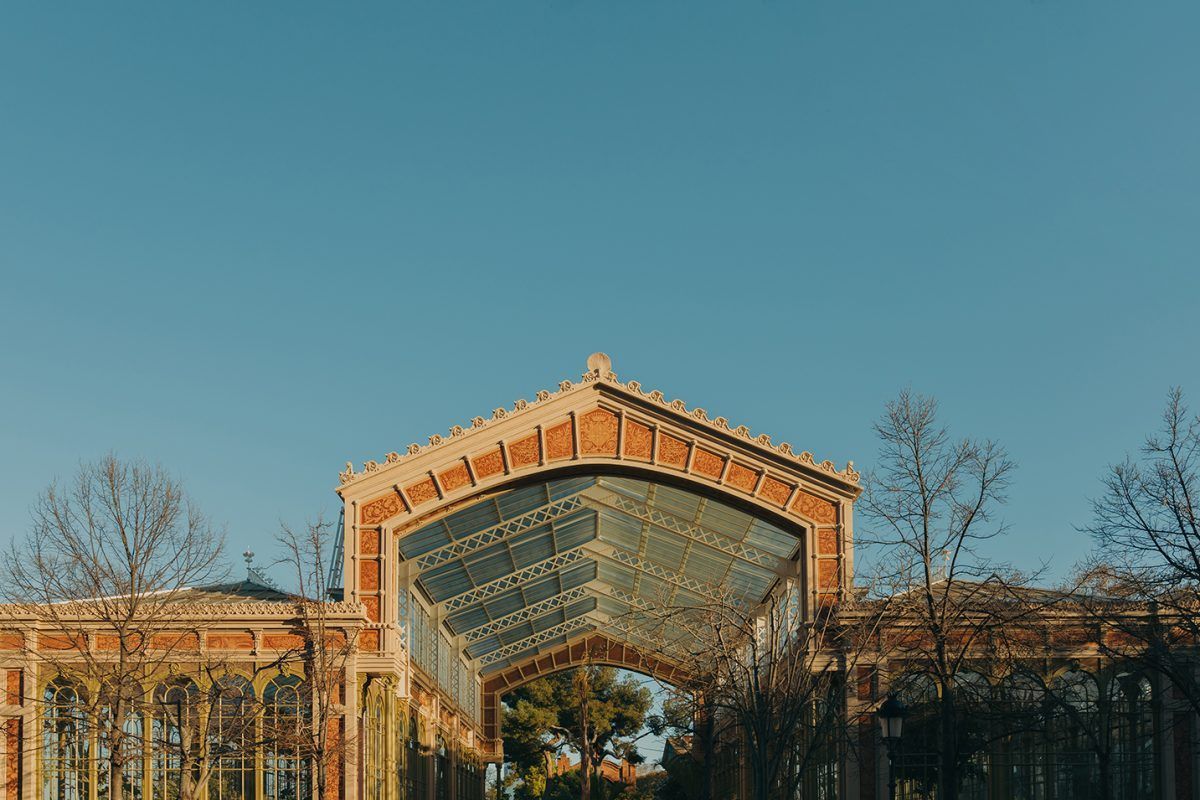
This magnificent modernist building is located within Parc de la Ciutadella, next to the Castell dels Tres Dragons. It is a greenhouse designed by Josep Amargós i Samaranch and protected as a “Cultural Property of Local Interest.” It was built between 1883 and 1887 and is part of Barcelona’s modernist heritage.
Address: Passeig de Picasso, 7 · Parc de la Ciutadella (Barcelona)
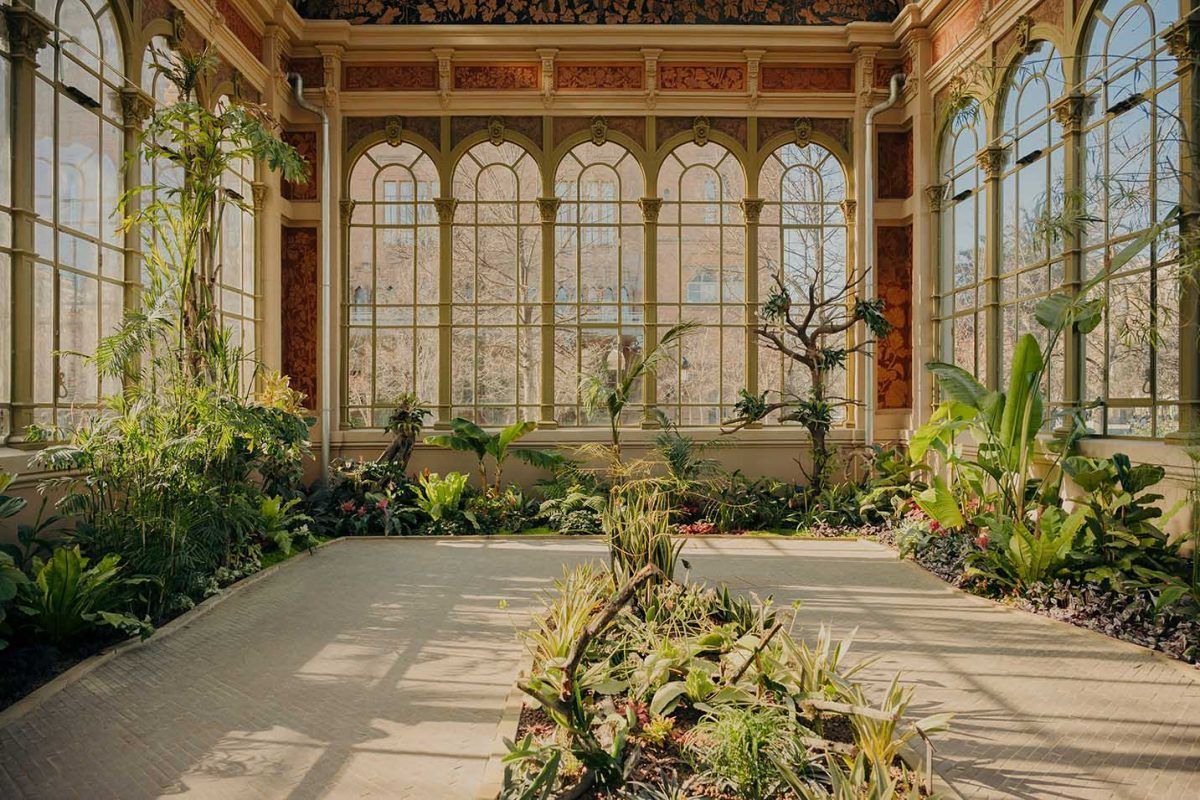
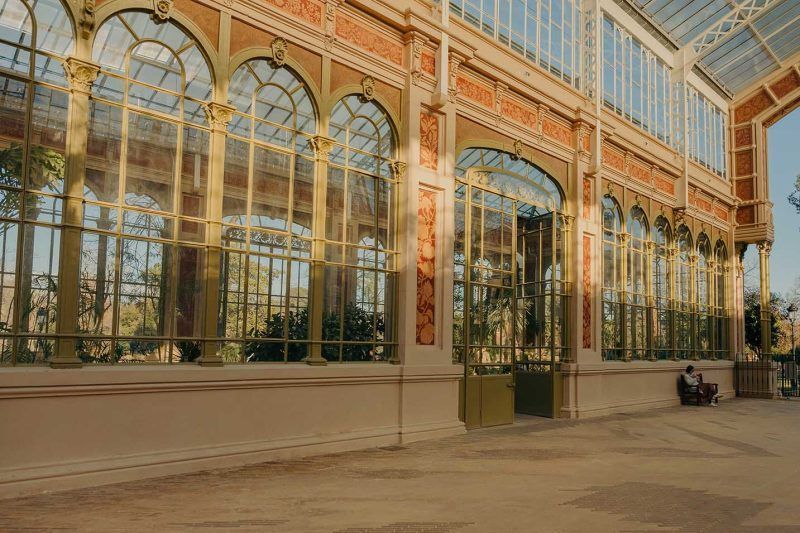
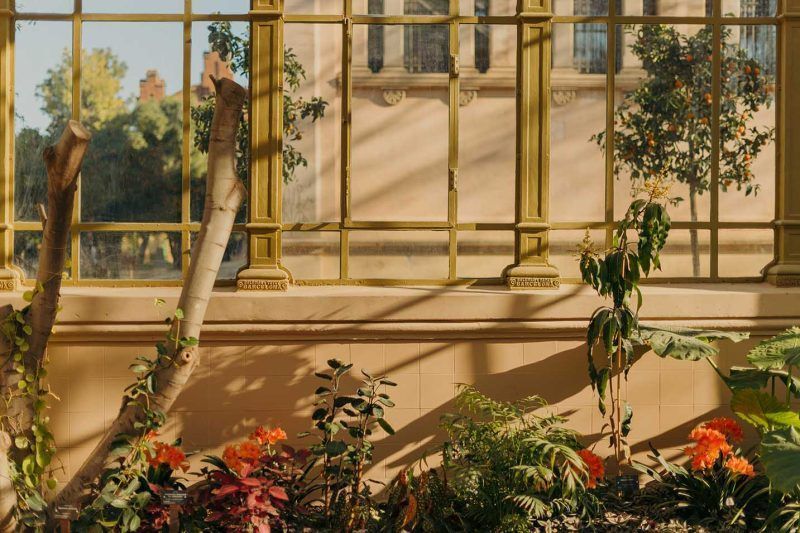
Despite being conceived to cultivate tropical plants, during the 1888 Barcelona Universal Exposition, the Hivernacle was used as a party and conference hall, much like the Umbracle. It also operated as a restaurant for a period afterward. However, since 2006, it has been unused.
“The Hivernacle is one of the jewels of Ciutadella Park.”
A rehabilitation for a new life
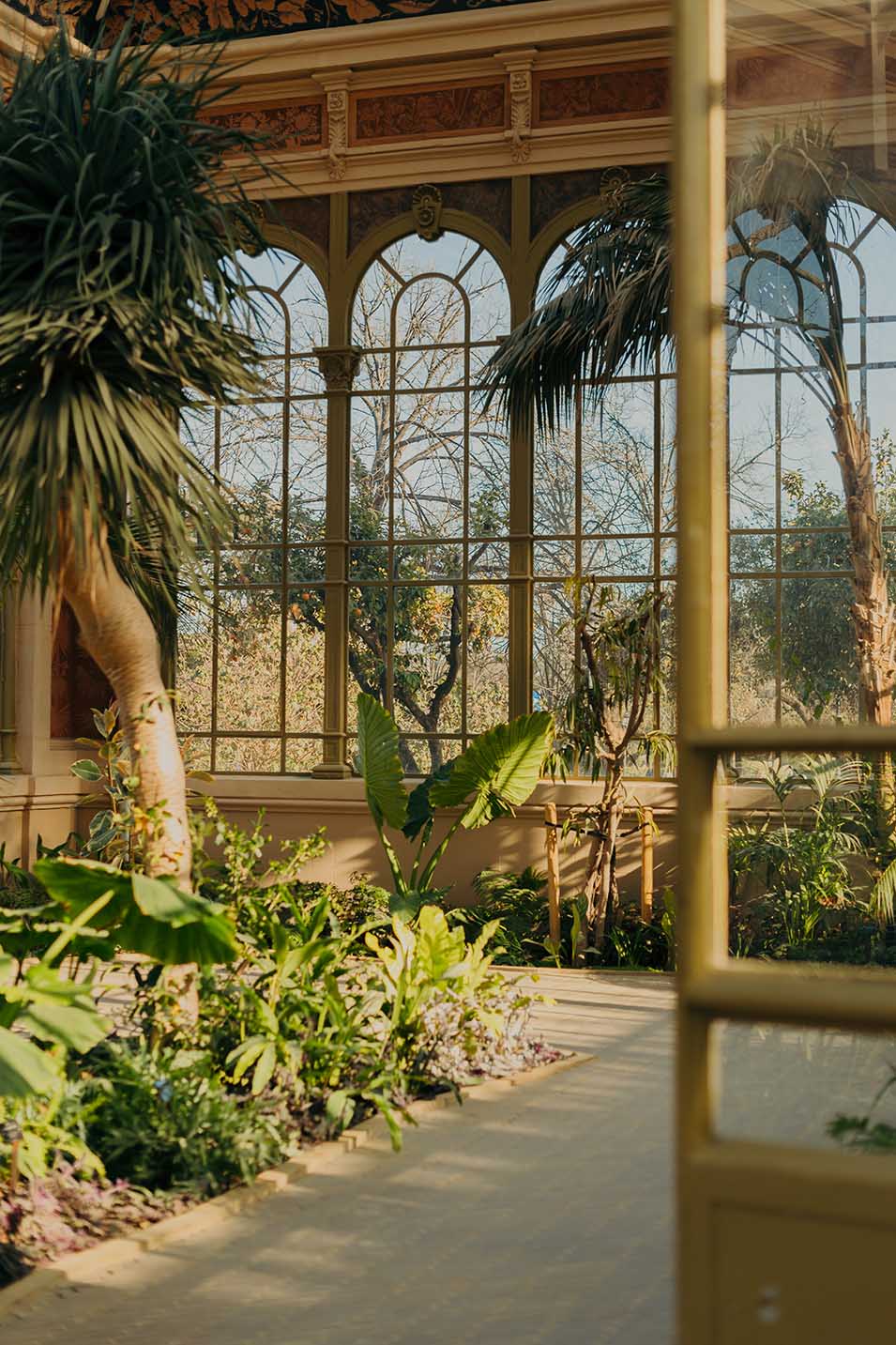
After a season of closure for renovation, the Hivernacle has resumed its main activity: housing plants from the botanical collection and disseminating knowledge about greenery, biodiversity, and gardening among the public.
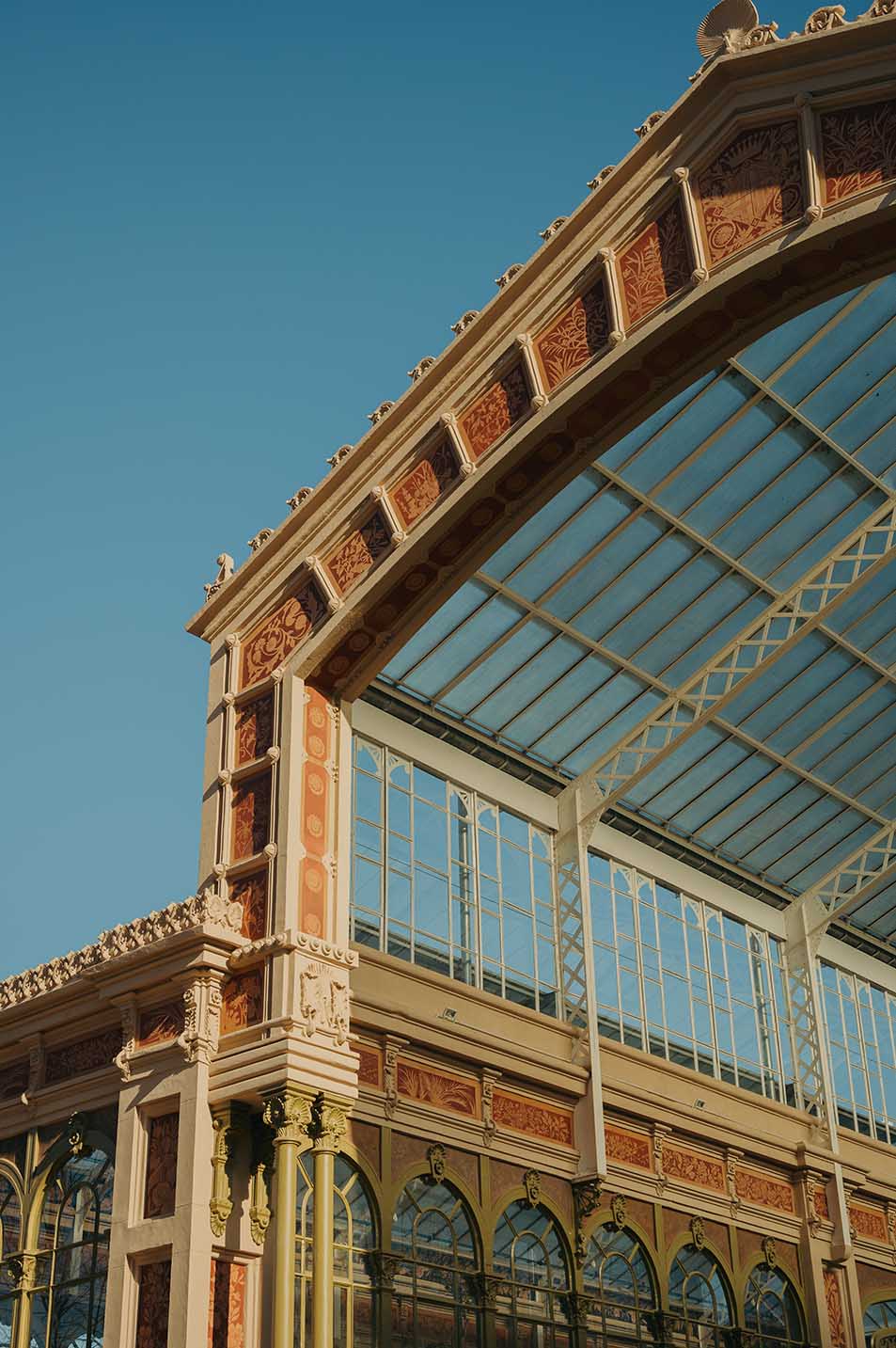
Its restoration has preserved most of the historical flowerbeds and planters, allowing visitors to contemplate specimens in the three naves that make up the building. In fact, it was discovered during the restoration that the decorative program of the Hivernacle is the work of Alexandre de Riquer i Ynglada, one of the most prominent plastic artists of Catalan Modernism.
Curiosities about the building
Built 135 years ago by Josep Amargós i Samaranch, the Hivernacle consists of a modernist-style garden space distributed in three areas: the central nave, the Magnolias nave, and the Picasso nave. The main entrance is through the central nave, which is open on two sides.
“It is a unique building and a prominent example of iron architecture in the city.”
It is one of the most outstanding examples of iron architecture that developed in Barcelona in the late 19th century, and it also stands out for its decorations, which have just been restored and recovered and now shine again in all their splendor.
A new facility for the city
The Hivernacle shines again, along with the city and its inhabitants. In addition to being able to enjoy its beauty, it has other very interesting uses:
/ It houses more than a hundred species of plants of high botanical and agricultural interest. Hence, it presents itself as a space for the care and exhibition to the public of plant collections.
/ A great variety of educational activities are organized in its space, aimed at bringing nature and botanical knowledge closer to the public, while reinforcing the heritage value of Ciutadella Park.
/ It includes the visitor information point for Ciutadella Park and, by extension, for all the green spaces in the city.
All these initiatives are public and non-profit.
Green that I love you green
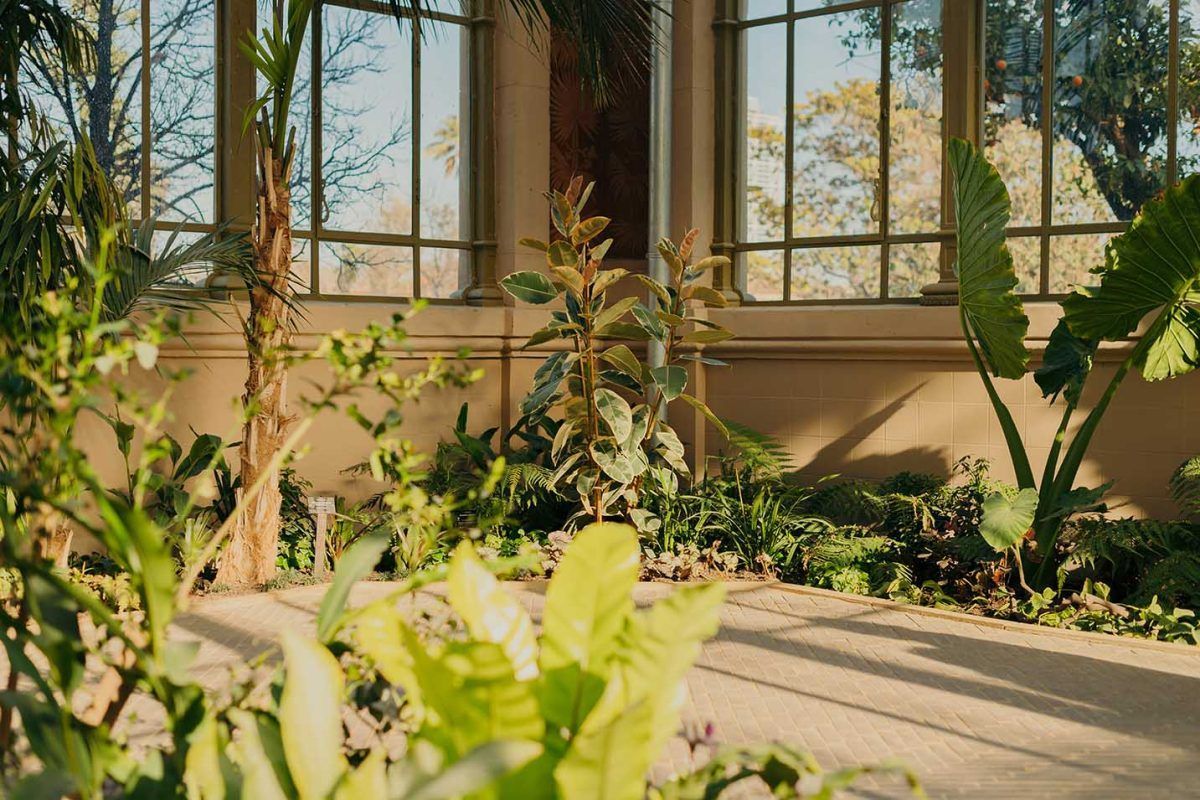
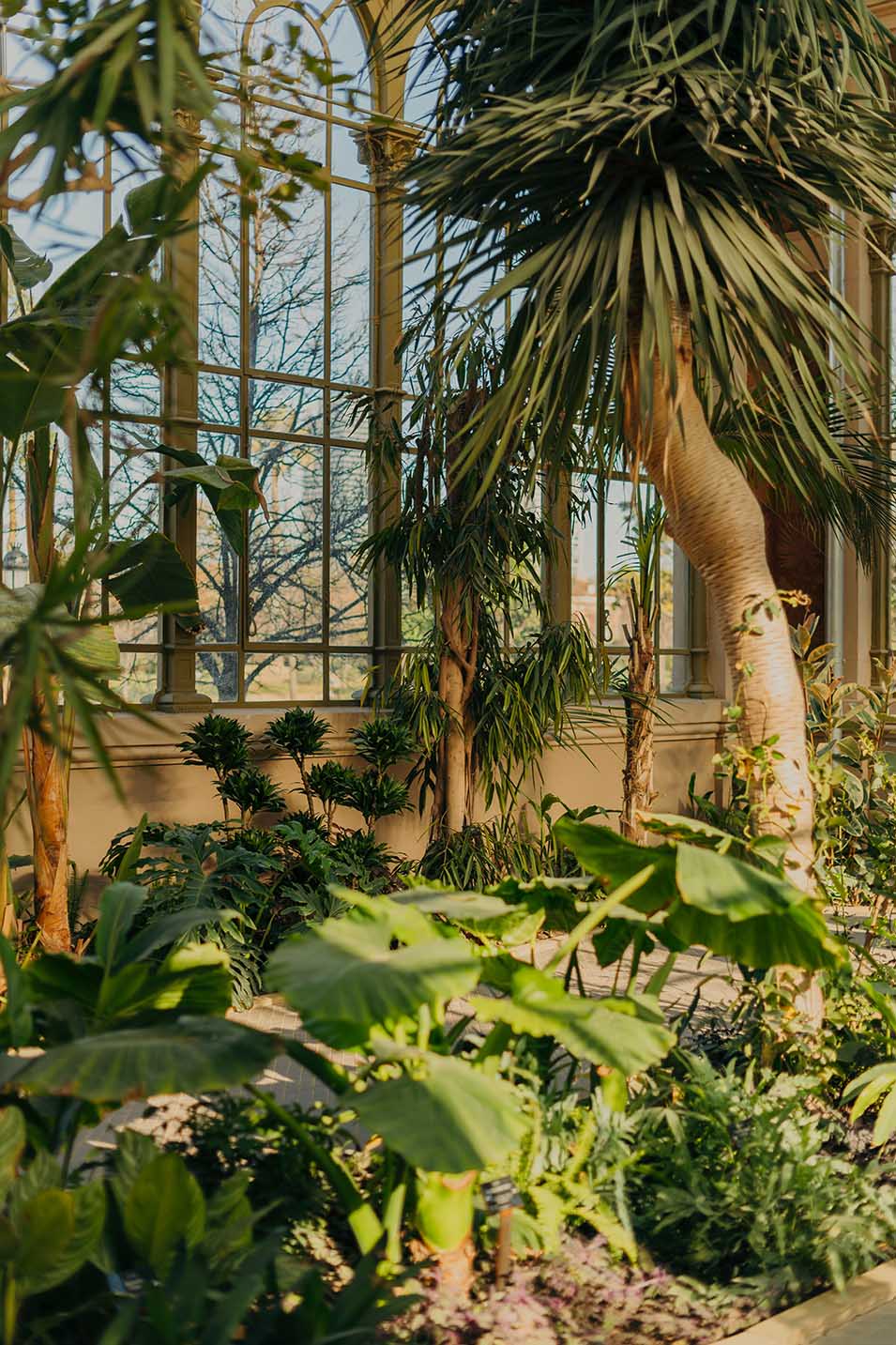
The plants that have survived all these years have been incorporated into the new planting program, which includes more than a hundred plant species. Most of them are found in the Magnolias nave, which houses the largest collection, although various varieties can also be seen in the central nave and the Picasso nave.
In choosing the plant species on display, different criteria have been taken into account: that the plants were available in the supply nurseries; that they could live in a cold greenhouse without shading; that they were, above all, traditional indoor plants for greenhouses, and that they had botanical or agricultural interest.
The collection includes some plants that were common in exhibition greenhouses in the 19th century, particularly in Europe (in countries like the United Kingdom, France, or Germany) in botanical gardens or in greenhouses of large private gardens. These species coexist with specimens of other types.
A history of ups and downs
After the Universal Exposition, on November 23, 1893, the Barcelona Publicists Association, which looked after literary and artistic interests in the city, asked the City Council to cede the Hivernacle for use as headquarters and for teaching classes there. The entity undertook to finish it because the closures of the central body had not yet been made, and to adapt it to their needs, but none of these interventions were carried out.
In the early 20th century, the Hivernacle was virtually abandoned. It was only used as a temporary storage facility for plants. In 1907, the Barcelona Board of Natural Sciences, a body that depended on the City Council, requested that the necessary works be carried out to accommodate some animal species: birds – which would live semi-freely -, snakes and reptiles – taking advantage of the areas attached to the side walls -, and other smaller reptiles and fish in the central area, where a fountain and a pond could be installed.
The Spanish Civil War (1936-1939) marked, like in so many other aspects of Barcelona’s daily life, a turning point for the Hivernacle. The building, fragile and exposed, suffered heavily from the bombings on the city.
In the early 1960s, the Hivernacle required extensive rehabilitation. In 1961, the Friends of the Gardens requested the City Council to restore it, along with other areas of the Ciutadella Park. In 1963, a major reform of the park began, starting with the lake, the waterfall, and the entrance promenade. The Hivernacle would be restored in 1965, along with the Umbracle building.
After a period of prosperity in the 1960s, and probably due to the inability to maintain the collection and the building, the Hivernacle experienced a decline again in the 1970s.
In 1983, the Hivernacle, which remained open to the public but in a state of abandonment, was renovated again. The City Council wanted to install the Urban Environment Center there, but the project did not succeed.
The penultimate rehabilitation began in 2015, but the works had to be suspended in September 2016. A large part of the visible iron structure of the three naves was restored, but the ornamental elements of the facades were not addressed. The work remained unfinished.
In 2021, a project was commissioned to complete the rehabilitation of this heritage piece that had been interrupted on several occasions. These works began in September 2022 and lasted for 15 months with two main objectives. On one hand, to restore the original image of the Hivernacle, and on the other hand, to address the pathologies that had appeared throughout its history.
Now, after all these ups and downs, we can enjoy a bucolic, beautiful, and very inspiring place.
(*) Photos: CC/studio.