Dumbo: the smashburger that conquered Paris and is now taking on London
In a world saturated with fleeting food trends, Dumbo has achieved something exceptional: transforming the smashburger into a cult experience, a cultural manifesto, and a case study in design-led urban lifestyle. Founded in 2019 in Pigalle by Charles Ganem and Samuel Nataf, Dumbo has not only redefined the concept of fast food — it has elevated it into a language of its own: honest, direct, and unapologetically contemporary.
This article explores how Dumbo became a must-visit destination in Paris, its evolution into a creative studio that goes beyond hospitality, and its recent arrival in Shoreditch, London — its first international location.

A radical start: back to basics
From its very first location — a 17 m² spot in Pigalle where food was served straight through a street window — Dumbo made its intentions clear: to reclaim the original spirit of fast food. Not the industrialised, mass-market version, but the popular, straightforward, and accessible one.
Their focus on the smashburger as a centrepiece was a declaration of intent: quality meat, a lightly brioched potato bun, American cheese for its perfect melt, Heinz ketchup, all cooked to order on a scorching griddle. Crisp on the outside, juicy within.
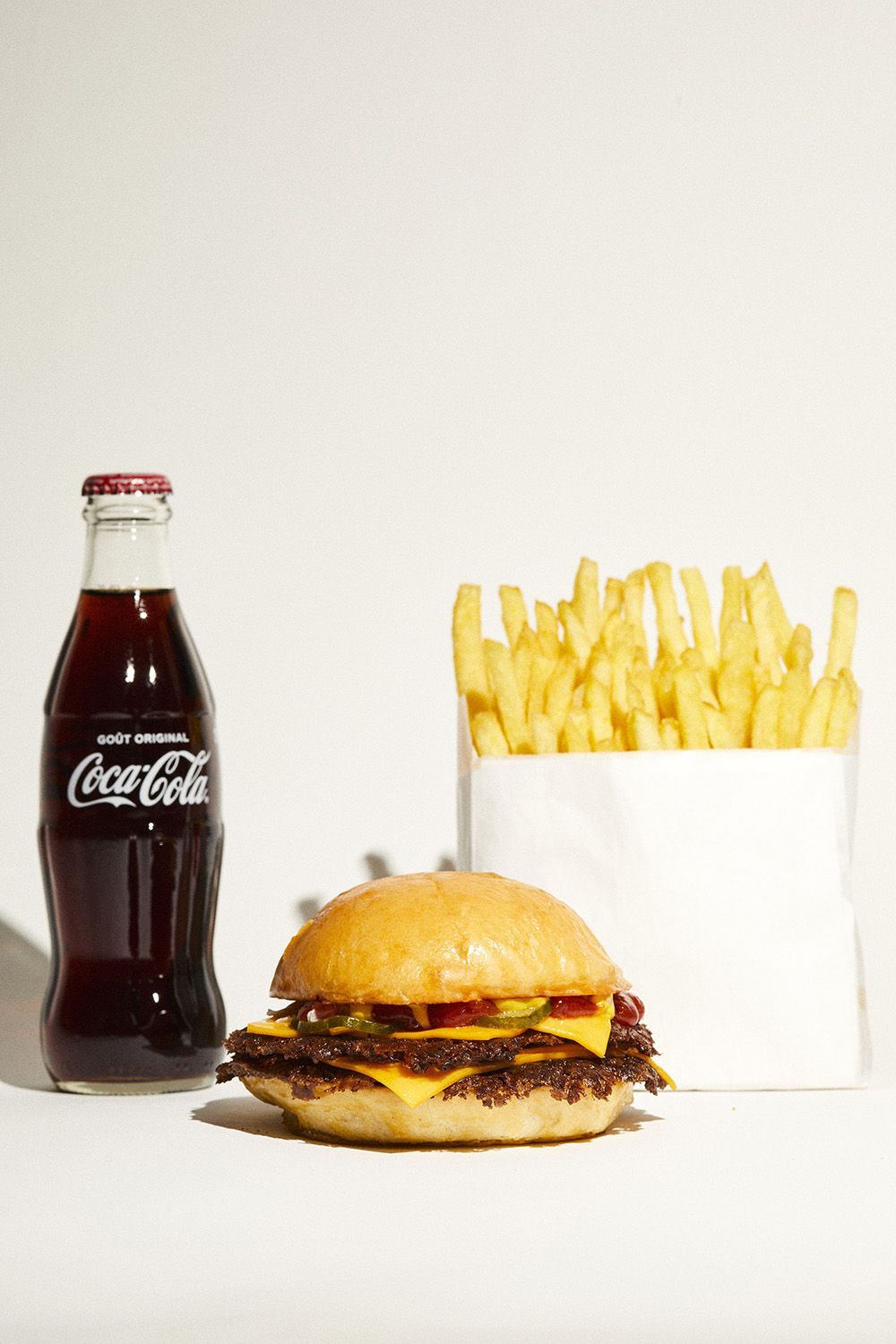
This minimalist, honest, and unpretentious approach was immediately recognised. In its first year, Le Fooding awarded Dumbo Best Burger, and since then, it has built a loyal following among the public, chefs, and creatives alike.

More than burgers: an evolving urban culture
Over time, Dumbo has proven that it’s not just a place to eat well, but a fully-fledged creative ecosystem. Charles and Samuel have collaborated with major names and brands from the contemporary scene — including Septime, Folderol, Nike, Jacquemus, Virgil Abloh — and have even catered backstage at Cannes and Beyoncé concerts.
The menu has evolved carefully, now offering vegetarian options, homemade nuggets with signature sweet-and-sour sauce, and craft beers developed in partnership with Hoppy Road. Every addition follows the same logic: balance of texture, flavour, and emotional memory.
Dumbo has become a culinary and cultural studio, where every element — from furniture to packaging — responds to a coherent, refined vision.
Emotional architecture: design you can feel
One of Dumbo’s pillars is the design of its spaces. Rather than replicating a formula, each location responds to the character of its neighbourhood.
The Petites Écuries venue was designed by Studio Uchronia, with nods to classic Parisian café counters. The Maraisspace blends contemporary minimalism with vintage warmth, while in Oberkampf, the kitchen sits at the centre, surrounded by booth seating — evoking a modern diner and a sense of community.

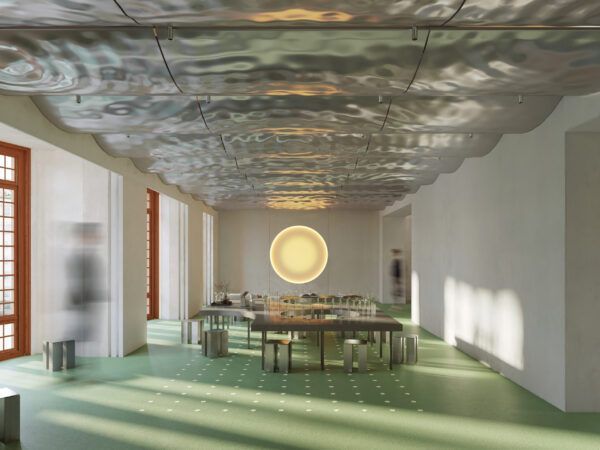
Furniture by names like Alvar Aalto for Artek, the use of noble materials (brushed steel, textured tiles), and warm lighting create environments that are functional, sustainable and timeless.
London: first step in going international
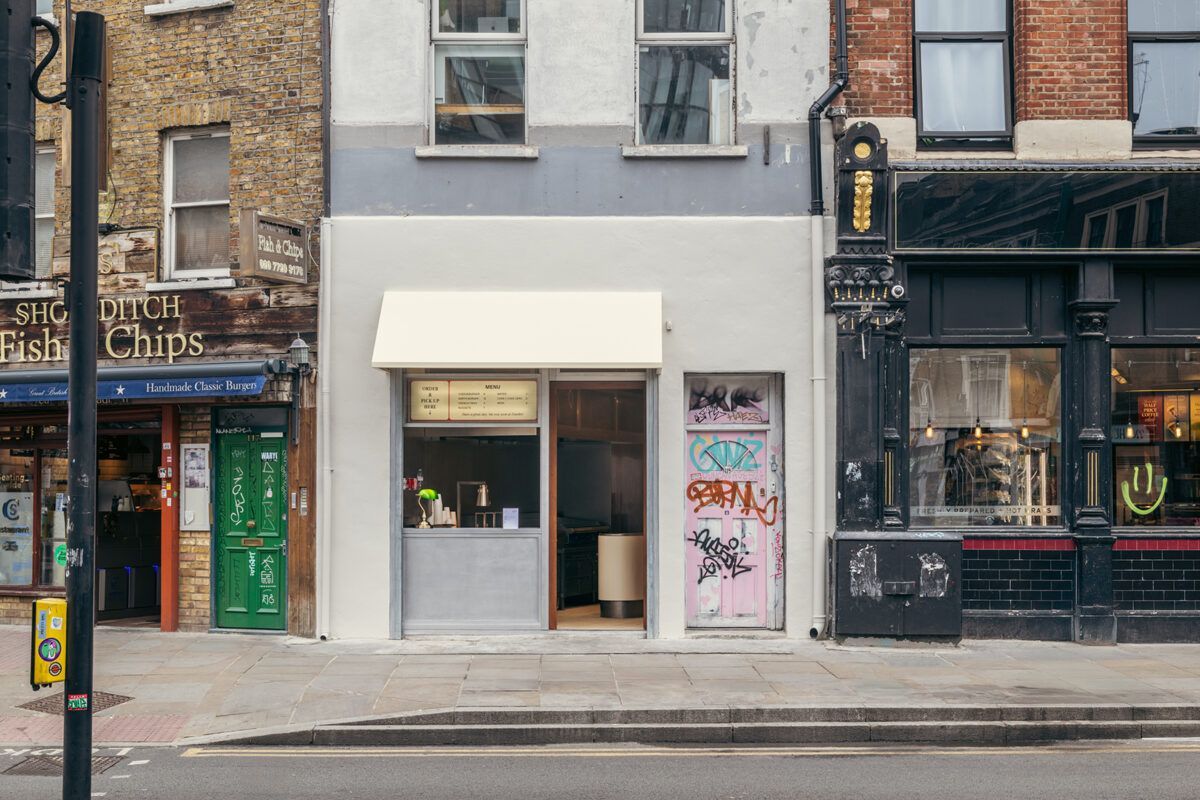
In June 2025, Dumbo opens its first location outside France, choosing Shoreditch — one of London’s most vibrant and creative districts.
The menu mirrors that of the Paris venues, but the ingredients are locally sourced. The meat, for example, comes from HG Walter, a high-end supplier also used by The River Café and Core by Clare Smyth.

The design of the London venue was developed with architecture studio Red Deer, taking inspiration from traditional East London cafés and bagel shops. Materials like brushed steel and ceramic create a space that is sober yet inviting, while a covered back garden offers a quiet spot to enjoy your meal.
Sustainability, honesty and community
Dumbo is founded on values that go beyond marketing. Its commitment to honest quality means using fresh, seasonal ingredients from responsible sources. There are no secrets or shortcuts. They also maintain a constant effort to improve — from sustainable materials to efficient processes and a respectful working environment for the team.
For Dumbo, food is a tool for connection — an everyday gesture that, when done well, becomes something powerful. Every burger, every piece of packaging, every space expresses a single idea: simplicity, done with care, can move you.
“Every Dumbo’s space expresses a single idea: simplicity, done with care, can move you.”

From Paris to the world: five spaces, one identity
Today, Dumbo has five locations:
Pigalle (where it all began, from a 17 m² street-facing kitchen).
Petites Écuries, with its urban café vibe.
Marais, with vintage-minimalist flair.
Oberkampf, the most diner-inspired.
And now Shoreditch, London — its first international outpost.
Each one functions as a meeting point between food, culture and community. Places to stay, to observe, to share. And all share a common essence: the pursuit of authenticity.

Dumbo: fast food for the future (and the present)
In a time of overwhelming choice and soulless standardisation, Dumbo shows that another way is possible. That food can be simple without being dull, popular without losing precision, and fast without sacrificing care.
Dumbo has not only redefined the smashburger in Europe — it has created a new way of eating, designing, and inhabiting the city. And if Shoreditch is just the beginning, the future promises new territories in which to keep exploring the essentials.
(*) Photos courtesy of Dumbo.