Noue Studio renovates a listed apartment in Freiburg
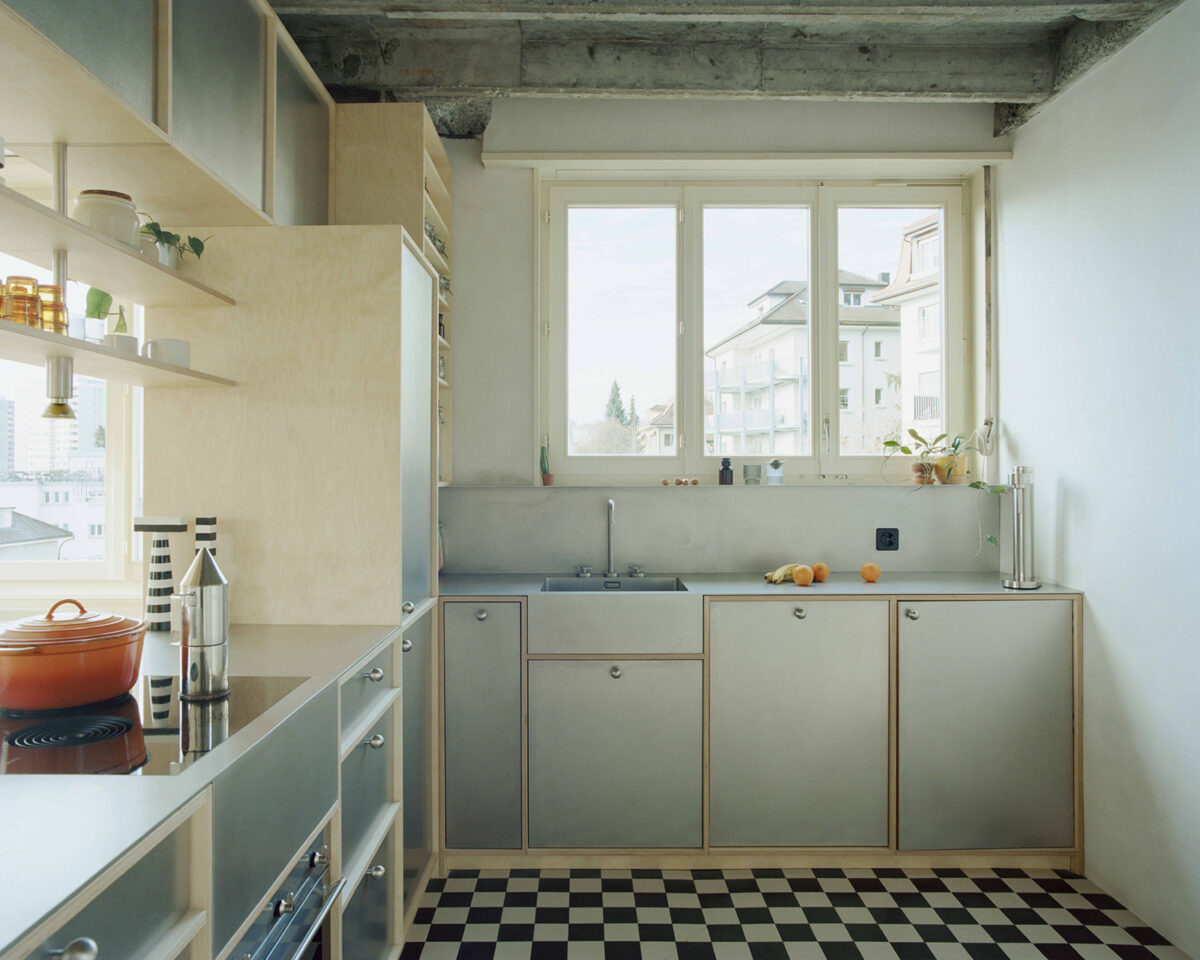
The intervention restores the original architecture of Freiburg’s first modernist building through a precise and deeply respectful renovation.
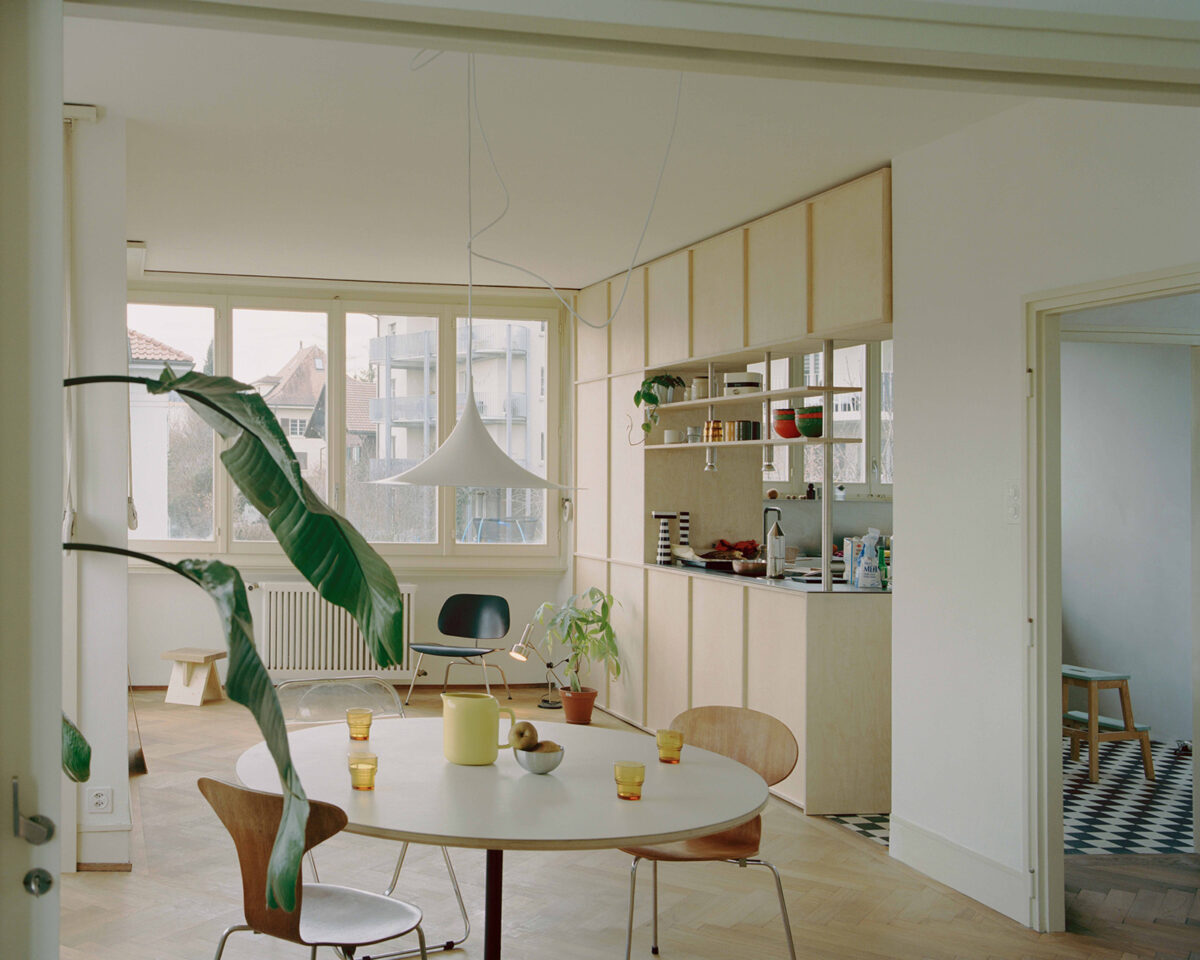
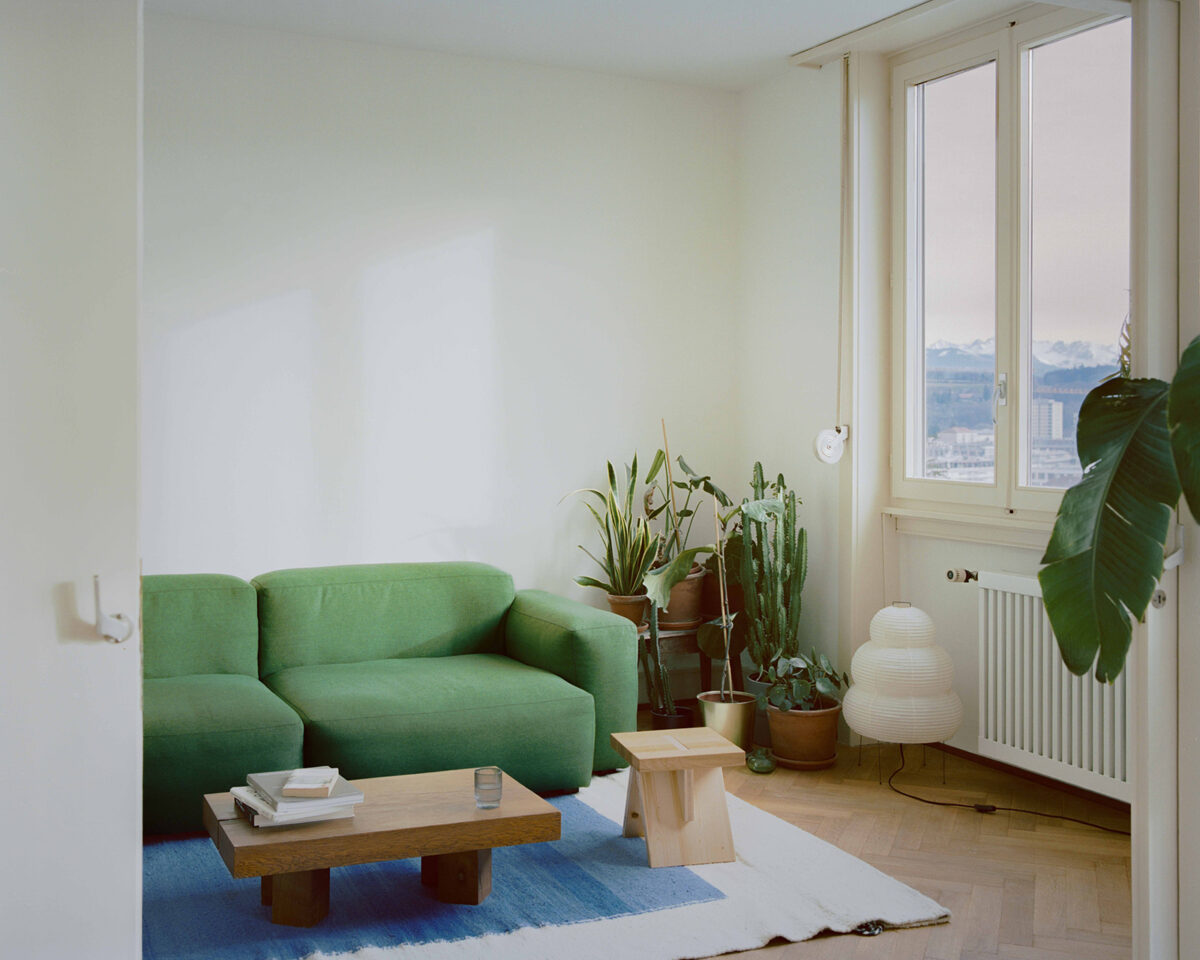
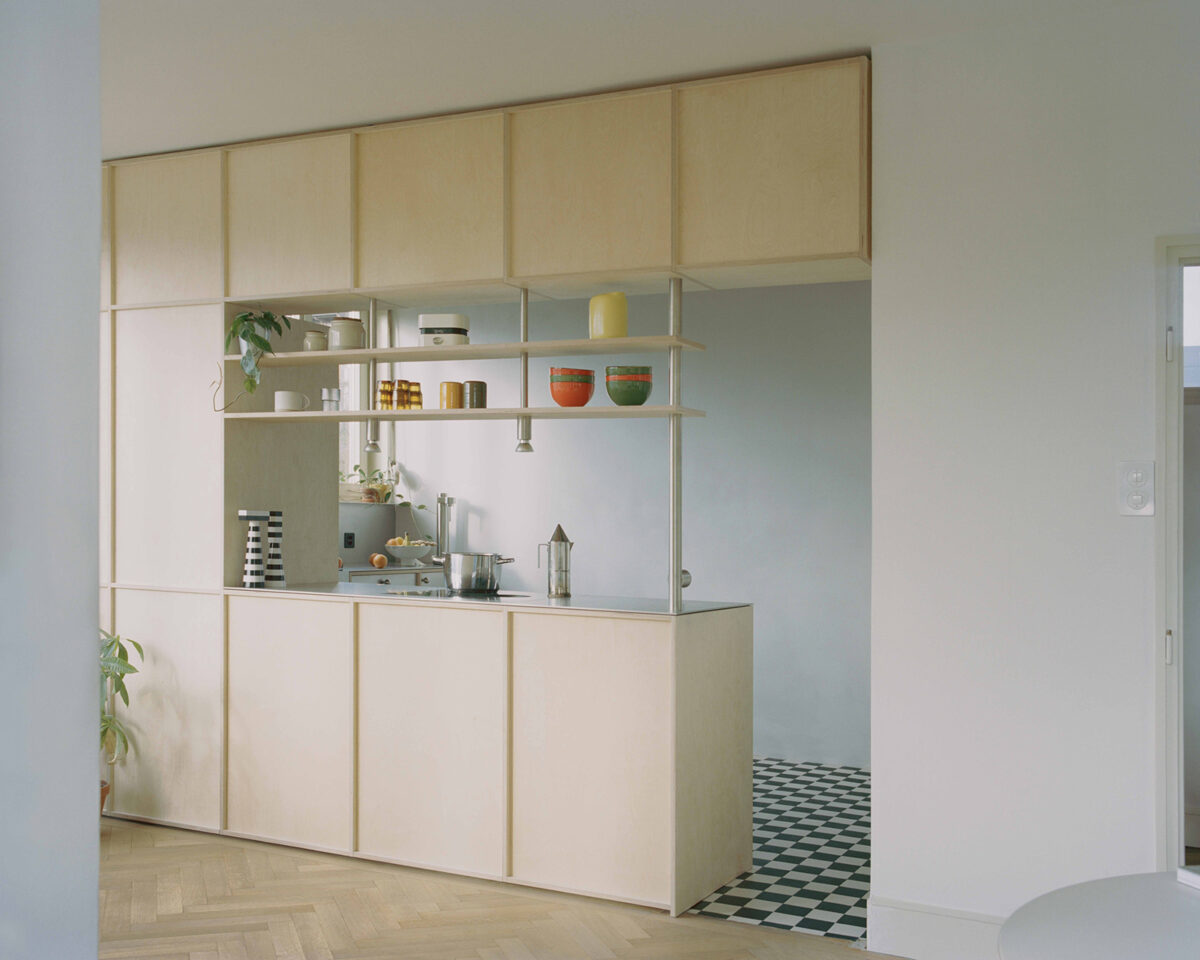
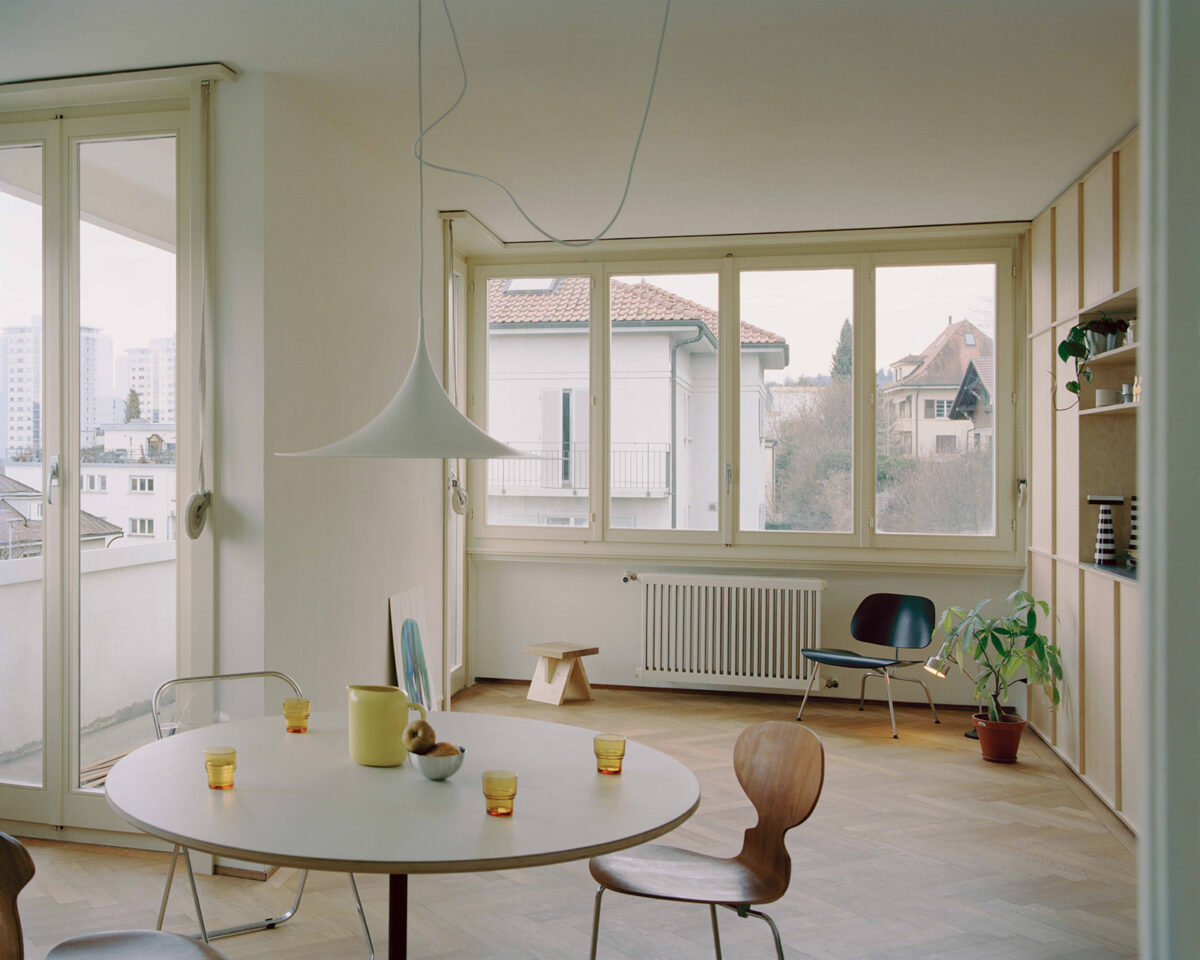
Noue Studio‘s intervention in this listed apartment in Freiburg is guided by a simple principle: intervene only where intervention is truly necessary. Rather than altering the layout or introducing new architectural gestures, the project restores the spatial composition originally conceived by Pierre Vauthey in 1936, while revealing materials that had gradually disappeared beneath decades of alterations.
Rather than transforming the apartment, the architects set out to recover qualities that had long been concealed. Their aim was not to reinterpret the home, but to restore prominence to the elements that defined one of the earliest expressions of modern architecture in Freiburg.
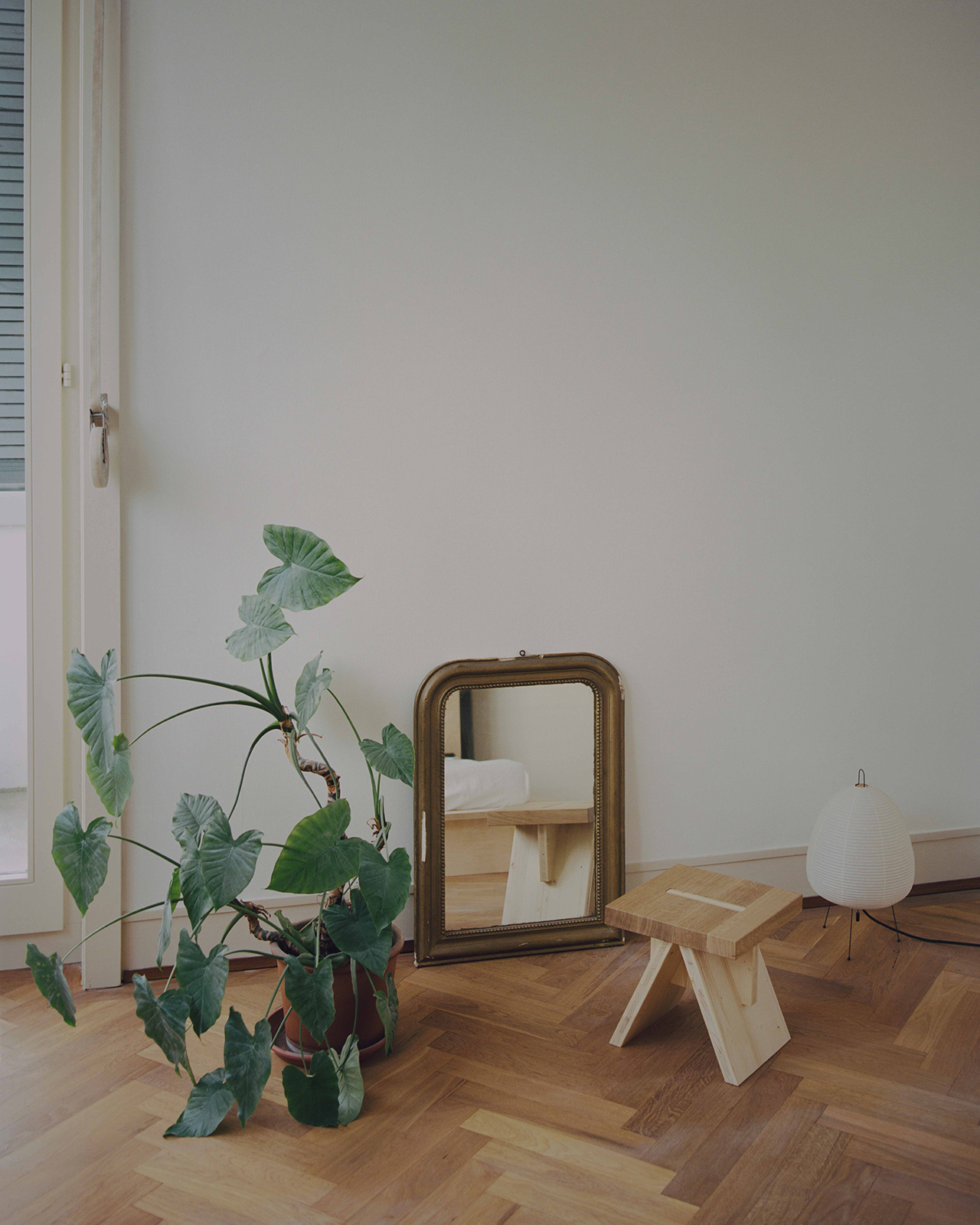
The project is built around a clear premise: to intervene only where it is genuinely necessary.
A pioneering building
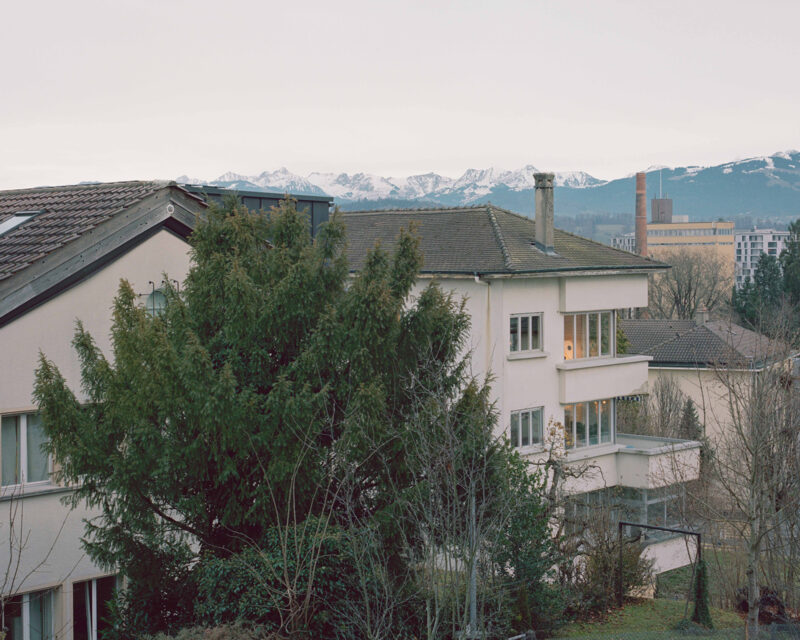
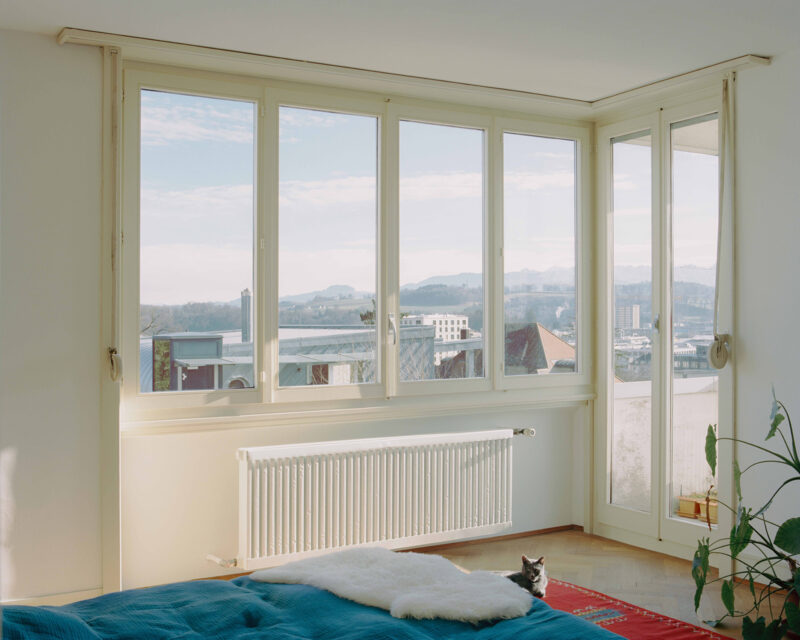
When Pierre Vauthey designed the building in the 1930s, Freiburg was still unfamiliar with the language of modern architecture. Its flat roof, ribbon windows and free-flowing internal layout stood in sharp contrast to the city’s prevailing architectural traditions, making it one of the earliest manifestations of Modernism in the region.
Almost a century later, this pioneering character has earned the building protected status as an A2 cultural heritage property, recognising its significance within Switzerland’s architectural legacy.
This context explains Noue Studio‘s approach. Rather than reinterpreting the apartment through a contemporary architectural language, the architects chose to work from the building’s original logic, understanding that the most meaningful way to update it was to reinforce the qualities that had always been there.
Architecture through subtraction
Noue Studio‘s strategy has been one of removal rather than addition. Many of the alterations introduced over the decades were carefully stripped away in order to recover the spatial structure originally conceived by Pierre Vauthey.
The layout has remained untouched and the rooms have preserved their original proportions, while regaining a clarity that had gradually been obscured over time. The process resembles architectural restoration far more than a conventional refurbishment, focusing on revealing, cleaning and making visible what successive interventions had concealed.
Concrete reclaims centre stage
One of the project’s most expressive features is found above our heads.
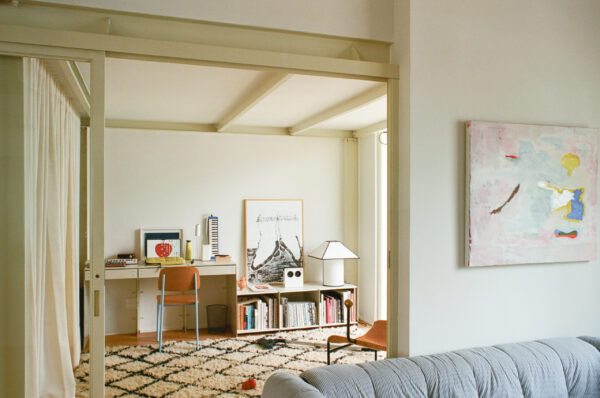
The ribbed concrete ceiling, hidden for many years, has once again been fully exposed, reclaiming its dual role as both structural system and finished surface. This was never simply an aesthetic decision. Revealing the concrete also reveals the way the building itself is constructed.
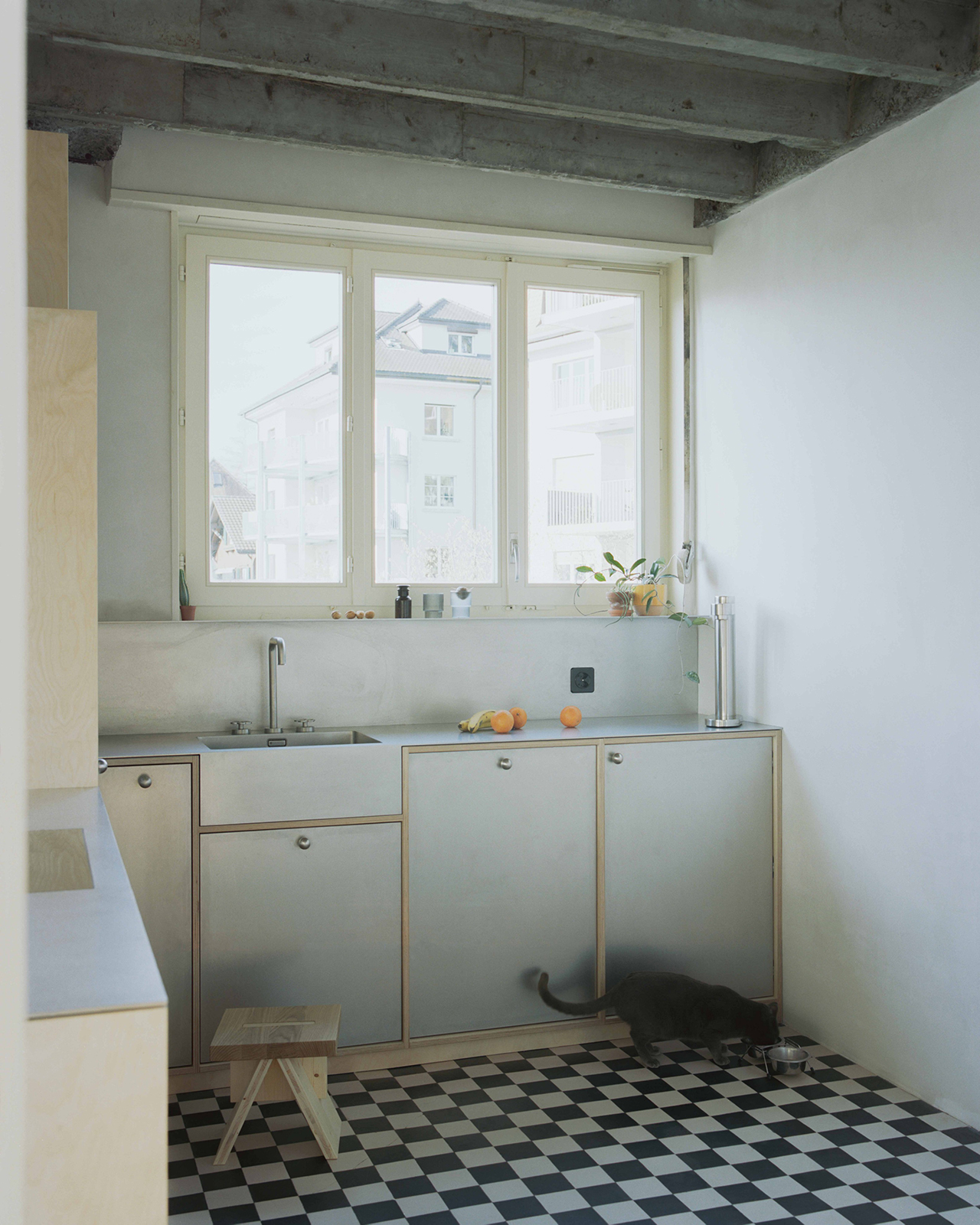
Rather than concealing the structure, the project allows it to become an integral part of the apartment’s architectural language, introducing rhythm, texture and depth throughout the interiors.
This material honesty runs through the entire intervention. Original materials have been allowed to reclaim their presence without competing with decorative additions, while every contemporary element adopts a deliberately restrained architectural language.
A kitchen that connects without dominating
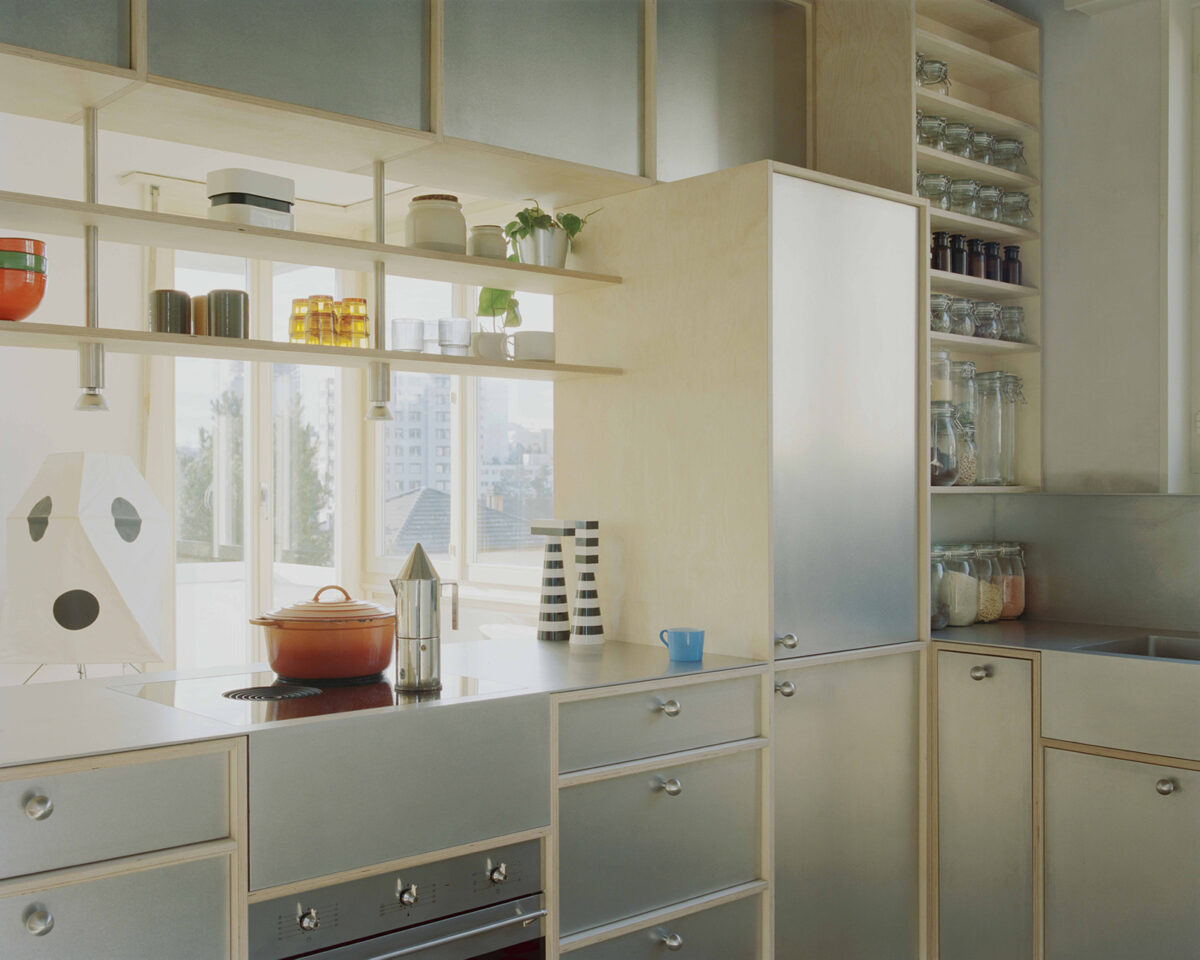
The project’s most visible intervention is concentrated in the kitchen.
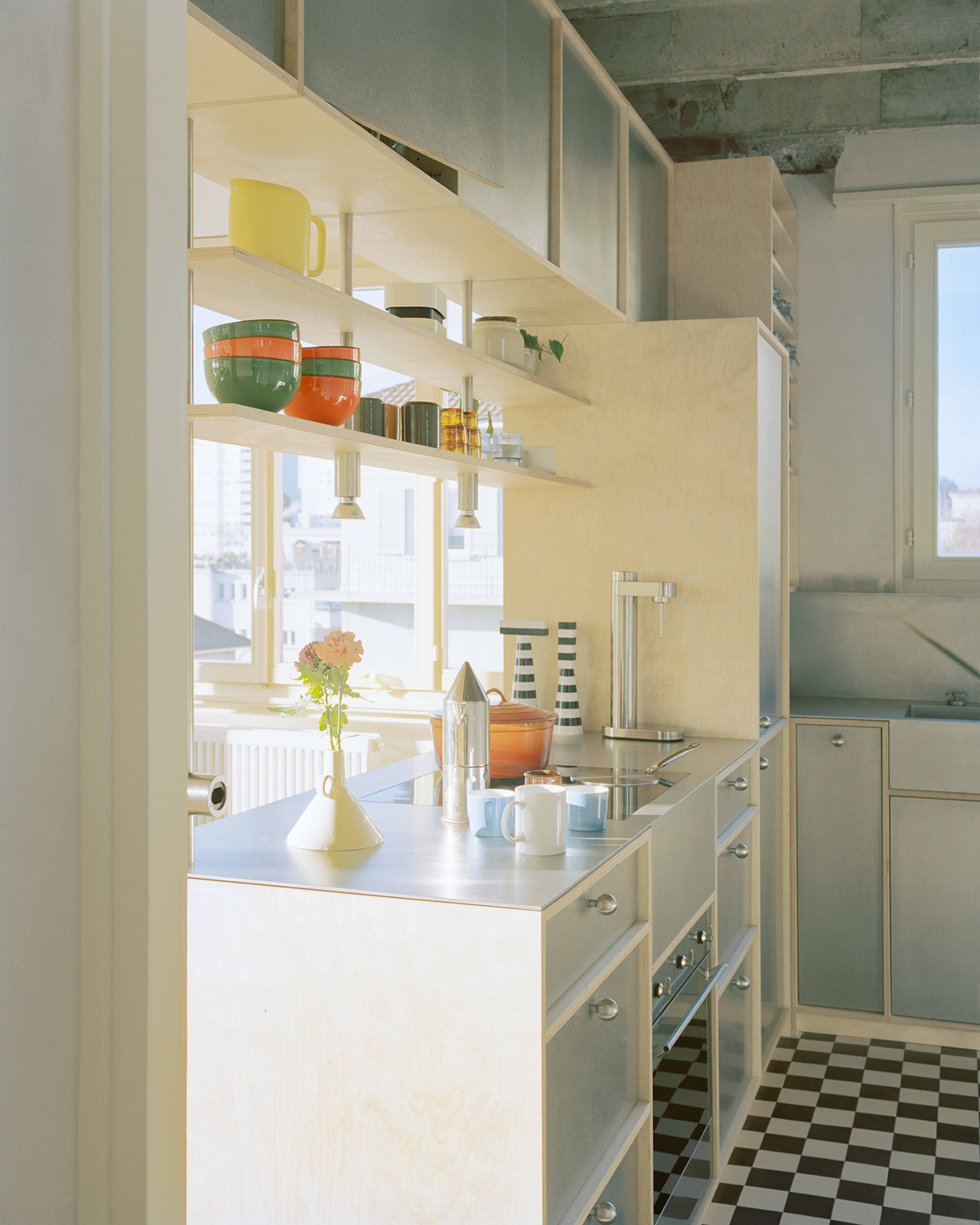
Where a serving hatch once connected the kitchen to the adjoining room—before being sealed up over the years—Noue Studio has reopened the wall, restoring a visual relationship between the two spaces.
In doing so, the opening also recovers the original function of the serving hatch, establishing a renewed dialogue between the rooms.
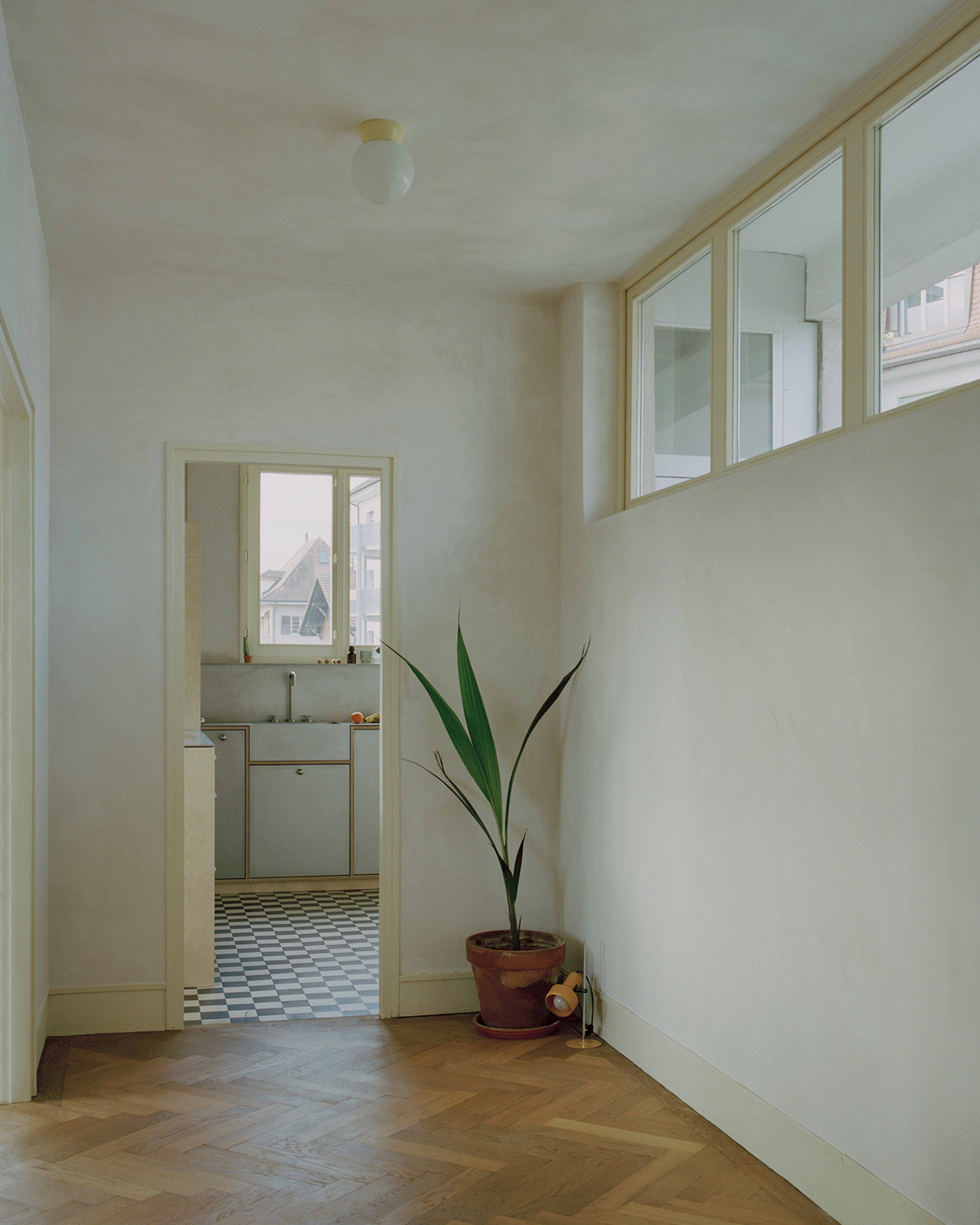
The kitchen no longer exists as an isolated space. Instead, it becomes part of the apartment’s spatial sequence, extending views through the interior without altering the original reading of the floor plan.
The importance of detail
In this apartment, it is the seemingly modest decisions that define the character of the project.
The service areas have been finished with natural plaster, whose soft matte texture reinforces their functional character.
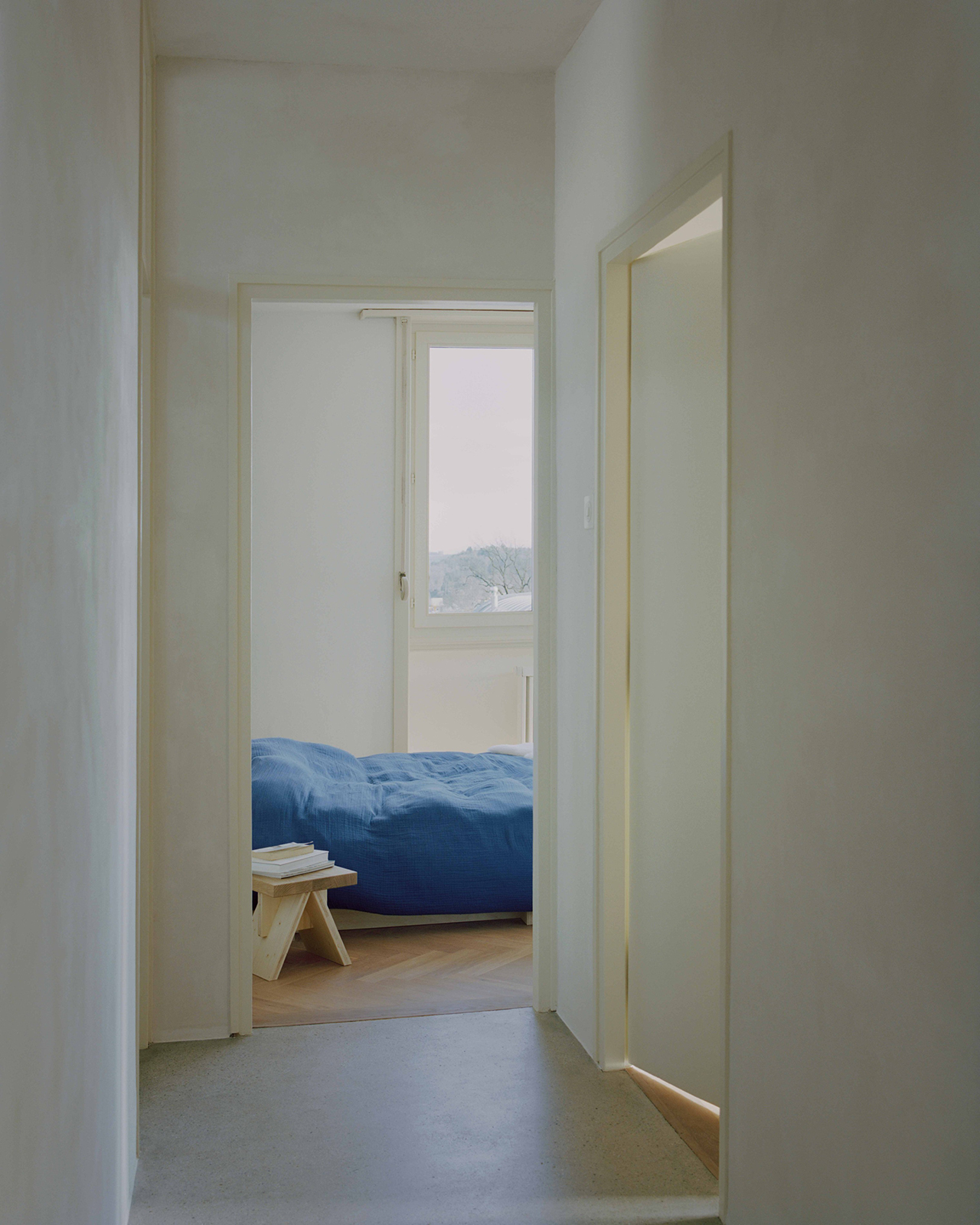
By contrast, the principal rooms are lined with textured wallpaper crossed by a horizontal band positioned at door height — a subtle reference to the compositional devices present in Pierre Vauthey‘s original design.
The joinery also contributes to this sense of continuity. Its finish revives the apartment’s historic beige-brown colour through a carefully calibrated adjustment, allowing the contemporary intervention to be distinguished without disrupting the coherence of the whole.
To preserve is also to design
Working within a listed building requires a very different approach from designing a new one.
Here, Noue Studio deliberately avoided competing with Pierre Vauthey‘s architecture. Instead, the architects reinforced its original spatial logic by removing the layers of interference that had accumulated over decades. It is a particularly relevant position at a time when many refurbishments of historic buildings prioritise transformation over continuity.
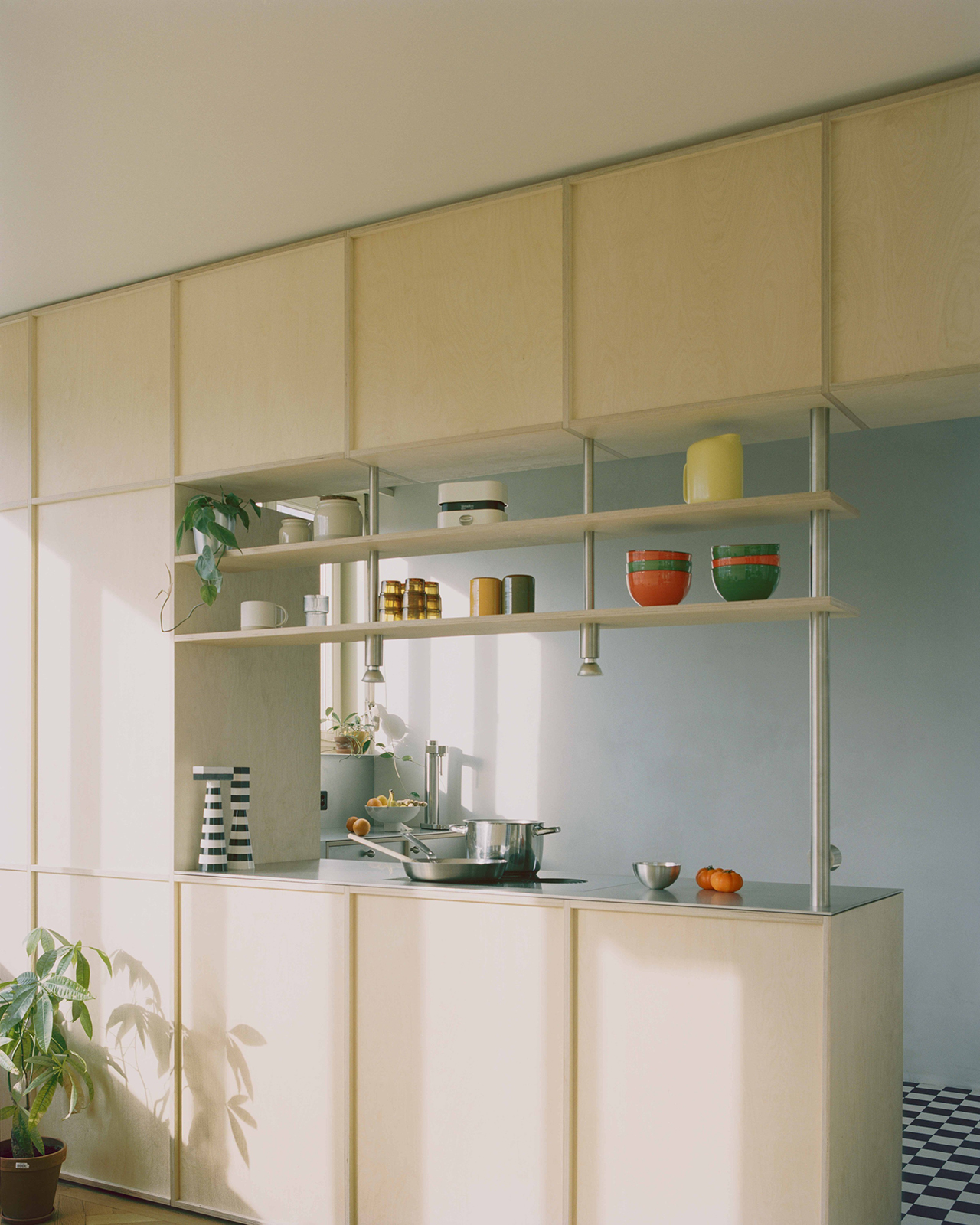
The kitchen has become fully integrated into the sequence of the apartment.
A new way of understanding renovation
The renovation of this listed apartment in Freiburg demonstrates that modern architectural heritage requires a different kind of sensitivity from that applied to historic buildings of earlier periods. Preserving such architecture is not simply a matter of conserving materials; it also means safeguarding the spatial relationships, proportions, circulation and construction systems that define the identity of the original project.
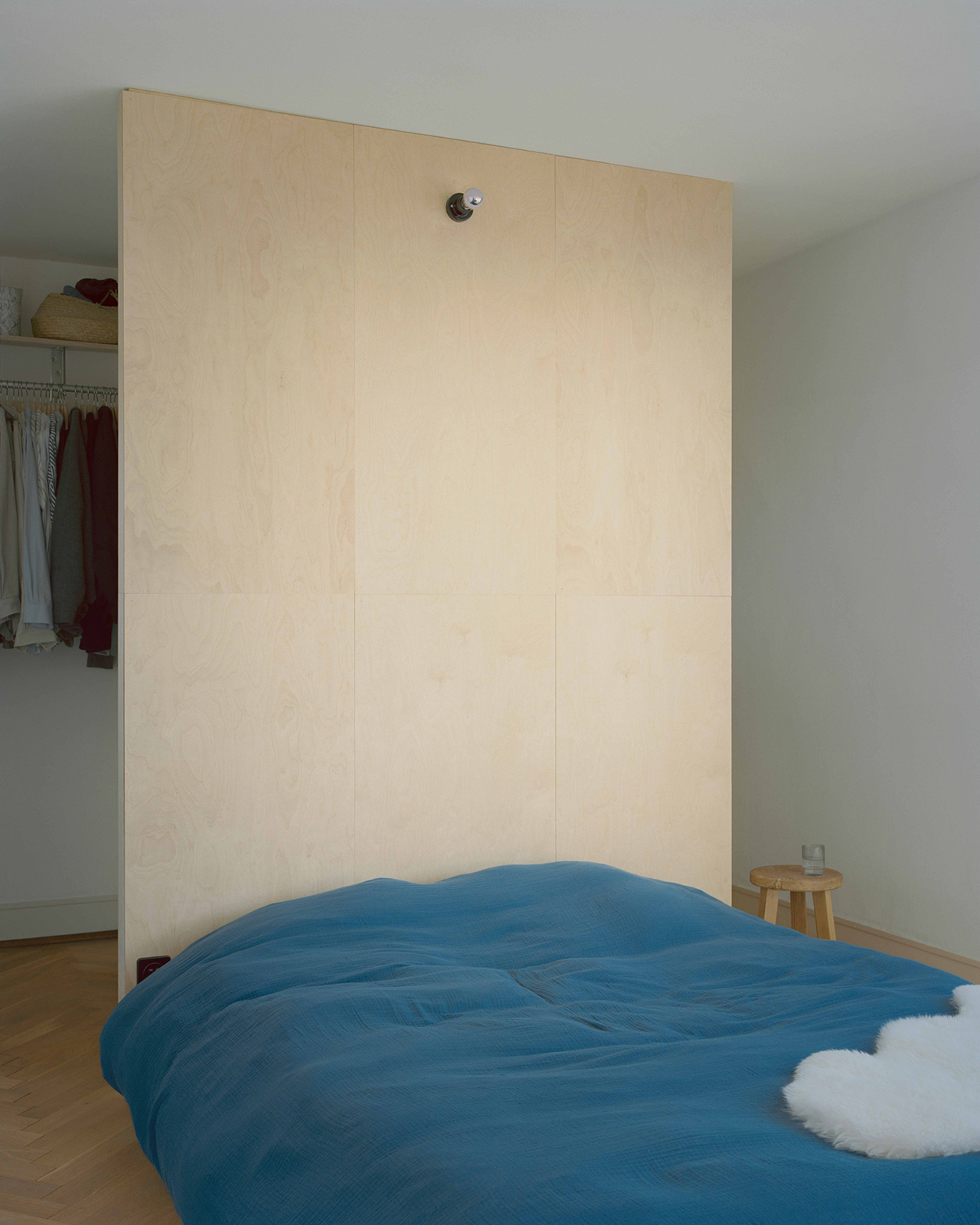
Noue Studio chose to reinforce its spatial logic, carefully removing the layers of intervention.
Following the renovation, the apartment does not feel like a newly created home. And that is precisely where the project’s success lies. Noue Studio has allowed Pierre Vauthey‘s architecture to be read once again with the clarity and coherence with which it was originally conceived in 1936.
It is a discreet yet rigorous restoration that demonstrates how, sometimes, the most meaningful intervention is the one that allows the original architecture to reclaim centre stage.
(*) Photography courtesy of Noue Studio.