Nodi Studio: the poetry of porcelain
In Warsaw, designer Anna Marciniszyn transforms porcelain into sculptural lighting and expressive objects that celebrate colour, craftsmanship and the beauty of the unpredictable. Her new showroom takes this philosophy a step further, turning design into an experience that invites us to observe, experiment and understand.
There is something fascinatingly contradictory about porcelain. It is delicate yet resilient, precise and, at the same time, impossible to control completely. It is a material that demands knowledge and technique, yet always seems to reserve the final say for itself. For Anna Marciniszyn, founder of Nodi Studio, that tension is precisely where its beauty begins.
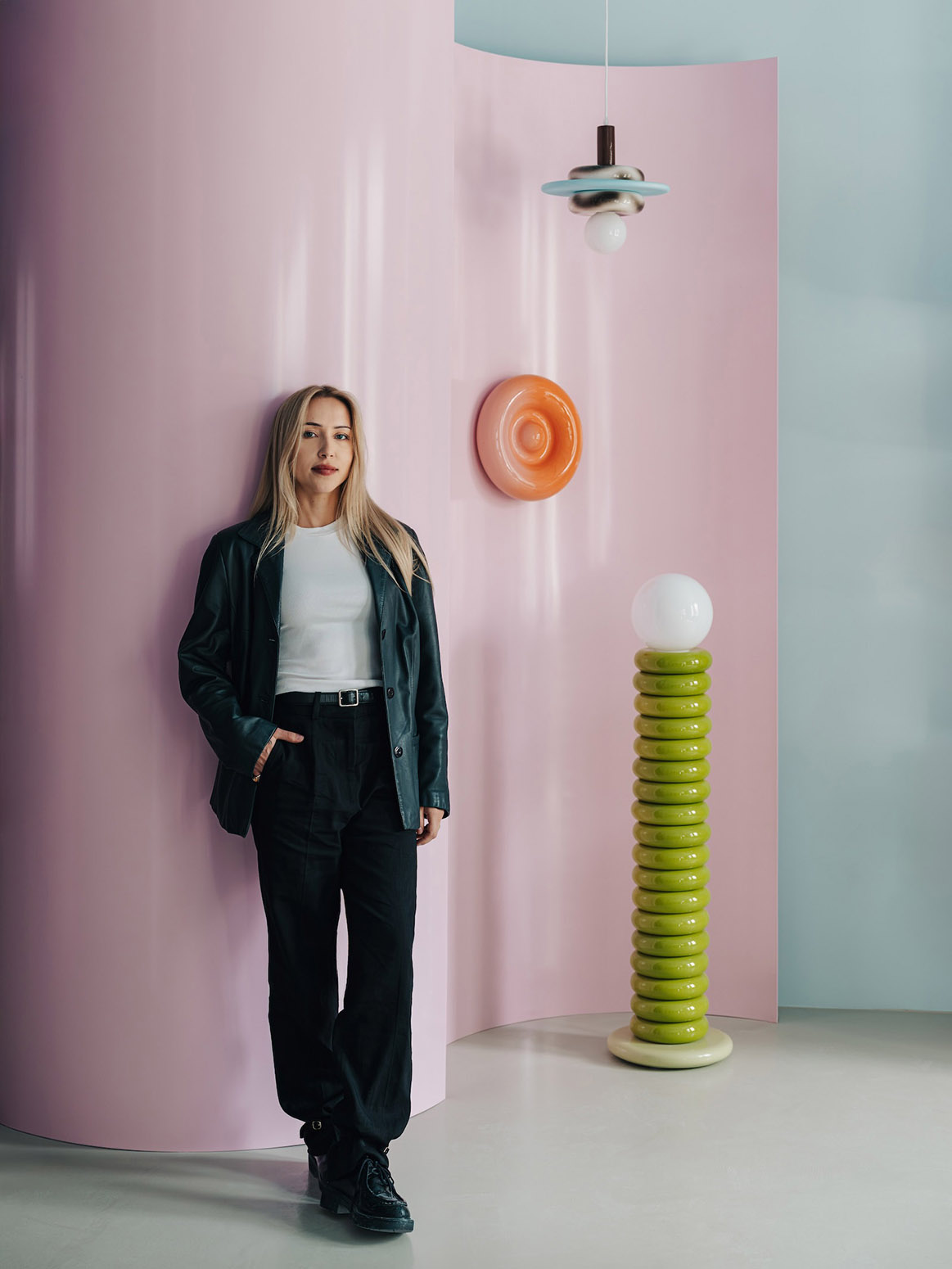
From Warsaw, the designer has built a distinctive creative language around this material, embracing its particularities rather than attempting to tame them. In her hands, porcelain becomes colour, volume and light; functional objects that flirt with sculpture while retaining the subtle traces of the artisanal processes that brought them into being.
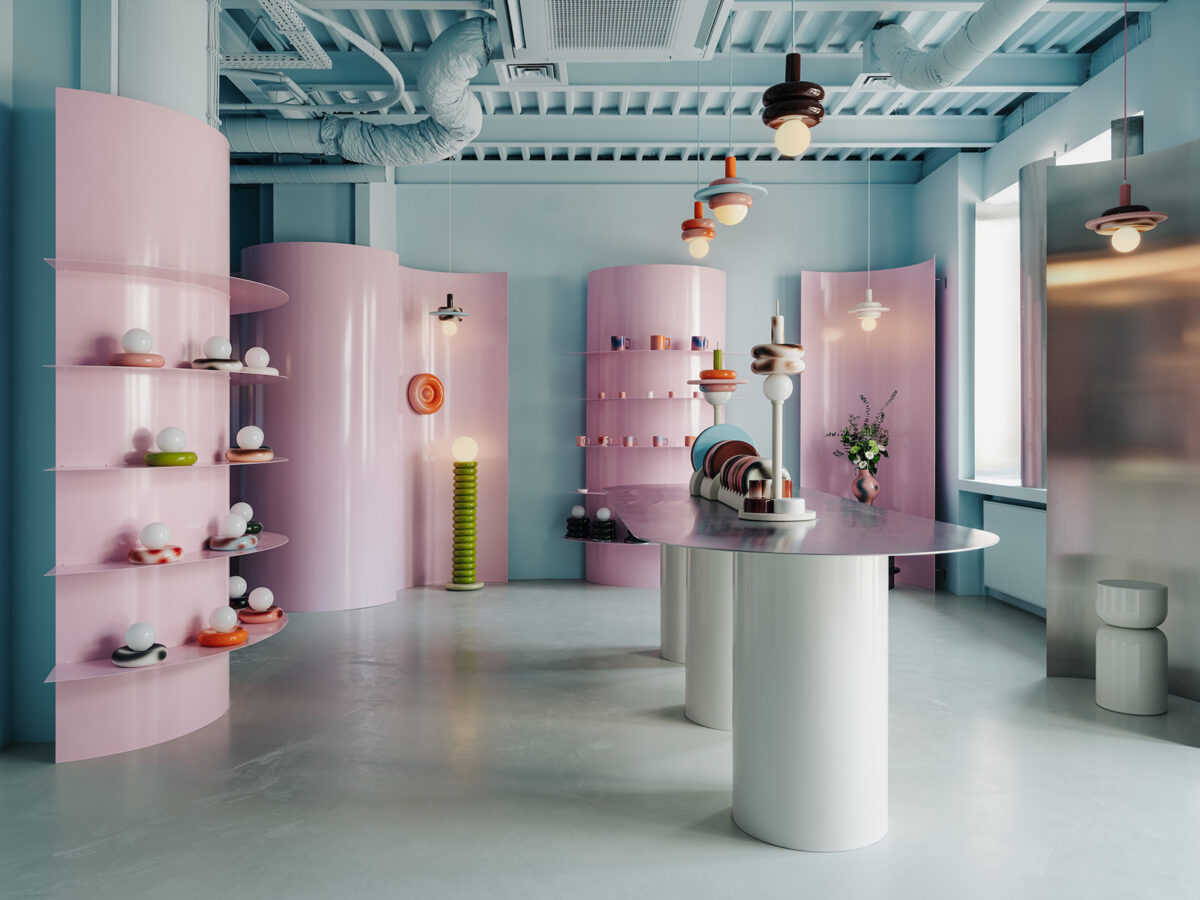
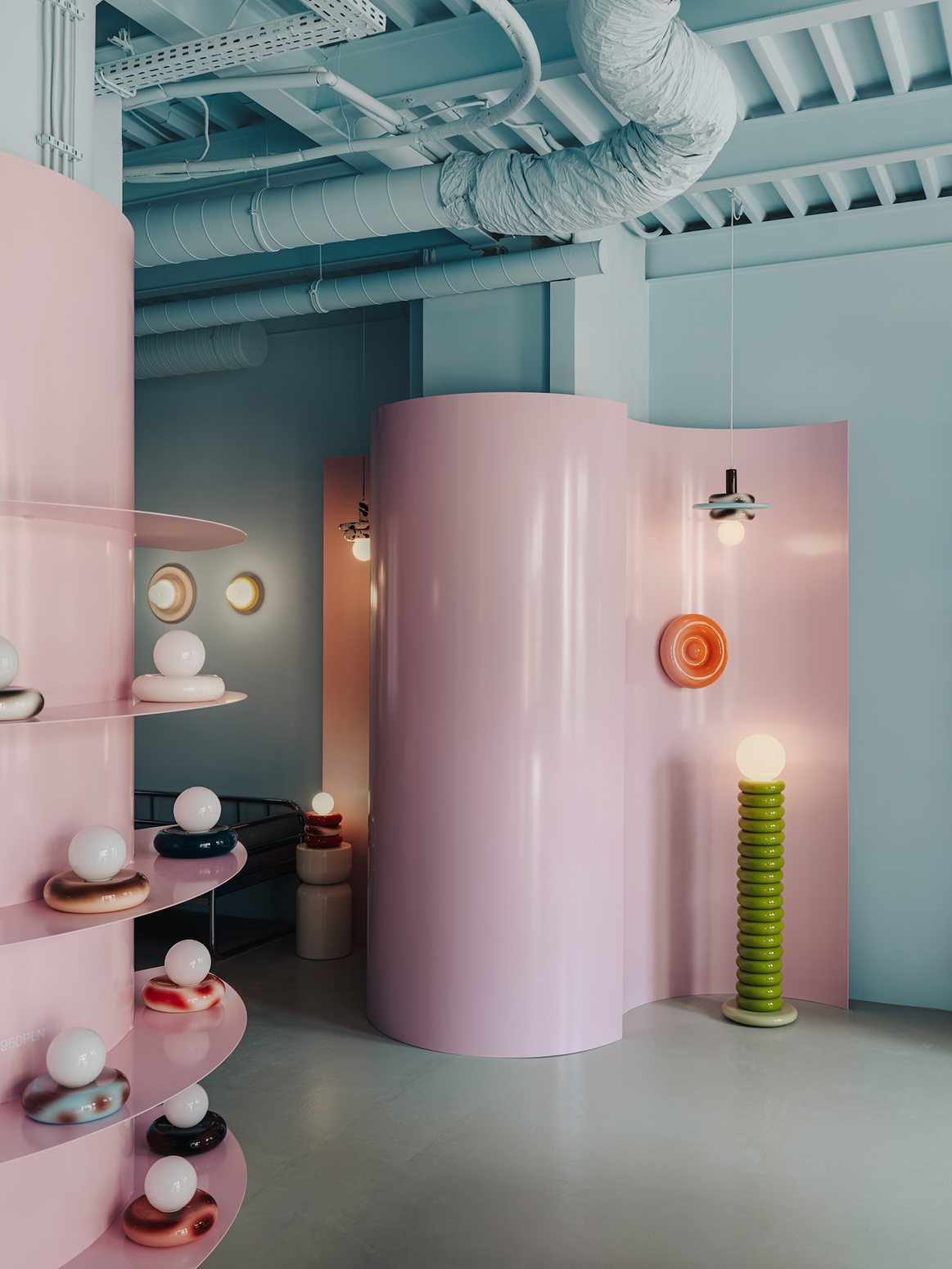
That creative universe now has a new home at 28 Marszalkowska Street in Warsaw, where Nodi Studio has opened a showroom that deliberately moves away from the idea of a conventional shop. Rather than simply displaying finished objects, the space invites visitors to discover how they are made, experience them up close and understand the stories behind each piece.
It is an especially relevant proposition at a time when so much of the design we consume reaches us through a screen. In contrast to that two-dimensional experience, Nodi champions something fundamentally physical: looking closely at materials, understanding the process, experimenting with the lamps, discovering their proportions and seeing how they interact with one another before deciding whether we want to bring them into our lives.
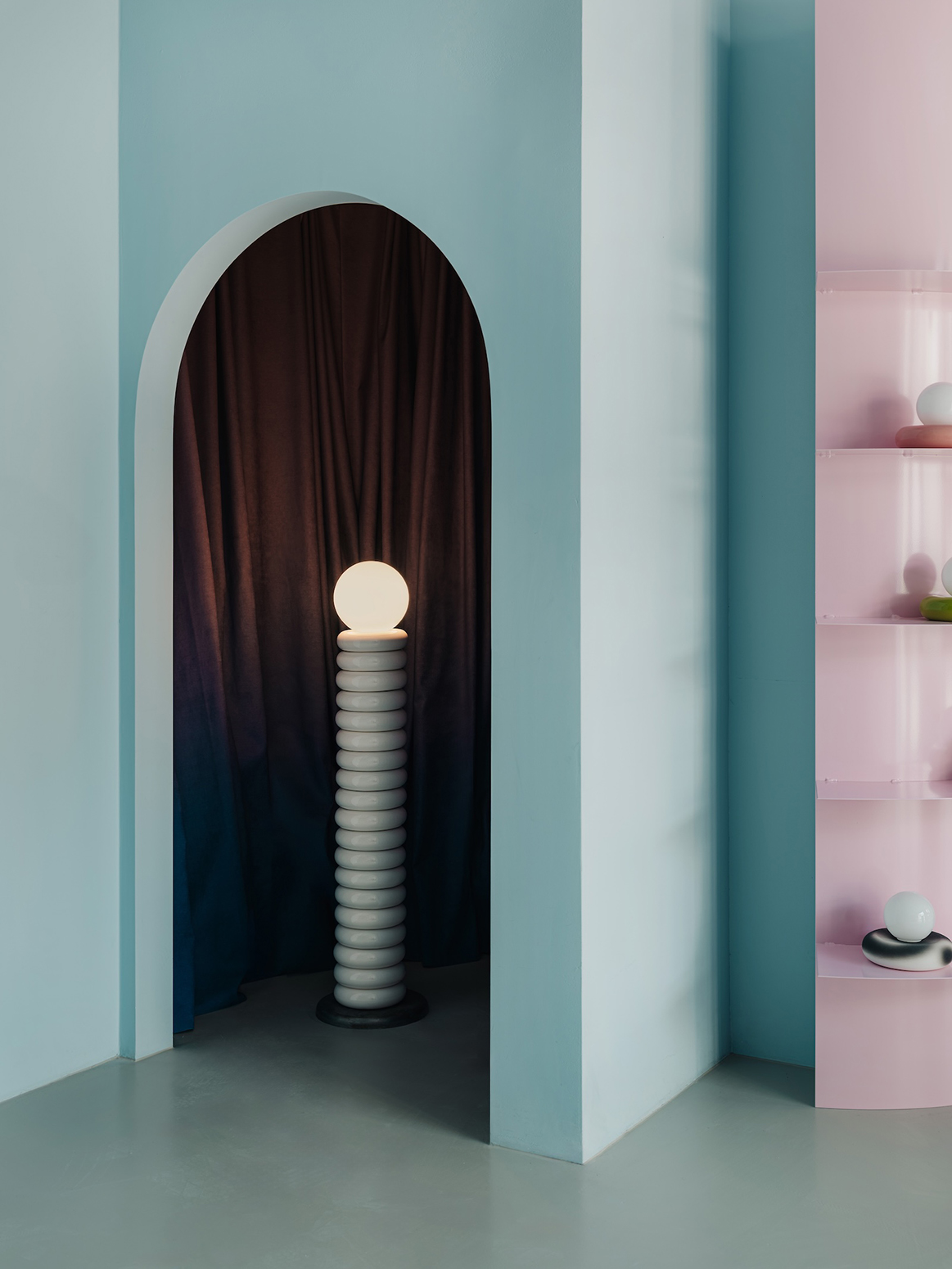
When porcelain becomes light
Marciniszyn’s relationship with porcelain began during her design studies at Warsaw’s School of Form. There, she experimented with different materials and techniques, but it was porcelain that ultimately proved to be the medium through which she could best express her ideas. Part of its appeal lay precisely in what remained beyond her control.
Glazing and firing introduce an element of uncertainty into a process that, from the outside, might appear entirely precise. Colours evolve, surfaces acquire unexpected nuances and the kiln ultimately has a hand in determining the outcome. This capacity to surprise is part of the designer’s relationship with the material and remains present in her work years later.
Rather than being regarded as a drawback, unpredictability has become one of the defining characteristics of Nodi Studio.
The pieces are handcrafted in Warsaw, and the small variations inherent in the process give each object its own individuality. The studio favours relatively restrained forms and avoids unnecessary detail, allowing colour, finishes and the expressive qualities of porcelain to shape the character of each design.
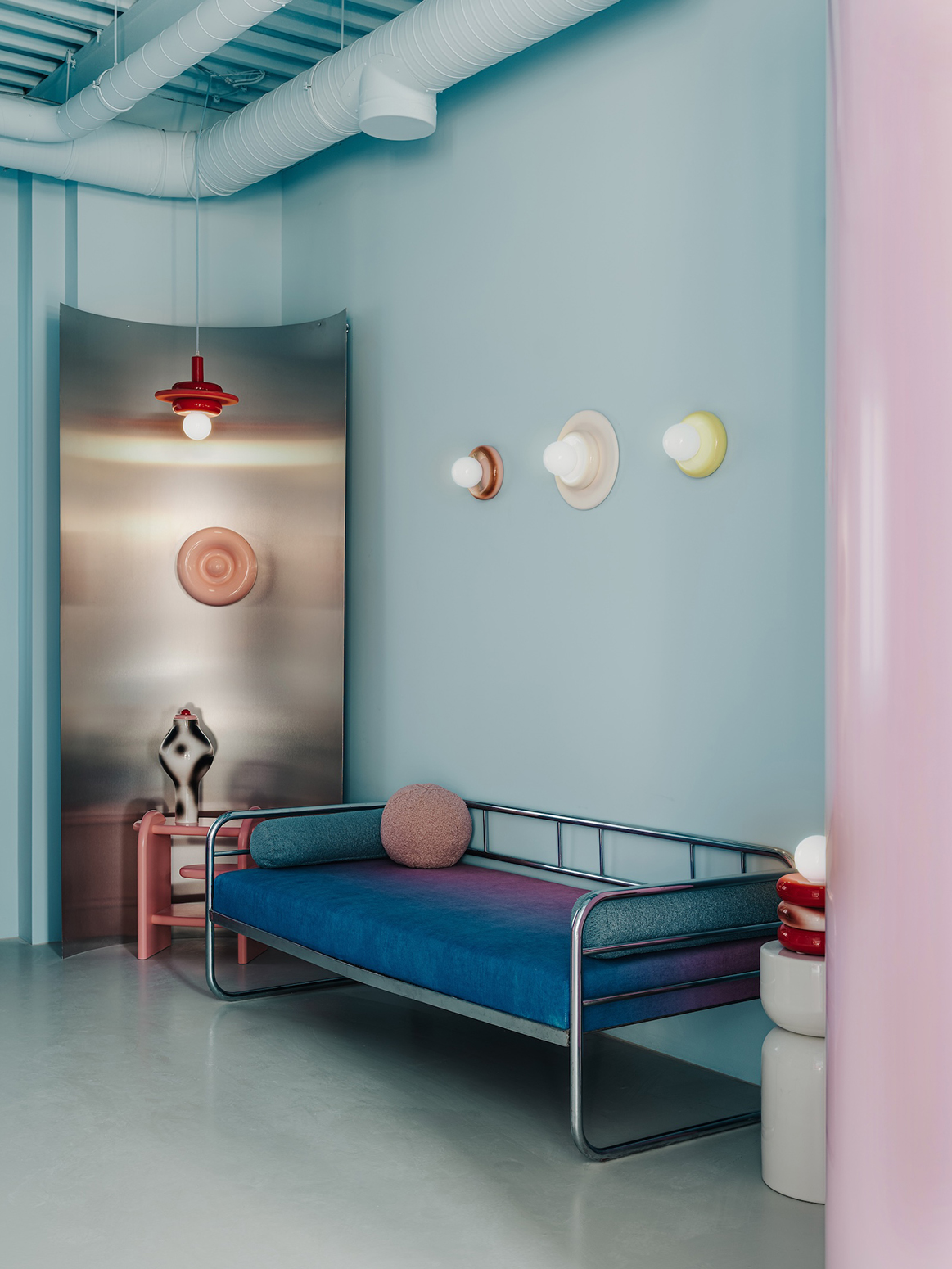
Lighting with a sculptural presence
Although Nodi’s universe extends beyond lighting, its lamps are perhaps the most recognisable expression of its visual language.
Whether pendant, wall, table or floor lamps, the pieces transform porcelain — traditionally associated with very different kinds of domestic objects — into an architectural presence. Here, the material no longer simply contains or decorates: it creates atmosphere.
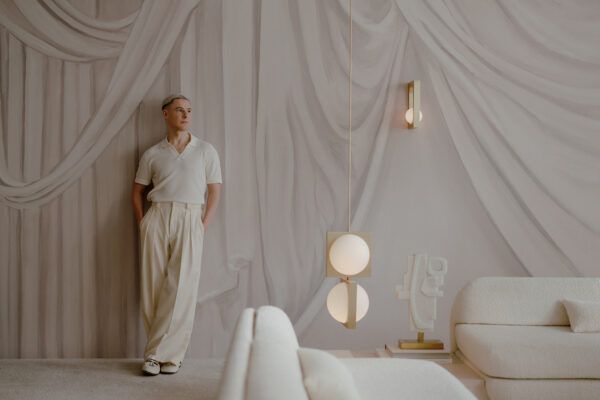
Designs such as the Venus and Neso lamps demonstrate how apparently simple silhouettes can acquire an entirely different energy through colour, texture and proportion. The collection explores bold chromatic combinations and finishes that move porcelain far away from any overly traditional interpretation.
What makes these pieces interesting, however, is not colour as a merely decorative device. Much of their expressiveness comes from the tension between a material historically associated with delicacy and the confidence of forms that are decidedly contemporary.
The showroom sits somewhere between a shop, a studio and a creative laboratory.
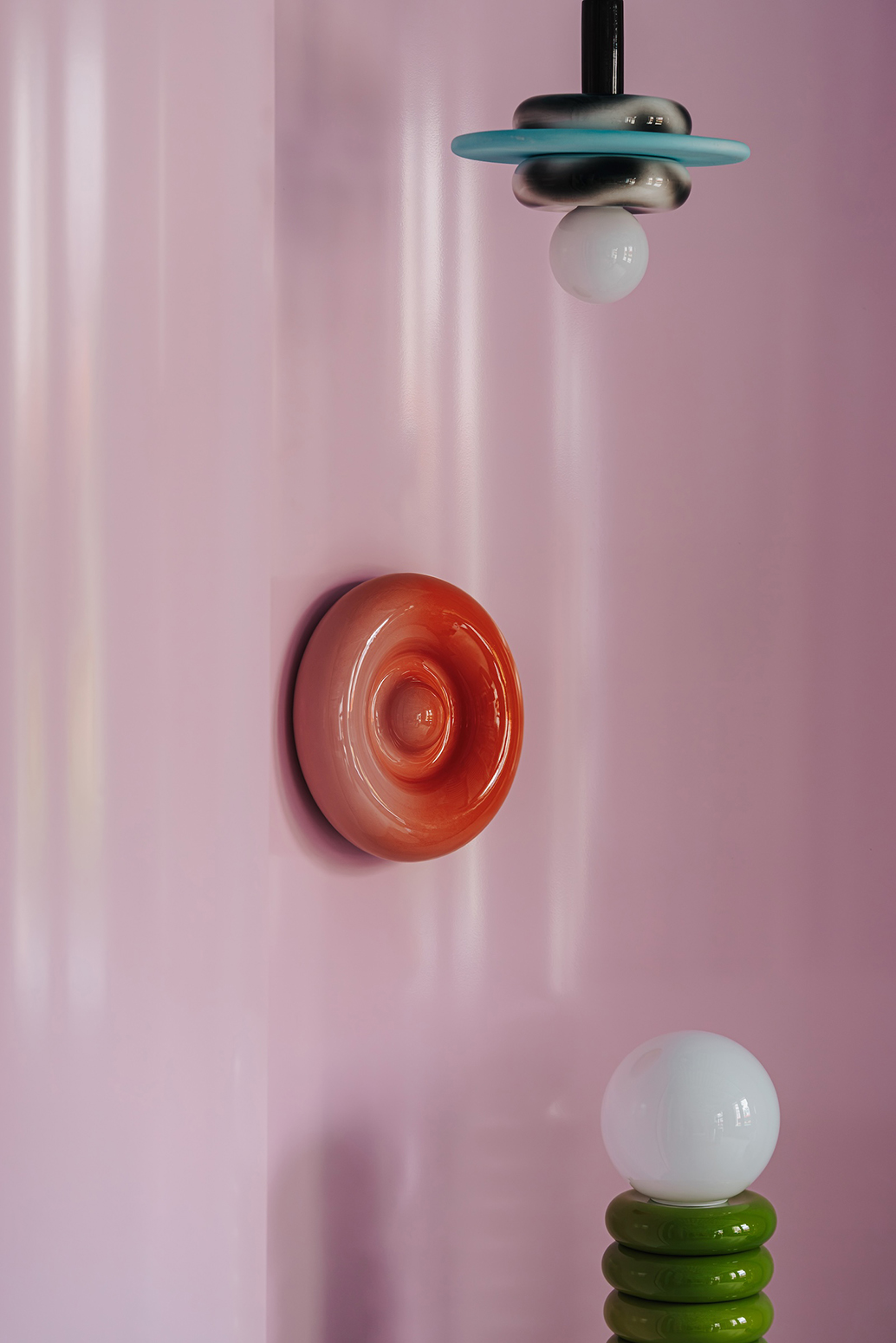
In Marciniszyn’s hands, porcelain loses its formality without sacrificing its sensuality. And that is an important distinction. Nodi’s lamps are not conceived simply as discreet accessories designed to blend seamlessly into an interior. They have a presence and personality of their own, yet their sculptural character never comes at the expense of function.
Light itself becomes another material within the composition, capable of altering our perception of colour, volume and surface.
A showroom designed for participation
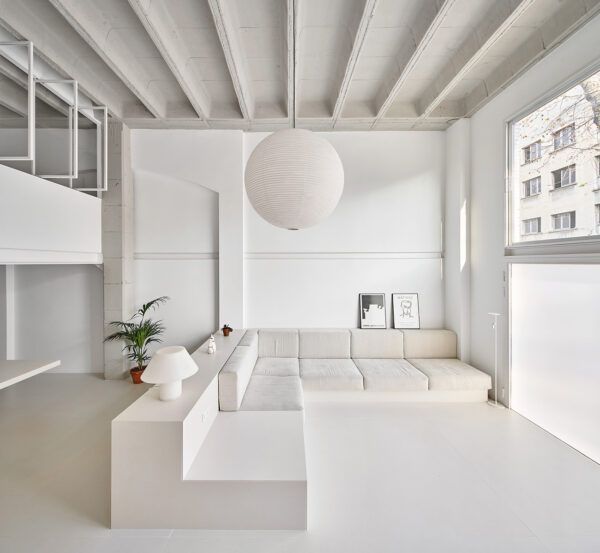
Nodi Studio’s new Warsaw showroom translates this philosophy into space. The interiors have been designed by Franz Brannaschk, associated with the German practice Tanja Lincke Architekten, around an idea that is fundamental to understanding the project: creating a place in which design can be experienced rather than simply observed.
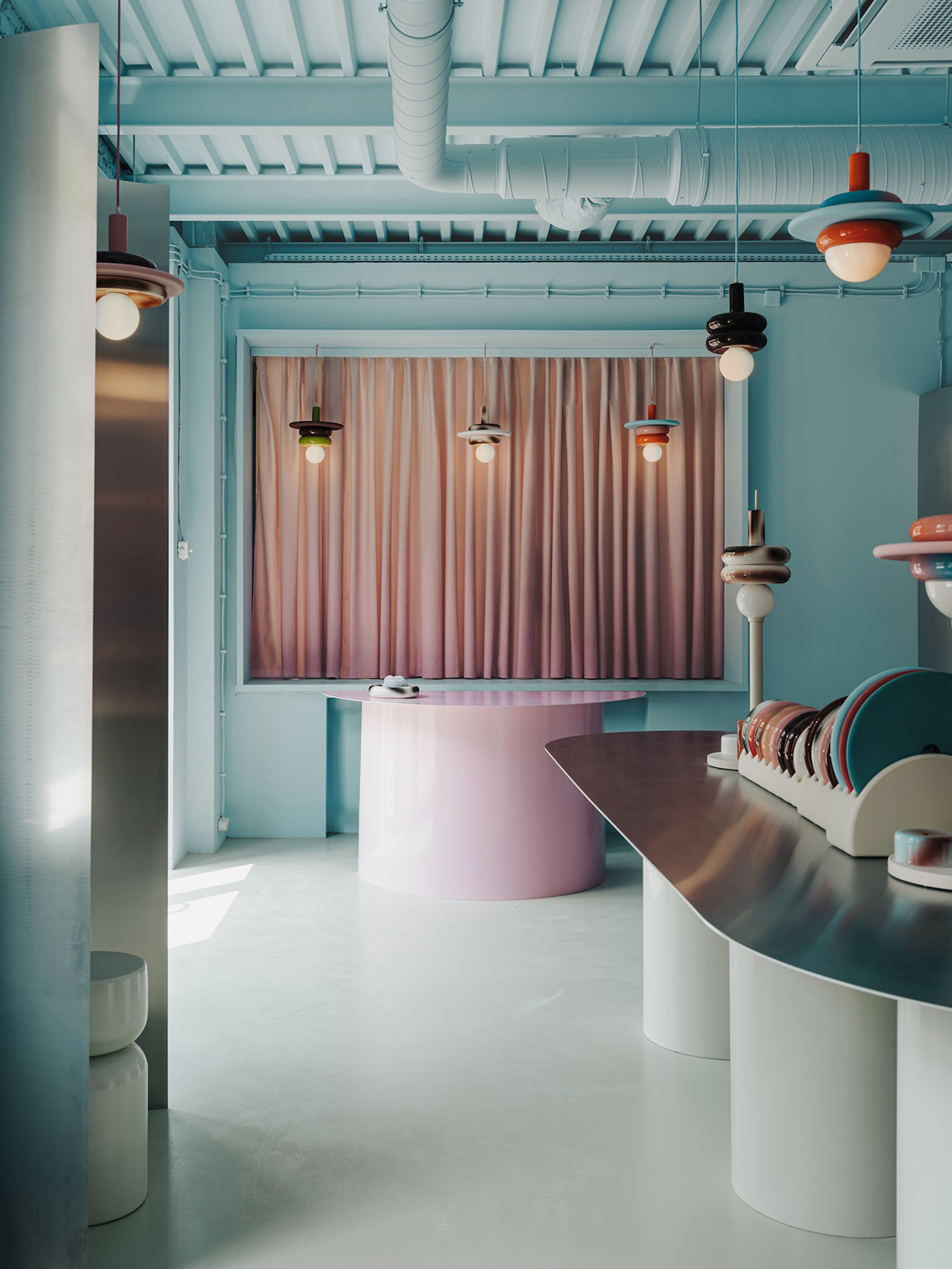
Instead of maintaining an immaculate distance between visitor and object, the showroom encourages proximity. Pieces can be examined up close, while the processes behind their creation and the stories surrounding them become part of the visit.
Porcelain-making, testing, experimentation and the finished object coexist within the same environment, quietly challenging one of the conventions of contemporary retail: the idea that consumers should encounter only the final, perfect result, stripped of any trace of how it was made.
Here, the process has value too. Understanding how an object is made — and discovering the complexity behind its apparent simplicity — changes our relationship with it. The small irregularities inherent in craftsmanship cease to be perceived as imperfections and instead become evidence of time and knowledge.
The showroom therefore sits somewhere between a shop, a studio and a creative laboratory.
Trying the light before taking it home
One of the most intelligent elements of the space is also deceptively simple: a table designed specifically for Nodi, incorporating a modular system that allows visitors to experiment with different lighting configurations.
Instead of trying to imagine, from a photograph or catalogue, how several pendant lights might work above a table, visitors can test compositions at full scale. They can adjust heights, explore proportions and combine different pieces before making a decision.
Buying becomes a small exercise in design. The idea is particularly effective when it comes to lighting, where scale and position can radically alter how a piece is perceived.
A lamp that appears bold on its own may find an entirely different balance above a large table; several smaller pieces grouped at different heights can become a sculptural composition.
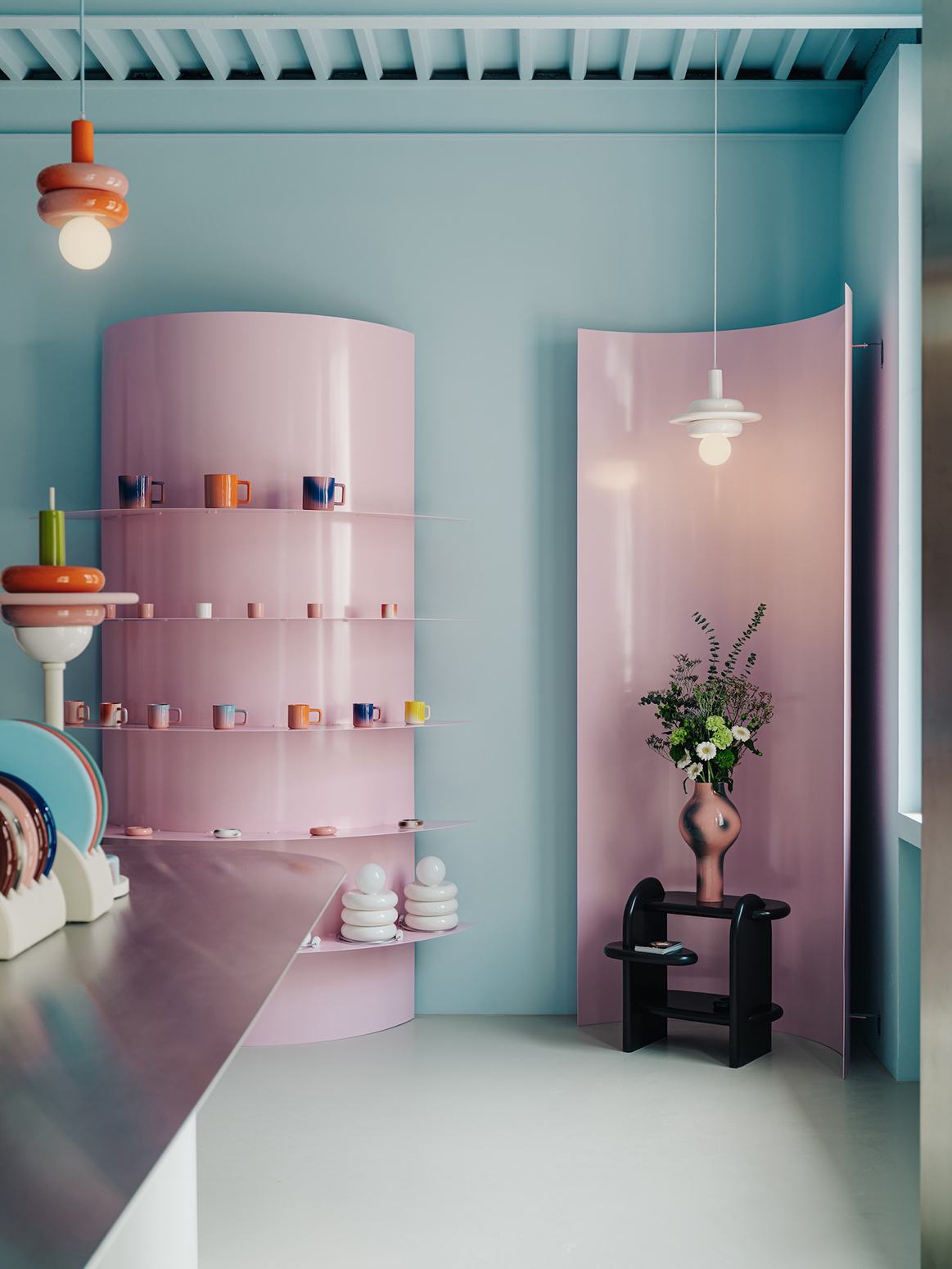
Allowing these possibilities to be discovered physically creates a far more intuitive relationship between the space, the object and the person who will eventually live with it.
It also reveals something important about Nodi’s philosophy: design doesn’t end when a piece leaves the kiln. Its story continues in the spaces it inhabits and in the relationships it forms with the people who use it.
Their designs do not end when a piece leaves the kiln. Their story continues in the spaces they inhabit.
A new creative destination in Warsaw
Nodi’s new home has ambitions that extend beyond retail.
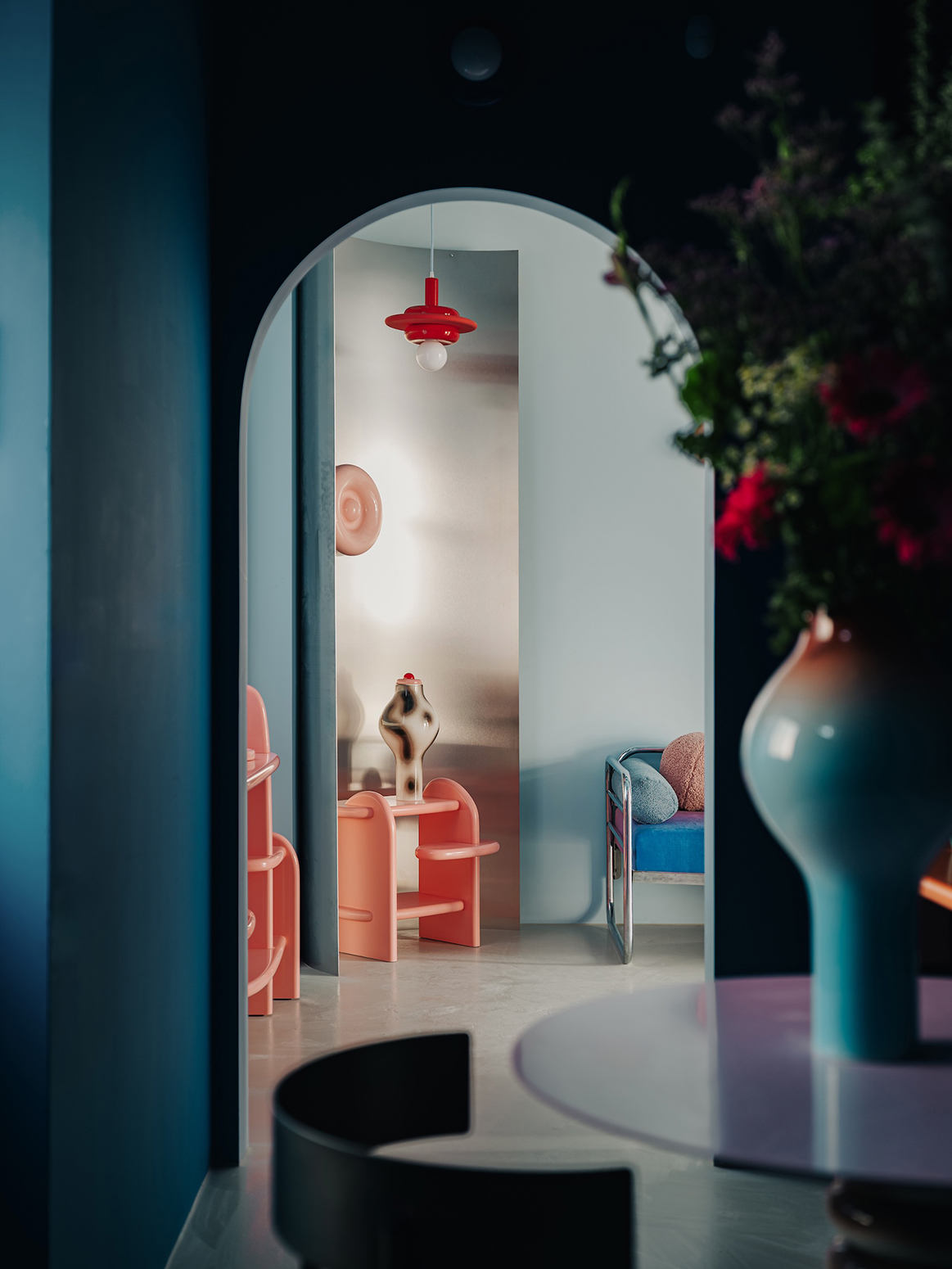
The showroom shares its space with the workshop, allowing visitors to come closer to the making of the objects they later see on display. This proximity between making and showing reinforces the studio’s commitment to local craftsmanship and removes some of the distance that usually separates consumers from the people who create the objects they buy.
At the same time, the space has been conceived to host presentations, workshops, meetings and photo shoots, opening it up to brands and agencies looking for an unconventional setting in which to develop their projects.
This hybrid nature is particularly interesting within Warsaw’s creative landscape, where design, architecture, craftsmanship and contemporary culture are finding an increasing number of points of connection.
The showroom can welcome someone looking for a single lamp for their home just as easily as a brand interested in developing a collaboration centred around local craftsmanship.
There is no rigid boundary between consumer, professional and creative: everyone participates, in one way or another, in the ecosystem the studio has created.
Celebrating the beauty of imperfection
Contemporary design finds itself at a curious point. Digital tools allow us to visualise objects and interiors with an almost impossible degree of perfection before they even exist physically, while social media has accustomed us to discovering and consuming them primarily as images.
Against this digital perfection, working with porcelain introduces resistance. The material can surprise the person working with it, and the kiln can alter expectations. Two handcrafted objects may look alike without ever being completely identical.
Nodi doesn’t attempt to eliminate these variables; instead, it incorporates them into its visual language. The value of a handcrafted object lies not only in knowing that someone made it with their hands, but also in understanding that its individuality cannot be reproduced identically, over and over again.
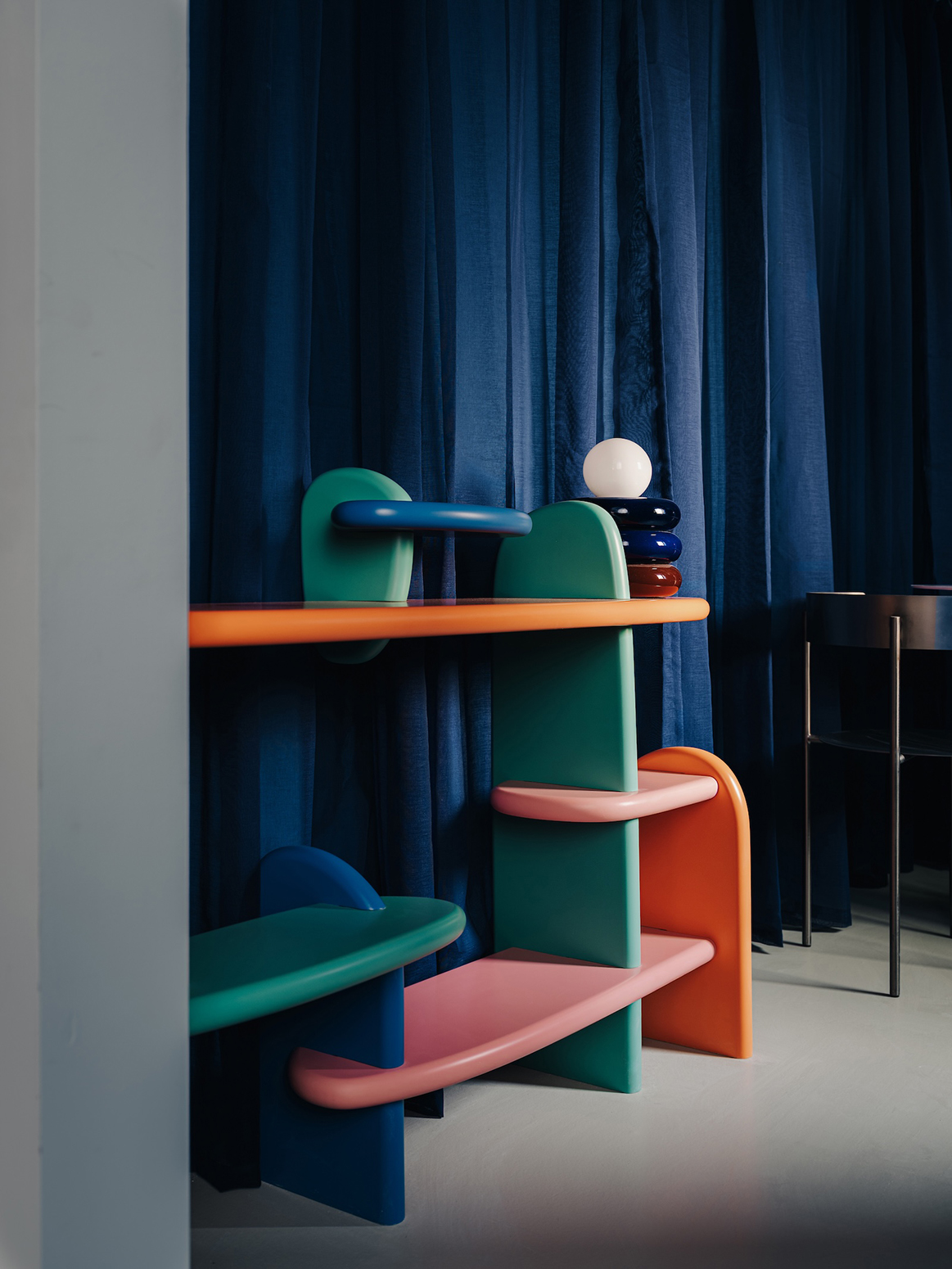
Marciniszyn’s use of colour makes this philosophy even more interesting. Contemporary conversations around craftsmanship are often accompanied by neutral tones, natural materials and a certain aesthetic solemnity. Nodi takes a different path.
Its universe can be playful, graphic, bold and unapologetically colourful while remaining deeply rooted in an understanding of materials and a considered, unhurried approach to making. Much of its personality lies precisely in that combination.
Much more than a design shop
At 28 Marszalkowska Street, Nodi Studio has created something more interesting than a beautiful setting in which to display beautiful objects. Its new showroom makes a case for experiencing design physically again.
Here, porcelain can be understood through its textures and subtle irregularities; we can observe how a lamp changes when its height is adjusted, discover the process behind a finished piece and come closer to the people and ideas responsible for creating it.
The experience restores context to objects that, when encountered exclusively online, risk being reduced to little more than a photograph and a price.
Nodi Studio reminds us that good design does not begin with ownership, but with curiosity: curiosity about materials, processes, the hands that transform matter and the ability of an object to change the atmosphere of the spaces we inhabit every day.
Nodi Studio reminds us that good design does not begin with ownership, but with curiosity.
In Anna Marciniszyn’s universe, porcelain does not need to be perfectly predictable to be beautiful. Quite the opposite: it is precisely its ability to resist, surprise and transform that brings it to life.
(*) Photographs: Migdal Studio.