Trattoria del Ciumbia, behind the lace in Brera
In Milan, Dimorestudio takes its cue from the trattorias where Brera’s artists used to meet. There is saffron rice on the menu, a little design history above the table and somewhere rather unexpected to go after dinner.
At number 32 on Via Fiori Chiari, a lace curtain hangs at just the right height to frustrate anyone hoping to see who is having lunch. Daylight gets through, of course, and that is half the pleasure of the arrangement. A table near the street is a lovely place to sit provided the street cannot look straight back at you. At Trattoria del Ciumbia in Milan, this small courtesy is the first clue to what Dimorestudio found worth borrowing from the old eating houses of Brera.
When Emiliano Salci and Britt Moran designed the restaurant for Triple Sea Food, they had in mind the places where Milan’s artistic avant-garde gathered in the 1960s. Piero Manzoni, Nanda Vigo and Enrico Castellani were among the figures in their account of the neighbourhood.
What interested the designers about those rooms becomes apparent well before the food arrives. They considered where you might hang your coat, how much of the next room you could see from the bar and where the evening might go once somebody suggested one last drink.
An aperitivo among the broken plates
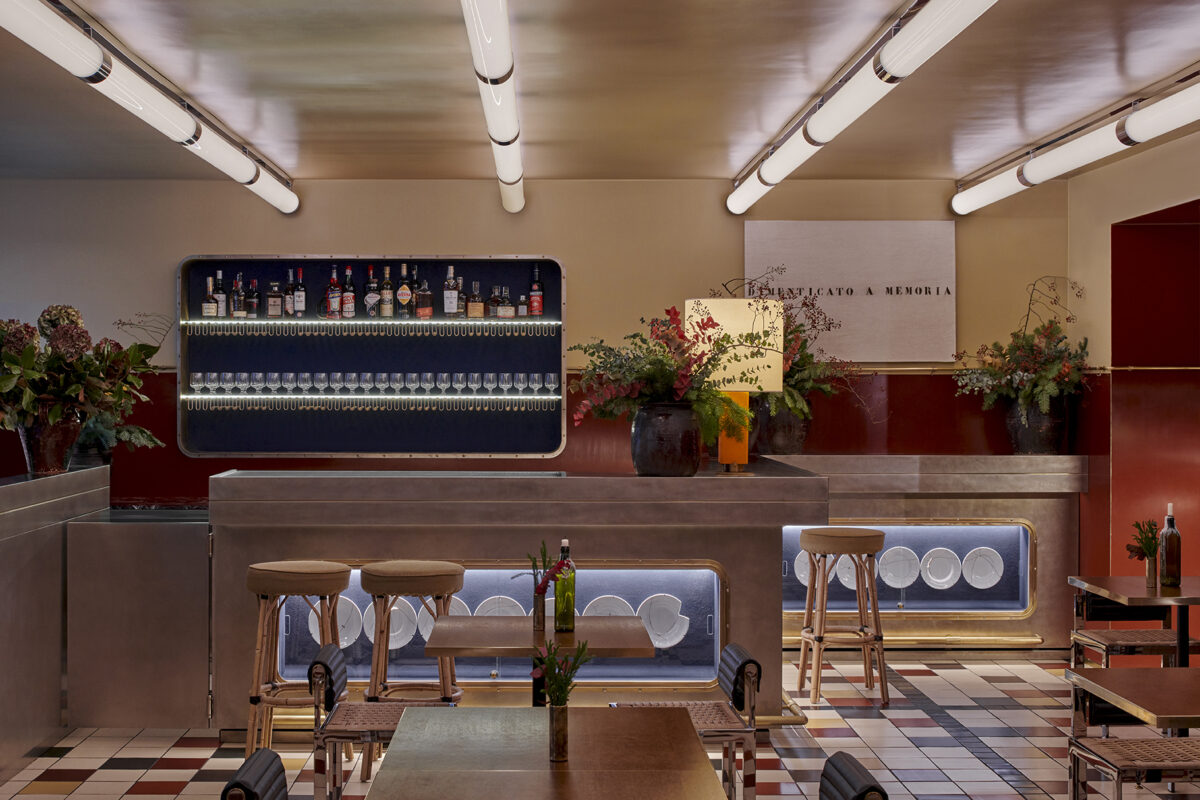
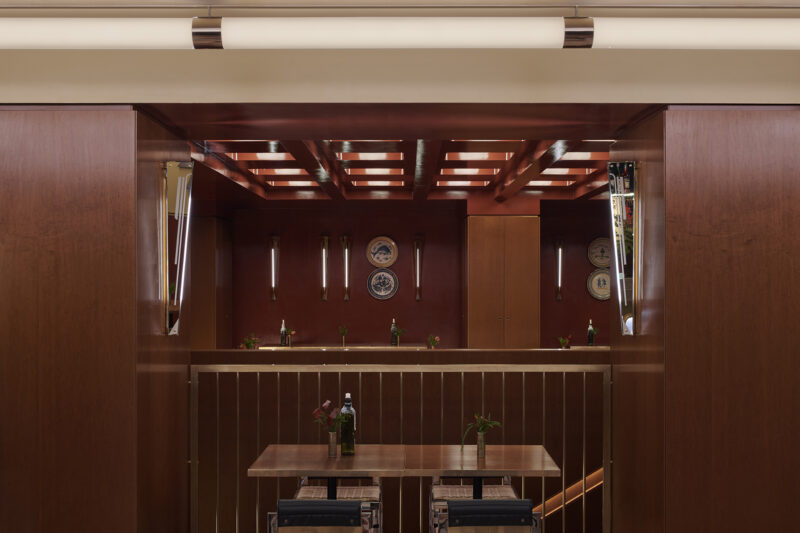
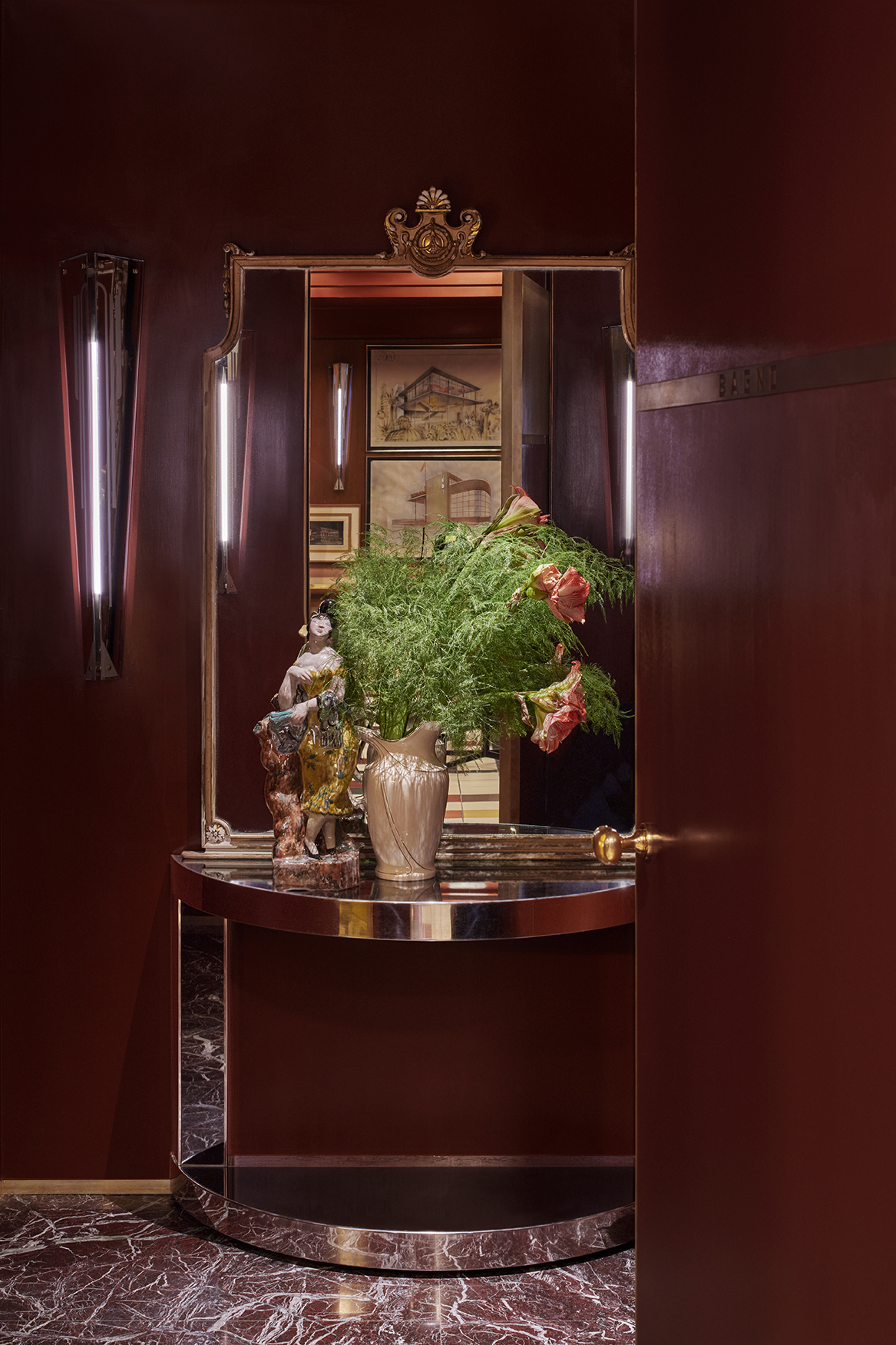
The entrance is a little enclosure of timber and glass, beyond which a long pewter counter marks the spot for an aperitivo. Set into it are brass-edged display cases containing an arrangement of plates that have been taken apart and reassembled. Crockery is an amusing choice of exhibit in a restaurant, particularly when the pieces under glass are among the few in the building that will never have to make it through dinner service. Above them, neon shines through long tubes of opaline glass, drawing the eye along the counter and towards the dining room.
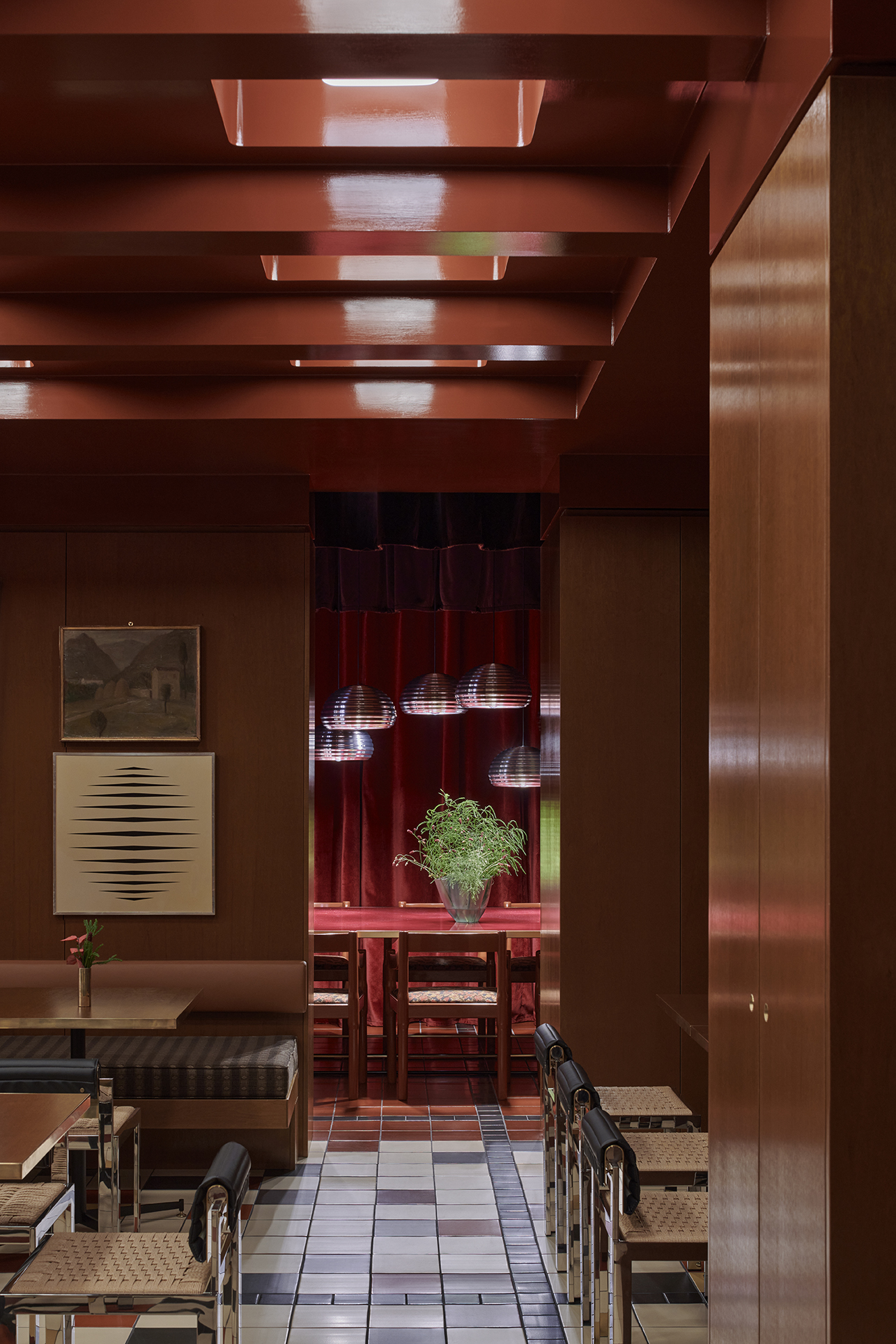
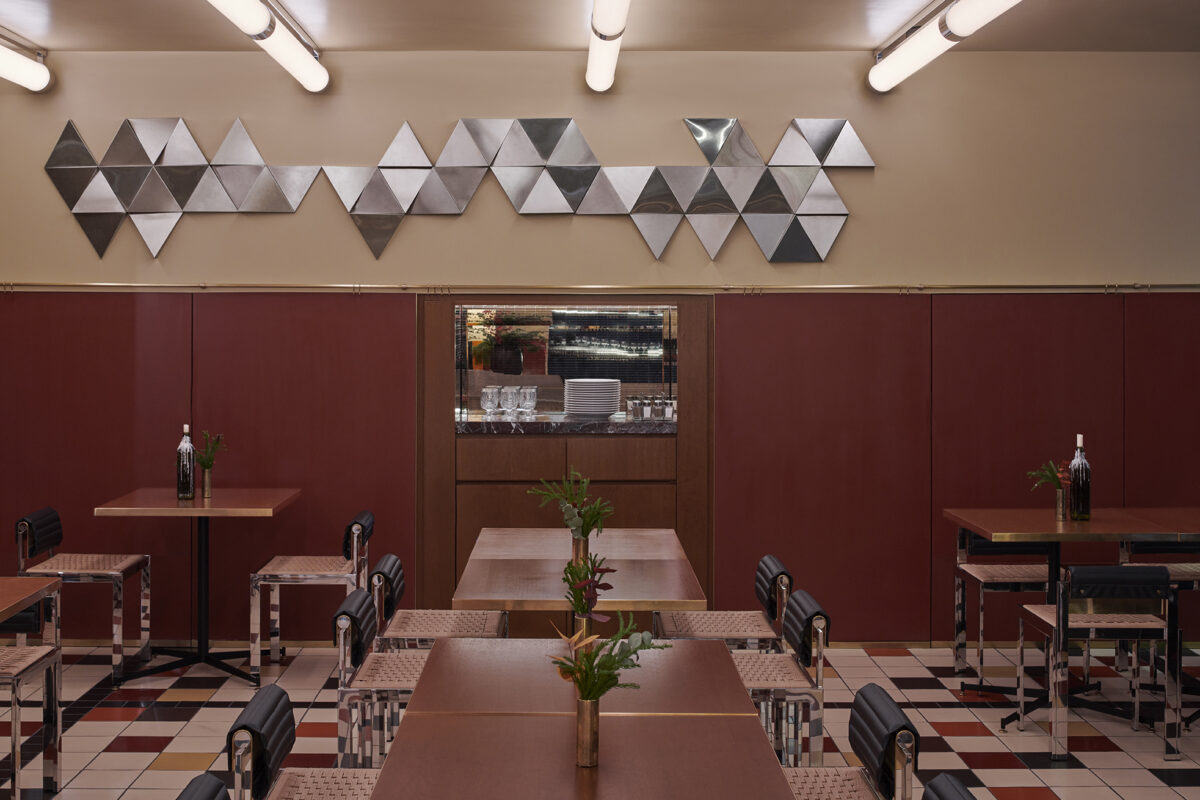
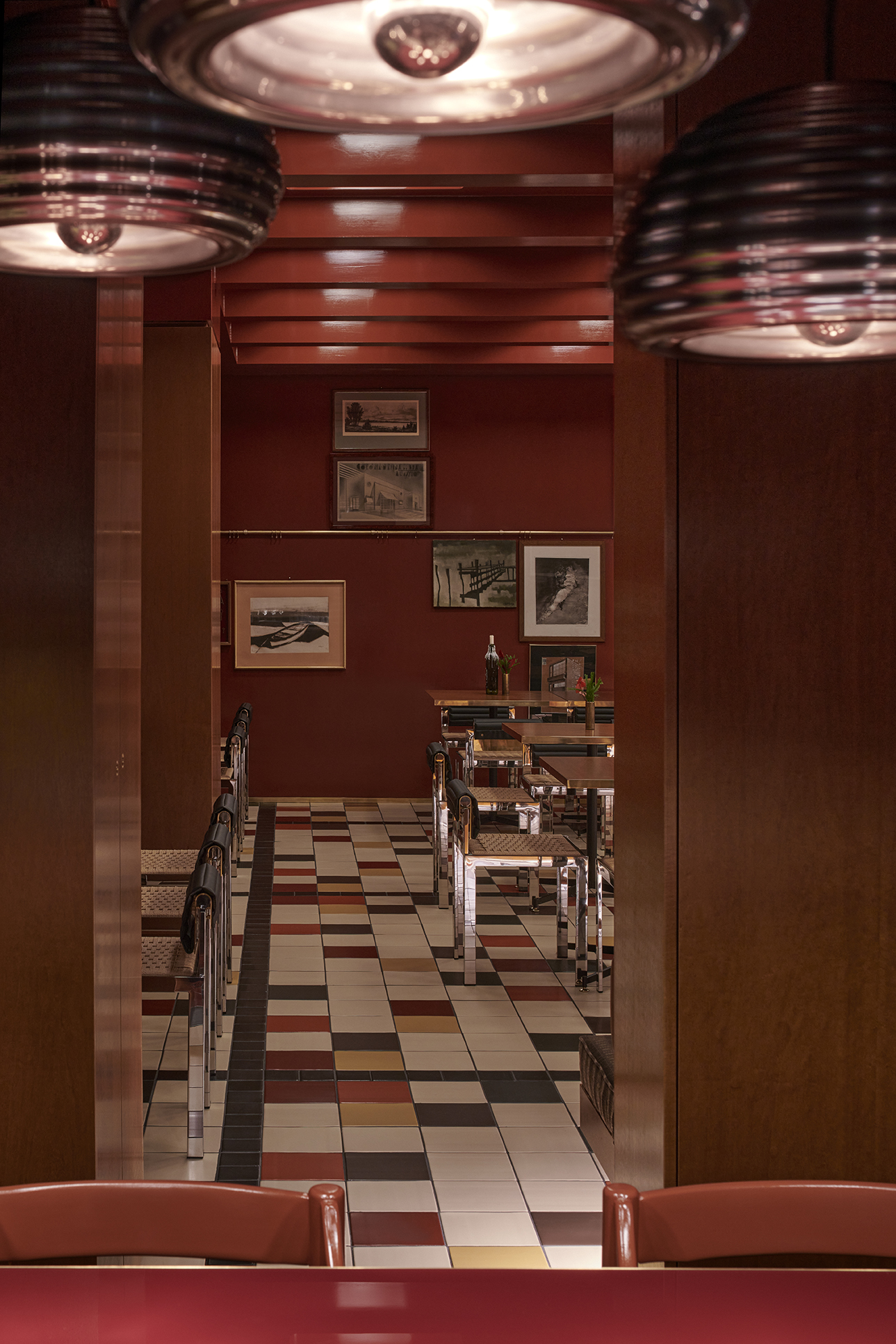
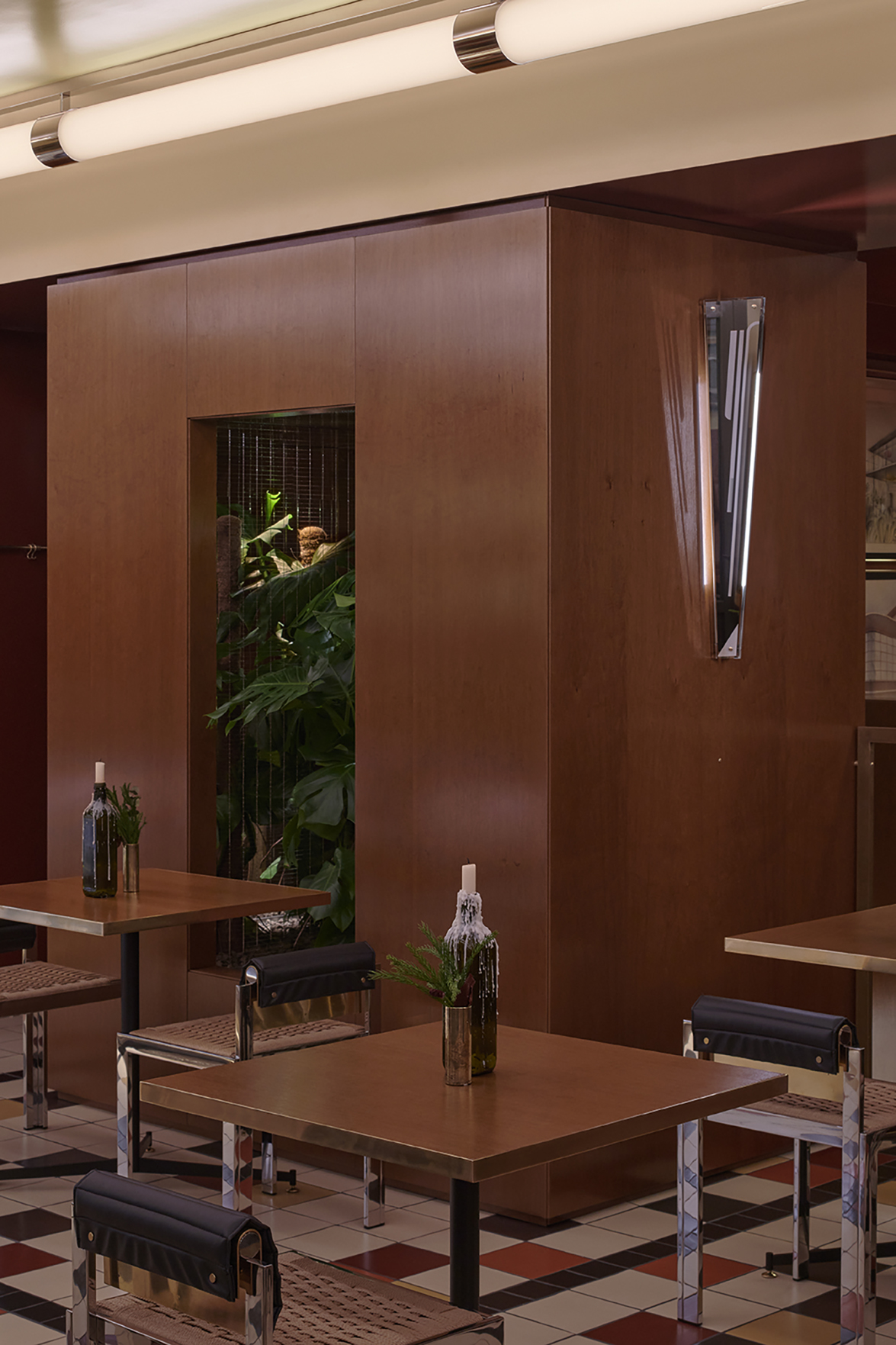
From here the plan opens up. A balustrade around the stairwell affords a view across to the second room and a glimpse of the route downstairs. Underfoot, a mosaic runs through both spaces. Tiled floors are familiar territory in a trattoria, although few would arrive at quite this combination of mustard, milky white, liver red and swamp green. For all the attention the floor commands, the walnut panelling does an equally important job. Its long stretches give the eye somewhere to rest, while the grain introduces a looser pattern of its own.
Architecture has found its way into an artists’ neighbourhood by way of a painter’s brush.
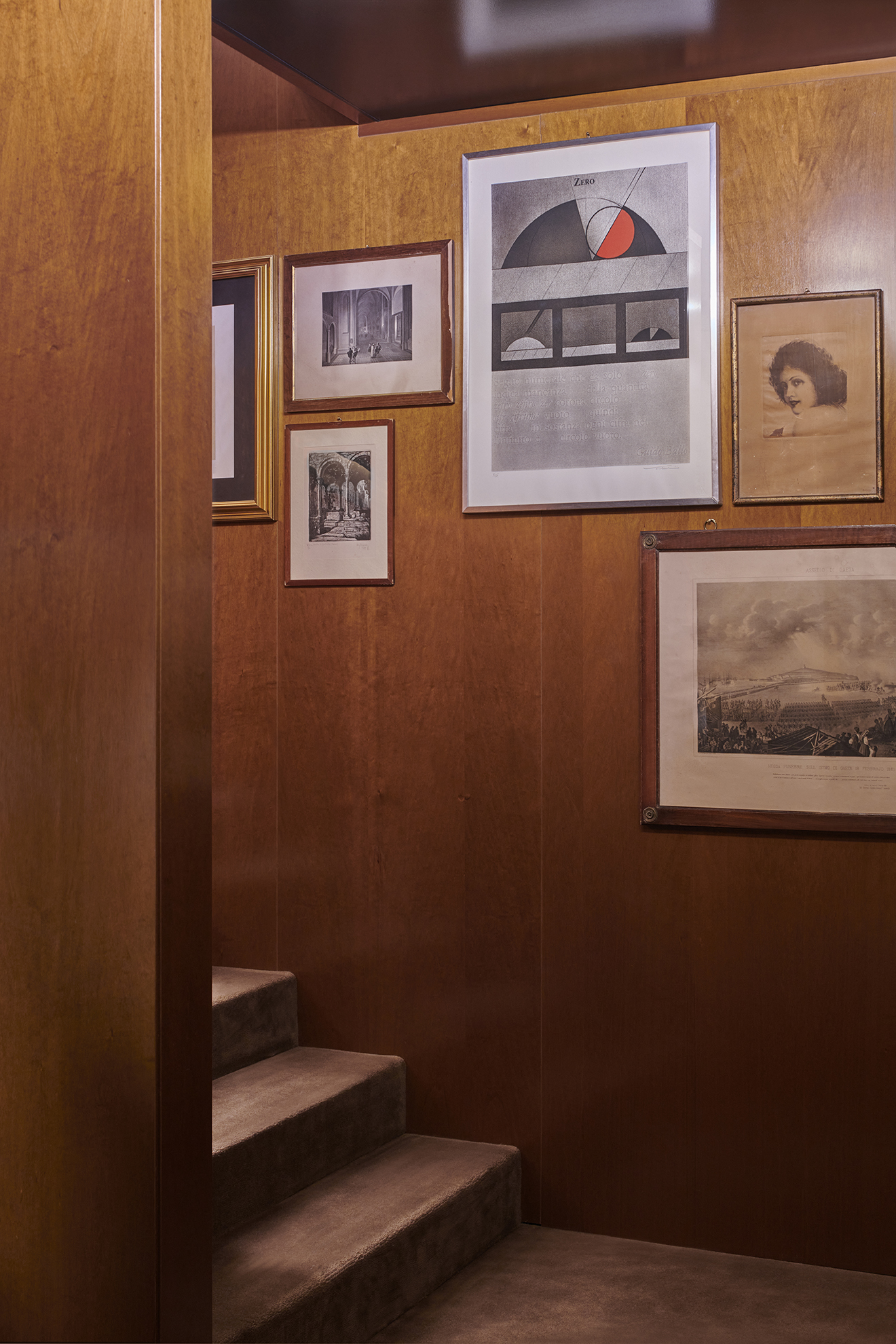
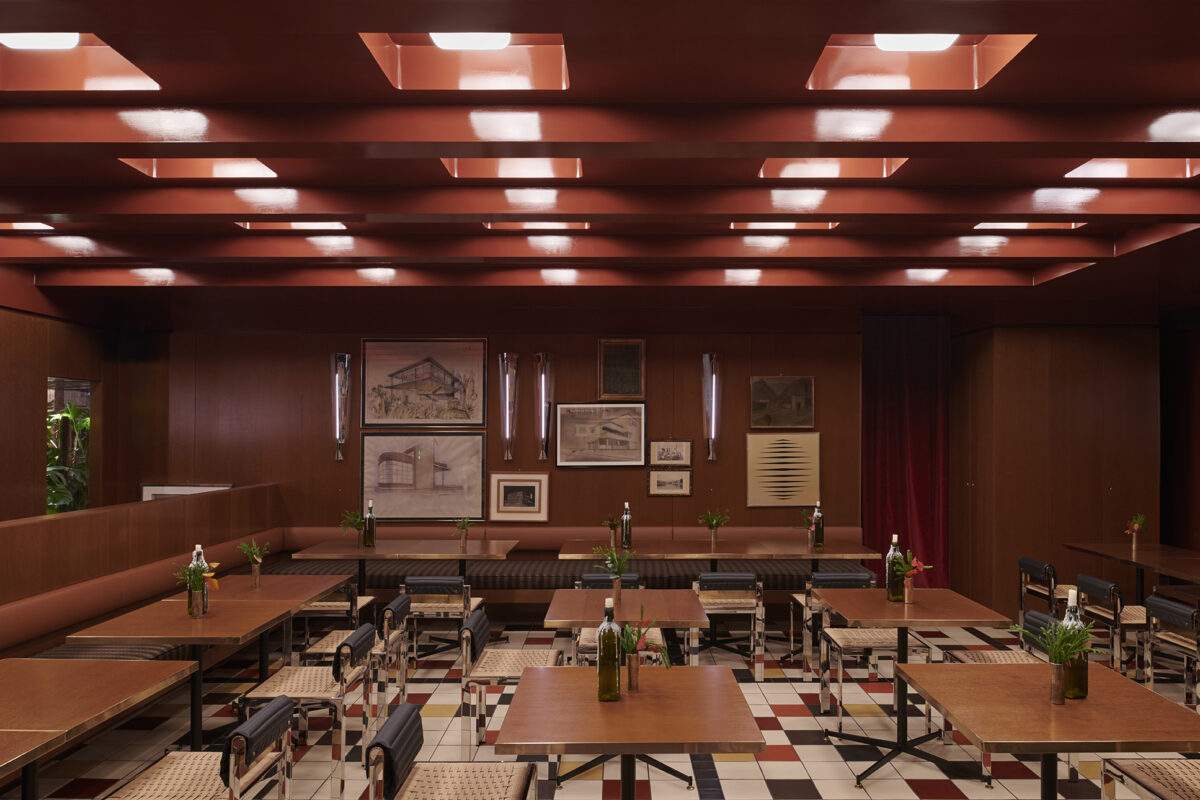
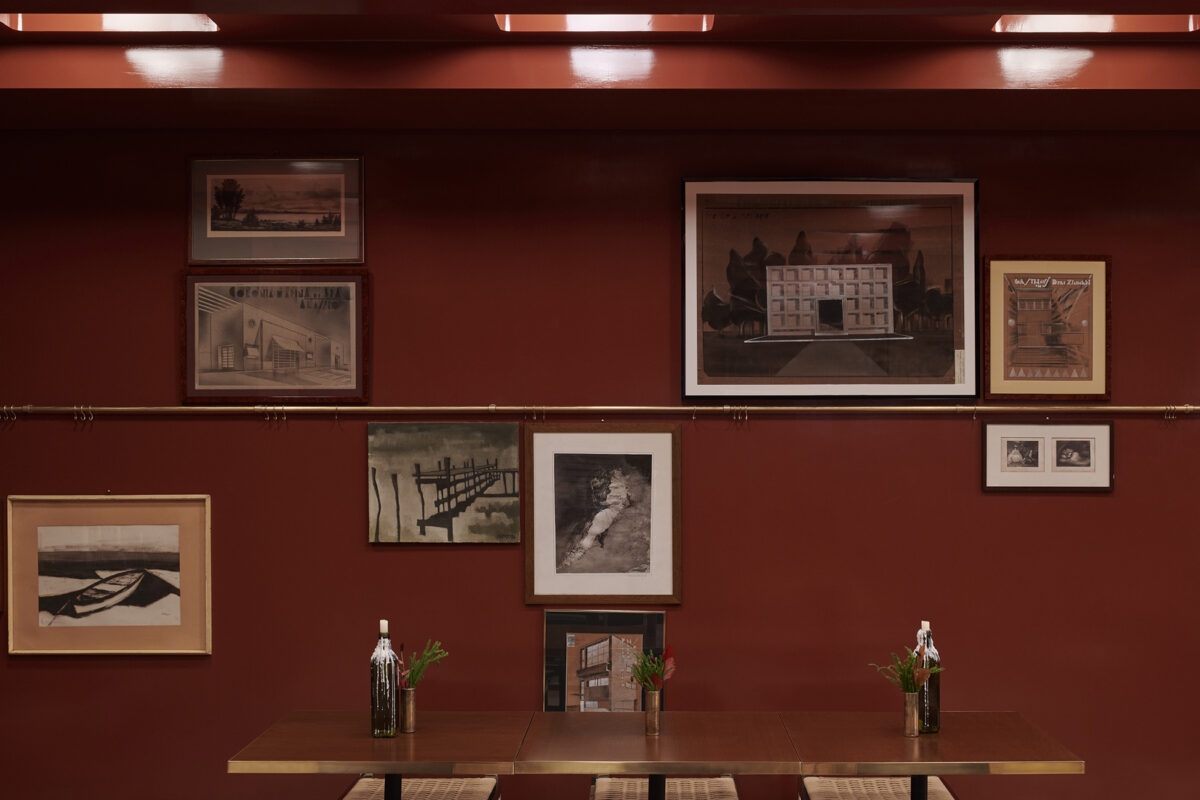
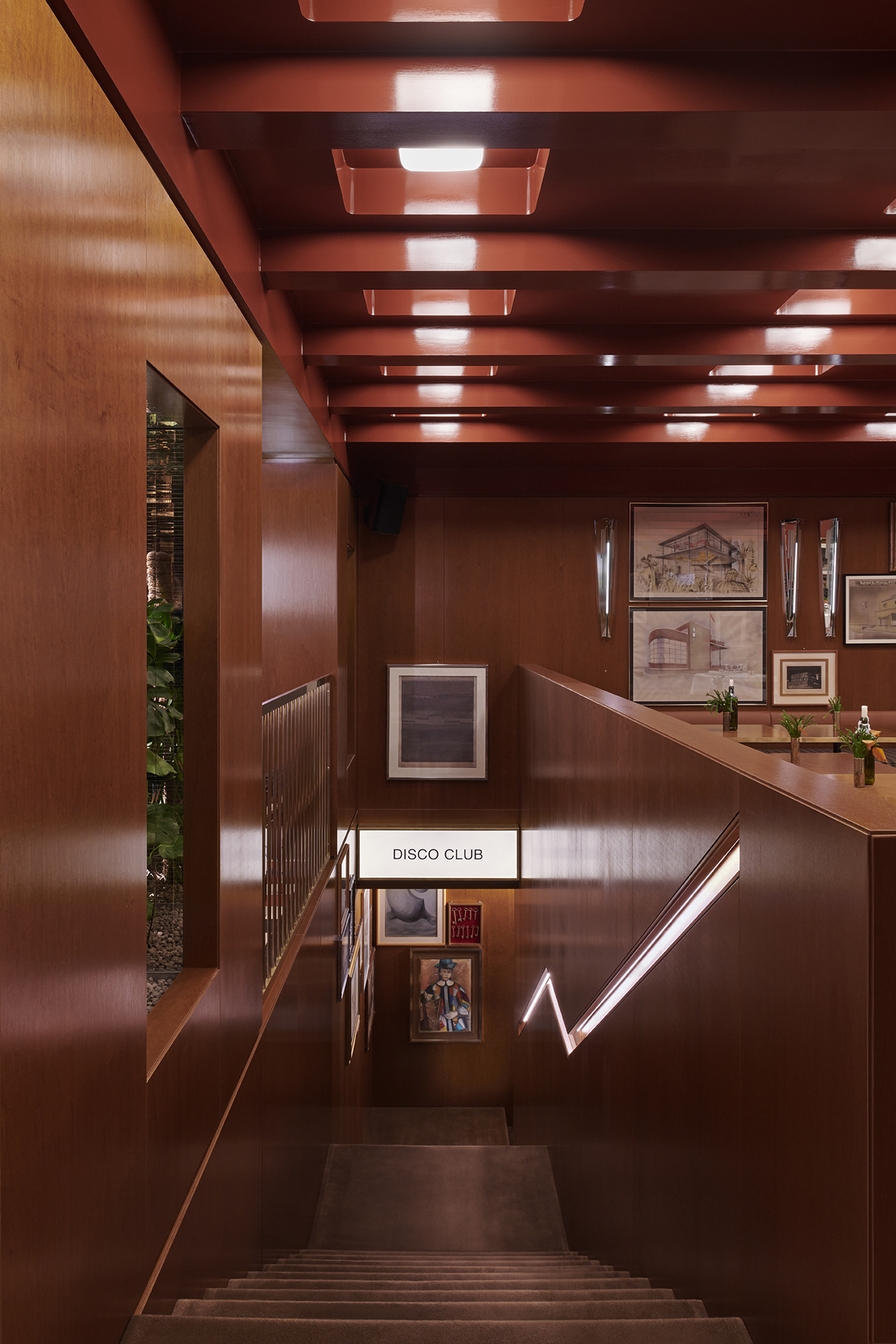
At table height, there are hooks for coats and racks for newspapers, alongside watercolours of Italian Rationalist buildings from the 1930s. The choice of subject is particularly lovely. Architecture has found its way into an artists’ neighbourhood by way of a painter’s brush, and the pictures hang where anyone waiting for a companion has time to give them a second look. Across the ceiling, squares of opaline light alternate with panels painted a deep red. Look up from the paper and there is another chequerboard overhead.
Much of what appears straightforward about this dining room took considerable work behind the scenes. Poliform’s contract division made the fixed furniture to Dimorestudio’s designs, extending the same attention to the bottle racks, wardrobes and waiter’s station. Out on the floor, the Ignazio tables repeat the walnut of the walls, while the Rei chairs bring woven straw into contact with steel. Both come from Dimoremilano, the studio’s furniture brand. The straw is a particularly good detail beside all that polished joinery. It is the bit of the composition a diner actually gets to sit on.
At table height, there are hooks for coats and racks for newspapers, alongside watercolours of Italian Rationalist buildings from the 1930s.
Three ways with rice in Lombardy
The menu gives an equally good reason to spend time here. Under executive chef Paolo Rollini, the kitchen draws on Lombardy, a region whose cooking can take you a considerable distance from the familiar Milanese pairing of saffron rice and veal shin. Take the rice itself.
On one of the trattoria’s menus, the risotto alla monzese comes with luganega sausage and a red wine reduction, while the riso al salto is pan-fried and served with veal reduction and Grana Padano. The appeal of the latter is the crust, precisely the part a cook would avoid forming on the base of a pan of risotto. Between the three preparations, there is a persuasive case for coming with someone who will let you steal a forkful.
There is plenty of character at the beginning of the meal, too. Among the starters the kitchen has served are mondeghili, Milanese fried meatballs, and nervit, a salad of nervetti with celery, lemon and sweet-and-sour onion. A dish called Ricordo di una zuppa pavese gives a poached egg a rather grand setting of concentrated chicken stock, mushrooms and black truffle. Its name translates as a memory of a soup from Pavia, a modest description for a dish that has travelled some way from its starting point. A remembered dish, like a remembered room, gives its author a certain licence over the details.
The menu gives an equally good reason to spend time here. Under executive chef Paolo Rollini, the kitchen draws on Lombardy.
A beer hall lamp and a clubhouse chair
For a party of up to ten, a private dining room on the ground floor offers the most rewarding piece of design detective work in the building. Behind curtains of plum and burgundy velvet, original Carimate chairs by Vico Magistretti gather around a glass table. Magistretti designed the chair in 1959 for the clubhouse of a golf course in Carimate, north of Milan. Its name, in other words, once told you where you had to go to sit in one. Much the same is true of the lights overhead.
The ribbed Splügen Bräu pendants are the work of Achille and Pier Giacomo Castiglioni, who designed them in 1961 for a Milanese beer hall of the same name. The brothers had been commissioned to design the whole interior, for which they drew on the atmosphere of old railway carriages. The beer hall has since disappeared, although its lamps are still doing precisely what the brothers intended, lighting a table where people have come together for a meal.
Downstairs at Trattoria del Ciumbia
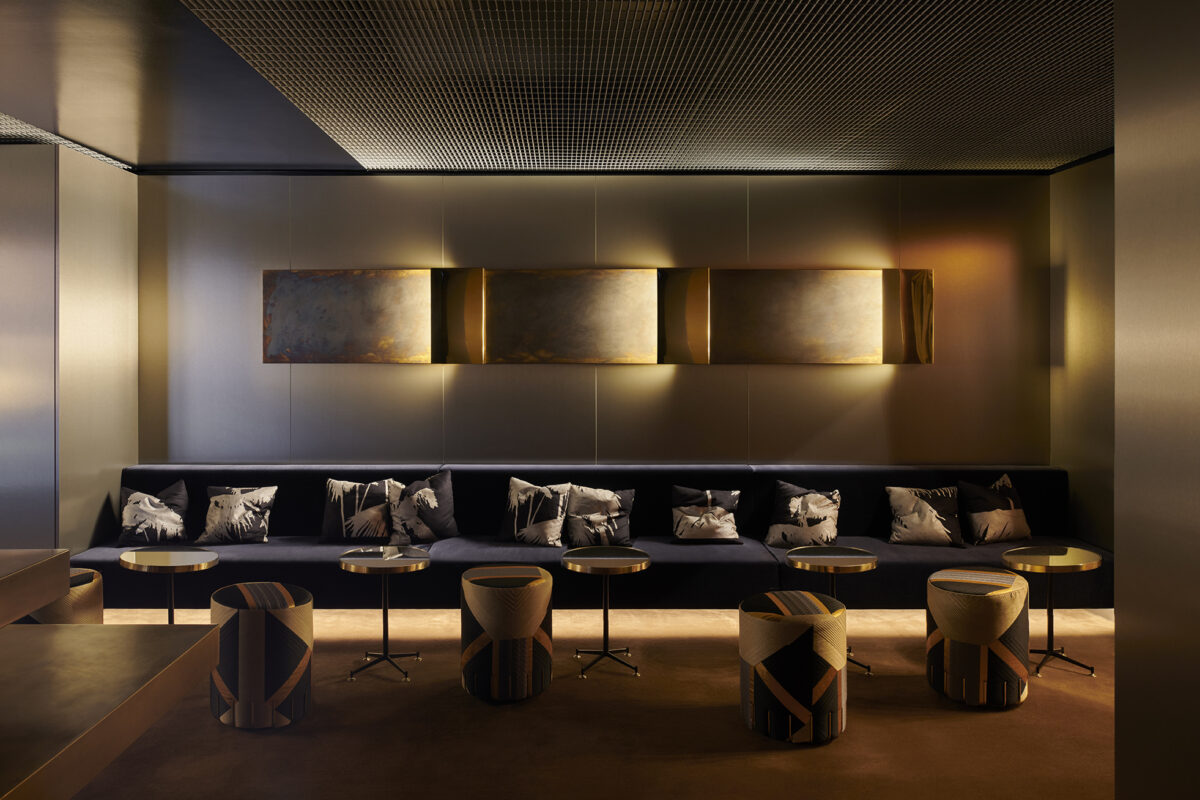
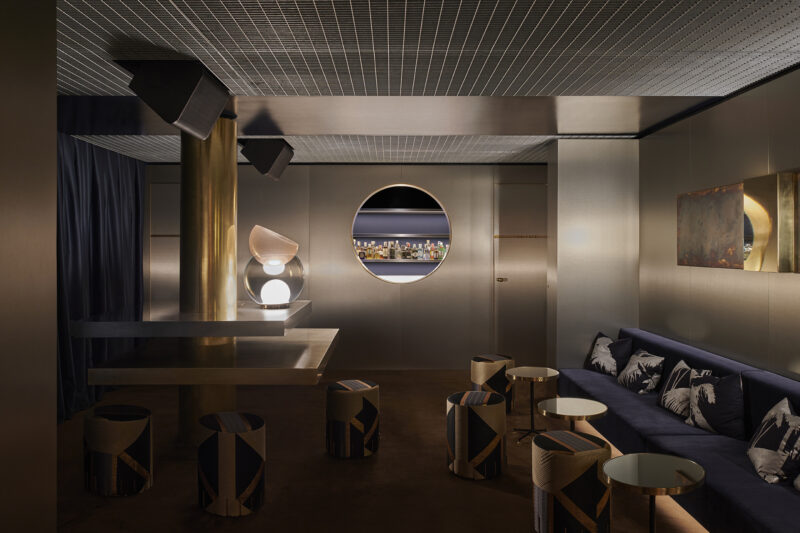
After dinner, the staircase glimpsed from the aperitivo counter finally comes into its own. Walnut follows the descent, with a line of neon set into the handrail. At the bottom, the materials change quite abruptly. Brown carpet takes over from the mosaic, deep blue satin falls across the walls and an upholstered bench shares the room with Dimoremilano’s Parigi poufs. This is the restaurant’s private disco lounge, conceived for guests who would quite happily surrender their dinner table if it meant they could stay a little longer.
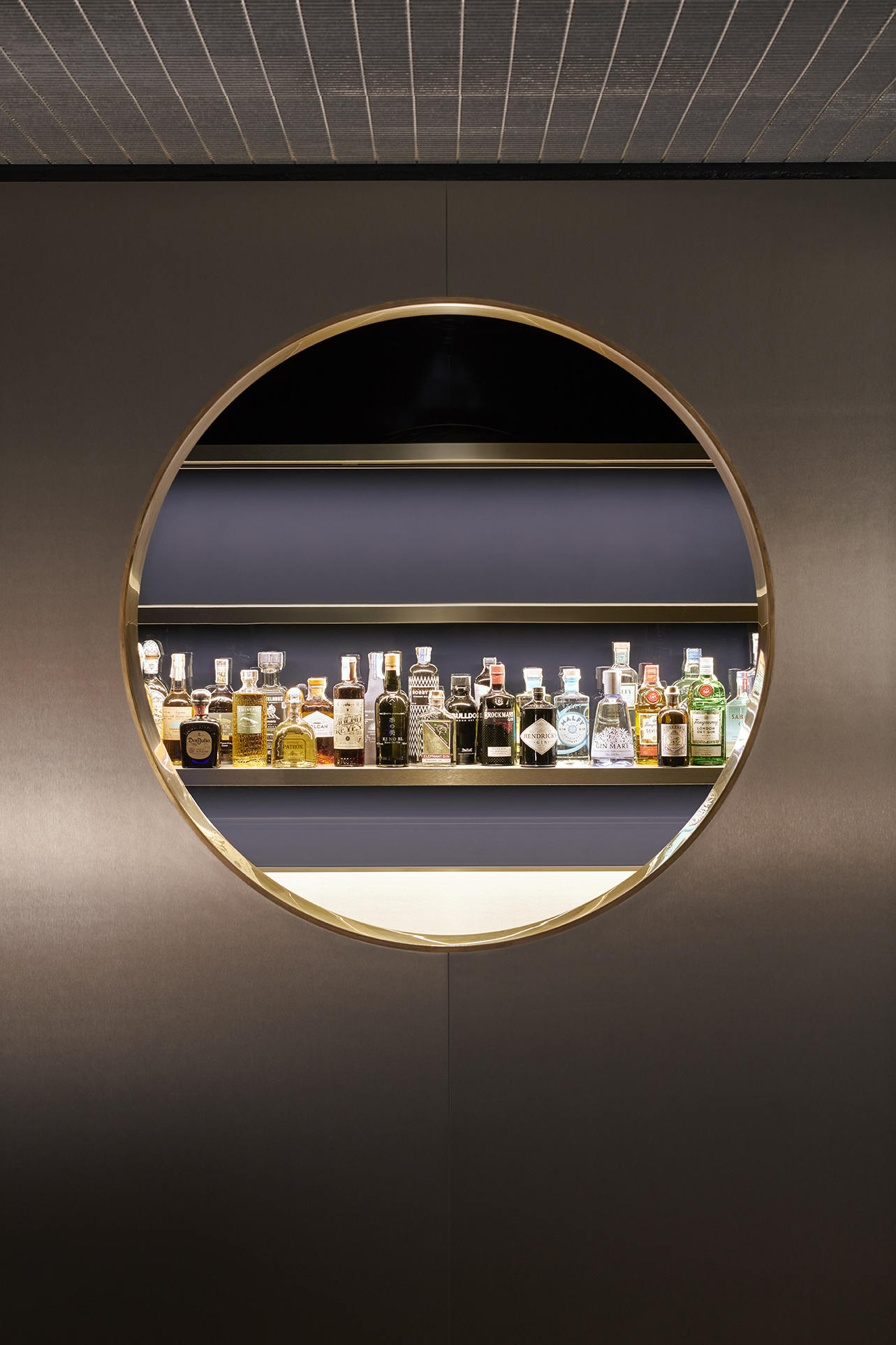
Down here a porthole gives a partial view of the bar through a wall faced in steel-effect laminate. Nearby, the rounded glass of a Giova table lamp by Gae Aulenti picks up the shape of the opening. A brass column has a steel ledge where someone standing with a drink can put down their glass. The studio imagined the room with Italian hits of the seventies and eighties playing. After the architectural watercolours and carefully placed originals upstairs, there is something rather appealing about the prospect of recognising a chorus before you recognise the designer of the lamp.
For anyone planning a meal in Brera, the choice here is as much about company as appetite. A long lunch in the main room offers time for the rice dishes and a good look at the watercolours between courses. For a birthday, there is the prospect of gathering friends round that single glass table. Whichever you choose, spare a glance for the lace on the way out. Once you are back on Via Fiori Chiari, the next table gets to keep its lunch to itself.
(*) Images provided by Dimoremilano.