“The Worst Person in the World”: when love isn’t enough…
“The Worst Person in the World”, directed by Joachim Trier, is one of the contenders for Best International Feature Film at the Oscars.
Structured into a prologue, 12 chapters, and an epilogue, this film is marvellous for many reasons, yet it’s also deeply moving and empathetic.
Before delving into the film itself, we’d like you to ask yourself: have you ever left someone “good” — supposedly perfect — someone you loved deeply, but no longer wanted to be with? Someone with whom life was easy, and arguments rare. A person you may have built a life with, but still, despite everything pointing to stability, you felt the pull to break away — because that balance felt more like boredom than joy.
If the answer is yes, you’ll likely empathise with the protagonist.
Though the film and its script aren’t exactly designed to make you take sides. And as you’ll see when watching and discussing it in a cineforum with friends, the story often gets dragged into the personal realm and binary judgements — where one is demonised and the other idealised. We don’t share that approach. We encourage you to watch it with an open mind, setting aside any unconscious biases or preconceived notions.
The plot
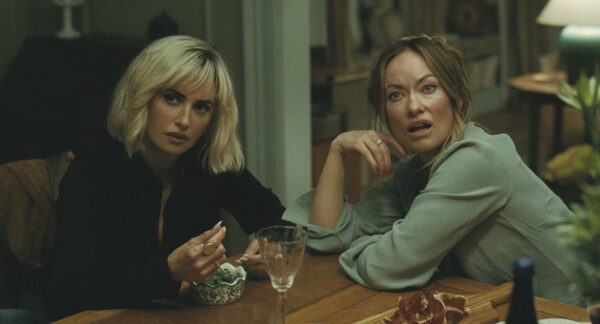
Julie (played by the captivating Renate Reinsve) is about to turn thirty, and her life is a mess. She doesn’t know what she wants to do — until she meets Aksel (Anders Danielsen Lie), an attractive comic book artist and writer. They fall in love and embark on a new chapter together.
There’s a 15-year age gap, and although they’re in very different stages of life, love binds them, and they choose to intertwine their futures.
Everything seems to be going well, until one day Julie — bored and craving new emotions — decides to sneak into a wedding… And that’s as far as we’ll go, to avoid spoilers.
Appearances can be deceiving
To outsiders, Julie and Aksel seem like the perfect couple — and even they believe it at first. But reality offers a less promising picture. At least, for one of them.
While one feels content with what life and love are offering, the other yearns for more — even without knowing exactly what that “more” is.
This gap in expectations and desires can weigh heavily on a relationship, no matter how deep the affection runs.
Love may be the glue, but it’s not always the cure when fundamental differences emerge — whether in career ambitions, family planning, or the way one sees the world.
Self-discovery as a catalyst
Though the film centres around Julie’s life, many viewers will see reflections of their own experiences — especially around the theme of self-discovery.
Often, we enter relationships without truly knowing what we want. Sometimes, things work out. But often, they don’t. Especially when we realise that what we don’t want is precisely what we have.
In “The Worst Person in the World”, Joachim Trier raises essential life questions — encouraging us to reflect on the many forms and phases of love. Love for ourselves, for partners, for friends, for fleeting connections…
He also explores commitment, what each person brings out in us (we don’t behave or love the same with everyone), and our internalised beliefs about what is “right” or “wrong” — or, more accurately, what is socially acceptable or not.
Loving without guarantees
Among the many messages the film delivers, one stands out: LOVE, despite everything. Because no matter how much we crave control, no one can guarantee that things will turn out as we hoped.
Life is about loving — and loving well. About giving and receiving affection, even in moments of uncertainty. And of course, without intending to hurt anyone — though the end of a relationship, no matter who initiates it, almost always brings pain. It’s still a loss.
Ultimately, “The Worst Person in the World” reminds us that love stories don’t always end the way we want. But that doesn’t mean they’re not worth having. Each one teaches us something — often about ourselves.
Highlights:
The Best: So many. But especially Renate Reinsve’s performance as Julie, and the wedding scene between her and Eivind (Herbert Nordrum). No sex, but it’s incredibly sensual and thrilling.
The Worst: Aksel’s storyline. It hit us hard, especially because it came so unexpectedly.
Check cinema listings.