“The Great Buster”: a tribute to the genius of silent cinema
Buster Keaton, one of the most iconic names in silent cinema, is once again in the spotlight thanks to The Great Buster, a documentary directed by Peter Bogdanovich. This recently released work on digital platforms and in specialized theaters not only revisits the career of the “Stone Face” but also cements his status as an unparalleled artist who paved the way for generations of filmmakers to come.
Buster Keaton’s persona has always been surrounded by admiration and mystery. Known for his stoic expression and extraordinary physical talent, he was a pioneer of cinematic comedy and a master of acrobatics. Films such as “The General” (1926) and “Steamboat Bill, Jr.” (1928) have stood the test of time, becoming essential references in cinematic history. However, behind the laughter and applause lies a complex story, marked by creative struggles and the ups and downs of the industry.
“Silence can be more powerful than any word.” Buster Keaton
Bogdanovich’s documentary provides a meticulous journey through Keaton’s life and work, from his beginnings in vaudeville with his family to his meteoric rise as a director, actor, and producer in the 1920s. Through a combination of archival material, interviews, and clips from his films, “The Great Buster” unveils the keys to his distinctive visual and narrative style: masterful use of long takes, integration of practical effects, and his ability to find humor in adversity.
The documentary also delves into the darker moments of his career, such as the transition to sound films, which curtailed his creative independence, and his battle with alcoholism. Far from being a melodramatic portrait, Bogdanovich celebrates Keaton’s resilience and his influence on contemporary cinema. Directors like Quentin Tarantino, Mel Brooks, and Werner Herzog contribute to the film, testifying to Keaton’s impact on their work and emphasizing how his legacy transcends time and styles.
One of the most thrilling aspects of “The Great Buster” is its ability to reconnect modern audiences with Keaton’s genius. The restored sequences from his films reveal details hidden over time, such as the precision of his choreography and the audacity of his visual ideas. Bogdanovich, with his characteristic cinephile sensibility, ensures that each scene feels like an invitation to rediscover the magic of cinema.
“Laughter is the best medicine, so laugh whenever you can.” Buster Keaton
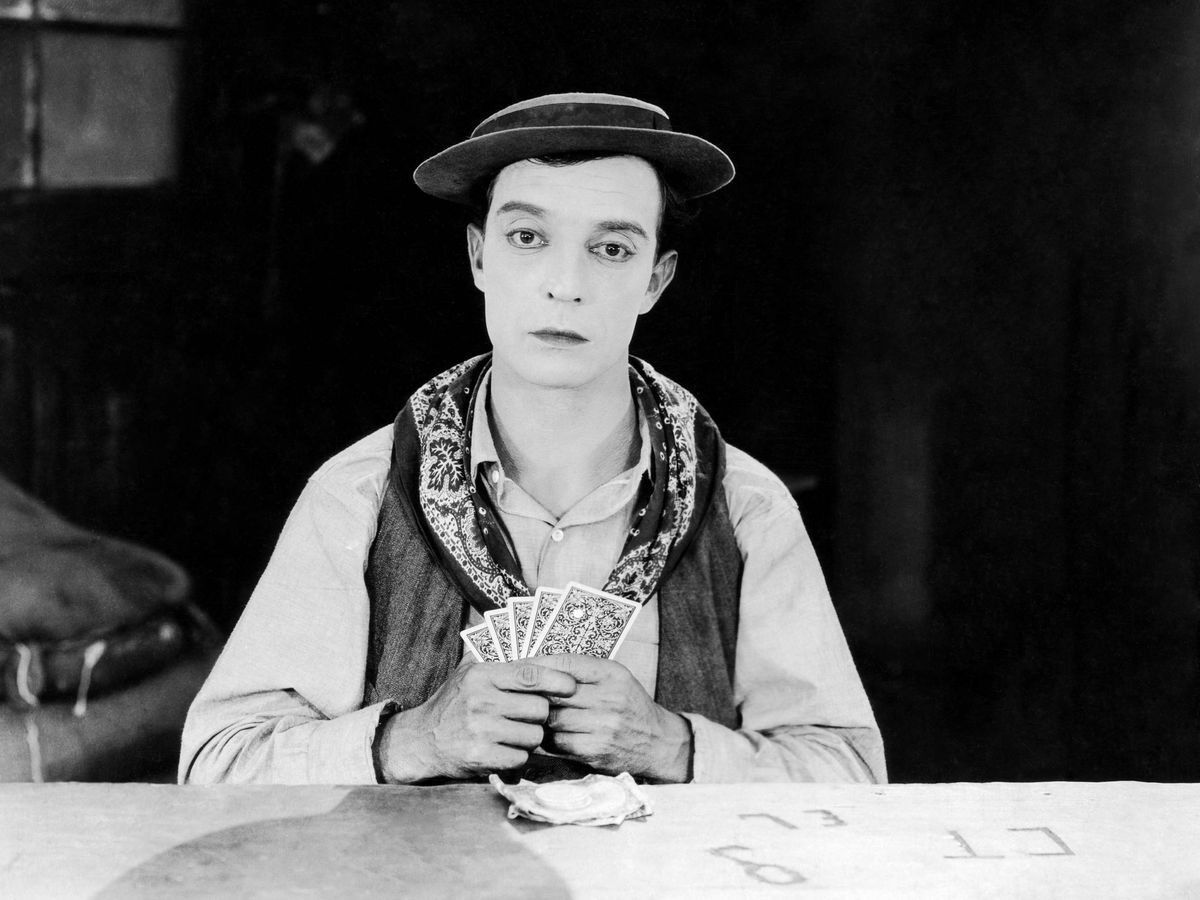
In an era dominated by digital effects and multimillion-dollar franchises, “The Great Buster” reminds us of the beauty of a more artisanal and human approach to filmmaking. Buster Keaton, with his straw hat, large eyes, and hieratic expression—earning him the nickname “The Great Stone Face”—stands as a symbol of boundless creativity and passion for the craft.
This documentary is not only a tribute to a genius but also a reminder of how the past continues to engage with the present. After watching the documentary, it’s impossible not to feel profound respect for Buster Keaton, who taught us that, even though life is an unpredictable stage, there’s always room for courage and creativity.
Highly recommended.
Five Things to Know About Buster Keaton
A vaudeville prodigy: Keaton came from a family of performers, so from a very young age he performed in shows alongside his parents and then with his brothers, where he demonstrated an innate talent for physical comedy and acrobatics. His stage education formed the basis for his unique style on film.
“Baptized by Houdini”: Buster‘s nickname was given to him by illusionist Harry Houdini, a collaborator of Buster‘s father, who, upon seeing him fall from a ladder, uninjured at the age of three, exclaimed: “That was a real buster!” His commitment to authenticity led him to perform his own stunts, often risking his life. The most expressive deadpan face in cinema: As we mentioned, one of his nicknames, “Punch Face”, comes from his ability to maintain a serious expression while chaos occurred around him. This contrast was key to generating humor and empathy in his films.
A career marked by ups and downs: Although he shone in the 1920s with classics such as “The General” – it is ranked 18th on the American Film Institute’s list of the 100 best films and 34th on the list of the best films of all time, according to the British Film Institute, the highest position achieved by a comedy film – the arrival of talkies and personal problems affected his career. However, Keaton demonstrated an admirable capacity for resilience, reinventing himself as an actor and consultant in Hollywood.
He received an Honorary Oscar: In 1960, Buster Keaton was awarded an Honorary Oscar. Later, in 1996, he ranked 10th among the 15 greatest film directors in Entertainment Weekly‘s list. In 1999, he was ranked 21st on the American Film Institute’s 100 Years… 100 Stars list, which recognizes the greatest American actors of classic cinema, as chosen by contemporary film stars.
Keaton’s relationships with women: Buster Keaton’s love life was tumultuous, marked by both affection and challenges in maintaining personal relationships. His first marriage to Natalie Talmadge, sister of silent film stars Norma and Constance Talmadge, ended in a bitter divorce that deeply affected him. Their relationship deteriorated due to personal differences and industry pressures. Later, Keaton found stability with his third wife, Eleanor Norris, who was a great support in his later years. Eleanor not only helped revive his career but was also instrumental in preserving his artistic legacy.
A legacy that transcends generations: Filmmakers like Orson Welles, Quentin Tarantino, and Wes Anderson have acknowledged his influence. His innovations in visual storytelling and spatial use continue to inspire creators worldwide.