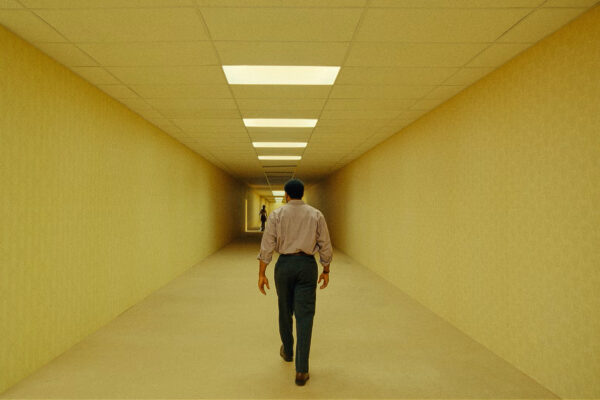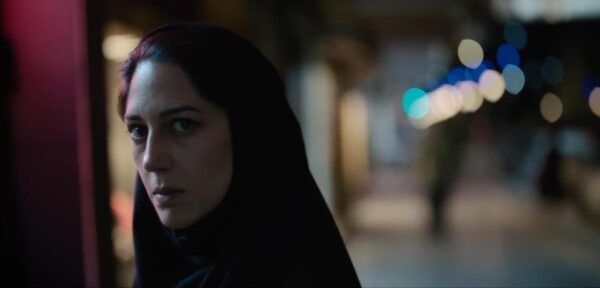
“Three Goodbyes”: Isabel Coixet and the art of saying farewell
The new film by the Catalan director confirms her talent for exploring human intimacy.
In the cinema of Isabel Coixet, farewells are never simple gestures. They are processes, layers of memory, conversations suspended in time. Her new film, “Three Goodbyes”, once again demonstrates this through a story about loss, reconciliation and the way human relationships transform when the moment arrives to say goodbye.
The film is based on the book “Three Bowls” (T”re Ciotole”) by Italian writer Michela Murgia, a deeply reflective work about emotional ruptures and the processes of personal transformation. Coixet takes this literary premise and translates it into cinematic language with her characteristic sensitivity, crafting an intimate story that delicately observes how people navigate the end of one stage of life and the beginning of another.
The Catalan filmmaker, one of the most distinctive voices in contemporary European cinema, returns with a deeply emotional work that has already made an impact at festivals and in cinemas. Premiered on the international circuit and presented at the Valladolid International Film Festival (Seminci), the film confirms Coixet’s ability to craft intimate narratives that resonate with audiences of different generations.
Far from conventional drama, “Three Goodbyes” offers a reflection on the bonds that evolve over time and on the difficulty of closing chapters while life continues to move forward.
A story about what remains when everything changes
The story unfolds through three farewells that shape the lives of its protagonists. These are not merely physical or romantic separations; the film explores the end of one stage of life and the beginning of another.
Coixet uses this narrative structure to delve into the fragility of human relationships. Each goodbye represents a moment of transition, an emotional fracture that forces the characters to reconsider who they are and what place they occupy in the world. The director avoids grand melodramatic gestures and instead works with silences, glances and small everyday actions. It is within this seemingly minimal territory that the film’s true intensity unfolds.
The emotional universe of Isabel Coixet
Throughout her career, Coixet has developed a highly recognisable cinematic language. Her films inhabit an intimate territory where emotion emerges from details and from the careful observation of characters.
In “Three Goodbyes”, this style once again becomes evident. The director employs a slow-paced narrative that allows viewers to approach the inner lives of the protagonists. Dialogue carries weight, yet it does not dominate the story. The camera lingers on apparently insignificant gestures, everyday objects and spaces that function as emotional refuges.
This approach turns each scene into a small study of human vulnerability. The viewer is not given a definitive explanation of what happens; rather, they are invited to complete the meaning through their own experience.
It is precisely this emotional ambiguity that has made Coixet one of the most influential auteurs in contemporary Spanish cinema.
“The protagonists are neither heroes nor victims. They are people trying to understand what is happening to them while life continues to move forward.”
Characters living with uncertainty
One of the film’s greatest strengths lies in the construction of its characters. Coixet avoids stereotypical profiles and instead explores complex identities marked by contradictions and shadows.
The protagonists of “Three Goodbyes” are neither heroes nor victims. They are simply people trying to understand what is happening to them while life continues to move forward.
This emotional portrait is supported by restrained performances, where intensity is not expressed through dramatic outbursts but through almost imperceptible nuances. The result is a gallery of characters that remain in the viewer’s memory long after leaving the cinema.
The importance of time in the narrative
Time is one of the central themes of the film. Coixet uses it as a narrative tool to explore how human relationships evolve.
The farewells that give the film its title do not occur at a single moment. Instead, they unfold over time, as if they were processes slowly taking shape.
From this perspective, the film shows how emotions change and how characters reinterpret the past as they gain new perspectives.
It also suggests that saying goodbye does not always mean closing a chapter definitively. Sometimes it simply means accepting that certain relationships continue to exist, albeit in a different form.
A profoundly European perspective
Although the film is firmly rooted in its author’s sensibility, its themes clearly resonate across Europe.
Coixet addresses questions that affect us all: loneliness in large cities, the transformation of family life and the difficulty of maintaining lasting relationships in an increasingly fast-paced world.
In this sense, “Three Goodbyes” engages in dialogue with a cinematic tradition that includes both European intimate drama and international independent cinema.
Yet the film retains a very clear identity. Its emotional tone, narrative rhythm and attention to detail reflect the personality of a director who has built a universe of her own.
“The film suggests that saying goodbye sometimes means accepting that certain relationships continue to exist, even if they have changed form.”
The power of everyday life
One of the most distinctive features of Coixet’s cinema is her ability to find beauty in the everyday.
In “Three Goodbyes”, the most seemingly simple scenes become moments of profound emotional intensity. A conversation in the kitchen, a walk through the city or a shared silence acquire deeper meaning.
The director demonstrates that great stories do not always require extraordinary events. Often it is enough to observe everyday life closely to uncover the complexity of human emotions.
This approach makes the film a deeply relatable experience. Viewers recognise fragments of their own lives within it.
A film about the art of letting go
Beyond its narrative structure, “Three Goodbyes” can be understood as a reflection on the act of letting go.
In a society that often celebrates beginnings, farewells are frequently relegated to the background. Yet Coixet’s cinema suggests that these moments are equally essential in understanding who we are.
Saying goodbye means accepting that time moves forward and that people change. It also means recognising that certain bonds endure, even if they take on different forms.
The film proposes a serene perspective on this process. Rather than dramatising loss, it seeks to understand it as an inevitable part of the human experience.
The place of Three Goodbyes in Coixet’s filmography
Within the director’s body of work, the film can be interpreted as a synthesis of many themes that have defined her career.
The exploration of intimacy, attention to small gestures and sensitivity towards vulnerable characters have been present since her earliest films.
However, “Three Goodbyes” also introduces a narrative maturity that reflects the filmmaker’s evolution. The film does not seek definitive answers or closed conclusions.
Instead, it raises questions: What does it really mean to say goodbye? How do relationships change over time? Is it possible to close a chapter without completely letting it go?
These questions run through the entire story and turn the film into a deeply reflective experience.
A farewell that lingers
When “Three Goodbyes” ends, the feeling remains that we have witnessed more than a story about separation. The film acts as a reminder that farewells are part of the very fabric of life.
Isabel Coixet manages to transform this seemingly simple gesture into a complex exploration of memory, identity and the passage of time.
“Coixet shows that simply observing everyday life closely is enough to reveal the complexity of human emotions.”
In an era marked by speed and an overload of stimuli, her cinema invites us to pause and observe. To listen to what happens in the silences. To recognise that the deepest emotions are rarely expressed in obvious ways.
Perhaps that is why her films continue to find audiences willing to surrender to her gaze.
Because, in the end, we have all had to say goodbye at some point. And we all know that some farewells are never completely spoken.
Check cinema listings.