“Parthenope”: a lyrical portrait of Naples by Sorrentino

“Parthenope” is the new film by Neapolitan director Paolo Sorrentino. After its box-office success in Italy, with over 1 million viewers in less than a month in theaters, it has become Sorrentino‘s highest-grossing film, surpassing “The Great Beauty”, with which he won an Oscar.
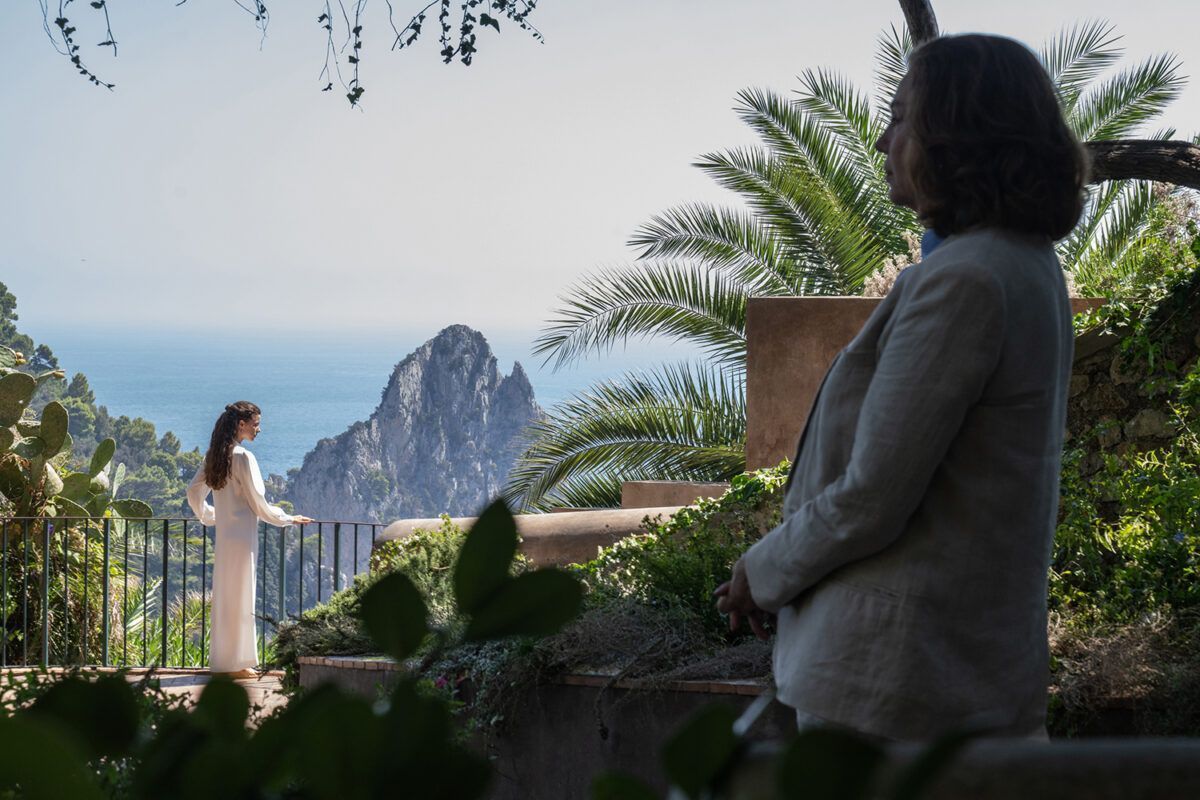


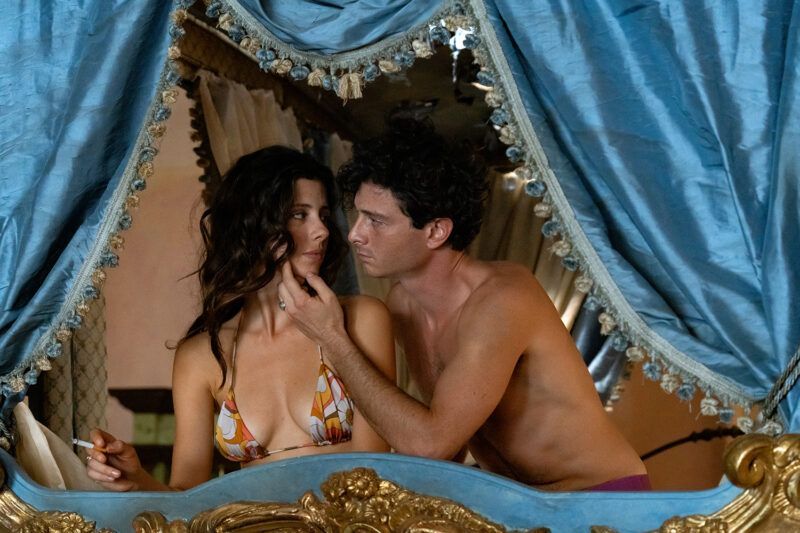

This time, Sorrentino returns to Naples to present a fantastical drama about the myth that gave birth to his hometown. In fact, the film was shot in Naples and on the island of Capri, starring debutante Celeste Dalla Porta and Stefania Sandrelli (“Novecento”, “Hamón, Jamón”) as Parthenope at different stages of her life; Oscar-winning Gary Oldman (“Dracula”, “Darkest Hour”) ; Luisa Ranieri (“The Hand of God”); Silvio Orlando (“Ariaferma”, “The Sun of the Future”); Isabella Ferrari (“The Great Beauty”) and Giampiero De Concilio (“The Perfect Dinner”).
Beauty has a price
With “Parthenope”, produced by The Apartment Pictures, Numero 10, Pathé Films, and Saint Laurent Productions (the fashion brand’s film division, which also took care of the movie’s costumes), Paolo Sorrentino returns to the big screen with a work that moves between fantasy and reality, exploring the city that witnessed his birth: Naples. The Italian director, known for his dazzling visual style, offers a unique vision of the city, woven with historical, mythological, and personal symbols that, much like the waves of the sea crashing along its coast, seem to pull the viewer into a whirlwind of emotions and reflections.
“Parthenope is the name of a siren who gave her name to Naples.”
The story centers around Parthenope, a sensitive, sociable, independent, intellectual, observant, open-minded woman, ahead of her time and extraordinarily beautiful, who must bear the weight of her beauty and all that it brings: prejudices about her intelligence, constant desire, and the expectations placed on her relationships. Parthenope is more than her physical appearance, and this is something she strives to prove throughout the film’s 134 minutes. Along the way, she must face a puritanical and oppressive environment, tragic family events, romantic disillusionments, existential doubts, and the inherent problems and virtues of living in a city as excessive, fascinating, and chaotic as Naples.
Through a Fellinian, surreal, and mischievous style, Sorrentino once again confronts two of humanity’s obsessions: beauty and youth. Two qualities that are present in great abundance throughout the film, but that also serve as a curse in Parthenope‘s life journey.
“Beauty doesn’t make the one who possesses it happy, but rather the one who can love and adore it.” Hermann Hesse
Naples becomes a character in Its own right
As we mentioned earlier, Naples becomes a character in its own right in this film. Sorrentino, with his usual visual mastery, presents an urban landscape that is not only geographical but also emotional. The city is depicted as a place of endless contrasts: beauty and decay, serenity and chaos. This dichotomy is reflected in the protagonist, Parthenope, who, from her birth until the end of her days, lived under the gaze of others, ultimately being objectified by society.
Keeping this in mind, Sorrentino tells the story of a woman who, born from the water, like the Venus in the painting by Renaissance artist Sandro Botticelli, will grow up and face difficult circumstances—many of which are caused by her beauty and youth, and others by her defiance of societal expectations. Because Parthenope goes her own way, and she is clear about living the life she wants, in the city where she was born. A setting that is as idyllic as it is surreal, yet synonymous with entropy.
A journey of self-discovery
As Sorrentino experienced, tragically losing his parents at the age of 16, Parthenope is marked by the suicide of her beloved brother.
She had a platonic-incestuous relationship with him, and after this tragic event, she embarks on a journey of self-discovery that will end when she frees herself from all the layers and prejudices imposed by others and by a sexist, puritanical society.
Throughout her journey, the protagonist crosses paths with an actress who, marked by deeply patriarchal structures of society, has experienced the same objectifying gazes that Parthenope has, but with even greater intensity. This actress will develop a troubling obsession with her own physical appearance.
In her own path, the young woman becomes pregnant, and, threatened by the potential loss of the independence she cherishes so much, decides to have an abortion. As the story progresses, she becomes a professor at the same university where she studied, parts ways with her first love, witnesses the extreme poverty that afflicts Naples, and finally establishes herself as a renowned anthropologist. Thus, her life weaves together transformations and confrontations through many decisive moments.
It is only at the end of the film, when the director’s splendid and sometimes overwhelming baroque beauty transforms into dense melancholy, that the meaning the protagonist has been searching for seems to slip through her fingers, and the pain turns into an almost palpable disillusionment. Then, an unexpected, anti-canonical light appears before her, returning clarity. Sorrentino, true to his style, relies on the outstanding performance of debutante Celeste Dalla Porta, who creates a character with an overwhelming presence. Thanks to her, the director builds a monumental and vibrant work, capable of capturing, in images of unusual strength, the eternal love for the senses, without guilt or remorse.
In the epilogue, Stefania Sandrelli brings to life a septuagenarian Parthenope. It is at this moment, after more than two hours of narrative, that Paolo Sorrentino attempts to unveil the protagonist’s most intimate thoughts and, ultimately, explicitly expresses his love for Naples, all marked by the vibrant rhythm of a triumphant city.
What is Anthropology?
“Anthropology means truly seeing. Seeing is the hardest thing because you can only see correctly when everything else disappears. And the rest is youth, passion, and, why not, love”. This is the answer given by the professor of her university thesis to Parthenope, who never ceases to ask this question. She is clear from a very young age that she wants to study this field, and as she progresses, she questions what it is and what it is for, beyond the obvious.
“Anthropology is seeing when everything else is missing.”
The narrative of a mythical city
Sorrentino employs his characteristic visual style in Parthenope, full of symbolism and saturated colors. Wide shots of the city, with the sea on the horizon and bustling streets, alternate with more intimate and surreal sequences, where the music (once again a fundamental part of Sorrentino’s narrative language) plays a key role.
The soundtrack by Lele Marchitelli adds a layer of melancholy and drama that perfectly complements the narrative. The costumes by Carlo Poggioli and the hairstyles by Aldo Signoretti not only track Parthenope’s evolution from her adolescence to her thirties but also act as a mirror of her emotional state and social situation at each stage of her life.
The script is written by Sorrentino and Umberto Contarello, and it feels like a personal manifesto and a reflection on the universal. Here, the filmmaker seems to wonder if it’s possible to escape the suffocating embrace of a city so rich in history, but also torn by its contradictions. The film doesn’t offer clear answers but invites the audience to reflect on the ephemeral and the eternal, the individual and the collective.
The cinematography is by Daria D’Antonio, who repeats her collaboration with Sorrentino after “The Hand of God” and was awarded the CST Award for Best Artist-Technician at Cannes this year for her work on “Parthenope”.
A tribute to Naples, beauty, and nostalgia
With “Parthenope”, Paolo Sorrentino not only pays homage to his hometown but also creates a work that is both a portrait of human passions and a melancholic tribute to beauty and the fleeting nature of life. The film, rich in unforgettable images and a unique atmosphere, invites the viewer to lose themselves in the labyrinths of Naples, but also in the labyrinths of their own memory.
While some may find it too abstract, fans of Sorrentino’s cinema will find a rich, complex, and deeply moving work.
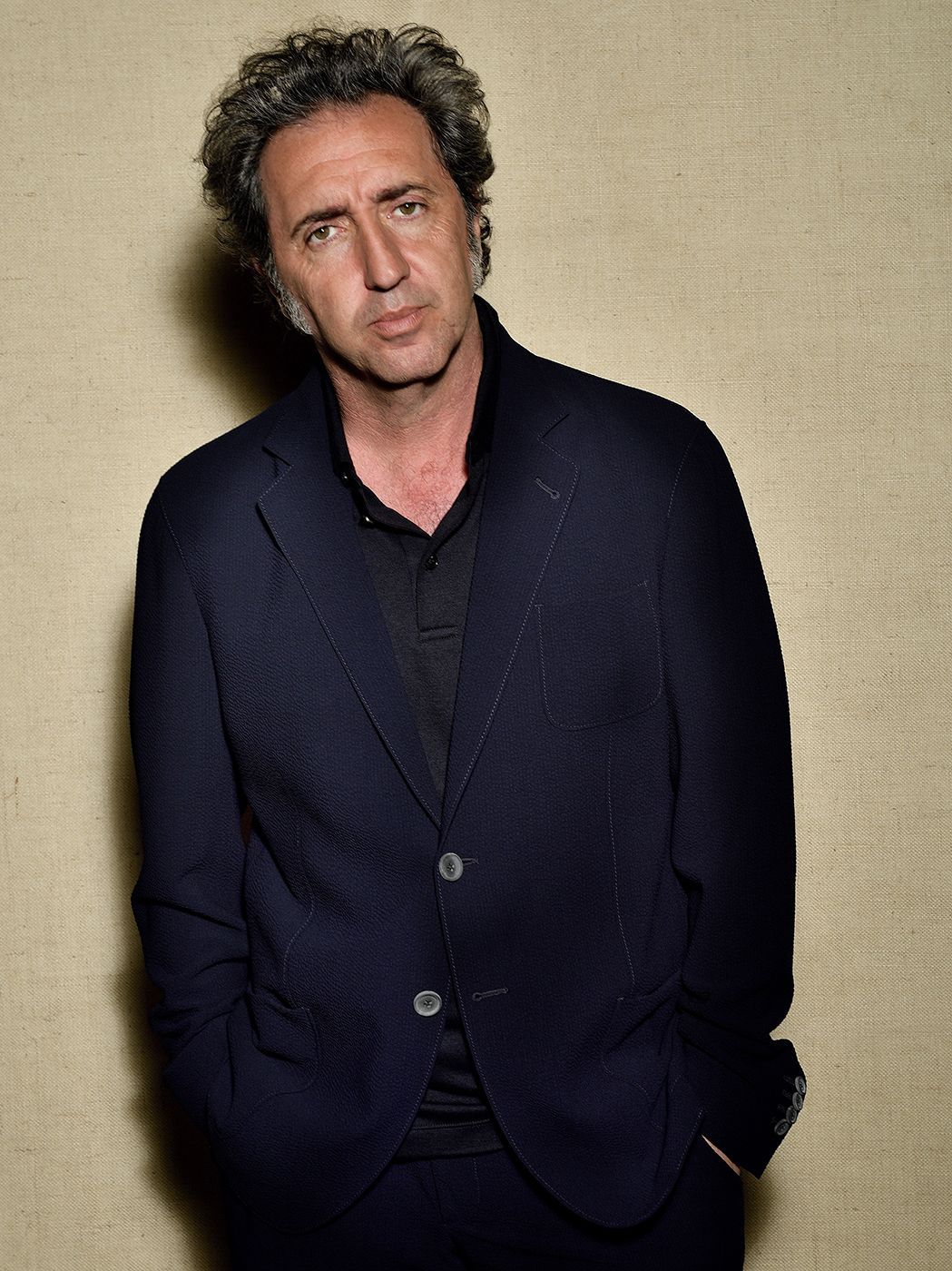
“Once, when I was asked one of those difficult questions like, ‘What is sacred to you?’ I instinctively answered: ‘The sacred is what we will never forget from our own life story.’ This is how this film was born.
For me, Parthenope is, above all, a film about the sacred. About all the things a woman has not been able to forget in her seventy-three years of life: the Bay of Naples and her parents, her first loves—one pure and shining, the other sordid and unspeakable; the perfect summer in Capri, carefree with its salty sunrises, peaceful mornings, and warm nights; those fleeting and fateful encounters; the discovery of seduction and the vertigo of freedom; feeling so fully alive that she sighs at the exuberance of life; the desperate search for her true self; lost loves or barely tasted; the sorrows that drag her into adulthood; the inexorable passage of time; the only lover who never abandons her. And in all of this, there is Naples, with its exasperating vitality, wonders in every corner, and everyone always ready, as if they are perpetually waiting behind an invisible curtain, to take the stage and offer chaos, vulgarity, surprise, promiscuity, and everything else.**
Naples is free, Naples is dangerous, Naples never judges. Naples is like Parthenope. Its freedom is constant, something it will never give up. Even if that means embracing loneliness. Because—too often—loneliness and freedom go hand in hand. Naples is the ideal place to deceive ourselves into thinking we live wonderful, unpredictable lives. The place where our life story seems, to adopt Manganelli’s perfect metaphor, like the underside of a carpet: we can intuit the design even though we can’t see it clearly.
Our lives are never orderly, never logical. It’s easy to get lost in the immensity of life. We try to see our lives. To grasp their design, to make sense of them. But life doesn’t see us. Life is always somewhere else. It’s exhausting, and it makes us feel insecure. Mysterious.
And Parthenope, like all of us, is uncertain and mysterious. ‘Do you love too much or too little?’ a demonic character disguised as a saint asks her at one point. He asks all of us. She doesn’t know what to say. Neither do we. Because all the questions have already been asked, and all the answers have turned out to be ambiguous, evasive, contradictory.
It is this lack of self-knowledge that makes us, in the eyes of others, a mystery. Parthenope is a mystery. First, we let ourselves be carried away, then we take responsibility, and then we let go. Such is the march of time. This is the ambitious theme of this film: the unfolding of life, with all its euphoria and disappointment; the blooming and fading of love; the end of melancholy and the beginning of desire. In short, the entire repertoire of life, or whatever can be conveyed in a film. And so, with the passage of time, even life in Naples, as amazing and unpredictable as it is, becomes stale.
Youth, with its loaded gazes and emotional farewells, has abandoned her. The Bay of Naples has become nothing more than water. Its wonder has faded. The great deception no longer deceives. She finds herself alone. One becomes what they are, as Nietzsche says. So Parthenope leaves Naples for a more anonymous place. She is now an adult, with a job. For forty years, she goes to bed early, as Proust and De Niro used to say. She loves too little. When, at seventy-three, she retires, she must change again. She must learn to see her past, to recognize the sacred within herself. To love too much. Or at least imagine it. Thus, she returns to Naples, that distant, wild city that never changes. Naples, which still knows how to deceive, offering us the only feeling that keeps us alive until the end: the ability to be amazed. Parthenope sighs. Just as she did when she was a child.” Paolo Sorrentino
Enjoy it on board Air Europa flights from June to September 2025.