“Faith, Hope and Carnage”: A must-read interview book by Nick Cave
“Faith, Hope and Carnage” is Nick Cave’s latest book, born from over forty hours of intimate conversations with British journalist Seán O’Hagan. A truly unmissable epiphany, in which the Australian artist reflects on life, faith, death, music, drugs, art, grief, love, and family.
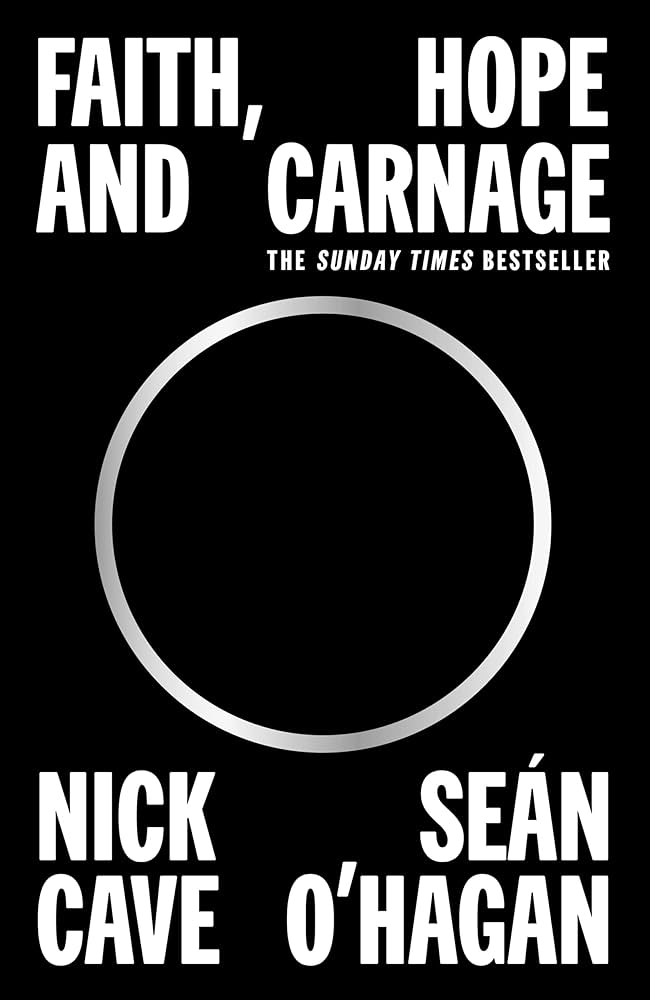
These themes emerge naturally as O’Hagan weaves a candid, honest and evocative conversation — through which Cave opens up completely and delves into deeply painful and personal experiences, such as the death of his son and the transformation it triggered, his childhood, family, and former heroin addiction, offering deeply intimate reflections and moving insights.
“My own story is almost entirely unbearable to me or at least the one that’s constantly being told.”
Here are a few of Cave’s most powerful thoughts from the book:
1. As I’ve got older, I’ve come to realise that perhaps the search itself is the religious experience — the desire to believe, the longing to find meaning, the movement towards the ineffable. Perhaps that’s what matters most, despite the absurdity of it. Or indeed, because of the absurdity of it.
2. I believe music has the power to penetrate all the bloody ways we’ve learned to cope with the world — all the biases, affiliations, interests and defences — which basically amount to a kind of layered suffering, and speak to that thing underneath which is essential, pure, and good for all of us.
3. Collective grief can bring about extraordinary change — a kind of spiritual conversion, and with it, great opportunity. We can either embrace that opportunity or let it slip away. I hope it’s the former.
4. Each of us, at some point in our lives, is devastated by loss. If it hasn’t happened to someone yet, it will — that’s a fact. And certainly, if you’ve been lucky enough to be deeply loved in this world, you will also cause extraordinary pain to others when you leave it. That’s the contract of life and death — and the terrible beauty of grief.
5. In my experience, boredom often borders on epiphany — the grand idea. That’s the agony of songwriting — because boredom is boredom until suddenly it’s not! (…) I know I can only reach that state through improvisation — and certainly through collaboration. The nature of improvisation is the meeting of two people, of love, and a certain dissonance.
6. Our recent history is like this: we tell and retell an experience so many times that it becomes a kind of fiction. It makes me think that maybe the traumatic events — those sharp, horrific images that live in our bodies and pounce on us at midnight — are the only real memories we have. The ones so devastating they refuse to adjust. The rest are fragments of slightly implausible stories we tell to give shape to our lives.
7. Happiness is a form of insubordination against — well, life, I suppose. It’s a choice. That’s what happiness is: a choice, a kind of well-earned and conscious agreement with the world. No one can control what happens, but we can choose how we respond. There’s a certain defiance in that — in the face of the world’s indifference and its apparent casual cruelty.
8. I have the great advantage of having spent a good part of my life making terrible mistakes. I’ve been hurt many times, I’ve suffered a lot, and I’ve messed things up more than I care to admit. But I’ve also overcome things that would be incomprehensible to younger people. Older people may be broken, but we are also vast storehouses of lived experience, and if we’ve paid attention to the world, we’ve gathered a certain amount of wisdom. That’s meaningful — and valuable.
9. The brain loves its patterns and pathways and wants us to stick to what’s familiar. That’s what happens with heroin, it’s the mother of all deceptive ideas!
10. I feel a compulsion to create. It’s really a force beyond my control. I do what I can to keep my creative project alive; I try to surprise myself constantly. That’s how things stay interesting. Still, given all that, I’d like to think that one day I could set it all aside and simply enjoy what this astonishing world has to offer — in and of itself.
11. When I left Twitter, the world suddenly improved. It became a better place, and the quality of my life improved immeasurably. The sun started shining and birds began to sing in the trees. I no longer felt physically unwell, so exhausted and depressed by everything. In my view, social media makes you sick.
12. I see my work as a clear rejection of cynicism and negativity. I don’t have time for it. I mean that very literally, from a personal standpoint. I have no time for censorship or constant condemnation. I’m not interested in the cycle of perpetual blame — I leave that to others. I haven’t the stomach for it, nor the time. Life’s far too short, in my view, not to be amazed.
13. I don’t believe there’s anyone who doesn’t regret something — unless they live a life utterly devoid of introspection, or are very young, which is often the same thing. So yes, I have regrets. I don’t think that’s necessarily a bad thing. They’re usually signs of a degree of self-reflection, personal growth, or distance travelled.
14. The Red Hand Files show me — explicitly and consistently — that we all suffer. They show me that suffering is the defining element of the human story. I know this to be true because I recognise myself in those letters — my own situation reflected back, my own pain — and I also know that in engaging with those people, I feel better. Or at least, I hope so. I try to offer the best version of myself to the person asking the question, because they, in their vulnerability and honesty, are offering me the best version of themselves.
15. Pain can lead some people to dark places from which they simply never return. I’ve seen it happen often. People build their lives around an absence, become hardened and angry, turn against the world — and never recover. Nothing brings them back from the abyss. (…) So essentially, what I try to put forward is the idea of pain as a gift. Pain as a positive force. A kind of pain that, if allowed full expression, can become a rebellious energy. That energy is what moved me during the In Conversation events.
16. I’ve inherited my mother’s stoicism to the core — and, believe it or not, I’m still uncomfortable with public displays of emotion! So this sort of empathy or compassion for others — and for myself — is something I’ve had to learn.
17. Young Nick Cave could afford to be disdainful of the world because he had no idea what the future held. Now I see that disdain — that contempt — as a kind of posturing, or condescension, even a kind of vanity. I didn’t understand the value of life, its fragility. I had no sense of how difficult — but essential — it is to love the world and to treat it with mercy. As I said, I had no idea what was coming. I was completely naive to it all.
18. I don’t think strength has much to do with anything. I think, when you take the next step, you’re simply choosing the least painful option. And strength implies there’s weakness. Is it weakness to stay in bed for days after losing a child? Is it strength to keep your head high and carry on? I don’t think those terms apply. People often ask me: “How do you stay strong?” They say the same to Susie: “You’re so strong”. But we’re not. We survived because we stayed together. It’s that simple. When one of us broke down, the other held them up. That’s what matters.
19. There is nothing harder than forgiving yourself. I think a reliable way to begin that process is to reach a place where you can genuinely appreciate that your daily actions are making the world a slightly better place — not worse. That’s something simple, and something we can all do — and to arrive there with a certain amount of humility.
20. Hope is optimism with a broken heart.
21. We go round and round, coming up against the same things again and again — but within that motion, things happen that change us, devastate us, shift our relationship with the world. It’s this circular, reciprocal movement that becomes more vital, more affirming, more necessary with each turn.
Highly recommended.
About Nick Cave
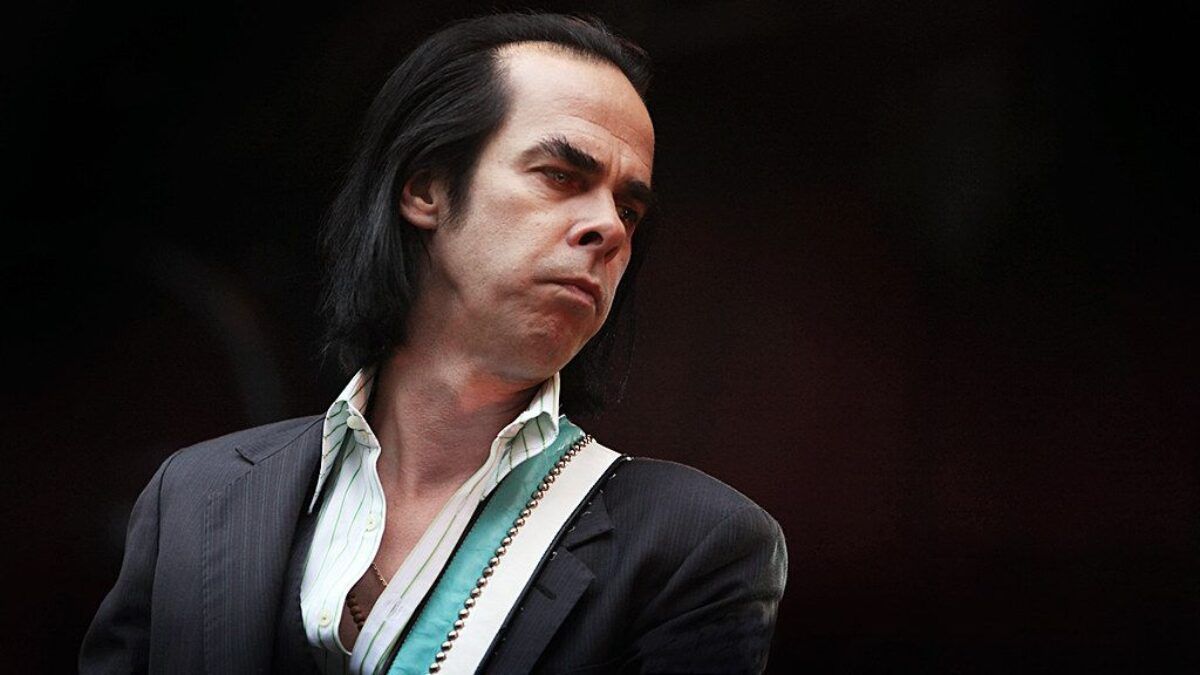
Nick Cave has been making music for over forty years and is best known as the singer-songwriter and frontman of Nick Cave & The Bad Seeds, whose penultimate album Ghosteen is widely considered one of his finest works. Cave’s creative output also spans other forms of expression, including film scores, ceramics, and writing. In recent years, his website The Red Hand Files and his live In Conversation events have allowed him to explore a more intimate relationship with his audience.
In 2024, Cave is touring with his new work Wild God.
About Seán O’Hagan
Seán O’Hagan has interviewed countless influential artists, writers and musicians over the past four decades. He currently writes for The Observer and is the photography critic for The Guardian.